Archive
Mineral Insulated Metal Clad Cable Blow Out – Calling All Cars
Last night (5pm) we had an electrical fault, which knocked out all mechanical services to just under half of the hospital. I’ve just ( 2pm) got the power back on, and am going for a beer with the boys (this is Australia after all), and then home. The work required a bit of on the hoof engineering but went well, but the cause of the fault, and so who pays, is contested. So I thought I’d ask you lot what you think; here goes.
At about 5pm, I was doing end of day checks after we’d been doing some work on the mechanical chilled water system. When I went into the plant room above the older section of the Hospital, I discovered that power had been lost and the air handling units were off. It turned out that the HVAC system to two blocks of the hospital was inoperable. I sent electricians to the Mechanical Services Switch Board in the Plant room, and to the Main Switch Board, from which it’s supplied to see if a breaker (fuse – these are old and crappy boards) had gone. A fuse on one phase of the sub main from the Main Switch Board to the Mechanical Services Switch Board had blown. As nothing appeared to have operated in the mechanical board, I sent a team to trace the sub-main between the boards to find the fault. It was pretty quickly obvious that one phase of the sub-main, an old (~35years) Pyro (Mineral Insulated Metal Clad – MICC) Cable had blown – picture below.

One phase of a MIMS cable sub-main had blow out, partially cutting another phase
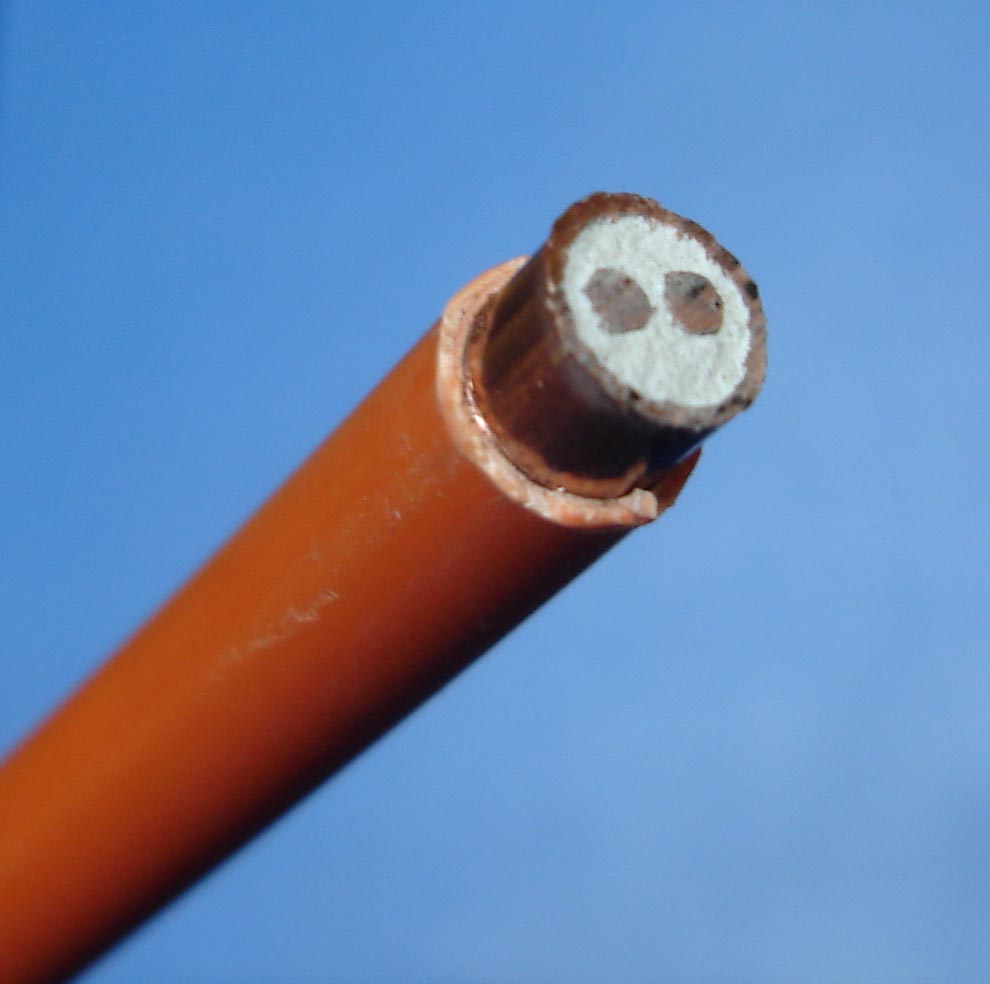
MIMS cables are formed of one or more copper cores, surrounded by mineral powder (often aluminium oxide) encased in a copper sheath and possibly a PVC outer cover.
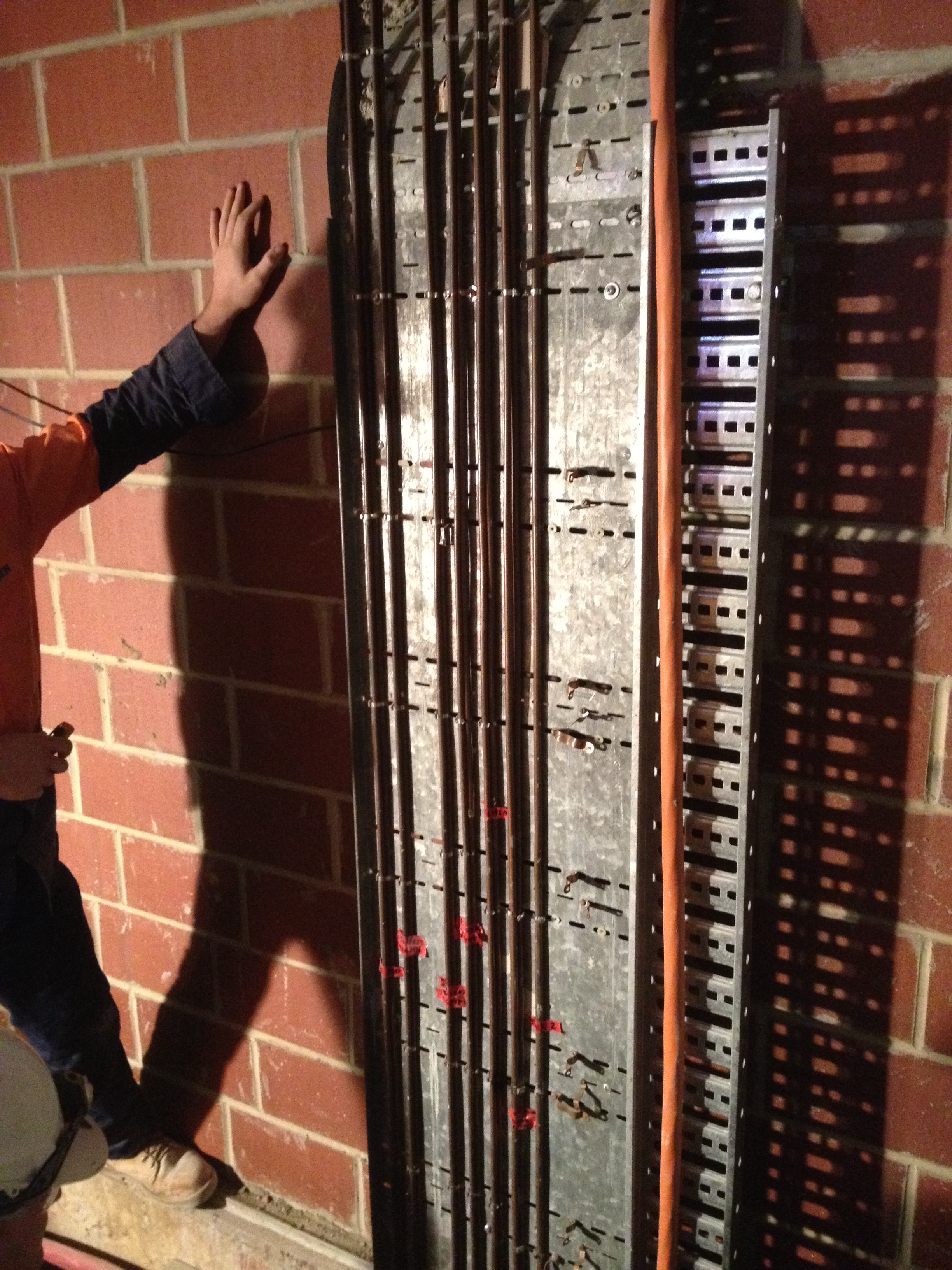
The pyros had been fixed to a cable tray using steel bands –apparently this is how it used to be done in Australia – instead of the copper straps recommended by the manufacturer of the cable. This is a picture of the type of gear they used.
On the tray, some demolished cables, had clearly once been fixed with the approved bands.

On inspection it seems that many of the steel bands had broken, and that the copper cable underneath was scored.
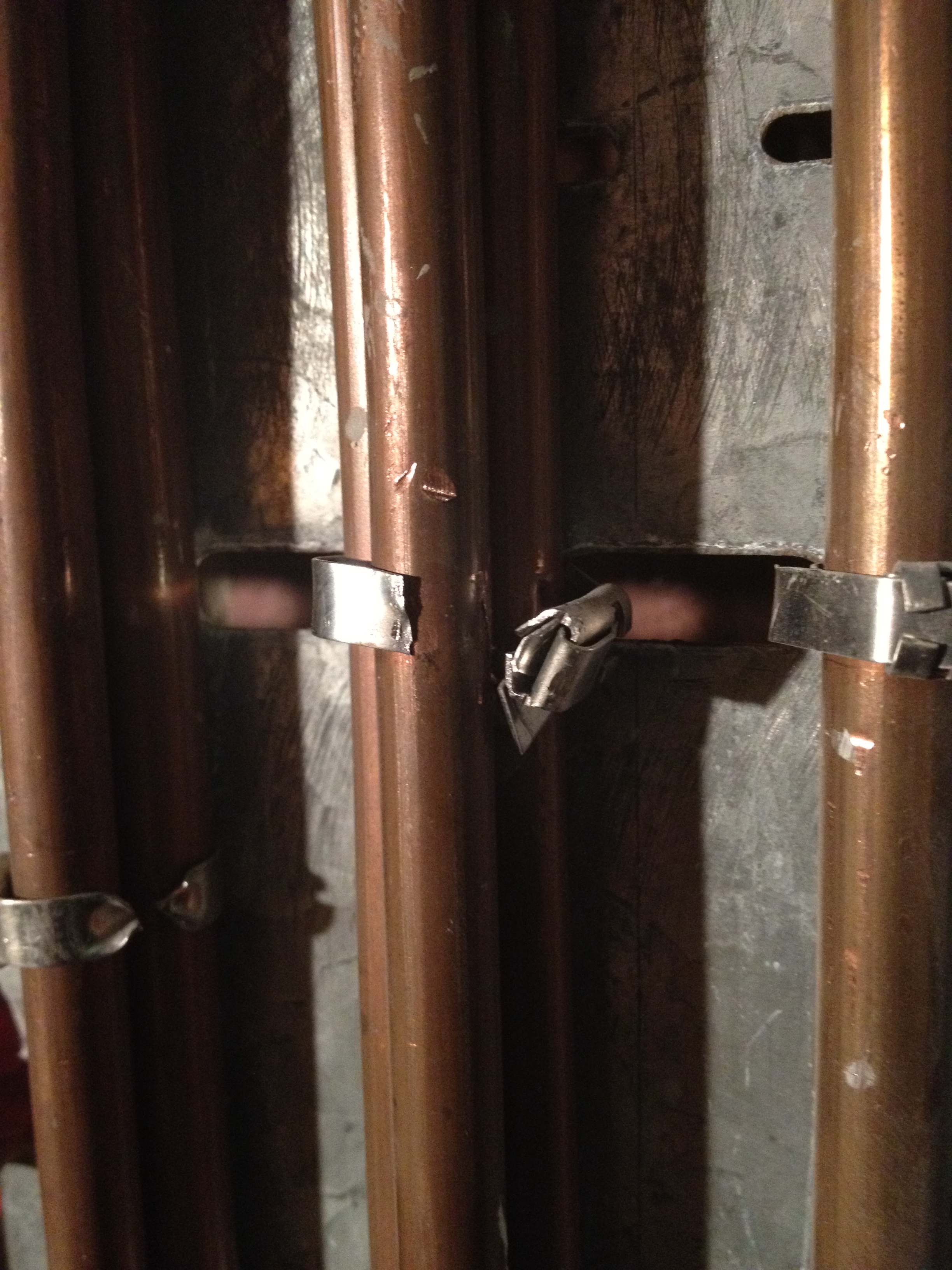
To me this suggests that over tightening of the straps has occurred, and, because the steel is harder than the copper cladding of the cable, the cables have been damaged. I suspect that a small penetration of the cladding may have occurred on installation, or as a result of vibration worsening damage caused by an over tightened steel band. Over time, moisture may have infiltrated the mineral insulation, breaking it down, until the a short occurred between the conductor and the sheath. My point is that this, in my opinion, constitutes a latent defect that would have eventually led to a fault, and that the client should seriously consider replacing the others cables that are in a similar condition.
The client’s representative, normally a mild managed man who just wants to be left alone, see things differently, however. He contends that either, the cable has been hit, or that excessive vibration has caused the cable, which he insists was not damaged during the original installation, to be cut by the steel strap. In either even, he insists, the fault, and so the cost, lies with us, the builder, and so he does not want to pay us for the repair work (~Aus$15,000).
I’m going to prepare a technical report form my PM about what the possible causes of the failure are, and what was most likely, and what the risk is of this happening to one of the others.
So there it is. What do you guys think? In particular, I’d be interested to hear if John has seen this before.
 Holdfast Training Services Trial Blog