Archive
“It’s all good to go”
“It’s all good to go”: Magnus B Crane Changeout
The replacement of Magnus’ B Crane was one of Ish’s major projects, and handed to me “all good to go” following two Value Systems Analysis meetings with the key stakeholders and an external agency who were brought in to facilitate it. The first was to investigate what weighting should be applied to four considerations that between them would be used in ranking methods of the B Crane change out. This was done by rating the importance of one factor against another and saying if it stronger, much stronger or very much stronger than the other. The outcome of this was more extreme than expected and showed that there was a 62% weighting towards (not) impacting operations, 22% towards constructability, 12% to the importance of having a straightforward implementation, and just 4% to minimising the cost. In my eyes the absence of anyone from the business side of things was highly influential on the outcome that suggested “quick and straightforward at any cost”.
In the second meeting had a few more key players: Gav from Renewals whose opening line was “So, is this where we confirm its an HLV then?” and Tamara from the financial side who was amused to see that the real cost had such a low influence. The next part of the meeting compared the different methods of crane changeout based on very few hard facts; essentially peoples’ opinions based on what they’d seen/heard in the past. Even more interestingly, we compared two named stick-builds (Sparrows and LBO, who all had supplied facts and figures) with three notional ideas of how a Heavy Lift Vessel would work, rather than named HLV vessels themselves. Funny old thing, the notional HLV came out on top, despite none of us having a real idea of what the implications are.
A week after Ish left we got Ian Alexander from Sparrows (our preferred bidder for lifting operations) in to discuss how they have worked with HLV crane installations in the past (bearing in mind the lowering speed can be 0.5 m/s there are some impact forces to mitigate against, amongst other things). They gave us an excellent presentation on their enabling works with the HLV Saipem on the Captain platform. In this instance the ‘super-fast HLV method’ required a total of 11 weeks work from start to finish due to all the other works required, such as moving some items on the platform (the HLV had a 2m “obstruction-free” zone), jacking up the crane that was being removed, and shutting down the platform as must be done for all HLV work. This has made us re-think the HLV option, although having spoken to Herema today (and also Ish), they have a much lower requirement for enabling works. The problem I now have, is finding the best solution based on some maybe flawed parameters, and then convincing everyone that I still have the best option by all accounts. To give rough figures, the full cost of an HLV is estimated as £15-20m; a Sparrows stickbuild will be £7-10m.
What I’ve really learnt from this is the seemingly obvious reiteration of three important things:
- Have hard facts and figures for all options when doing any kind of comparative analysis.
- Ensure key stakeholders are present at meetings that affect decisions where options can have £10m difference.
- Always remember Rule number one.
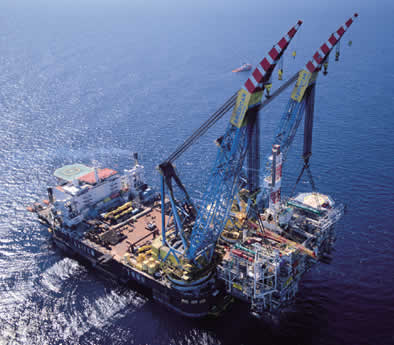
Figure 1. Saipem being used to install an entire platofrm. Is it overkill to use an HLV for a single crane?
Other jobs
ETAP ALQ. My Appraise report is nearly complete and having convinced my programme manager that we need to look at more POB, I have a feeling we may be asked more than the 30 originally planned for. To get the Area Operations Manager to attend my gate meeting I was given two windows this side of Christmas, but as I have found, I don’t want to make any decisions without the big-guns verifying it, so I have a date and time set. The go-ahead (looking at £15m for 40 POB) will be based on a business case that I’ve been told to not concern myself with, so all I need to worry about is the engineering of it. This will be an excellent job for my successor to carry on with the Define and onshore Execute of. The offshore Execute will be Summer 2014.
Magnus TAR jobs (5 of). These are all running OK, with the work on three of them being split to minimise the work done inside of the TAR so it can be completed after (outside of the time when a day equates to roughly £2m in lost revenue). My concern is that the work will be delayed so I am fighting to get buy-in from the platform for the project POB afterwards. The one that this is unlikely to be the case on is the Decommissioning work – there is loads more than expected (looking at <300 different parts of pipework post-TAR) and that is a lot of work: something like 300 man-weeks in the latest estimate! This non-TAR work will be surveyed in Jan and Feb so we should know more then.
And in other news.
I’ve hung up my running shoes for the year, having finished 4th (from 196 starts) in the 60-mile London to Brighton race, and 12th (from 150) in the Glencoe Marathon (gutted – was 2nd for the first 8 miles but piled in as soon as we started running downhill). Liz also did Glencoe and did amazingly, despite cutting her knee nicely in the first mile. Nearly £1000 raised for Combat Stress and the Muirhouse Youth Development Trust so that’s good.
Dougal is awesome but hard work – Roy Serevena, I really don’t know how you managed with all those dogs and children: Lisa must be a legend!
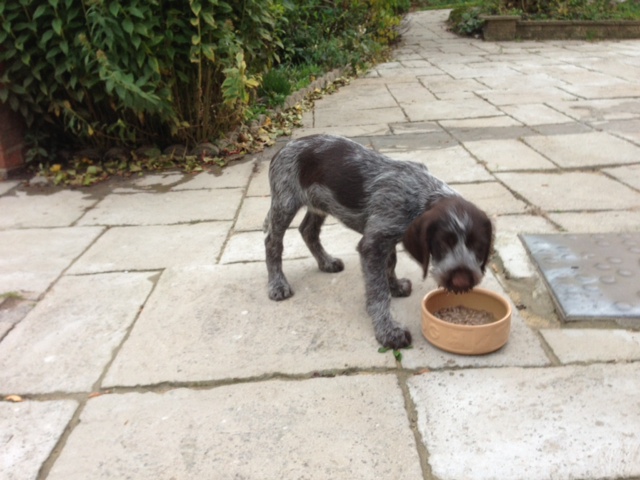
Figure 2. Dougal
Winter tyres are ordered and get fitted next week: it was -4 as I drove in last week (admittedly this was at 0500 hrs…). Perhaps a little cooler than things Down Under, but looks good for the winter climbing season!
 Holdfast Training Services Trial Blog