Archive
Superstructures, Site Visits & Surveys
SUPERSTRUCTURE
Maximising space and rationalizing the use of steel and concrete in Project Armada (The London Development) continues….. along of course with weekly Client changes to floor plans! The link to ‘design development’ is becoming increasingly tenuous as the completion of Stage D approaches. Demolition planning has started and the detailed Architects (conveniently based in New York!) have started detailing the retaining wall and foundation proposed scheme. In terms of a design objectives and development, The London Development has many similarities to the nearly completed Heron Project which I visited last week.
SITE VISIT
The Heron. WSP have recently completed Milton Court (now to be known as ‘The Heron’ and the Guildhall School of Music and Drama). The building is a 36 storey development comprising a six storey lower level structure for the Guildhall and a residential tower above the school. The unique nature of the building resulted in some very interesting design features. The main objectives were to provide an efficient a buildable scheme with minimum quantities of raw materials (i.e. minimize shear walls and transfer structures). Design development to Stage D recommended to following key elements
1. Steel Framed: Concert hall & foyer structure providing slim but strong vertical structure and address buildability issues associated with the ‘box-in-box- approach to acoustic performance.
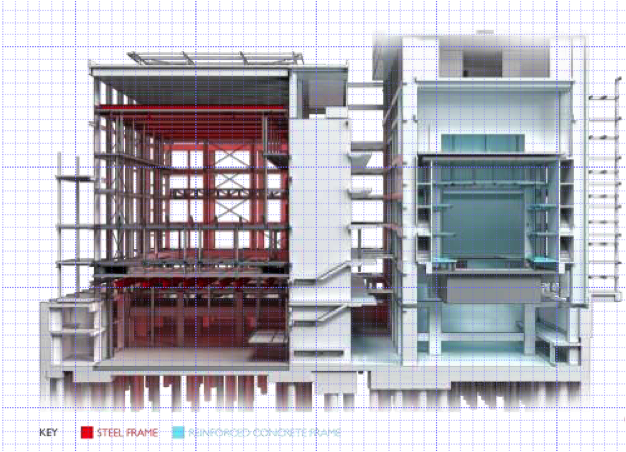 2. Concrete Framed: Tower and teaching theatre, compatible RC for the theatre and PT for the tower to provide flat soffits to all floor plates, good acoustic separation and a maximum number of floors within the stack and height restriction.
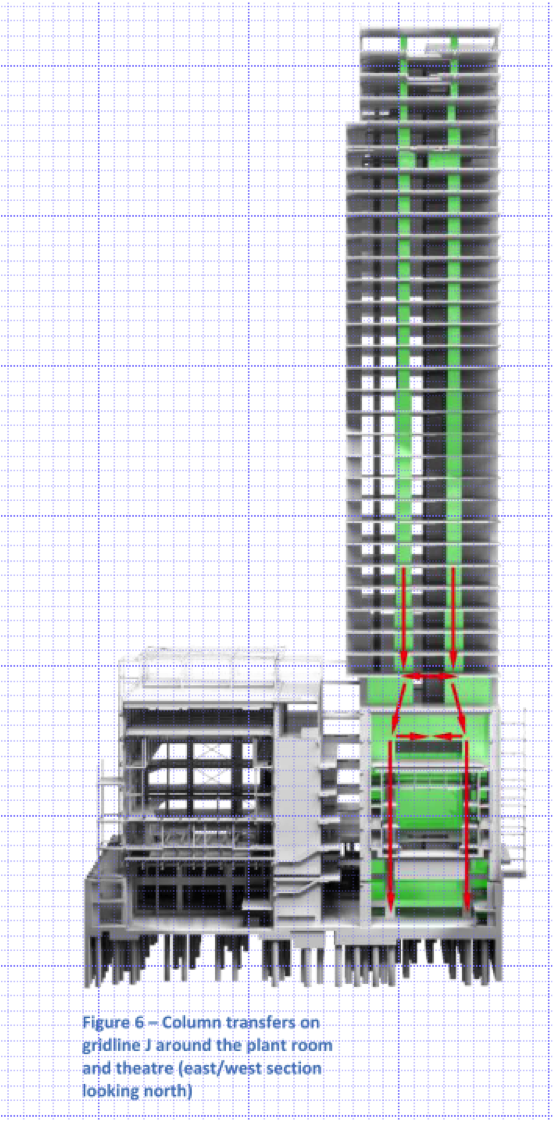
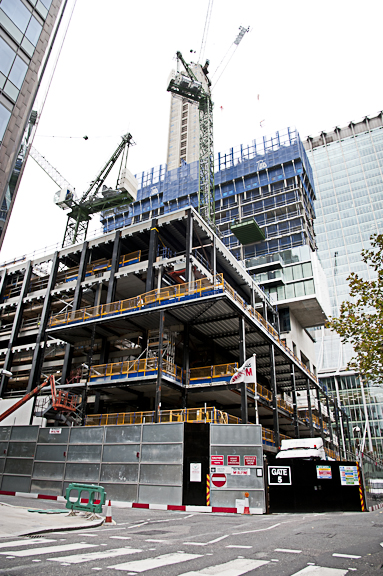
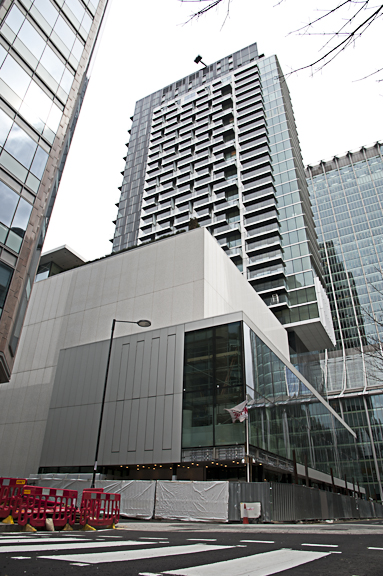
The Heron – before and after.
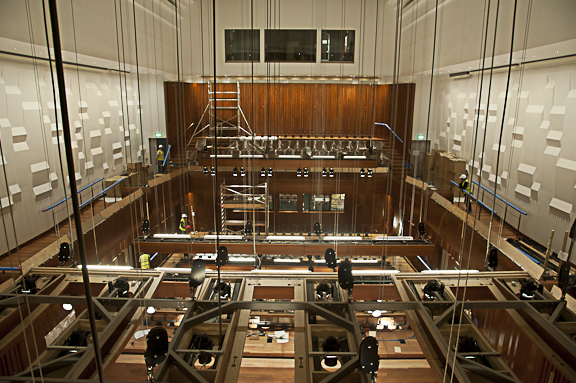
Steel-framed concert hall.
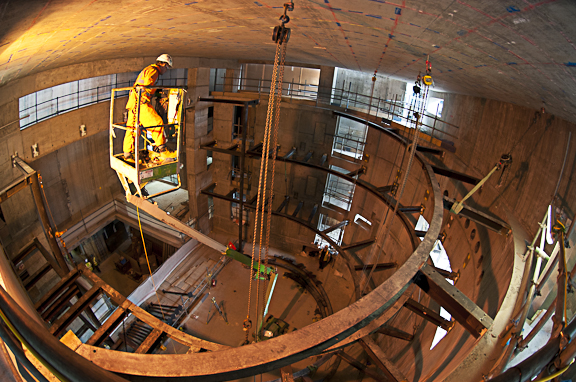
Concrete-framed theatre below residential tower.
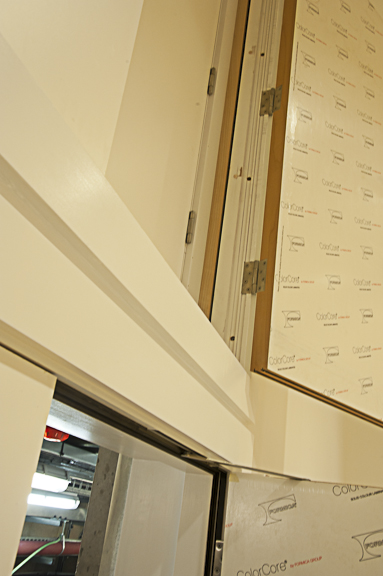
‘Box-in-Box’ construction joint, note separation void between boxes.
SURVEYS
Water Leakage Survey. Heron is one of London’s principal property developers. As part of the development The Heron acquired some basement space under the road, through to some car parking spaces in the Barbican. The acquisition of additional space in a 1960s development however comes at a price beyond that of the space alone. Movement joints within the Barbican podium have deteriorated such that water leaks onto Client’s potential parking spaces, and the basement on the other side of the road is now leaking. I had been initially tasked with providing retrofit waterproofing solutions for the podium slab, before the basement was also identified as leaking…!
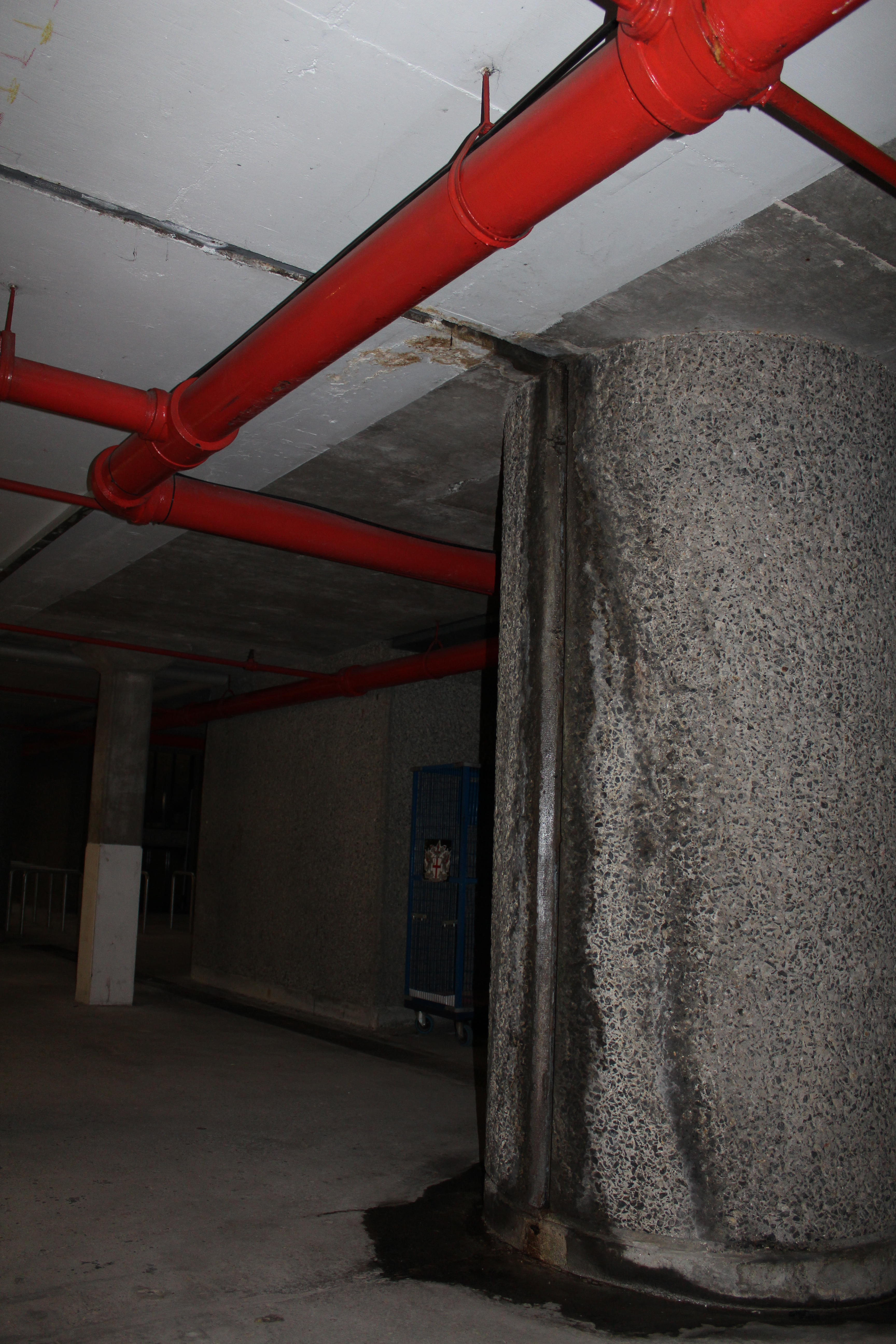
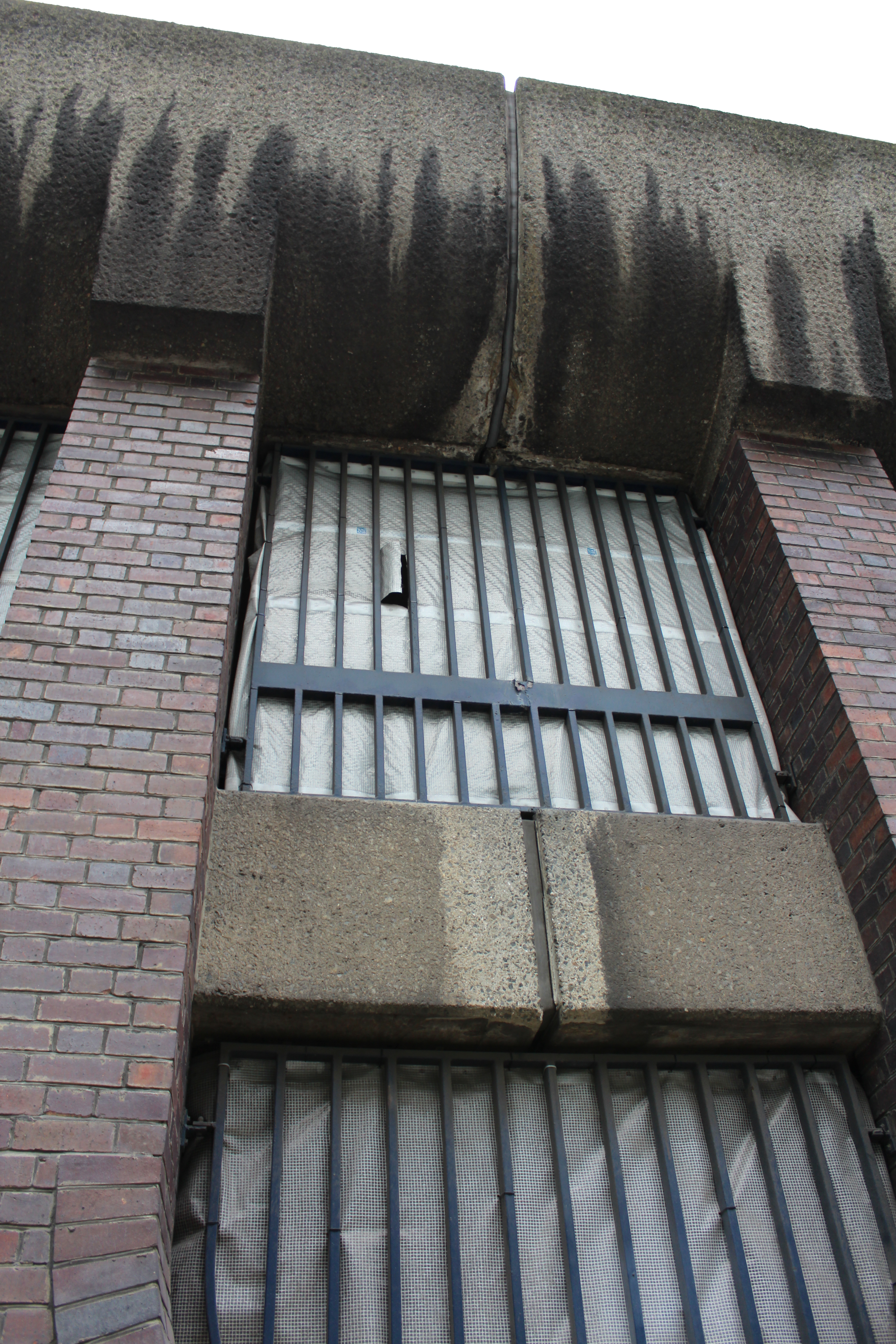
Movement joint in car park column and podium slab.
The picture below was taken 2 hours into the site visit to determine the cause of the problem and agree possible solutions. In attendance where the Client, the Heron Project Managers, the contractor SRM, City of London Surveyors, WSP, representatives from the Barbican. A total of 8! The eventual outcome of the visit was that the two issues were either mutually exclusive or the leaking basement was as a result of the leaking podium slab. City of London roads are treated as structures (i.e. the surface is deemed to be an impermeable layer) and as such additional waterproofing measures are not incorporated into road build up. Fine, until the road is dug up for services installation and maintenance! The waterproofing at site boundaries as specified by WSP does not extend the full pavement width and is not incorporated under the pavement lights adjacent to the Barbican car park. A number of possibilities were identified, all of which would see financial responsibility with a different party – funny how that added at least an hour onto the investigations! It was decided that a water test be carried out by the contractor using a Barbican fire hydrant and coloured dyes to establish the source of the problem……. so look forward to more exciting photos next time in colour!!! In conclusion, water is extremely difficult to trace through structures!
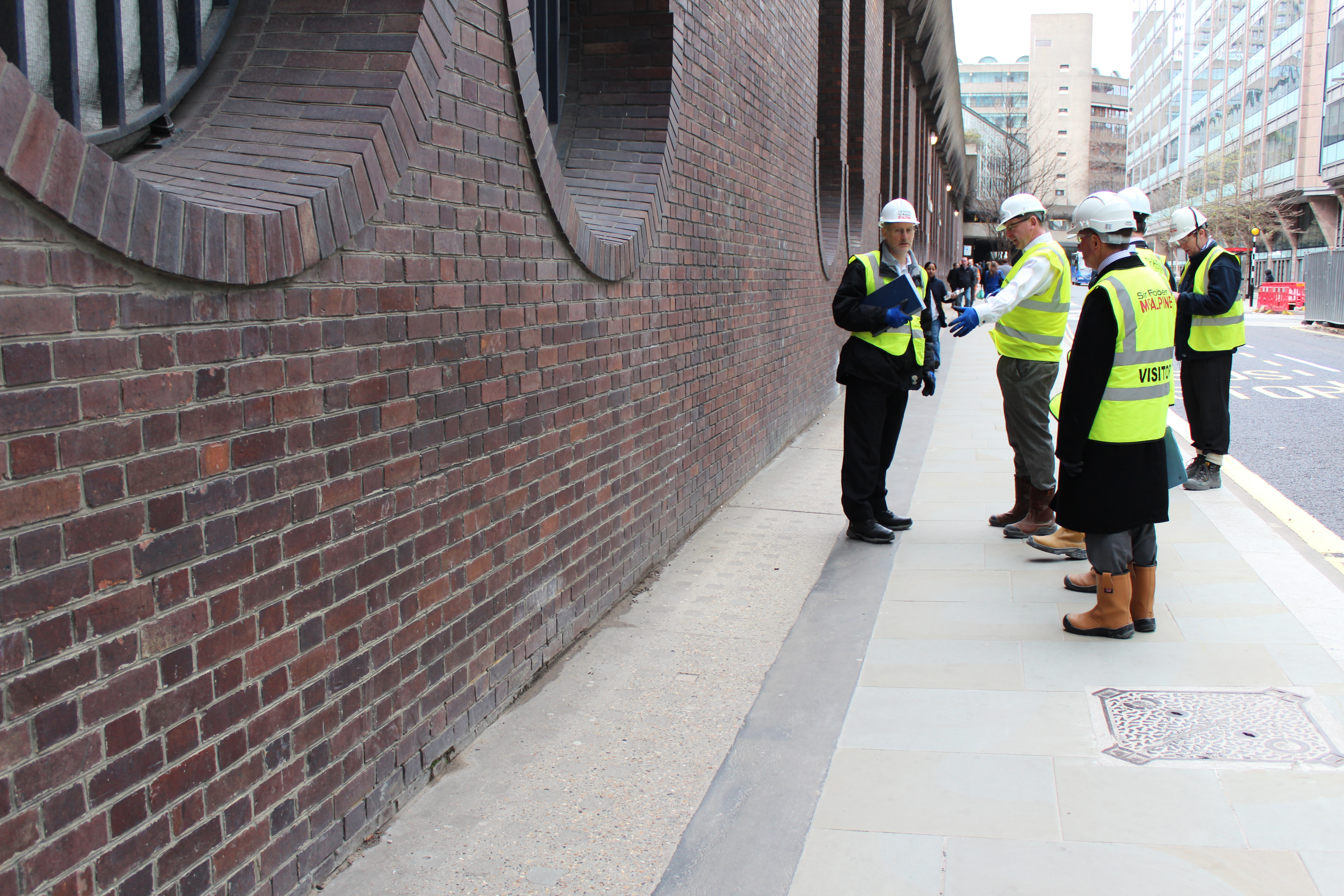
The water source identification team adjacent to the Barbican on the left hand side.
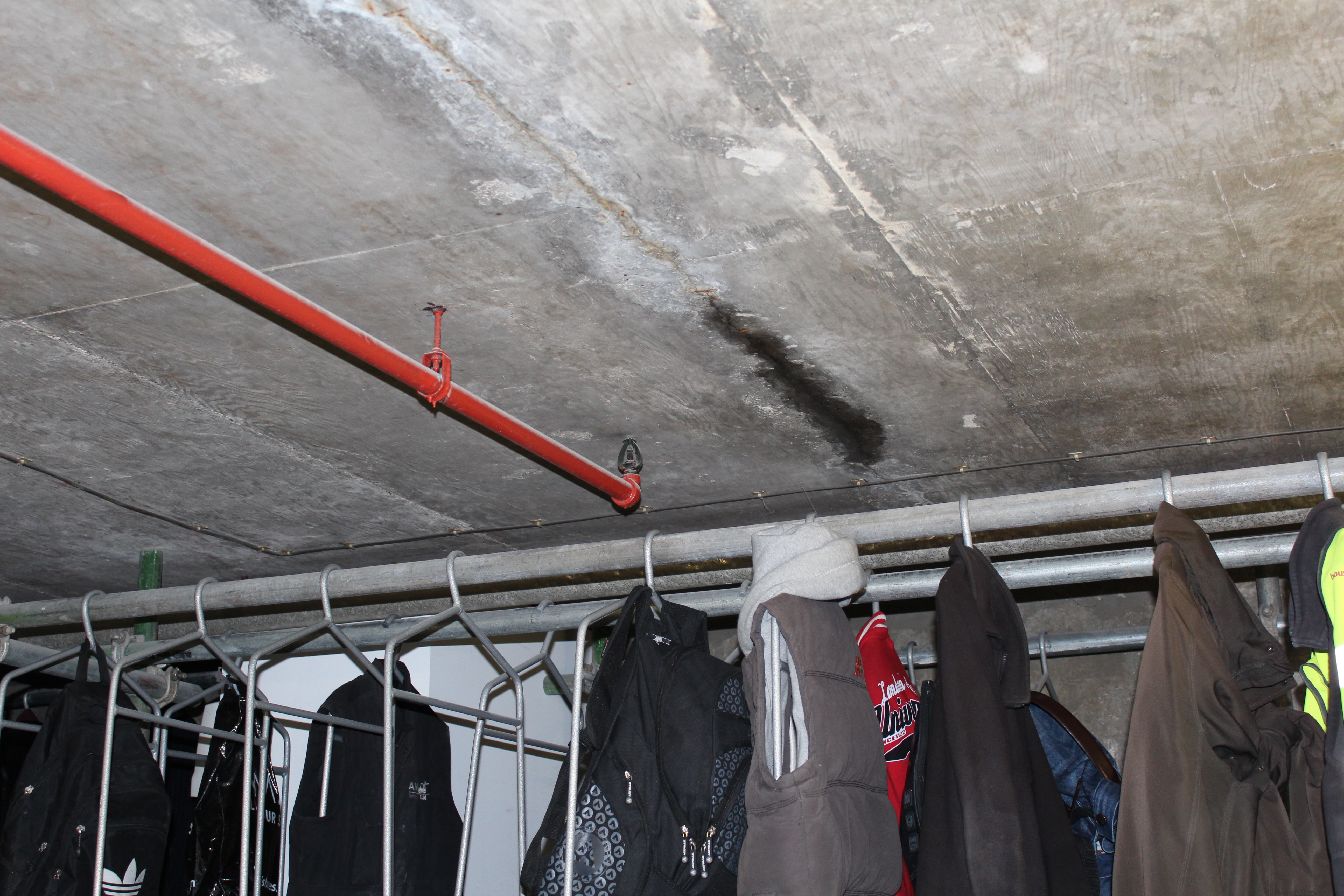
Tracing the water through to the Heron basement (on the right hand side of the above picture).
Employee Survey. On return from the site survey, I was approached by one of the Directors about my thoughts on the WSP employee survey, which are now mandatory in almost all large UK firms. He told me that the Structures department boss was very disappointed, surprised and concerned about the results. He asked me to put a few bullet points together (from an outside/military perspective) for a meeting the following day. After a year in industry these were my slightly de-militarised thoughts:
1. Survey results. Unfortunately I have not yet seen the survey results, however, from what you said I understand that there was a general consensus of apathy and negativity towards the way people feel they are managed and the company in general? The two main reasons people fail to complete, or adopt a ‘whatever’ attitude towards surveys is that they either:
a. Don’t believe they will be listened to.
b. Don’t believe that actions will be taken from the results.
This causes results to be skewed towards those who completed the survey (i.e. highly satisfied or disgruntled). Before deciding on any action, it is therefore important to fully analyse the results and carry out further investigation if required (i.e. interviews or meetings to determine the crux of the issues). For future surveys, techniques to maximise employee participation could be used (e.g. one company used charitable donations post 50% completion in individual units).
2. Response to survey. The next stage is demonstrating to employees that their opinions count and that they are a valued part of the decision making process. This can be simply achieved by communicating what the survey said and what actions have been taken as a result of employee feedback.
3. Engagement. Fundamental to dissatisfaction is an unengaged workforce. Engagement is quite simply meeting basic, social and esteem requirements of employees. Research show that “people join an organisation but leave a manager”! Engaged employees are proven more likely to share their views with their managers, take less sick days, have improved performance and productivity and be more innovative. Engagement is a reflection of a manager’s individual leadership qualities, and will only happen if managers have a clear understanding and are committed to realising the benefits of motivated and value-adding employees. This requires buy-in from all levels of the organisation.
4. Managers responsibilities. Every employee is different and hence effective engagement requires a very personal style of leadership. This involves managers making every effort to understand the needs and aspirations of their team (both within an individual and group context). This can be achieved through regular meaningful engagement: informal (daily/weekly), formal (6 monthly annual performance and potential reports and PDRs). Goals should be set at the start of every project which are clear and realistic, feedback should be immediate (and honest) and every effort should be made to match skill and challenge levels appropriately.
5. Employee responsibilities. Employees should be incentivised to optimise their performance and potential, as well as contributing to the wider company ethos. Manager’s reports should reflect employees levels of engagement, and they should be rewarded accordingly (responsibility, position, project assignment, promotion*). Engaged employees should be empowered to instigate change, from changing dysfunctional or unpopular processes, to tasking graduate engineers to get maximum participation at a company team building event.
*I appreciate that there are always financial constraints however, fewer quality, ‘engaged’ and appropriately salaried personnel are much more valuable than many short-term ‘unengaged’ employees.
I have since been asked to a follow up meeting with HR…… sports afternoon Wednesdays, early knock off Fridays and ‘enforced fun’ socials here we come….!!!!
 Holdfast Training Services Trial Blog