Water Depressurisation
Second week back from summer hols and things are progressing nicely. The shaft construction is becoming a bit repetitive so I thought I would give the spraying a go for my self.
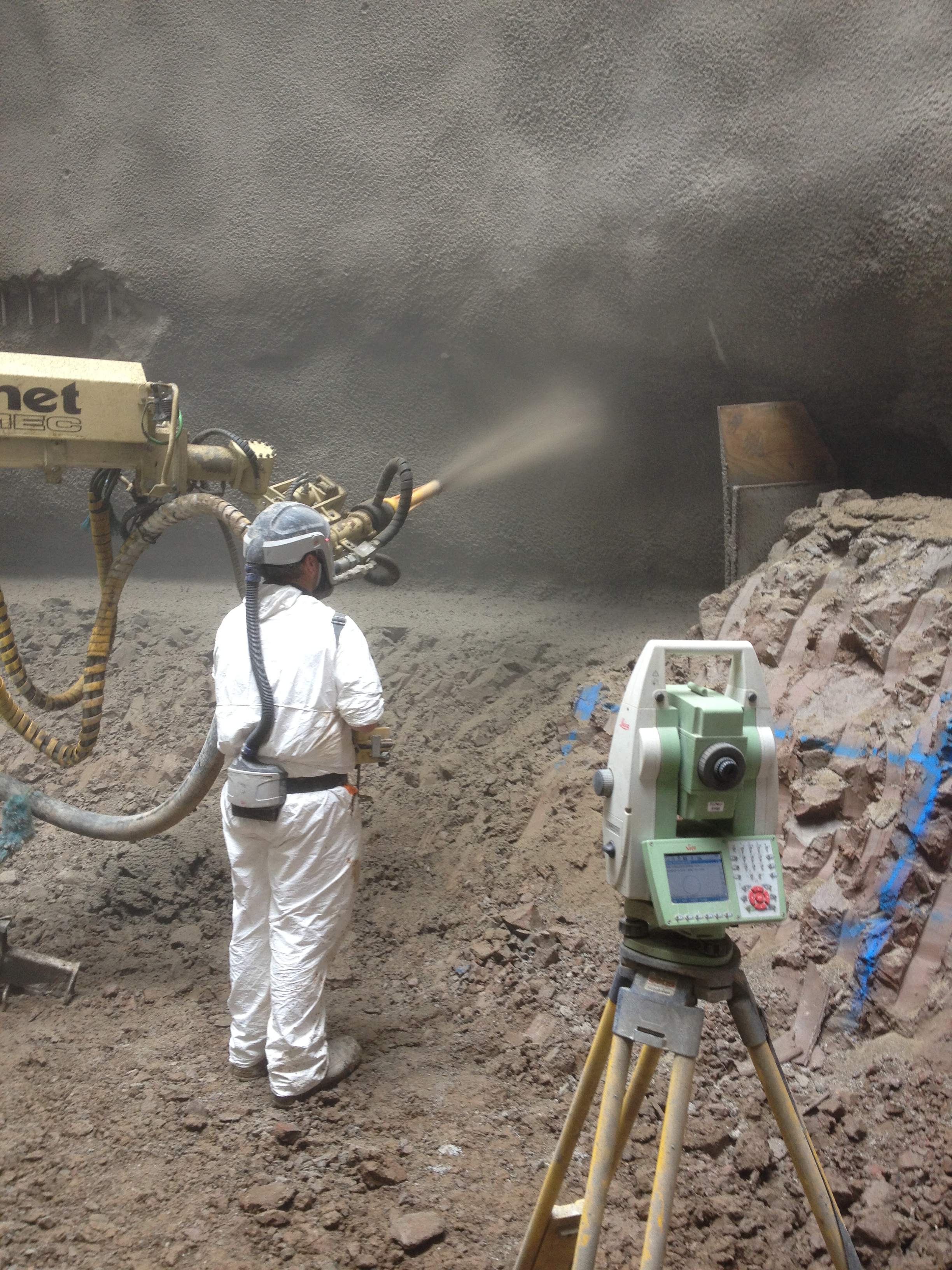
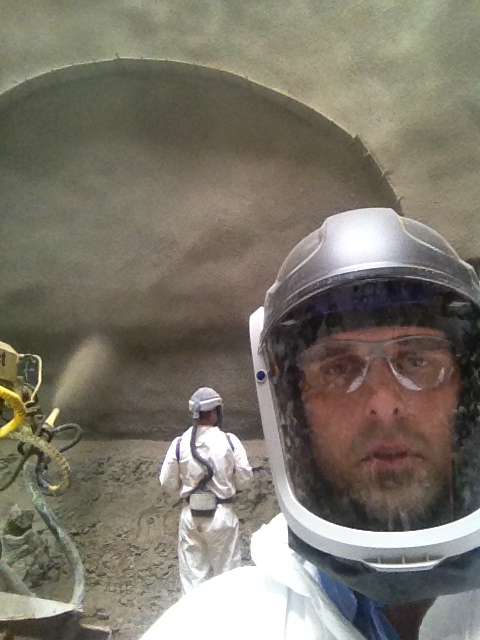
Some of the nozzlemen are the highest paid workers on site, which is quite interesting as the course to qualify is only 5 days long.
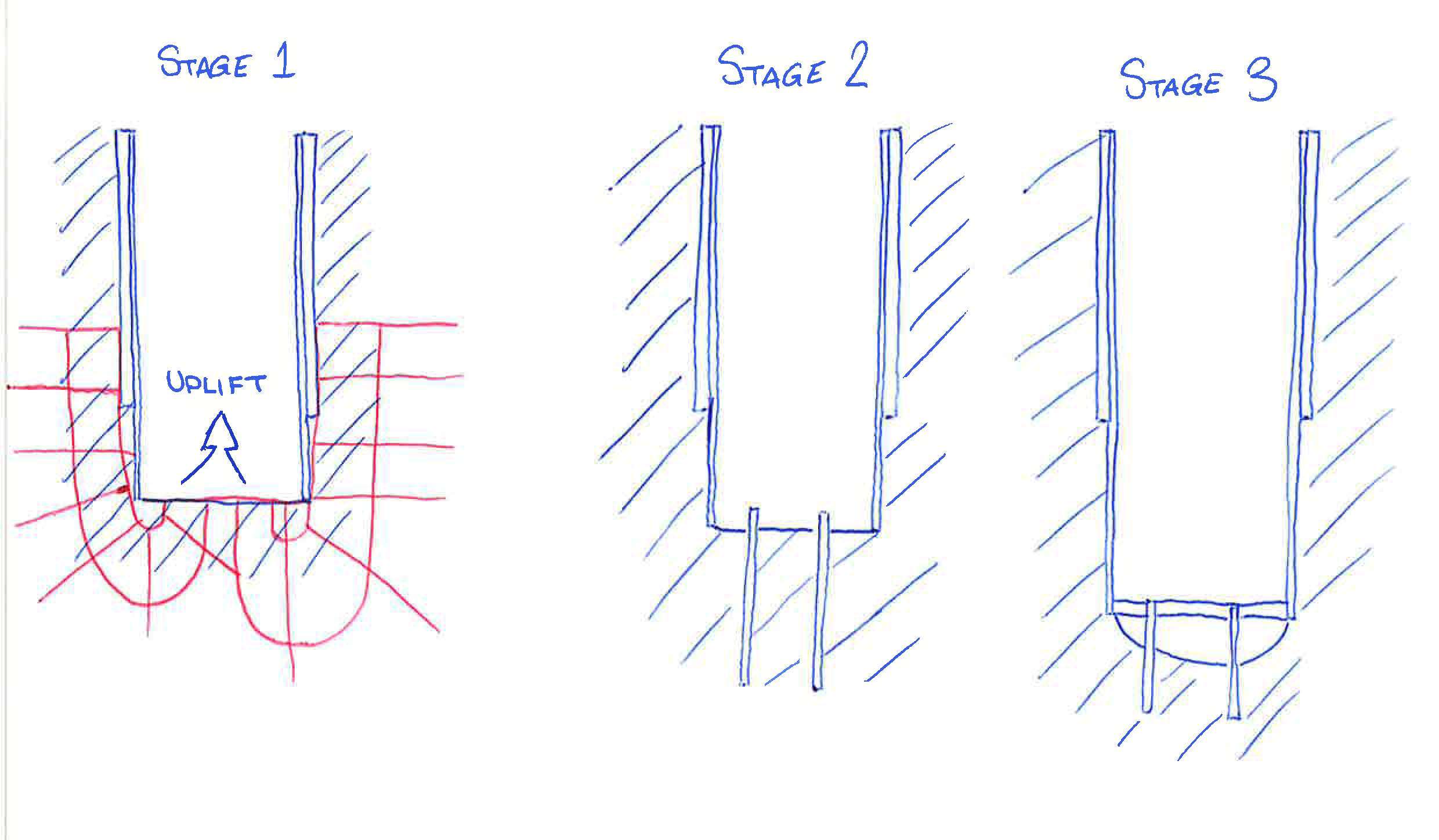
Anyway we are getting close to the base slab now and that means that we need to depressuirse the water, to ensure there is no up heave when constructing the slab. We contracted this phase out, essentially constructing 2 x 11m small boreholes in the bottom of the shaft. The photos below show the sub contractors digging the boreholes.
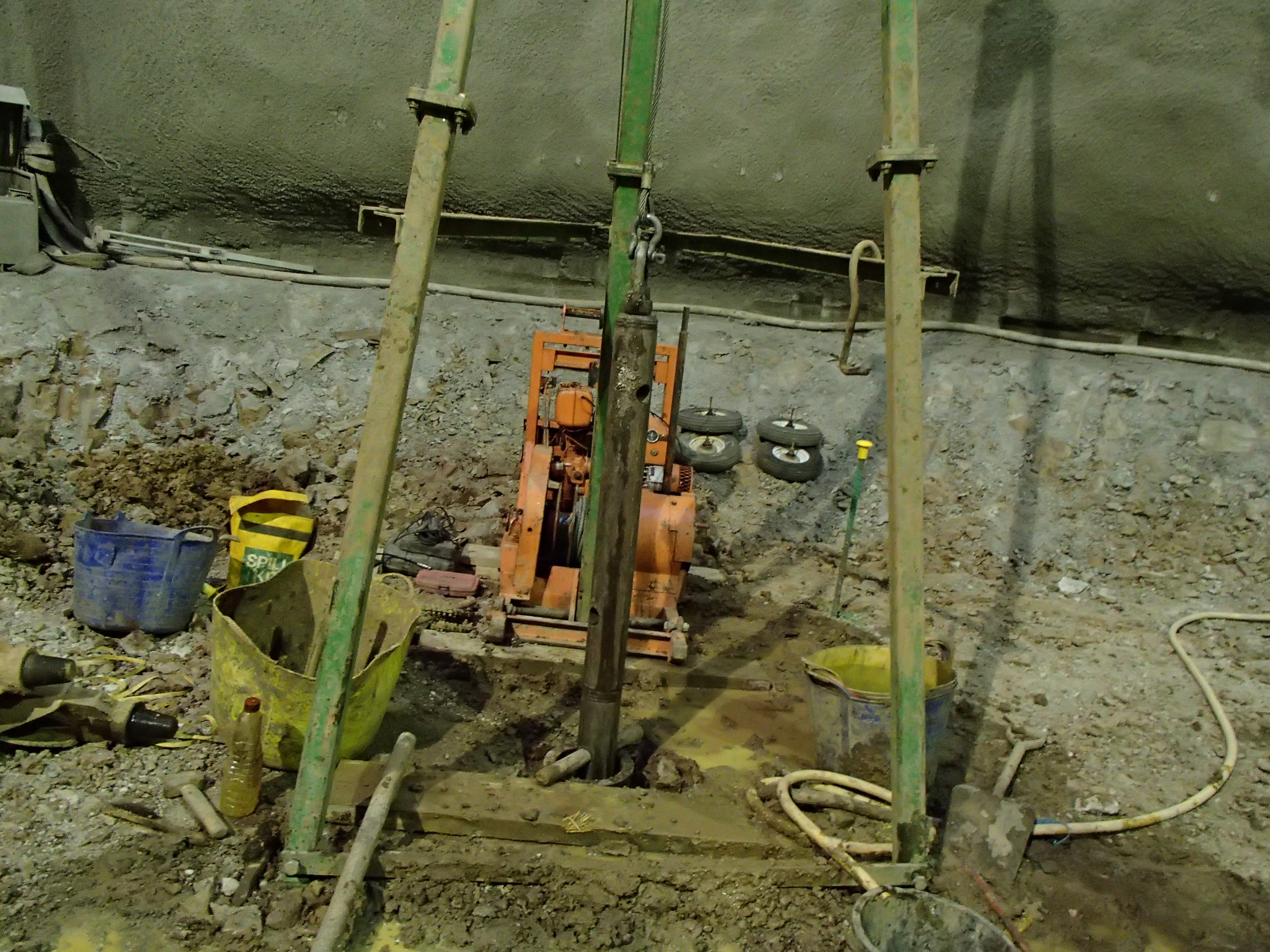
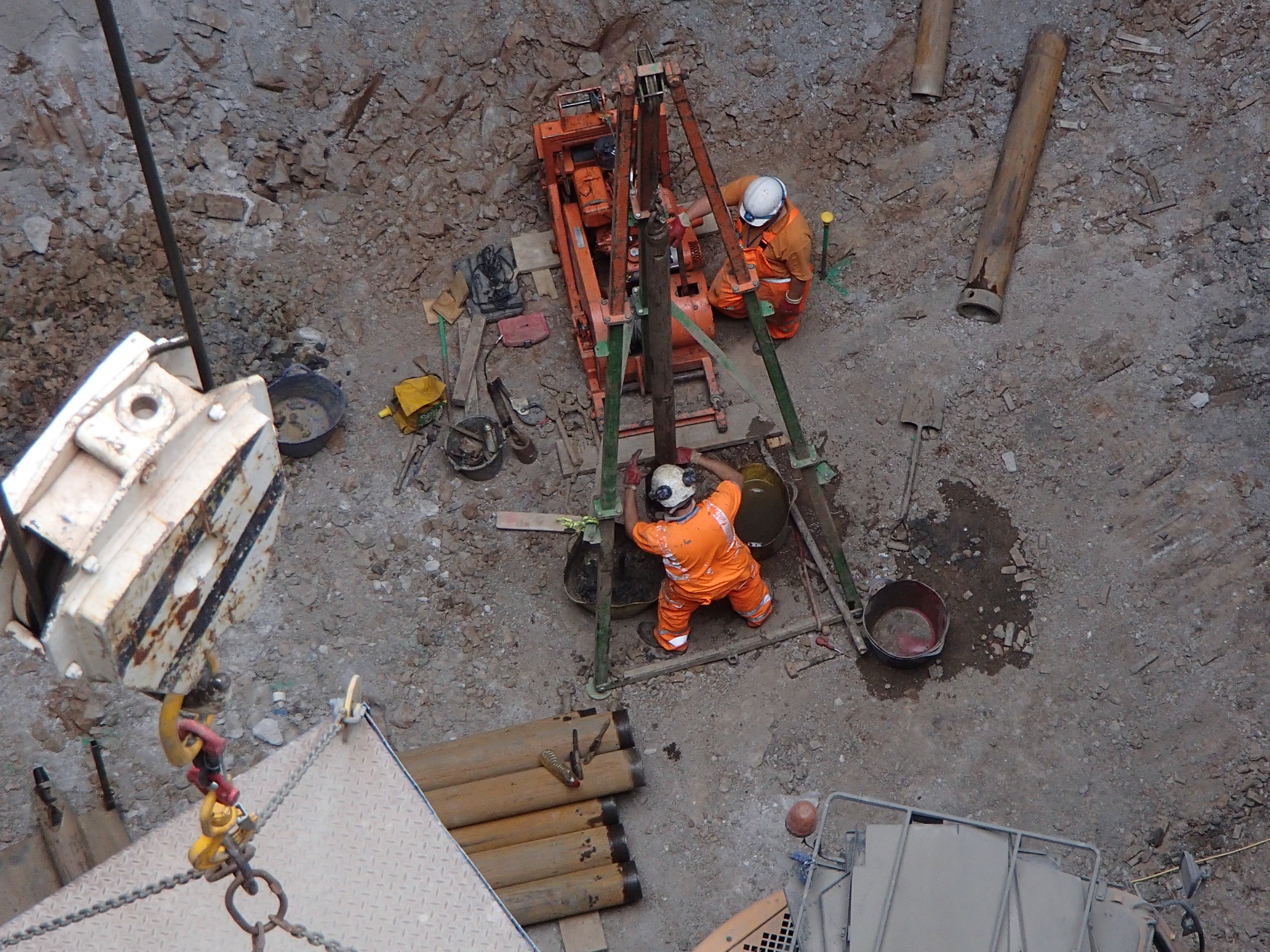
Its a very simple solution to potential up heave of the base slab. The two boreholes will allow the water (although there is no water as we are in the Lambeth clay layer which is more like mudstone) to release the pressure. Theoretically once the base slab has been cast and the slab has gone off, the boreholes will be closed off and the base slab will take the force. However as I said there is no water in sight any where).
I have just attended the Waterproof membrane trials at Bond Street. THis will be the next phase, due in about 1 week. Essentially it is a large roll of waterproof membrane. THis roll will be lowered to the bottom of the shaft and pulled to the top, where it will be nailed in place. Once the membrane is in place the secondary/in situ lining will be constructed. THis is the poured concrete. I have just completed the TW design brief for the shuttering. THe shuttering will need to be able to handle lifts of 2m. THe sub contractors have estimated a 28 day period to complete the in situ lining, I am extremely doubtful but I remain optimistic.
I am currently eyeball deep in a CE (Compensation Event) trying to calculate the time delays caused by out of spec concrete. However my next post will probably be about the CE procedure and the lessons (if any) that I have learnt.
Just managed to book myself on the ICE presentation about the Super Sewer construction in London. Looks like it will be a good talk on the 19th Sept followed shortly afterwards by the ‘Hidden Shafts’ talk on the 02 Oct. Let me know if anyone else is planning on going to either of these events.
 Holdfast Training Services Trial Blog
There’s something very worrying about the picture of you in the gimp mask…….nevertheless
you’d expect me to comment on the base heave issue…..first ..not Lam,beth clay but you a re in the Lambeth Beds and the hidden horrors are as follows:
-rapid changes in lithology
-clay with irregular water-bearing sand bodies
-perched water tables – ask Rich P
– hard bands that obstruct boring, drilling, excavations and piling
-flint gravel beds, which are water bearing, and may restrict boring progress and increase wear of cutting equipment
lignite, which may provide differential settlement
-deposits infilling dissolution features in the underlying chalk
-fissuring of clay, potentially leading to instability in cuts
there were also some oxygenation issues in tunnels cut into Upnor Formation sands
Anyroadup…..they can be clays and they can be other stuff … lovely stuff for the CPR but you need to be clear what the pumping solution is trying to achieve in the base. Generically it will be to increase the strength by decreasing the pore pressure and increasing the effective stress…but this could be by straight dewatering ( if essentially coarse grained) OR using ejector pumping to generate a pore pressure reduction ( if fine)… My guess would be that they would go throught the fine to dewater the coarse to reduce the pwp in the coarse below the fine ….if you see what I mean…..BUT it’s a real obvious question for CPR….figure it out then put in a ‘reel them in’ sentence in your project report…’ the excavation base was stabilised using a dewatering method drilled from the shaft base’
Mike
Looking at the pictures it looks as though the nozzles are guided by remote control and so all the operators need to be is competent with Play Station 4 games. Was your attempt reworked to bring it to spec?
Kind Regards
Neil