Archive
Hot salty fluids
As previously mentioned I have been supervising bringing the utilities onto site, so far it has gone fairly well I had to decide to abort the BT ducting as there simply wasn’t going to be enough space for the work to go on, this will be revisited in the future as the disruption will only impact on site activities rather than the public. I had to deal with a complaint from the Southern BBC Engineering and Operations Manager which was quite an uncomfortable phonecall, it felt a little like OPTAG where the SIMPRESS are sticking a camera in your face and trying to trip you up with questions.
The geothermal element of the installation is quite interesting, what I didn’t realise is that the Southampton geothermal borehole is the only functioning one in the UK. The original project was started as part of a Dept of Energy experiment in the late 70s, the DoE decided that it wasn’t a viable option but Southampton City Council decided to pursue it and went into partnership with private enterprise and started the Southampton Geothermal Heating Company, there are some other complex company arrangements that involve Cofely GDF Suez that I still don’t truly understand but it’s just minor details. Because the City Council are still involved in the scheme it seems that connection to the scheme is often a planning condition, bribery by another name.
Anyway the scheme works something along these lines (see Rich aged 5 sketch).
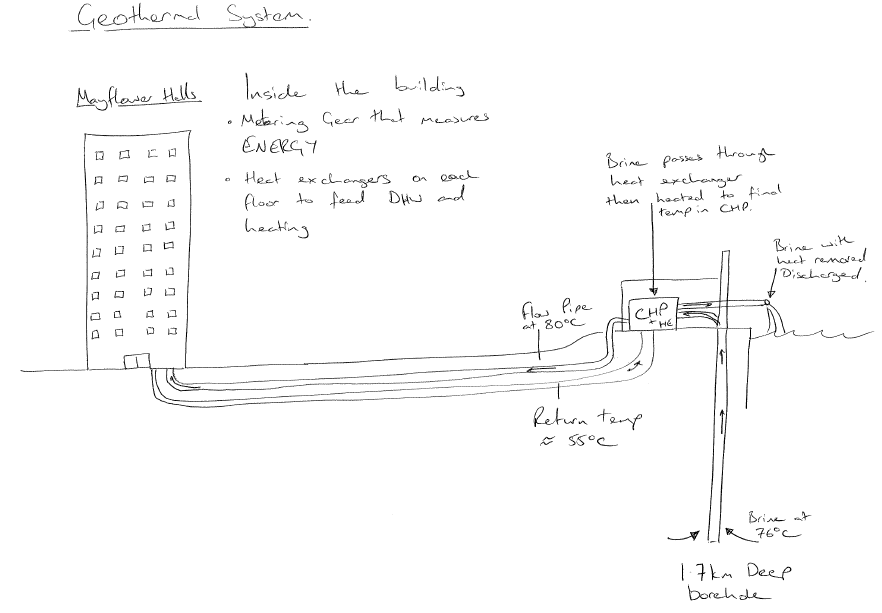
The borehole is 1700m deep and taps into a geothermal aquifer containing ‘ancient’ brine at 76 degrees Celsius (the bit I can’t quite get is why it needs to be ancient and if it is it must take a while to recharge) a pump at 600m deep draws the water to the surface it arrives at about 70 ish degrees. At this point it goes through a heat exchanger to with fresh water and the cooler brine is discharged into Southampton Water. The fresh water temperature is now topped up to 80 degrees using some combination of Combined Heating and Power plants (CHPs) conventional boilers and biomass boilers. Once the desired temperature is reached it is them pumped around the distribution network that runs under Southampton. In key buildings such as the Civic Centre there are additional boilers that maintain the temperature of the network.
A building that is using the system has a flow and return pipe plumbed into a metering rig. Crucially the metering rig allows the provider to measure energy used, by monitoring temp in, flow through and temp out the clever computer works out how many MWh of energy have been used, I guess this has something to do with specific heat capacity and other such stuff that GCSE physics mentioned. The demand is controlled by the BMS which decides to raise or lower flow as required. There is a limit on the return temp and the contract specifically states that it must be around the 55 degree mark.
The flow pipe can flow in both directions (not simultaneously for the confused Civils amongst us, I stopped short of asking the stupid question of how that works, instead choosing to nod sagely) depending on demand. So if a sudden demand occurs near the civic centre CHP and pump it will be fed from there and the CHPs and pumps are the other extremes of the network pump water inwards to fill the ‘gap’.
Once inside the building I think ( though need to check) I think it goes through a big heat exchanger in the plant room which pumps it around what I suppose could be described as a ring main and then on everything third floor smaller heat exchangers steal heat away for the DHW and heating systems.
All the connection has been made onto a live system in what they refer to as a ‘hot tap’ the provider have been banging on about it for weeks now and made it sound really exciting. It wasn’t, just a couple of blokes all the way from Scunthorpe with a drill, no steam, no blowback nothing.
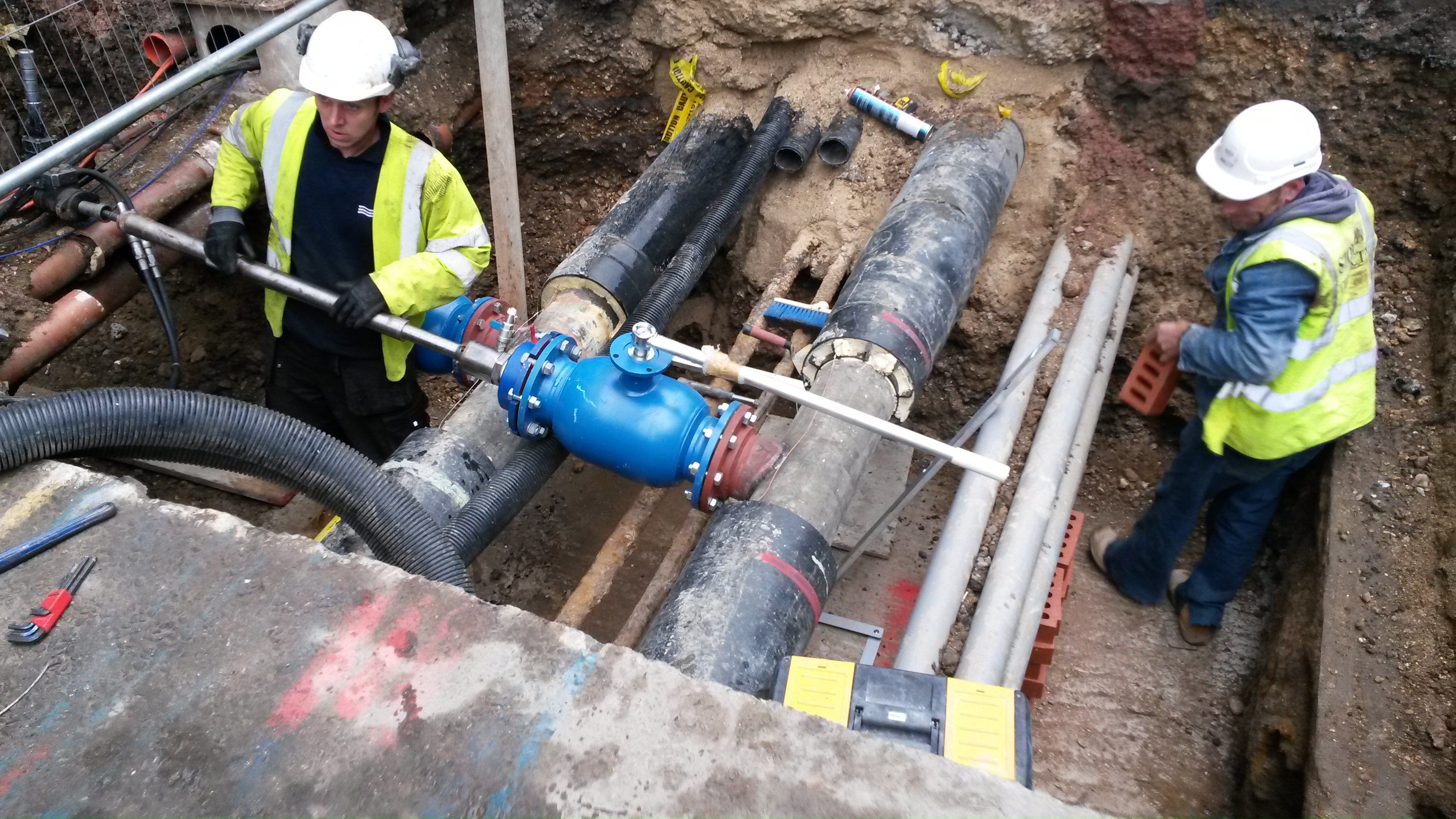
What a big shaft. Note all the services running through the same small area of road way, at least half of the ones seen behind the guying drilling shouldn’t have been there.
M’s I prepare for the questions I can’t answer.
Mark, in all seriousness if you’re excited by this they’d be more than happy to have you come and look at all the engines and other stuff that moves.
The Devil is in the Detail – Closure
Well, not quite.
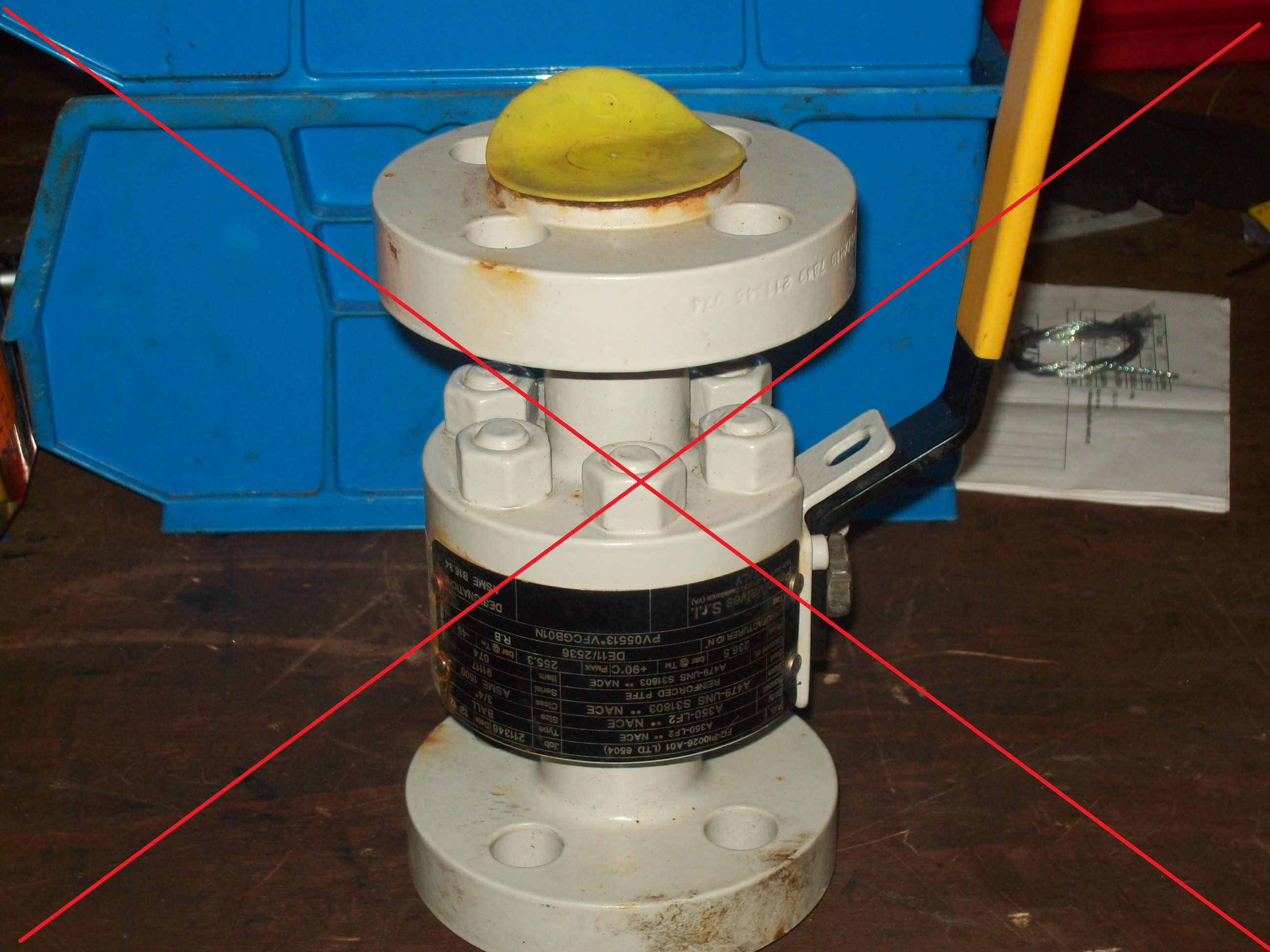
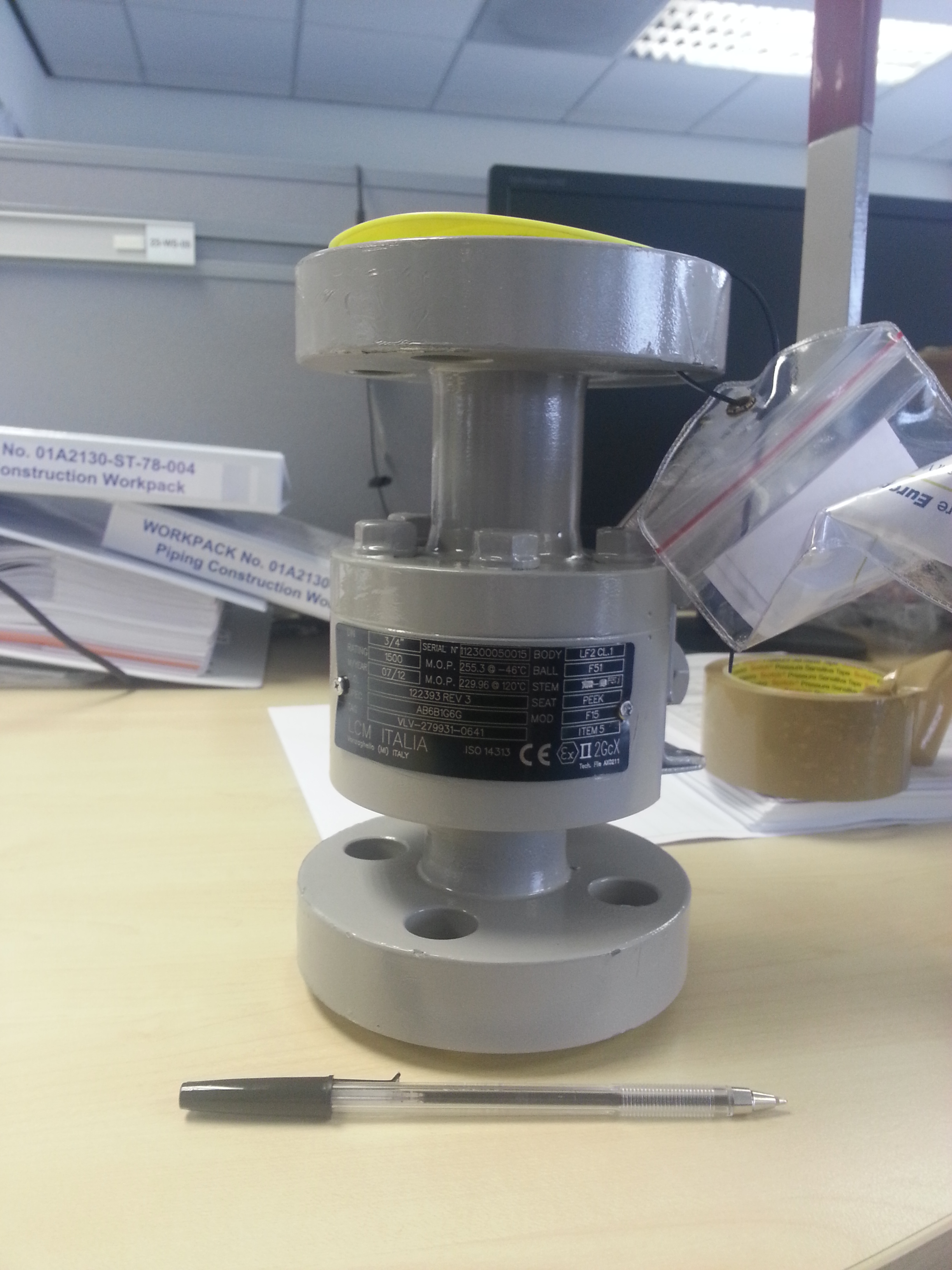
When presented to the Technical Authorities, one of them noticed that on the valve plate it stipulates a maximum design temperature of 90 DegC, not ideal on a line that can see 175 DegC. This was missed at every step along the way and set our meeting off to a bad start. Luckily Woodgroup were able to offer up a ringer that was suitable for service up to and beyond 175 DegC. However this new valve had had the valve stem changed out, but there were no certificates to QA the material used. As a work around I got agreement that the valve could be fitted for leak testing, thus allowing MC1 on 28 Sept, but to be used in hydrocarbon service it would need to Positive Material Identification (PMI). PMI would have required for a trained person to be mobilised with the equipment (think speed gun), so I gave the Asset a choice, PMI the in place valve or we fly out a ringer with certs complete. They went for the second option and so this valve is now fitted and I am left with the glamorous business of ensuring the deviation is recorded in the change management system – queue much chasing after people, bullying and coercion.
If you are interested, here is what the most expensive valve in the world (gram for gram) looks like…
The real drama didn’t start until close of play last week and luckily I’ve not had to get too involved. On Thursday the ACE Engineer responsible for developing the commissioning plan highlighted the fact that the test pressure stated on the piping isometrics was some 30 bar lower than that required by the piping specifications. Following some calculations by BP it appeared that the incorrect temperature factor had been applied to the design pressure to calculate the test pressure (1.5 instead of 1.75) resulting in this discrepancy. This quickly blew up into quite a large issue between BP and WGPSN, with WGPSN spending the weekend checking all of the pipe work in the Coolers project, then all of the pipework in the Clair TAR and then all of the Pipework in the Magnus TAR. A considerable expenditure on Wood Groups part to ensure that, while the pipe work did indeed fall short of the required standard, it was more than suitable for service. Part of the issue lies in the way that BP specifies pipework on assets which is flawed in that it is a massive over estimation in most cases. Ultimately the situation has been justified and there will be no requirement to replace the pipework, which is a massive relief, and the hullabaloo that it caused nicely distracted everyone from the valve issue and I have managed to get it sorted in the back ground.
In hindsight, I should have spent more time when the valve issue was flagged up restraining WGPSN to ensure that we had the right solution. I allowed us to go forward and present a completely inappropriate valve to the TAs and it was only luck that we had a second, more suitable, option to present to them. I am now in the process of trying to implement these tactics to the new issue, Independent verification.
OSCR Regulation 19 mandates that IVB is carried out as a check calc for the project to ensure that disasters like Piper Alpha and Deepwater Horizon don’t happen in the North Sea. There are 20 days until the system is due to go live and I just got handed 23 pages of comments that require response from WGPSN. The clock is ticking once again.
In the background I have also re-written the project Approval For Expenditure to make sure that I don’t run over budget. I like the philosophy of moving the goal posts and in this case it was agreed. My request was for a cool million and it should be approved shortly, unfortunately they BP won’t be giving me the 10% commission I requested.
All in all, good stuff for CPR methinks.
 Holdfast Training Services Trial Blog