Things fall apart…
There is a genuine BP post on the way, just as soon as I finish this TMR…until then some comments on the following would be appreciated. I have been providing some engineering advice to my old housing association in Woolwich over the last 3 or 4 years. Over Christmas there was a roof leak in one of the upstairs flats caused by the structural failure of a roof air vent as per the pictures below.
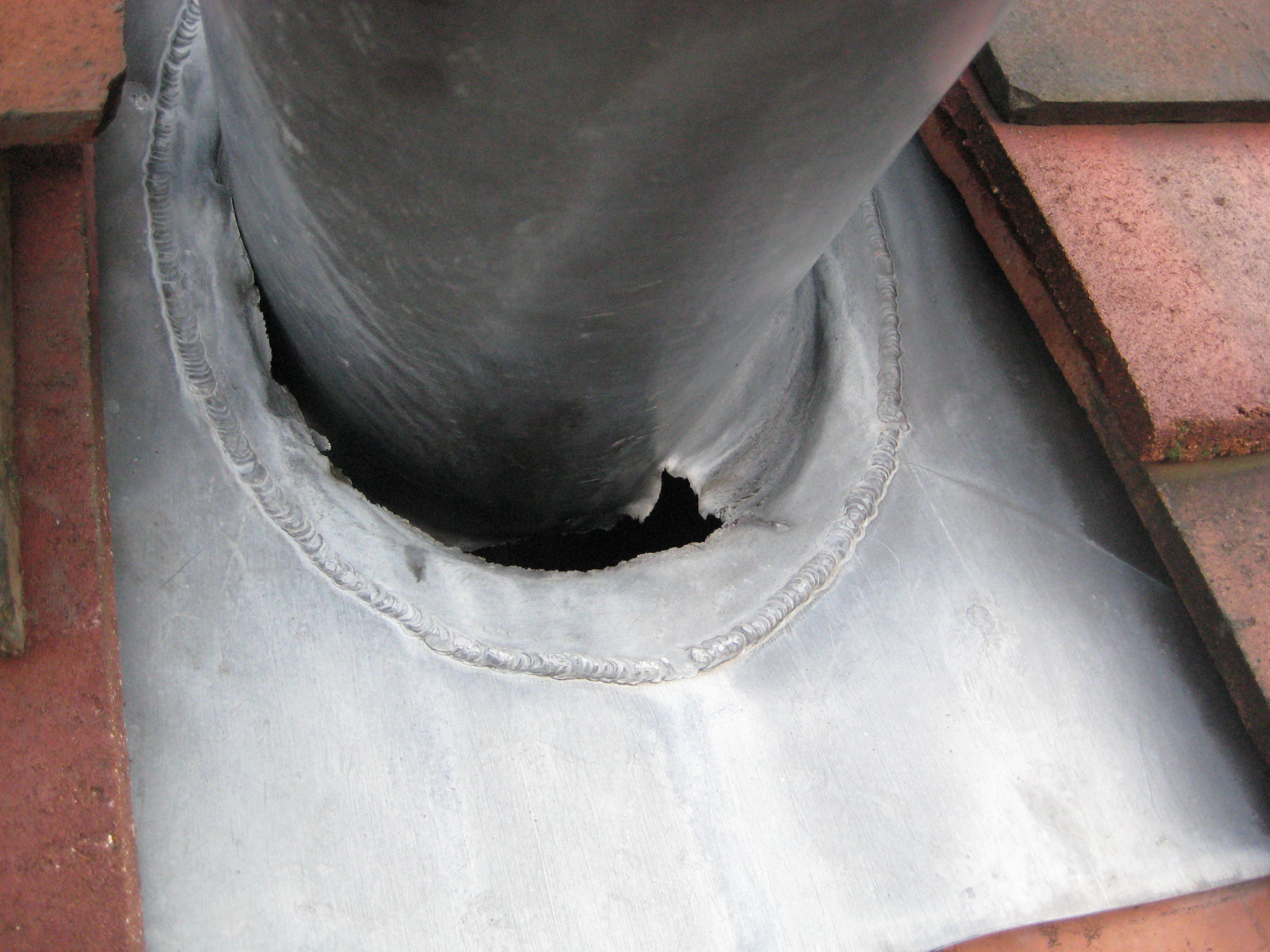
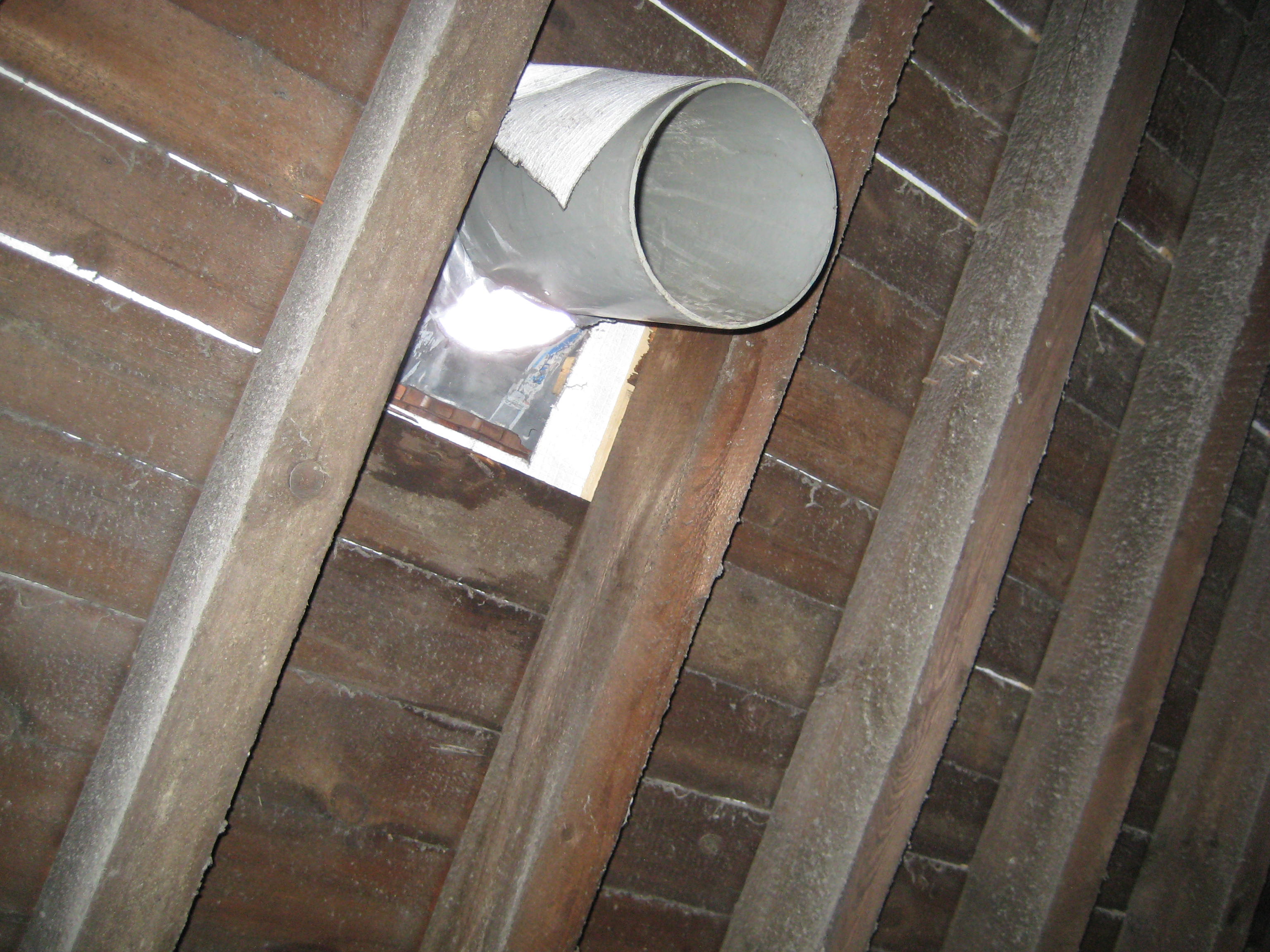
The only thing holding the vent in place was the lead flashing which, under wind loading, has failed quite catastrophically as can been seen above and below.
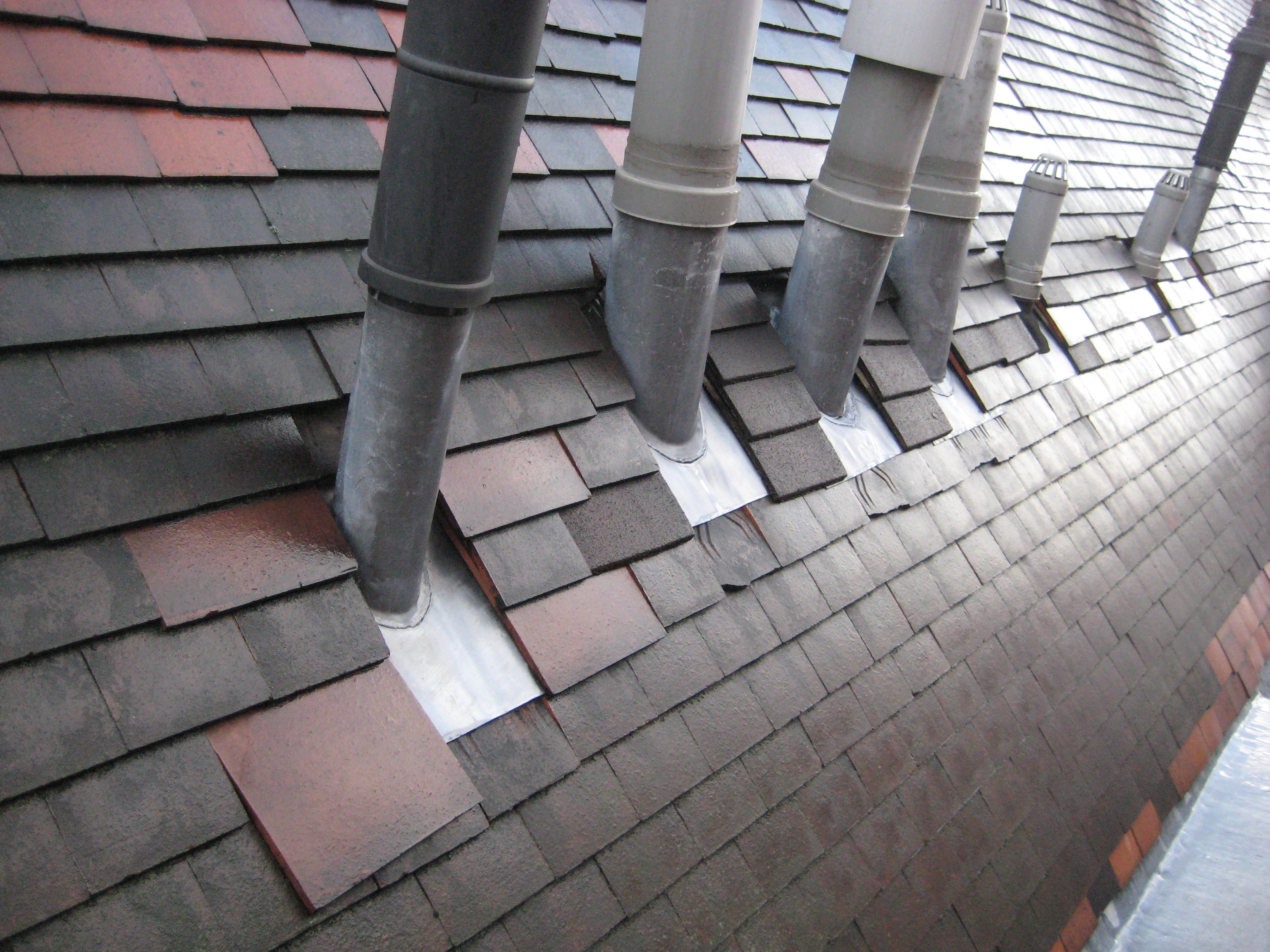
Below is an example of the stack arrangements on the roof, the third stack in is identical to the failed one and is clearly already starting to buckle.
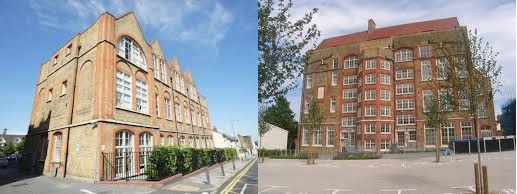
Below are pictures from the front and side of the development. The stacks are positioned in the valleys of the roof and can’t be seen in the photos, but it gives you an idea of the size and shape of the roof, the elevation in particular.
My first thought would be that stacks at this elevation, on a hill and overlooking the Thames and a lot of flat space, would be subject to near constant wind loading. I would have expected something a little more robust holding them to the vertical than a few mm of lead flashing. However, I am not expert in roofing design and my first assumption is that this would be a standard building practice that, in this case, should have avoided/improved upon by the architect/site engineer. I have advised the Residents Association request that Gallions inspect the remaining flues and vents as I am sure that this is going to be an issue common to most of them (especially going on the jaunty angles in the photos).
There is mounting evidence that the developer has cut numerous corners, which the housing association (Gallions, now Peabody) failed to pick up on when taking over the building on completion. I am interested in your views as to whether this would be another one…
 Holdfast Training Services Trial Blog
Out of interest are they purely for letting air out of the roof space or are they meant to be attached to other features? They are a bodge job, emphasized by the various types of piping stuck on others to gain height. Everything I have seen over here has a proper plate type footing in plastic or aluminum to ensure the vent can be secured and well connected pipe so as not to be affected by the wind. Lead was never going to cut it as a support and I am surprised they lasted this long. There are several references on IHS but one states that there is no regulation covering roof vents in the UK although they should have the British Standards kite mark on them – (NFRC Technical Bulletin 1997 – Roof Ventilation Products) and should be able to withstand wind loads. Good luck!
Looks like these are leftovers from a refurbishment job where a slightly less then diligent builder has removed the soil stacks and gas flues from old internal pipeowrk and left the through roof penetrations in place because he doesn’t want to incur the cost of removal and making good! If I’m right the options are either 1) remove the pipework and flashings and make good the roof. The lead salvage value should almost cover the cost given that there looks to be good access, no scaffold requirments and a sound fuly boarded roof beneath. Or 2) drill therough the pipe in the roof space, bolt a cross member to it and screw it to the joists so the pipe is held in place. Bit of a bodge, probably take longer to sort out than option 1 but the labour will be unskilled and so marginally cheaper, it also leaves a residual risk. FI they are intended to ventilate the roof space Id like to think that even a MechE would have a proposal or two to make them neater than this – vent tiles etc…
I concur with Richard’s analysis of these features (I can’t call them services as they aren’t connected to anything). They are not a recognised form of roof vent and lead should never be used to provide strength because it is so maleable. If this work has been completed by a contractor that is still in business, you have three years from the point of discovery to get their arse into court if they refuse to put this right.
Jim, forgive my untrained eye, but are you saying that all of the features in the photo would be unrecognised forms of roof vent? It is a little frustrating that I can’t get out to the site for my own look around and these photos are about all I have to go on at present.
I had assumed that the remainder of the pipes in the photo could be attributed to actual building services, but if not, then as Richard says they must be cheap work arounds to the original roof structure. This would not be the first evidence of the developer cutting corners and it would appear that these are multiple instances of poor workmanship.
What is the basis of your “three years from point of discovery comment”? From my understanding of the situation the building is a few years out of the agreed latent defects period so I am an unclear on the legal standpoint of your comment, but it would be a useful avenue for me to investigate on behalf of the association.