Finally a pile is in the ground!
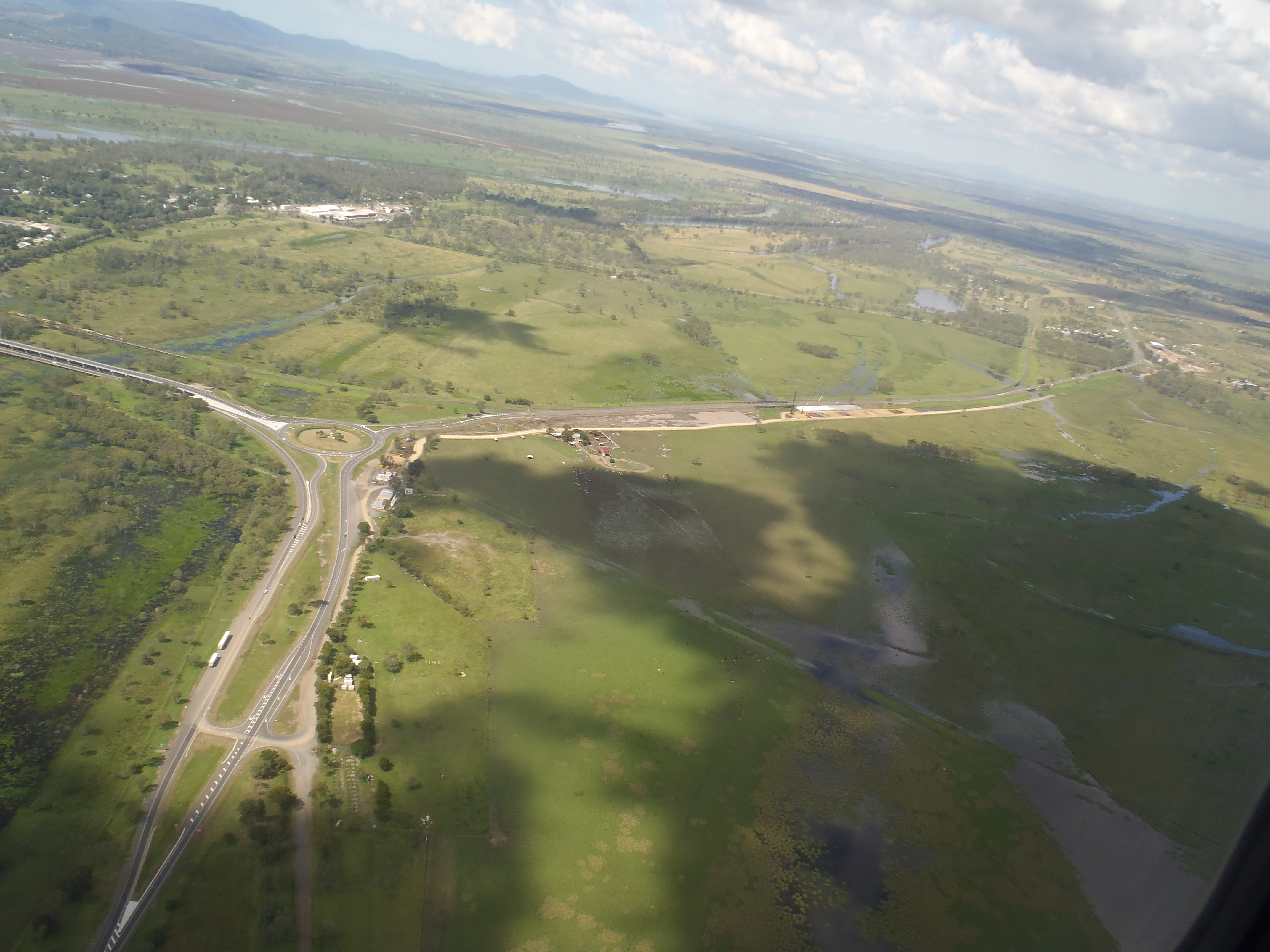
The piling subcontractor is finally on site and what I thought would be a nice easy period before the madness of concrete pours turned out to be anything but. First off the kit that they were confident would be up and running within half a day actually took closer to 2 days to set up. I have a feeling they were hoping to drag their feet enough so that Easter came and they would get a break without any piles having been driven. Thankfully their management gave them a reminder that they’re paid per metre of pile driven and so they started to move a little faster.
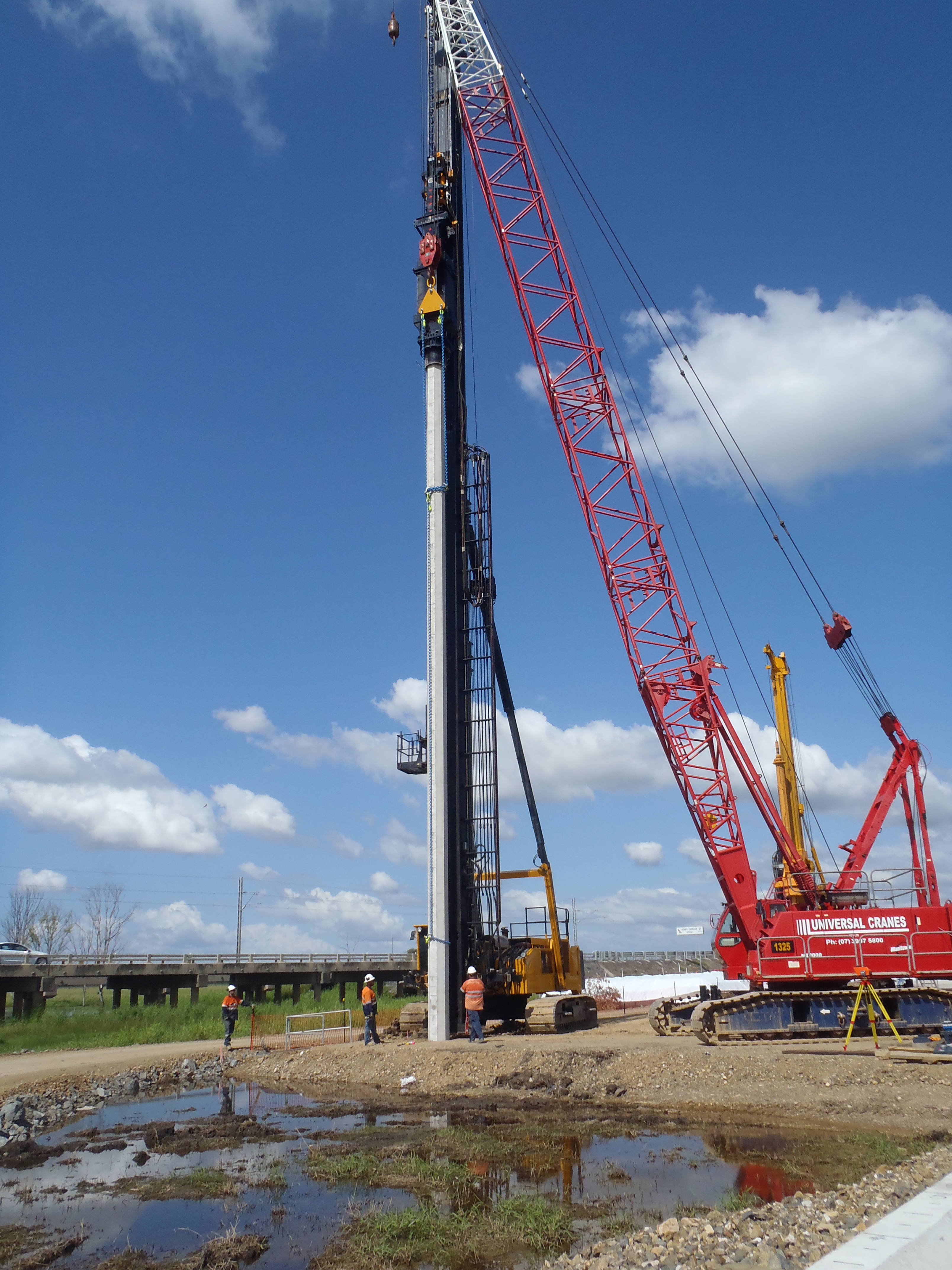
When it came to driving the first test pile the consultant engineers that are doing the monitoring set their gauges up and off we went. The pile was pitched without any problems and locked into the 26t hammer 23m in the air (26m pile with 3m prebore). The pile self weight along with the hammer weight caused it to sink about 4m in total. Driving started nice and easy and were steadily increasing the drop height when a hydraulic hose broke. This shouldn’t have been a problem to fix, except the subbie hadn’t completed the lift study for using the manbox hanging from the 110t service crane. This is despite having the info nearly a month in advance. The reason for giving so much notice is that John Holland have a classification system for all crane lifts. There is an easy to use table (it must be if I managed it) that rates the risk based on the weight, how close to the capacity of the crane you are and a few other factors such as multi-crane lifts and the conditions you are in. One thing that automatically goes into the critical category is any use of manboxes. This needs the lift study to be signed off by two lifting SMEs in Brisbane, the project H&S manager, the project manager and the area general manager in Brisbane. While this can frustrate some on site, the process is based on lessons learnt after crane incidents on various sites through John Hollands time in the industry. It has also frustrated the subbie somewhat as they had intended to use a 25t franna as the tailing crane when pitching the piles. Being a two crane lift there is an instant reduction in both cranes capacities of 20% (due to a small mis-movement from an operator possibly placing up to 80% of the load on one of the cranes). Now this means that the subbie needs to find a bigger crane, likely an 80t crawler crane. So the remainder of the afternoon was wasted as they tried to get a cherry picker onto site.
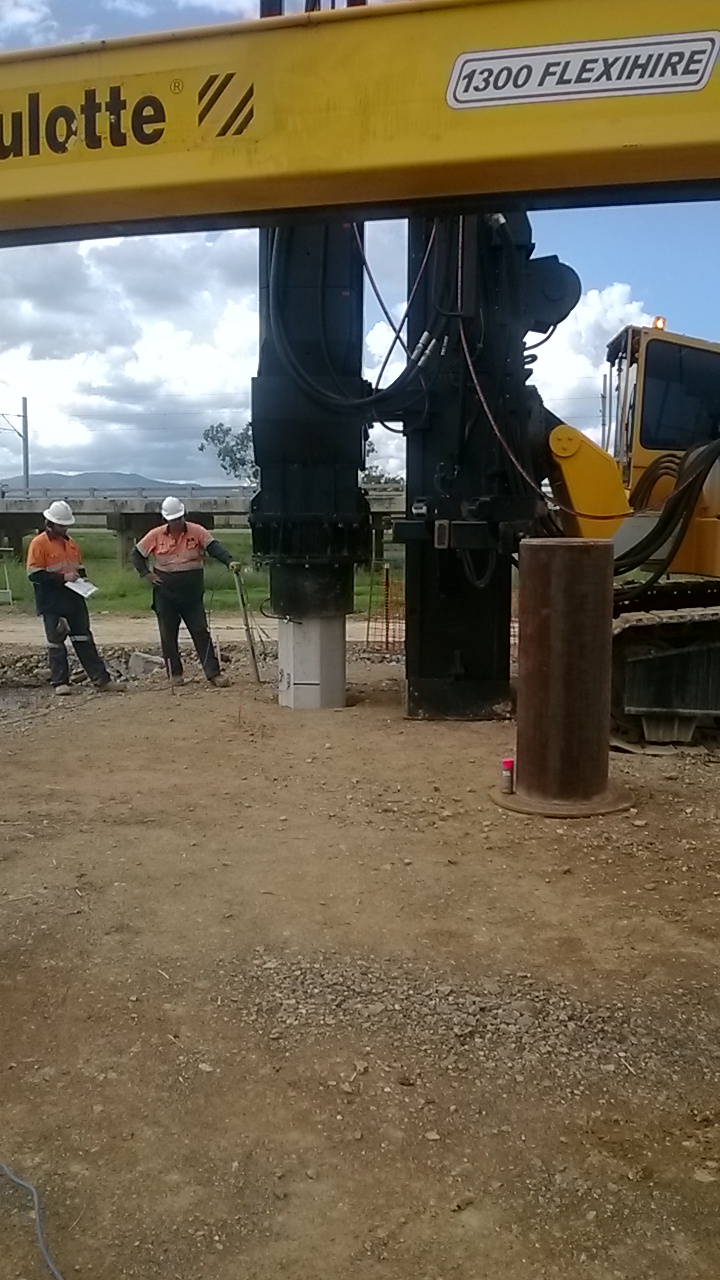
Thankfully the next day the cherry picker arrived, the hose was fixed and we were able to finish driving…or so I thought. The second monitoring requirement placed on us is that the piles need PDM (Pile Driving Monitoring) at the end of drive. This is a glorified laser level that sights onto a 3M sticker on the pile and records the temporary compression along with peak pile velocity. As we neared our design toe level we were still about 1000KN away from reaching our required set. We then went a metre past and still had a long way to go (only 60% of what we need). At this point I had to call a stop for a few reasons. 1) The gauges were about to disappear down the hole and they cost $5000 a pop. 2) We only have 3m overdrive allowance after the design toe height. 3) It was nearly 4pm on the Thursday before Easter. My thinking was that with the piling subbie away for 10 days this might allow the resistance to increase when we re-strike. Thankfully others thought this too, however there is still 40% of the capacity to find and if the soil profile is remotely right )which it might not be) then the toe is currently sitting in a band of sandy silt. I think this might become a contractual issue as the current plan is to fit a dolly to the pile to enable us to drive below the level of the rig. As soon as we hit 3m we hit issues with the length of rebar to be exposed that needs to tie into the pilecap, and the Dolly will only give us 1m more than the overdrive limit anyway. We’ll also need to fix the gauges to the dolly and try and figure out the losses from using it in the next 2 metres. I think I also need to spend a bit of time reading more into Johns notes on piling…
I’ve also had the first payment claim from the piling subbie in, mainly mobilisation costs for the first rig $85000 and the tiny bit of driving they’ve done. However I’m glad I checked as the standard method of measure in this contract states that length of pile driven is from the base of the pilecap. The piling subbie tried to claim from the top of our piling mat. That may only be 3m difference but at $90 per metre and with 1000 piles that’s $270000!
I also had a fairly long and important meeting with all concerned parties for the substructure sequence and methodology, and started to look at the cofferdams for piers 1 and 2, but I’ll save that for another time.
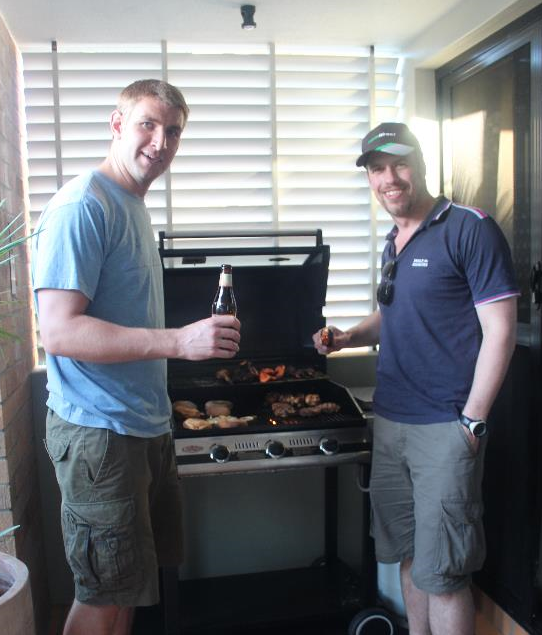
I went down to Brissy over the Easter weekend and stayed with Ben in his nice plush pad in New Farm. That gave a perfect excuse for a BBQ.
Phrases I’ve learnt:
“Bush Pig” – A woman who is not blessed with good looks, and resembles an unkempt wild pig
“Outan babi” – As above but in aboriginal (or so I’m led to believe)
 Holdfast Training Services Trial Blog
Nice blog….sorry to dissapoint but if it’s guidance on dynamic assessment of pile resistance you’re after then my notes will dissapoint. I’ve never been wholly satisfied that a dynamic test can predict a static performance; particularly if the dynaic tests are either:
a) in water beraring ground …in all but coarse soils
b) are of low energy
Your case is not afflictted by (b) but is on the fine end of coarse and below GWL
I am sure that dynamic testing is a decent QA …but I await your TMR for convincing of anything more.