Archive
Full of hot air….
No doubt you have all had trouble sleeping recently. Understandable…waiting in trepidation for the outcome of ‘McGuirk’s Magical Mix’ trial for the cast in situ secondary lining! In the seminal works, ‘Red Card Moments – Parts 1 and 2’, I detailed the genesis of this mix, following the realisation that there was a national shortage of Pulverised Fuel Ash (PFA). So like a slightly confused contestant on Great British Bake off, I was set the challenge of developing a new recipe for self compacting mix by the site sub agent (who is no Mary Berry!). This mix was to include Ground Granulated Blast Furnace Slag (GGBS) as a cementious filler, in place of PFA. The mix design is as follows:
kg/cubic metre
Ordinary Portland Cement – 270
GGBS – 180
Agg (Limestone, 20mm, 10mm, 4mm) – 1300
Marine Sand – 325
Filler – 100
Admixtures including superplaticiser (water reduction for the low water/cement ratio), stabiliser (modifies viscosity, and eliminates segregation) and retarder(controls the rate of cement hydration). An importanly, 2kg of polypropylene fibres for passive fire protection.
Results
This table shows the performance requirements specified by the client…and how my mix got on!
| Performance Requirement: | KF10 rev 10.0: | BFK024A SCC |
| Cementitious Content | > 320 kg/m3 & < 450 kg/m3 | 450 kg/m3 |
| Water / Cement Ratio BS EN 206-1: 2000 | < 0.50 | 0.50 |
| Density | >2300kg/m3 | 2207kg/m3 average @ 28days |
| Target Flow BS EN 12350-5: 2009 | To be determined during site trials | 500 mm |
| Concrete Temperature | 15°C – 35°C | 26°C |
| Early Age Strength Development | C8/10 @12hours or | 6MPa (achieves 9.2MPa at 24hrs)(please see general comments) |
| Long Term Compressive Strength BS EN 12504-1: 2009 | 28 days > C32/40 | 43.8 MPa(Must exceed specification by current margin, 7.5MPa minus 3.5) |
| 90 days > C32/40 | ||
| Concrete Shrinkage ASTM C341/C341M-06 | <0.03% | 0.003% |
| Exposure class | XC3 | DS2 |
Many of you will not be surprised to hear that despite a valiant effort…it failed. Two criteria. Density and compressive strength.
Analysis
The strength of the concrete is influenced by the water/cement ratio and the relative volume of air in the mix. All Crossrail mixes that I have encountered so far have a specified w/c ratio of <0.5 and in the main, have easily achieved the required density. This mix achieves a figure of 0.5. Whilst I would have preferred a slightly lower figure to achieve a greater strength, this is still within specification, and therefore is not affecting the density in this instance.
The cementitious content adheres to the specification of no more than 450kg/m3, and so cannot be increased. Further, at no point can the mix achieve a temperature of 70degrees C during curing. Using thermocouple data loggers I recorded a peak temperature at the core of 66degrees, so I dont feel I can increase the proportion of cement for fear of too much heat gain.
Therefore, I am focussing my efforts on the volume of air in the mix. The low density may indicate a higher than normal volume of air in the mix. Crossrail have an air entrained mix which is used as a sacrificial medium for the Tunnel Boring Machines to ‘pull’ their way through the station boxes on their drives. The air entrainment has left them with a similiar density to my mix at around 2100kg/m3. This mix is designed to have a relatively low compressive strengh to allow the TBM to easily plough through it. I therefore suspect something in the mix causing it to retain air voids which reduces the density, and further the compressive strength.
Polyfibres
By comparison to other mixes in the project, the only real variable in this mix, is the addtion on polyurethane fibres. Following a series of high profile tunnel fires and the increased threat of terrorism, the safety of underground structures have gained public atention. Polypropylene fibres have been developed as a means of passive fire protection to prevent explosive spalling, and maintain the structural integrity of the concrete.
How do they work?
This is quite interesting…so much so that I found myself spinning the dit to my girlfriend at the weekend…before I had a moment of clarity, whereupon I fell silent for fear of getting chucked!
Imagine the concrete is exposed to high temperatures, such as those in a tunnel fire, or indeed my fire trials (Refer to the tour de force that is “I am the god of hell fire!! (testing) for more details). In high quality concrete,t he density prevents the moisture contained within the concrete lining escaping quickly enough. Any voids that are present will become saturated. The heat will gradually increase and overtake the moisture front, whereupon the moisture will vapourise and increase the pressure in the body of the concrete. This increased pressure can ultimately lead to explosive spalling.
Polyfibres are introduced to increased permeability during heating and ultimatley reducing pore pressure. At approx 160degrees they will begin to melt, before disintegating at about 360degrees. This has the effect of providing millions of capilliaries in the concrete which allow moisture to escape. Brilliant…
However….
Having been tipped off by a guarded response by the manufacturer, it seems the particular brand of fibres…IGNIS…have a tendency to trap air in the mix during curing. As a fag packet calculation, a percentage air change of 1% in your mix can affect the compressive strength by as much as 5%. As the mix had cured there wa no means of conducting an air entrainment test on it, but this confirmed in my mind that this was a prime suspect.
Next Steps.
The pressure is definitely on. We are programmed to pour this mix in the permanent works in 5 weeks time. 28day results, plus a 2 week contracted response time from the client for material approvals, puts us behind by a week.
I have initiated two trials, whih were poured this morning. The same mixes, but with two alternate fibres: one from the same manufacturer, one from a competitor. Initial results as follows:
Fibremesh 150.
Slump/Flow. – 660mm
Ambient temperature. – 15.7°C
Concrete temperature. – 17.6°C
Fresh Density. – 2275
Air Content. – 2.1%
M320P 32F.
Slump/Flow. – 640mm
Ambient temperature. – 14.5°C
Concrete Temperature – 19.7°
Fresh Density – 2270
Air Content – 3.7%
NB. The air entrainment test is not a requirement byt specification, but I requested it given my theory that air content is at the heart of this. Using previous mix performances, and the fag packet from above, I reckon the percentage of air content in the first, failed mix could have been upto 10%. The result above are a good start
Testing
I have taken a total of 30 cubes over the two tests, which will allow the following (increased) testing regime. Those required by the spec are highlighed. In addtion, cores will be taken at 28days the test dry shrinkage.
12hrs – 3 Cubes – Crushed at 27 Aug 14, 1930
24hrs – 3 Cubes – 28 Aug 14, 0730
7 Days – 3 Cubes – 03 Sep 14
14 Days – 3 Cubes – 10 Sep 14
28 Days – 3 Cubes – 24 Sep 14
56 Days – 2 Cubes – 22 Oct 14
(2 spare)
In order to expedite this, I have gained provisional agreement from the client to submit a Materials Compliance Report at 14 days in the hope that I can show a marked improvement in material strength against the first mix. If Im really lucky it may have gained its 28day strength by then, in which case they will approve subject to dry shrinkage results at 28days, meaning McGuirks Magic Mix will be holding up the ‘cross’ in Crossrail!
Safety is not a dirty word…
Safety has been the mainstay of my last couple of weeks. Whilst hierarchical eye-brows were being raised at the photos I continually produced showing a lack of grip of PPE on site by the SSHO, I did some more digging into the site safety. What was initially a little thread pull, turned into a set of pants falling down around the ankles!

Grouting about tie backs (before eye-pro!)
Following installation of the walings and allowing a week for the grout to cure, we have just completed the pull testing on the anchors at 133% of design load. On a site visit to observe the installation of the soil anchors and grouting, I was again hit by sub-contractors without eye-pro, some without high-vis, and others with no hard-hats. As mentioned in previous blogs you may have realized my frustrations at the inability of the QC manager who is double hatted as the site safety officer (SSHO) – hence my decision to ramp it up a gear as my initial hand-holding and constant on the spot rectification clearly handn’t worked. Safety clearly wasn’t in the psyche of the SSHO nor was the understanding of documentation, briefing or indoctrination. I enquired from the operators as to whether they had safety briefs upon arrival on site – the answer all round was ‘no’. Further questioning turned up no hot works permit for welding (as per USACE regs), no accessible first aid kits or knowledge of their contents, no eye wash, no material specs on hand, no accessible emergency plan with routes to hospital etc etc…it went from bad to worse. Upon my return to the office and back briefing the Area Engineer and H&S coordinator, I immediately drafted a dismissal letter to the contractor’s CEO for removal of the SSHO. Somehow the CEO later managed to calm down our Area Engineer, by the promise of a rectification plan within 72-hours and discipline of the SSHO.
The rectification plan has been pretty thorough with the additional intent of bringing a 3rd party to conduct an independent safety audit. The QC has improved dramatically, with the QC manager for the first time intently conducting 3-phase (prep, initial and final) briefings and inspections correctly and with all involved rather than on the back of a fag packet and solely him and the foreman present. I tend to find that safety goes hand in hand with the QC as I would suggest good safety is a function of sound, comprehensive QC. However, my safety ‘feelers’ remain alert so I have gone through the Accident prevention plan (APP) with a fine tooth comb as it is only the risk assessments and CoC diagrams that have been updated since the first 2 phases of the project that were completed last year. What could very well be a scene from Monty Python, was when the USACE H&S manager decided to check the emergency contact numbers in the APP, as they curiously were not 911?? The telephone answer was: ‘’Hey, this is Misty’s bar’’..once the H&S guy had picked himself up from the floor, he managed to do some further enquiry to realise that till not so long ago the bar was the manned telephone for any out of hours fire emergencies as Danville’s fire service was a volunteer service (who presumable were permanently in the bar??). It wasn’t still the case, cue more knuckle rapping. Needless to say the contractor’s rating will be rock-bottom at the end of the construction project.
So, questions I’ve been asking:
- Why did we approve this SSHO, when his CV shows no safety management experience on it other than a 30-hour online course? (Answer: there isn’t answer; we dropped a ball and let it pass under our nose a long time ago!)
- How did this contractor win this contract when it is becoming apparent that they have minimal experience working with USACE (other than a single roof job), no experience working with levee systems and it is becoming clear they are purely a management layer for gaining works and then subcontracting everything out…I also have my assumptions that the APP was written by an external party, as supposedly the SSHO on my site is the contractor’s corporate director of safety…he doesn’t even follow his own APP rules nevermind USACE’s. (Answer: this project was put out to bid amongst ‘small businesses’ – those with an annual income less than $25.5mill. Tender evaluation for such businesses are done by contracting division in Baltimore head office and the dept deals with over $1bill of projects annually…I therefore get the impression that projects such as mine are fast-tracked and minimal resources are allocated to the technical and managerial evaluation boards – I hope to explore this a bit more when in Baltimore for Phase 3)
Negotiations and change orders have now been put to bed for the north end shoring system, the damaged drainage pipe running through the middle of the site, as well as me sitting down with the sub-contractors designers to discuss new site dewatering systems – the longitudinal extent of the excavation was further out than originally thought, especially with the heightened water levels (see pink flagged pegs in river). Instead of the dike system in front of the excavation, we have planned to dam the water upstream with jersey barriers, sandbags and plastic sheeting, whilst pumping the water around the site in addition to the smaller dewatering system within the excavation area. Other options were to change the size of rock armour being used to allow for a steeper slope thus a tighter toe. A lot of our ideas are hamstrung by Public Law 84 for disaster operations, Pennsylvania’s dept of environment permitting and the timeline for which dewatering is intended to take place.
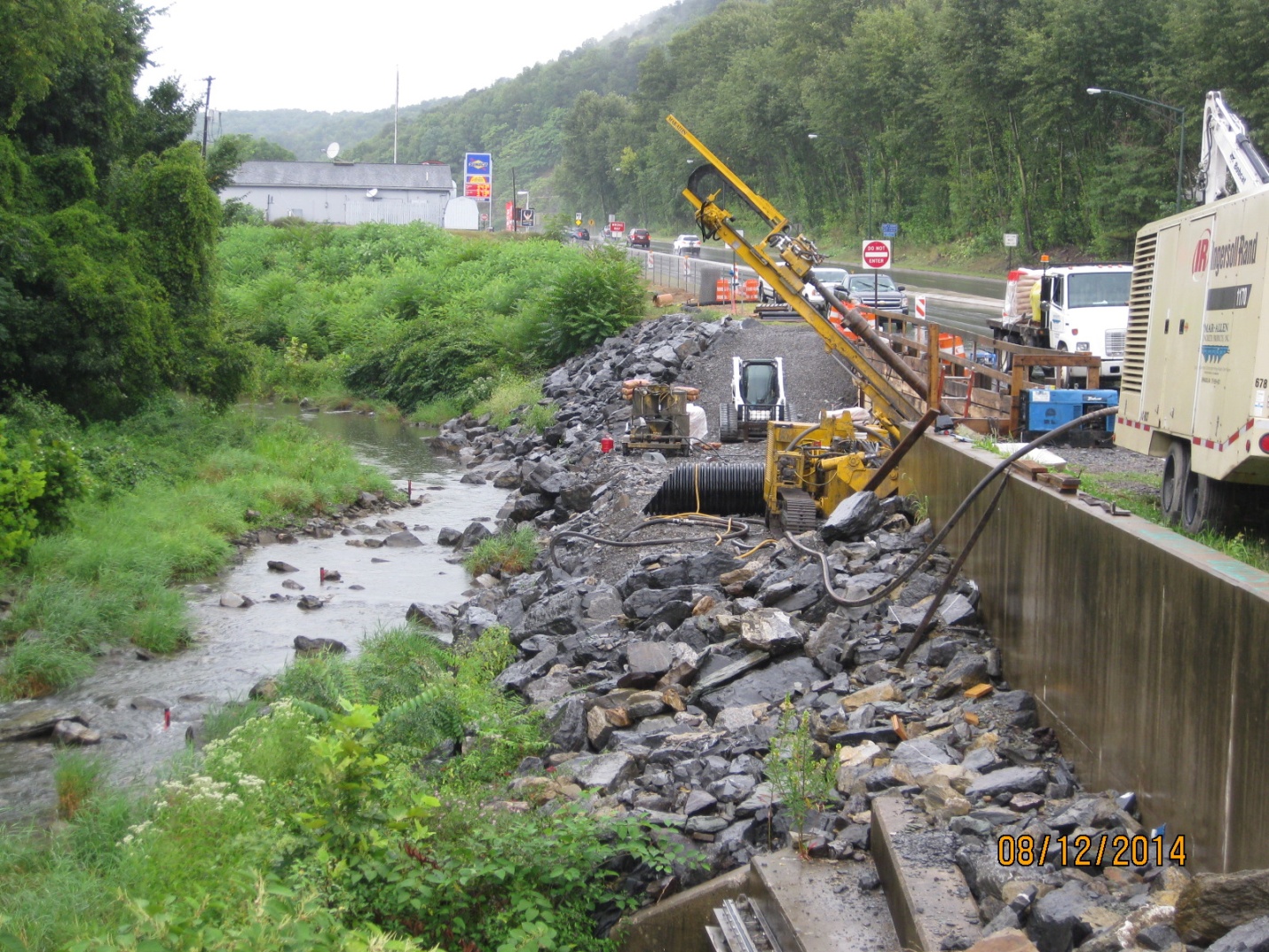
Looking south through the site; note the stakes in the river showing extent of excavation hence the need for a rethink on the dewatering plan
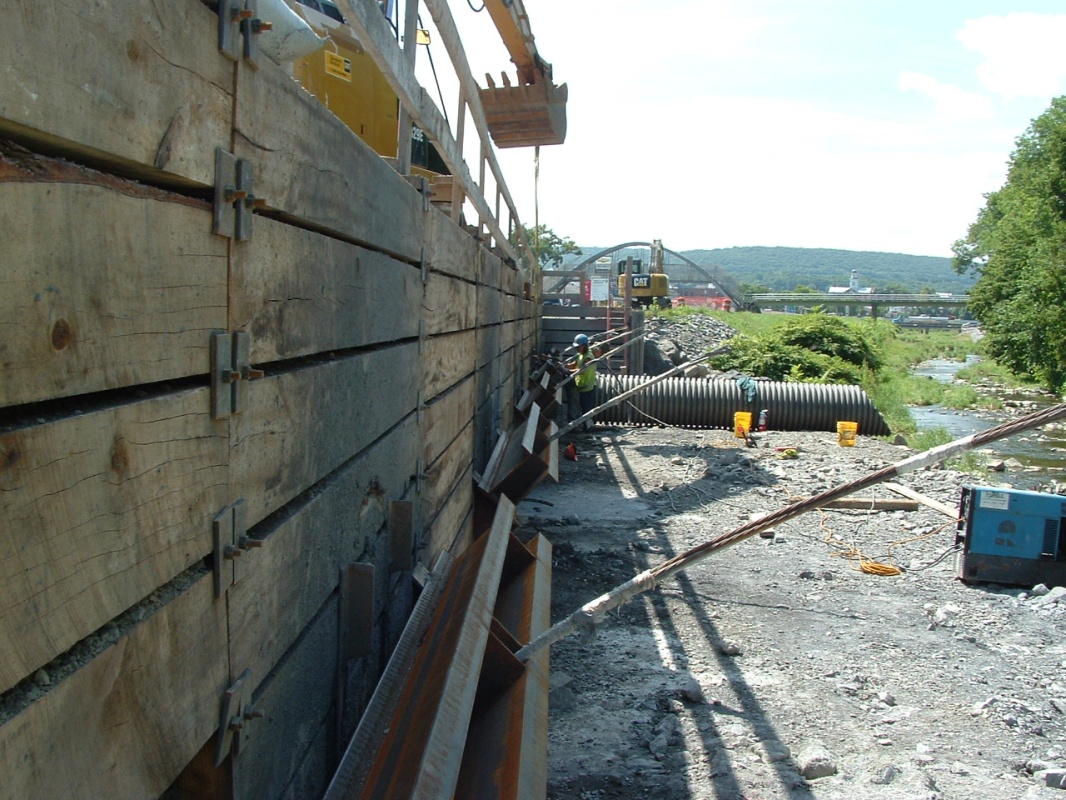
Excavation down to approx 10ft; wales now attached awaiting tie back performance testing.
In other news, Emily and I were kindly given tickets to a pre-season NFL games by a fellow USACE employee for last Saurday evening – what an experience…USA testosterone in all its grandeur!
The pipe-jacking saga continues…
I tried to post this before my holiday, but it seems that WordPress and I don’t get on that well so here I go again 4th time lucky!!
Well this is my 3rd attempt at a blog as first my computer turned itself off then the site crashed whilst trying to save my work. I am off on holiday in 1 hour so I will be quick!
For the last 6 weeks I having been waiting to be able to write a great blog about pipe-jacking under Battersea Park Road with pictures of the launch shaft or some pipes going in. But alas no, we are now going back to looking at different methods because it is too expensive. To cut a long story short the client’s representatives (T&T) and client (BPSDC) nearly had a fit when the £75k provisional sum wouldn’t even cover the launch shaft. Due to the soil type (Terrace Gravels) and water table above the pipe-level, the costs have escalated to £960k! Cue lots of panic and many meetings questioning how on earth it had become so expensive. Here’s why:
Due to the likelihood of hitting an obstruction under Battersea Park Road Bridge the open-face pipe-jacking technique was decided using a 1.2m diameter ID pipe allow miners to excavate inside. Due to the groundwater, this would require de-watering along the full length. As the bridge covered half of the 75m the de-watering regime would not be able to achieve such a large radius of influence without potentially affecting the railway lines 10m from the pipe. Therefore resin grouting would be required for the last 35m. So what was once around £250k for the pipe-jacking alone ballooned to nearly £1m once you looked into the detail design.
Despite my best efforts to explain this with the sub-contractor T&T looked at alternative solutions such as micro-boring and a representative from Barhale came along with his sales pitch. He tried to say that pipe-jacking with miners over 25m went against HSE guidelines (our H&S person then dispelled this as it is allowed with safe systems of work in place). He then said that micro-boring would save lots of money as de-watering and resin grouting would not be required. T&T thought that this was the golden chalice and they put a halt on all pipe-jacking work and made us investigate this more. Since we had already done this exercise back in March less the pricing side of things it wasn’t too difficult to highlight the constraints for the micro-boring. The big ones being: if it hits a boulder over 1/3 the size of the pipe, or timber or steel, it gets stuck-a cost of £350-500k and still no pipe under the bridge with no back-up plan. If that wasn’t enough to put you off then the installation of the reception shaft would need to be in a public cul-de-sac over the trunk main. Diverting services and digging up the street is also not a cheap option. A representative from Terra another tunnelling company also came in to explain this and suddenly T&T’s golden chalice turned into a poisoned one (and I refrained from shouting “told you so!!”). Now we will not get the job done by our deadline of the end of the year when the Northern Line Extension starts at the south of the site in Jan.
So it looks like we will be back to pipe-jacking when they make their mind up this week and I have left the 200 pages of Risk Assessment and Method Statements and temporary works designs with Network Rail for approval. Now I am off to Turkey kite-surfing for a week so next week should be quite interesting!
HV Cable Strike!!
If you want to see a pained expression worse than Ryan’s when he realises the last chocolate digestive has been taken, walk into your offices and utter the words ‘we’ve had a HV cable strike!’
My last blog commented on the progress I was making towards my DO’s with work on the Dwarf Wall, HV ducting and student mentoring. I have completed 192.652m of the 619.310m Dwarf Wall, which is as far as I will now take it. This is no bad thing as I got as much experience out of it as was likely. The student has fledged and flown the nest to start work on the second rail load out silo for IRFT 2.
The HV ducting and deluge main proved more challenging than it first appeared and there were a whole host of learning points from the experience.
As part of the preparation for the work I organised a GPR survey to identify all the existing ABP services crossing the area we would be excavating through. This all formed part of the various permits and RAMS I completed, as mentioned in my previous blog and in detail for AER2. We successfully undermined 5 sets of existing HV lines at various points, a number of live water mains and several fibre optic telecommunication cables without incident. On the last HV cable crossing this happened:
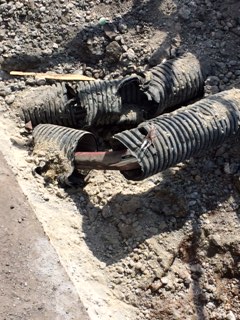
Unfortunately it was the primary HV line to the main unloading jetty (location shown in photo below), powering all the infrastructure including the cranes, where 2 container ships were being unloaded at the time. It was also during the crossing of the main access road to that jetty that we were only allowed access to for one 12 hour period. Balls.
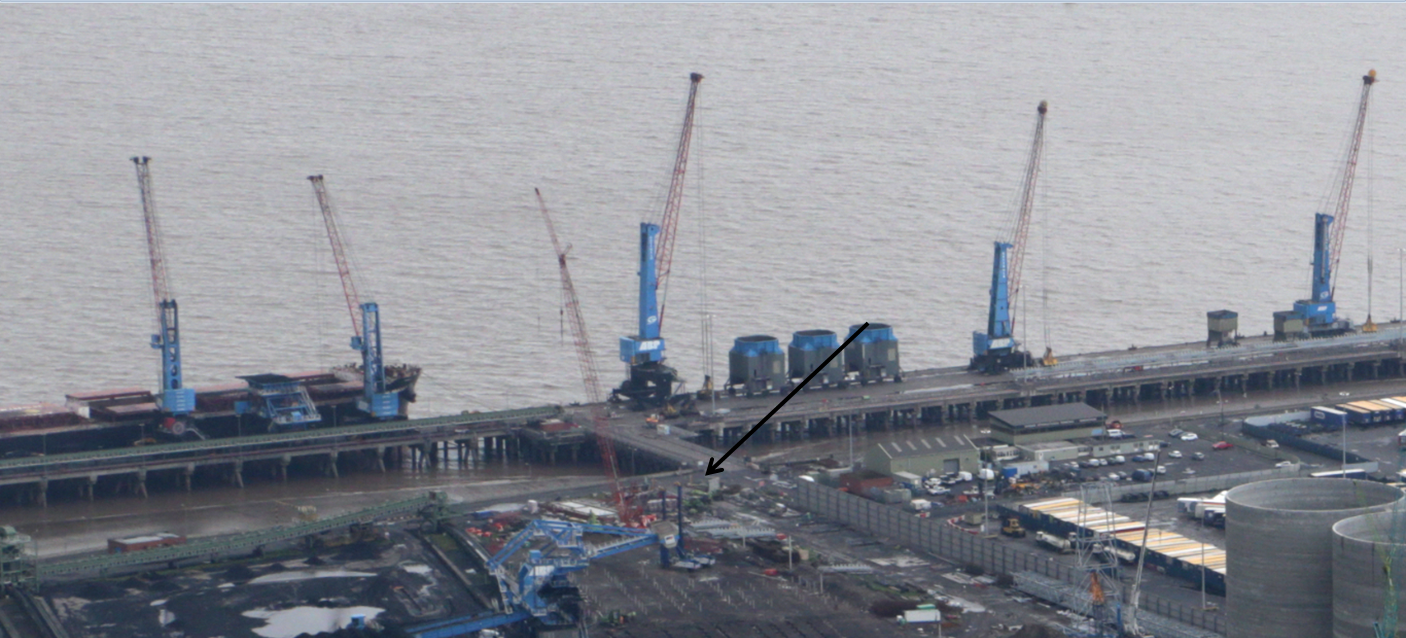
The first photo shows the primary 11kV line that we hit and the fibre optic cables that ran in parallel. There happened to be a secondary HV line directly underneath the primary that subsequently proved useful. By the skin of our teeth only the armour surround to the cable had been pierced not the inner cable and it never went bang despite being wrenched a few inches up by the excavator bucket.
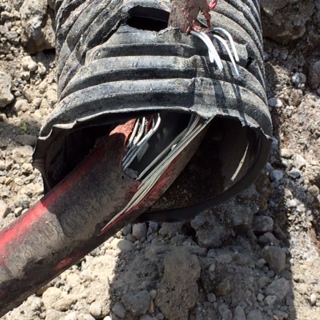
So what happened??
This was my section of works but in the greatest tradition of every troop commanders favourite sapper, I wasn’t there at the time boss! The previous night I had issued the permit to dig, briefed the team (including the engineer who would cover for me in the morning) and prepared the road closure procedures for the following day. The route of all the cabling was identified through the GPR drawings, checked with a CAT scan and sprayed in red onto the road. The following morning the team set to work and the road tarmac was cut using the road cutting saw.
This is where a small series of errors came together resulting in the strike.
The road cutting saw creates a lot of dust that when suppressed by the accompanying water unit covers everything around it in a thick slurry, including red spray paint marking routes of HV lines.
The team that I had briefed the night before got pulled onto another task early on in the works (operator availability as ever) and the replacement crew, despite having also attended the evening brief, were not given a thorough HOTO or up-to-date brief by the engineer or foreman. The tarmac line that had been cut was assumed to be the line of excavation to the full depth of the ducting, as the red spray was no longer visible they just cracked on and dug away.
The engineer left in charge hadn’t noticed the red spray was no longer visible, assumed everyone had understood the brief as well as himself and was taking photos of a manhole to one side when the incident occurred.
The foreman working on the task had only arrived on site the day before, had been briefed but wasn’t really ‘acclimatised’.
I’m sure you’ll all say ‘yeah yeah’ but my timing couldn’t have been worse as I walked into the works area to hear the foreman shout ‘whoa, whoa, whoa, that doesn’t look too good …….ah Joe you’re here……take a look at this…..’!
So what did I do??
After calming down and realising nothing had gone bang, nobody had been BBQ’d, (thanks Harry for those inspiring HV strike H&S videos), and everything on the jetty was still working, I basically conducted a 4C’s operation! Train hard fight easy and all that.
I phoned my section manager (who thought I was joking) and informed the on-site health and safety advisor.
I soon had a battlefield tour on my hands as every man and his dog came down for a nosey and a photo.
Everyone was fairly pragmatic about the situation, some more so than others and I had to laugh when the foreman suggested poking it back into the ground and covering it in concrete before the client found out!
The main HV line serviced the whole jetty, the secondary line powered just the cranes and ancillary equipment ie the vital unloading equipment. After much discussion it was decided that the power would be switch to the secondary line for 2 hours so the primary could be inspected but allowing the unloading of the ships that were docked to continue. Once complete the main line was switched back on and a cordon was put into place until the ships had been completely unloaded. This then gave us a 12hr window, between the high tides, a couple of days later to get it fixed prior to the next ships arriving. The damages for a ship in port not being unloaded are huge, so realistically that was the only choice.
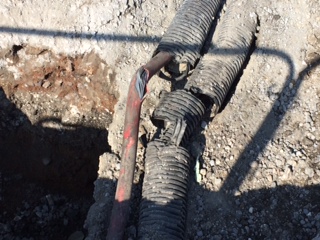
So what I have learnt?
Technically.
GPR Survey. The investment in a GPR survey is worth every penny and I cant recommend it highly enough in similar circumstances. The amount it reduces the risk alone is worth the investment. The cable we hit, we knew the location of, which makes it even the more frustrating. The CAT & Genny is very good for identifying services but proves difficult on our site due to the industrial nature of the fill that makes up the top 5-7m of ground as it is full of metal and old cabling. In addition the clients existing service drawings, that formed part of the initial tender, are woefully out of date and hugely inaccurate and some of the electrical cables service night time facilities so the CAT SCAN may miss them in the day, the GPR survey will not. The GPR survey allowed us to identify the services and then we could use the CAT SCAN to confirm the locations as it much easier to use on this site once you know the path of the service. I was also surprised with the accuracy of the GPR depth estimations as 90% of the time they were spot on. This has led to my insistence on getting the same done over my new site for the substation build I will be conducting, as there are a number of services including HV around the existing substation that mine will replace. I suppose the ground is a risk whatever way you look at it!
How to fix HV lines! The armour was cut away and replaced followed by a mould that was pumped full of resin to reinstate the outer casing. This was then re-sleeved with the ducting. We also used the 12 hour period to complete the undermining of the lines and fit our 12 ducts into the manhole as can all be seen in the photographs below.
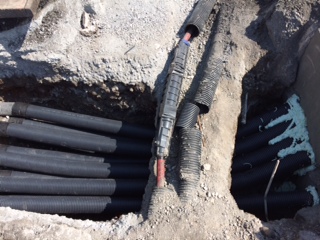

Managerially.
Health and Safety. Don’t skimp on the paperwork. The H&S advisor rightly conducted an investigation and after his initial enthusiasm to hang someone was dampened, he used the opportunity as a lessons learnt scenario. He concluded that the paperwork was actually to a standard that he had rarely seen on the site! The RAMS, drawings and permits to dig I completed were comprehensive, up-to-date and everyone had been fully signed up so my arse was covered. I even suggested an additional measure that has now been adopted on site similar to the sign off sheets seen in the military when a memorandum is circulated to ensure everyone has read and understood the permit to dig. Up to that point everyone had to read and sign the RAMS but only the operator and banksman had to sign the permit to dig that contained the up-to-date drawings and service details.
Communication. Absolutely key. It was clear that much of the error had come from the change-over of the plant operator and banksman and the lack of communication between the team largely assembled in the morning. There were various levels of information amongst the team and everyone assumed everyone else knew what was going on. The lack of communication invariably led to the strike and was the main learning point from the H&S investigation.
Control. I wasn’t on the site at the time of the incident (have I mentioned that?!). I had handed over to another engineer the night before who knew of the HV line (I had sprayed it out with him) but he had been taking photos of the manholes we had constructed the day before when the incident happened. If I had been there I would like to think that I would have been more resistant to the change of plant operator and at least stopped the incident as I had lived and breathed those services for the preceding weeks. I was a little disappointed with the whole episode from a personal perspective as we had conducted a number of crossings to this previously without incident, and we stumbled at the last fence.
I have now completed my summer leave and have started setting up my own mini-site for the sub-station construction I have been given the independent command of. The design is yet to be completely finalised but this week I have cracked on conducted the GPR survey (as mentioned above) the CAT SCAN and dug a number of trail holes to confirm the services. I am taking the design co-ordinator down to the site this afternoon as a number of my discoveries (railway lines, CFA piles, pile caps, sheet piles etc) are likely to force additional redesign – watch this space.
Things are going wrong!
The mechanical subcontractor is the worst performing subcontractor on site!! They have today after three months of work have realised they have did not design their expansion of their chilled water pipes correctly. This is causing huge problems as currently the system is a fully Victalic system and now they want to weld every change of direction. Considering a large amount has already been hydraulically tested, signed off and lagged, with cable tray below this is going to be major re-works. Also going through the programme with them a completion date of their plant room which will supply chilled water to the Central Communications Room CCR2 an essential part of the hospital, which has a hand over date of December fully operattional ie it has chilled water running to it, now has a completion date of mid feb……not good.
On a positive note the Power Available programme which has been running since April is nearly complete, we have all three substations ready for commissioning, I have attended all the Factory Acceptance Tests (FAT) for the equipment, we have had some huge logistical problems with some of the larger switch boards. Overall has been a very good experience. We are having large problems with the Client changing its mind and also delaying works by
sitting on very small decisions, it is frustrating how so many people don’t like making decisions and we have been trained to make decisions. We are now getting into the real detailed design of how everything operates and it is clear that the detailed design is truly lacking. There are fundamental parts of systems that have not been thought about correctly, for example the Reverse Osmosis water, chilled water to CCR2 (no mechanical separation) and the whole BMS interface with equipment. this is just to name a few, the great side its keeping me very very busy, with thinking about design, functionability on site and cost.
I have also been responsible for the Northern Green Space as a lad was a way for 5 weeks, this involved all the connections to and from the building for the two fire tanks and two rain water tanks. This brought around a new dimension to works as I had a new set of dead lines set by the infra guys outside, who I was pushing as we wanted to run the Syfonic drainage to the tanks instead of flooding the basement. Overall busy times and the pressure is on as the completion date of 30 June 2015 is dramatically looming and there are some fundamental things going wrong, mainly the mech subbie…
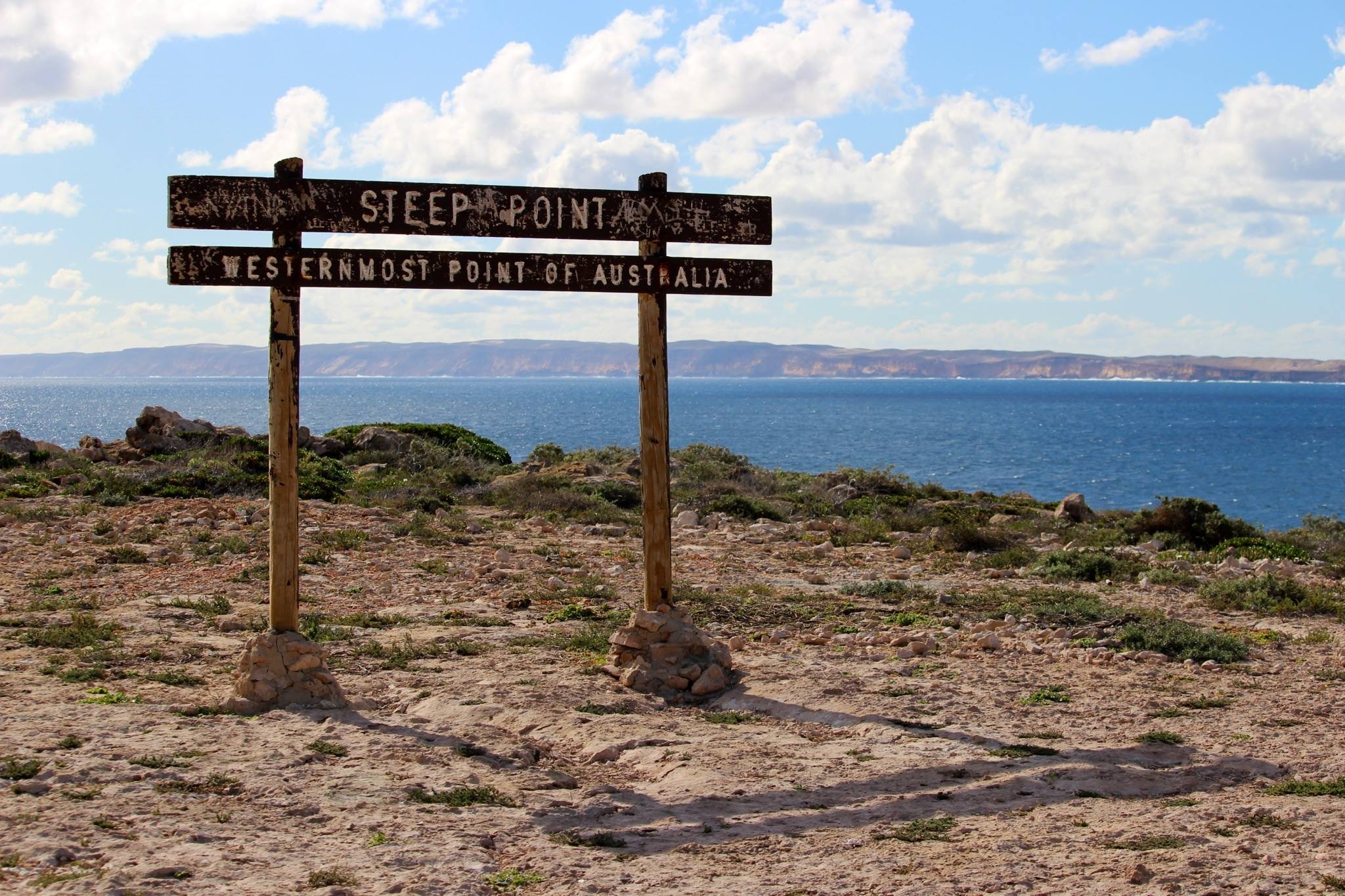
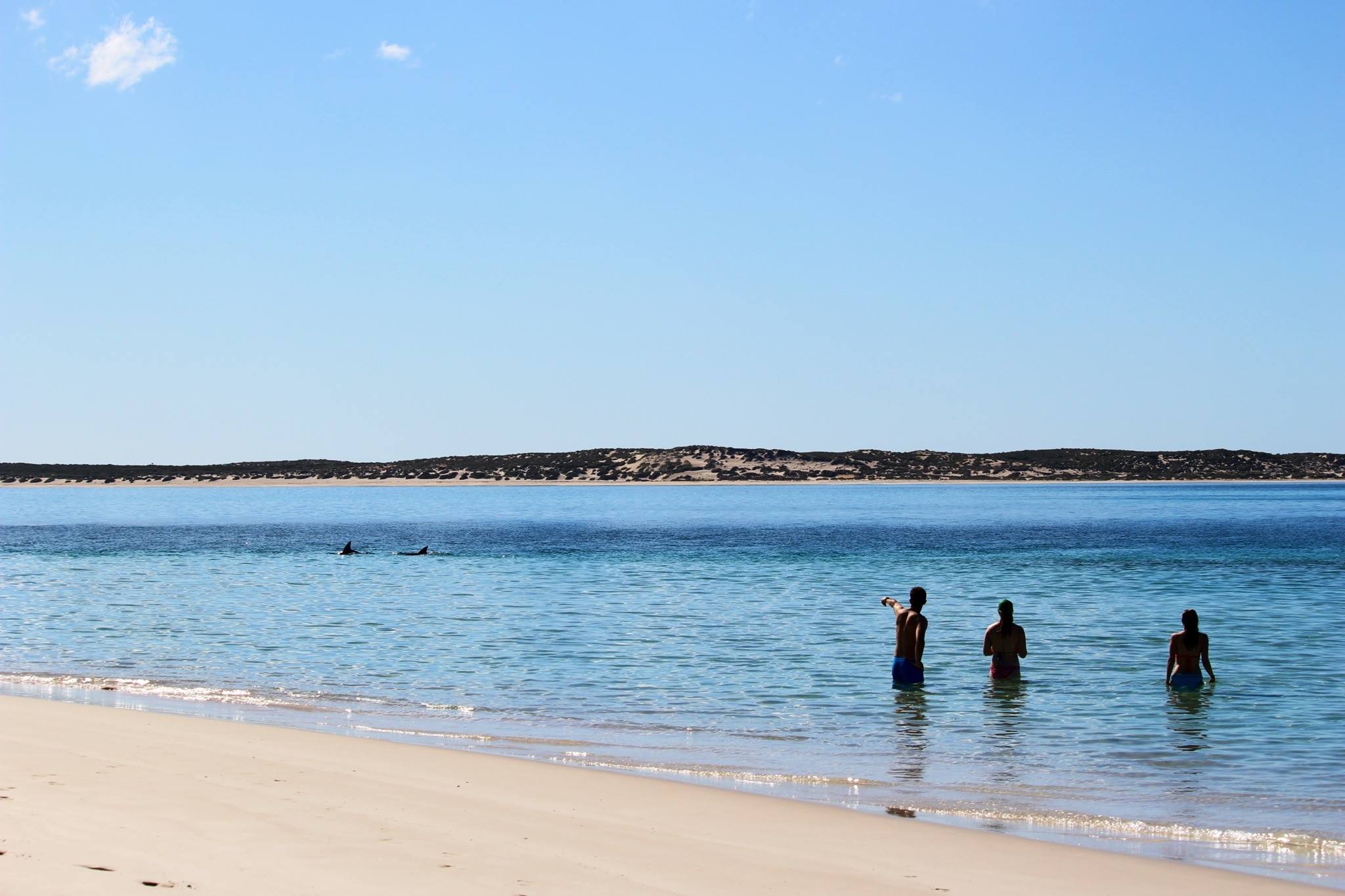
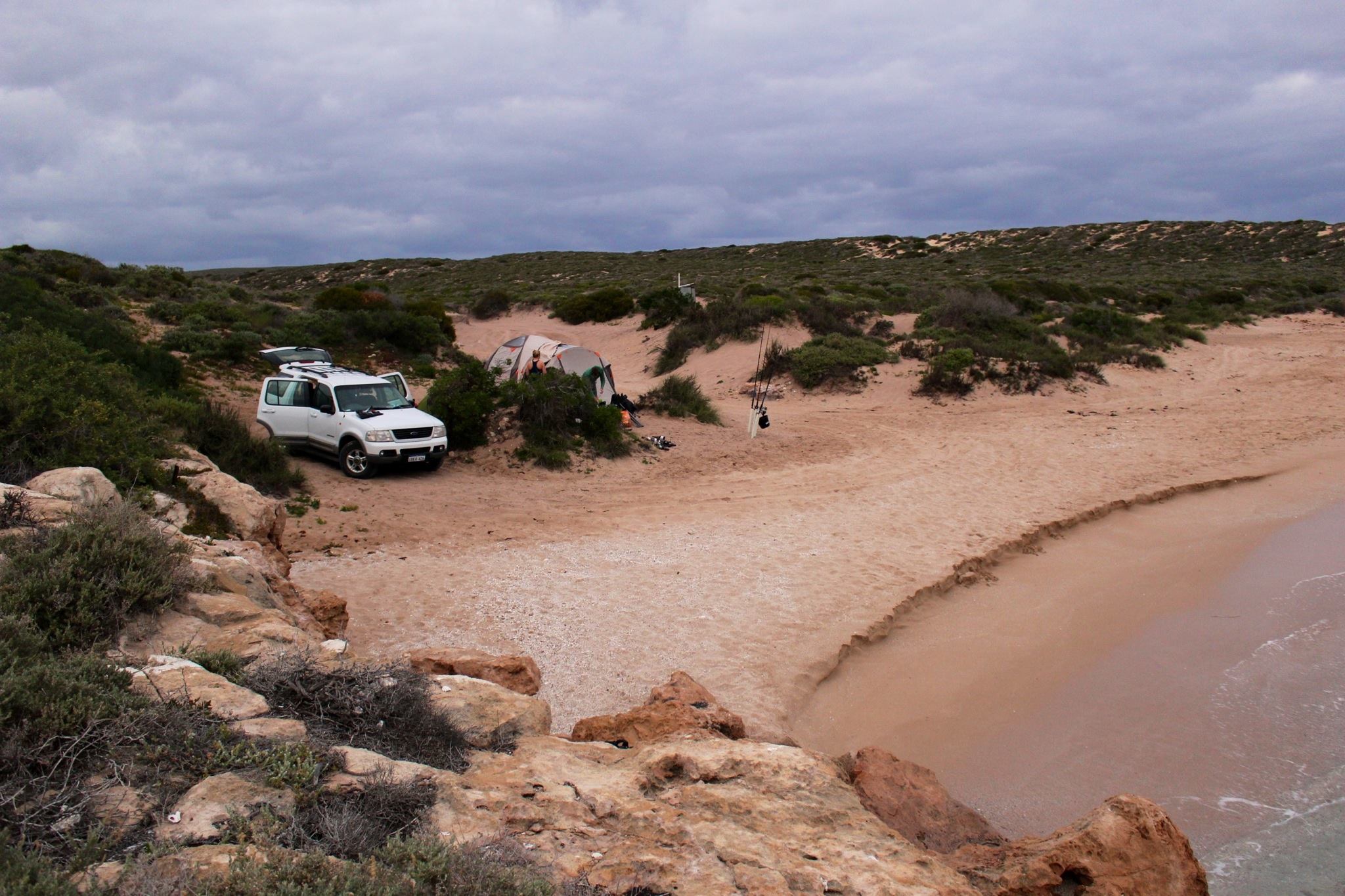
On a positive note spring is here it was a lovely 25 the other day and is warmer at night now, Hannah and I had a great weekend at Shark Bay which is such an incredible place, but a 10 hour drive!!
Things are getting contractual
Background
The piling subcontractor has been achieving a very impressive level of productivity now that the hammers are finally fixed. In the initial planning stages of the project it was estimated that they would complete 4 normal piles per day, per rig or 3 spliced piles. Recently we have been seeing the rigs regularly reach 7 or 8 piles in one day. The piles that are being used on site are produced in a local factory. This factory has limited capacity, however started weeks in advance of the piling rigs arriving on site. The precast piles that can be produced per day in the factory is limited to 5 of the longer single length piles or 10 of the sliced piles. The plan had been that with the factory starting ahead of the piling rigs they would have enough stock to keep the site supplied and there would be no shortage of supply. The graph below shows the state of pile supply currently. The piles must cure for 7 days before a hold point can be released and they can be used on site. We are now at the stage that there are 7 day old piles arriving on site.
The contract states that John Holland are required to supply 4 standard pile a day per rig, however this would mean that the crews are stood around waiting for most of the day incurring extra costs to the piling sub contractor. To reduce the costs, an informal agreement was made to stand down one of the rigs and go with just one on site. This would allow 3 cranes to be off hired by the piling subbie and dramatically reduce his costs. The crew from the second rig could then move to another job. The one crew that remains would then work much more efficiently.
Issue.
Last week I was called and asked for an instruction to demobilise the second rig. I was going to do no such thing. It ended up being a bit of a stand-off between the Senior project engineer and the piling subbie, with costs of around $16000 per day starting to mount at the end of the week. In the office we were rechecking everything we had signed and all the documents that we had to prove we had met our side of the contract, while collecting the evidence of where Caporn had failed to meet their end.
The outcome
Thankfully there was a dispute resolution process in the contract, with named senior executives from both companies (the regional manager from John Holland and the company director from Caporn) to undertake negotiations. If this hadn’t resolved the issue then it would have progressed to expert determination and finally arbitration or litigation. But it seems that all is well for now. Rig 1 never stopped working and a resolution has been reached that seems to be keeping everyone happy. We have agreed to supply 36 piles per week to the pilers and they have demobilised one rig and the associated cranes. The whole issue is making me look even more closely on the daily reports that I sign and check on the site diary kept by myself and the undergrad that is looking after the piling.
With a variation from the client this has also provided the opportunity to get some piles from another source. As such the piles for the extra spans that have been added will arrive earlier than if the winner of the original pile supply contract had won the variation. They still submitted a price, but it was much higher than previously, which made it a no brainer to go to a different factory.
Other stuff
Pier 12 column
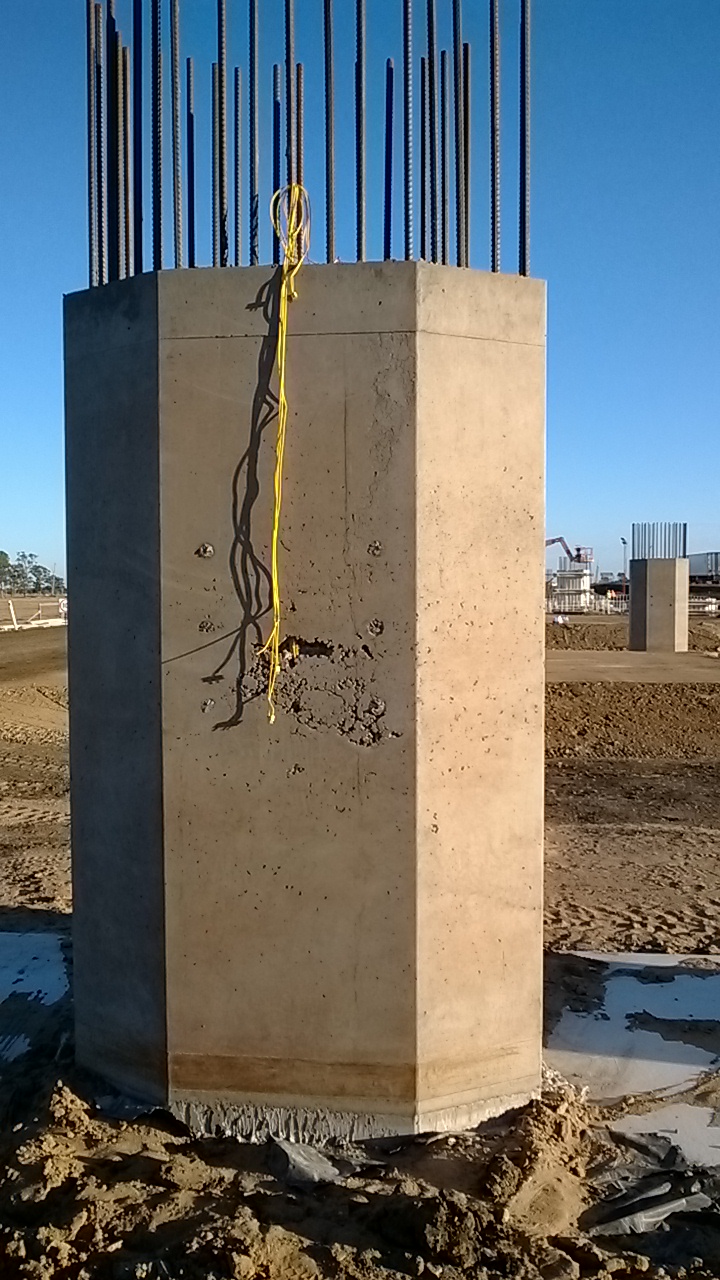
Pier 12 column2
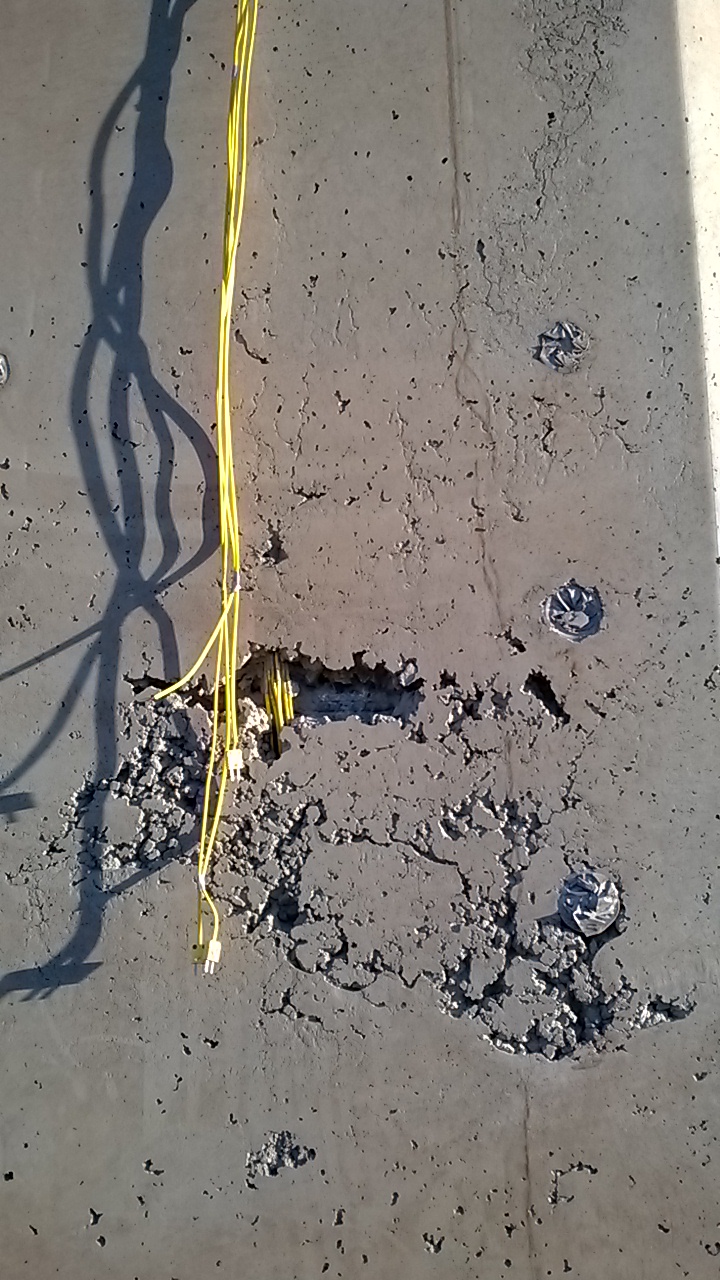
The speed that we are cycling through our forms has picked up now, which is good as this is on the critical path and we are now meeting our own targets. The downside has been a drop in quality with some of the elements being produced. In particular the columns seem to be problematic when it comes to consistency of the finish. The worst one so far was on pier 12 (shown above) where you can see the reinforcement exposed and the yellow thermocouple cables (luckily the columns have the least number of monitoring points). I’ve still to write the procedure for how we are going to fix this, and the sections at the top of columns where (after pouring too much) the excess had to be jackhammered out and some of the workers got a bit too enthusiastic. With the root cause being the over pour on the columns there is a lot of effort being put into monitoring that area.
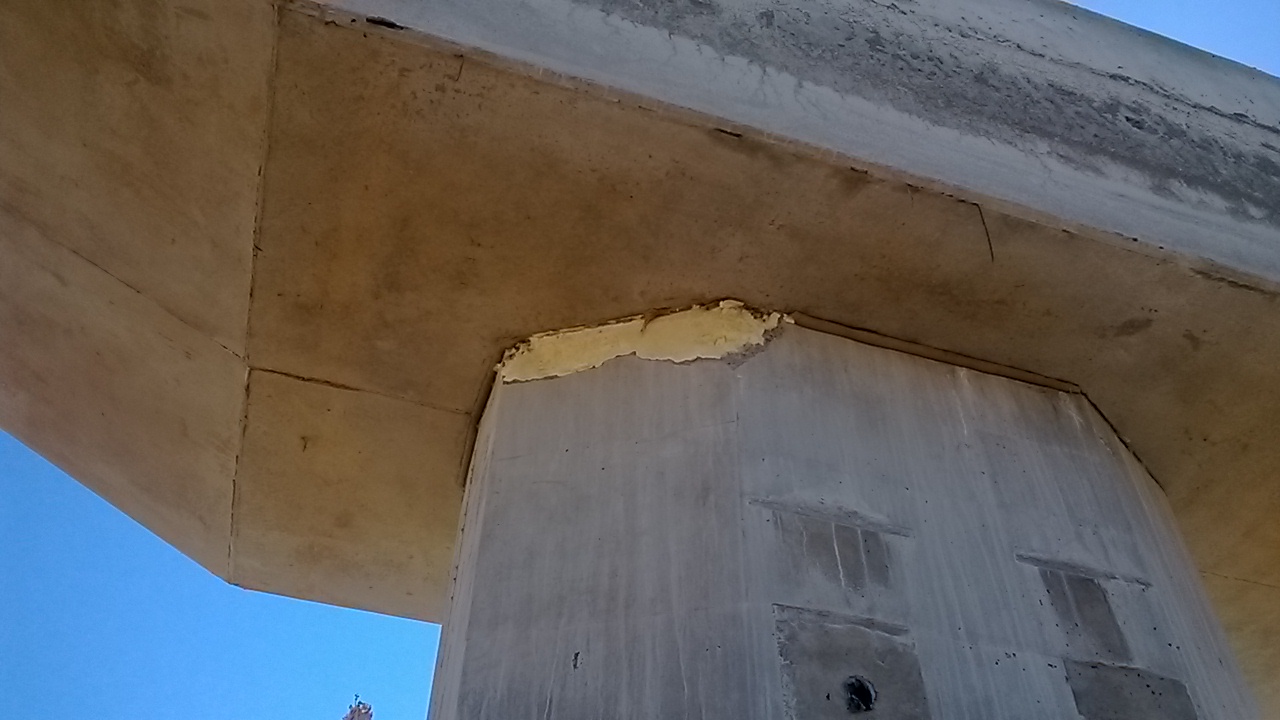
Pier 3 headstock
There were a few temp works issues that have come up too. The method for cutting and breaking down the piles has had to be checked and some extra controls put in place. This was brought on due to the piles only just reaching into the underdrive, meaning up to 7.5m needing to be cut off. I’ll maybe include that in a follow on post early next week. I’ve signed of reinforcement schedules to the end of bridge 1 and I’m starting to plan ahead to the abutments and pier 1 and 2 (though it turns out there is no money in the budget for sheet piling…might be speaking to John about possible alternatives very soon)
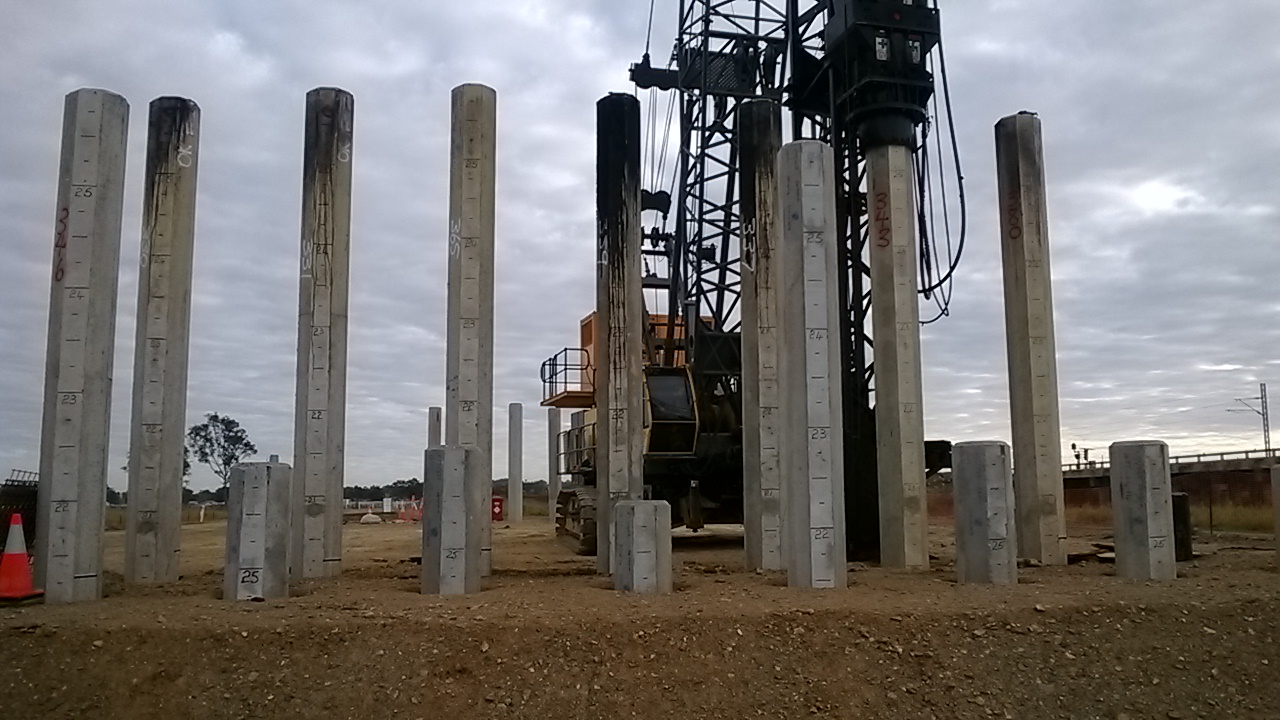
Pier 17 piles
I also dragged myself round the Brisbane marathon last week and managed a half decent time considering I had done no training. Tim also stopped by mid week while travelling down the coast and we went to grab a steak. By chance we caught some amateur bull riding in the ring at the back of the pub – just your average Wednesday night in Rockhampton.
Post CPR debrief and thoughts for the next batch
DB suggested that I might like to record my thoughts post CPR, so this blog is an amalgamation of Steve Dollimore’s email to me immediately after his CPR and my thoughts and views post my CPR (both written before results).
I understand that it is quite early for the current course but it is really worthwhile thinking about this now, as the groundrush at the end of Phase 3 and Phase 4 can be pretty full on!
Reports
I spent quite a while on the reports (2k (Experience Report) & 4k (Project Report)) to try and get them just right, working on the assumption that if it was covered in the required detail the interview would be easier. In reality, I probably agonized over these a little too much and left far too many ‘hooks’ as it is not possible to cover everything in enough detail.
I found the reports to be good revision of my time on attachment, but highlighted just how little useful information I had gathered to support my attribute claims. I know this will probably go unheeded, but it is well worth thinking about your CPR docs now and gathering the required info as you go so that you have relevant photos, calcs, or standards to refer to when compiling your reports. As a rough guide, if you are using something as an example for your DO’s it is probably worth building a decent pack of evidence in prep for your report.
If you can get the reports final drafted prior to leaving your Phase 3 attachment, you should get a civilian perspective on what you have written.
Preparation
The CPR rehearsals with the lecturers/mentors are really worthwhile. Be prepared by re-reading past AER/TMR’s and most importantly ER and PR. Prepare your presentation well in advance and have a good couple of run throughs prior to the event. (I left this late and only managed a couple of practices before the mock – I think I could have gained more from the experience if I was more prepared.
It is worth doing a second/third mock with somebody willing, to gain a second perspective (I borrowed Steve Dollimore’s recent knowledge and a civilian mate who had just been through CPR). As a result there were very few tough questions that had not considered). I think using a non-military mate worthwhile as they will have a more similar perspective to the reviewers (i.e. not tainted by green).
Presentation
The CPR presentation should tell an interesting story, not just be a list of attributes. I found that writing a script then leaving bullet points on the back of the presentation slides was most useful (avoided the temptation to read it).
Scripting is good to ensure you contain the correct information but be careful not to come across too wooden. It should be an informal style presentation that is interesting.
Don’t get sidetracked when you notice them writing during the presentation, at the range you are it is obvious you are looking!
Buy a presentation flipchart early – not many places sell them. A3/A4 is a personal choice, but I would argue that at the range of about 1m across the table from your reviewers, an A4 flipper is perfect (and cheaper).
Keep slides clear. A few photos, or one big one without wording I would say is best.
Interview
The interview runs for about 60mins, and I would say is broken down into 15mins fro presentation Q’s, 30mins PR Q’s, and 15mins ER Q’s, with a few randoms thrown in for good measure. By randoms I mean unrelated questions about the ICE, and your views on Civ Eng in general. For example “What can you offer the ICE?”
You can largely guess what the presentation questions will be based on your preparation. This is a good chance to demonstrate sketching ability, either built into the presentation, or to elaborate on something in it after. Don’t sketch in the middle of the presentation – it kills time and looks too planned and therefore suspicious.
In honesty, I don’t really remember much of the interview; it really was over in a blur. I remember being highly attuned to the reviewers reactions to my answers though (At one point one said “Oh dear, that’s not good!” but I was unsure whether it was my answer of the situation I was describing that merited the reaction).
I think all of the reviewers had conducted CPR’s at the RSME before. I was hoping for a couple of newy’s who would be interested in Afghanistan, but that wasn’t to be. That said there were several questions on the military, “How does the Army approach E&D?” “Describe how you did something in AFG?”
I found it interesting that there appeared to be no outright technical questions. Whether there were but I didn’t think they were that technical, or there just were not any I cannot fully remember. The interview was more like an informal chat about my experience that was genuinely quite relaxed. I am not sure if I actually relaxed, but at one point I even strayed onto who the greatest Briton was! (My view that IKB should have come top over Winston C in the UK documentary (Backed up by Jeremy Clarkson) a while back was enthusiastically agreed with).
Written Test
Everyone seemed to be pretty happy with their written questions, ranging from views on military future to management strategy.
You are looking at an intro, 6 paragraphs of narrative, and a conclusion – about 1000-1200 words.
I handwrote, as I think that you can easily waste time by re-writing on a computer, and it also shows you can work without IT. I think only 1 of 4 used a laptop.
The time goes very quickly, but do not skimp on the essay plan, it will keep you focused.
Aftershocks
Good to be done, but a 2 month wait for the results is a little too much. Obviously we all spoke to each other afterwards to dissect the interviews and share with each other how we probably f@*ked it up, but retrospectively looking at it I think we all tend to focus on the bad bits and take for granted the level of knowledge that we portray without thinking about it.
Ultimately, there is nothing that we can do now, but I am not burning my notes just yet!
Overall
The reviewers will most probably stay in the mess overnight. Therefore time breakfast right to chat in the morning. It is important to show you are normal, even if you are not.
I think we all spent a lot of time the week before review chatting with JM and RF. In my case, probably worrying too much about the trivia. Without blowing too much smoke up their proverbials, they know their stuff having worked in industry, and offer sage advice that makes you think a little more. Just chatting about engineering puts you in the mindset and helps hone your vocabulary prior to interview.
It is not worth researching your reviewers. I don’t think anybody did from our course, but purely from the work addresses we could work out the rough bent of each of them. It made no impact on the questions asked.
Its not as bad as you think it will be – the reviewers are old pros and they went beyond the call of duty to calm you down.
Hope that helps. I don’t know the result yet, but will happy to chat through the process and prep with anybody either way nearer the time.
Enjoy the rest of your attachments. Take lots of photos!
Westie
Bahrain progress
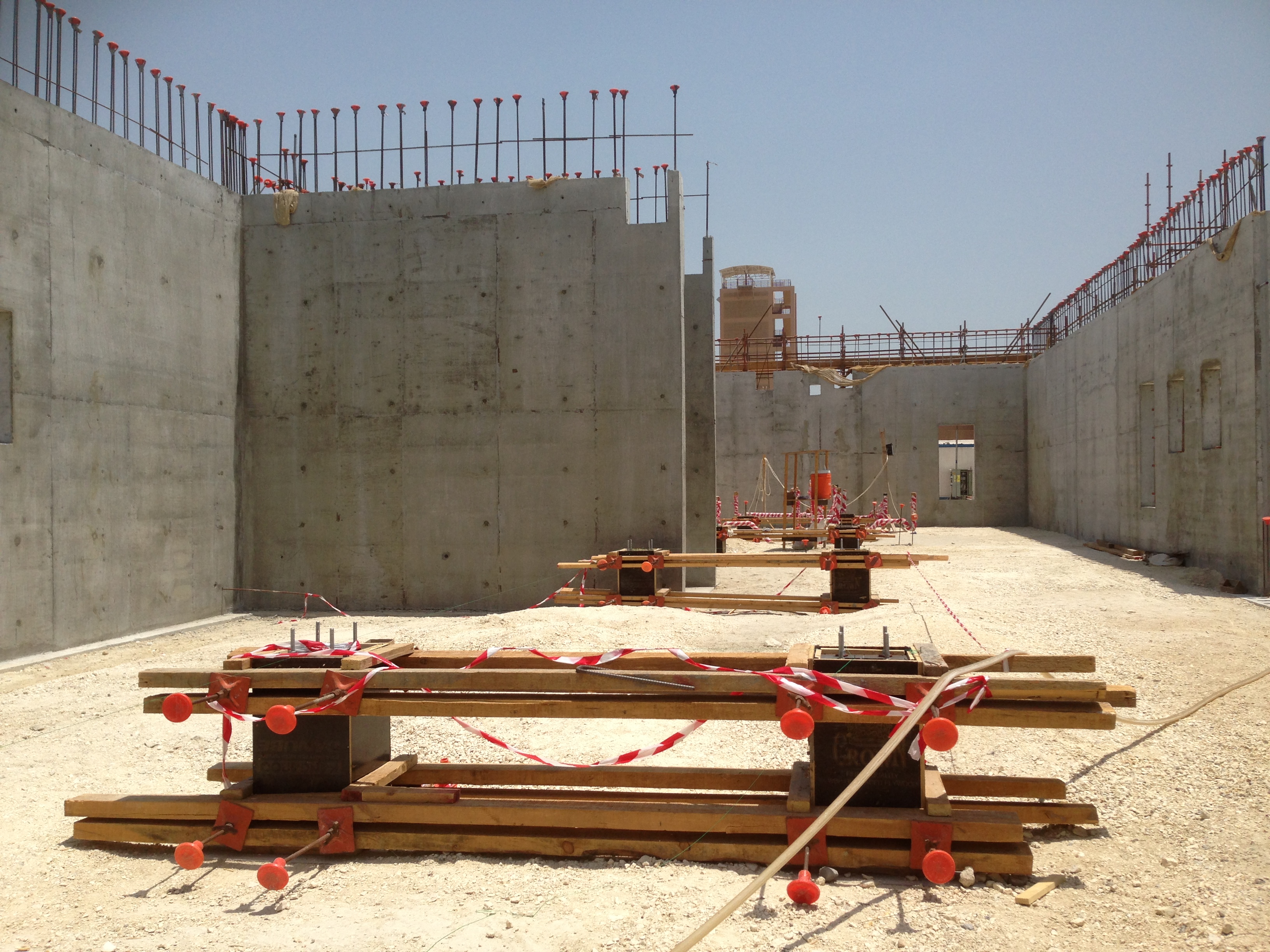
Hi all
Some shots from my site in Bahrain for your interest on http://www.roselliott.wordpress.com. Quite tame in comparison to your sites and not so many dramas – but thought you may be interested all the same.
50.0892857142857 times slower than a common snail
Slipforming of the core at the South Bank Tower began back in May. The 12th of May to be precise. 12 floors to slipform, from +106m AOD to +154m AOD. That is 48m total.

Slipforming a reinforced concrete core is supposed to be fast, efficient and financially economical. PC Harringtons (our concrete contractor) sold slipforming the core at a pace of 1.5m a day, 5 days a week. So by more complicated maths this makes:
Duration = 48m / 1.5m per day = 32 working days, or roughly 6 weeks
Therefore,
Date for completion = 12th May 14 + 6 weeks = 20th Jun 14
Sadly, this date for the completion of the core was not met. We topped out today! 5th Aug 14!
Thus,
Actual duration of slipping = 5 Aug 14 – 12 May 14 = 67 working days
So,
Actual Speed of slipform rise = 48m / 67 days = 0.71m per working day
At 10 hours work per day, this makes:
Actual Speed of slipform = 0.71m / 10 hours = 0.072m per hour
or 72mm per hour
or 1.2mm per min
or 0.020 mm per second
or 20 micro m per second, on average.
A common snail has a speed of 0.001m/s, or 1mm/s, or 1000micro m/s. Therefore 50 times faster than our slipform has climbed!
As I said, the planned speed (or rate) of slipping was 1.5m per day. That makes the achieved speed of the slip 48% of the planned rate! Is this adequate? It has to be asked whether this was the most economical method of building the tower.
At the South Bank Tower we have a rare set of site conditions. The build ability of tower is generally poor, the complexity of reinforcement is high, the burden of temporary works is also high, access is limited, competition for hook time on the tower crane is high and weather conditions 150m above ground mean that it can be less than conducive to work.
I’ve decided to explore this issue in my latest TMR. What alternative systems could have been used to build the core? Should the tower have been purely steel? Additionally, should Mace have known that achieving a rate of rise of 1.5m a day was over-ambitious? And how was this reflected in the contract to deliver the slipform?
I also want to explore whether the project was influenced by the fact it wasn’t fixed price at the start, and had it been fixed would we still have taken the same decision to slip it.
Having spent the last 6 weeks inside the slip on a daily basis I can confirm it can be fraught, manic and a desperate place. There was never quiet second. PCH performed as best they could in my view. The slow pace was not due to laziness, insufficient resources or commercial will. We as Mace have driven PCH to get this core finished but the sheer complexity has denied us the rate that is normal for a slipform. Other slips on the project (10 floors high) have flown up without issue.
There is very little literature available on the rate of slipforming. Is anyone aware of any? I plan to work out the financial cost the slow slip has caused, and quantify the impact this has had to the project.
 Holdfast Training Services Trial Blog