Aberdeen
One of my concerns with coming to BP was that I would have no construction site phase and therefore leave without seeing any tangible results. And whilst the first few months appeared to reinforce this fear, I have seen a reversal this over the last 8 weeks due to an increased pace of life and a number of notable events.
The first notable event was 2 weeks spent off-shore conducting pre-commissioning line walks for the BP Andrew platform. Whilst this had the potential to be very dull, the reality was very different. The main purpose of going offshore was to buddy up with a production technician to trace process systems and confirm that lines as recorded on the P&IDs were in fact in place and that valves and instrumentation was present, serviceable and in the correct position. The fact that there were a number of instances where reality differed from the drawings meant that it was an educational experience, as the line walking team were given the remit to ‘fix’ anything that we could. This involved simple tasks from opening/closing valves to ‘repairing’ instrumentation and safety related devices.
In addition to the line walking activities I was able to engage with the platform management and throughout the course of the two weeks was able to attend the full range of meetings that formed the platform battle rhythm. This ranged from the tool box talks associated with leak testing activities, through production meetings to senior management meetings with onshore. I was also fortunate to be invited to observe an emergency response drill, during which the platform personalities were assessed in their management of a crisis, in this case a helicopter crash. Whilst the language and manner of addressing people was somewhat alien, I believe we would all recognised the activities that were going on.
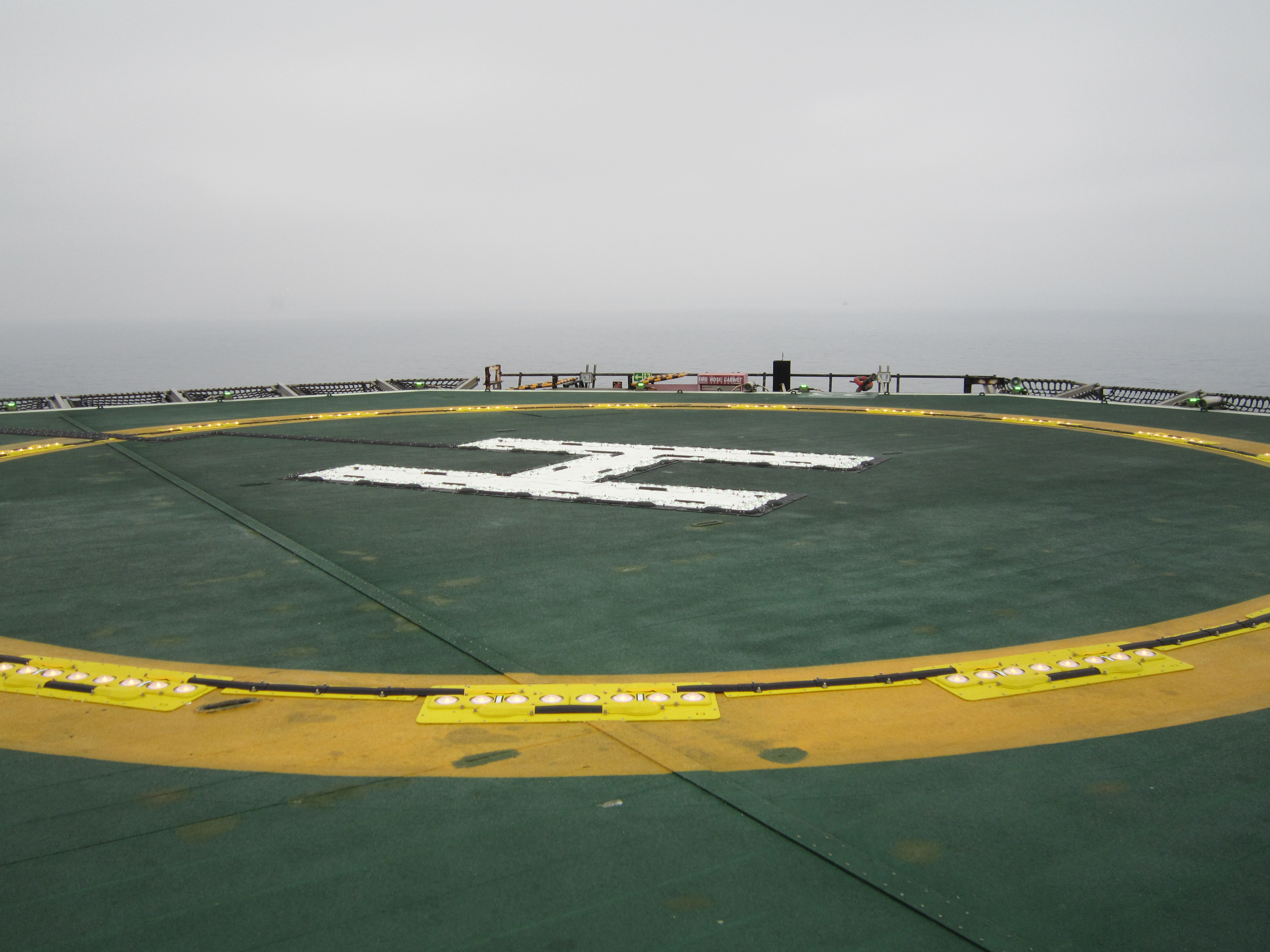
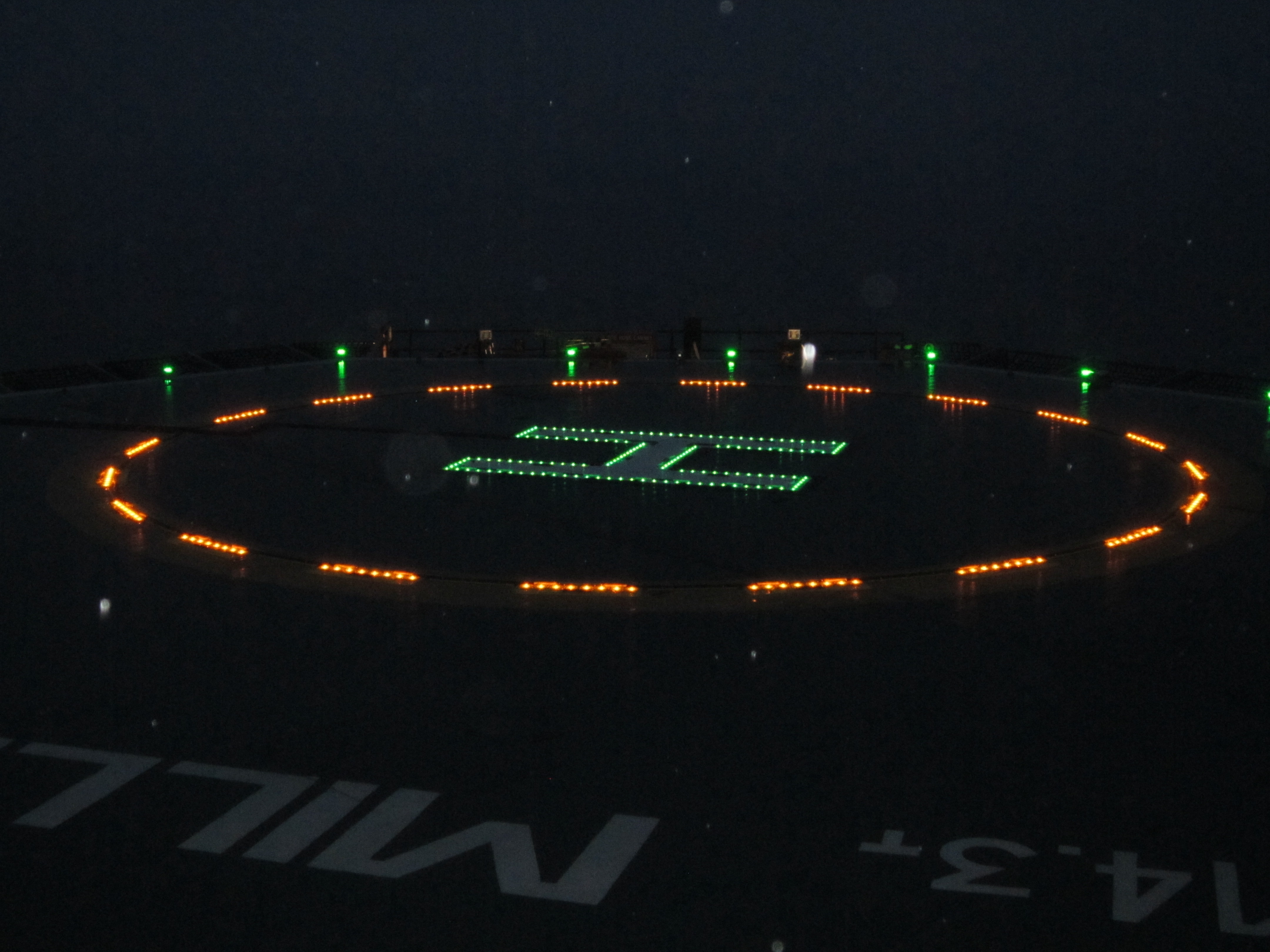
The second notable event was the offshore construction of the helideck lighting trial. Though not an earth shattering achievement and whilst it doesn’t add to the ability of BP to increase production, it was satisfying to take a step forward in aviation safety for the offshore industry. With this activity complete it provides momentum for the regional helideck lighting project which will soon pass to me. I also learnt a huge amount throughout this simple and relatively low value project. I’ll highlight two elements:
-Material tracking. Within the Corp this typically well managed by the G4 chain, not so in industry. Wood Group construction managed to send all the materials for construction offshore except the lights. A fundamental part of the system was missing due to a simple oversight on behalf of the materials coordinator. Because the lights had been gifted to BP by the Civil Aviation Authority there was no purchase order, so no ability to call off the materials. Unfortunately for Wood Group this simple error cost them ~£50,000 in material transport costs and probably the profit on this job.
-Closeout actions. The BP management of change system requires a number of closeout actions to be conducted for even the most simple task. These all appear very simple when sat behind a desk, but the reality of getting individuals to follow through is very different. I have another relatively short turnaround task on the cards, where I will be getting all post-implementation actions closed before the execution if possible and if not a very clear responsibility matrix drawn up.
The photos below show the Orga lighting system installed on the Miller by day and night.
Projects Update
Andrew Helideck Hydrants. I have had sight of this for about 3 weeks. A quick turnaround job that has been labelled by one and all as a ‘hospital pass’. This has to be in offshore execute by the end of November. I have significant concerns with this project for two reasons:
a. The long lead items will not be available until mid-November.
b. A new project execution strategy is being trialled on this job. I know Nick is watching closely as he also has a job that is being trialling the new execution strategy, but the g*t has a little more time in hand and his job isn’t tied to consent to operate.
The two points above effectively means that I’m having to micromanage Costain Upstream on this one and BP are having to provide a lot of support to enable the interface between Costain Upstream and Wood Group for the construction. I think it is achievable but there is very little float in the schedule.
Andrew Hypochlorite Dosing. This is a hangover form the Andrew Area Development (AAD) project that has spent 3 and a half years improving and adding capacity to the Andrew platform. This project was due to deliver a temporary (2 years) chemical dosing skid to deliver sodium hypochlorite into the seawater caissons. This is to replace a faulty electro chlorination package which prevents the built up of organisms in the seawater and firewater system. Projects & Mods will have to take the partially completed design over from the AAD team, which dissolves at the end of September, and complete the onshore detailed design and offshore execute.
The AAD team have identified and purchased a duty/standby pumping skid and designed the pipe run to deliver the solution to the seawater system. The associated challenge is base-lining the progress to date and ensuring that the underpinning engineering is fit for purpose, which will be difficult as there are a number of fundamental documents missing. I expect that it will be necessary to conduct a design review of the available document and retrofit those that are missing/incomplete. The elements of the solution that have been specified appear to be suitable so I expect the this project will move swiftly once the review is complete and corrective actions have been implemented.
Miller Helideck Lighting. Offshore construction complete and now working through the post construction actions. Some of these post construction actions may prove quite difficult to close out, e.g. flickering lights and will require close cooperation with the lighting manufacturer.
Mungo Rescue and Fire Fighting Services. This has now moved into the Define phase and as such the responsibility sits with me as SPA. It has however effectively halted as the business has yet to release funding. Progressing this now sits with my 1-up.
Andrew Sea Water Filter Failure. I was fortunate enough to see the standby in place whilst offshore. The business has taken the decision to refurbish both filters in the near future. The first filter to be refurbished on-shore has now been reinstalled. The second filter will be removed once the platform is back on line. This is being managed by the asset so I will have no further involvement.
ETAP Electrical Controls Upgrade. This project has now reached the end of Select phase, where it is on hold pending a decision from Shell, one of the ETAP partners. Once a decision has been made by Shell to with either retain / dispose of a J-tube (a conduit from the platform topside to the seabed contained within a caisson) the project can complete the Select activities in order to move into Define. This is unlikely to happen until the end of the year and may stretch to early next year as the topside activity is low in value compared to the subsea work and it is not on the critical path.
ETAP Sand Management. Alongside Andrew Helideck Hydrants this project has been consuming a large part of my time. This is a perfect example of scope creep in a job. Unfortunately the scope creep occurred during the Select-Define gate review meeting. (The job should probable have been recycled through Select.) The result was a project that left the Select phase with temporary scope and entered Define a few weeks later with a permanent scope which had doubled in size in terms of packaged plant to be deployed offshore. Whilst the creep has occurred for very good reasons and the prize associated suggests the juice is worth the squeeze, the second and third order implications were not identified. I have spent the last few weeks understanding these effects with my 1-up and communicating this back to the Client (ETAP platform). I have effectively produced a decision brief requiring the asset to commit to a course of action so that this can be driven forward against some challenging scheduled timelines.
In tandem I am reviewing the cost, schedule and scope of work that has been generated by Wood Group for this workscope. The first of four stages, which includes commitments to packaged equipment vendors, has a price tag of £4.2m. The remaining stages are estimated to cost a further £3m, but it is likely that the project will only have to commit a further £0.8m before the end of the 2014/15 financial year. That’s assuming that the partners will agree to the increase in costs from £5m to £9.65m, which will be an interesting conversation later on today.
That’s all for now.
 Holdfast Training Services Trial Blog
Brendan
If you have any details on the Hypochlorite skid that you may think are of use for water treatment (P&IDs, Specs or associated drawings etc) then I’m sure we can incorporate them where relevant – It helps to see the practical application of the technologies we discuss in the class.
Presumably this is an hypochlorite production rig from seawater or are you using standard dosing sets and buying in the hypochlorite? What sort of dose rates are you using? Questions I know will be on the tip of 56’s tongues with their thirst for knowledge!
Ditto the AGL for info if you think it’ll be of use
Mark
Mark,
The skid comprises of a duty/standby pumping arrangement for 14 %sodium hypochlorite solution. The pumps are ‘V’ serries plunger type (model CRP1000V400). It is possible to dowload a brochure via :
http://www.pumppackage.co.uk/pumps/williams-milton-roy.
It is anticpated the dsoing rate will be approx 0.07l/min, though this wil be altered on site to achieve a free chlorine level of 0.2-0.8ppm. This range ensures that the system is clean but that the integrity of the duplex system is not comprimised by the high chlorine levels.
The dosing skid and dischcarge pipe work to the seawater system is titanium.
Watch your inbox.