Archive
Only 12 x slower than the common snail.
The slipforming has commenced on site again for the four additional silos required for IRFT 2, the £60M variation order that includes all the associated infrastructure.
I have not been heavily involved in the slip, as I’m not in the section responsible, but I thought that it would make interesting reading and a good comparison to Rich’s earlier blog.
The silos range in height from 52.524m – 63.107m AOD and the actual slip height’s are 46.924m – 58.457m respectively. The internal diameters are 37.5m with a wall thickness of 450mm. Silo 6 (50.424m slip height, 2705m3 of concrete) was the first to be completed and it took a remarkable 168hrs almost exactly from approx. 0700hrs on Mon 29 Sep through to 0700hrs Mon 06 Oct, 3 days ahead of the programmed 10 days. That’s an average of 300mm an hour or 16.095m3 of pumped concrete an hour, only 12x slower than the common snail at 83micro m/s. The teams are currently running in 2 x 12hr shifts maintaining a 24hr continuous pour, 7 days a week. It is reputedly, the largest continuous pour conducted in the country this year. There are 2 sets of slipform equipment so within 30mins of completing silo 6, silo 5 was started. This will be repeated for silos 7 and 8 and should therefore be completed in 40 days and 40 nights of continuous concrete until over 10000m3 has been poured.
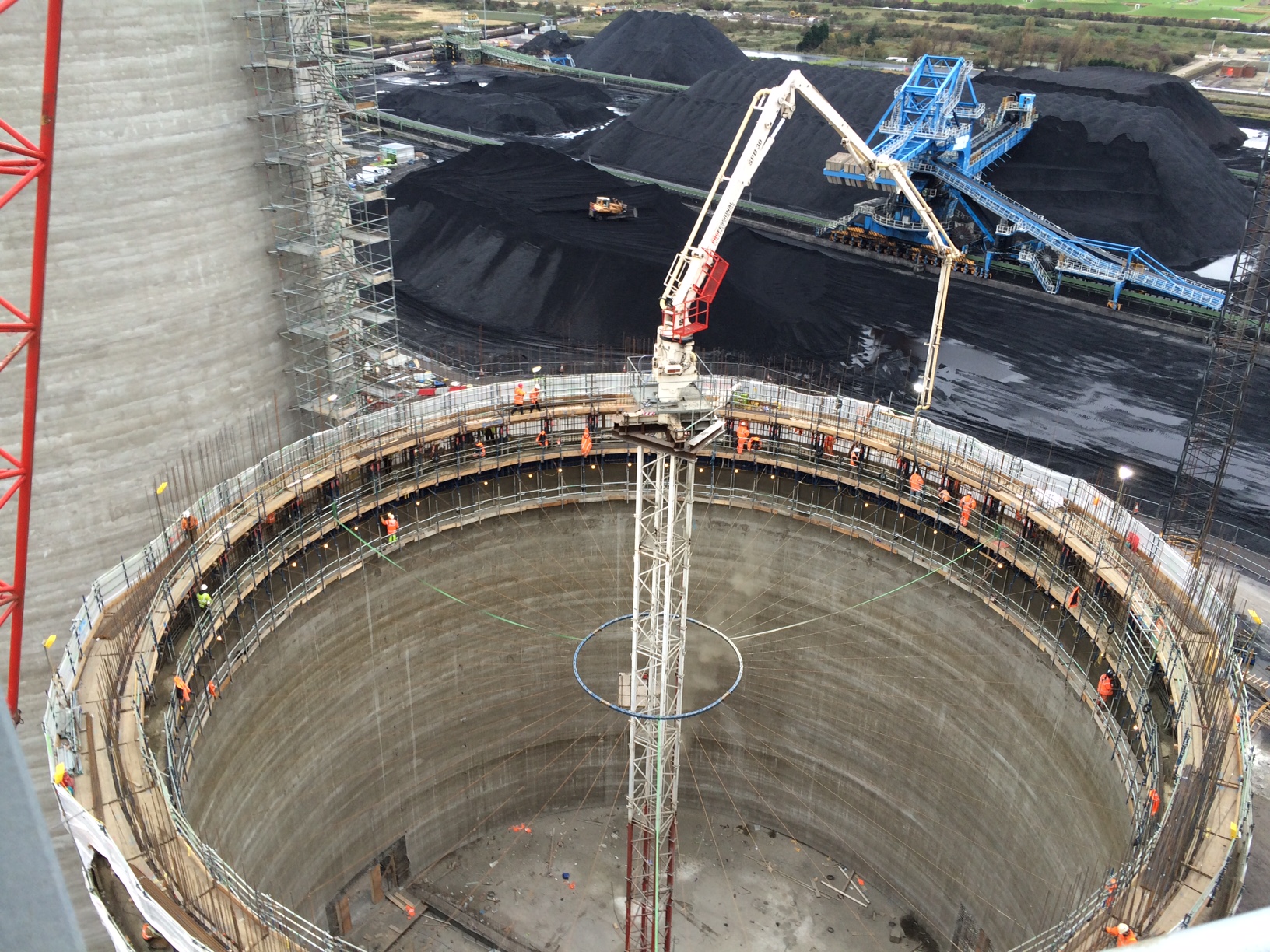
Inside the Silo slipform.
The slipforming platforms are on 3 levels. The upper level is used for the placing of the 20mm vertical steel bars (that are at 3 different heights, meaning only a third need changing at the same time) and the solid slip bars, that the jacks run up, that are placed inside the wall and cast insitu to be jacked out once complete. The middle level is the chaotic level (as Richard mentioned in his blog), where the concrete is pumped into the shuttering, the 25mm horizontal steel bars are placed and the actual slip is controlled. The shuttering is 1.2m deep. The lower level is used for rubbing down the concrete after the slip shuttering has moved upwards to create the specified finish. There are never less than 45 guys on the decks.
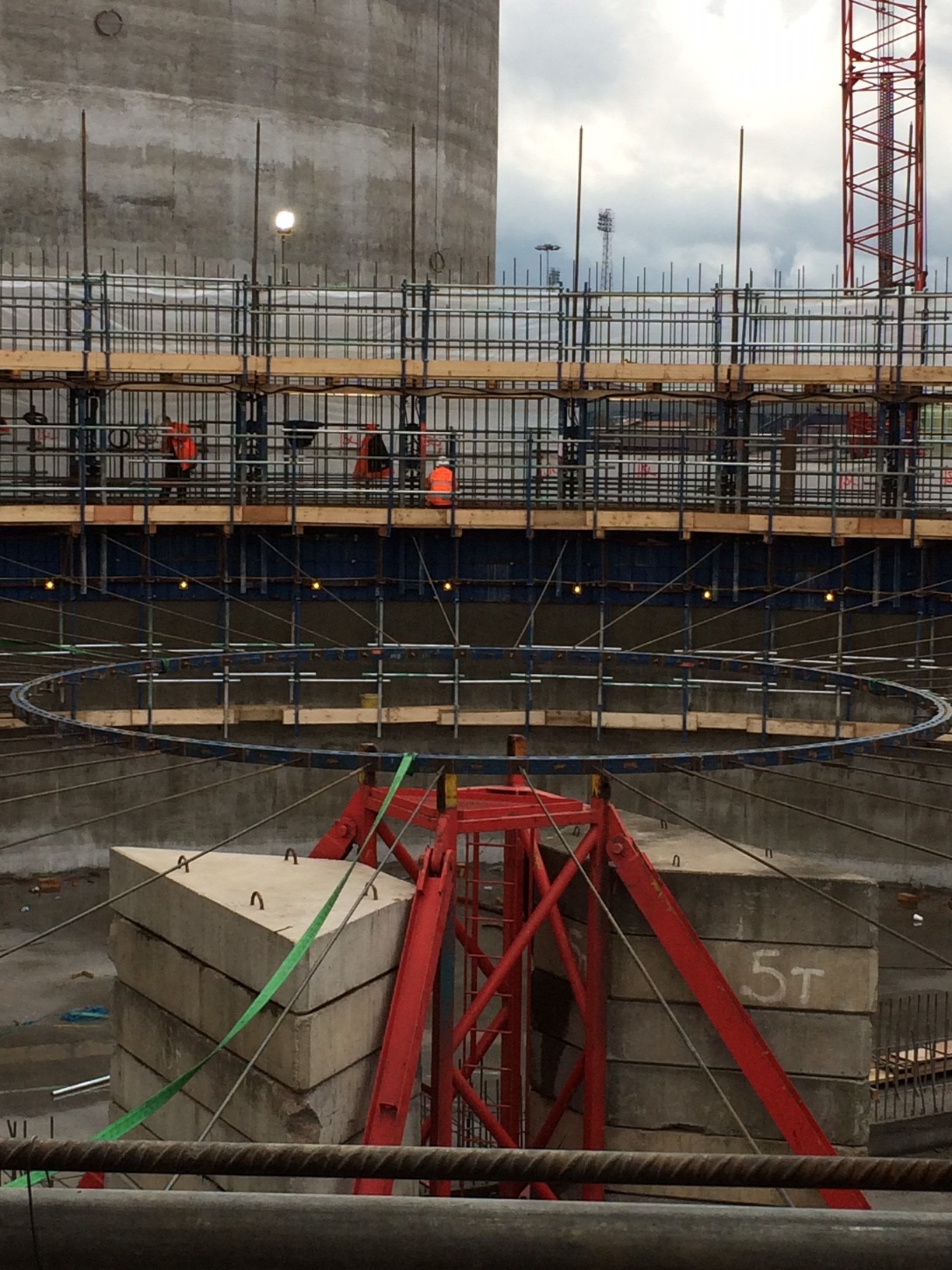
Slipform central ring.
The internal shuttering is held in position using a central ring with a number of post tensioned spokes running out to the shuttering itself. The internal shuttering in turn holds the external shuttering in place at the 450mm width required. The jacking bars that are placed internally into the wall, that allow the slipping equipment to raise up, are where the heights are transferred to allow the engineers to control the move.
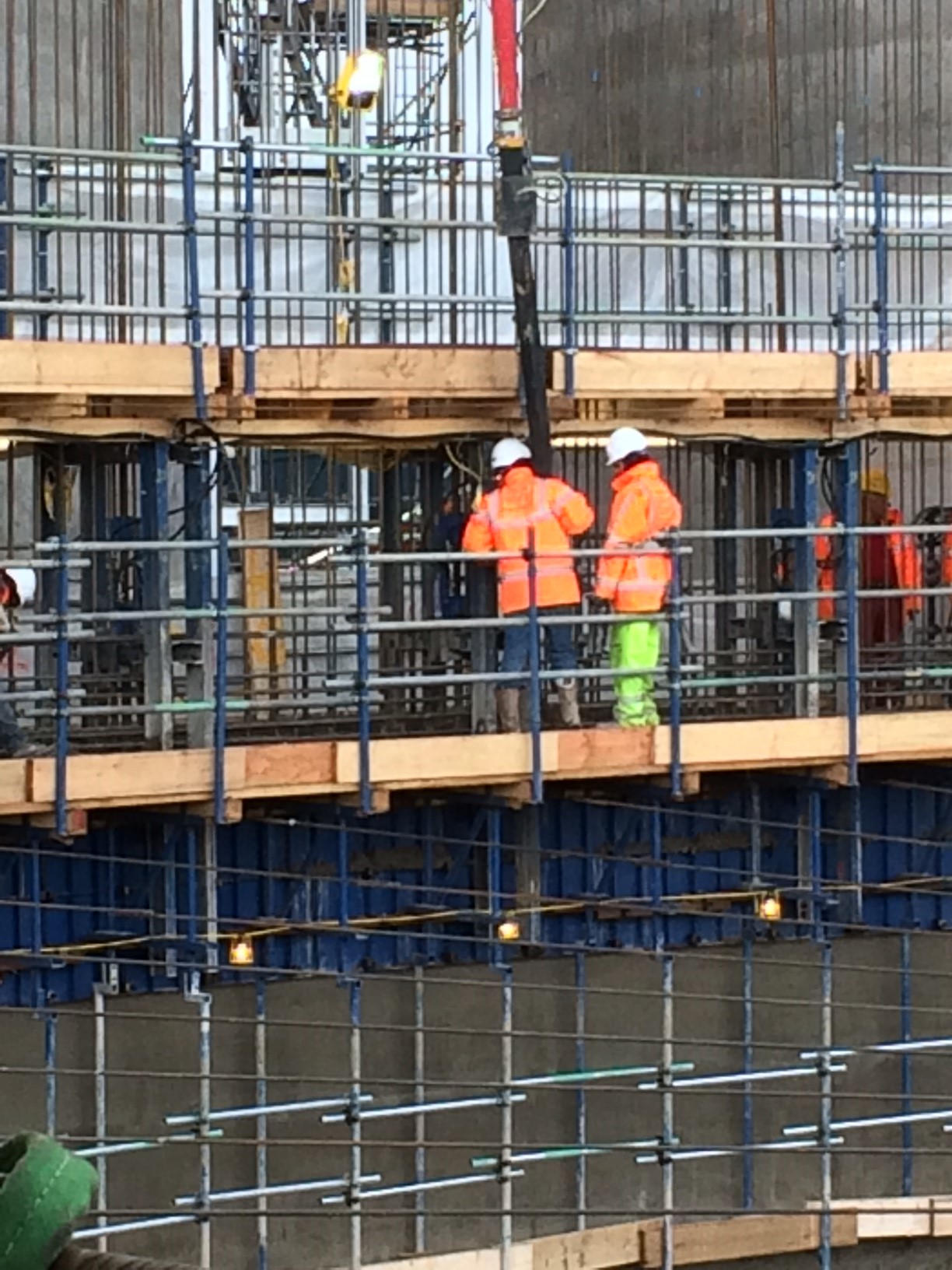
Level 2.
The concrete used is a rapid setting specification and one of the main reasons the first slip was completed so quickly was due to the high ambient temperatures seen during that first week in October. As the shuttering was 1.2m deep and the teams were slipping at around 300mm an hour the concrete was reaching sufficient strength to be slipped out of the shuttering within 3hours. The concrete strength is tested in a highly technical manner prior to it being slipped out of the shuttering. A 1.2m piece of rebar is pushed into the concrete until it will go no further, if 300mm was left protruding the equipment would slip 300mm. The bar would dictate the amount of slip. The entire structure was completed with the concrete placed on day one having only just reached its 7 day strength when the structure was completed. I have not seen the 7 day cube results yet.
The silos were tendered on a fixed price contract based around a 10 day completion per slip. The concrete sub-contractors, IFL, completed the first slip 3 days ahead of the priced schedule and its estimated that the wages alone amount to £10000 a day. Therefore the subcontractor has made at least a £30000 saving on wages during the first slip. However it may not all be profit as 13 of IFL’s workforce were arrested coming into the port for their Saturday nightshift by Immigration Officers. The Indian gentlemen may not be returning in a hurry and IFL may have to reinvest their profits into the Homeoffice to pay the fines. We’ll wait and see but I’m not convinced they care as another mini bus full of replacement Indian labourers turned up on the Sunday morning! Either way the concrete foreman is currently running on redbull and pro-plus to ensure that the 3 remaining silos are completed ahead of schedule to guarantee his substantial Christmas bonus.
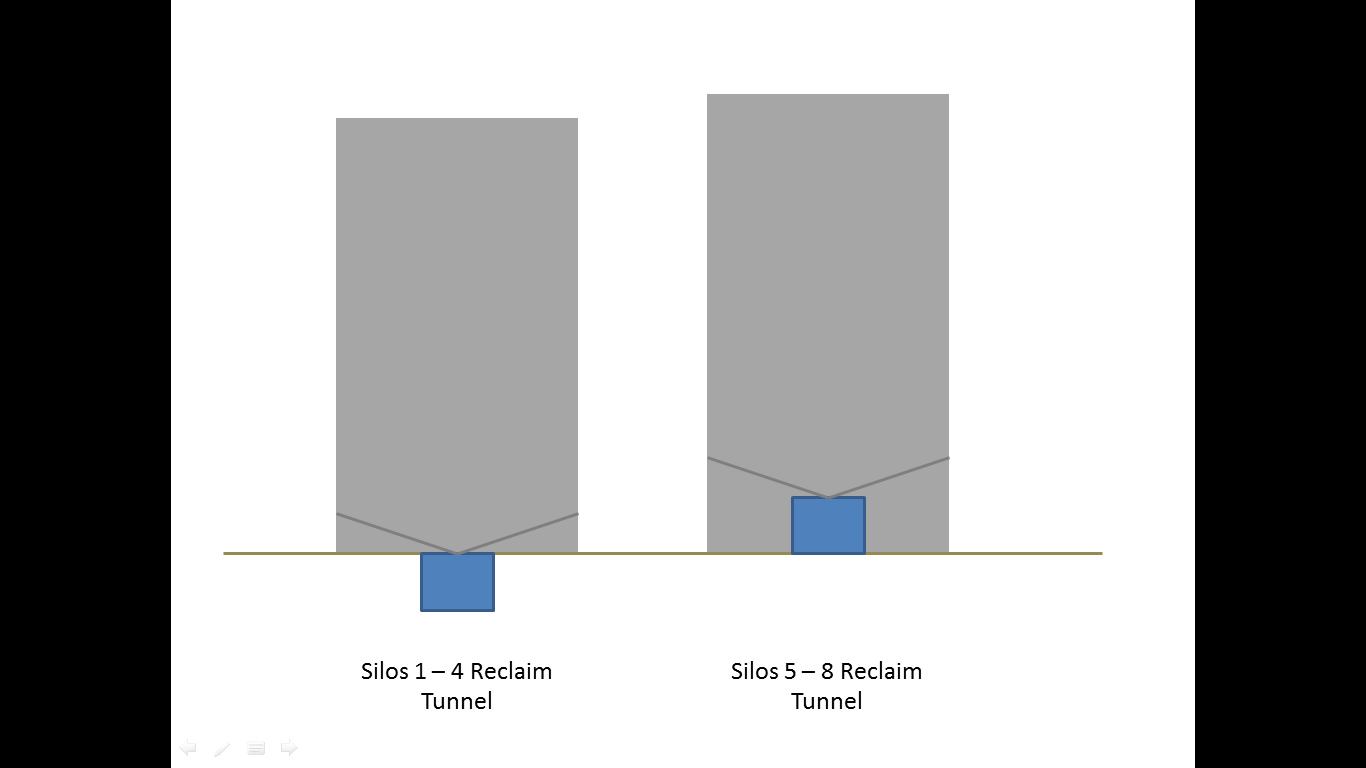
Silo Reclaim Tunnel Re-design.
As an aside, the original silos underwent a fairly detailed cost analysis to verify a proposed design change for the latest ones, that would mitigate the risks in the ground. The reclaim tunnel that runs underneath the existing silos was placed inside the new ones. Essentially the cost of the additional silo height required to maintain the capacity and extra fill for placement of the vibro-panel floors was less than the ground works associated with the excavation of the tunnel and the post construction dewatering maintenance costs. It also reduces the risk for Graham. There are only 3 access voids left in the silo walls during the slip. 2 for the new tunnel positions and one higher up for the back fill of stone, concrete flooring and vibropanels. These limited voids, go some way to explaining the speed at which the silos have been constructed when compared to Rich’s tower block.
I have spent some time working on the slip to get some additional experience but its generally a stressful area that is best avoided, especially in poor weather conditions. It wont be much fun up there with the dregs of Hurricane Gonzalo expected tomorrow.
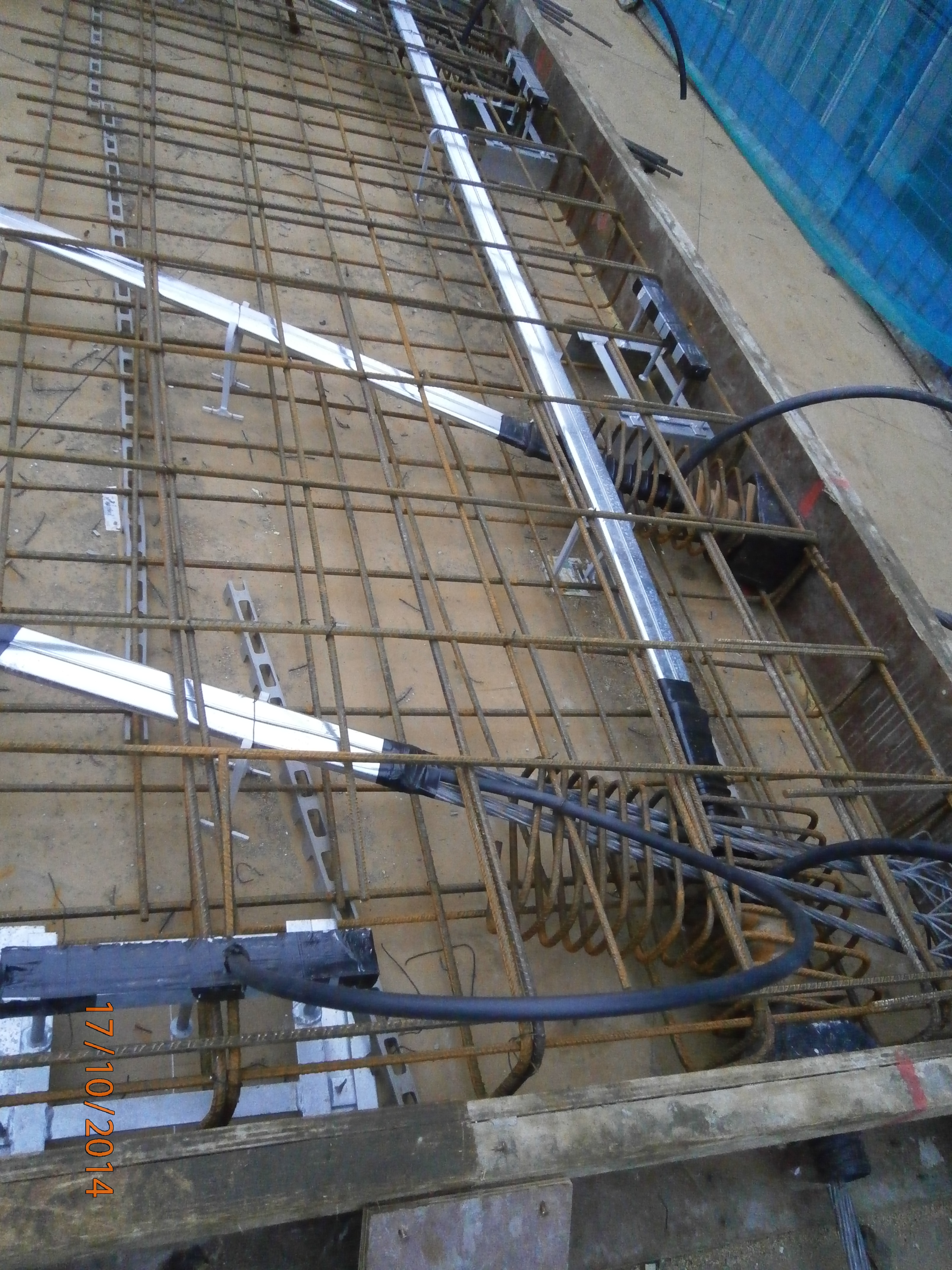
PT slab – Live end with ducts
In response to Rich Farmers comment on ‘where are the sheaths?’, here is a pic of the live end. Sheaths/ducts in place and taped up with grout tubes poking out.
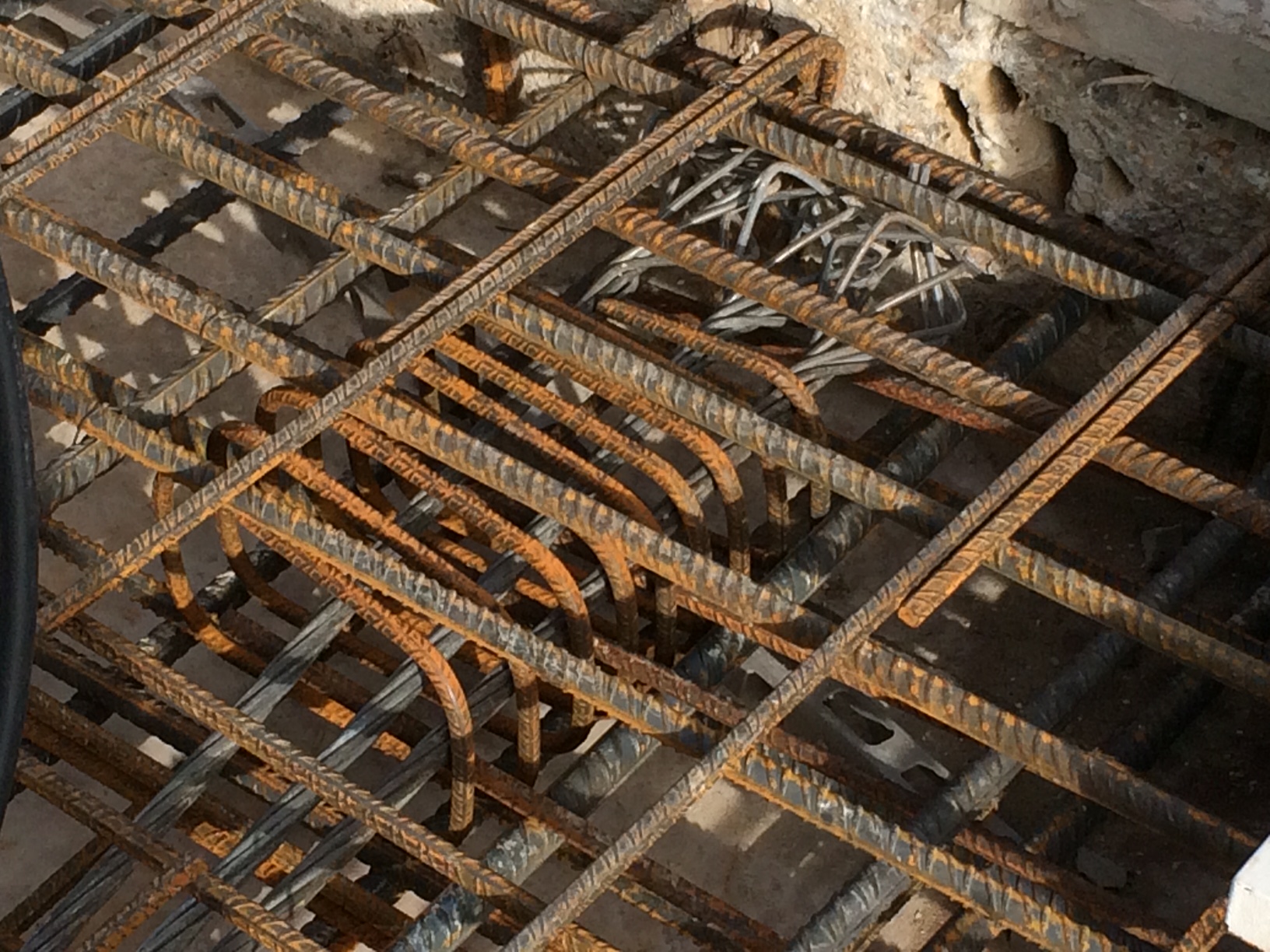
PT Slab onions
Here is a photo for the phase 1 guys. We talked on site about the PT tendons. This is what the dead end of the PT tendons looks like with the splayed onion end in order to anchor the tendon in the slab. The spring like coil of reinforcement is for bursting. Enjoy Ex Waterloo. Rich
 Holdfast Training Services Trial Blog