A job with a view!
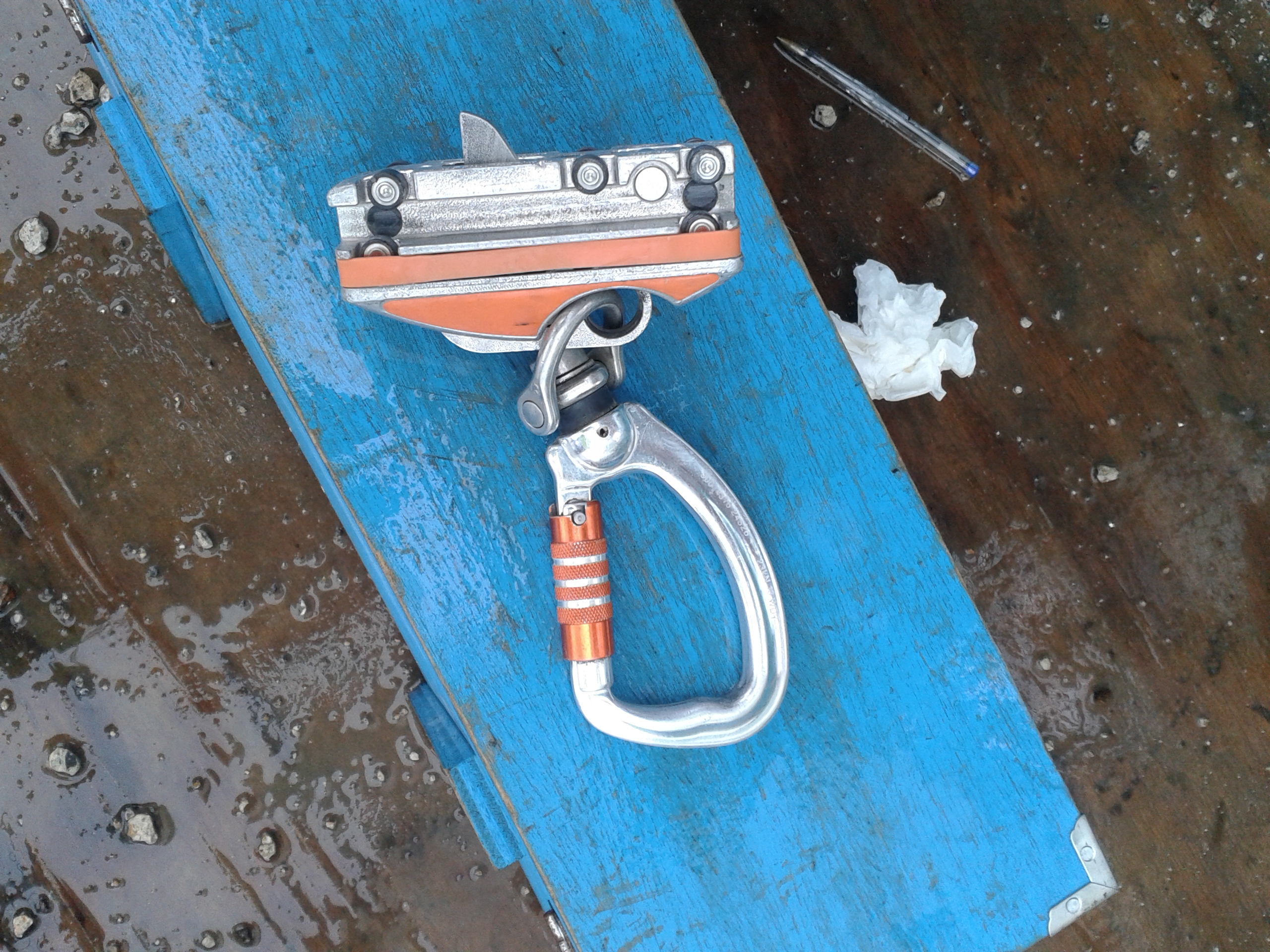
I finally managed to make a contact over in Mace by randomly chatting to the Project Director on the walk to site. He put me in touch with one of the engineers to chat about some of the technical issues who then put me in touch with a construction manager to organise my trip up a chimney! Having told him that I was a climbing instructor he quite happily gave me a full body harness and a glide-lock fall arrester off we went on a nice windy day!
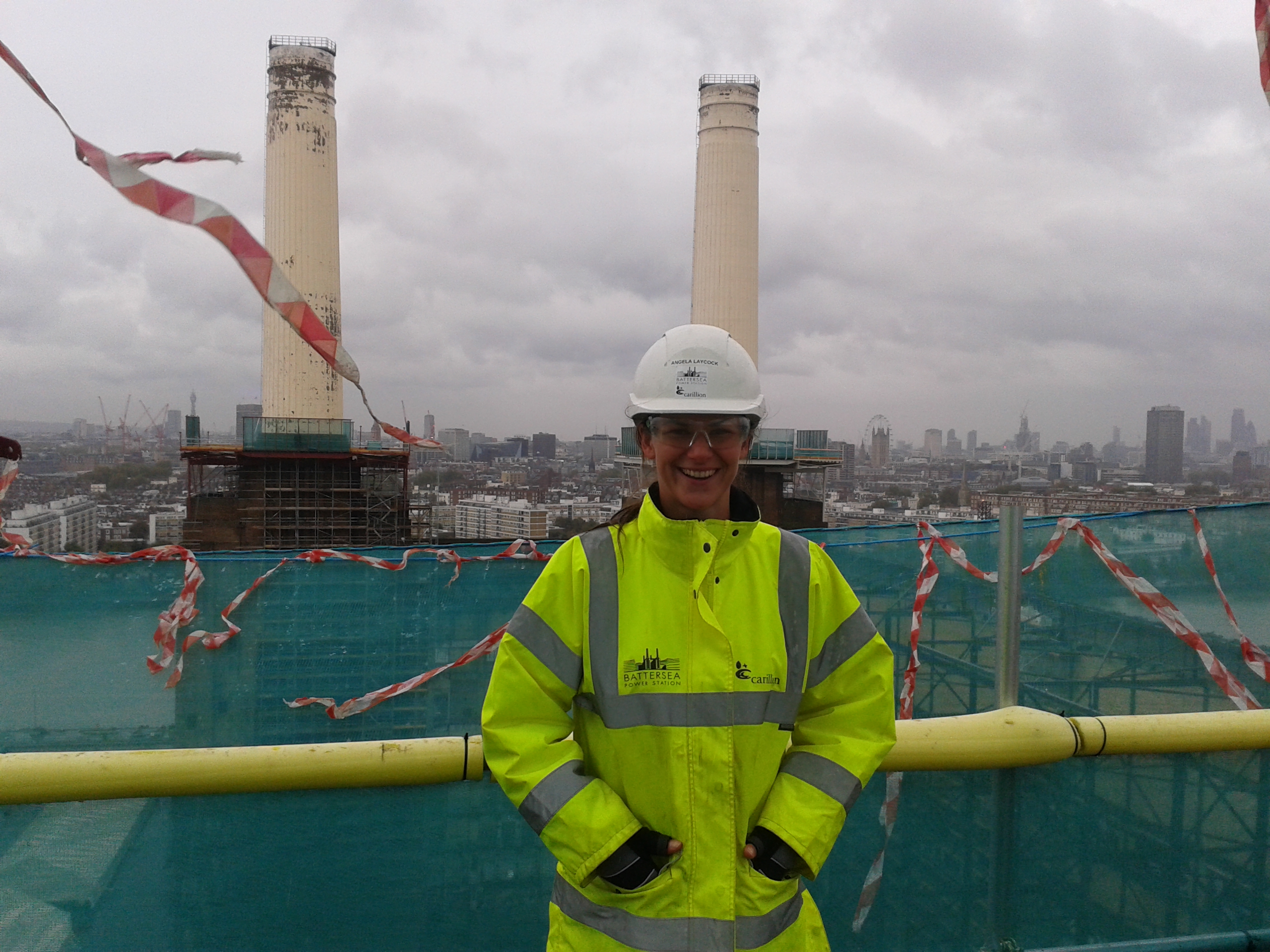
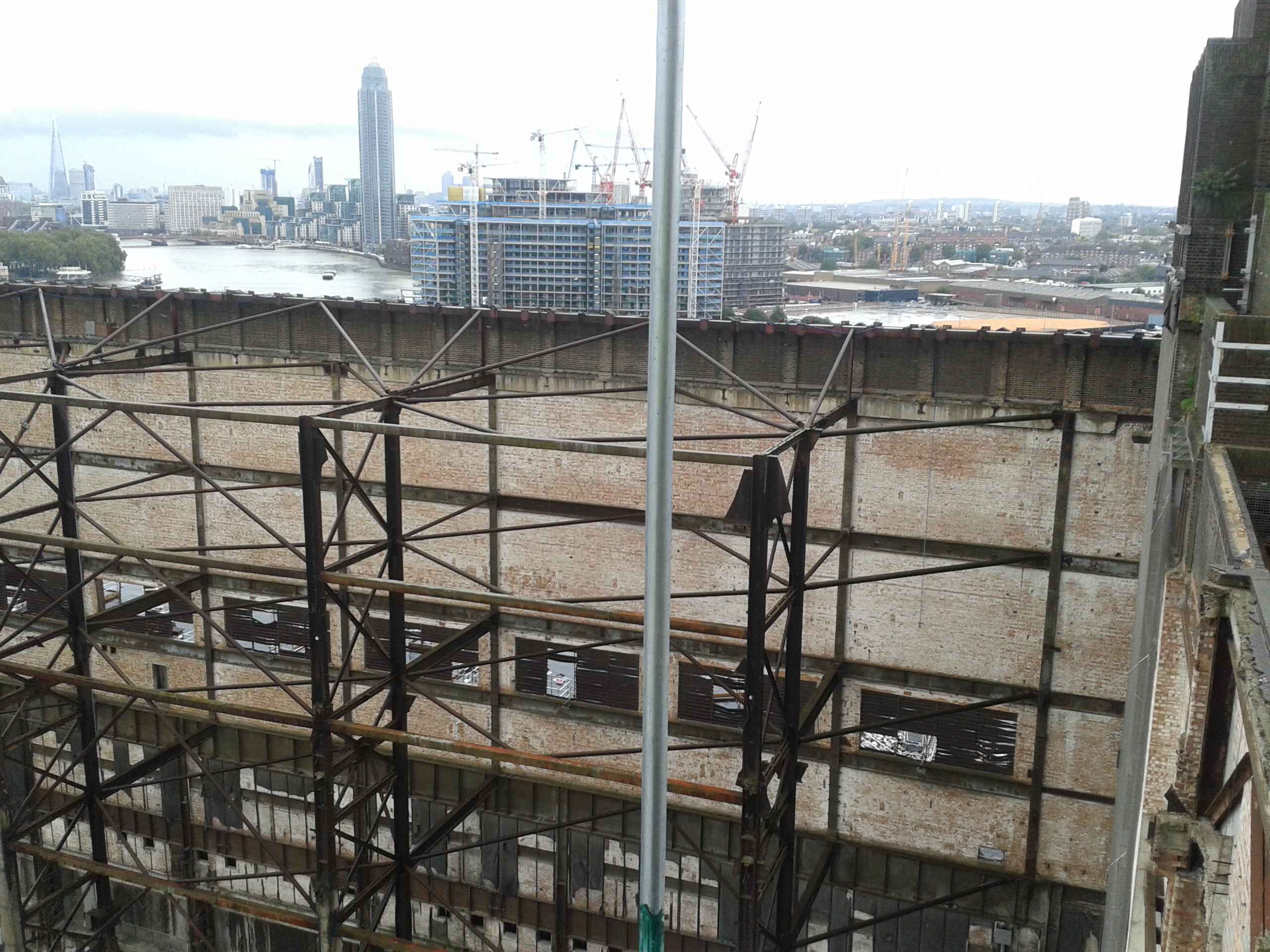
To get up the chimney you first catch the hoist up to the 14th stop which takes you to a level of scaffolding around the top of the brick wash tower. From there you climb up a couple of platforms via ladders until you are on the large protective platform that is designed to contain any spoil which falls from the demolition of the chimney. Even from there the view is pretty good and you can see what remains of interior of the steel framed-brick clad building.
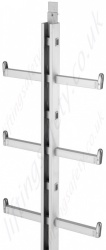
If that wasn’t enough to trigger a bit of vertigo, the really exciting part comes next with the ladder of doom. The only access to the top of the chimneys is by a “Y-spar” ladder that has been bolted into the good bits of concrete. It wasn’t quite as hairy as the Via Ferratta on the Camino del Rey in Spain but it certainly got the adrenalin going!
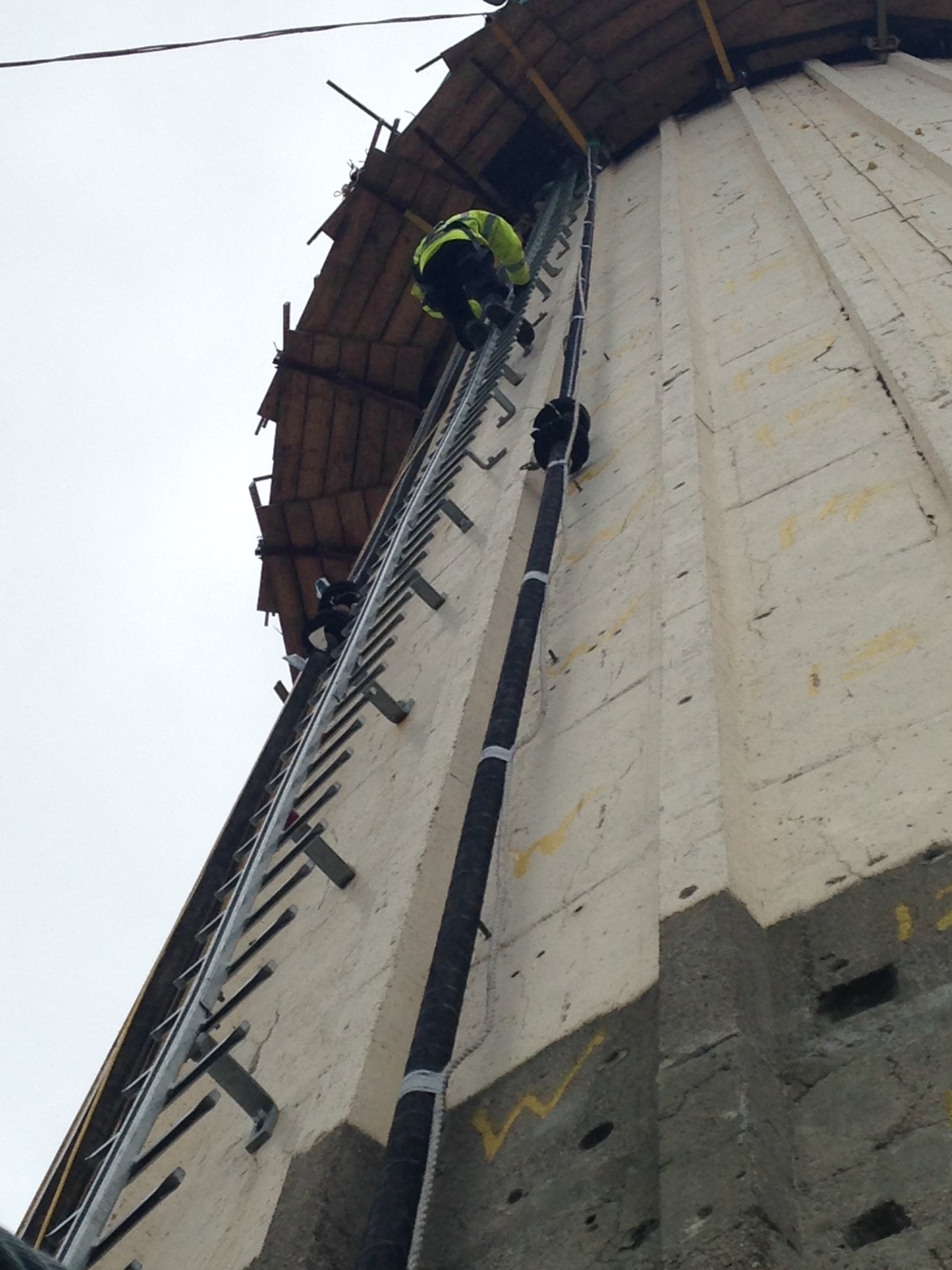
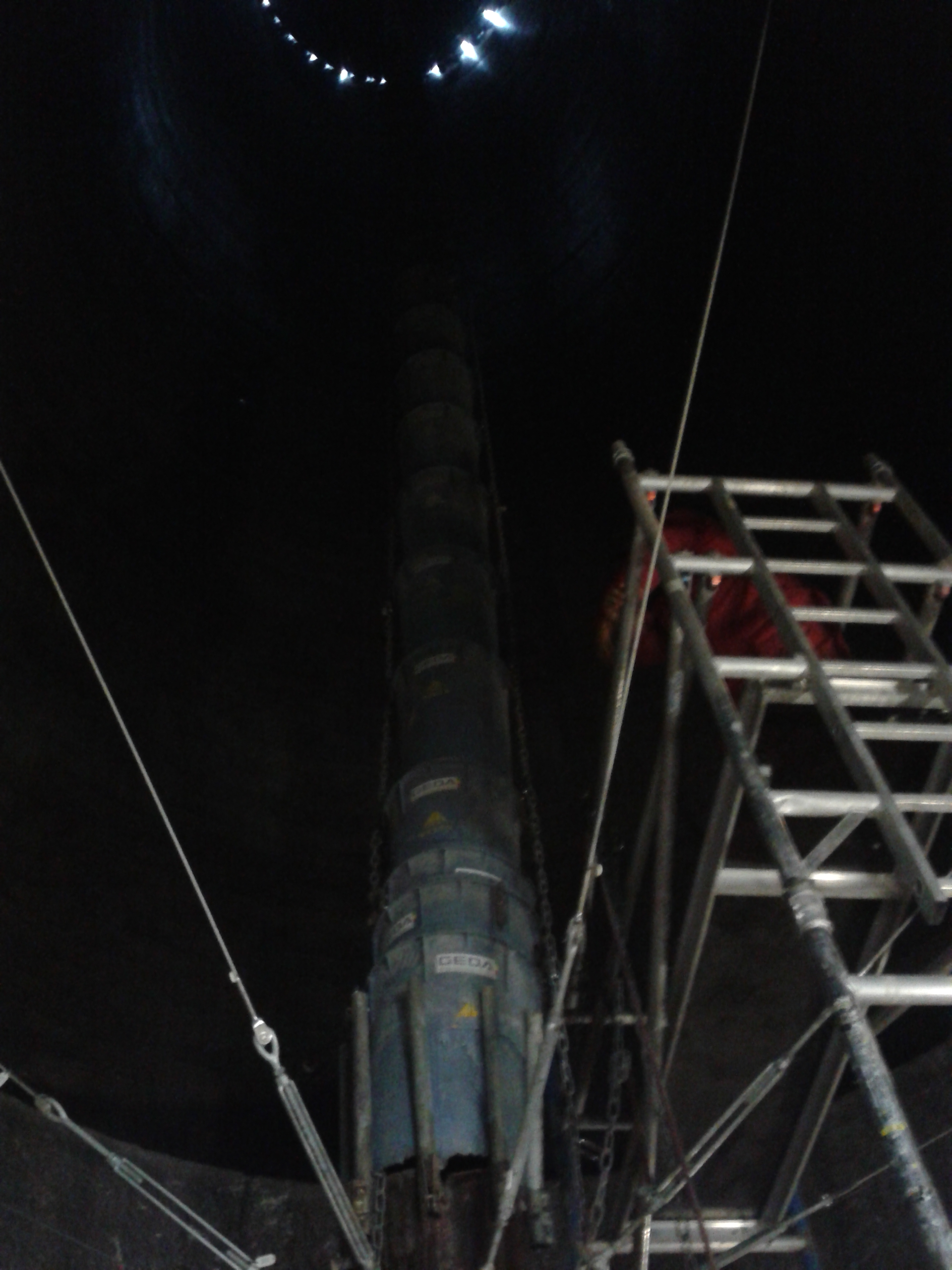
At the top of the chimney they have two circular platforms which can ‘climb’ up and down the chimney using hydraulic actuators on the bottom platform. They act as compressive bands around the chimney providing support keeping the concrete in compression. Hoists and other access methods were not used as vibration and differential loading could cause the 80 year old concrete to continue to crack and spall. Prior to the breaking of the concrete the interior of the chimneys was sprayed with a sealant to prevent the tiles which line each chimney falling off and to seal in any contaminated particles. The original plan was to use hydrualic concrete breakers on Davit arms on the top platform to crush the concrete and the reinforcement was to be cut using hand tools. The broken pieces were caught in the centre of the chimney in a collection funnel which then travelled down the centre of the chimney into the building. The pictures below show: 1) the breakers, 2) the chimney rebar, tiles inside the chimney and top of the collection funnel, 3+4) the funnel chute inside the chimney.

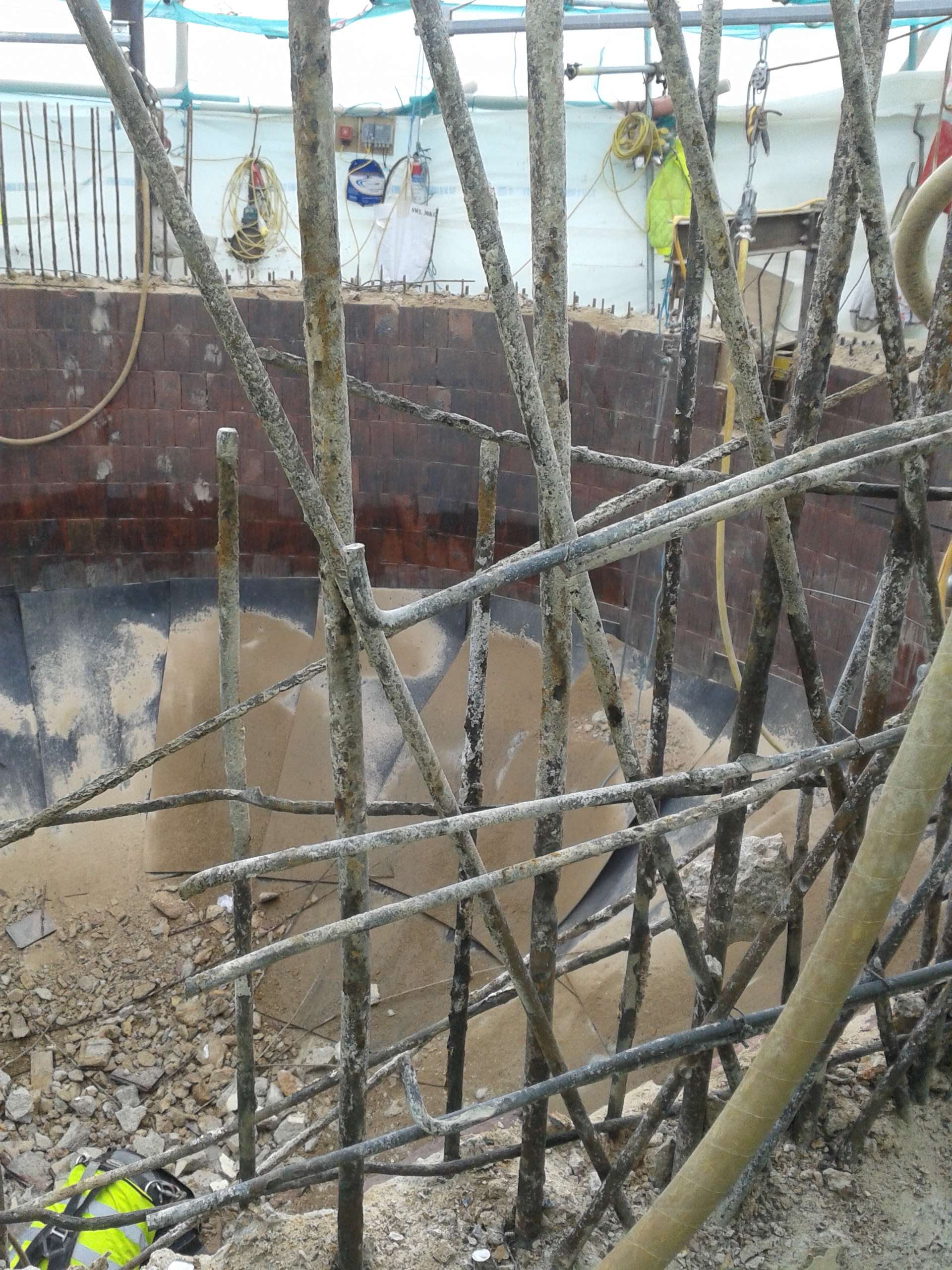
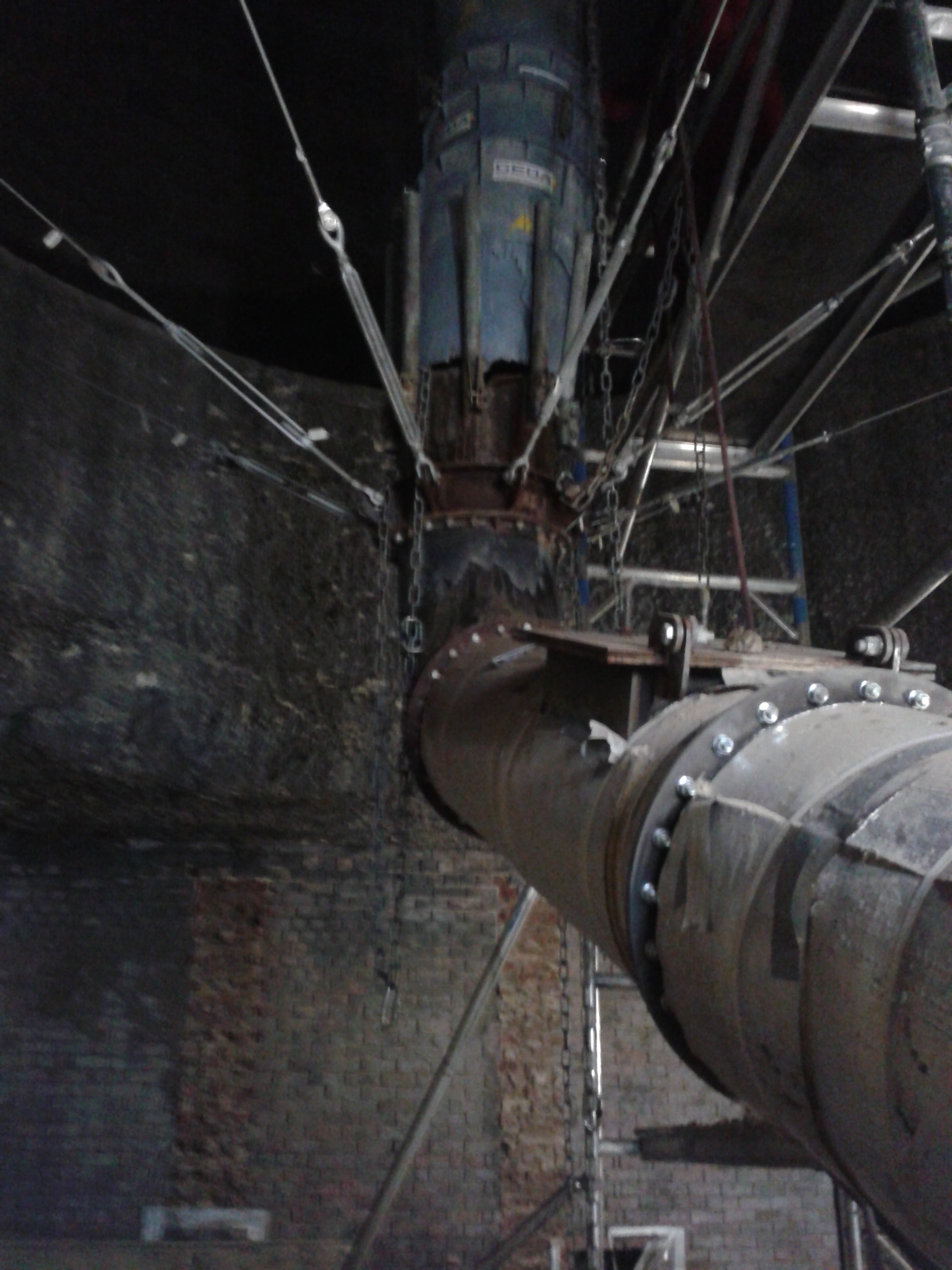
The dense lattice reinforcement meant that the breakers did not work effectively and the concrete did not separate from the rebar easily. The process was proving to be too slow so they switched to using pneumatic hand breakers and circular saws to break the concrete and cut the rebar. The process is quicker but more operatives are required due to the time limitations on the equipment due to the risk of HAVS.
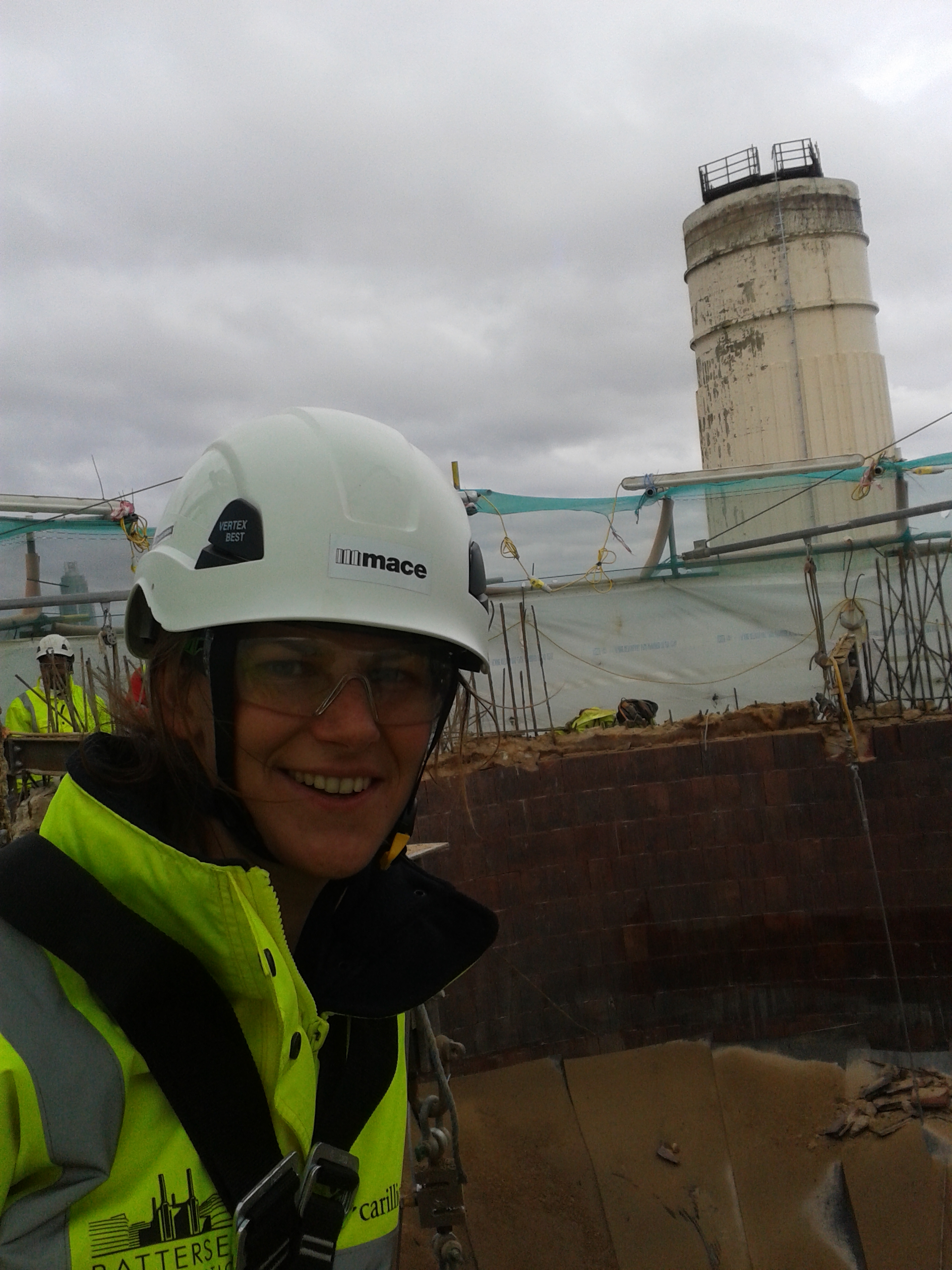
The chimney will be demolished until the final section where the client want to keep a full section for display. It is yet to be decided how this will be achieved! The chimney will then be rebuilt using the jump form technique in 1.2m (4ft) sections to achieve the same ‘day lines’ as the original chimneys. The paint has already been matched and a small concrete batching plant inside the building will be used to produce their own concrete. Once they have built 25m of the first chimney, they will have the planning permission to continue with all 3 of the other chimneys concurrently as the cost and methodology will be proven. They are already looking into other forms of mechanical breaking rigs for use on the other chimneys to speed up the process and reduce the use of hand held equipment.
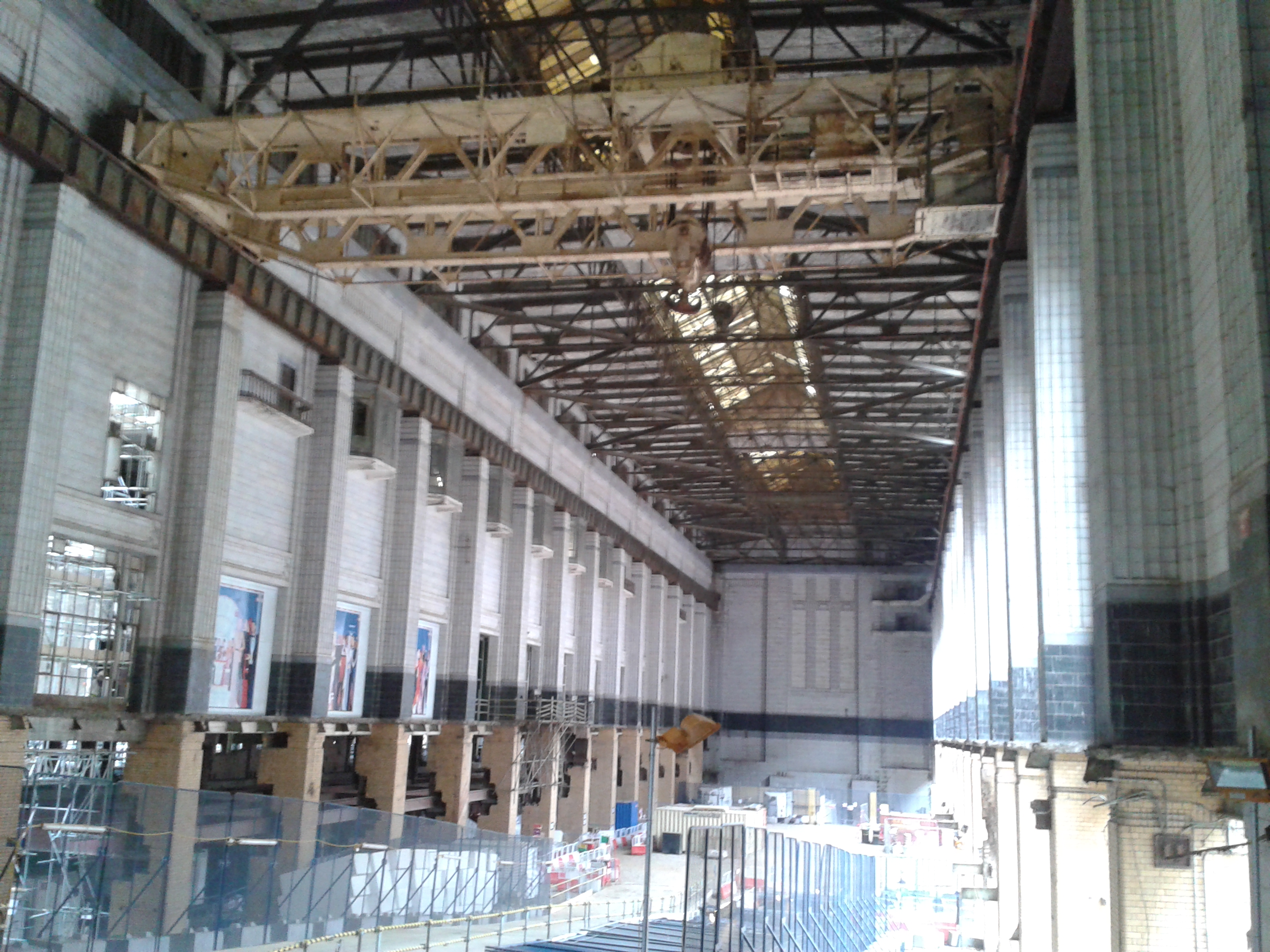
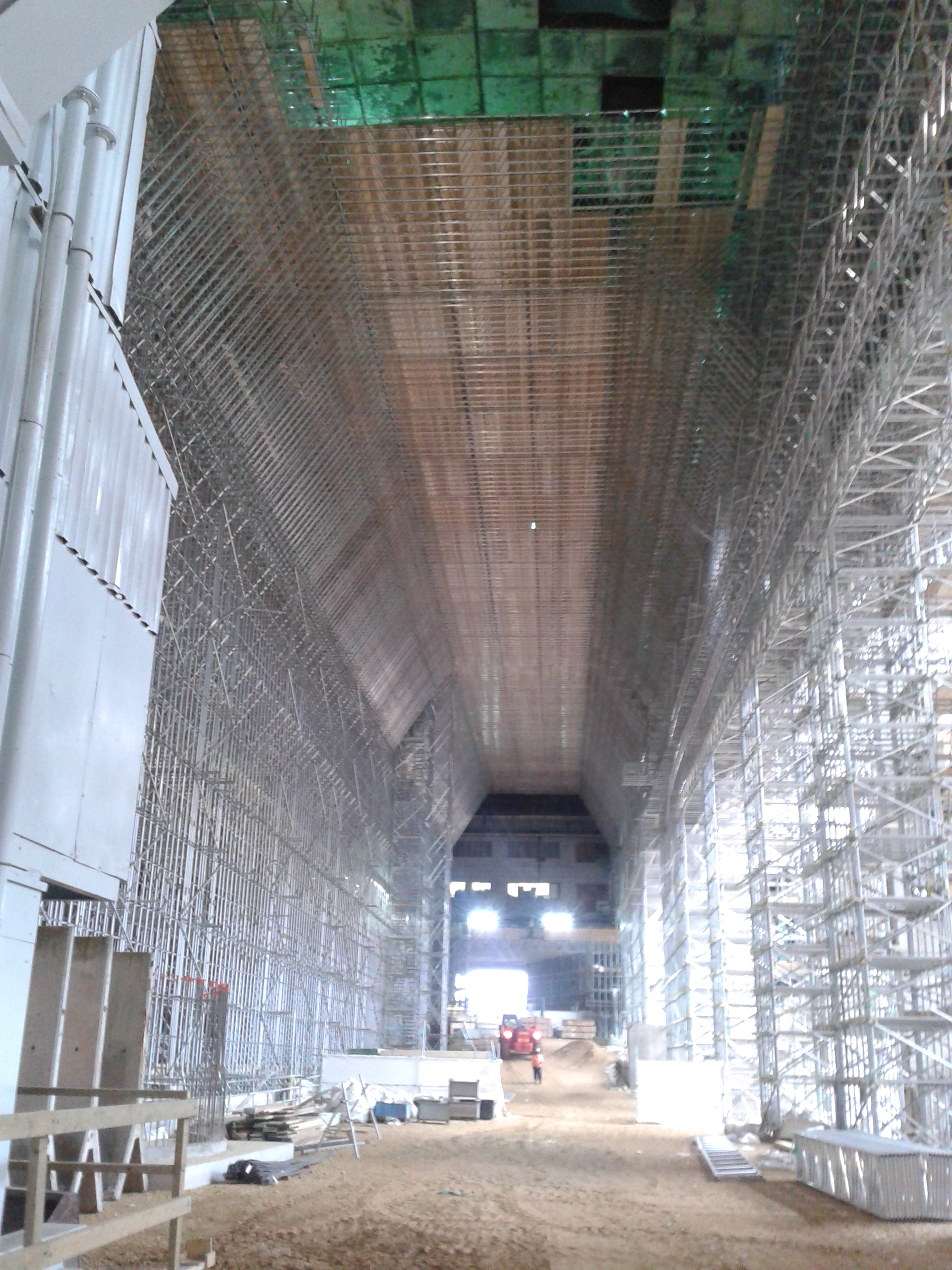
I was also shown around the main turbine halls which will be being refurbished. The asbestos has been removed and work has started on erecting the scaffolding to repair the roof. Even that is an impressive structure that I would not like to do the temporary works design on!
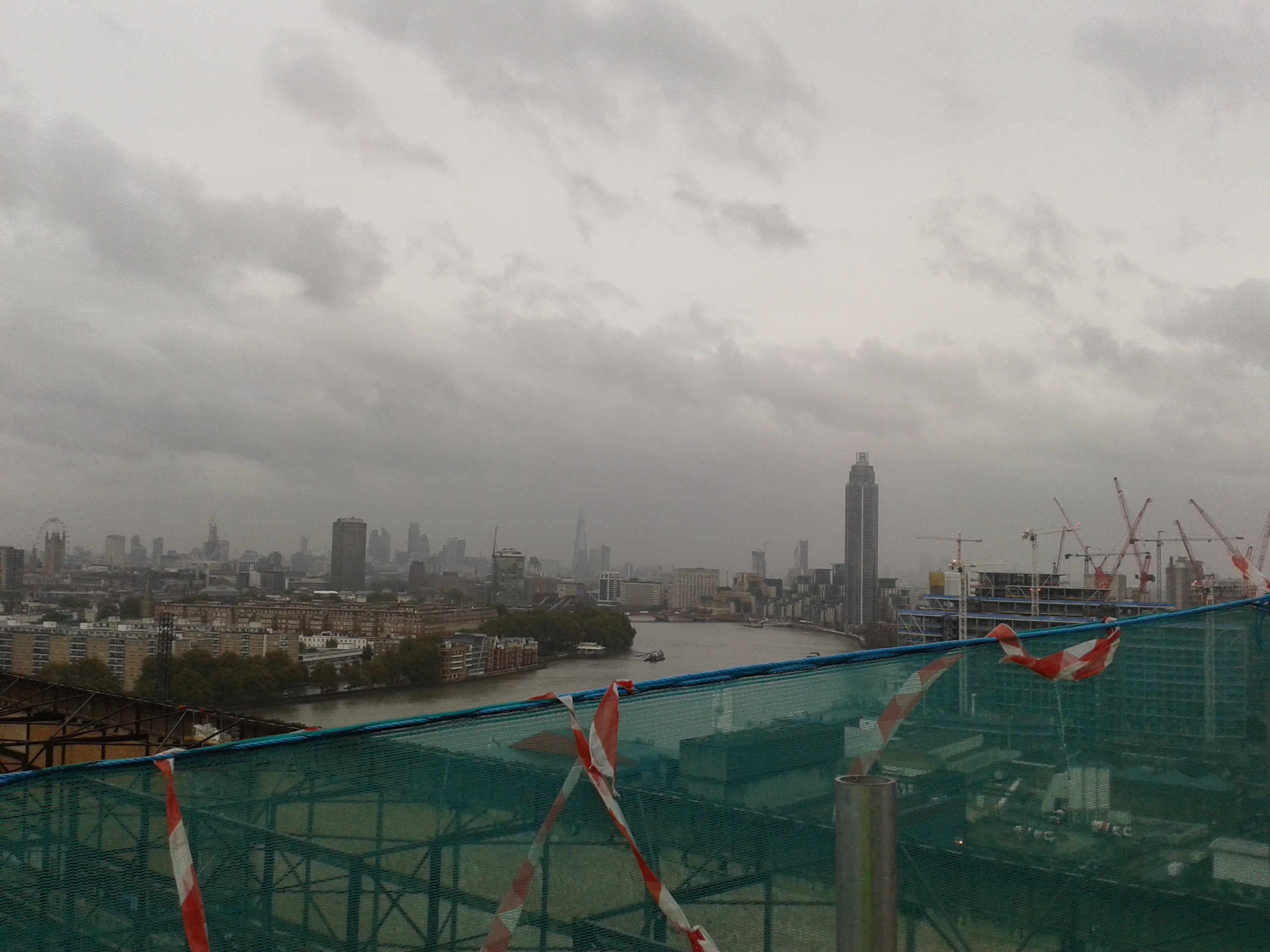
The trip up the chimneys also provided a good vantage point to view our construction site with Block G looking like Ex Cofferdam and my Network Rail Road standing proud along the main site.

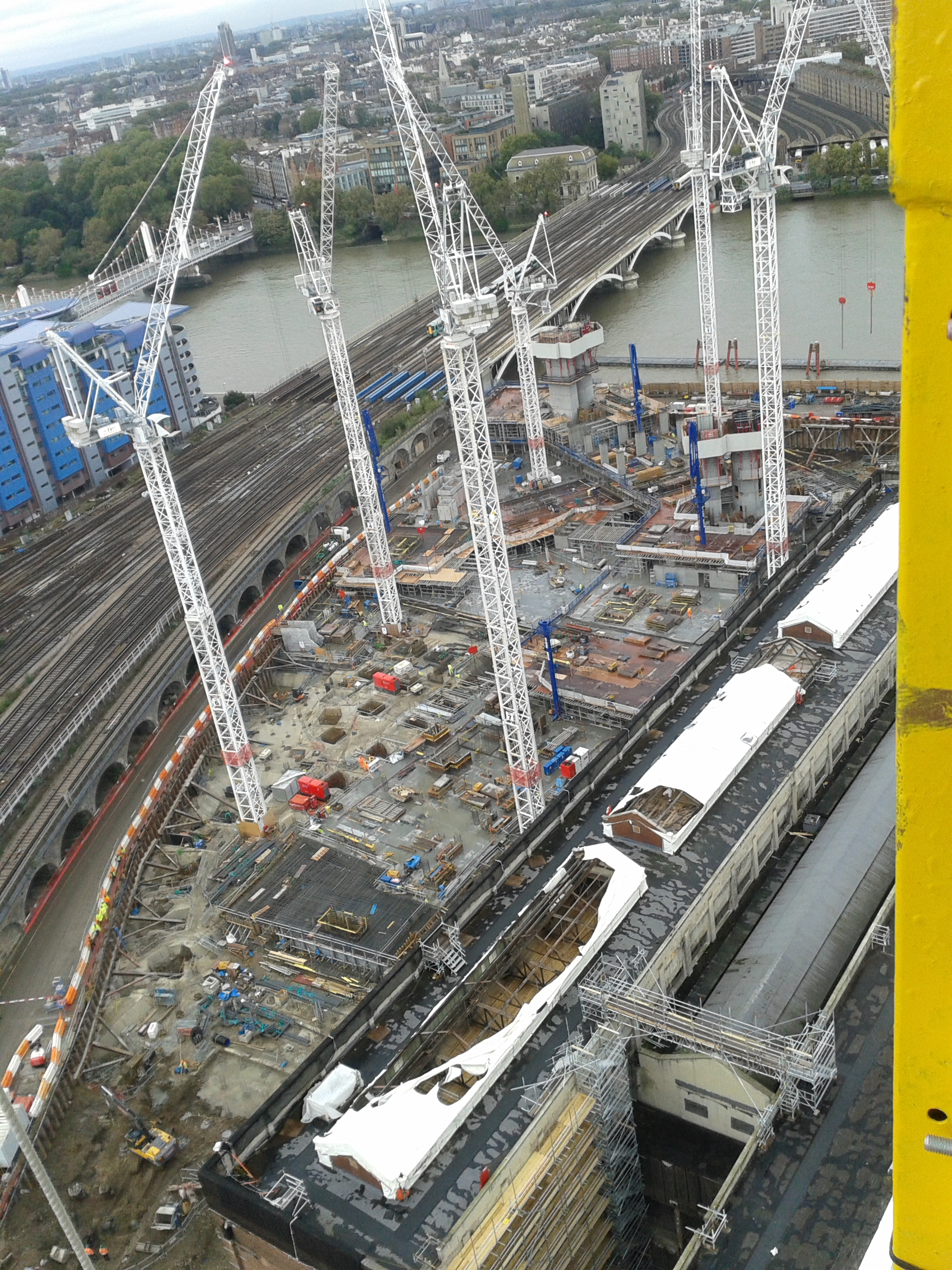
Back to the real world and my construction site. Well we hit a major milestone with the HV being switched on the other week-only 6 months later than planned! We are also near to getting the approvals for the microboring so work is likely to commence in the next couple of weeks. We also found out today that the Northern Line Extension contract has been signed by Laing O’Rourke and they have designed their escalator shaft to go straight through our HV cables, water supply and comms ducts despite them being a constraints drawing showing them! I think this project will be trying to dig up as much of the previous phases as they can as co-ordinated design doesn’t seem to be their strong point!
 Holdfast Training Services Trial Blog
Silly column..
Nice photos of London Ange and the generator halls, always think they are majestic even if redundant. Is the concrete from the towers being recycled as bedding and backfill? Presumably it has a fairly significant proportion of contaminants? No surprise on Laing O’Rourke moving ‘existing’ to make way for new; just puts a little pressure onto making sure your as builts are accurate!
The concrete was meant to be recycled and I think it is being sent out into the yard to become 6F2 for piling mats. The chimneys were lined with tiles and a glue-like sealant was sprayed onto them to seal any old exhaust gas residues. The wash towers actually used to hose down the exhaust gases to help clean them and it ends up that the waste water that then went into the river was more toxic to the environment than the gases going into the air! The as builts have been appalling, O’Keefe sacked 2 engineers involved in installing the services and someone else had to find their info on their EDMs. Carillion didn’t have a resident surveyor until a few months ago and before that we had to get one in for spot checks. We have only just got a Quality Manager on board too so I am scraping together a quality file that we made up as we went along. Carillion basically tried to save money at the front end of the job so we are now playing catch up!
Angela, you’ll get a climb in anywhere!
The wastewater should be more aggressive than the flue gases, not sure about the word toxic, maybe in its early days.
Battersea was the first power station in the world to employ flue gas desulphurisation on a large scale. Thames water mixed with chalk initially and then later with alkaline by products from boiler water softening plants. FGD removes oxides of sulphur from flue gases which, in turn, reduces acid rain and smog – real problems in 1930s London.
The by product at the time would have been sulphuric acid in a slurry so the major effect on the Thames was, as far as I can tell, a local pH change around the outlet, a bigger problem would have been corrosion in the pipe network and removal of excess slurry products.
Modern FGD systems typically have gypsum as a by product but the use of very low sulphur fuels and natural gas is having the biggest impact on flue emissions of sulphur.
Angela
A nice blog – no more climbing towers in the design office with a broken foot. I am not sure that I could have made the trip up the column. Do the workers get ‘height’ pay?
Kind Regards
Neil