More Offshore Helideck Stuff
Since the last post I have enjoyed a further stint offshore assisting with the line-up of BP Andrew for start-up. This most recent mobilisation had two components to it a) assisting with a complete system line walk before start up b) production support to start up activities.
The 96hrs line walk is the final serial prior to introducing hydrocarbons to the platform. This final walk is effectively the third system line walk that is conducted on the platform. However, considering that the previous line walks may have occurred up to 8 weeks before the start-up it is conceivable that some of the systems may have been put out of alignment. It also allow for checking that all the previously identified snags have been corrected.
Having completed this line walks I was then set to production jobs with the production technicians. The tasking received was to prepare a series of scrubbers for their gas duties. The preparation activity was to introduce approx 1m3 MEG (ethylene glycol) into each of the three vessels. As this was not a routine activity there is no procedure in place, therefore, it was down to Barny (prod tech) and I to design a procedure, find the equipment, make up the fittings, run lines from the top of the platform to the bottom and execute the task. It felt very much like a scrap heap challenge. It was definitely the most valuable and enjoyable experience of the trip for a few reasons:
Control of work. Although a relatively simple task it was necessary to create a permit to work and to take the Area Authority out on to the plant to brief them on the conduct of the task prior to it going for approval. Only once approved by the Offshore Installation Manager (the CO) could the work go ahead.
Technician competence. As an outsider I initially thought that the Ops Team Leader (the OIMs right hand man) and the techs would be all over what seemed a relatively simple job. I was wrong. Whilst the teams are sound at doing their routine tasks the ability to tackle something outside the norm really was a challenge.
Plant conditions. Though the platform was not yet producing hydrocarbons the system was far from being ‘flat’, i.e. no pressure. The conduct of the task required that we interrogate the process and instrumentation diagrams in order to identify filling points for the vessels. In all cases this necessitated breaking into systems for tie ins as there were no engineered tie in points available, e.g. via double block and bleed valves. This meant that there was no way of proving that the system was ‘flat’. Fortunately in all cases it was possible to break into the system down stream of an isolation valve. This allowed a controlled assessment of the condition of the plant. In two out of the three cases it was found that significant residual pressure had remained in the vessels, from system pressure tests/purges, even though we had been led to believe that the vessels were depressurised. (Although pressure gauges were visible they were high range pressure gauges, up to 120 bar, so the 5-10 bar in the vessels did not register.)
MILLER HELIDECK LIGHTS
Since the switch on the system has suffered a number of issues. Orga has mobilised engineers from the Netherlands to fault find. These issues have been resolved by the replacement of a control panel module and a software mod is due.
The Helideck Certification Agency (part of the CAA) has now issued an updated certificate for the operation of the helideck with the circle and ‘H’ lighting in operation. Initial feedback from pilots has been great and as long as all the lesson are captured this project will be a useful stepping stone in rolling this out across the region.
ANDREW HELIDECK HYDRANTS
This has taken a considerable amount of supervision to keep this project on the rails. The enabling scope is due to start in 3 weeks, with the engineering destruct/construct starting 10 days after that. As expected this project has not met any of the activity planning timelines proscribed by BP. But for the fact that this project is necessary to maintain the helideck certificate and operate the platform it would have been kicked in to the long grass. Instead I am on the receiving end of a long handled screw driver.
I have found this quite project both challenging and rewarding. Despite Costain assuring the BP management that they knew what they were doing and could easily deliver, it has been necessary to educate them on almost every stage of the process, whether that be engagement with the independent verification body i.e. Lloyds or procuring materials. This learning process has resulted in them losing their way with the engineering. Only a few weeks back it was necessary to signal to the BP management that I had serious doubts regarding the technical ability of Costain to deliver the project. On a number of occasions they were guilty of issuing drawings, calcs and technical notes that failed to meet either the regulatory or BP technical standards. It’s amazing the response you can get from a contractor when you communicate this lack of confidence to both management teams!!
Looking forward, I am expecting to receive the workpacks approved for construction and have the materials sat in Aberdeen ready for shipping by the end of next week (31/10). I am also looking forward to the Costain Project Manager sitting down with all the engineering changes notices that he has been stockpiling for some unknown reason. I get the feeling he has just been putting off another awkward conversation. This one will definitely be awkward Costain have nearly doubled the hours burnt without any coverage! It also brings into question the quality of their own front end engineering work against which they generated their estimate, but that will be the topic of another uncomfortable conversation.
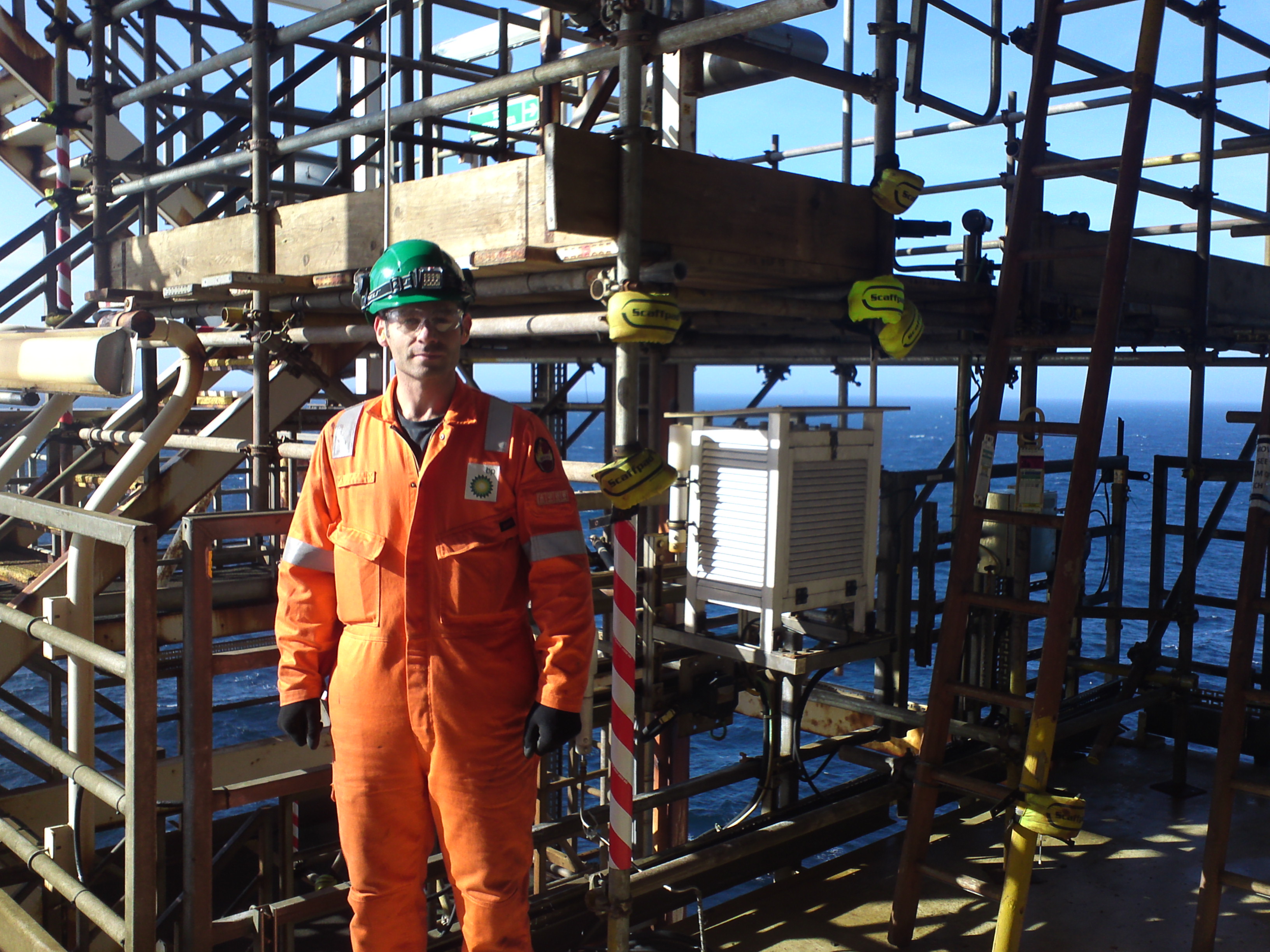
Gratuitous photo:
 Holdfast Training Services Trial Blog
Brendan, leave aside the fact that orange isnt flattering. Ive said it, noone need comment further!!
Interesting stuff and some good talking points for cpr, the competence of techs for instance raises the need to understand the engineering to appreciate the problems that could be encountered- could be an good hook for some “B” competency talk.
I have to say your section entitled “plant conditions” amazed me, a pressure system without DBB for planned tie in or for adequate isolation is an accident waiting to happen, does the industry have different safety criteria for pressure systems than the norm? it sounds like you tied in after a single isolation valve which wouldnt be acceptable onshore on a live system above the 250 bar litre limit without controlled depressuristaion . Another cpr moment in this activity, management of SSoW – ill caveat my comments in that I assume this is a gas stream and not liquid stream?
Now the helideck is reaching an end with a bit of reflection is there anything that can be learnt from this that may be useful on an operational level with regards to keeping a HLS open in adverse conditions?
Brendan, nice post and good to see that you hae been able to get off shore; no photos, it didn’t happen are the generally accepted rules of the house. From a purely contractual perspective, BP seem to be very hands off with the contractors unless the SPA is prepared to dig in and hold them to account. Do you see much eveidence of this happening on the other desks? It was a key issue that came up in the legal ruling against them in the US last week.
I’ll admit I was waiting for a Gitmo type remark!
Great to see some feedback on an E&M post!
Ref the plant conditions. This was non-routine activity that we were required to conduct, hence the lack of engineered tie in point and procedure. The tie in we ended up using on the vessel was a blanked flange with an isolation valve between vessel and blanked flange. This activity was sanctioned as this gas system had not be brought on line and had only seen a max pressure of 8barg (if memory serves). (The hazard i.e. pressurised gas had been identified) There is a BP standard that deals with isolation of lines / vessels and for interest above 10barg single isolation is not sufficient, without other mitigating measures. Above 10barg double block and bleed is the minimum.
Apologies if I led readers to believe that this was some type of cowboy operation. I felt reassured by the processes and management behind that. I believe that it is worth recognising the work that the management team have done on Andrew with respect to standards. When one considers that the operators have been working on a hydrocarbon safe plant for the preceding three and a half years complacency and a dropping of standards due to the perceived lack of hazard is a real risk. I saw no evidence of this. That is not to say that the operators don’t enjoy a few more brew breaks than I would like to see if I were a shareholder!
The Miller helideck trial has been a great learning tool for the regional roll out plan that will follow on its heels. Throughout the execution of this task I have been able to feed nuggets into the front end engineering team for inclusion/consideration in the regional study. This will also include a formal lessons learnt review in the next 10 days. Reassuringly, one of the key outputs is a number of options for delivering the projects on producing platforms, that are unable to tolerate in some cases helideck shutdowns of more than half a shift (6hrs).
Regarding the contractual side of BP. Nick and I have both been given a handful of tasks that sit out with the normal delivery timelines. The timelines have necessarily driven a more hands-on approach. Now Nick may comment differently, but what if would say is that there is lack of pace associated with the projects, as the natural pace allows for a relaxed approach. I do believe that it has led to a workforce that care more about the process than the task, hence the requirement in the hydrants workscope to ‘ride’ Costain.
Got it, my reading was this was a 120 Bar system (hence the DBB concern) the 10 Bar limit is mentioned in HS(G) 253 so single valve and blank plate would make sense, hopefully my question didn’t lead readers to believe that I thought it was a cowboy operation!