Services Engineering with John Holland in Brisbane – Part 1
As the only non-engineer on the PET E&M 55 course, I knew absolutely nothing about what to expect during phase 2 & 3 of the course. Furthermore, selecting where to go seemed like a lottery. What follows is a brain dump of how i ended up in Brisbane, and what i have done since i got here. Hopefully it will be of some assistance in selecting placements and helping the non-engineers understand what is in store.
Placement Selection
I have no marriage / family commitments, so arrived on the course with the aim of getting to Oz. That said, i was also pretty concerned about how i would cope with the academia on the course; my BSc in Disaster Engineering & Management may as well have been a degree in brewing, given the ratio of socials to lectures. Furthermore, do not be mislead by the word ‘engineering’ in the degree title, as the complexity of the engineering covered was little more than building tripods and digging pit latrines.
Early exam failures started to make me think that i should stay in the UK where i could have better access to academic support (PEW). There was also an element of scaremongering about John Holland (JH) getting their pound of flesh due to the associated additional costs, which would reduce available study time and increased pressure around assignment submissions.
In the end I was fortunate to have a moment of clarity. The placements are, in my opinion by-and-large luck of the draw, even for those who arrange their own in the UK. My management could be good or terrible wherever I ended up, any project was guaranteed to be interesting as it would all be new. So my decision to plug for Oz boiled down to this; I had never been here but only heard good things, Ozzies were rumoured to enjoy a few beers and a similar understanding of banter as the Brits, and above all, hot girls in lycra.
My advice – go with your instinct.

South Bank, Brisbane

Casual (girls) lycra
Australia
Awesome!
Pre-Arrival Admin
Getting early information whilst in the UK was like getting blood out of a stone and in the end I contacted my PM to be through Linked In. When I got here all my PM seemed to have been told was that some services ‘guru’ from the British Army was coming and that he needs to be accommodated and given a car. The lack of information had clearly caused rumour amongst the small team, and I later found out that the services engineer whom would become my mentor thought I was being brought in to replace him, which explained the initial uneasy dynamic.
I managed to negotiate $650AUS per week for my accommodation, which in hindsight, was pretty good for Brisbane which is definitely cheaper than Perth or Sydney. I live in a spacious 2 bed apartment in a decent suburb. I can cycle to the CBD or to work in 15-20 mins and am almost on the Brisbane river (Google: Dixon St, Newfarm). Whilst there was a lot of property available, the need for furnishings narrowed the field considerably. Of the 2 weeks relocation leave, i spent just over one finding a place to live and got to know the city for the second.
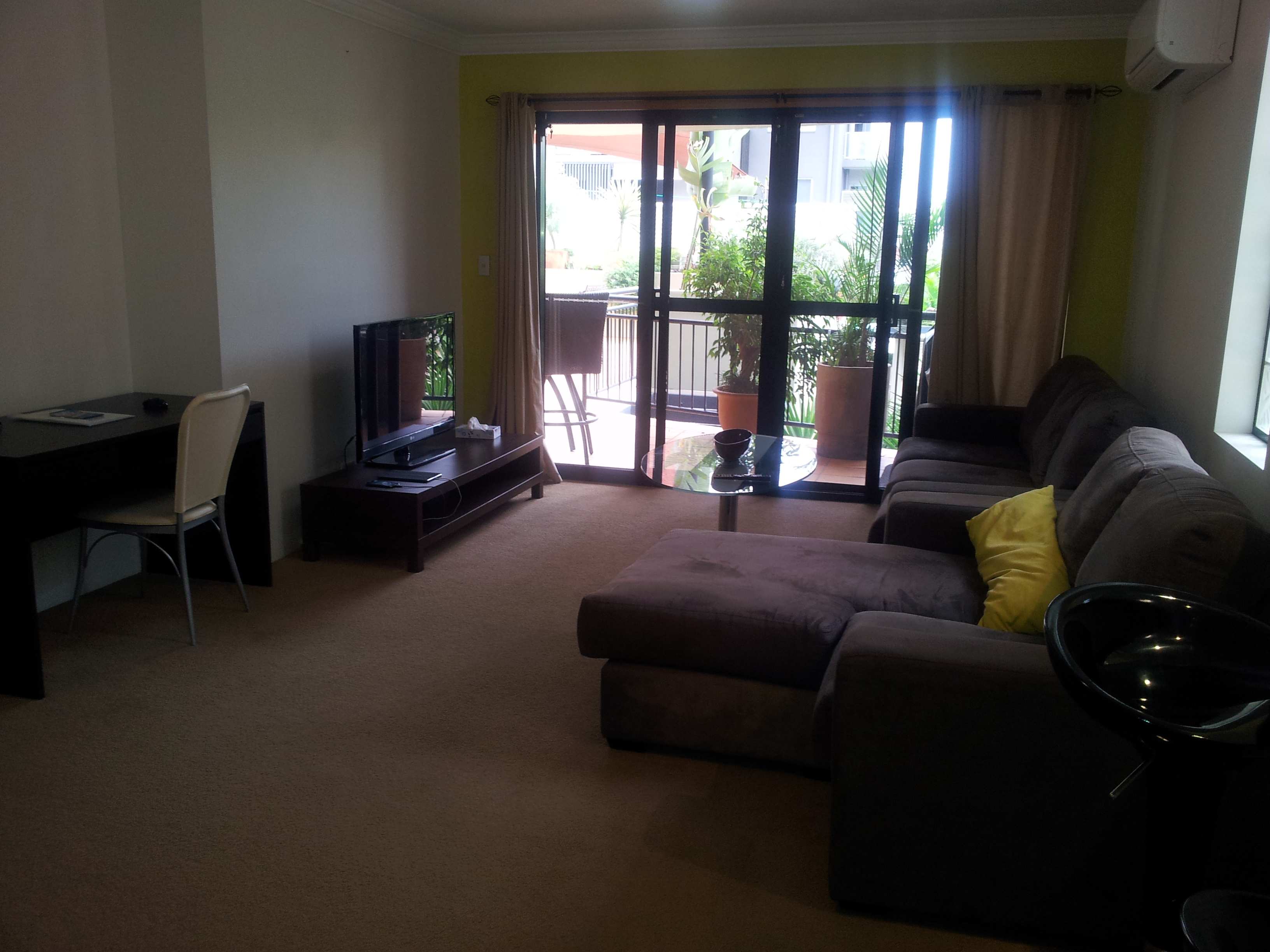
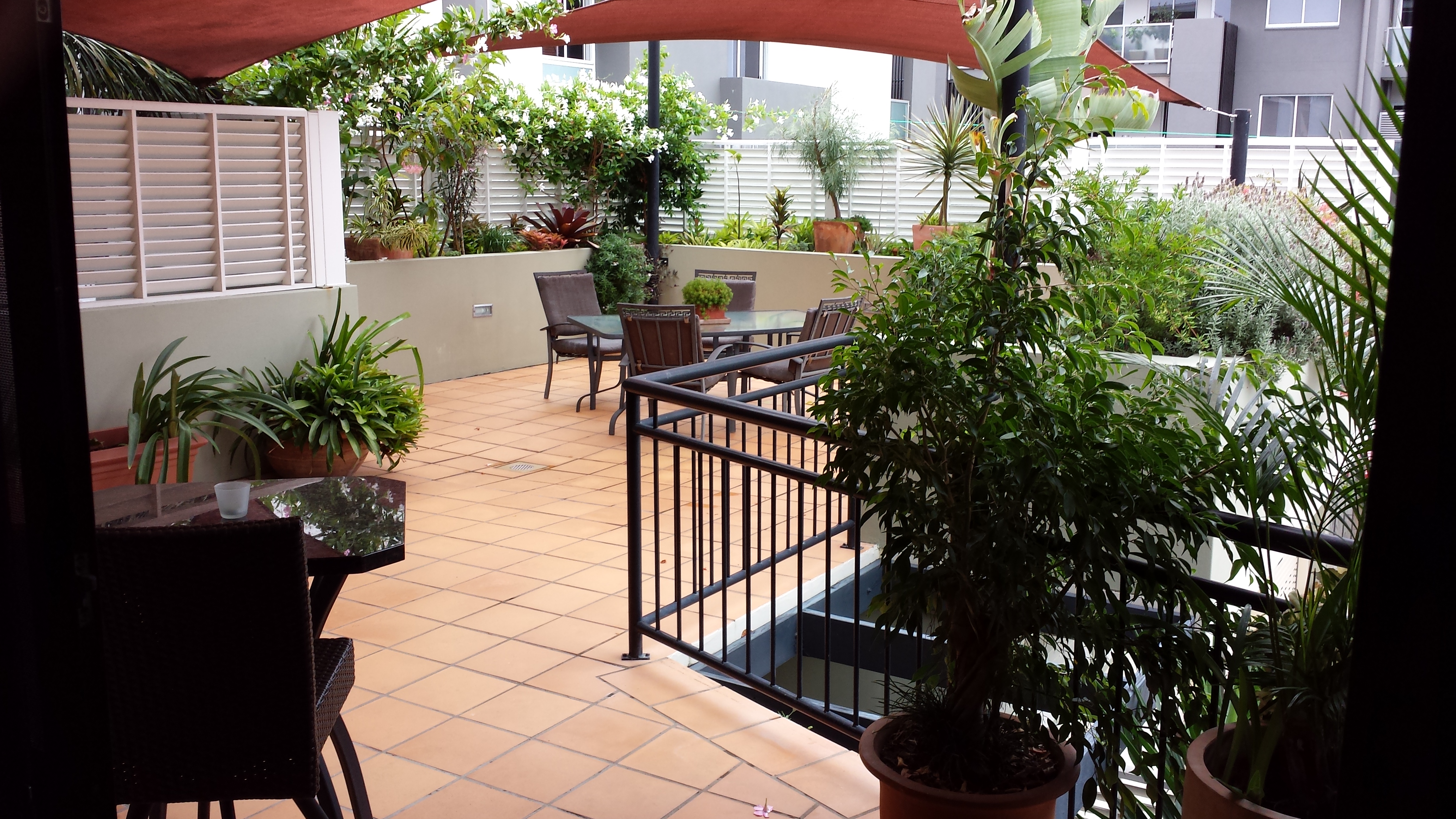
The pad
I am still a little unsure as to why so little information about who I was and why I was there was passed to my PM. John Reddie (the JH LO to PEW) is a calculated man so I have no doubt it is a deliberate move but I have been unable to work out why. Whilst we get the Coursework Instruction from PEW, a single document from PEW outlining key information to a PM, such as course objectives, coursework requirements, accommodation allowance / entitlement, request for support in terms of study time etc. would save some early, slightly uncomfortable, negotiations. In the end I wrote one myself and talked it through with the Senior Project Engineer as something to fall back on later. The trigger for this was repeated attempts to get me to take over some of the structural engineers workload such as testing concrete etc.
Starting Out
Very slow for the first couple of weeks. I had no desk, no computer, no phone and no safety boots. For the first week my job was to perch at the plan bench and familiarise myself with the project drawings. This revealed my first and probably most significant weakness; i knew nothing about architectural/design drawings. A basic understanding of what drawings i could expect to find and how to read them would have been a huge help. Furthermore i knew nothing of the other key project documentation i should be looking for such as specification documents, the project management plan and the safety management plan.
First impressions count as we know, so the early days of asking billy basic questions lead to me being perceived as a work experience kid by many I’m sure. This made it harder for me to get traction for the things that I could add value to, and set the starting bar for earning respect amongst the team unnecessarily low. In hind sight, I could have dramatically reduced the quantity of basic questions if I had had access to and had trawled through the intranet. Unbeknown to most of my project team, details of procedures, the most up to date forms, and checklist prompts to assist in safety walks etc. could all be found on the intranet.
My advice – ensure you are familiar with reading drawings before you arrive on site and read the following key documents (or equivalents) as a matter of priority; Project Management Plan, Safety Management Plan, Head Contract, Sub-Contracts and relevant trade Specification documents. I also recommend having a good trawl through the company intranet (IMS in JH) as there may be a raft of useful information to save you reinventing the wheel.
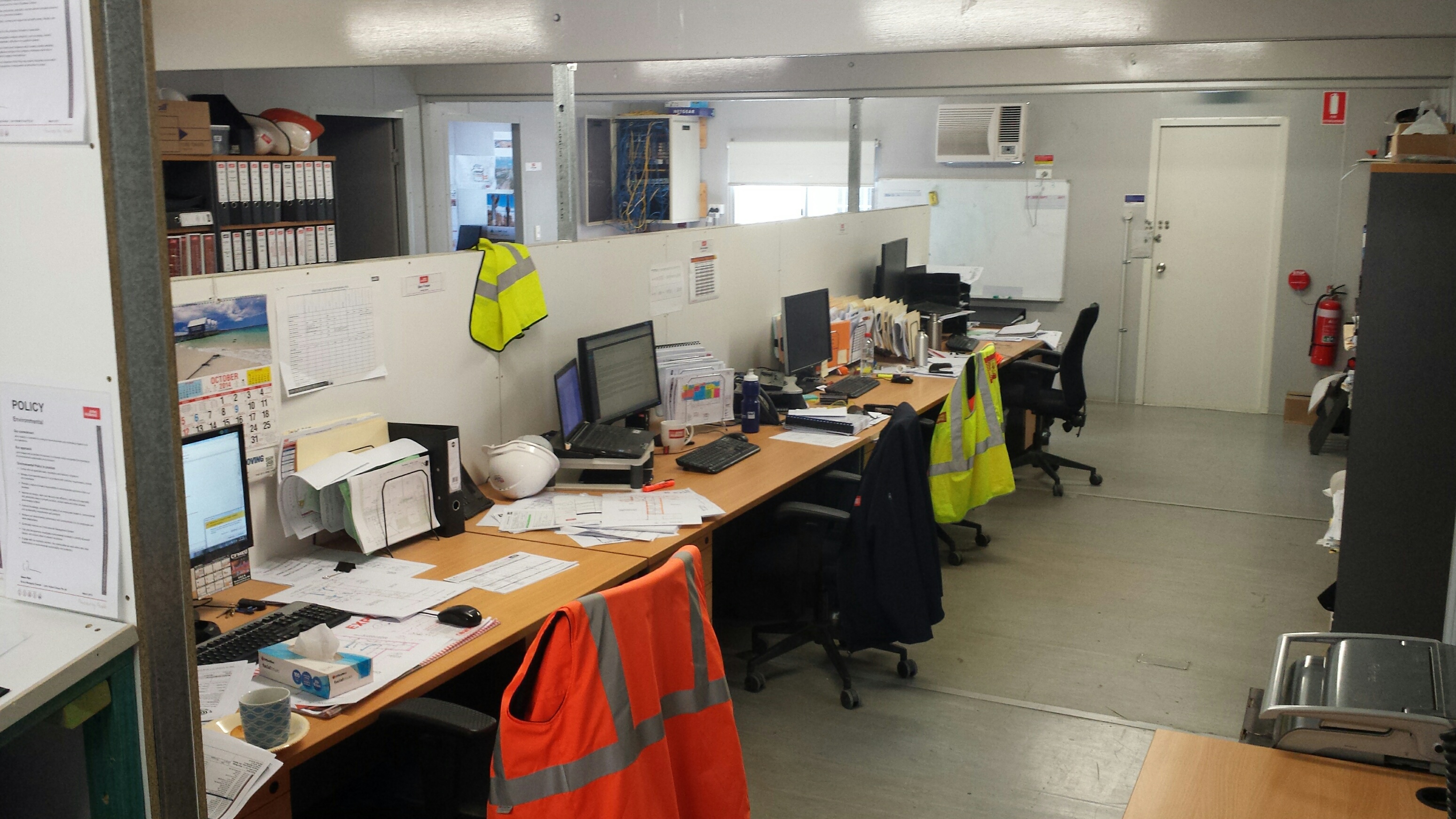
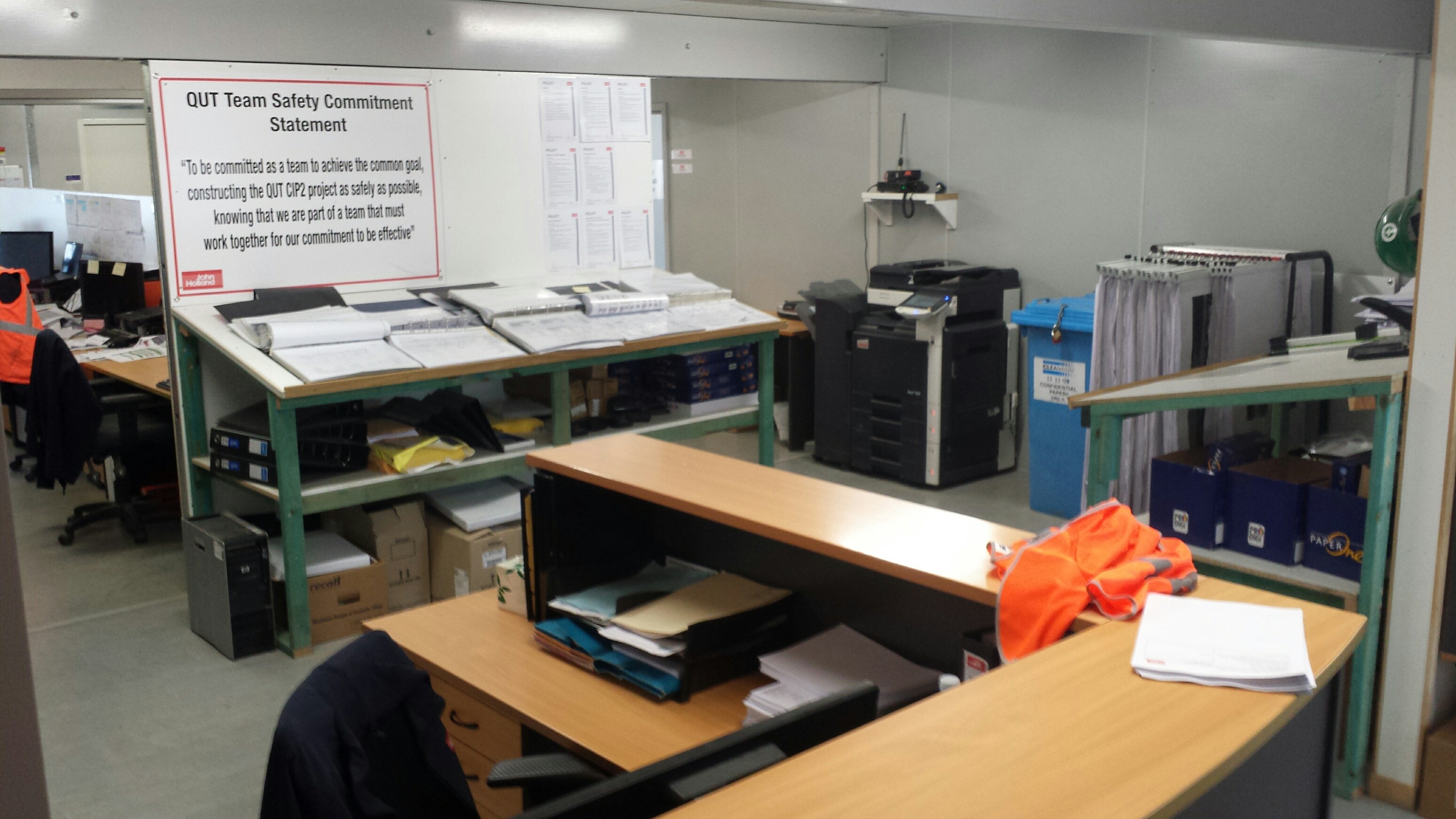
The JH site shed.
Look Forward To….
In Part 2 of Services Engineering with John Holland in Brisbane I will try and cover the following:
- The Project
- The Project Team
- Roles & Responsibilities
This should lead on to Part 3 where I will try and summarise key lessons.
Let me know if there is anything else that could be of use……
 Holdfast Training Services Trial Blog
It sounds like you have only just arrived Ben!! Some very good points though, especially about PEW letting your line manager know what our objectives are. I found that I was being given all the odd jobs that no one else wanted to do until I told them that I needed things that would work towards my DOs. I also found I stumbled upon the important documents as and when I needed them (or months after!) as most people were too busy to show you or didn’t know themselves. A first week reading list containing the documents mentioned would be a good idea. I have found document control at Carillion pretty shocking and the software Aconex is pretty rubbish too!
Definitely no one heading to Aberdeen unless some of the WAGs get to read the blog!
Ben,
Welcome back to the blog and thanks for the feedback on the course prep. A gentle reminder that whilst the update from you is useful for those looking to deploy to Oz (and I look forward to Parts 2 and 3) the blog is there primarily as a diary substitute. It is a forum to discuss issues that have arisen, enabling you to shape your AERs and Professional Review submission. It enables you to post interesting developments about your attachment and site that would benefit others and whilst I know much discussion takes place on other means between you all, posting on the blog enables everyone, lecturers and all, to maintain CPD on current contractor-based issues.
The following comments should clarify for the Phase 1s what you need to be thinking about as you move towards Phase 2:
Placements – attachment selection and location is based on the quality of the attachment, balanced in part with personal preferences. John Holland Group has a proven track record of offering quality attachments that enable students a greater autonomy to develop their experience and higher levels of responsibility than is generally found in the UK. Whilst all sites can be well or poorly run, the onus is always on the student to push their attachment experience to develop their competency. There is no such thing as a bad attachment in terms of gaining competency, only a student’s ability to identify and capitalise on learning opportunities. (The real bonus of the blog is the support mentors can offer to students in the form of identifying these learning opportunities.)
Pre-arrival admin – we are aware that something went awry with the passage of information from John Reddie to Ben (and Tim’s) LMs and that they had difficulty establishing comms. This was addressed with John Reddie and shouldn’t happen again. In terms of what you are there to do your sites are issued copies of the John Holland Agreement signed by both JHG and RSME and all LMs are issued Guidelines on the Attachment of Royal Engineers (UK sites too). I will ensure John Reddie passes these to future LMs. All students are directed to the documents on Sharepoint prior to Phase 2 departure and I’ll ensure these are placed on the ELE. Similarly the Phases 2 and 3 Admin Instruction issued to all students (and to JHG) also details exactly what is expected from all; leave allocation etc. Ben – if there are shortcomings in the detail contained in the instruction please feed this back by email so I can test and adjust for the current Phase 1s.
Starting out – the first few weeks are always turbulent as you become familiar with who is who on site, what’s going on and where you can gain the experience you need. The purpose of AER 1 is to provide you with an excuse to ask those ‘bone’ questions (because I’ve told you to ask them) in order to get you up to speed with what you need to understand on site in the shortest possible time. It enables you to knock on anyone’s door in the organisation to find out what they do and why; what contract is being used (and why – and how it works, and where the money goes etc); what plans exist to manage the site etc etc (full detail is in the Admin Instruction). You will generally start on site at a more lowly level than you would like however once you’ve earned your spurs you will be given more responsibility. As Ben mentions there is much can be gleaned from external sources and the company intranet (should you have access when you arrive). Developing situation awareness is something you would do naturally when wearing green – this deployment should be treated no differently.
Probably enough for now. Thanks again Ben for prompting the discussion.
I was under the impression that you came on the course to get qualified to CE level.
With your experiences would you still advise other students that have not got a recognised degree to come on the course.
Widnes108 (not sure who you are). The course is an amazing opportunity to charter, particularly as a non engineer. I have gone through the academic review process with the IMechE and have been told that I don’t need to complete any additional work other than finish the course. Fingers crossed, I will charter in summer 2015. Which part of my blog led you to believe that I am not here to charter?
Hi Ben
Widnes 108 is me John Marsh.
The reason for my comment is 1st line in paragraph ‘Placement selection’ quote ‘arrived on the course with the aim of getting to oz’.
Regards John