Progress or Quality?
Having treated my self to a weeks ‘summer’ leave last week, I returned to what can only be described as widespread mayhem on the secodnary lining team. Three members of the team had left, including my line manager. Rats and sinking ships. I am still employed as a section engineer on the ‘binocular section’ of the crossover between the two running tunnels. The tunnel design and construction varies over its length dependent on function. For example, the running tunnels which maintain a uniform shape over a long distance, are driven by tunnel boring machine and lined with pre cast concrete panels for speed of drive. Enlargement works foR platform tunnels and concourses, including irregular shapes are ordinarily excavated and lined with steel fibre reinforced sprayed concrete. Uniquely, the binocular section uses a sprayed concrete primary lining, in composite with a cast in situ bar reinforced secondary lining. I will focus on this here. Binocular Section Function. In operation, the running tunnel will divide into two; the left hand side will form a crossover to the opposing running tunnel. The binocular sections are located in the areas noted EBX and WBX, at the point where the tunnel divides in two.The design is also shown in section, and is mirrored westbound and eastbound. 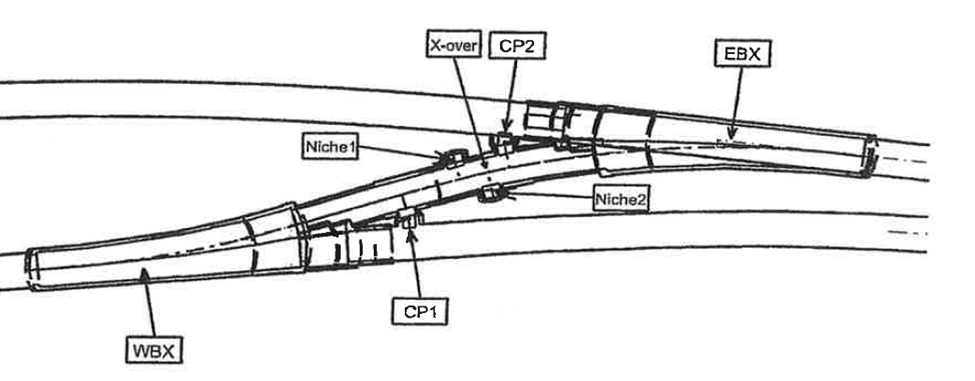
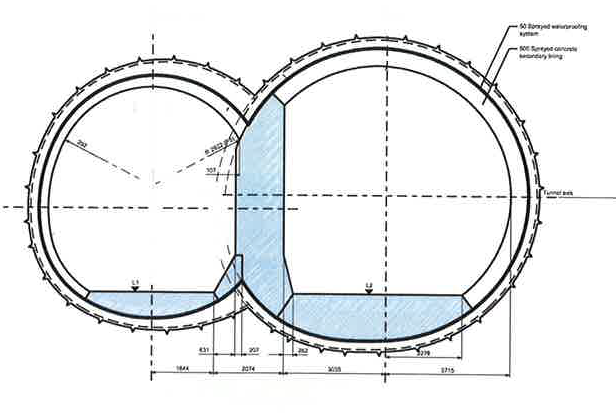 The internal profile, defined here by the bold line, designates the secondary lining, which is all cast in situ. Design. The front face of this section details a relatively large span at approximately 12.6m. This would be considered challenging to complete entirely in sprayed concrete. But the ‘figure of 8’ design creates high stress zones at the confluence of the two tunnels. This requires support which is designed in the form of the ‘binocular wall’ shown as the upright in blue. You will note that in comparision to the remainder of the secondary lining, the wall itself has large proportions. This design copes with the temporary state during the excavation of the second tunnel and prior to ring closure. Sidewall Issues. Aside from the day to day frictions that I will not cover here the casting of the invert, headwall and binocular wall sections passed largely without incident. However, the right hand sidewall was poured in my absence, with some issues. The profile of the sidewall is formed by the use of bespoke poystyrene void formers, which are designed and laser cut by a specialist contractor. They are supported by RMD Kwikiform temporary works, again designed by sub contractor. Despite being contracted out, temporary works repsonsibility falls to us, so I got involved here to check design calcs, and made some adjustments for buildability purposes. Designs are shown below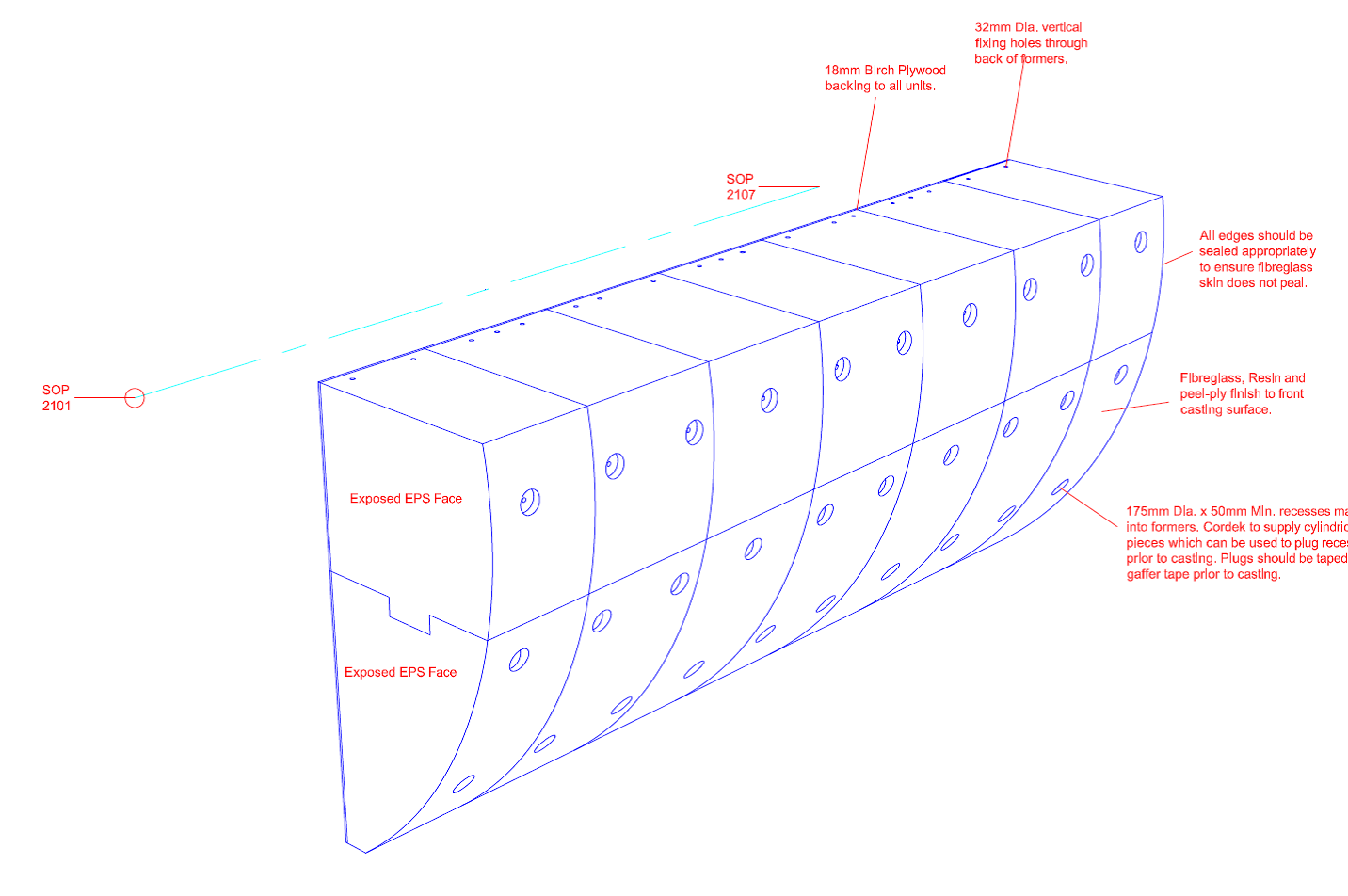
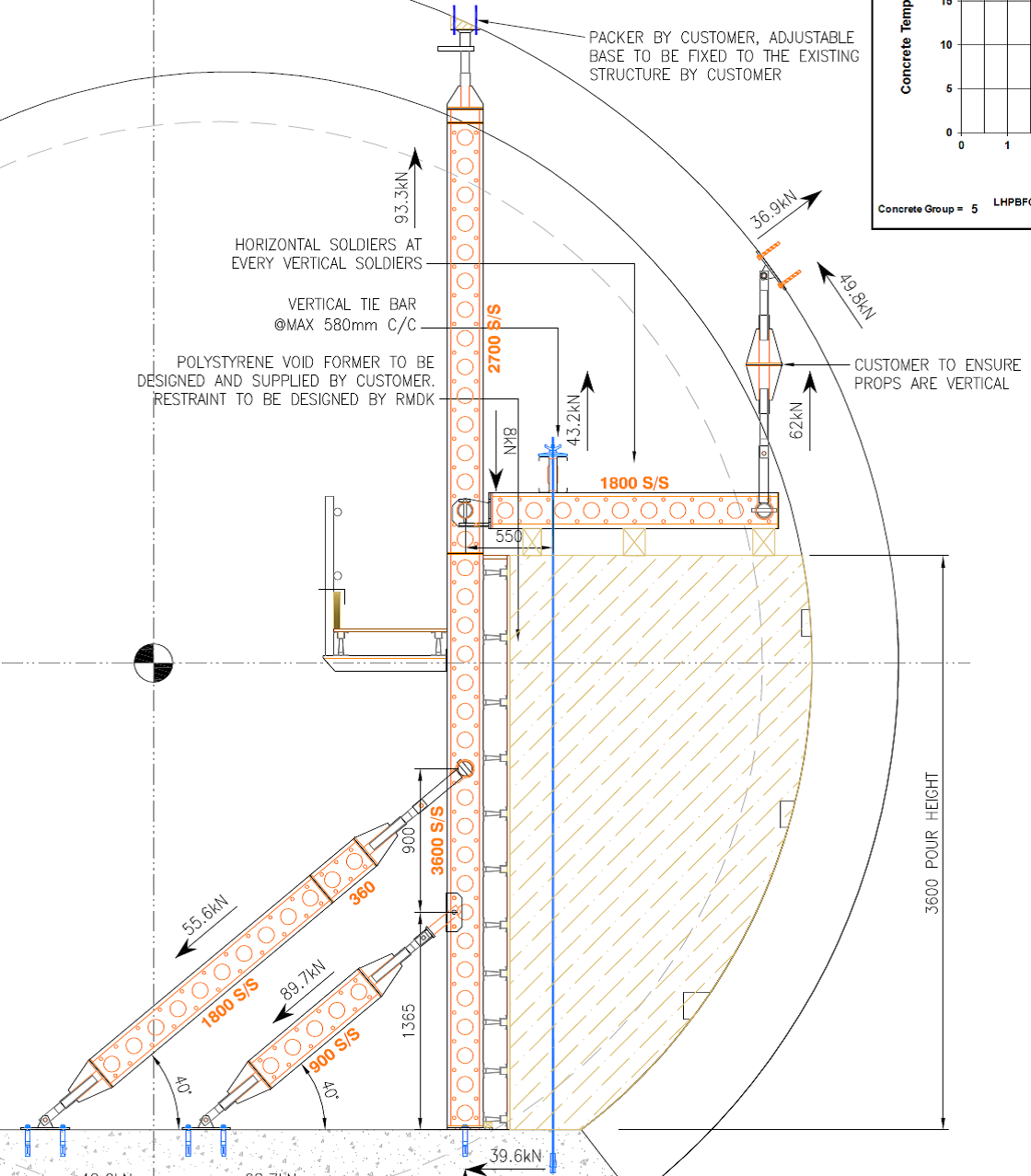 You will note that the profile presents a tricky detail for the pouring and vibration of concrete at the lowest point, particularly given the congested steeelwork incorporated here. Way ahead of this pour, I sought to preempt this issue by designing, in conjunction with the supplier, a self compacting mix, which I trialled and had approved. This was supposed to replace the existing mix, which was also susceptible to entrapping air due to the type of polyfibre it contained. (See previous blog about mix designing – a delight). Thus I went on holiday happy that I had forecast a design risk, conducted some analysis, came up with a solution and communicated it effectively. (See John, I was listening…) I returned to this….
  The poor resolution on this phot doesnt give you the full joy of this. You may note pock marking across the bottom 2/3 of the wall. This is caused by a proliferation of air bubbles trapped in the lower section, exacerbated by poor vibrations. As it turns out, the old mix was used despite my amended activity plan explicitly stating the new mix to be used. The entrapping of air is quite obvious here. I suspect, if the wall was cored, that the mix would have a relatively low density, and may fail on compressive strength as a consequence. You will also note the cold joint which runs the length of the wall. Apparently, pre planned road closures causing traffic in London, delayed the follow on wagons by approximately 4 hours between pours. With no engineer on site when it finally arrived, the site foreman continued the pour based on ‘whether we can still get a poker in the mix’. Conclusions The loading path in this section of wall puts the wall predominantly in compression. That said, there are performance requirements pertaining to flexural strength. Assuming there are no major voids at the cold joint, this should not present an immediate structural problem. My concern is the threat of water intrusion and consequent acid attack in the high sulphate environment of our local ground, over a 120year design life. However, it is likely that these concerns remain on the aesthetic rather than the structural in this instance. The air entrainment is a bigger concern. Although the contractor kindly offered to patch repair the surface to bring it in line with the clients specified surface finishes, I feel like they are missing the engineering risk. I demonstrated the effect on compressive strength that a lover volume can have in my failed mix design trials, and I suspect in we were to core this, we may find voids and poor encapsulation of the rebar, along with a low compressive strength. The client has yet to request this but Im certain it will. I find it hard not to be deeply frustrated and cynical about all this. All of these issues were foreseen and planned for, but coherent planning of a task from start to finish is simply not in the culture here. A single responsible person for these task s is not easily identifiable and noone is held to account. A common theme throughout my attachment here is that progress always trumps quality, and even cost. These problems were caused by not following the instructions, and a lack of engineering oversight, combined with a rigid application of quality, through the inspection and test plan that I wrote to govern this. The rush to complete, and consequent mistakes made have achieved a delayed program, and extensive rework. We are under an NEC (C) Target Cost contract, so as long as we raise this issue through a Non Compliance Report, the ‘pain’ is shared with the client. So incompetance on our behalf of the contractor has led directly to waste of public money…not only frustrating, but actually quite immoral. In other news, I’ve found something as uncomfortable, as a John Moran Q&A. Tough Mudders Electric Shock therapy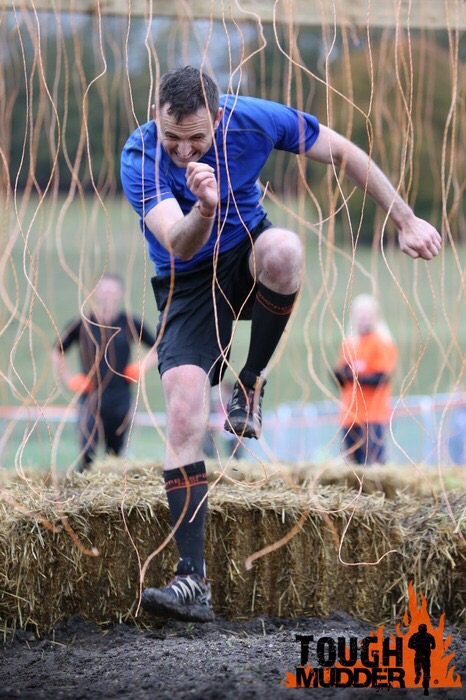
 Holdfast Training Services Trial Blog
Argh! Really don’t have the time to read this but it’s a subject that just demands attention! The way the stressess work around the tunels will be ina interesting conversation t CPR. Nioce use of concrete void formers – was a shaped piece of bespoke formwork considered and dismissed or was non-recyclable waste amterial not an issue? I can understand your disppointment at the communication failure/deliberate act of using different concrete; I fear your faith in the client vindicating your direction by coring and failing the section is equally unlikely to come to pass unless you raise a NCR. When you do, the first question will be was there non-compliance with your procedure or with a cross rail requirment, if only the former, I suspect all will be buried for many years before any issue comes to light if ever. The interesting observation is that progress seems to trump, quality and cost. I suspect that there is a root cost benefit to rate of progress i.e. profit is actually king. I also wonder if those that managed to make good progress in your absence will feel the pain of the effect of their haste? Electric shock therapy required all round?
Hi Richard
Thanks for the comment. Actually there was a rush to Gucci bespoke polystyrene void formers for ease and reduced installation time, aswell as the opportunity to resuse when we build the mirror image on the eastbound tunnel. It was telling to note that my chippies were dead against them from the start, and felt quite strongly that a bespoke timber solution was best. Thet were overruled…we then stumbled through a series of ill fitting, badly formed void formers that were cumbersome and difficult to install, even more difficult to strike and left an appalling surface finish. We can’t even reuse them as we destroyed all but three of the 15 when we removed them!
A perceptive remark regarding our procedure vs CRL requirement. The ignorance of my activity plan and ITP, which are my management tools, doesn’t concern the client. The end result however, has a specified output, which we have missed for the suface finish, and probably missed for density and compressive strength. I’m interested to see what the client do on this. If they ask for cores, and demostrate that we have missed specification it will lead to extensive rework on a program which is already delayed. If they dont ask for cores, we carry on in ignorance, but the secondary lining is our responsibility , and given that we are self certifying, the buck stops here for future issues.
On the progress issue, much of the tunnelling culture is inexticably linked to bonus. A gang will attract their full bonus in a shift if they achieve a certain advance rate. But this section of works does not attract a bonus. On macro level costings, the aspiration was the tunneling gang would complete their advance on the eastbound and immediately roll into works predicated by our completed binocular section. Inspried by bonus, they have finished their advance 26days ahead of program; we, stumbling from crisis to crisis are almost as much behind leaving a dead period of approx 6 weeks. To have a gang standing for that period is prohibitively expensive and as they work 24hr shift we have had to let 3 gangs go. So the root cost as I see it; over all lost program time, lost skills and experience in well drilled gangs, and reputational impact in front of the client.
Thank you for the Respons – great stuff. Thought as much about the formers; are you buying in more to trash or are your chippies back in gainful employ? Do let me know the outcome if you core the wall, particularly if you do so on the cold joint. Keep at it. 😉 Regards, R
Ryan,
Could you please offer a quick snapshot of the major issues that have attributed to you running behind time. Are the delays born from mangament, programme or engineering design/solution issues.
Olly (Ph1)
Richard
Thanks again. You won’t be surprised to hear that we will blunder on regardless and order more void formers for the future works, in complete ignorance of our recent experience, and the advice of the guys who will be installing it. Your suspicions were prescient regarding the coring. When I returned to site a couple of days ago, the surface finished had been improved with some form of grout and the wall signed off by Crossrail. The issue hoofed into the long grass without a sniff of any coring! Disappointed.
Hi Olly
Hope all well on Phase 1 and you’re hanging tough.
Thanks for the comment…how long have you got. I suspect there are a number of daily issues that are bespoke to this job that I will avoid otherwise we’ll be here all day. I think three key takeaways.
a. Management. A distinct lack of management, both project and personnel. Its easy to forget that our background sees us trained for this, and well practised in it from day 1. The average engineer gets neither, and after a few years may well find themselves promotes eventually into a managerial position. Im afraid the majority, in ignorance of the managerial aspects of their role, simply do what they’ve always done before. There is absolutely no formal planning process which provides consistency in the assessment of a task: allocation resources and manpower, consideration of risk mitigation and management. Critically the communication of this plan both to the site operatives, and the wider organisation is sketchy at best.
b. Engineering awareness. Those that work on the contractor side seem to have very little awareness of the engineering involved in the work that they are delivering. Indeed there is little interest culturally as there is a belief that all that is handled by the designer. It may be telling to not that in my entire site structure there were only three CEng, one of whom was the Chief Engineer! This exacerbates point a. as you end up stumbling from one crisis to the next. A good example on the binocular section is the continued water ingress. I was told repeatedly that that section is dry, despite a running battle with damp patches. I dug out the ground investigations which showed that the section was dropping out of London Clay and into the Lambeth Group, where it seemed that there was at least a possibility of water bearing strata. I suggested that we should perhaps investigate further where I was told that would be a waste of time as its dry…and in any case the TBM has already been through there so we would know if there was any water (The TBM is closed architecture with no mean of sampling so how would we know!?) Long story short I ended up drilling through the lining, installing a pretty rudimentary bleed pipe, filling one of the lads water bottles (at a rate odd approx. 500ml/min) and taking it with me to the next meeting. I was told some form of well system would cost approx. 7 days in the program based on previous work on this site….we spent at least 3 weeks trying to chase water leaks.
c. Progress v. Quality. I aluded to this in the blog. This is certainly the culture in tunnelling. Rather than do it right first time, it seems to be do the minimum first time; allow the client to inspect and comment; adjust what you’ve done to satisfy the comments and gauge the clients minimum acceptable requirement; aim for that until sign off. I suppose this brinksmanship harks back to the old days of client v contractor, but under an NEC (C) pain/gain on such a high profile publically funded project, I just don’t see that it satisfies anybody. This is further exacerbated by the position of the quality function in the overall setup. Quality Engineers/managers sit very much alongside the engineering team. There role is not central, but advisory and so as long as they have ‘advised’ they look to the construction team to take ownership. At the same time, the is a real reticence about taking responsibility. Rarely is an individual tasked with delivery by a deadline. It more about ‘what we should do’…or ‘what should be done’ general non specific chatter. So, inevitably, it doesn’t get done, and nobody is then accountable.
If your attachment is similar, and I suspect it may be given the experiences of some of my cohort, take heart from knowing that these things are your core business. The mere production of a bastardised estimate and orders format had me (briefly) painted as some form of tunnelling messiah! Your willingness to say ‘I will deliver that for you by this time’ will quickly have you running things that feel way out of your comfort zone. As infuriating as it is at times, it gives you plenty of experience to get stuck into.
Good luck with the rest of Phase 1
Thanks Ryan,
Nice follow up on all points. I’m afraid you’ll have to settle for recognising polystyrene void formers as sacraficial and work out how that fits into the SWMP. If you ever get really stuck with them they dissolve nicely in petrol (without a match!).