Archive
Installation of the six mega embedments at the South Bank
 In an early blog I described how the load path of the new steelwork on the tower extension is pulled up and into the core through Macalloy bars.

This is required since the existing pre cast columns crank inwards towards the bottom of the building, inducing a large moment that cannot be dealt with.
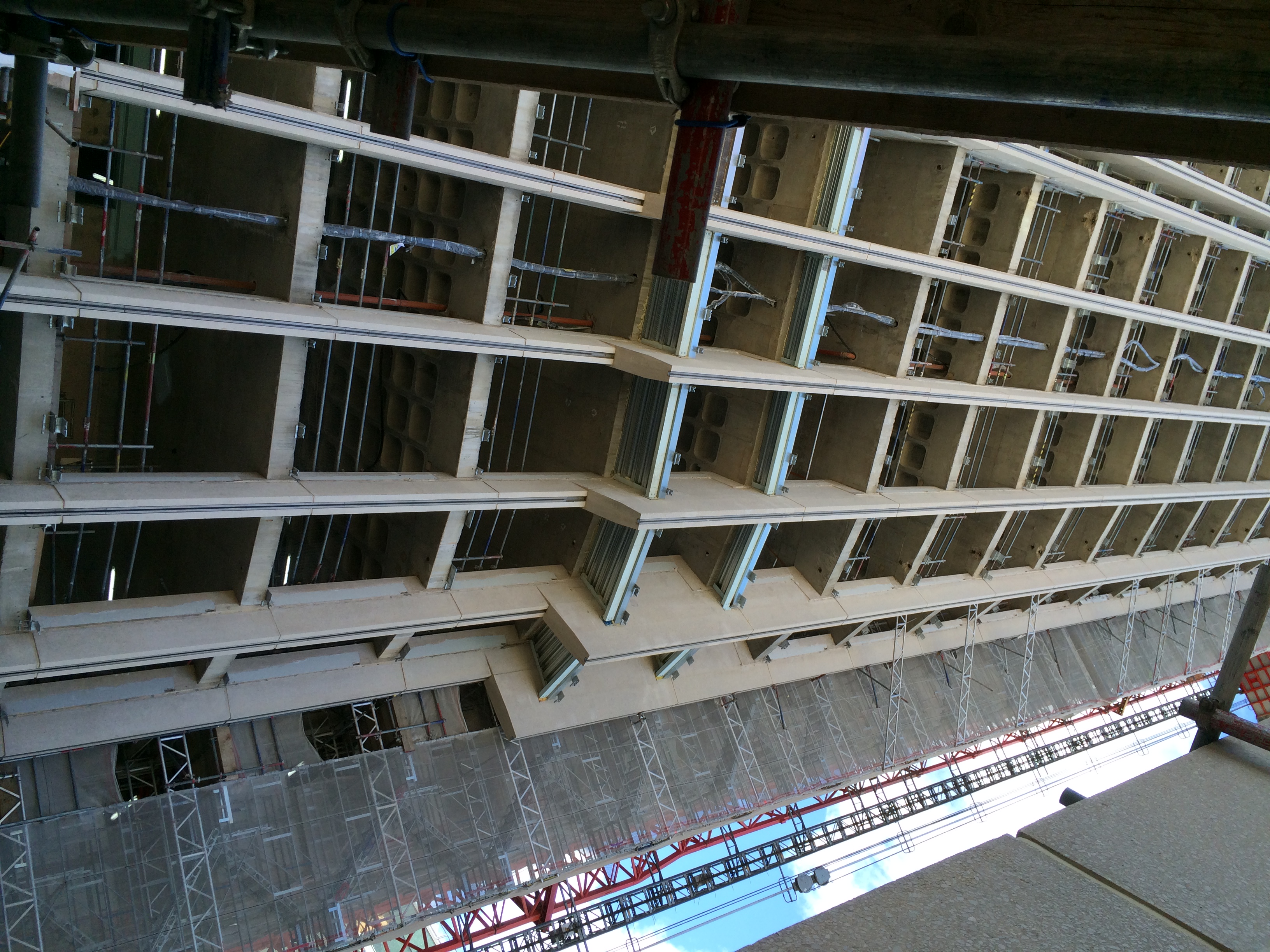
The existing column crank can be mid picture
In the temporary construction condition, whilst the diagonal Macalloys are not employed (because we were building them) the weight of the steelwork is propped off level 30.
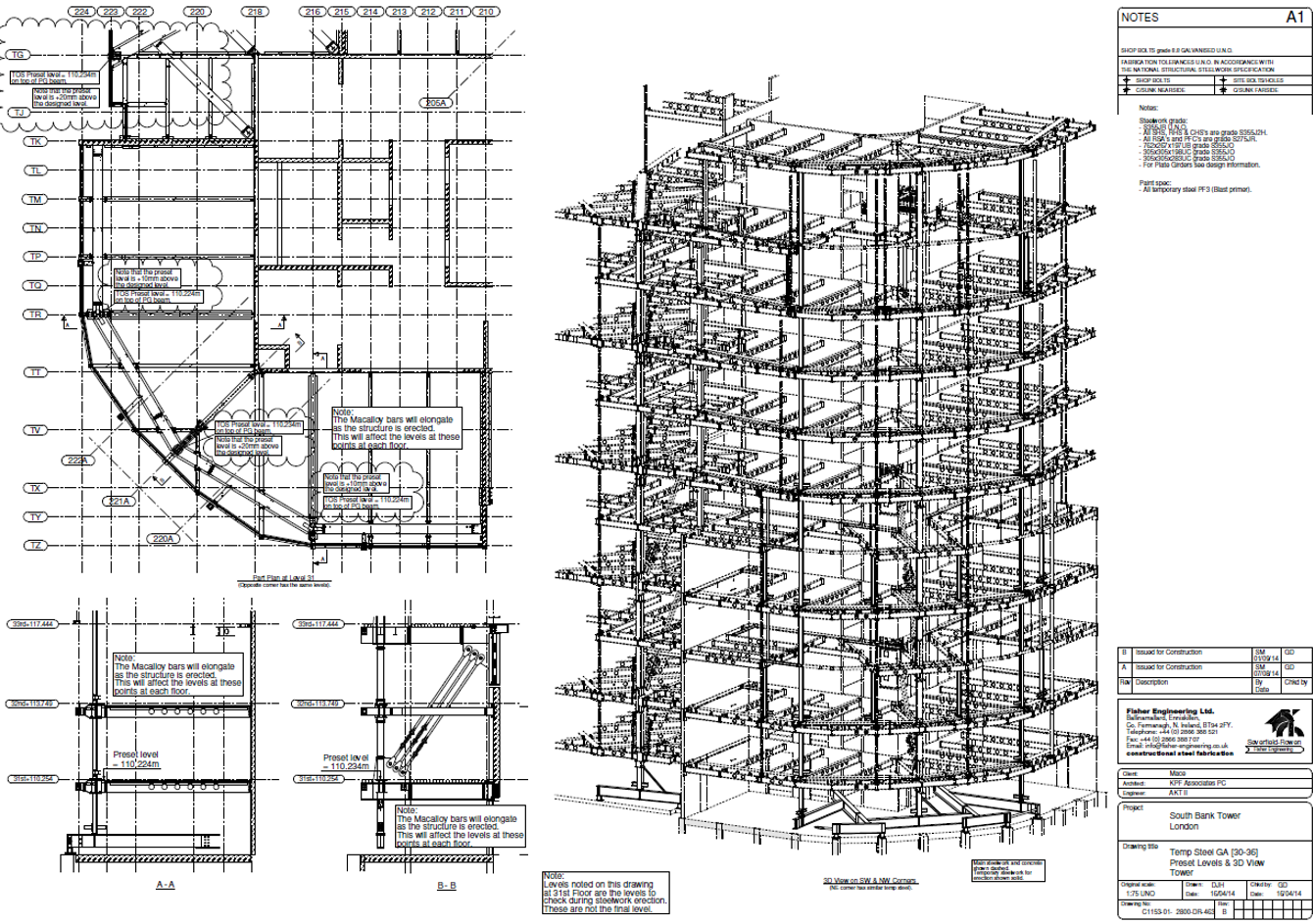
This load passes down the existing pre-cast perimeter columns and into the foundation.
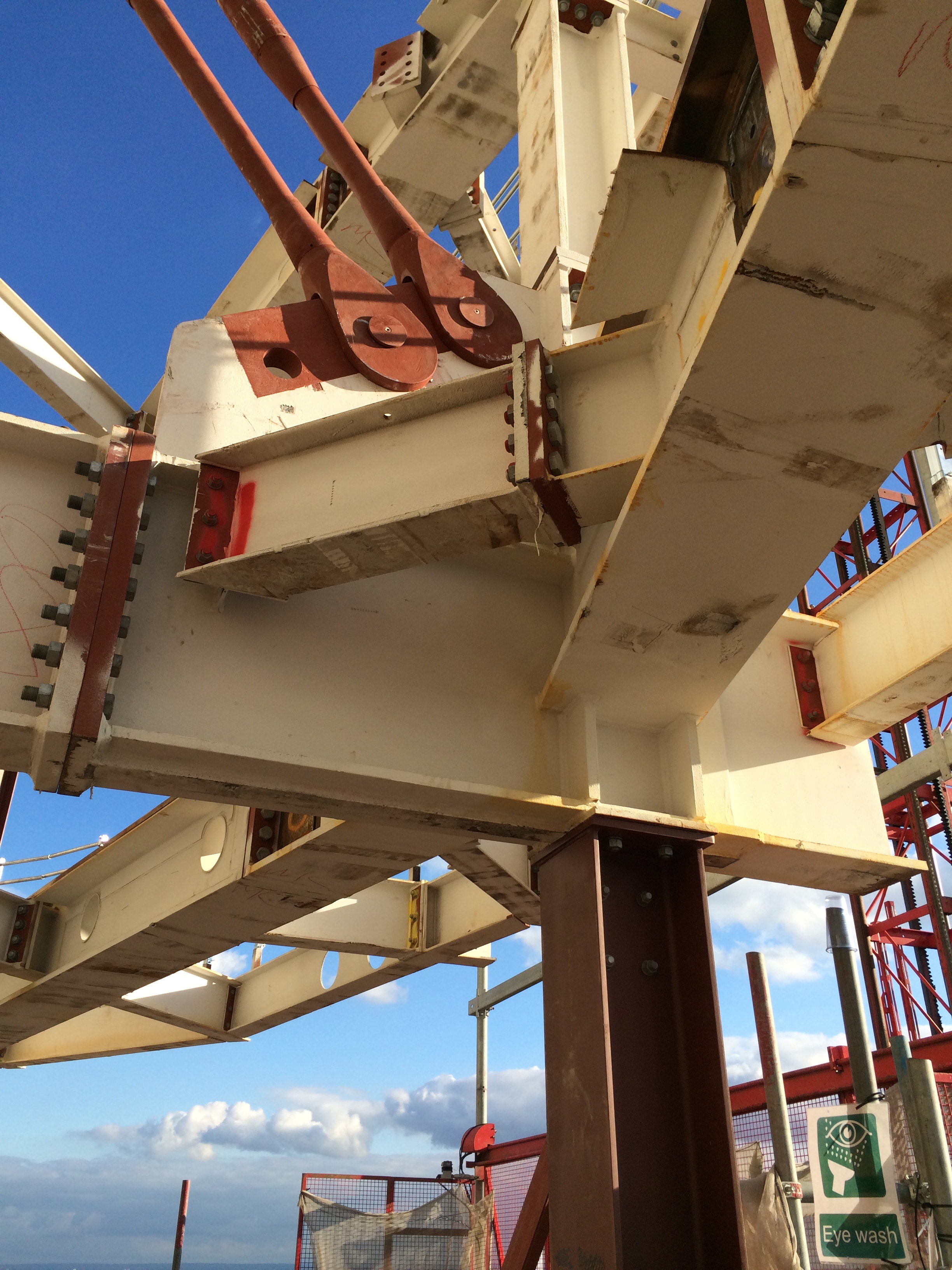
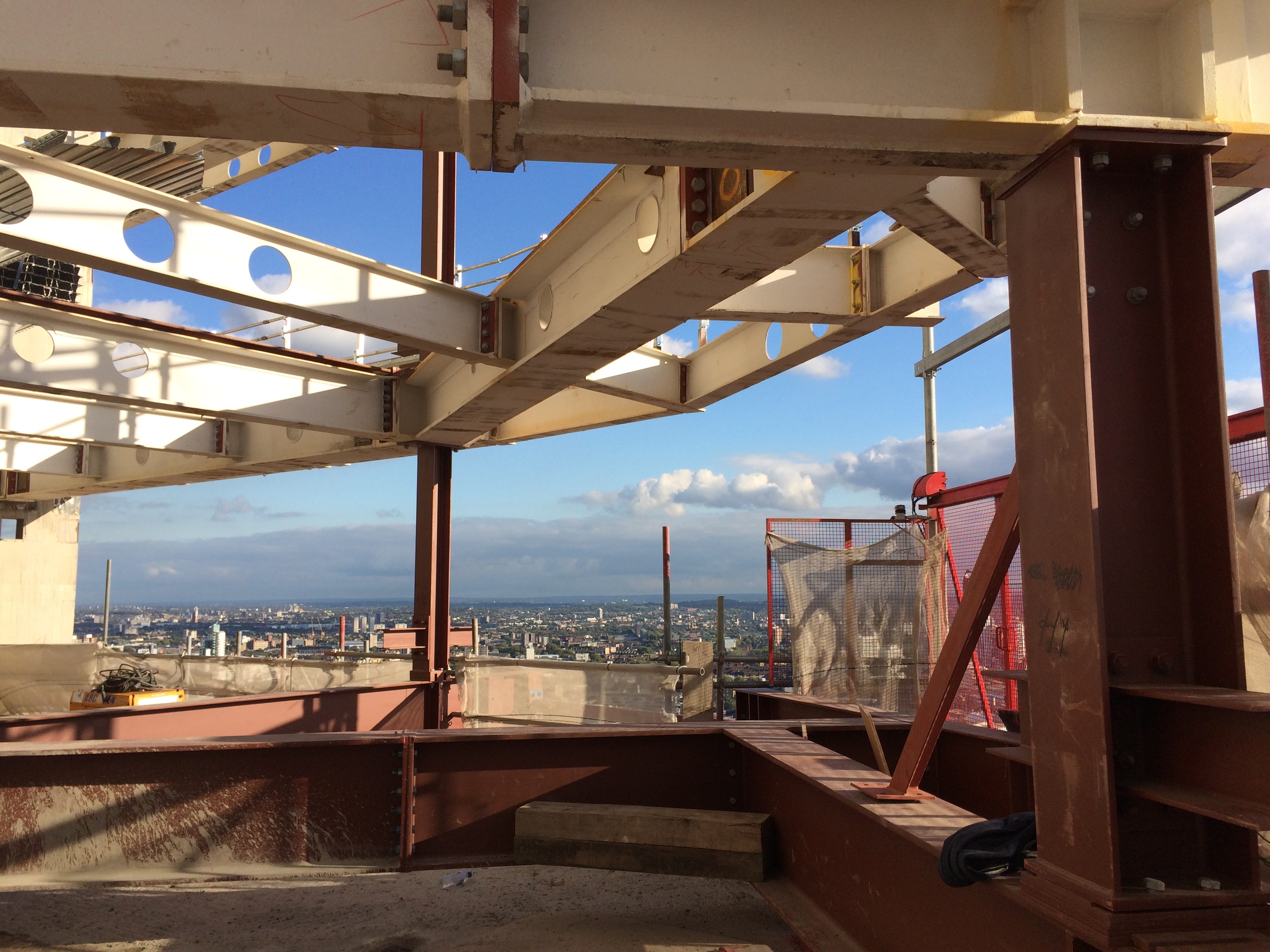
The red steel is the temporary steelwork sat on the top of the existing columns
I undertook analysis of the existing structure to determine how much steel we could erect before we reached the limit of the crank. I can report that my calculations to determine the allowable load were alright since the building is still here. Knowing the actual factor of safety during this operation was exceptionally difficult so we will never know how close we were.
Installation of the hangers has been slow because of a number of issues.
1. PC Harringtons did not cast the correct size holes/voids in the core to allow the mega steel embedment to fit into. This required us to break out additional concrete.
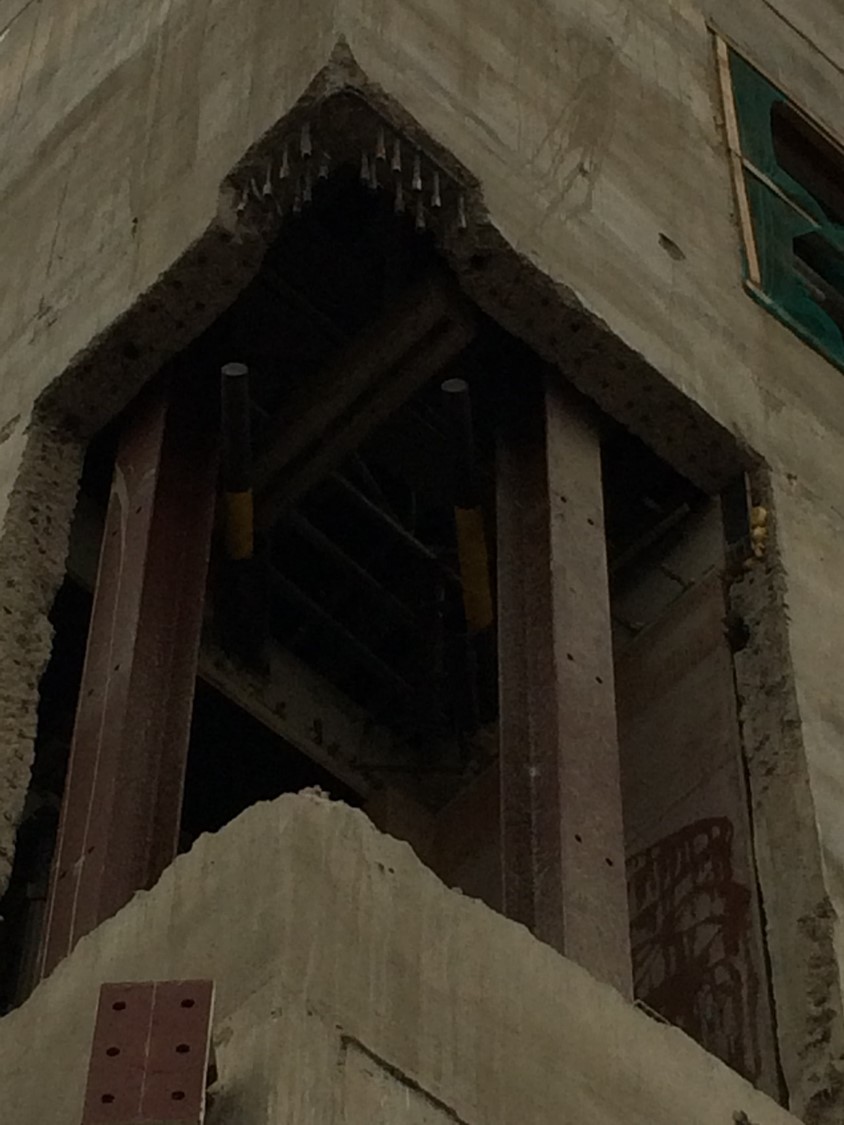
Void for the embed
2. The slipform at the top of the structure meant we could not lift the embedments into the holes until the slipform was completely removed/dismantled. This meant there was no concurrent activity
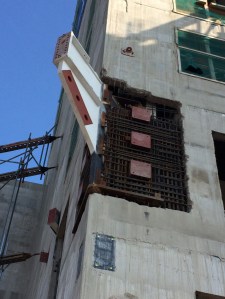
Back plate in place
3. Access to the embedments is difficult. We used a combination of traditional scaffolding, proprietary platforms and scissor lifts to access the embedments.
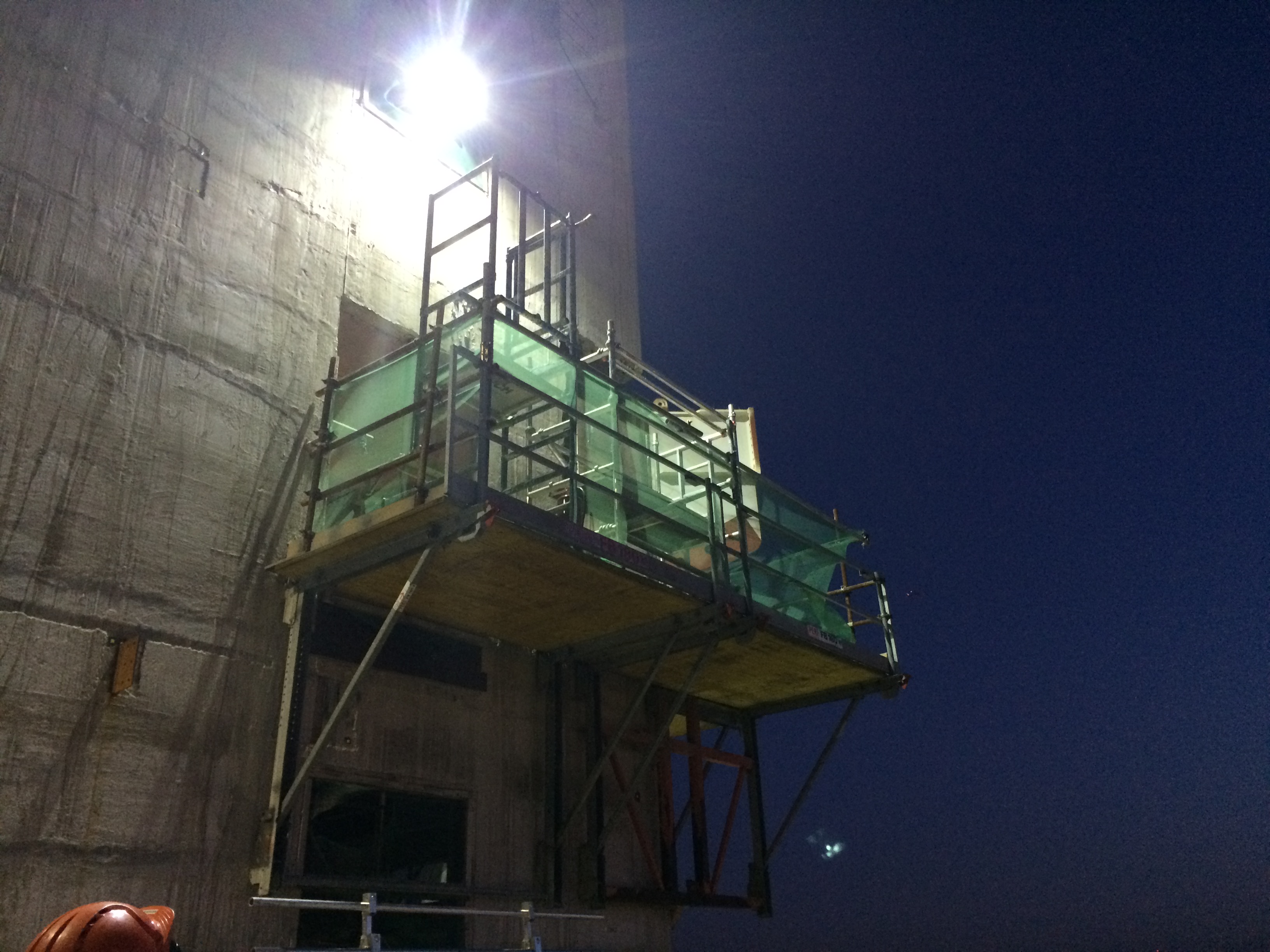
Access to the embed
4. Since the embedment elements are critical to the structural integrity of the permanent works each segment of work has to be inspected and signed off by the structural engineer, Mace and sub-contractors prior to moving on. This took a lot of my time as well as wasting progress.
5. Our resident engineer on site is useless. Although he is supposed to be a qualified engineer, he is not willing to take any responsibility or give a direct answer to anything. At every instance he has to refer back to his office for advice.
6. We are dealing with two sub-contractors to deliver the one element. This has required almost daily meetings to ensure progress is maintained.
So what.
- I think we could have planned better for this operation (who never says this?)
- Design information was scant. Its lack of detail seems to have then impacted upon the whole operation. Since there were so many unknowns I think higher risk was accepted prior to construction than really should have.
- We should have used 3D software to map out how the reinforcement and steel interfaced. The slipform precluded particular vertical reinforcement being fixed during slipforming. This should have been picked up. We were then in a position fighting to get hold of every piece of reinforcement that was available.
- The Structural Engineer’s designer of the embedment elements should have given us a presentation of how he designed them, and why particular elements were important. This would have allowed us to make more informed decisions on site and understand risk better.
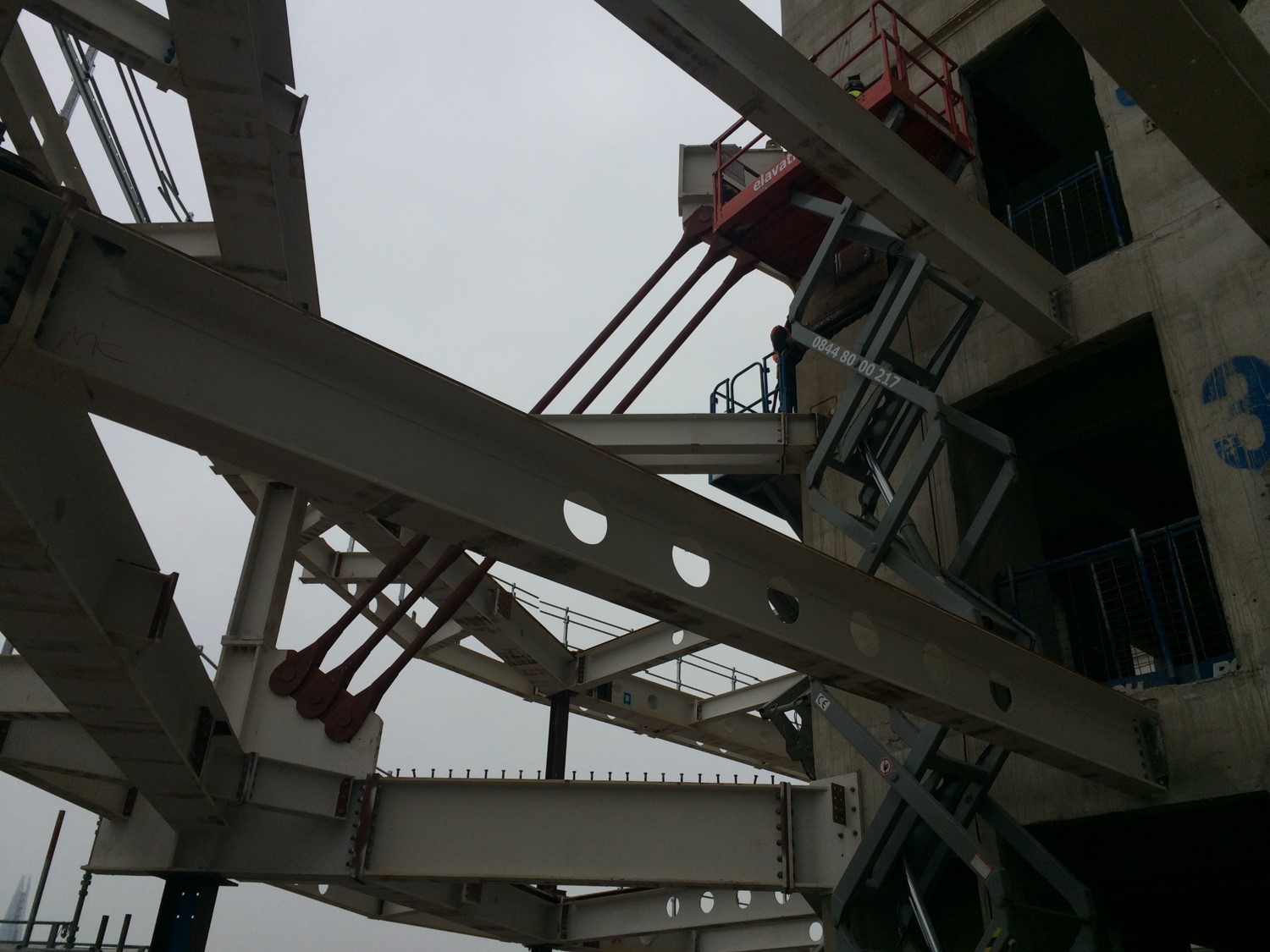
Macalloys in place
So inclusion.
Communicating how a structure or element of it is designed is key. If the contractor doesn’t ‘get it’ then there is real risk failure could occur. Sub-contractor engagement, liaison and partnership is key to ensuring that shared progress is optimised. There was little motivation for the concrete contractor to get the job done, but lots of motivation for the steelwork contractor. Modelling of complex nodes, connections and elements is worth the time, effort and expense as it ultimately reducing time, cost and improves quality on site during the installation.
Here are some other photos of the embed.
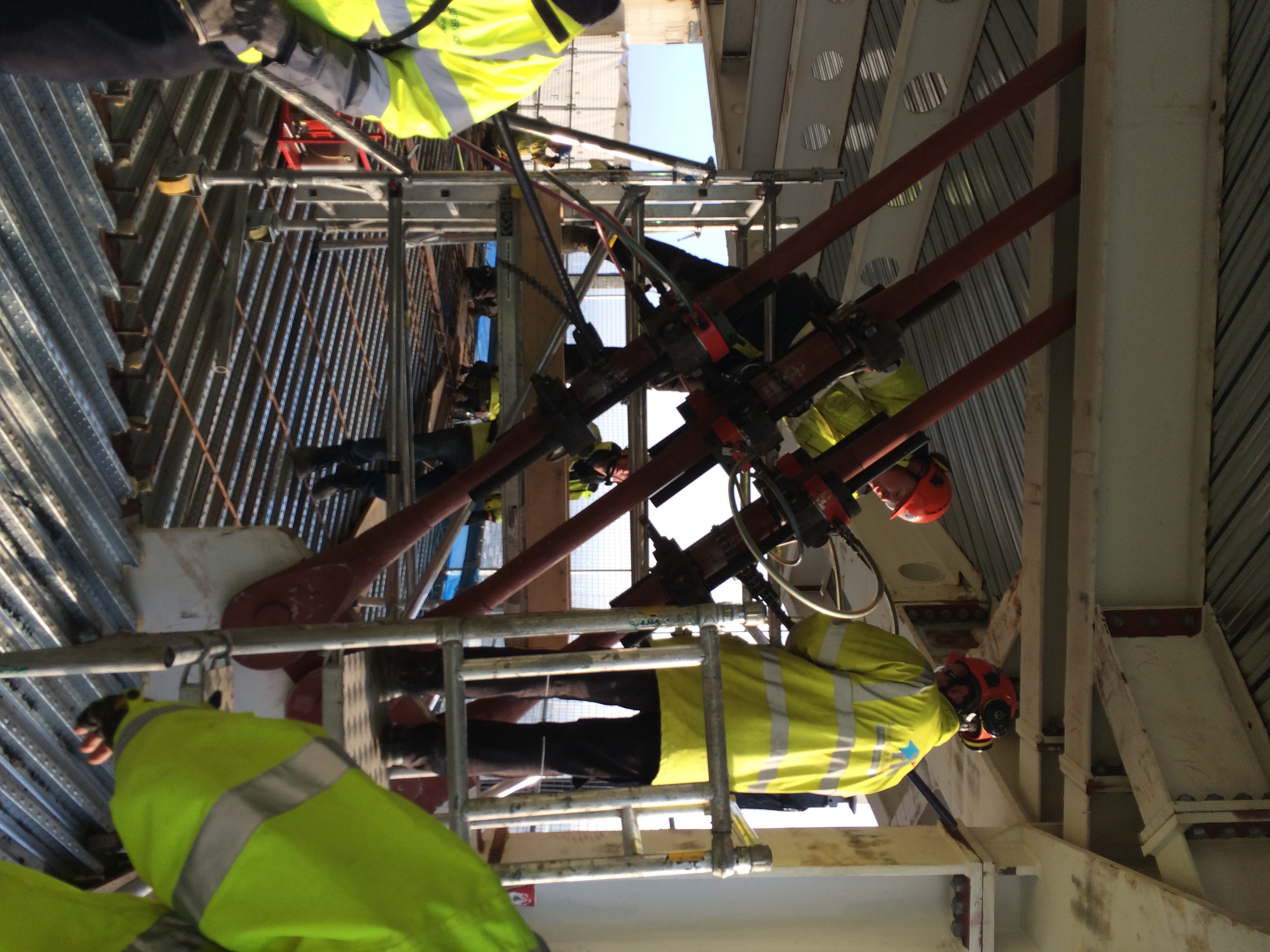
Jacking in progress
Lift off once the macalloys were tweeked
 Holdfast Training Services Trial Blog