Capts Blog – A final word
Has nine months really passed, time on attachment has gone very quickly. As I leave Liverpool Street here is a quick update on my areas of responsibility.
Site in General. At the time of my departure we had just completed the concrete pour for the penultimate slab at 78SSL and works had commenced on the excavation to the final level 73 SSL. All in all some 2,400m3 of concrete poured and nearly 2000 tons of steel fixed in the preceding slabs. The final excavation would prove the most complex as a the break out of the pile wall to create the access tunnels to the platform would need completed. During the breakout of the pile wall a temporary section of slab would be required carry loads across the sections of pile wall. I have intentions to return to the site to witness the pile wall breakout as the plan is to use a steel and diamond rope in a winch to cut the piles like a cheese wire……I would like to see that as the piles are 1200diameter with heavy steel reinforcement, but I have been told it is possible.
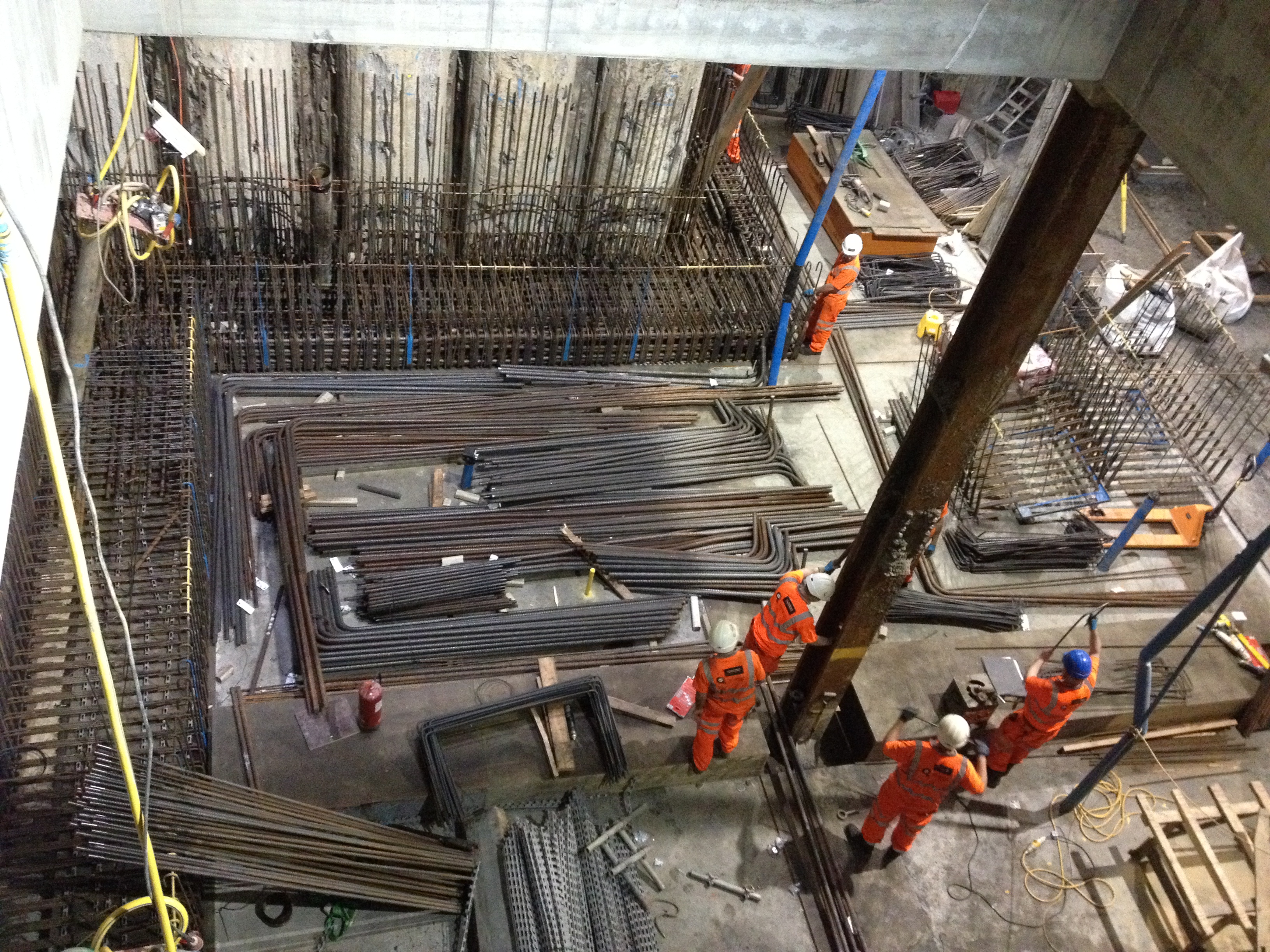
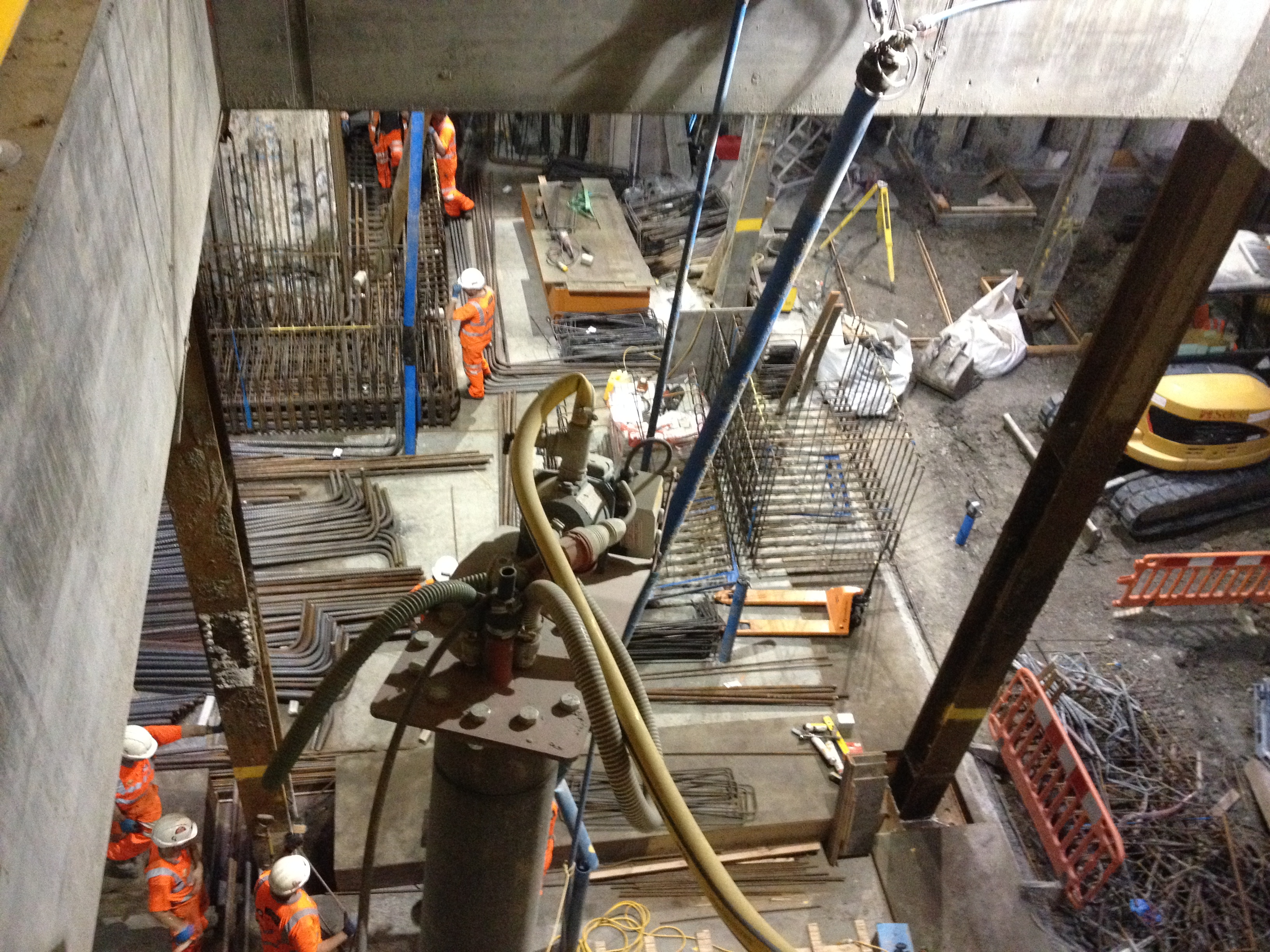
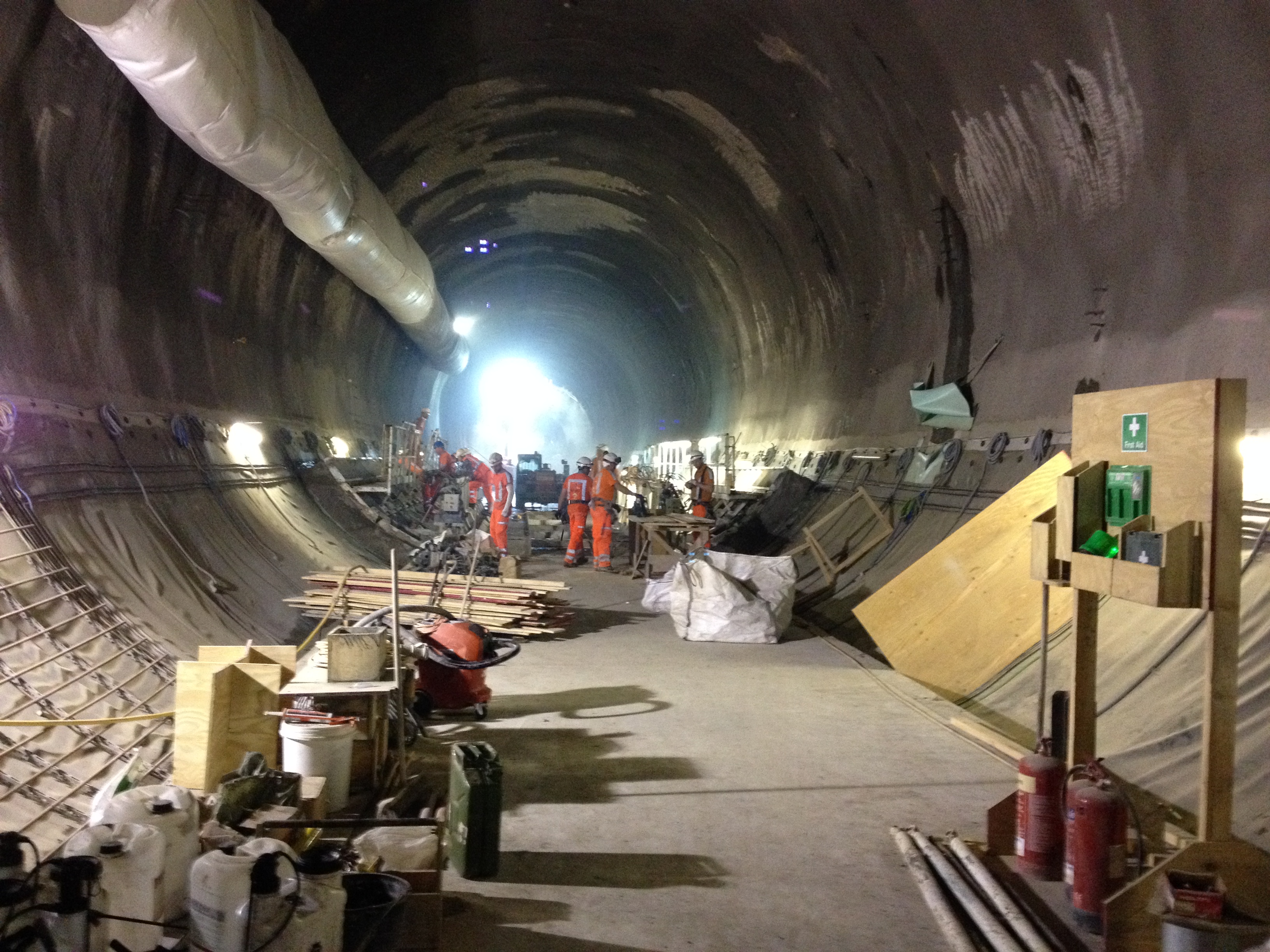
Installing steel at the penuletimate slab level & view of the running tunnels adjacent to site
Depressurisations wells. My part completed wells installed, working and a steady decline of the pore pressure had allowed the cessation of works to be lifted and the excavation to continue. Having now entered the Lambeth Groups of soils and with the wells firmly in the course grain gravelly layers the amount of water being pumped had dramatically increased from 200-300litres per day to20,000 per day. All was going well up until my last day when we arrived at work to discover the site flooded from an over flowing settlement tank, the cause turned out to be that the contract excavating the tunnels adjacent to our site had turned their dewatering system off on the Monday and it had taken a week for the recharge of the ground water to reach our site. Although the wells we had installed were capable of pumping the increased amount of water we did not have sufficient storage capacity. It also turned out that the young apprentice responsible for monitoring the flow rate had neglected to do this and so the increase in water flow had not been picked up.
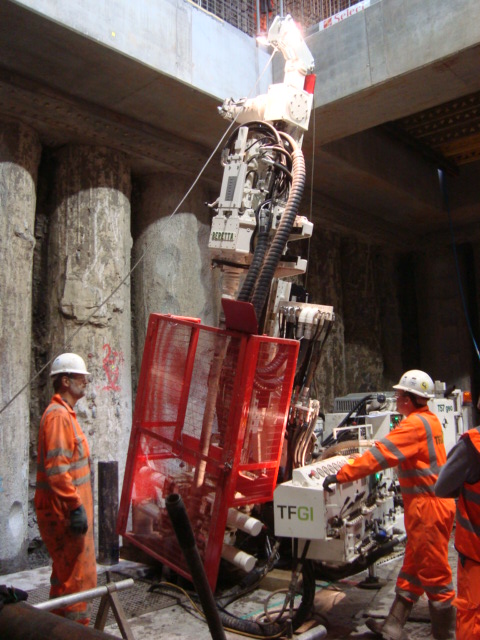
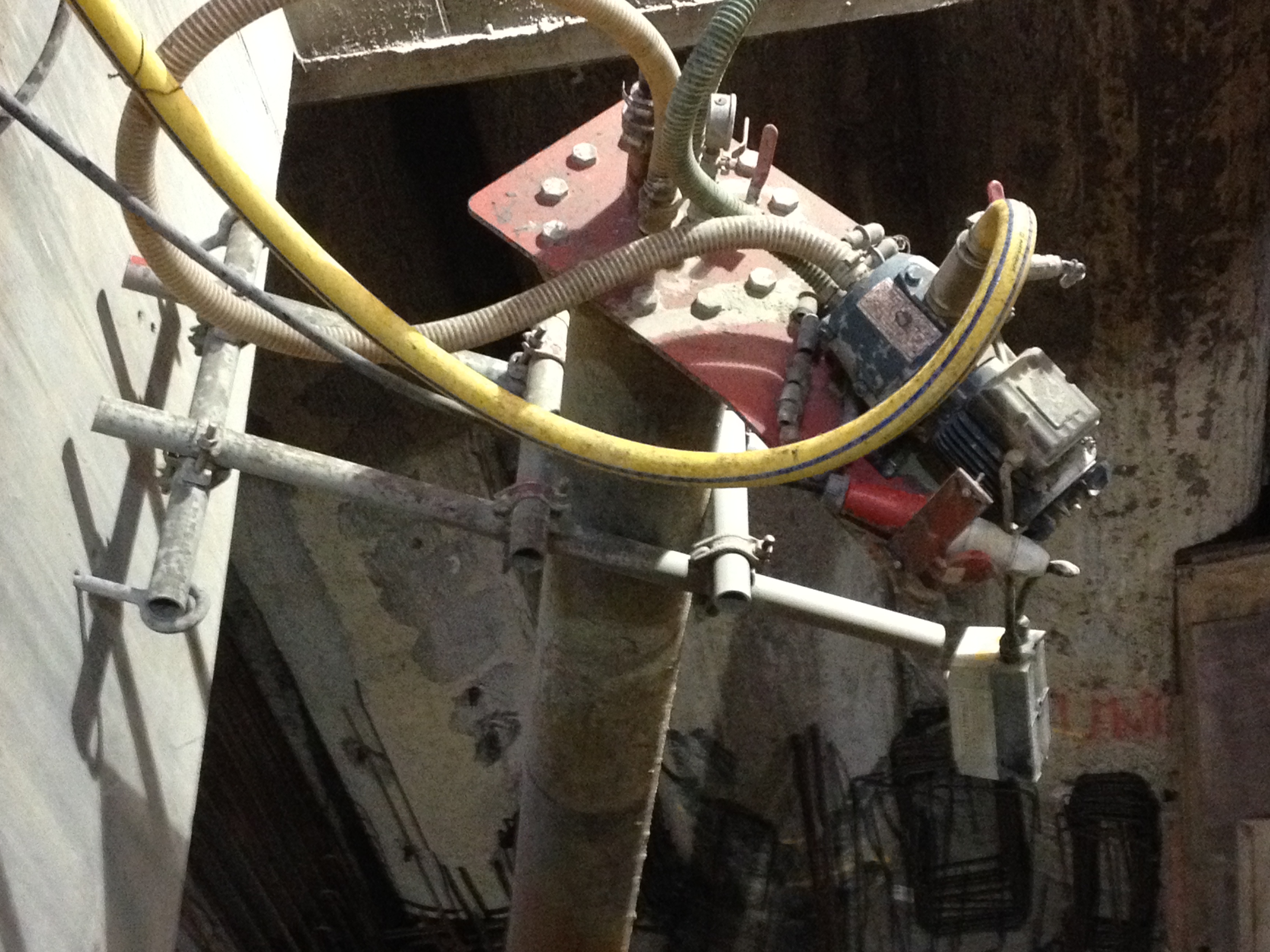
Installing the depressurisation wells & the well head of the vacuum edjector depresssurissation system
Precast Concrete. Leading the charge for Laing O’Rourke I had at the time of leaving managed to secure my greatest legacy to the Liverpool Street site, the use of precast concrete sections to complete the Northern Wall of Blomfield box. Through the use of negotiation skills, professional engineering judgment, coercion and by being a deviousness and sneaky bustard I coordinated efforts and produced the Value Engineering proposal that convinced Crossrail Engineers that the use of Precast Concrete was in fact the best option in terms of engineering risk, H&S and commercial risk.
The complicating factor in the design of the precast concrete sections was Crossrails insistence that as they would be required to take structural design responsibility then they would design the wall sections and inter wall connections. As the wall is to be next to live LU track and undercover the wall must have little to no maintenance burden and cannot use any materials that release toxic fumes when burnt. As a result Crossrail had designed the walls connections as an insitu concrete stitch creating two problems for us as the contractor to overcome; Firstly this insitu stich requires the reinforcement within the wall to be tied to the structural frame of the building and then concrete poured between the steel to join the wall and structural frame together to form what engineers have described as a monolithic structure. Secondly how do we turn and ten support the wall sections during construction. The walls have a long slender overhanging nose section that cannot be used to support the wall during fixing and pouring. With the temporary works team we had developed a rough scheme of manoeuvre using Perri Strong backs to create legs to support the wall. These legs then had to be offset from the wall sections to allow the site operatives access to fix steel and pour concrete. As a result at my time of departure I was working with the temporary works team to model the loads on the connections. At the time of departure we were on the 6th iteration of concept designs from the design consultants Motts….
I have now moved to Arup, London office without a speck of mud insight. I am now surrounded by a mix intellectual geeks and glamorous Europeans. I have discovered the free lunches that accompany the lunch time CPD sessions and have attended two this week already. The festive season has already started with a wear your s***test shirt to work day and festive if not geeky pub quizzes…John I am sorry to disappoint but my team came last at the geotechnical Christmas quiz…….
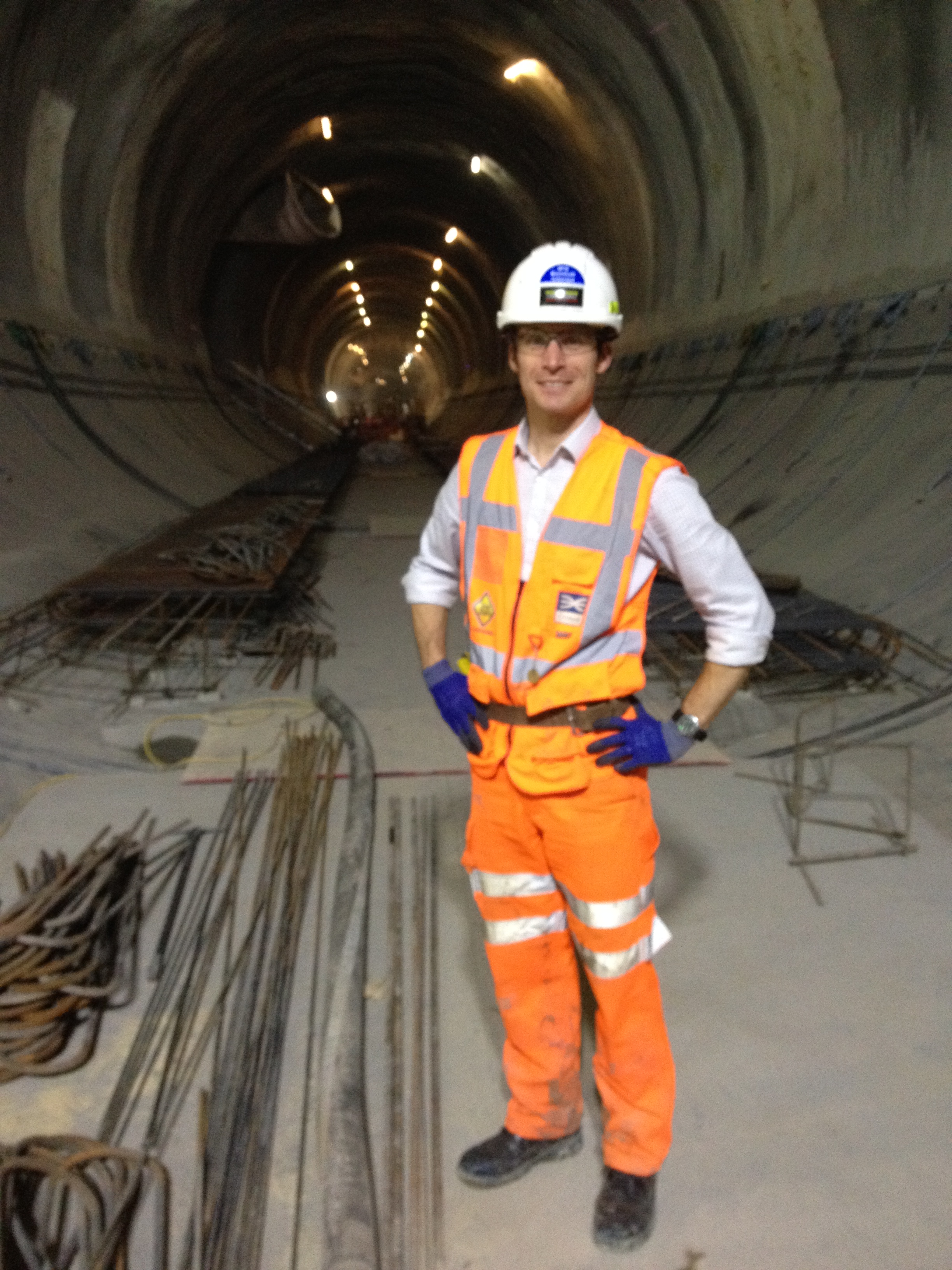
My final walk in the tunnels and on site
 Holdfast Training Services Trial Blog
Thanks Steve,
Some impressive statistics in terms of material consumption, I imagine the volume of excavated material is similarly intriguing in terms of the logistics for such a tight site. Photo1 shows some of the most neatly laid out loose bar I have ever seen! You have had a fantastic attachment, thank you for sharing so much of it with us all on the blog. I know Laing O’Rourke will be very sorry to lose you.
MAterail excavated ranged from 3000m3 to 5000m3 per level and each level was excavated in two weeks with the steel and formwork taking a further two weeks. at that rate we would have had the main shaft excvation and slabs pours completed by christmas, however the interuption of the installation of teh depressurisation wells casued a significant delay.
I was offerred a job but had to decline. I think we add a significant amount to the sites during our attachement, not just in our engineering contrbution but asmuch with the planning, communication and general way we conduct ourselves. I know you have said RE should admit when we do not do so well, but here i think we should be recognise that we really do add value and will be missed on iste once gone.
My obs form a number of mentorships ( if that’s the right phrase)
a) SCJ is correct in that the basic management skills that our officers arrive with are much sought after; particulalry bearing, organisational and communication.
b) That these alone can bring you to ‘exhaulted’ status speaks quite loudly of what might be missing on many sites
c) The really impressive is when it is realised that all the stuff that passes for management is actually managing the delivery of some engineering; and that understanding some engineering often mitigates contract risk most effectively.
Every mentee that I’ve had have described cock-ups that have led to major project management catterwalling when the solution to the cock-up was the application of a couple of grammes of engineering; way,way,way before the issue went to melt down.
I am left with the impression that the project management breed so loved of Latham is parasitical upon engineering that they neither understand nor show any need to understand…let me see now….
Gary Allen – complete fubb on piling matresses and disposal of acid sulphate arisings
Chris Cliiford – excavating perfectly reasonalble fill becuse some forms hadn’t been filled in
Ross Elliot – my christ- too many fubbs to mention – my fav was understanding that you needed the diagphragm segments on a cantiveleverd box girder execution before all the other segments
Rachael Beazant – what happens when you dig a hole under water
Steve Dollimore – Do you think that that dewatering scheme is wise?
Rich Phillips – I wonder what a transfer beam is
…and so it goes
Lots of work for the PMs though!