Riyadh Metro – Ground Water Risk, again!!, but different!!!
Now at the end of my second week with Arup I have found a desk, computer and even taken some time to find the library check out some books and remind myself what a bending moment is. Not sure why I am surprised but a have found copies of most the books we were issued on course either in the library or actually being used by engineers around the office.
I have been assigned to the Riyadh metro team and once again find myself looking at trains underground.
Project in brief
The Riyadh Metro is part of a wider scheme to regenerate the public transport system around the capital city of Saudi Arabia called the Riyadh Public Transport Project (RPTP). The metro system is to be a rapid transit system designed to reduce congestion within the city due to the rapid growth in the size of the population of Riyadh within the last 10 years. Construction of the metro system began in April 2014 and is due to be completed in 2018.Once completed the Riyadh metro consist of six lines totalling 178km of track and 85 new stations. Arup have been employed as lead design consultant by BACS consortium consisting of Bechtel, Almabani General Contractors, Consolidated Contractors Company and Siemens. At Arup the Riyadh metro team is responsible for the design of the five subsurface stations along the Green and Blue lines. At my time of arrival the 30% concept design has been completed and the team are now turning their attention to the 60% detail design phase. I have been assigned to the team looking at station 1F2 which is considered the most complex of all the stations. The complexity is due to the interface of already existing buildings, a main highway (under which the station is to be built), a flyover and testing ground conditions.
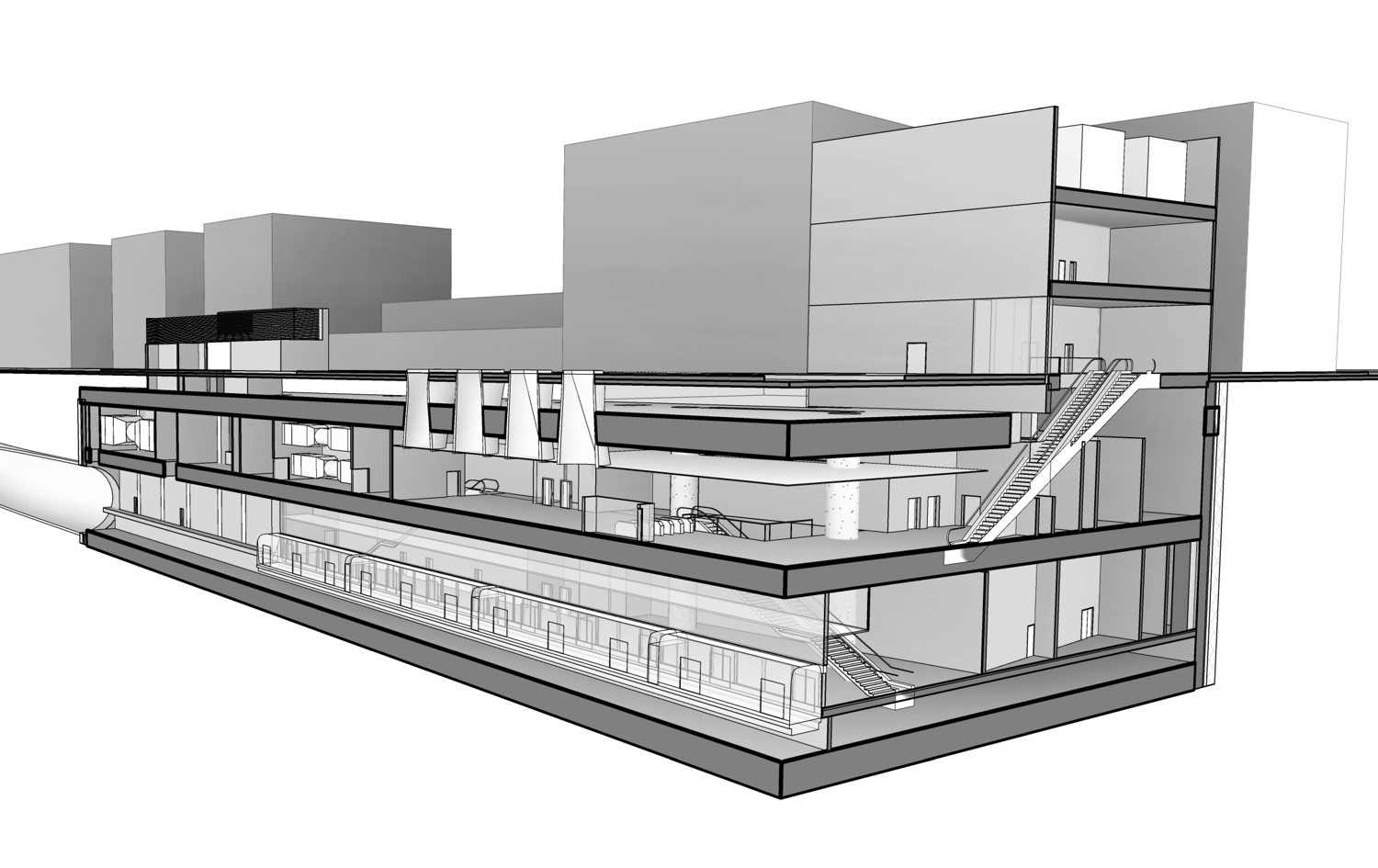
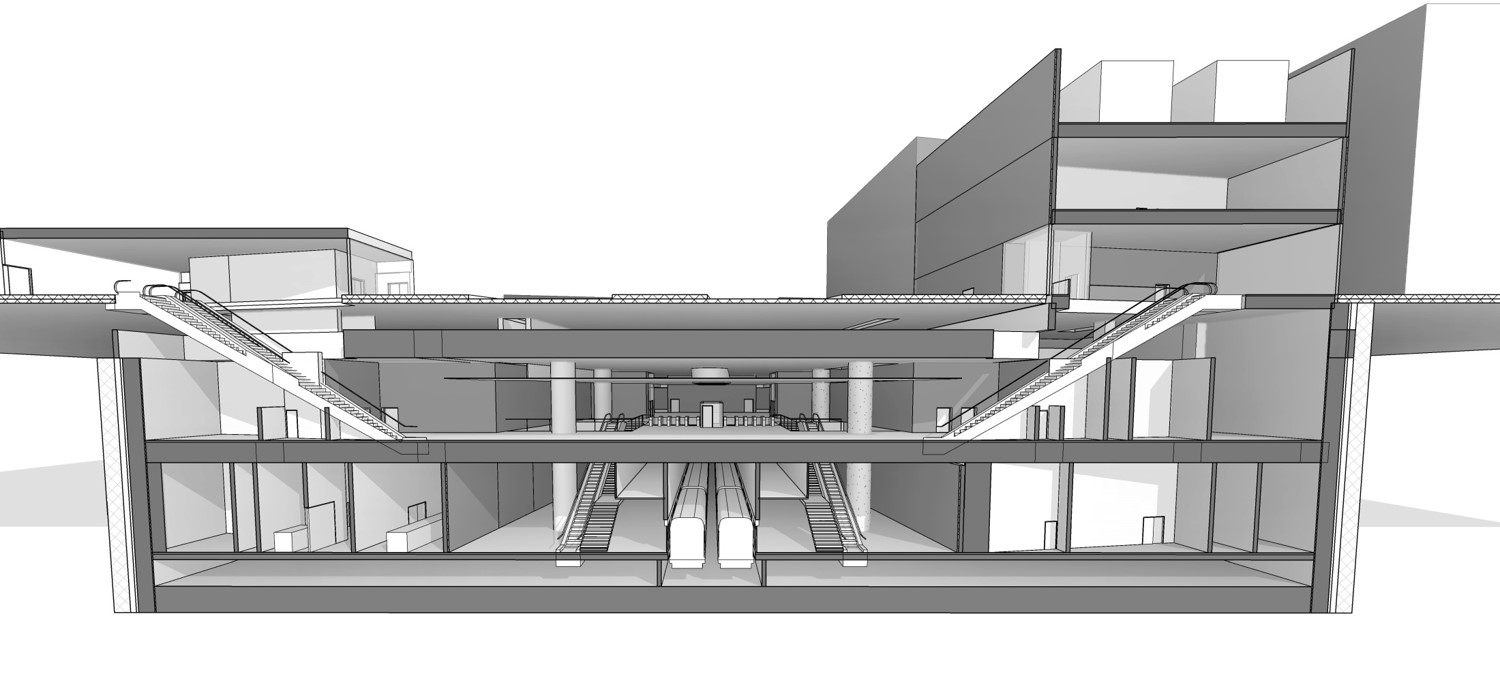
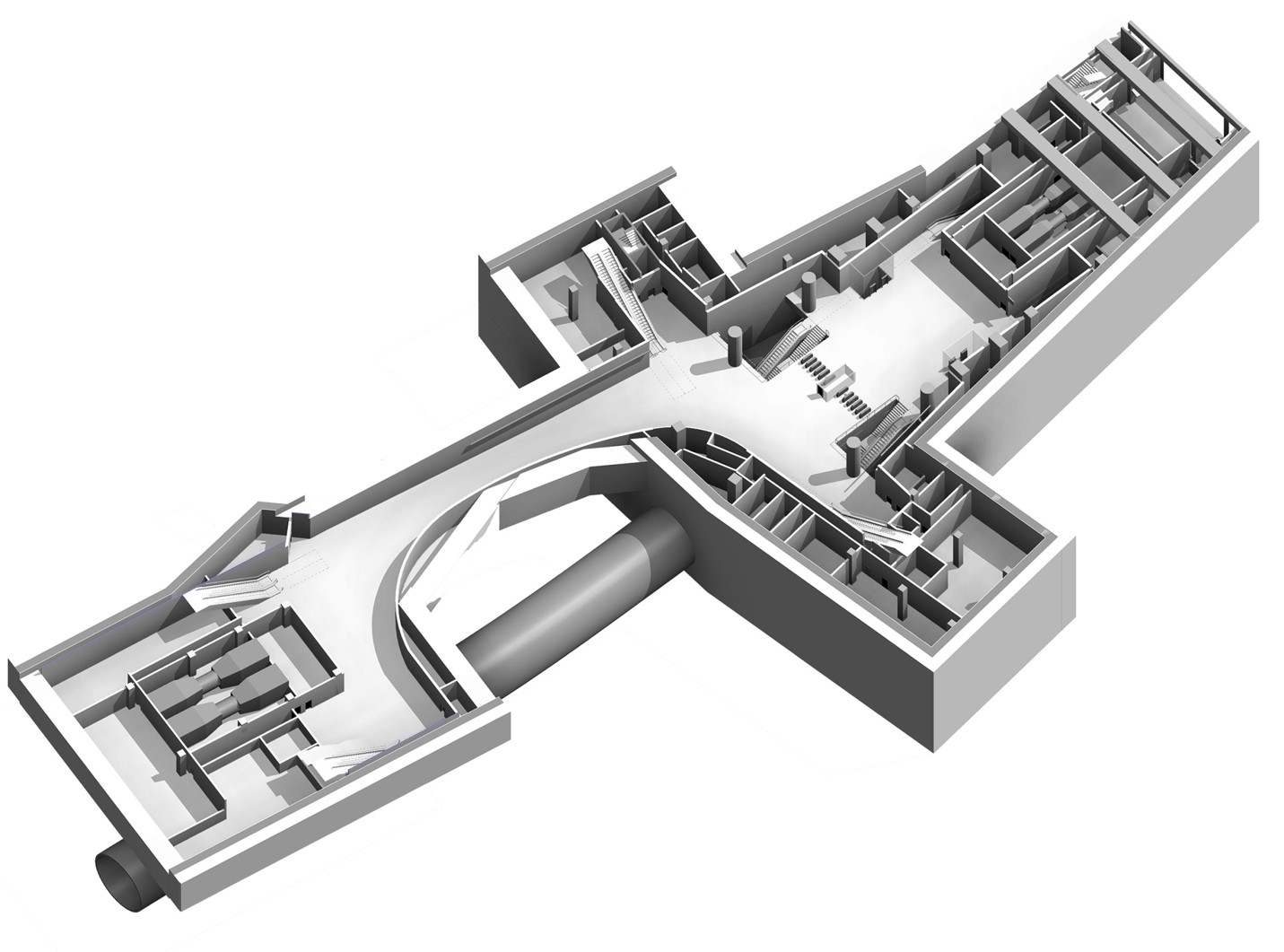
Fig 1. Station 1F2 structural model.
Construction Method: The construction of 1F2 is to be a bottom up construction unlike the Liverpool street station which was a top down construction. The use of a secant pile diaphragm wall with tension anchors into the soil behind the piles will be used to maintain the excavation. The structure will then be built from the bottom in a conventional method.
Soil Conditions: Although not read into the detail the ground conditions on site are set to be quite different to Liverpool Street. The ground is predominately course grain gravels, sands near the surface with more consolidated soils at depth and ultimately layers of rock.
The Engineering Risk.
Ground Water: The main engineering risk identified in this case has been ground water due to confined aquifers and a high water table and high permeability soil. The high permeability of the soil combined with an wxpectation of large fissure will result in a high flow rate of ground water which will fill the excavation and pose arisk to life or at the very least make conditions unworkable.
Settlement: Any attempt to lower the water table will also alter the voids ration and cause settlement of surrounding soil and poses a significant risk of causing damage to surrounding structures.
Solution
Reduce the ground water flow. Ground water flow (Q) occurs when a change in the ground water regime sets up an hydraulic gradient (i), i.e. opening an excavation. The greater the difference in head the greater the hydraulic gradient and the greater the flow, however the length over which the water must flow will also affect the flow of water due to resistance caused by the permeability of the soil. As a result
Ground water flow (Q) =Cross section area (A ) x permiability (k)/flow length (l) x (h1-h2)
Hydraulic Gradient (i) = h1-h2 / l
Therefore there are a number of ways to reduce the ground water flow into the excavation, one using a ground water pumping regime to reduce the difference in hydraulic head or increase the flow path by forcing the water to flow further using a hydrulic cut off.
Ground water pumping reduce head difference: My usual approach would have been to design a dewatering scheme to lower the water table outside of the diaphragm wall to ultimately lower the ground water within the excavation. However due to the risk of settlement and damage to structures within the influence zone this has been deemed unsuitable. Therefore de watering must take place within the excavation.
Ground water cut off increase the flow path. In order to reduce the flow of the water a vertical cut off may be used to reach a lower permeable soil boundary or to increase the length of a vertical cut off to increase the length of the flow path and reduce flow. A typical method for achieving this is the use of piles either sheet or RC concrete. The geotechnical team within Arup have opted to used injection grouting at the base of the pile to create vertical cut of. In this case a TMS (Tube a Machete, read tube with holes in it) is inserted through the pile and grout injected in to the soil to fill the voids. The intention is to us a course grain grout followed by a finer grain grout to create the vertical cut off and reduce the dependency on augured piles.
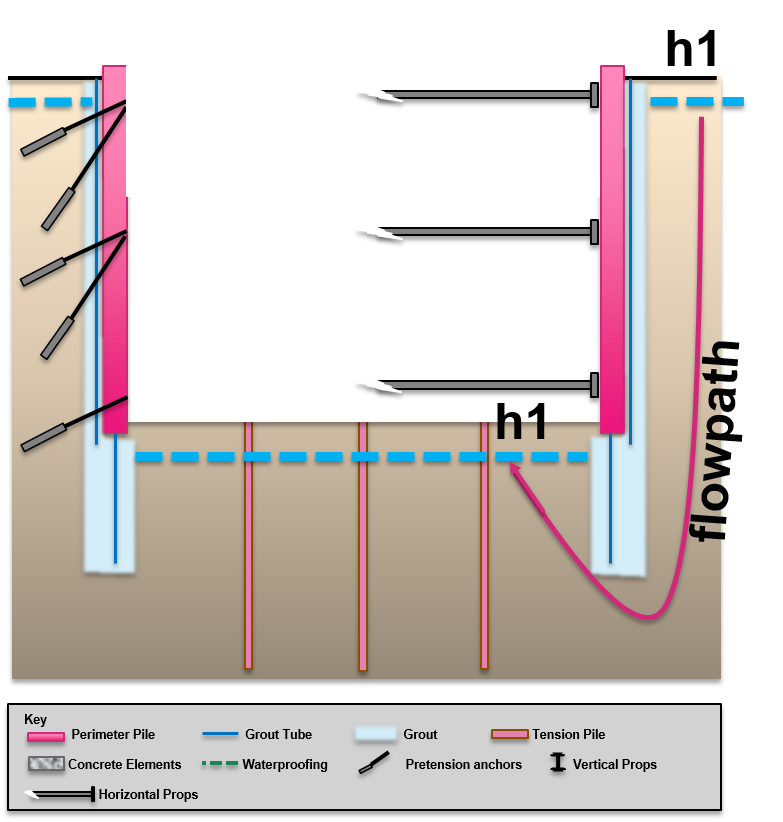
Fig 2. Showing use of grout as a vertical cut off to increase the flow path.
My initial thoughts are that this seems very high tech and potentially engineers trying to be too cleaver. The problem that I raised but apparently has been considered is that the first that anyone will know it has failed is when the excavation starts to fill with water. In this instance it would be too late to increase the length of the secant pile wall to increase the vertical cut off. I stand by to be corrected.
Comments on a post card…..
 Holdfast Training Services Trial Blog
Looks like an interesting job to be on. The concept of grout TEM is not one we are strangers to – see Rach Beszants blogs about the connaught tunnel. Lots of oportunity for unexeded things to happen and the skills of military ConPlans to come to the fore. I’d be thinking ground freezing if all does go Pete Tong! When does the job hit site and how is it being tendered i.e. where does the risk for detailed temporary works design sit?
The interesting thing about this contract is that it would appear in the middle east contractors are employed to deliver descret packages of work and they are pyhsically seperated to avoid litigation across contrators. i.e the contractor that digs the hole will not build the structure and the structure must be designed to limti contact between the diaphram wall and structural elements. This allows responsibility to be directed at those that built each element and contractors will not be able to blame previous works. This will be difficult as at some point the diaphram wall and slabs will need to contat each other as the slabs will replce the temporary propss and tension anchors.
My concern is that if the ground water regiem is as the Geo Tech deprtment say it is then if the grout in the vertical cut off fails the contract will be trying to pump more grout while swimming (assuming arm bands avaliable) in what will be the worlds largest jacuzzi!! Would it not be better to install the secant pile wall just a little deeper.
This is where one starts to do engineering! What is the risk, what constitutes a little bit more depth? Some where along the line there must be a flow net, list of probabilities and an assessment of apetite for risk versus time/cost. I think that there is an element of the Saudi approach that could be employed – keep it in one department – the geo guys work out the nature of th ground and the flow, the geo guys design the solution… risk in one basket; sleep well!?!
Nice blog Steve.
Has a con plan been done yet? Things that spring to my mind are have the Geo guys worked out a worst and best case flow if it does go tits up? What size of pumps would be required to deal with the flow in these cases (and the costs of hiring them and the associated hoses?). Has anyone thought where the water will be discharged to, and if it can cope with the worst case flow? I’m guessing there is a low level plan for small scale pumping during the excavation works? Could this easily be scaled up if things go sideways?
Is it your job to work out the additional cost of increasing the pile length vs the cost if the grouting goes wrong? I agree that just making the piles longer seems much simpler but could you present the case for this in a better way? How does the cost of 1m of grout compare to 1m of pile? It could also take into account the costs if there is a failure with the grouting. What mix are they using for the secant piles, and how will it compare to the grout in terms of permeability?
Have you managed to get yourself on a recce to site yet?