Design office blog 3
Submitted a tender to ICC (that I was bid leader for)
This was a request for tender that came through from a panel agreement that Jacobs have signed up to. The proposal was a fairly small one, with fees in the region of $30,000. It involved the checking of a preliminary design that the council had completed themselves, including some computer modelling, plus the design of some discrete elements in the stormwater harvesting scheme. This all sits within a larger flood mitigation project (outside of the scope). It was nice to be given this to run with as I’ve worked on a number of proposals now, but only concerned with the civil aspect of these larger projects. It allowed me to go through the review process and complete the tender documentation, helping to understand the elements that I’d only read about previously. This included everything form assessing the brief to submitting CV’s of the team that would complete the work, arranging the insurances and finally getting sign off from 2 of the directors (plus lots of other tasks).
I looked into the panel agreement a little further, as I’ve not encountered it before. The Local Buy panel is essentially a 3rd party organisation that matches clients (from local government) to design services and other service providers. There is a list of agreed rates that exist between Jacobs and the panel. In practice they just send out the requests for quotation to the companies on their list. Then they add a 5% fee. I can’t really see what value they add in the current market. The rates agreed were far above what is currently the market norm.
Completed stormwater sizing for the 50% design on Amberley RAAF base.
This was a small bit of design work to help out the engineers working on this project. First I worked out my design storm and the rainfall intensity, the Qld Urban Drainage Manual (QUDM) was the local standard to follow (as the land is owned by Defence they don’t have to adhere to local legislation, only federal, but they tend to follow it out of courtesy). I calculated my run-off areas from the CAD sketches, and picked some inlet positions. I took the design through to the sizing of pipes and inlets (this involved checking the flows captured in each inlet and what would carry on to another inlet).
Cost estimate for accommodation relocation.
This involved the client relocating dispersed accommodation assets to one location. The location to be removed has been sitting empty for some time. The new location was originally planned to be much larger, but was scaled back prior to completion. However all infrastructure was sized for the full camp (2500 men). The camp bore many similarities to expeditionary infrastructure, as each location had their own water treatment and sewerage treatment plants. Power was from the main grid and stepped down to 33KV where it came on site. There were then a series of HV and LV loops around the camp. The water and sewer mains were fairly simple to tie the new accommodation units into. I then received a rapid lesson on the comms and electrical infrastructure that would be needed from the team downstairs. I was just able to follow the lingo with the electrical kit, but started to get a little lost when it got to the comms. It turns out that each 4 man “donga” has fibre to it. It is then converted to copper for the individual rooms. I scribbled down lots of notes about the number of head end FOBOTs required and how the 144 core cable ran in a big loop from the main comms room. Each laundry unit was where the 12 core loops to the dongas were split out (there was another FOBOT here). All very interesting stuff I’m sure.
I got one of the drafters to put some quick sketches together on CAD. (see below)

The client was keen to know the cost as if it was below a certain value the move could be done as part of their operational budget. If it was too expensive it would fall to capital works and wouldn’t be possible in the current economic climate (commodities are currently suffering).
Recce to Melbourne (Puckapunyal) for a crossing design/assessment.
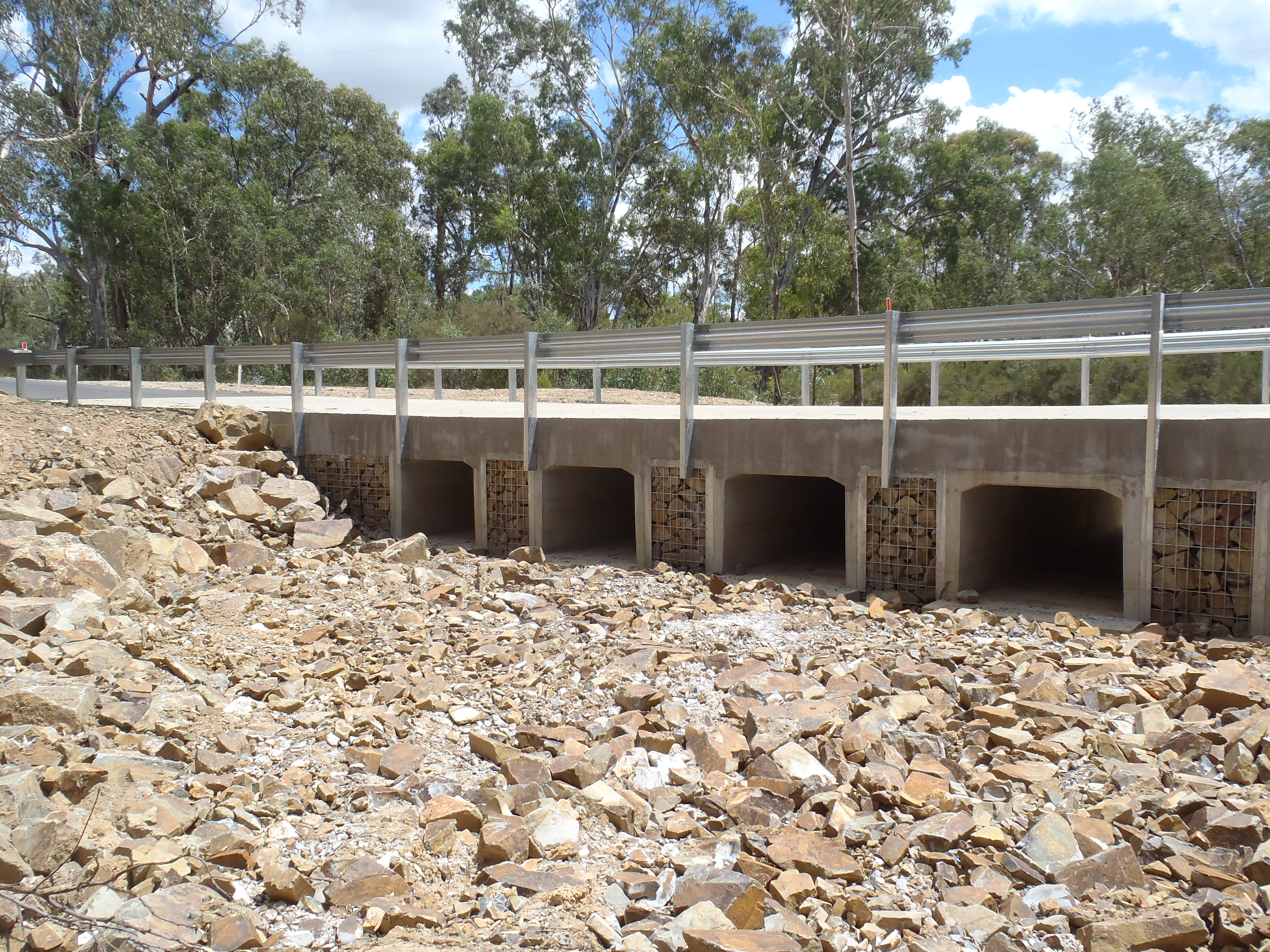
This turned out to be both a very frustrating project and very informative. At the start this sounded like a great little task, involving a free trip down to Melbourne. However I only saw Melbourne airport before heading North to Puckapunyal Training Area. This is the home of the Australian Army school of Artillery and their school of Armour. There is also an experimental weapons range tagged on the side for good measure. The background to the project is that Jacobs are managing the maintenance contract for the range. This year there was an underspend in the budget, so they are looking to squeeze in a number of tasks that were further down the priority list. On the training area are a number of crossings that have had their MLC downgraded significantly, see the photo below (looks suspiciously like a non equipment bridge). The aim is to install some new crossings to MLC 110T (wheeled). There is an existing design template that they want followed for these new crossings. Three existing crossings have already been built following this template on the training area and the client is happy with this style.
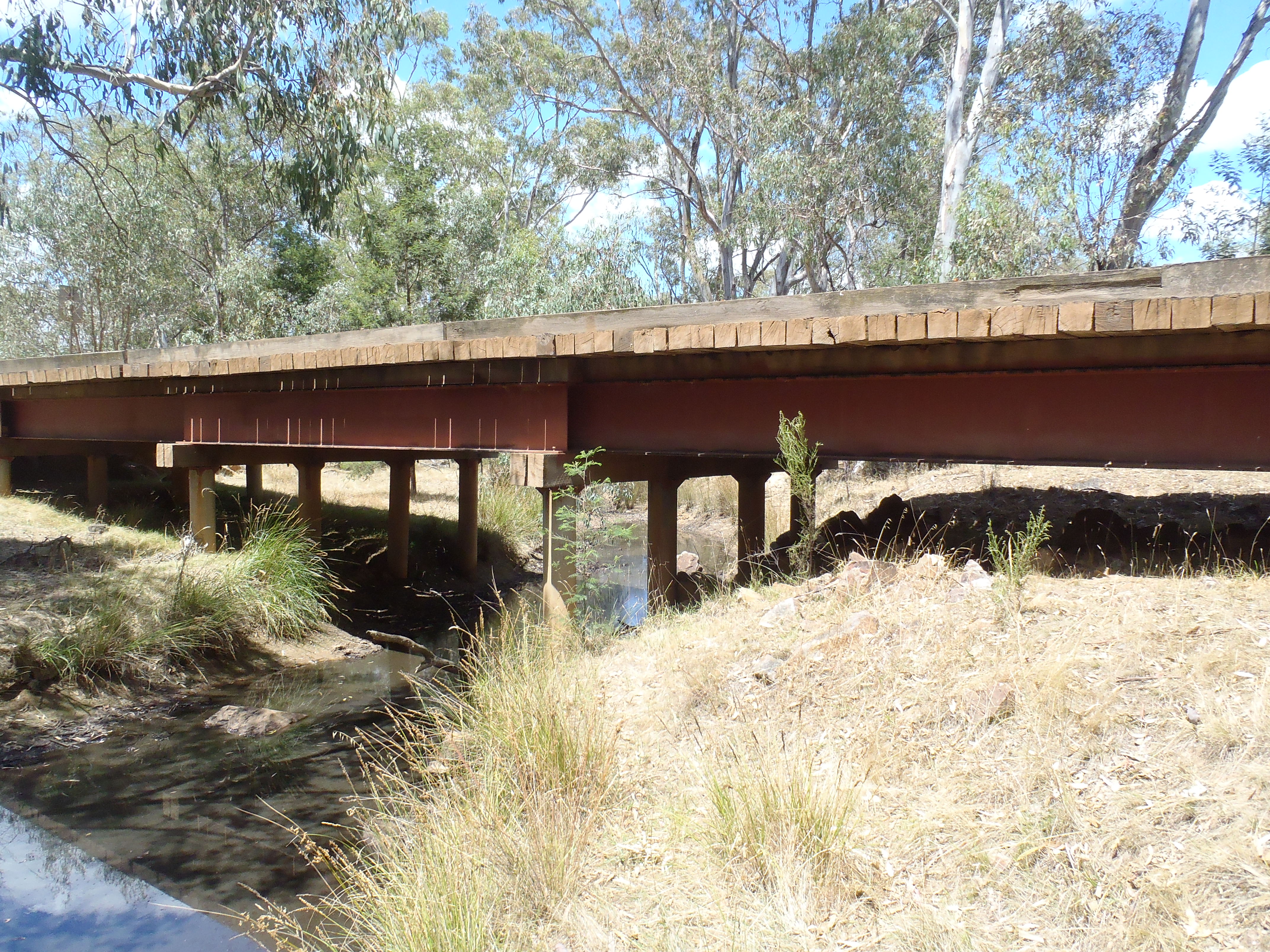
I was given the previous crossing drawings and the calculations that went with them. My task began as a review with some sizing of the culverts within the design (after finding the catchment size and calculating the design storm flows at the crossing points) On return to Brisbane I confirmed what I would be able to do for the team in Melbourne and set about deciphering the calcs. I completed my own check calcs in parallel to AS5100 (the Australian Bridge standards), the pavement was designed to a technical note published by the Cement and Concrete Institute of Australia.
Lessons learnt
Write down all thinking when doing calculations. It was really difficult to interpret this other engineers thought process. I am using educated guesswork to figure out why he selected a specific span to design to – it doesn’t match with anything in the design. It could also be old calculations from a previous job that were never updated – I just don’t know.
Understand clearly what you are being asked to do before starting a project. If the aim had been made clear form the outset, that a set of design drawings that could be issued for construction (IFC) were required, time and effort could have been saved. While I clarified what I was doing with the team in Melbourne on my return, they never stated their need for IFC drawings, or for any material to go outside of the company. This could be my own ignorance, but with hindsight I think they were after a quick and dirty, “she’ll be alright, just go build it”.
Unwillingness to move outside of comfort zones. This could be interpreted as people adhering strictly to the codes of practice and only working in areas that they are competent in. I see it as people not wanting to make the effort and take responsibility for a project. Going to other specialists for help when those unknown areas arise. This was put in the “too difficult” file by many until I pushed for the job to be taken. This could be due to the narrow field, but depth of knowledge many seem to develop. Only a few of the older engineers seem to have much in the way of cross discipline experience. Has anyone else encountered this? Is it more prevalent in the larger consultancies?
 Holdfast Training Services Trial Blog
Hey Pete; interesting blog, not least bc I’m in a very similar line of design work with USACE. I also have been doing stormwater design for a new site albeit taking somewhat longer as we are limited with manpower and we don’t have draughtsman, as well as doing other site designs and planning.
Interesting point you make regarding specialisation and the narrow depth of field. It is commonly noted by engrs in my office at how general we (USACE) are, since much of our work is reviewing deisgns and covering a vast array of subject material with ltd manpower. When we do actually commit to a design, we admittedly have to the likes of Jacobs when it comes to really complex design. Though we find they clearly know their stuff, it is hard to get them to grasp impinging factors beyond their remit that working on military sites often present and that they are not used to working with, not least G2 and FP constraints.
That was a swift response Hoops!
I know that Jacobs do a lot of defence work, both in the US and over here in Aus. Here they seem to have grabbed quite a few ex officers to work in project management. There is a former full colonel sits downstairs and an ex brigadier that manages the military liaison/sales team. There don’t seem to be any in the engineering side of things though.
Pete
Some good points about your calcs. You only really understand the details that are required when you try to pick up someone else’s calculations and run with them.
All the very best – not long to go now
Kind Regards Neil