Archive
That’ll do!
After a week off last week the learning curve had ramped up again this week.
Two tower cranes up, three to go. We’ve cast the ducts for the power cables to the tower cranes into channels under the blinding. This keeps them out the way and protected. The ducts continue across the site and spit out of the edge of where the building ends.
![WP_20150313_08_58_31_Pro[1]](https://pewpetblog.com/wp-content/uploads/2015/03/wp_20150313_08_58_31_pro1.jpg)
![WP_20150313_08_58_41_Pro[1]](https://pewpetblog.com/wp-content/uploads/2015/03/wp_20150313_08_58_41_pro1.jpg)
Ducting emerges… …from under the (still wet) concrete
Adjacent to this is the berm holding back the sheet piles (in that area they’re just there for water control really, less so for soil retaining. In order to install the cables it was asked if the berm could be locally removed in the corner to allow the cables to come straight down the pile wall and into the ducts.
![WP_20150313_08_59_02_Pro[1]](https://pewpetblog.com/wp-content/uploads/2015/03/wp_20150313_08_59_02_pro1.jpg)
The berm in question
So I broke out the cofferdam notes and off I went. I discovered that although the piles would still stand, it seemed likely the top would see a deflection of up to 40mm.
5 meters behind the wall is a public road complete with services under it. I then estimated the services would probably see a localised deflection of up to 20mm. Well beyond the acceptable 10mm. So it needs bracing.
So I broke out the Cofferdam spread sheet and off I went. I estimated the wailing load, and thus the prop load. I selected a propriety system that could accommodate and made a recommendation. My CEng took one look at it, halved the section size said “that’ll do”.
It’s due to get installed next week.
I really hope it holds!
Condors, Piling Methods and Bomb Hunting
Site Two Fifty One
I’ll reflect on 3 points this week.
1. Sensible Health and Safety. This week’s Monday morning was more “Monday morning” like than any other – the busiest day on and around site to date. PM on leave and Project Engineer arrives at 9.30am (site works start at 0800). Typically muck away lorries, UXO survey team, slab breaking, pile rig conversion (rotary to CFA), perimeter hoarding move, substation re-routing and traffic management all collided at once. Add in the client’s representative visiting and an already confined and cluttered space and you have issues. Unfortunately the UXO survey team arrived late, muck away trucks got stuck and converting a pile rig needs loads and loads of space. This inevitably started to cause chaos and not just the site was becoming unmanageable, the roads around the site perimeter were getting blocked. This was the time to take the condor moment: step back, think and act. I chose not to and felt the client’s representative needed to be briefed. I missed the increasing hazards and did not take control. Shortly arrived the Project Engineer arrived he stopped the works (not for long because it just needed a few composed minutes to sort things out), cancelled further muck away, and installed new walkways to make safe passages between work areas. Simple stuff and a big lesson learned for me to then reapply the following day when the situation changed again.
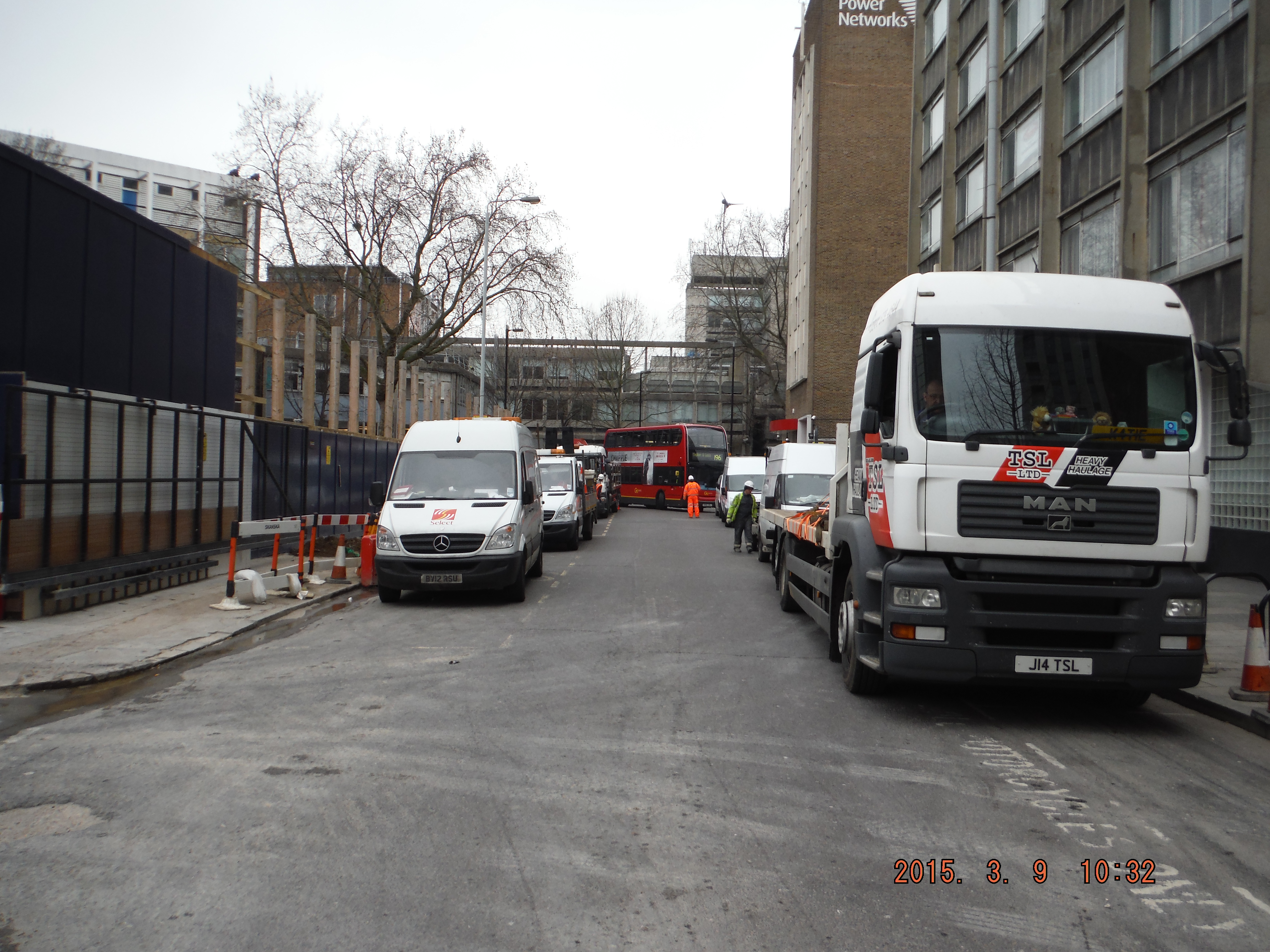
Site perimeter, Gaunt Street, choked with site vehicles. See high-ab arm at the back and the London bus attempting to get through.
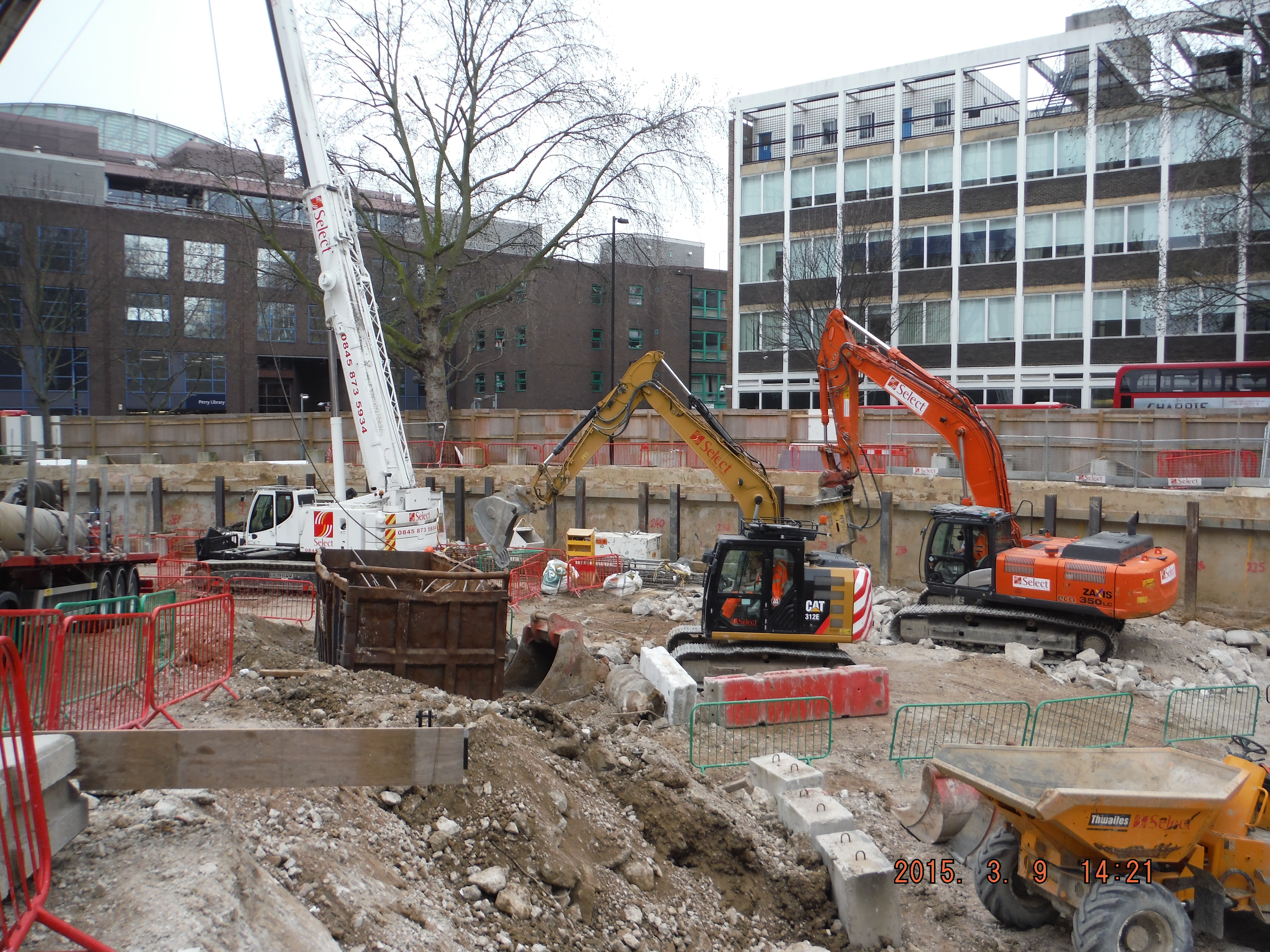
Site in overflow: slab breaking, excavation, skip exchange, deliveries, piling and UXO.
2. Pile type, Rotary to CFA. Some reminders for me/anyone who is doing either type of piling in the future. Firstly, allow 3-4 days, not 1 or 2.
Rotary bored (replacement). This is where the casing is bored into ground and a rotating auger is used to excavate the soil within. Casing keeps the hole open and makes a pretty neat pile. This method struggles to work at 38m depth and in dense sand – hence the change to CFA.
CFA. The first key point is that the space it needs is huge. Not just the longest drill bit you will have ever seen (it comes in 4 m lengths) but the guard which removes spoil from the auger means more space around it is needed. Additionally rather than just having a pile rig, crane (to lift reinforcement), and concrete wagons, you also need a pump which needs 3m of extension hoses, a thick hose line and an agitator (stationary concrete wagon) to mitigate typically infrequent concrete deliveries in London. Add this to the above Monday morning scenario and unless the situation is well planned you have problems. The first pile was constructed and the volume of concrete was horribly out requiring the pile to be drilled out and re-poured. Why – probably because the massive drill bit auger, without a casing, had brought in material from the edge of the hole making the hole much bigger. So what, well for a start, it is very difficult to predict the concrete quantity, secondly it makes for a very uneven pile and thirdly who pays for the extra concrete (about 30% extra than the cylindrical volume budgeted only, about 50% extra required)…
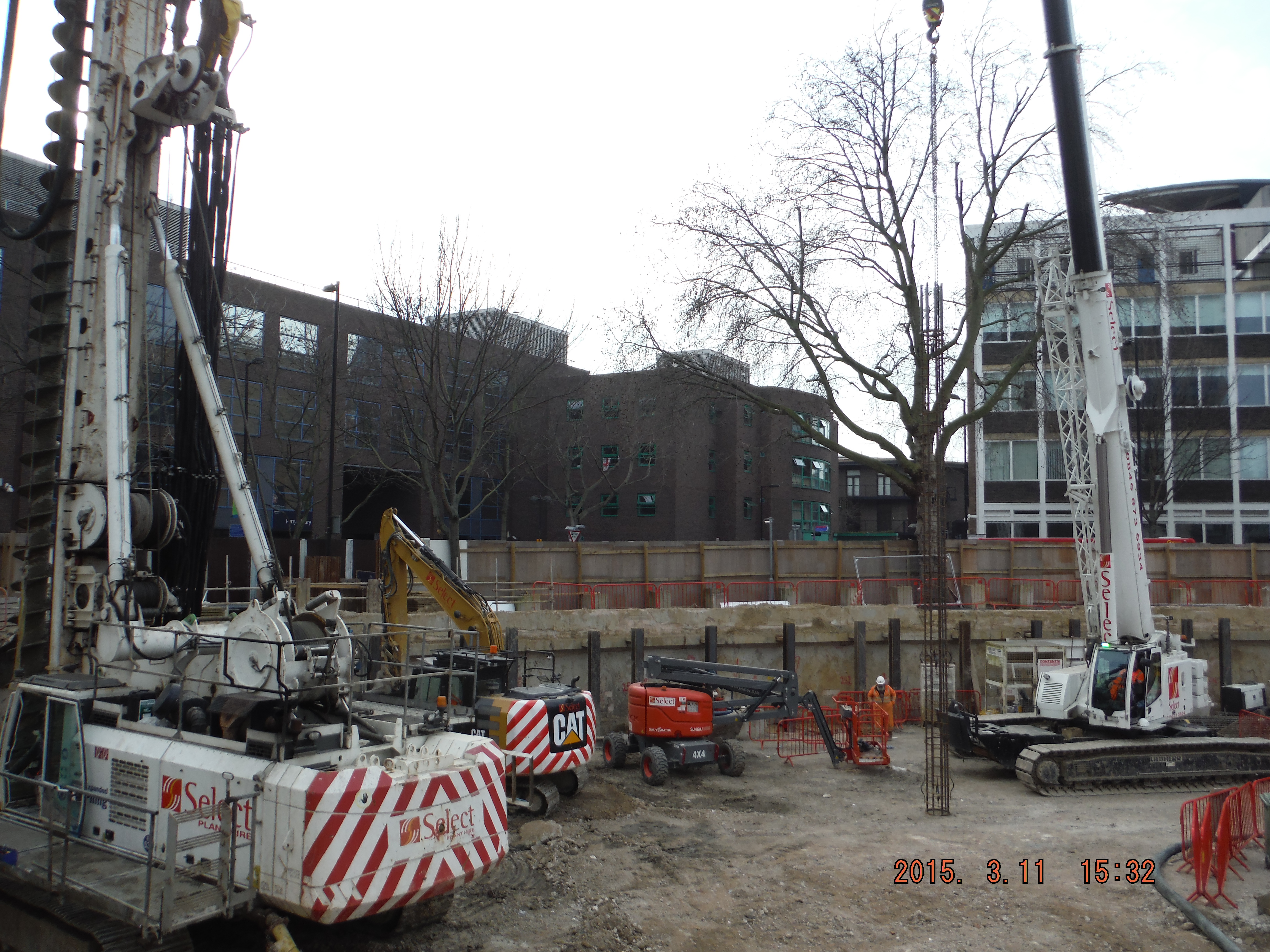
Crane moving reinforcement ready to be inserted into male pile.
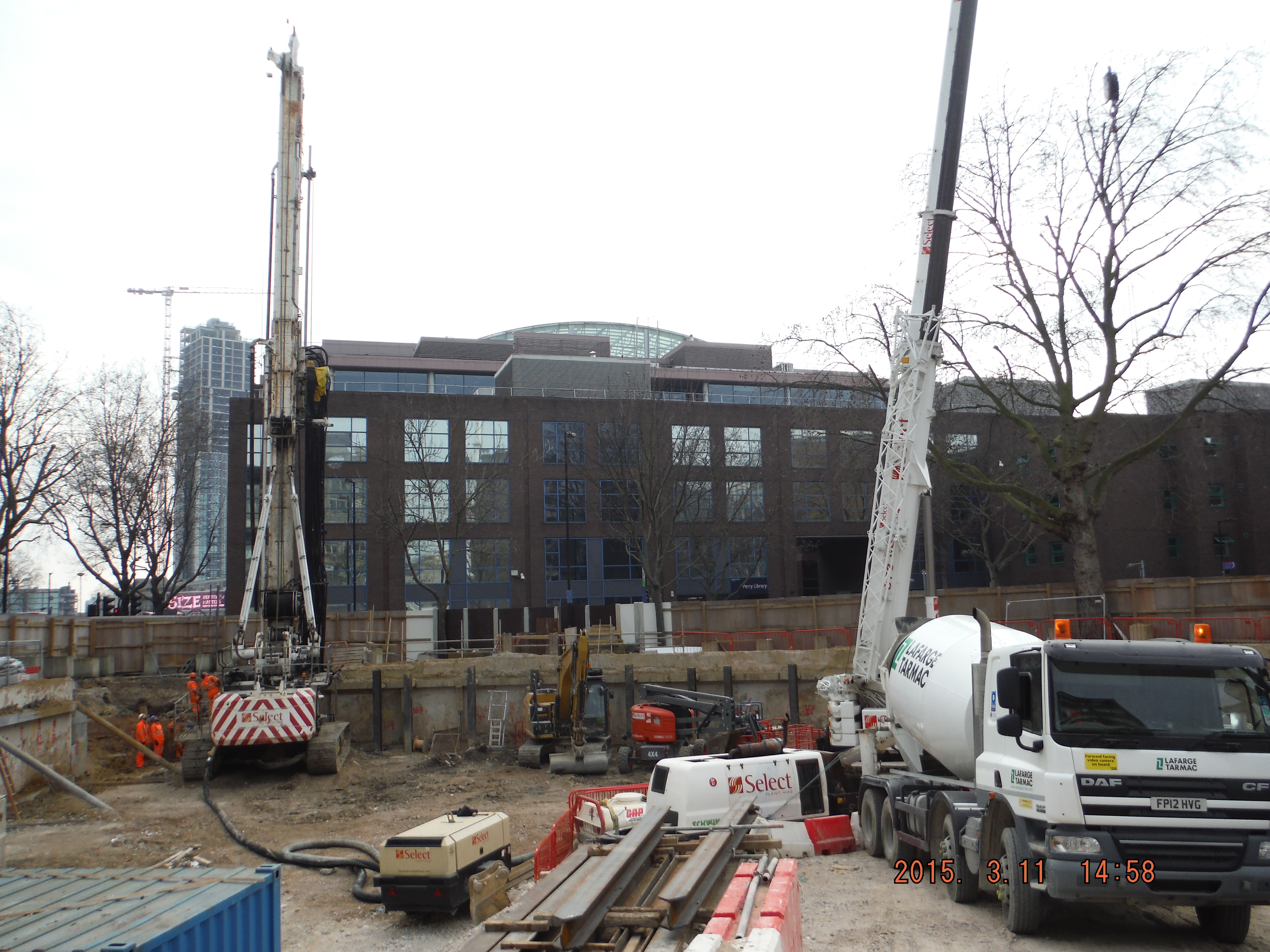
Alternative CFA concrete delivery – direct to pump without agitator.
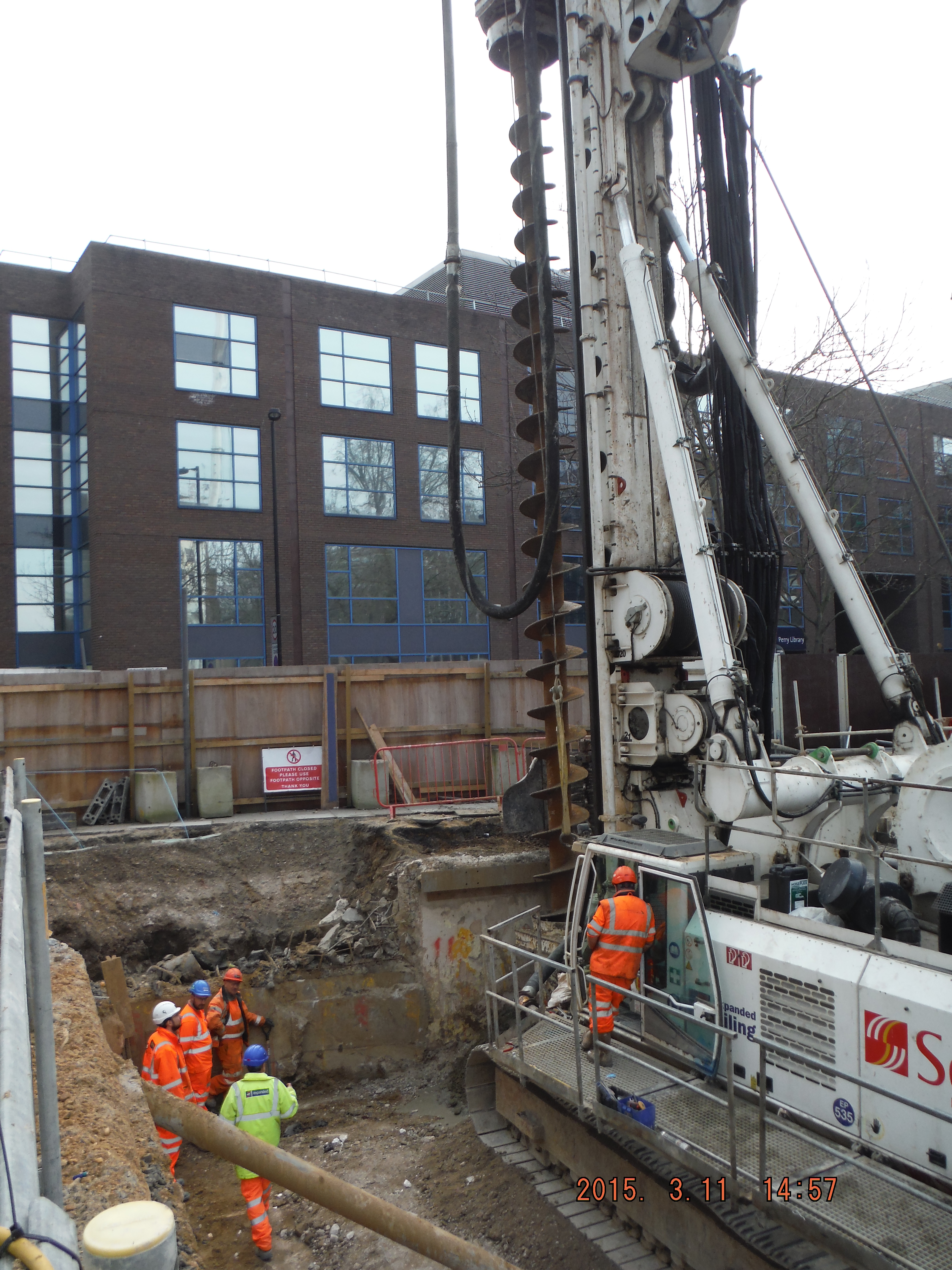
Auger guard hits back wall, solution – remove top of back wall!
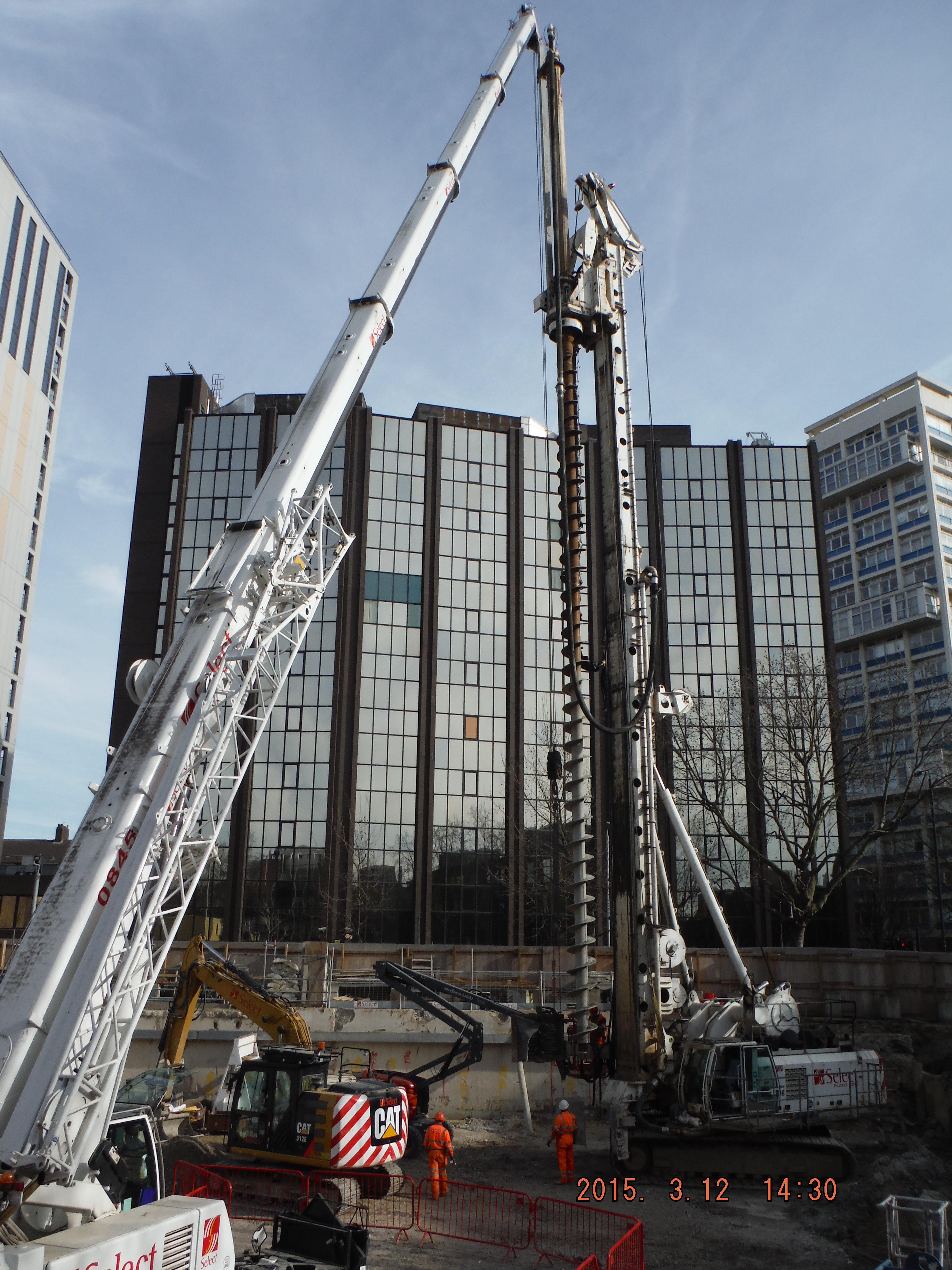
CFA – 30m auger
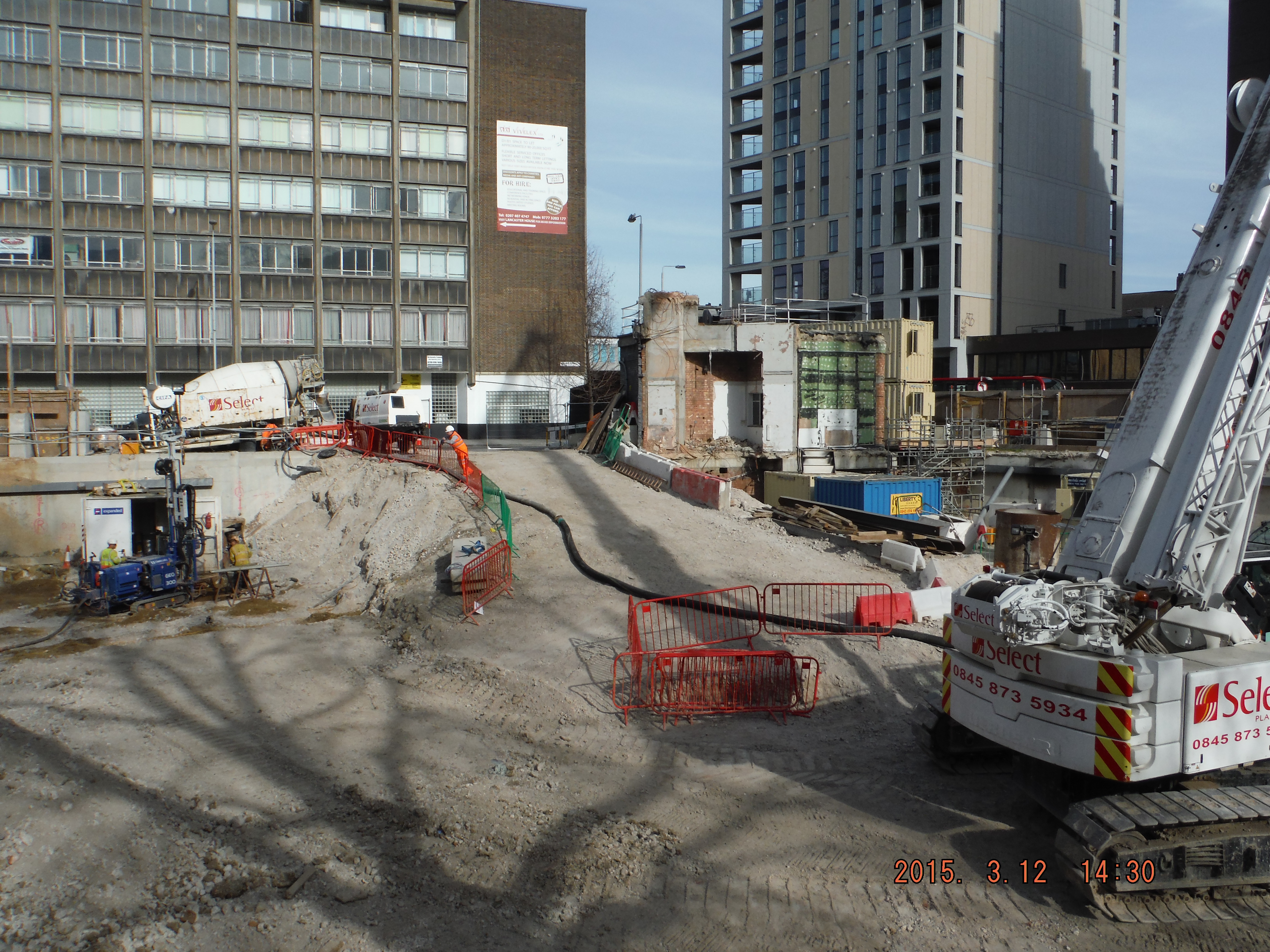
Expanse of CFA plant. Left: agitator (static concrete wagon), pump, hose, crane, (out of shot) pile rig.
UXO Survey. Some photographs of the magnetrometry in action (magnetometry or electromagnetic surveys are used in the search for buried UXO and rely on the detection of small variations in the Earth’s magnetic field caused by the presence of ferro-magnetic objects). The UXO survey was required as a result of a study of WWII maps highlighting a medium risk of UXO within a certain area within the site. Risk mitigation or contract covering exercise…
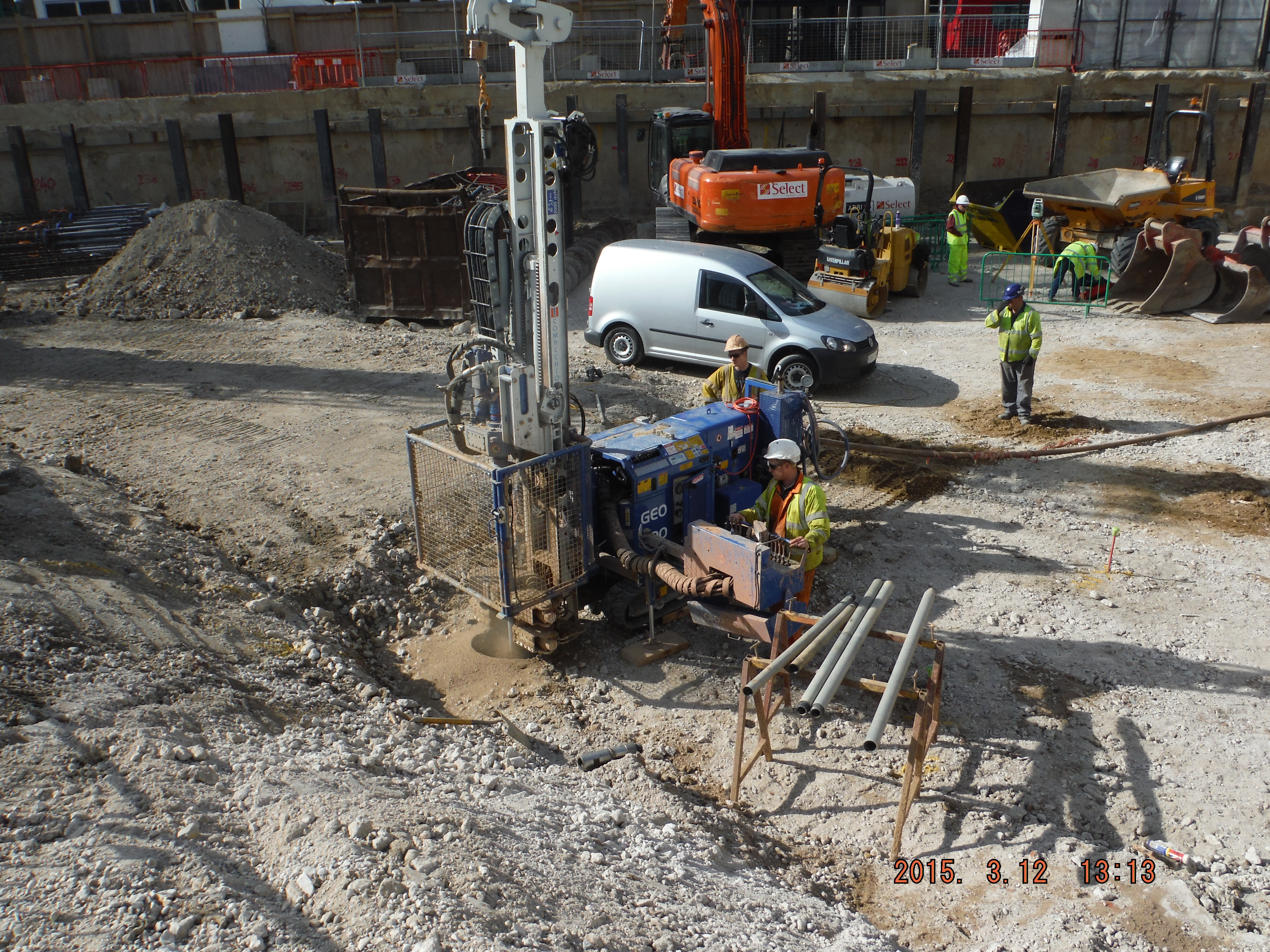
UXO probing: Drill, probe, analyse.
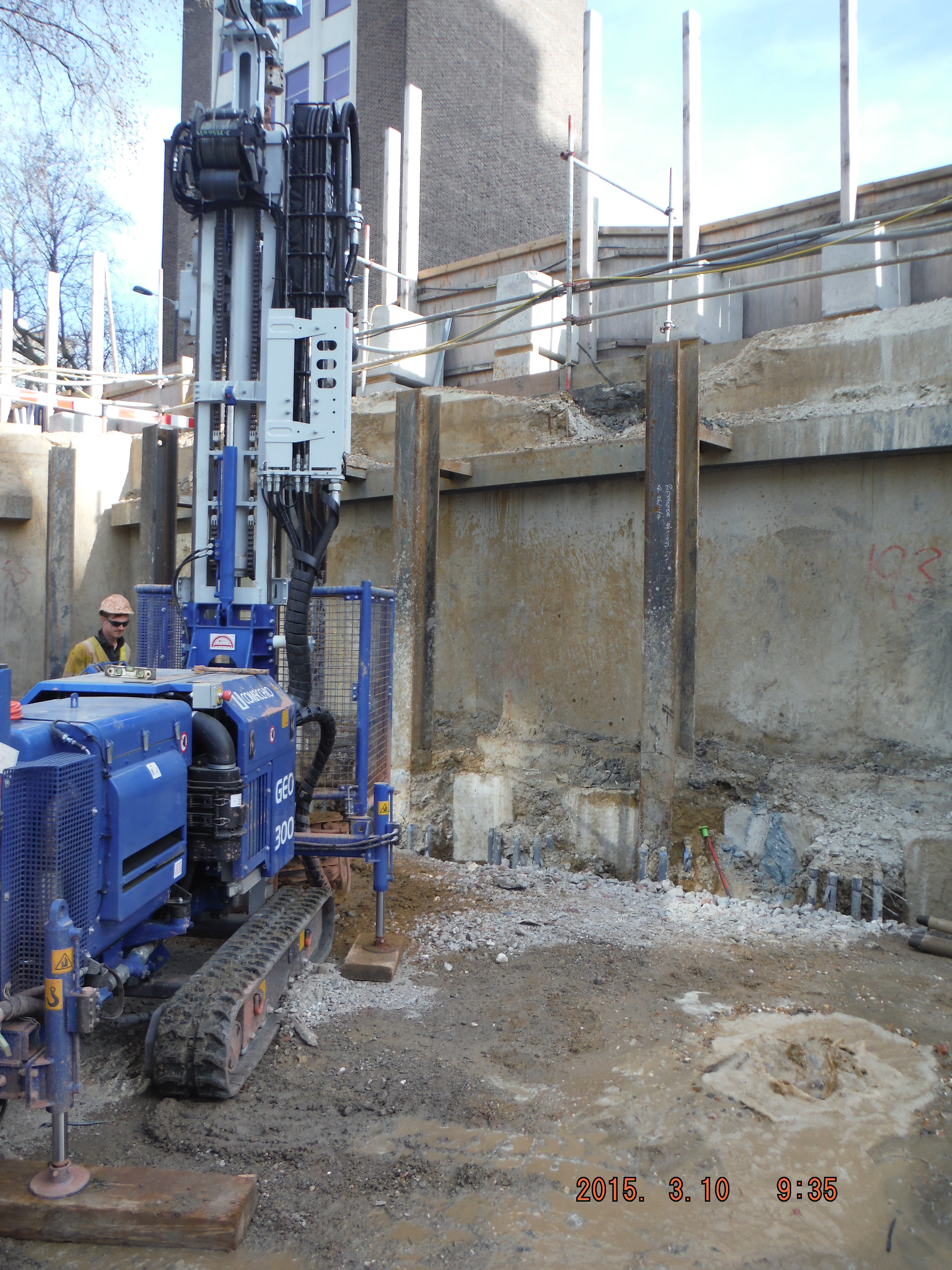
Note the compressed air causing the ground water to bubble in the previously dug holes (up to 9m away out of shot)
 Holdfast Training Services Trial Blog