Technology merging with health and safety.
Site Two Fifty One
Technology merging with health and safety.
This week I attended the Laing O’Rourke “Mission Zero – Ask the Question” workshop. This is the Laing O’Rourke mandatory health and safety briefing which aims to get their staff to work safely on projects. It is a pretty decent attempt at raising awareness of health and safety in the workplace and potential pitfalls when working on projects. Impressively, Laing O’Rourke has produced a short film illustrating an accident on one of their sites (early removal of back-propping causing a slab collapse). The film is relevant and applicable to many sites, raising multiple issues and creates an excellent scenario for discussion. The real focus of the workshop was not to teach employees about health and safety, but simply get people asking the question to ensure activities are done safely.
Later in the week I attended Priority 1 training. Perhaps familiar to some, but likely not all, this is an online tool to enable snagging, permits, tasks and observations to be recorded electronically and geographically. The software aims to “improve the way that information is collected, managed and reported within live construction projects”. The example I will cite is based on the Health, Safety and Environment Supervisors’ check I do weekly. One of the items I check is edge protection. If I find a missing toe board, I then raise an action. I take a photo, fill out a short form and assign a date and organisation to resolve the problem. You might say what is wrong with a paper form and telling the site foreman to sort it. That method works but it fails to record trends and give the project leader timely feedback on issues that have arisen. Moreover, the snagging tool allows tasks to be assigned to a variety of sub-contractors which can then be monitored for their progress and have records kept with the photograph/location data acting as evidence of performance. It’s a good tool and probably has lots of other useful functions which I expect will become apparent soon (issuing of permits for example).
This week, a PowerPoint brief was issued for delivery on-site to highlight recent issues across multiple Laing O’Rourke sites. Good information sharing and method of learning from others’ mistakes. Especially applicable as we do all of these activities!
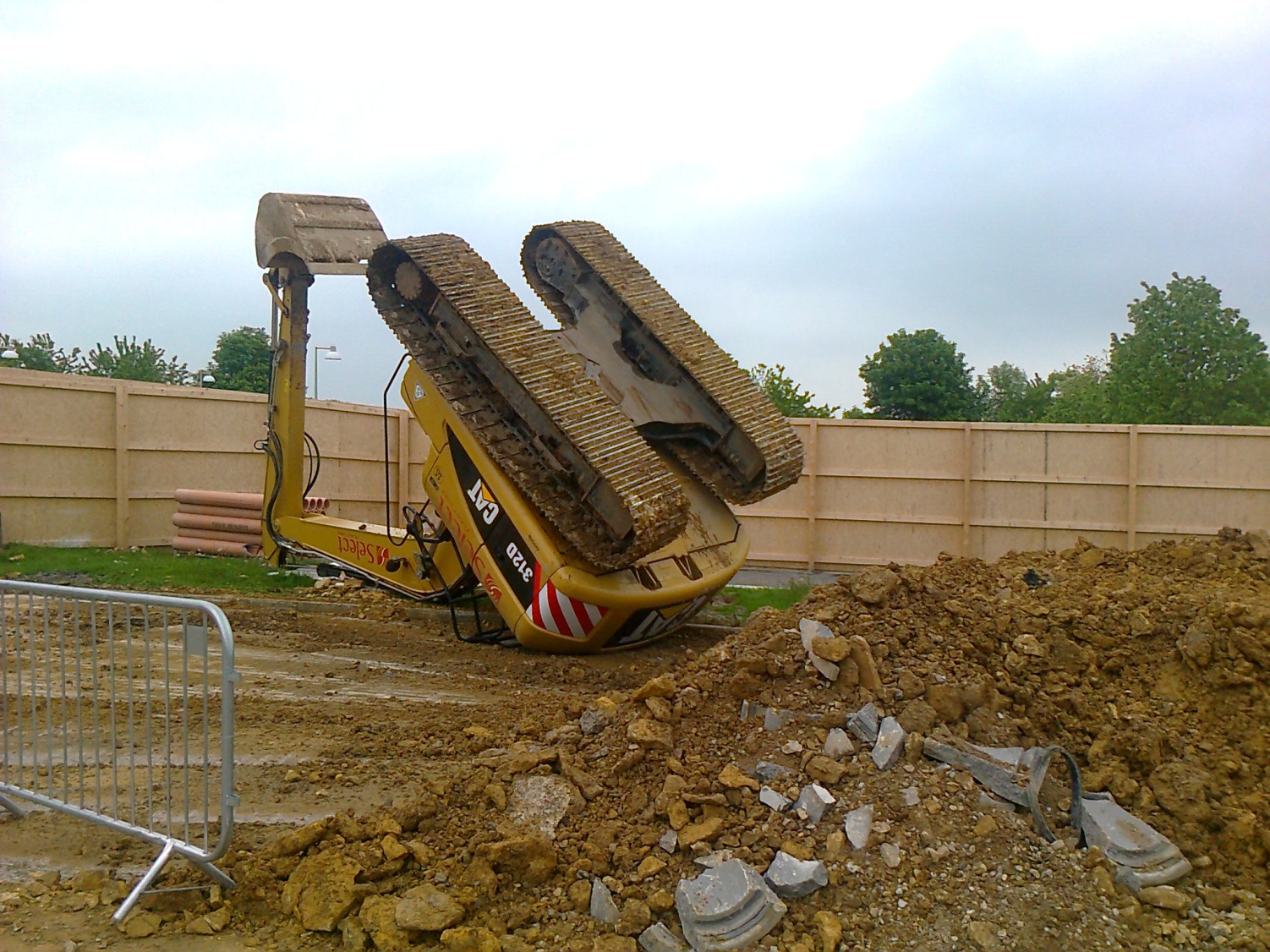
Excavator overturned when loose item in cab became trapped under operators pedal.
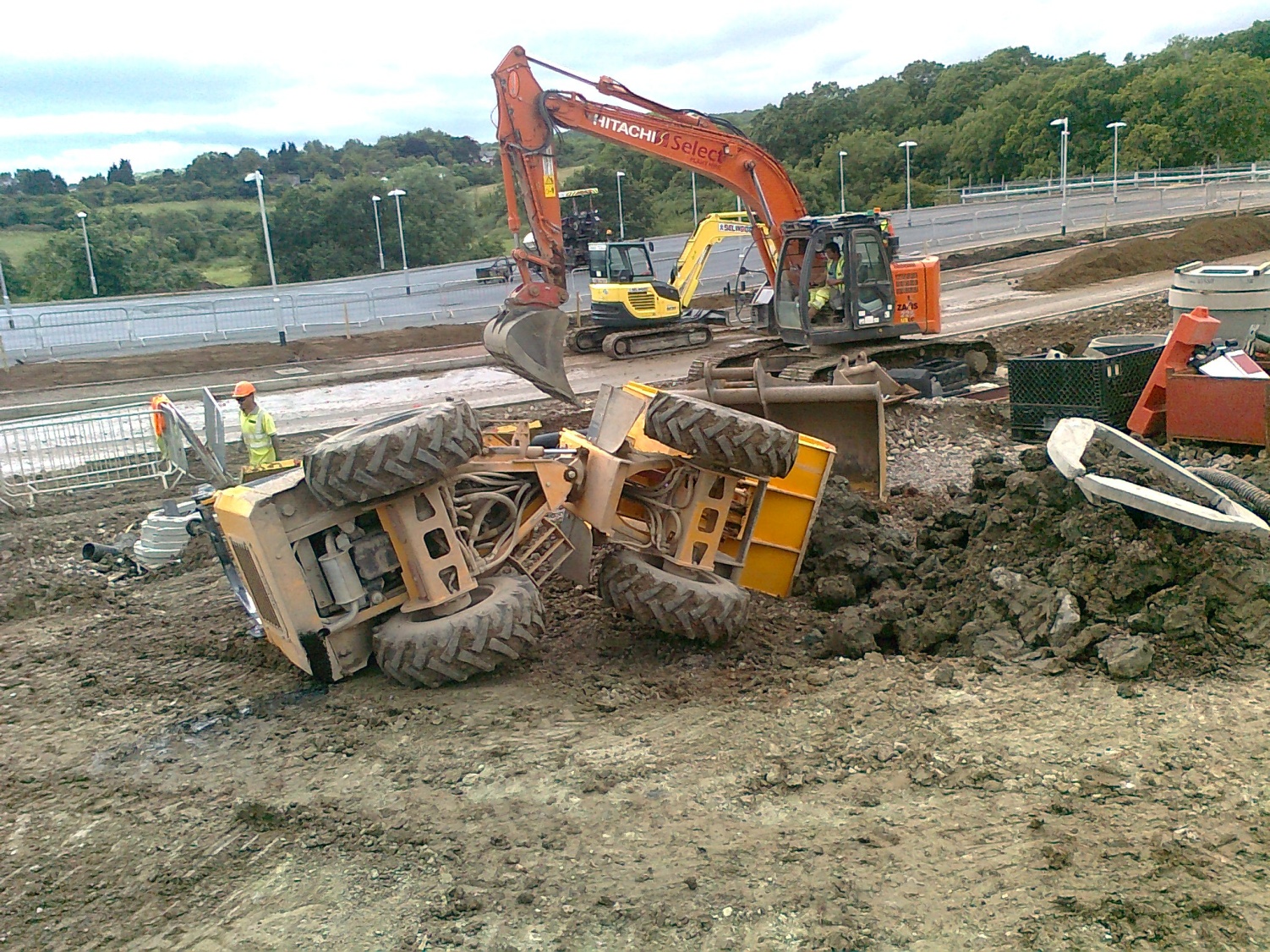
Mini dumper overturned when bucket was elevated whilst machine was positioned on incline
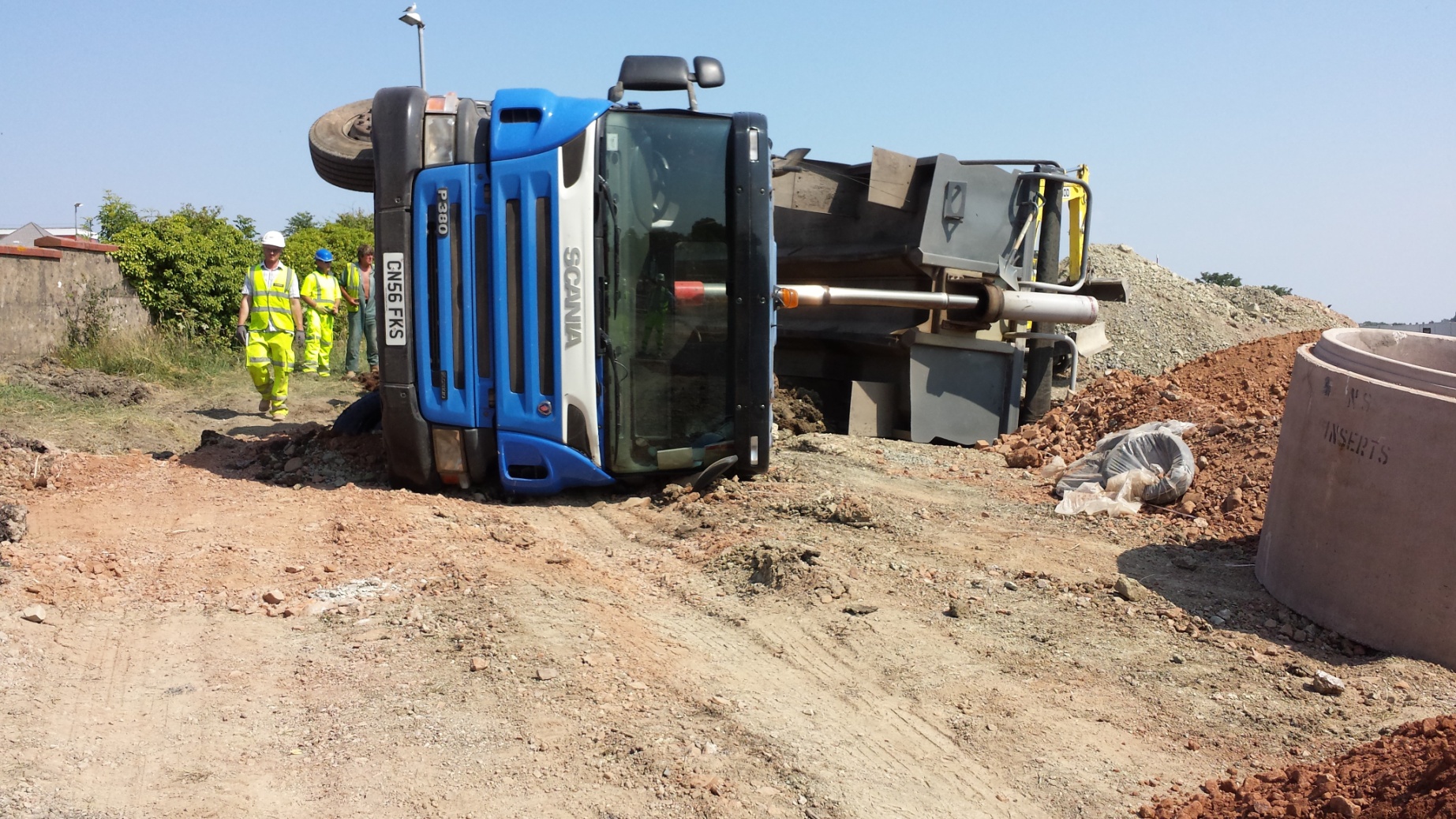
Tipper wagon overturned due to unsuitable ground conditions – wagon should not have gone onto area in question.

The area being rolled was sloping to the left. This should have been levelled out prior to and during the backfilling operation.
Military – Civilian Processes
I thought I would look at a few checks/processes in the world of construction I think the military do well at based on my experience of the civil industry. The people/checks/processes are all present/done on civilian construction sites and it really has reinforced the good old Troop Commanders’ checks being vital to keep a project running. Not just with counting spanners but the checks to ensure the equipment is serviceable (PA test in date and item functions).
QM in charge of materials and logistics
SQMS to make the logistical chain
G1098 storeman
Lifting tackle register
Tp Comd monthly checks
Equipment Care Inspections
Complete tool boxes for tradesmen
SHEF statements
Section composition (section comd and 2ic with tradesmen)
First parade checks
Whole Fleet Management
Risk registers
Fire NCOs
Tool box talks
Orders process
My site is at an early stage and so effectively lacks a bit of section comd leadership. It has some good quality tradesmen but a lack leadership skills are to be found on-site. I know on more advanced projects lots of these things (G4, material requisition, health and safety provision) just happen but in my case, I (we) are establishing the safe systems of work. I would like to say it is a bit of a pain, but actually I am learning a lot from it and think I will learn more from a maturing system, rather than a mature system.
 Holdfast Training Services Trial Blog
Interesting stuff. We have a similar mandatory workshop to attend, which I was similarly impressed by. Less so by the workshop itself but more by peoples willingness to take part.
I also wonder if your site’s lack of leadership really is due to it’s immaturity. My site struggles with similar issues and we’re much more established. I’ll be interested to see how that develops.
Thanks Damian, Two thoughts:
1) There is always an outpouring of military angst regarding civilain sites and leadership along the lines of “what this lot needs is a good SSM”, which begs the question is civil industry really so far behined the military that it should be ashamed of itself or is there something that is being missed in this. I suggest the latter and leave it to the floor to consider what might be different between military delivery and civilian industry that caould contribute the forming of this opinion.
2) Whilst I concur twith the utility of electronic logging of H&S incidents (and many other site activities) for use in future analysis and therefore longterm risk reduction, I wonder if simply photographing something that is a hazard is sufficient. What direct action did you take to ensure the site went from dangerous to safe in the quickes and most efficient manner i.e. Did your actions lead to the fitting of a toe board and how long did it take to come about? Could this have been achieved more quickly throough direct intervention therby reducing the risk (surely the objective)?
Richard – Thanks for the thought provoking points as always. My thoughts.
1. The MCF approach is not sustainable in the civilian commercial construction environment. A troop or Squadron deployment would typically not be economical for a project. At present on site we just have the specific trades required (not even a storeman), hence no SSM (or construction manager) to get things moving. Perhaps the difference is more to do with motivation – Civilians work to set hours and only do what they are responsible for. The military have a much more team-like approach which does not mean civilians cannot work together, but if it’s not in the contract, they aint doing it! Then again, perhaps that is a failure in the military approach…
2. Agree – my examples were not particularly earth shattering! The more effective approach to sorting toe boards is to tell the foreman (who does not even have access to an IPad) to get it sorted. However, the online form is better for monitoring, control and review. Project leaders, health and safety personnel and business unit leaders will be able to see a dash board of issues which would have otherwise only been apparent by trawling through folders of paper. Additionally, as an upcoming play station generation, online forms are going to be more agreeable/user friendly than a paper form – doesn’t make it right/better, that is just the case. So in short, digitalising H&S forms does not immediately reduce the danger arising from the hazard, but has longer term benefits of site H&S management which will in turn lead to reducing the issues arising in the first place through better training or introduction of pre-emptive systems.