Archive
Do they REALLY mean it?
As of next week I have to start conducting site inductions. So I’ve started getting my head into McAlpine’s Health and Safety policy.
Obviously they induct everyone on their first day, insist on CSCS cards and SMSTS trained supervisors. That’s the norm. But McAlpine are attempting to go further…
McAlpine have the” Work Safe, Home Safe” tag line, and claim to be attempting to change the culture of construction by pushing Health and Safety to the fore. They conduct workforce engagement session each week and everyone who works on site must attend one within two weeks of starting.
But do they follow it through? Do they really mean it?
How much does all this cost? There’s the cost of the materials, facilities and training courses. And there’s the lost hours which impacts on the program. And program = money. Particularly when the subcontractor is currently 3 weeks behind. McAlpine must think it’s worth it in the long run. So where are they making that money back?
A couple of weeks ago I posted this photo and learnt the lesson of “It’s all about money”.

That happened because a tipper was driving onto a pile of spoil to dump more material onto in. The pile hadn’t been compacted and there were no stop blocks or banksmen to stop him. He drove onto a loose area, it gave way, dumper at funky angle. But prior to the last trip, he must have driven onto the pile 5 or 6 times.
In my mind each of those trips was a near miss. It was an unsafe practice that could have resulted in injury – proved by the later incident. So what did McAlpine do? Did they report the incident internally as an accident? Did they scorn the sub-contractor? No. They recorded the incident as a near miss and cracked on.
Prior to any work being conducted on site risk assessments and method statements must be completed by the sub-contractor. John and Harry would hate them. They’re full of stuff about slips, trips and falls and make no consideration to how the tasks relate to each other. They don’t require a real consideration to the risks involved or what the safest way to conduct that activity is. There is one method statement for steel fixing and another for drainage. Nothing on how they interact though. Which led to this:
![WP_20150327_08_29_51_Pro[1]](https://pewpetblog.com/wp-content/uploads/2015/03/wp_20150327_08_29_51_pro1.jpg)
In case you’re wondering a large non-return valve should fit on that pipe. A lot of rebar had to be cut to get it in. And for each bit of rebar they cut, they have to put an additional area of steel back in, including a full anchor length. So they’re really not helping themselves.
![WP_20150327_12_43_39_Pro[1]](https://pewpetblog.com/wp-content/uploads/2015/03/wp_20150327_12_43_39_pro1.jpg)
So I ask again: Do they REALLY mean it?
I sense a TMR coming on…
Site Two Fifty One – Uncertainty in Ground Conditions
On Wednesday, the first ground bearing CFA pile was drilled. The stratum is made of 7m of river terrace deposits (sand and gravel) then 19m of London Clay. The auger was drilled to a depth of 24m and on extraction the nozzle at the base of the auger was found to have been blocked (reasons are extensive – poorly primed hoses, gravel getting stuck within the bottom of the auger, but not the focus of attention here).
On removal of the auger the gravel began to “flight” which is where the size of the hole increases in relation to the bore diameter. This is a particularly prevalent problem in sands and gravels. Add in a water table at about 1m depth and that compounds the problem.
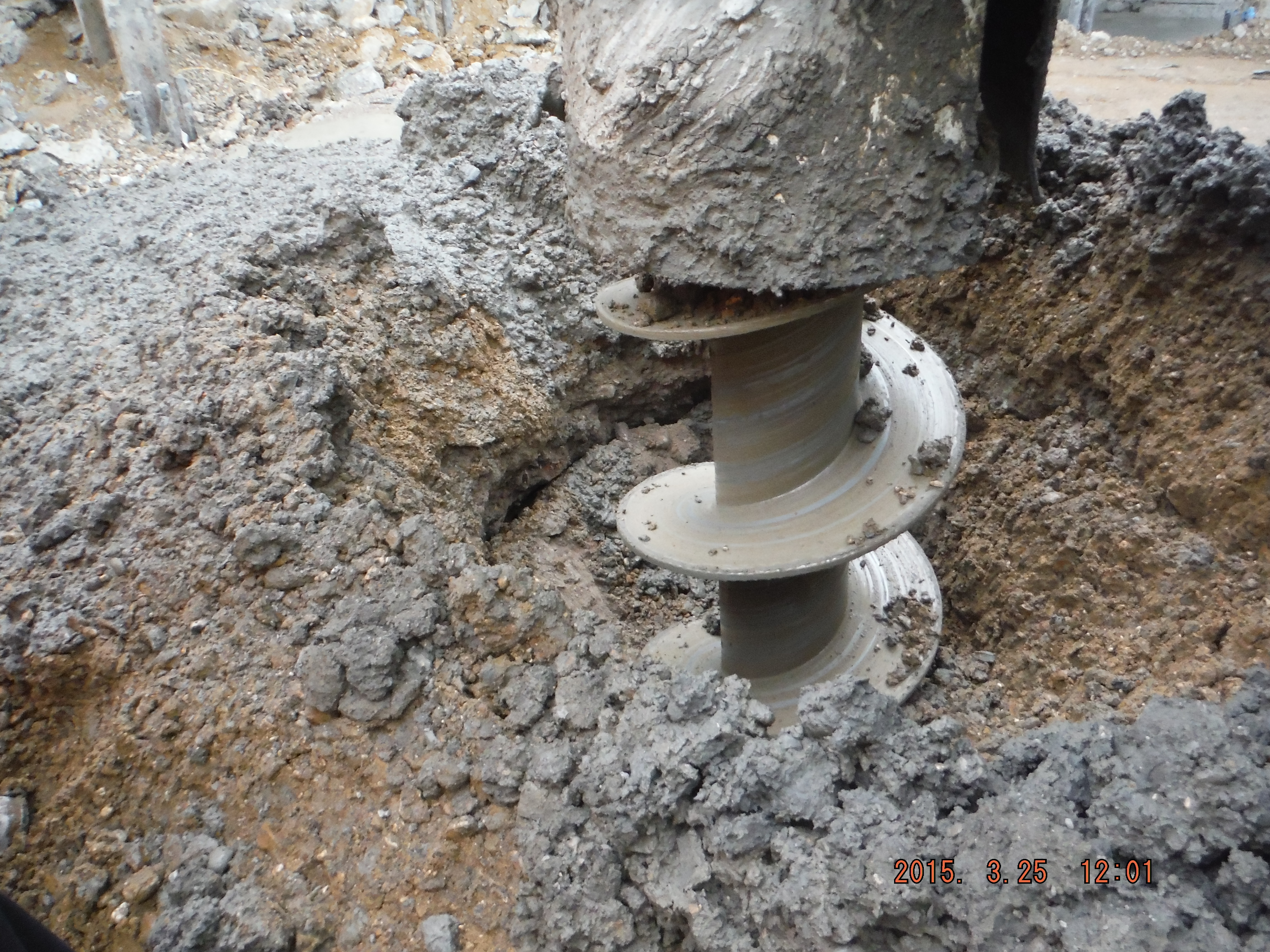
Pile diameter much greater than auger diameter
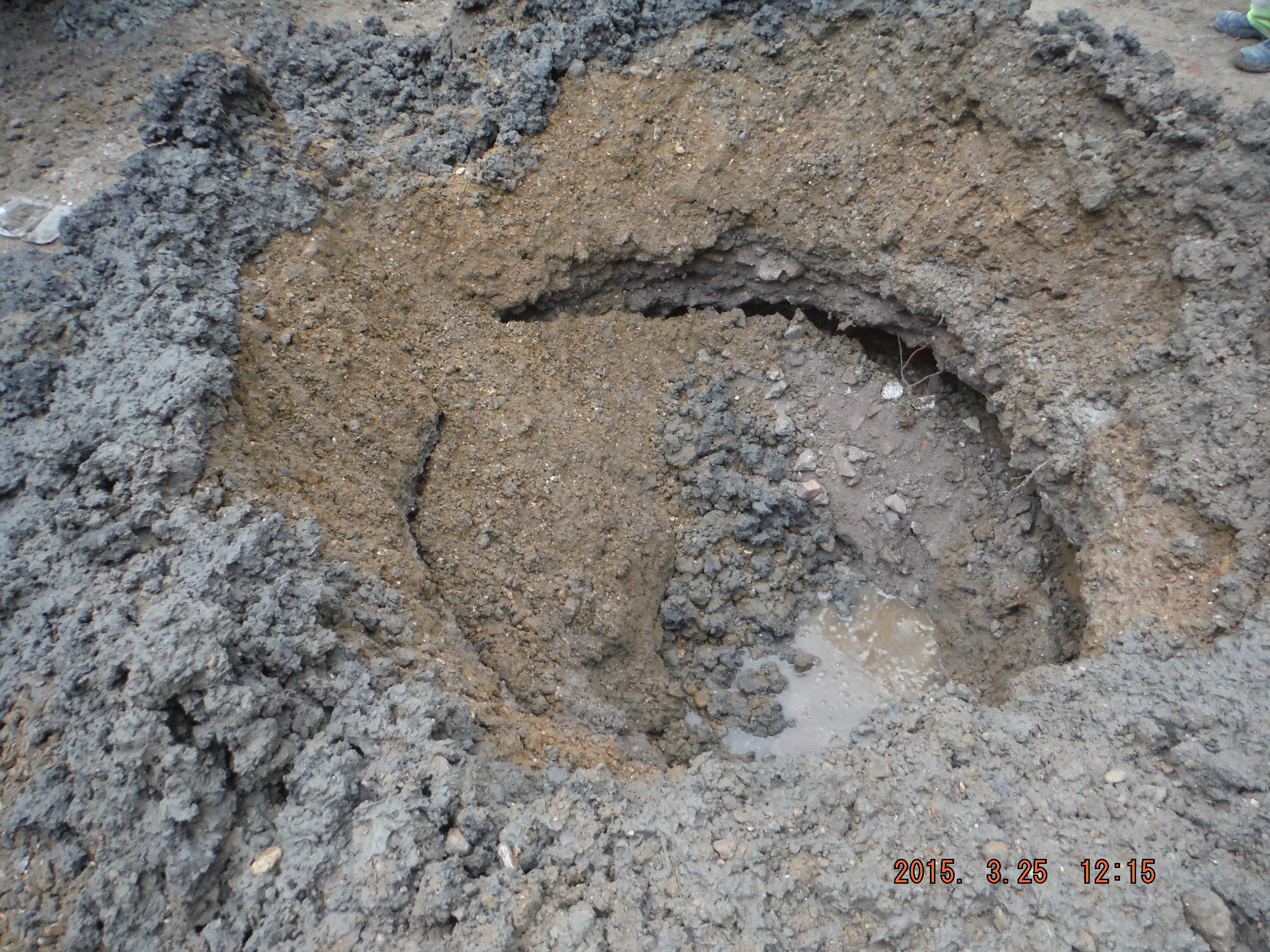
Pleasingly my pile mattress was doing a good job at holding the pile rig up. Less pleasingly was the undermining occurring below it potentially causing diffemderential settlement and risk of the rig turning over.
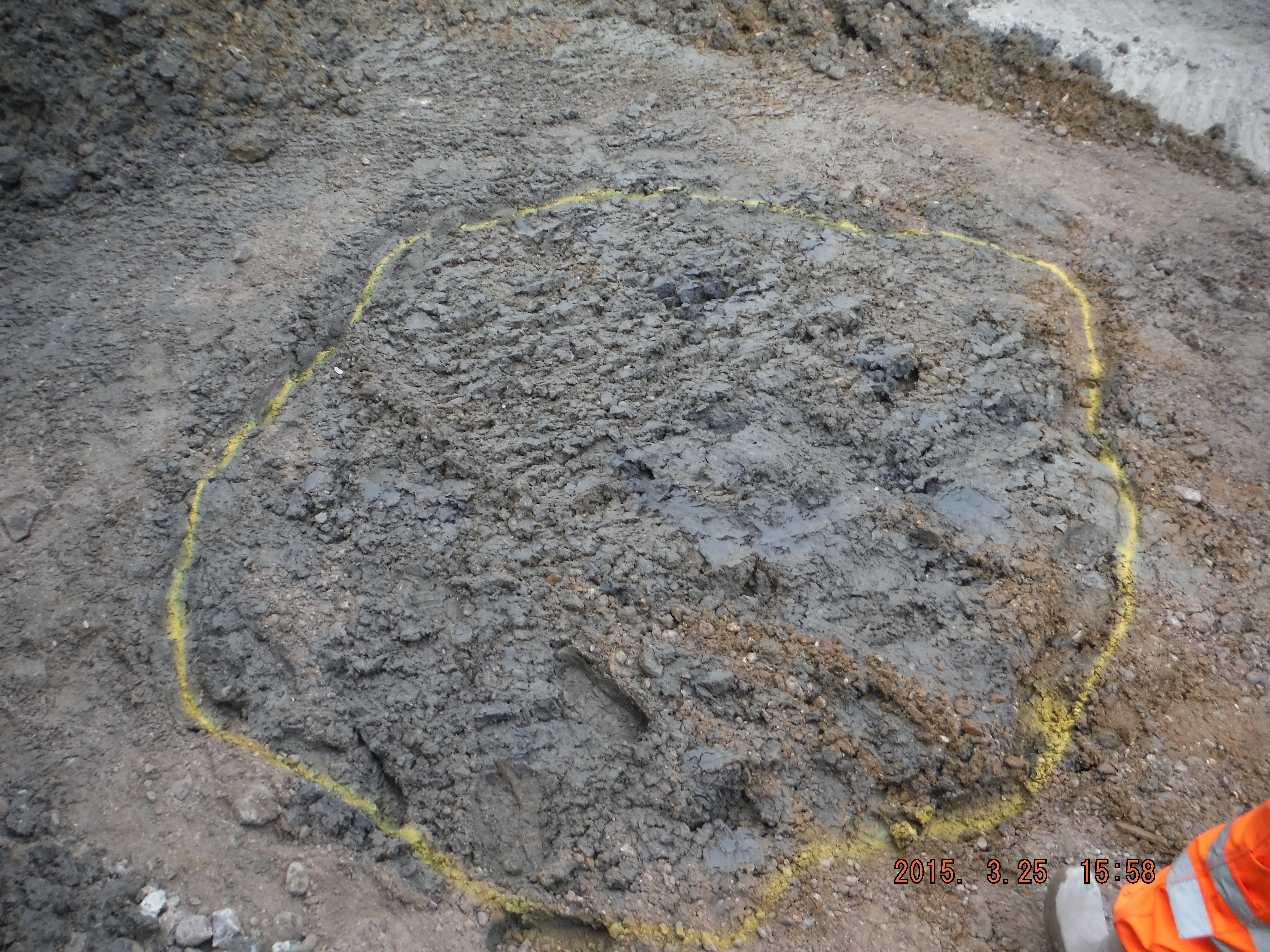
Hole diameter increased 4 times original.
Take 2. The next ground bearing pile was approached in the same way. Auger goes in, no blockage, concrete comes out and auger extracted. Nice vertical concrete pile. Then the reinforcement cage was added then it was pushed into the pile with an 8.5m column to sit the cage at the right cut-off level. This was in order to avoid breaking down the pile with reinforcement in. Everything great.
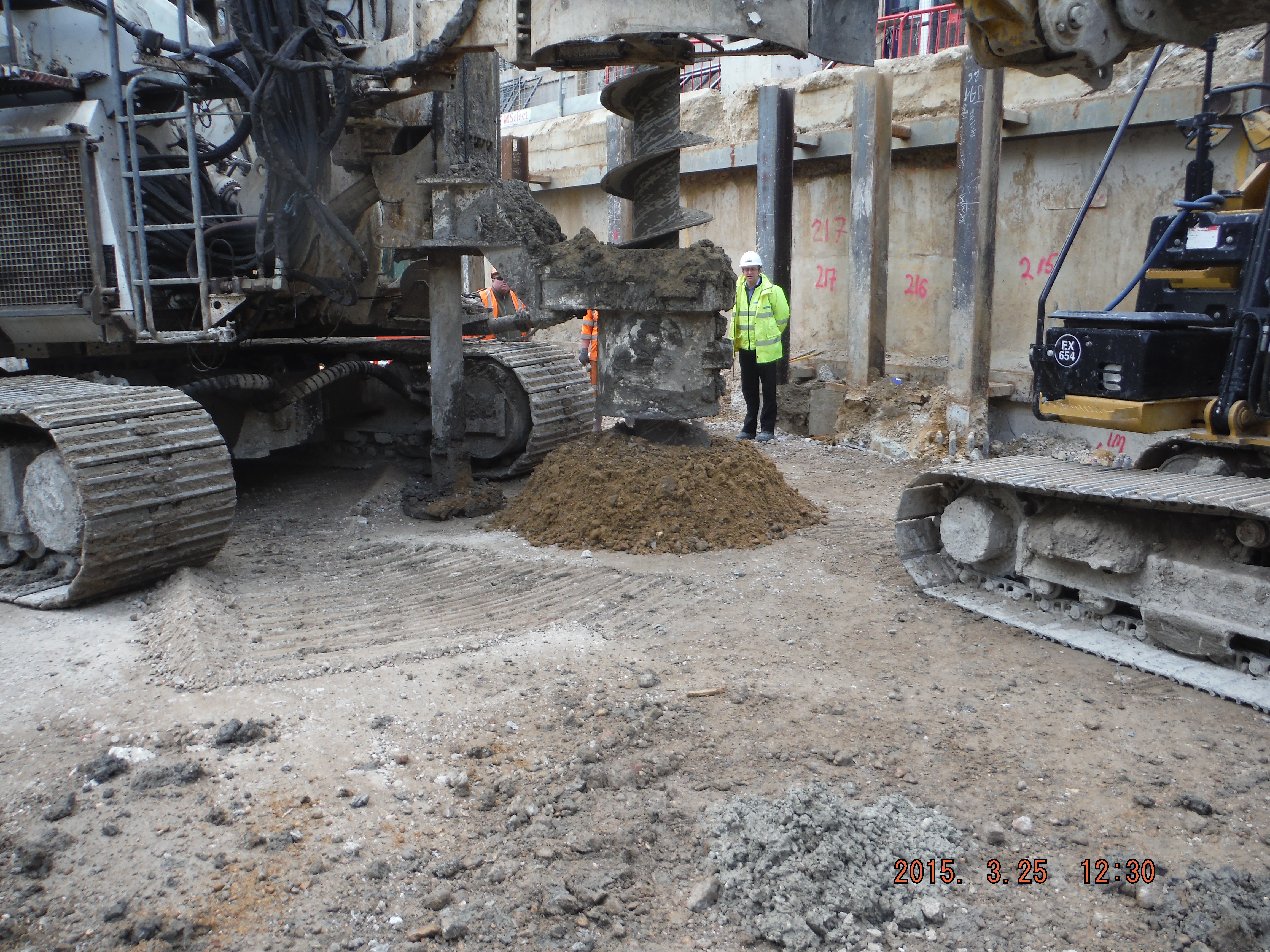
Pile rig mast toe not being undermined.
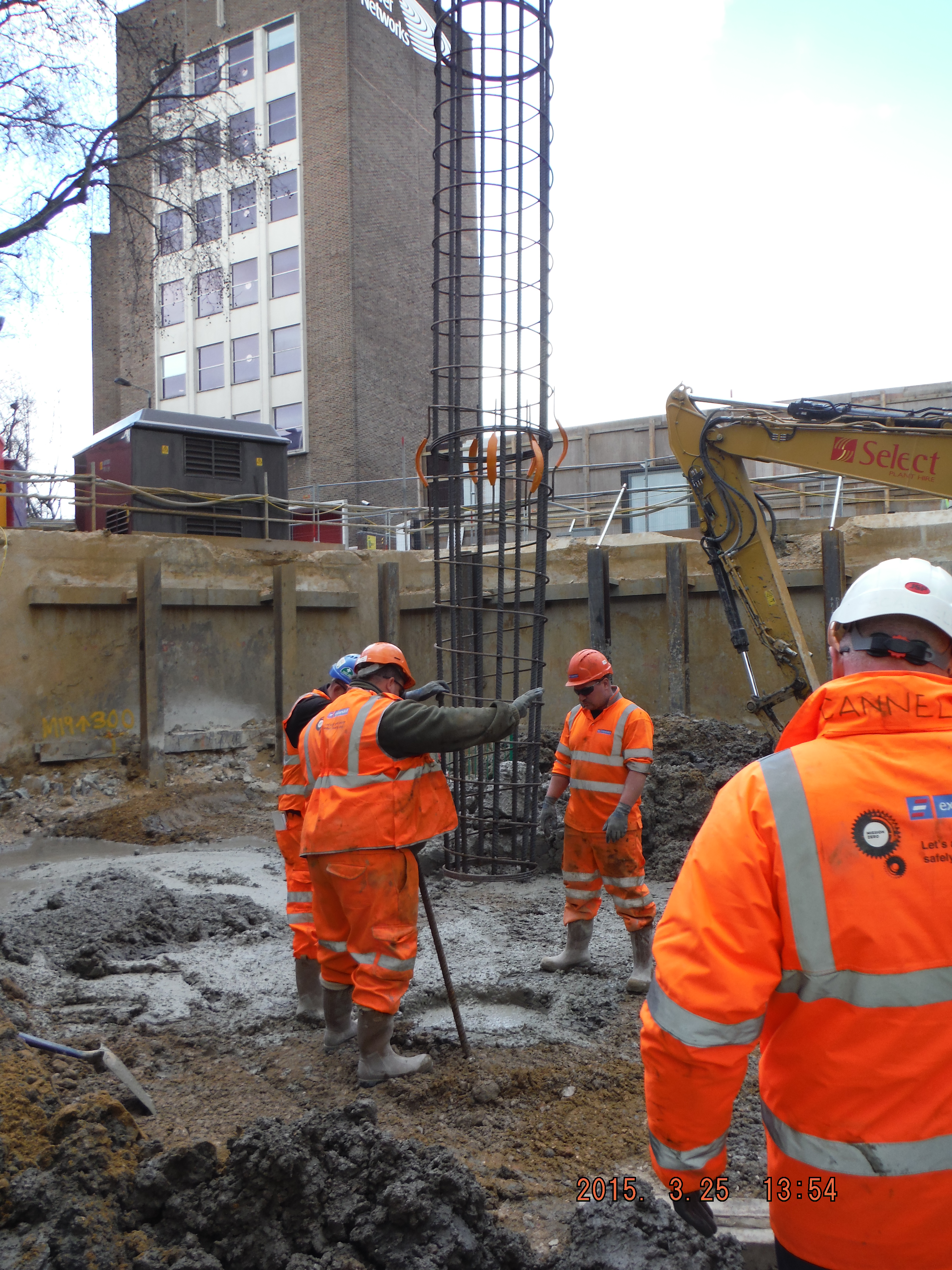
Reinforcement cage being lowered into pile hole 750mm diameter
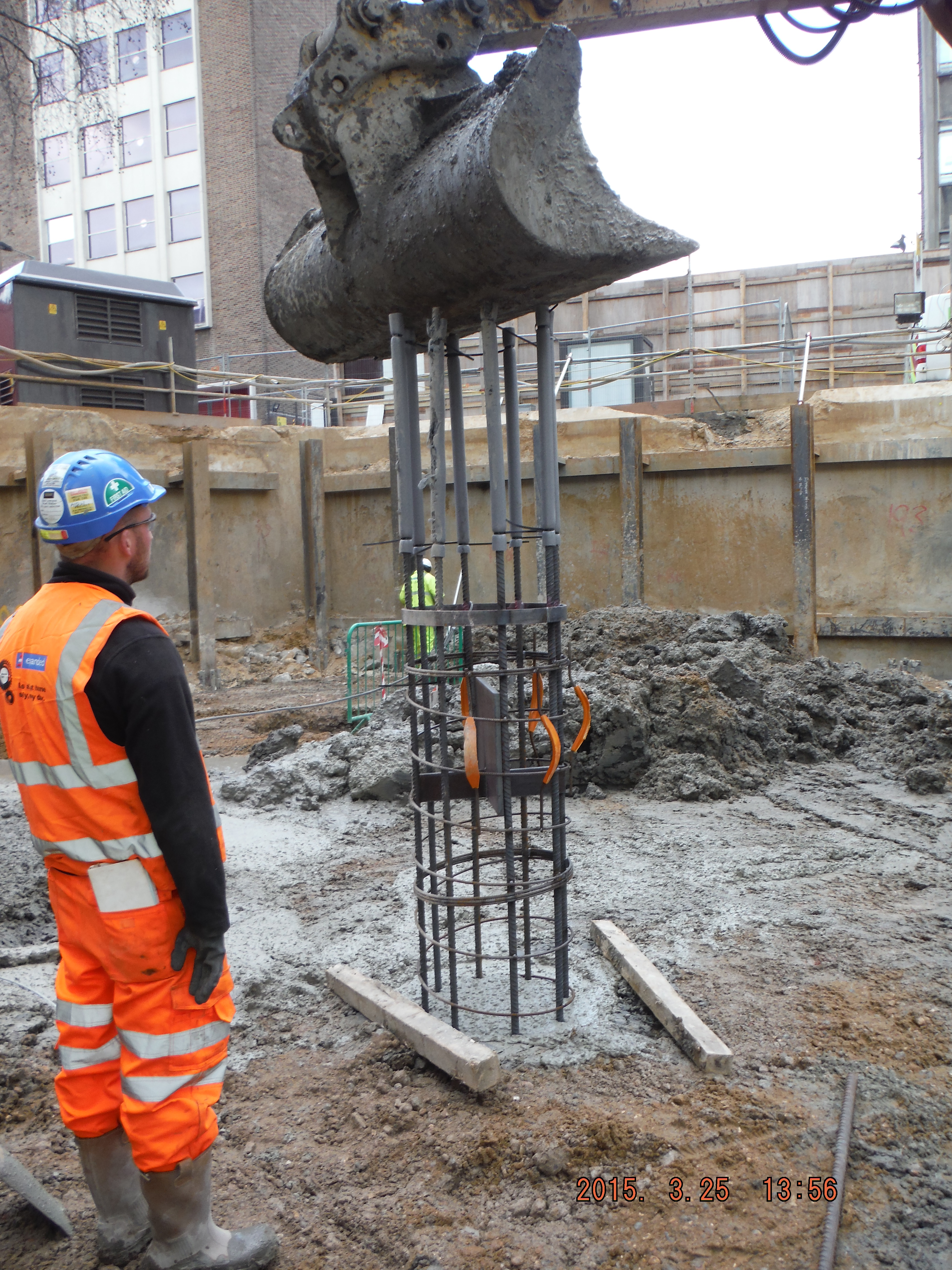
Cage plunged firstly with excavator bucket
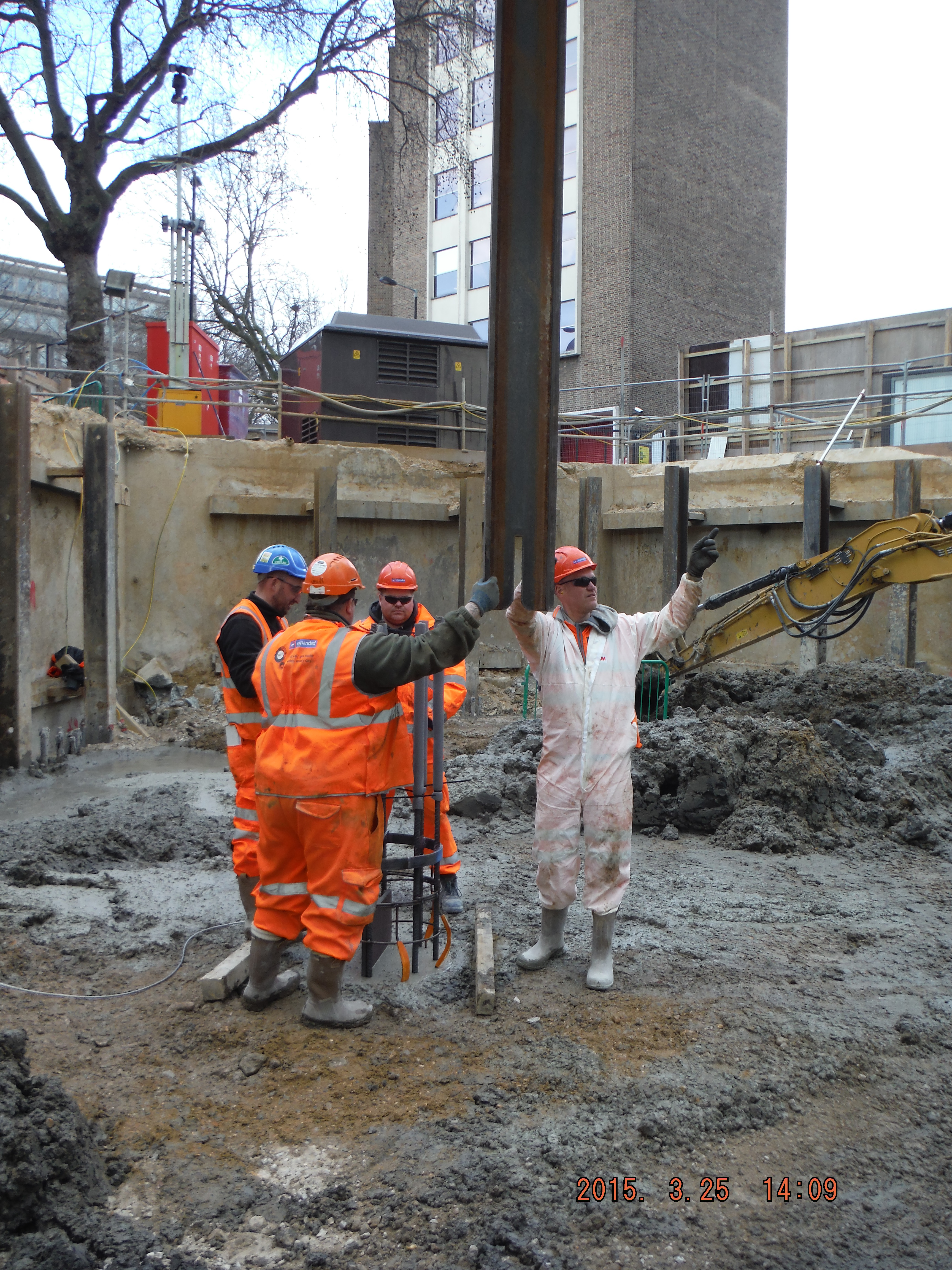
Cage plunged secondly with an 8.5m RSJ

Steel wire rope used to stop the reinforcement cage from embedding any further into the pile.
Take 3. Auger is drilled in and at about 20m embedment the extracted material from the pile drops into the ground. The foot at the bottom of the pile rig mast was starting to get undermined and so the drilling was stopped and the auger retrieved.
With John Moran’s prompting, he directed me to the ICE Specification for Piling. There is a section on CFA piling in ground with a loose section overlaying a stiff clay layer – see below in Option 1.
Solutions
Option 1.
Reduce the auger rotation in relation to penetration. I.e. reduce the auger turning speed or increase the rate of penetration. There must be some flighting (or extraction of material) to avoid corkscrewing the auger into the ground which would then be impossible to retrieve.
The specification says where there is high ground water there is higher risk of over fighting and so casing the piles should be considered.
Option 2.
We have just reconfigured the pile rig from cased rotary bored to CFA because it enables the deeper piles to be installed in the Lambeth Group below the London clay. So changing back to Cased is not likely to happen. Additionally the combined case and CFA rig that Laing O’Rourke own only drills to 17m.
Option 3 – chosen option.
Surcharge the loose ground around the auger with dry material. This should then stop any displacement of material around the pile mast. Turns out this is pretty effective! 4 piles done on Thursday and 4 on Friday.
Why does this work? I will attempt to speak in effective stress language. I think this is nothing more than a case of the quick condition, recently spoken about by Guz. As the auger penetrates through the Gravel it unloads the ground (simply by extraction of material by the auger). With the high water table, and the reduction in total stress, the augering results in the effective stress (Terzaghi : σ’ = σ – u) reducing to zero, i.e. piping. Hence, this causes the ground around the hole to fall inwards. So by adding additional total stress (surcharge) it maintains a positive effective stress and stops the ground from collapsing. So now piling can continue.
 Holdfast Training Services Trial Blog