Site Two Fifty One – General Update
Site Two Fifty One – General Update
This week I thought I would blog generally about site activities taking place to give a feel of what I am doing. Main activities are: sub-station demolition, preparation for the capping beam installation, office ground bearing piles (CFA), pile mattress construction for a small section of sheet piling and the most laborious task of all, welfare establishment. My focus is on the capping beam, although when the project manager and project engineer are off-site my responsibilities tend to extend a little further, in fact, I am not sure where they stop!
All the activities themselves are fairly low level (no multi-span bridge beams for example) but the planning, co-ordination, resourcing and commercial aspects as a whole make for a varied experience.

Old sub-station at top of access ramp
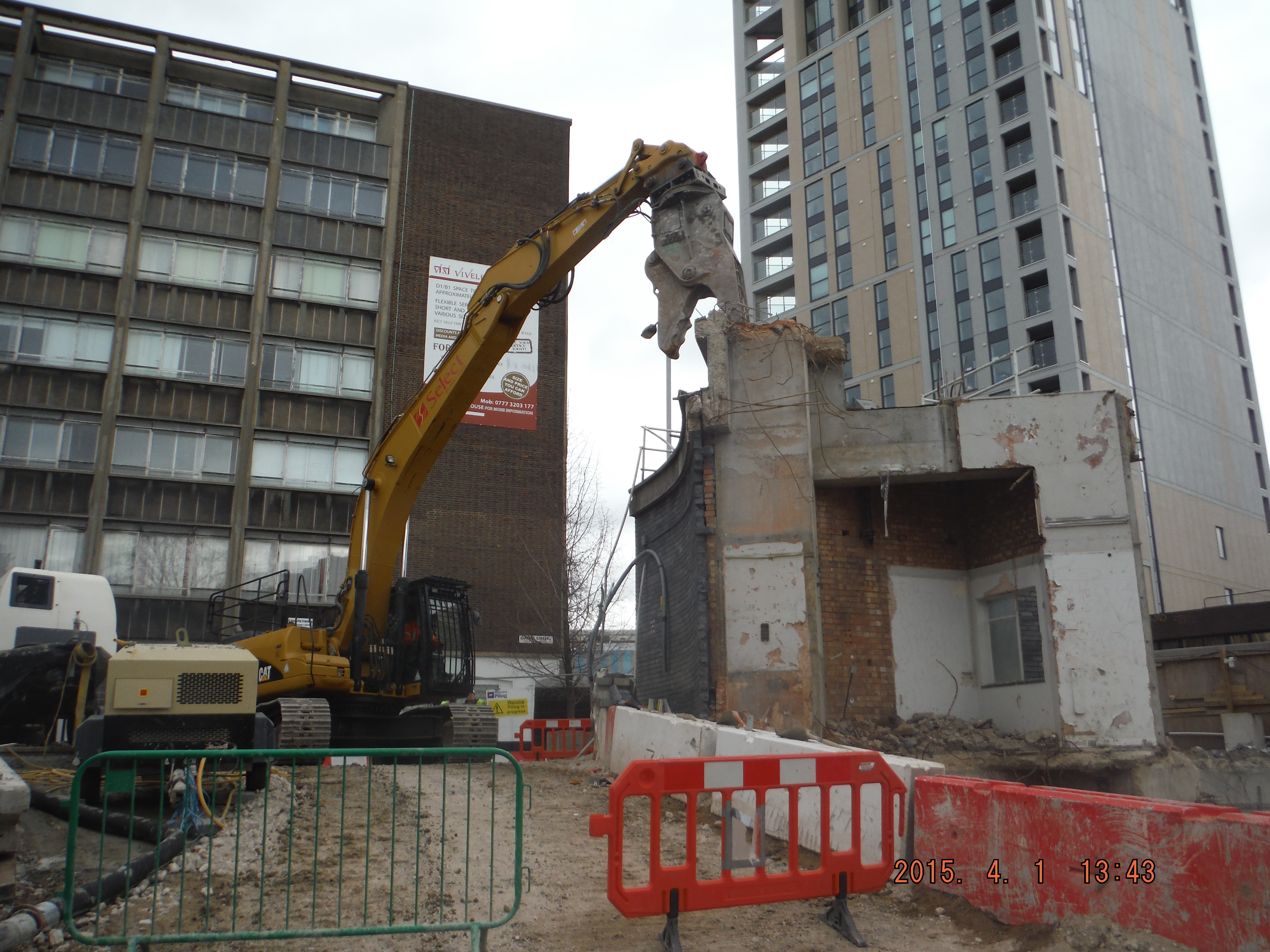
Demolition of the old sub-station begins
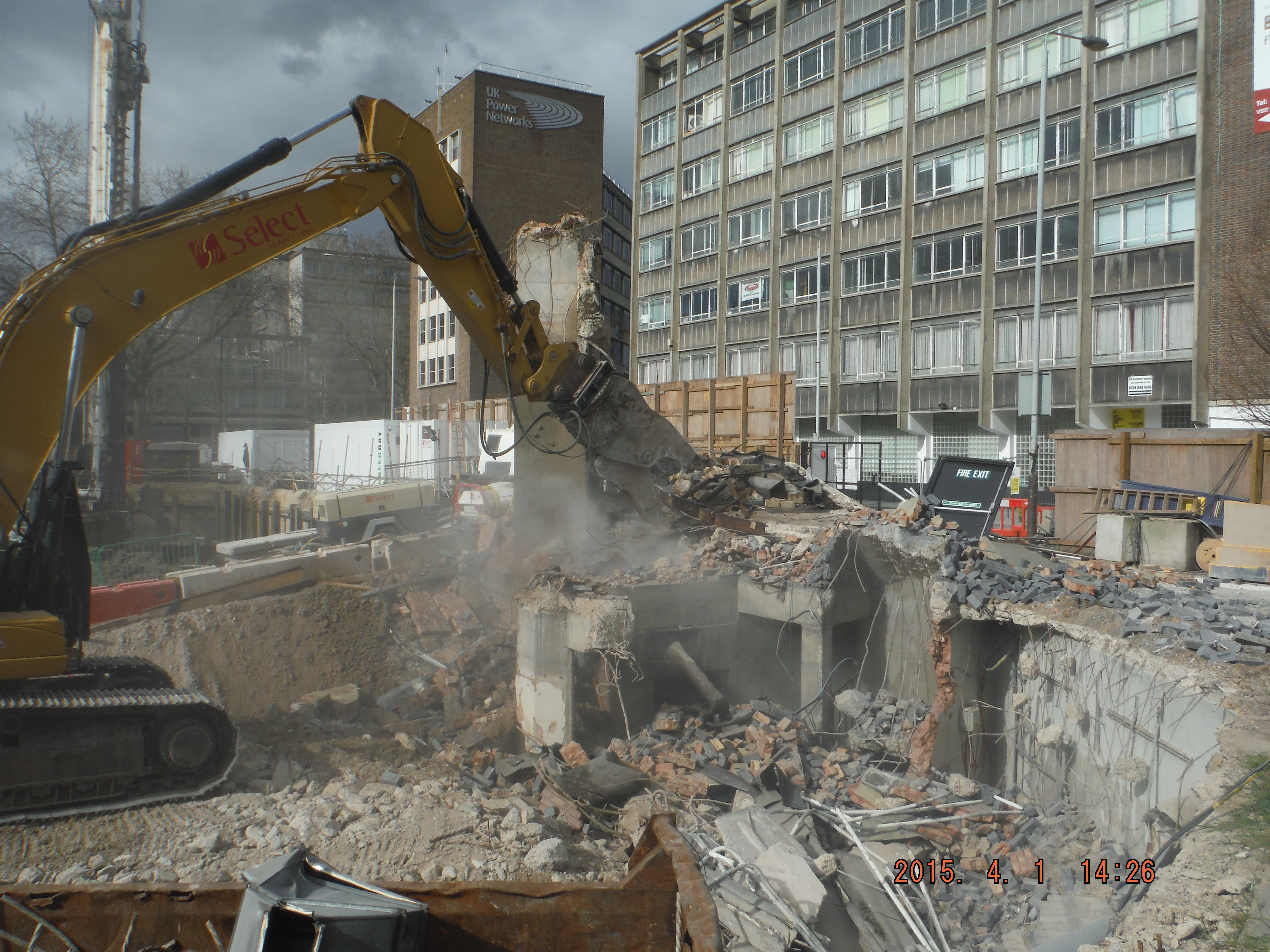
and finishes pretty soon afterwards

Breaking of piles to cut off level

Underpinning the pre-existing wall
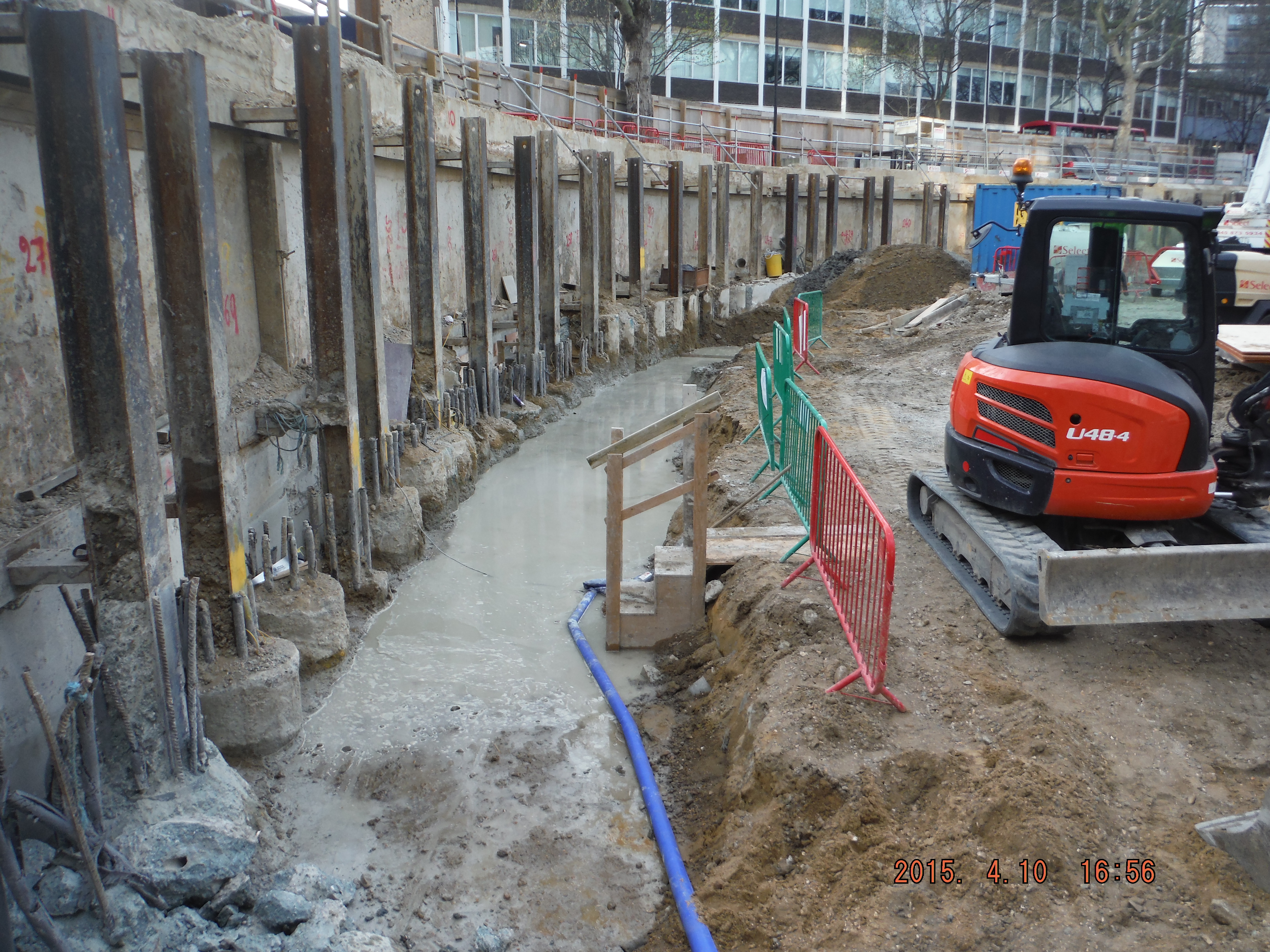
Preparation for the capping beam
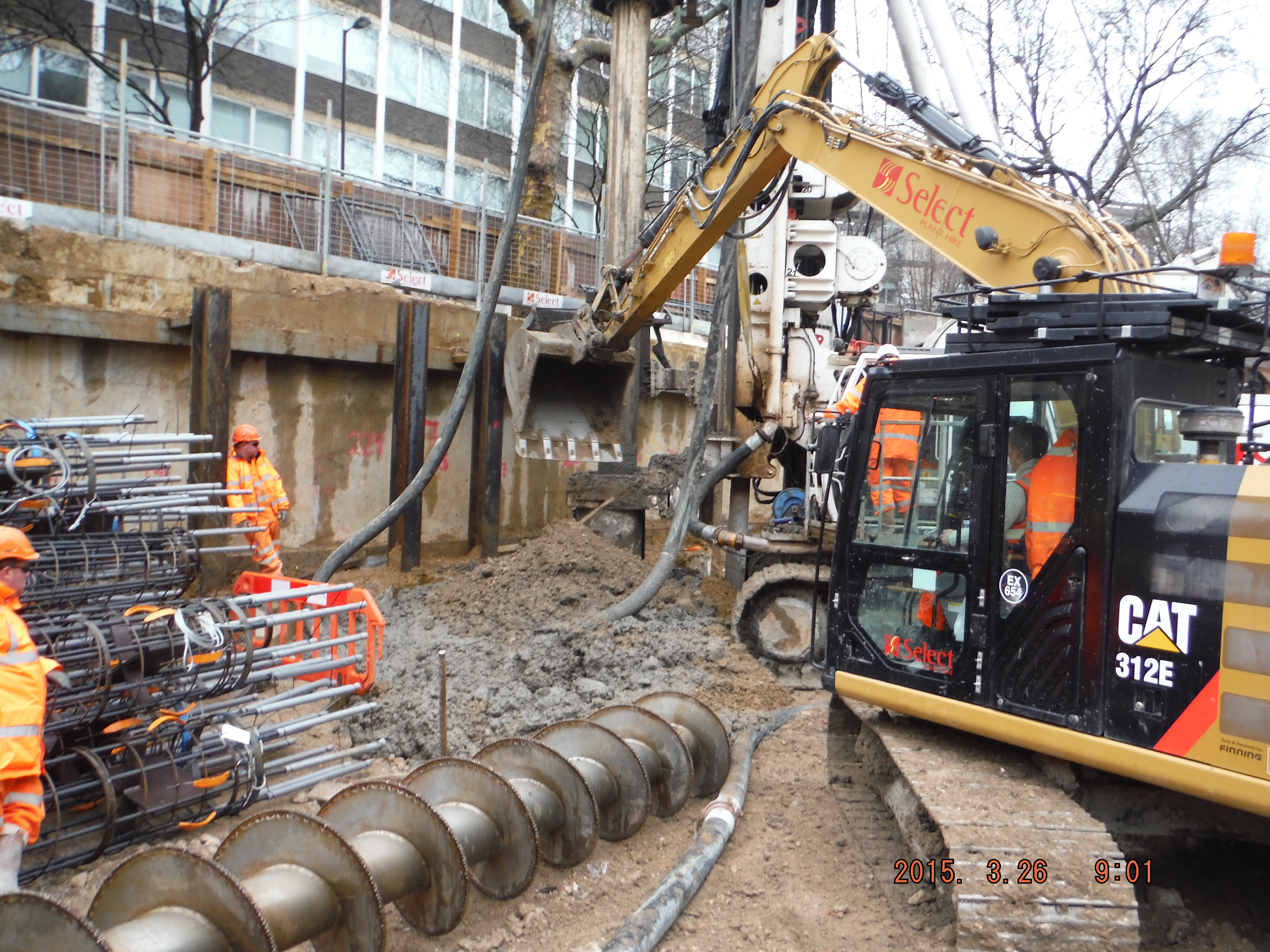
Piling continues at much improved rate
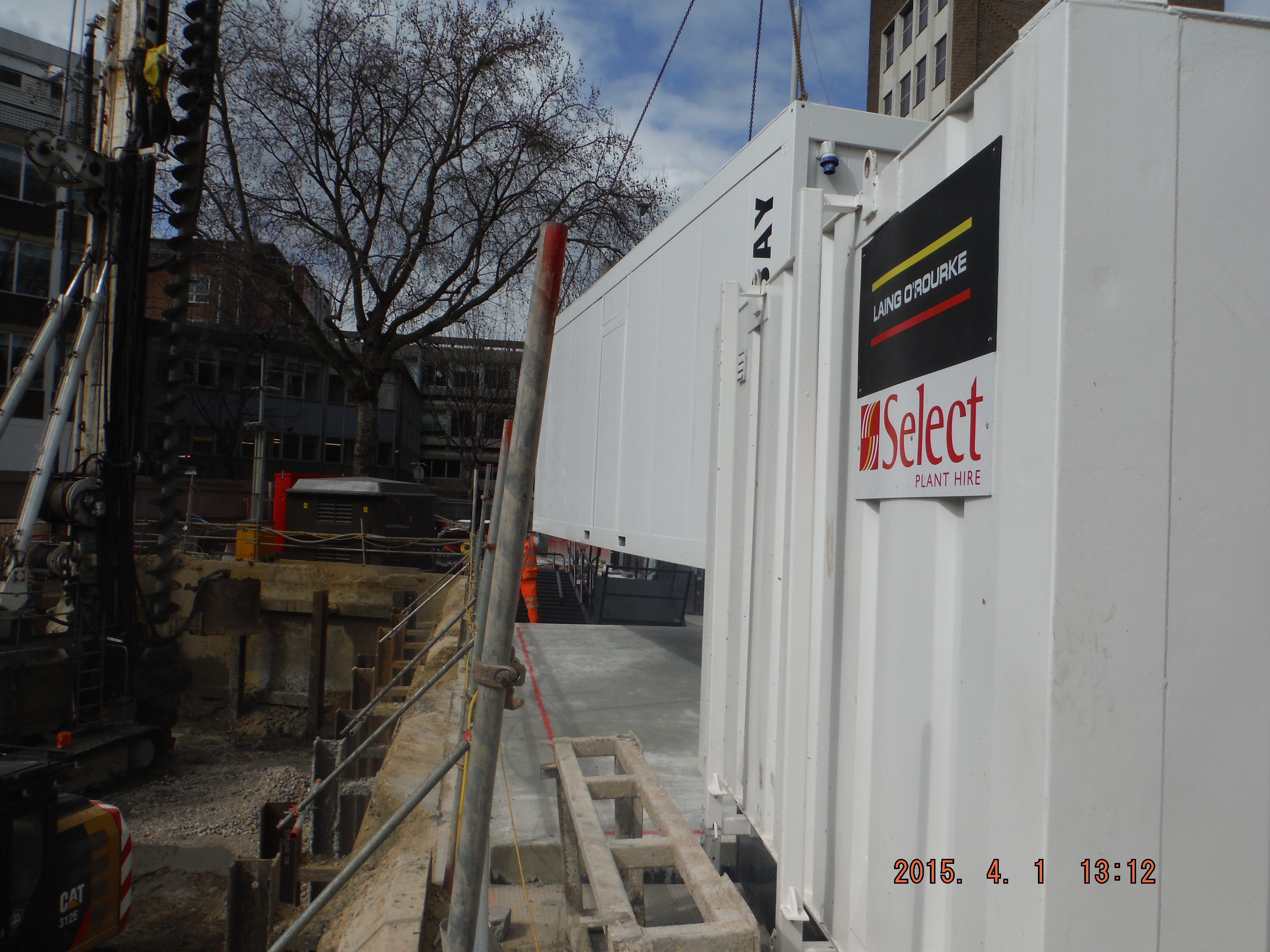
Welfare cabins arrive.
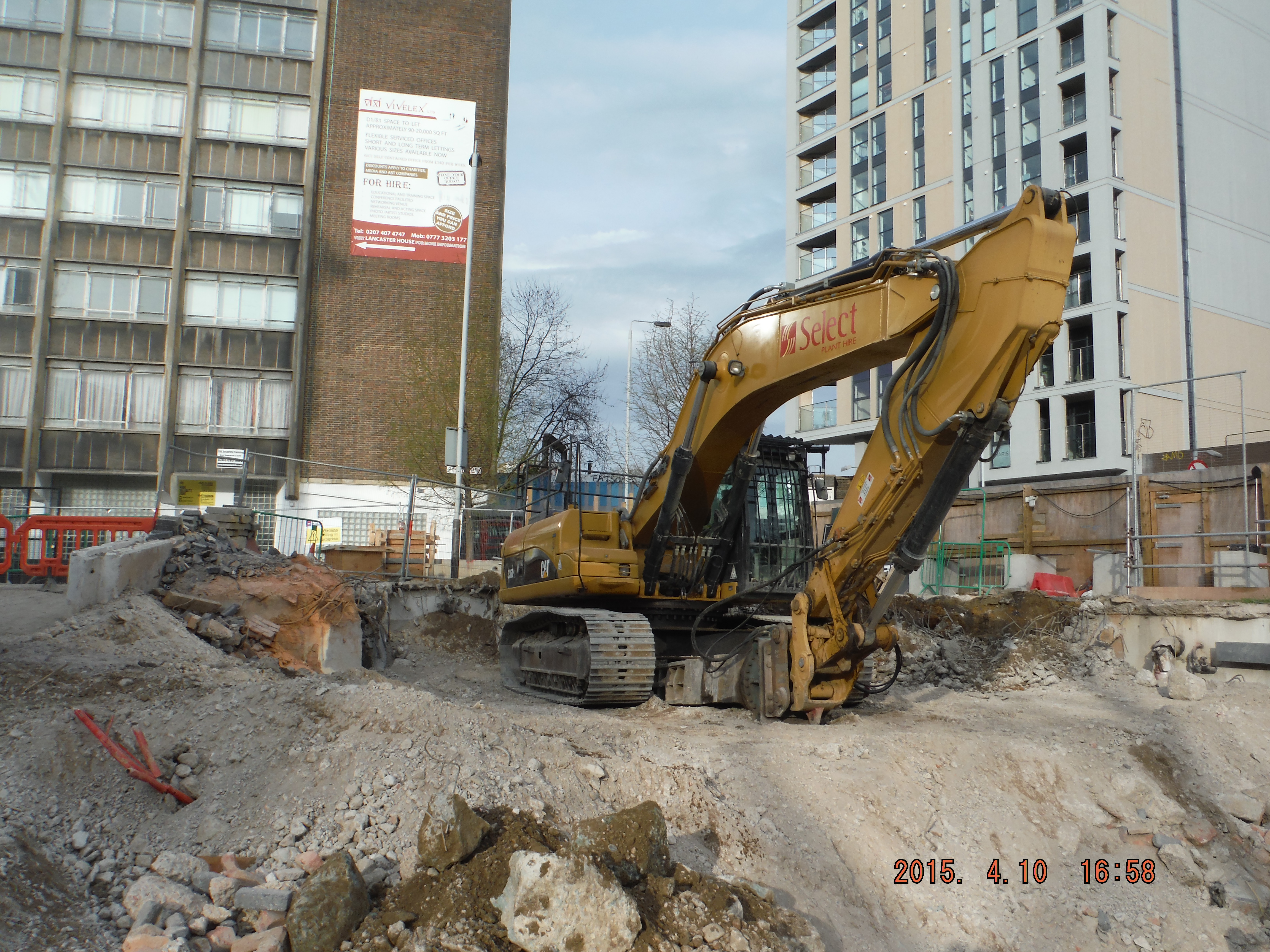
Excavator sitting on pile mattress where future sheet piling will take place.
Progress. We are currently about 3 weeks behind schedule, mostly due to pile rig breakdowns, a few unforeseen ground conditions and a bit of a few things just taking longer than planned.
Foreseeable practical issues.
1. Sheet Piling – I can see that preparation for the sheet piling is going to be difficult – we have potentially struck a fibre optic cable (green pipe sheath below) and there are many other cables which led into the old substation. How to resolve – careful hand digging and attempting to recognise if cables were part of the old substation or not. How to resolve cutting a fibre optic cable – I am holding my breath.
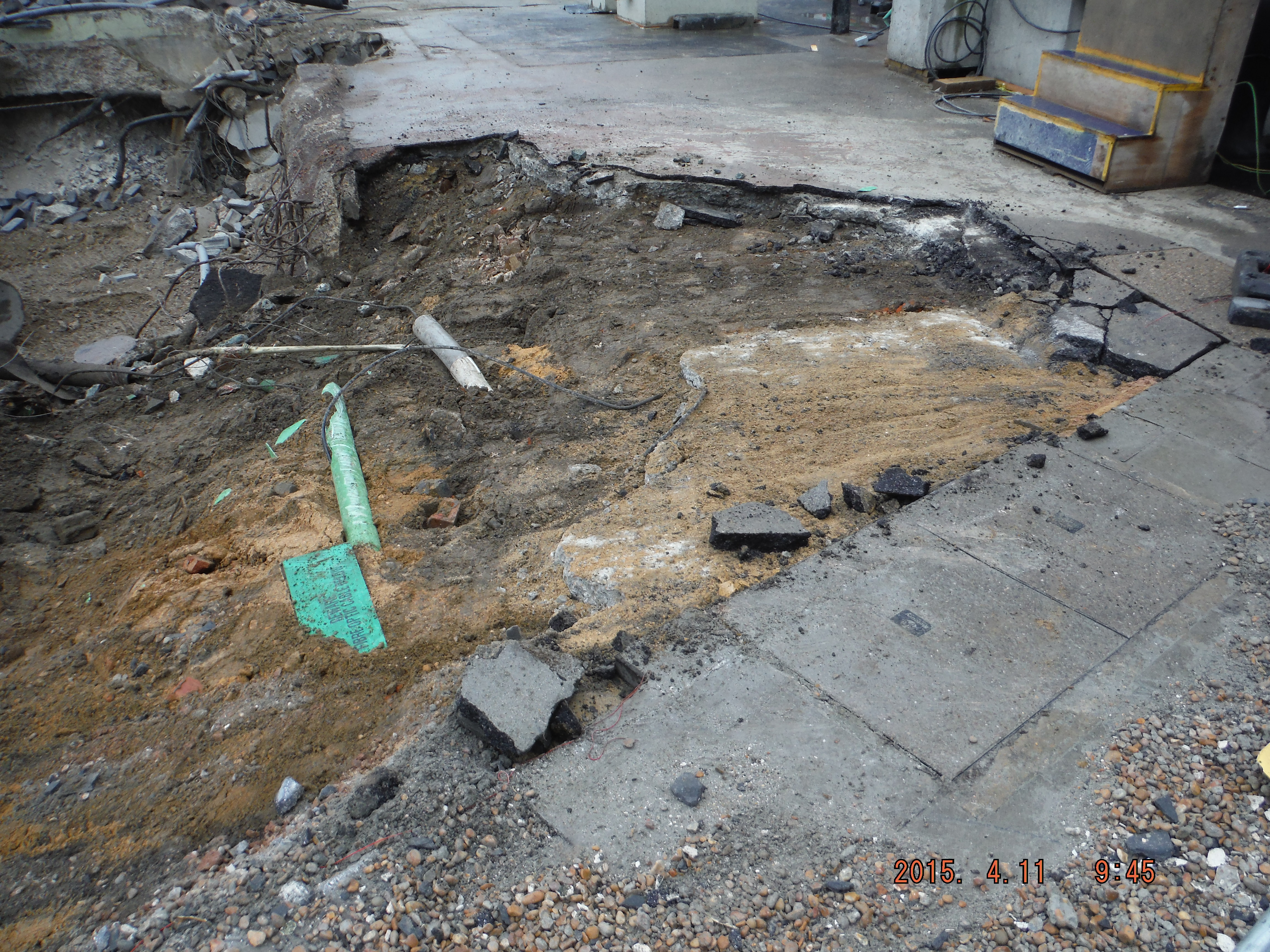
Fibre optic cable strike? If the IT companies all arrive on site on Monday, I have a problem.
2. Capping beam – as you can see there are male pile tops to cut, king post (vertical steel columns) and a complicated as you like “shear stub” connection (Richard – this may ring bells from my questions away-back in December) for the ground force props to enable excavation of one further level. This is surmountable but is going to be painstaking threading re-bar through the stub as well as lifting them about (each way in excess of 200kg).
3. Ground water – the ground water level is about at bottom of blinding of the capping beam. We cannot drain the bath that is the entire site because the secant wall is not finished. Current method of resolution: Effectively at the moment we pump water out for it to recharge into the hole, albeit giving us long enough to work for the day. Should it rain heavily for days there will be a problem.
Other points:
ICE webinar brief on CDM 15 on Monday for those interested!
Another cyclist was killed by a construction vehicle in London this week. Laing O’Rourke are a Construction Logistics and Cyclist Safety (CLOCS) Champion but do all vehicles that deliver to site comply with the minimum safety requirements… to be continued!
 Holdfast Training Services Trial Blog
Damian,
Who exactly are you planning and co-ordinating with? Do you have one or multiple sub-contractors below you? Let me know if you fancy a chat and catch up over a beer at any point soon.
Damian,
Thanks for the update. Great to feel I actually know what’s happening on site and makes me jealous all over again… The green duct issue is a perennial site challenge. Hopefully you will have an SI in your hands with full untilities search and confirmation from BT and other likely players in the fibre optics game that they have no aparatus on your site before you slice through anything too important. When should we expect comms to be lost?
Good update mate. How’s that ramp fairing? We’ve increased our number of traffic marshals on the road outside as a response to the death. Mostly because it looks good to the locals and Nick Clegg’s kids go to the school at the end of the road! They can’t stop traffic, including cyclists, but can advise people there is a bloody big truck coming. So what good are they really doing?
Damo,
Now that your piling gang have had time you get used to the site conditions how long is it taking them to install a pile? I seem to remember you saying they were around 25m.
Thank you for the comments. Well no telecommunications companies have arrived today so I think I am off the hook.
Richard Farmer – SI all completed for inside the excavated site, I will do some digging to see if I can find some better perimeter service drawings. Until about a week ago the area which I unearthed was a sub-station (hence no prior SI and a multitude of (old/decommissioned) cables feeding into it). Our site hoarding incorporates much of the pavement which contains lots of services. We have had Vodaphone in a lot recently to resolve an issue they were having and there is a BT line which also runs along the same section. I think I was just a bit taken aback that a fibre optic cable had been wrenched out – either way I will proceed cautiously so you should have internet for the next few days at least.
Rich Garthwaite – Although I am working for Laing O’Rourke they have a “one team” approach and I am really working for their Structures sub-contractor. They (Expanded Structures) are owned by Laing O’Rourke so effectively it is all one company, just different cost codes! There are external subcontractors (e.g. propping scheme, muck away, hoarding, etc) but Ray O’Rourke likes to have things in-house. Hence he owns an M&E contractor, piling company, plant hire, cladding, pre-cast factory, the list goes on. So although these are effectively sub-contractors to Laing O’Rourke, they are all part of the same business. The idea is that rather than profit on profit making them (LOR) expensive, each business unit charges the client less of a profit margin and so makes for a competitive tender/product. Planning and coordinating is a good question! It seems to be mostly between myself and the site foreman with some oversight from the PM and Project Engineer. We are starting to have weekly planning meetings which will help but at the moment, until we get down to basement level 2, it is pretty much: hit tasks head-on and mussel through. Not the most efficient or effective method but with the staff power we have and considering that the site is so small, that is the best we can do. All of these works are part of the enabling contract (main contract not yet won) and so it is all being done as cheaply as possible with a no frills approach. Time, cost or quality? Quality is left behind, cost is very important, but time rules – get it done now!
Guz – Ramp is on the rampage (sorry). This week we are moving it to a different part of the site. This enables the rest of the secant pile wall to be completed. We too have increased our traffic marshal numbers. Albeit from one or two and because we now have 2 gates at either end of a pit lane! Not really sure how we managed with one, but two is an improvement. I also am amazed we have not had more accidents. When we move the ramp it will mean the new vehicle access crosses a Boris Cycle Super-Highway, not sure how thought through that is! I agree in terms of your marshals not actually being able to stop traffic, but if you have lots of deliveries, vehicle movements, just the control at the front of site is pretty useful.
Olly – pile progress hit 8 piles a day for a couple of days last week. Mostly about 24m. CFA is quick but utterly messy IF there is nothing in the rig’s way and the ground does not give way. So for open area piling I would have thought you would be able to get 6-7 a day if you are at a similar depth, if you are in water I suspect that will take lots of time, but perhaps not if you have pre-sunk casings? How many cages do you have?
Damo – Thanks, we are using CFA piles for the rail bridge but won’t be putting them in for a little while but it’s useful to have an idea of other methods. 8 per day is a lot quicker than i expected!
Today we started boring the river bridge abutment piles (I’ve not been on site today). They are approx 40m deep and will be cased down to approx 20-25m. Casing to that depth should toe well in to the clay and negate the effect of water ingress. The gang expect to get around one pile in a day. The pile is cages to just shy of half way. Three cages per pile that will be welded prior to being lowered in as one cage.
Olly – I have some questions – but these will all be answered in time when you actually do the task, so no need to find out just yet! We are going to have length problems because our max CFA piling depth is 28m with this particular rig. Is your rig simply very tall to be able to get to 40m? Are you using the same piling rig to case and to do the CFA piling? We had to convert our rig from rotary cased to CFA and cannot do both at once (I know rigs do do this but the ones Laing O’Rourke own only go to 17m). Additionally, to retrieve the auger once the pile has finished, the rig sends concrete everywhere (concrete still in pipes when the auger reaches ground level to ensure pile is fully concreted). How are you going to stop concrete going into the river (perhaps all inside the coffer, in which case, how will you remove sloppy wet concrete mess being created)?
As with all good military equipment, don’t forget about maint days. We have to have these frequently. Primarily for the auger cleaner (series of brushes that remove pile risings from auger), but also the auger itself. After about 20 piles the auger wears and means the diameter it is cutting reduces. Simply welding more metal onto the cork screw works but takes the rig out of action and it is a pain to de-auger. Not sure that is much advice, just reality of the CFA method.
Damo – If you have any questions please let me know, it may prompt me to look in to things before we start the CFA operation. Also I will make a note of them and try to answer them in a blog down the line.
The rig we have has a telescopic bar that can bore to 60m (we went down to 55m yesterday with a test pile) however it can only get down to 22m when converted to CFA. It is currently working on the west abutment and is due to move to the west cofferdam in a couple of weeks. After that it will move over to the east side and repeat the process.
The CFA piles on the rail bridge are not due to go in for a little while so it is quite possible that the rig we use down the line will be different.
The cofferdam is only 8m x 15m with a couple of props across the middle. Clearly we can’t get the rig inside so we’re putting a roof on the coffer to stand the rig on. When we pile we will dump the material inside the dam and muck away once it’s reached depth. We are planning on laying a layer of sand in the bottom of the coffer so that when the concrete pores out of the top we can clear it up with ease.
The team we have seem pretty washed up and have already talked about carrying admin (cleaning and welding the auger) in tandem with other aspects of work. The benefit of my side it that we are not short of space. They have spread out like an RLC soldier conducting morning routine however it all seems to be going quite well…touch wood!