Archive
Levee Inspections
To attempt to take up the mantle from Howard of saving Pennsylvania from catastrophic flooding this week I have been out conducting inspections of elements of the levee network. Every year Baltimore District inspect half of the levees in their AO, which broadly covers Pennsylvania and a section of upstate New York and control flow into the precious Chesapeake.
Sadly my image of Hollywood style concrete channels where we could put the hire car to the test were dashed and replaced by oversized earth berms. I imagine this is the slow time equivalent version of the inspections carried out in six weeks by RE JNCOs in the UK last spring, except completed by two qualified Professional Civil engineers and a couple of hangers on like me.
Below shows a typical levee and our main tasks were to look out for ‘critter’ holes and the wrong type of vegetation. A common occurrence is for groundhogs to burrow completely through the levee, both allowing flow but also destabilising the remainder of the levee. Vegetation is important to promote soil stability but has to be able to bend to the flow to avoid creating an obstruction, or a place for obstructions to settle. Within the main straight channel to the bridge in the distance a meandering path has been engineered for the normal flow condition slowing the flow down, whilst allowing it to drain quickly in a flood condition.
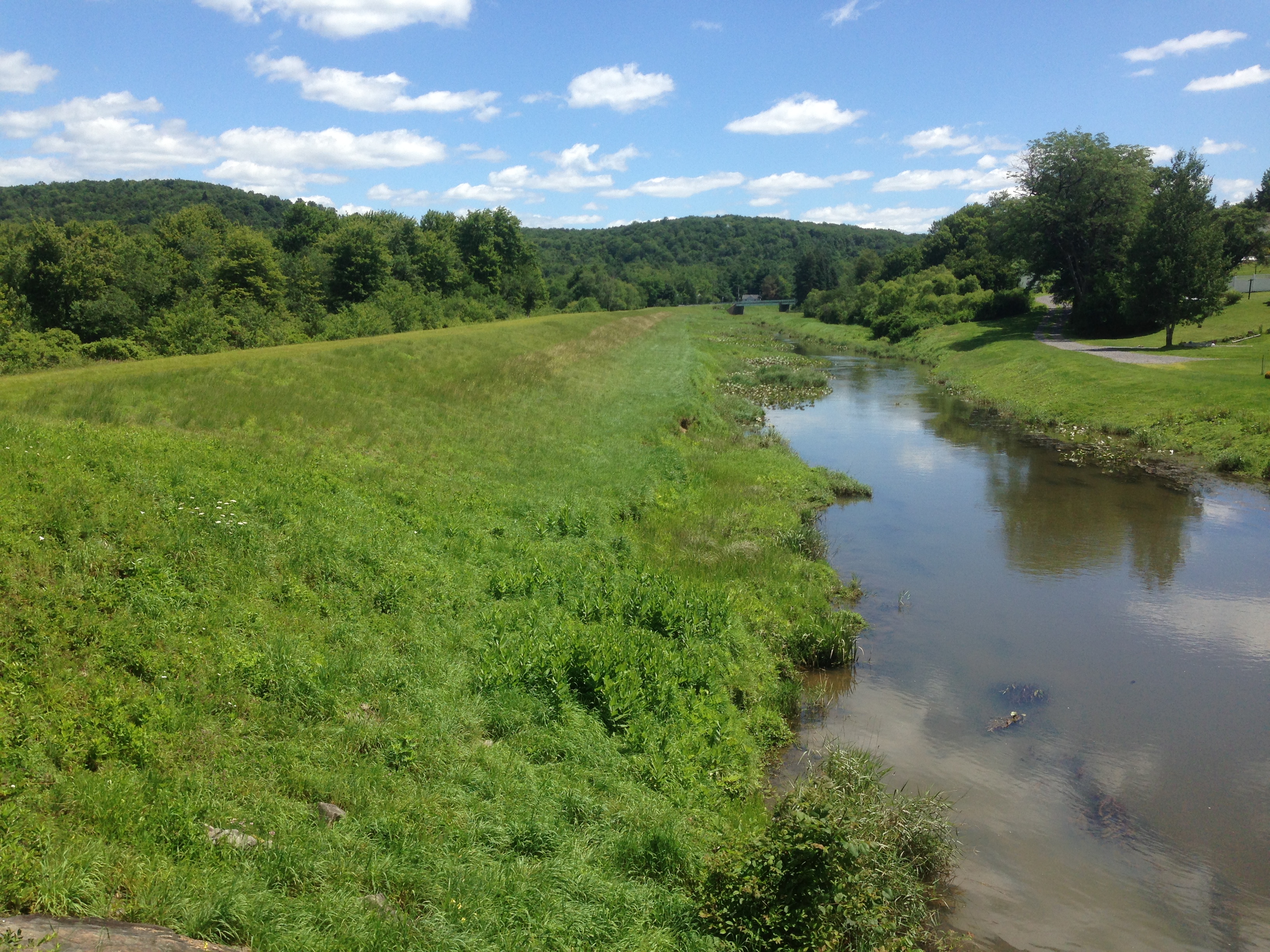
Typical levee and channel
To control flow through the levee from drains gated inlets are used and flap gates prevent back flow from the river up the pipes. These all required checking and had been greased to the standard a farmer would have been proud of.
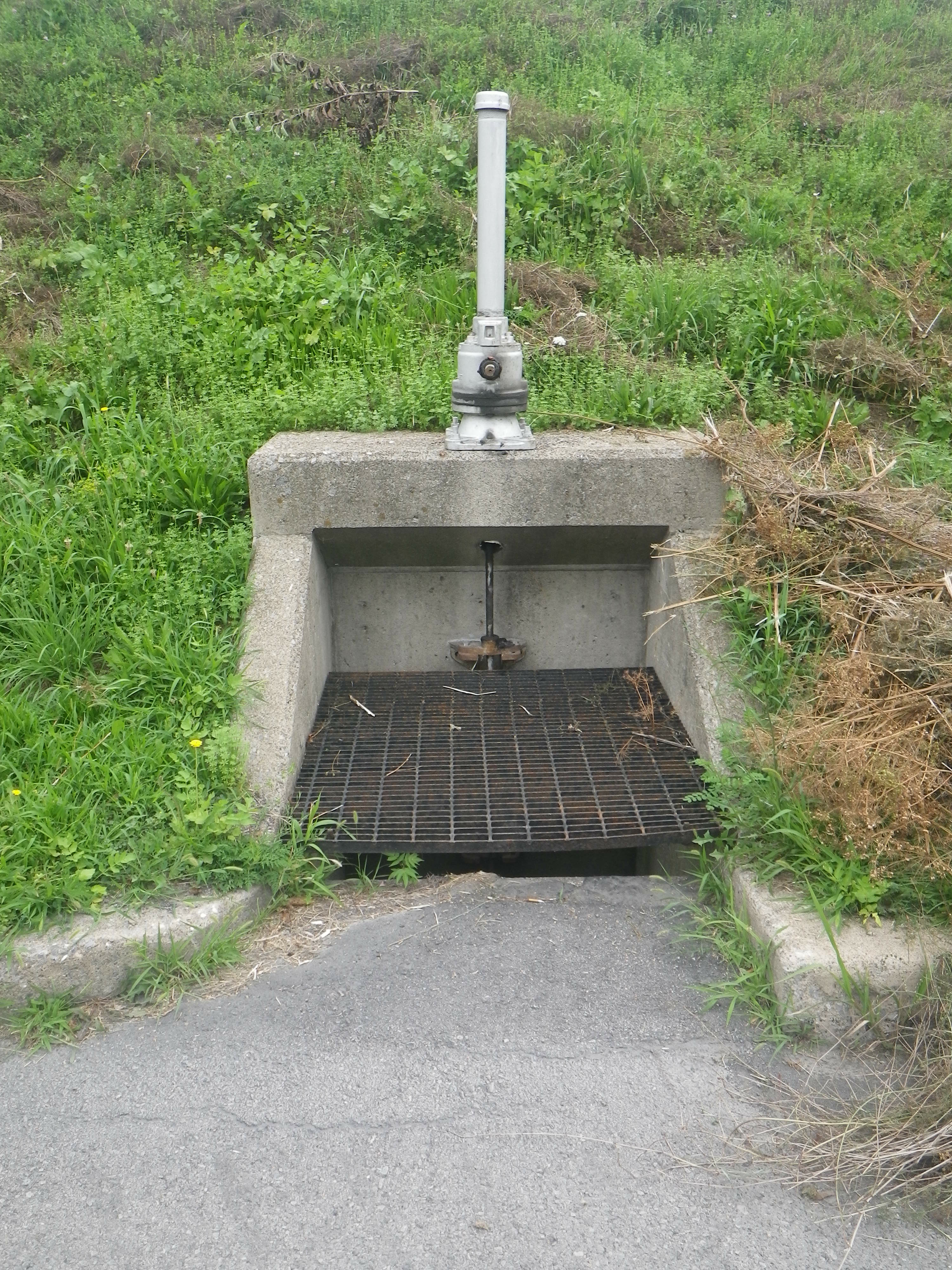
Drain and inlet
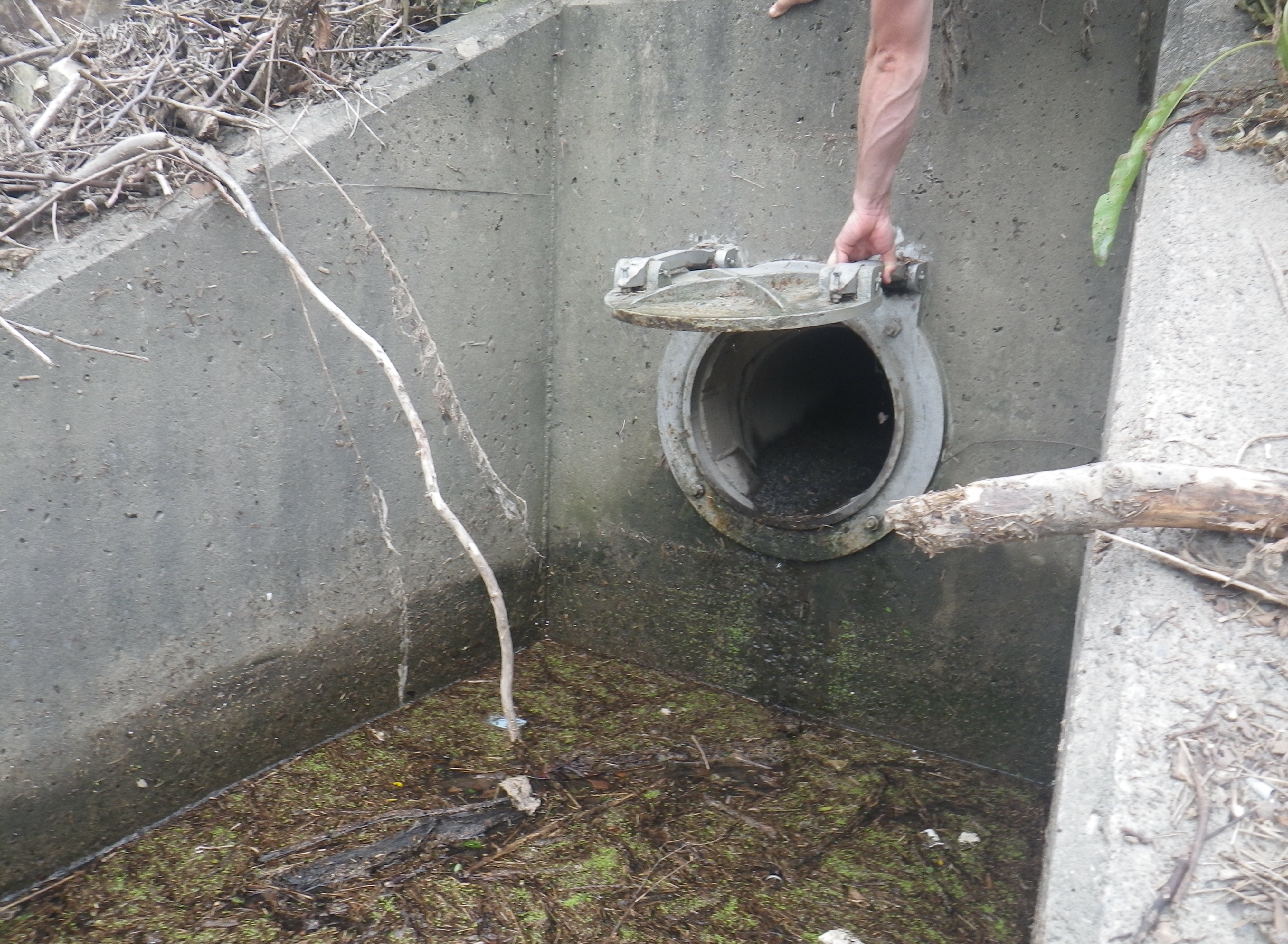
Flapgate outlet, minding out for snakes!
The systems we inspected were built from the 1940s onwards and were simple and robust in their design using, as one would hope, gravity where possible. There were a couple of pump stations with standby generators where gravity had to be overcome. As the drawing shows below a lot of effort is taken to remove the debris and sediment from the flood water to protect the pump and prevent it clogging the pipe work (or pressure conduit to use the vernacular).

Pump station
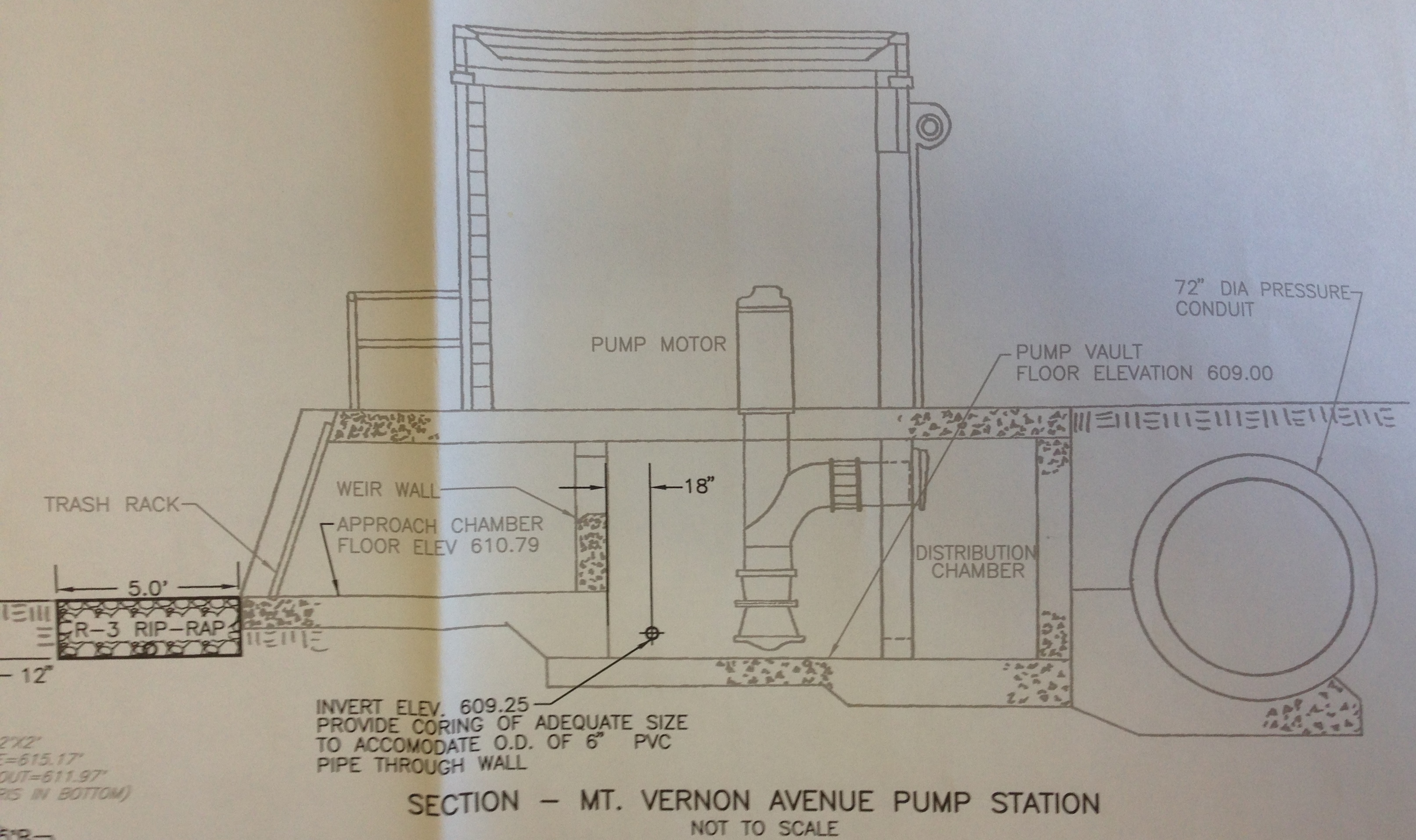
Section through pump station. Water flows L – R
Rip-rap is 6” diameter rough stone.
As far as analysis goes the question in my head this week has been how does it all integrate? My conclusion is that it doesn’t. Responsibility for each levee has been pushed down to the lowest level of government, the Township, and so there doesn’t appear to be an appetite for integration from one to the next. That said, as the map below shows, there is quite a lot of space between townships out here and so maybe that doesn’t matter.
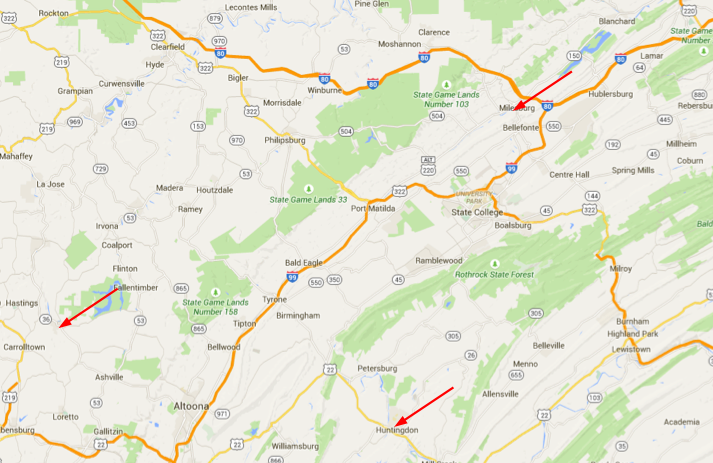
Upstate in Pennsylvania. Huntingdon is 2 hours NW of Harrisburg
I imagine further down stream towards the coast where the population density is higher and all the water converges this would be more of a problem. For now I am going to shelve these thoughts and pick them up again when I get to phase 3, where I can speak to the hydro engineers in their natural environment.
Finally, for the civils who were whinging about making a cofferdam, this is how you do it ‘redneck style!’

Simples!
And apparently this is a salad…

You can just see a piece of salad poking out under the chips and cheese
All this paperwork is great, but who’s building the job…
This blog will focus on my exposure to the quality management system at Battersea Power Station Phase One.
To set the context of this blog I will provide a bit of an update on the project. It’s fair to say that the pace of life at Battersea power station is getting frenetic. Carillion (CCL) and Skanska Rashleigh Weatherfoil (SRW) finally got agreement on the MEP programme we’re working to, so pressure is naturally being applied to hit deadlines. This pressure is added to by the fact that CCL procured the job during the recession, under resourced it and have no immediate plans to increase the level of resources available. As I have previously mentioned the site has significant logistic constraints and complexity due to the sheer scale and profile of the job. Given these factors I would have thought it prudent to keep processes simple and not re-invent the wheel. This is certainly not the case with regards to our quality management system.
Battersea’s quality management system.
It will come as no surprise that the main way in which CCL are managing quality during the installation is through the use of Risk Assessment and Method Statements (RAMS) to ensure the planned method of installation is correct and safe. This is then followed by Benchmarks (part of the JCT contract) which must be the first of type on site to set the standard for the works including how it was achieved not just the finished product, Inspection and Test Plans (ITPs) and check sheets to ensure that the installation is being carried out as per the agreed specification, this information is then recorded in a package plan file which is the audit trail to the client that CCL have done their job. The processes I have just outlined seem straight forward and make sense to me. Where I believe Battersea is starting to over complicate things is through the overly zealous use of Benchmarks.
Benchmarks
Under the JCT contract that CCL have signed up to there are approximately 250 benchmarks that are required, none of which are MEP related. There are further 140 non-contractual benchmarks that have been created internally by CCL, the majority of which are attributed to the MEP team. Each benchmarks requires SRW to pull together an 8 page document with additional supporting evidence (details of the specification that the benchmark relates to, photos of the installation, relevant extracts from the RAMS and drawings). This paperwork then needs to be red penned by CCL, signed off by 5 people and utilised to inspect the benchmark itself on two separate occasions; quite a time consuming process in total for what is effectively a discretionary task. Due to the lack of resources on site these non-contractual benchmarks are not being closed out in a timely manner. As mentioned above the benchmarks are supposed to be the first of type on site. However, in reality by the time the paperwork is completed and the benchmark signed off the job has progressed far beyond the first of type being utilised as a benchmark. As an example, a recent benchmark for electrical containment took so long to close out that approximately 50% of the total installation had already been completed. In theory the works should have been stopped until the benchmark was signed off. But on a job that is already behind schedule that wasn’t going to happen. With regards to the specific example of the electrical containment, one of the reasons work wasn’t stopped was that everyone knew (from walking past it on a regular basis) that the work was being installed to a high standard. Therefore what was the point of this benchmark other than to tick a box on an excel spreadsheet? I believe the production of the associated paperwork took up valuable time that could have been better spent managing other areas of the job which would have resulted in improved quality. I have highlighted my concerns and they are shared by other members of the CCL team, however, we are being told to soldier on.
 Holdfast Training Services Trial Blog