Archive
Site Two Fifty One – Problems, drainage and digging
Site Two Fifty One – Problems, drainage and digging
After the jubilation of completing the piling last week, and the removal of the rig on Friday night, a nightmare awoke the site today.
One of the tower crane bearing piles was piled in the wrong place. Coordinates were used to set it out and a typo of a 2 rather than a 3 mean the pile is 10m out.
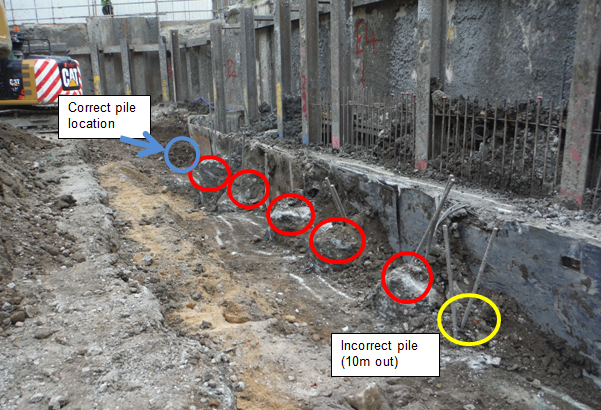
Why – it was a simple typo but where was the gross error check to double check it was in the right place?
The dywidag bars that project out of the ground were / should have been a bit of a giveaway. The person who set it out was a junior trainee student on attachment under the umbrella of the Site Engineer and myself.
So what?
The piling rig has left and the tower crane foundations, grillage and design all need cat 3 checks (due to proximity to Network Rail) which have taken weeks to organise. The problem of what to do now also needs to be resolved.
Options.
I can’t proffer the solution other than to say options include:
- Redesign of the tower crane foundation using the piles that have been installed – unlikely to work as they were on the limits anyway. If something can be made to work and get around the eccentric loading this would be the least expensive option.
- Bring back the piling rig. This would be a phenomenal cost and time.
- Bring in a smaller piling rig to drill some piles to replicate a 750mm 24.5m deep pile. Costly but practical.
- Others. Announce the problem far and wide and hope the corporate engine of Laing O’Rourke can find a better answer.
Drainage
How do you go from a drainage layout plan to installing drainage runs?
Design, resource, construct. The design is done and construction seems to be within people’s competency. That leaves resourcing. The drainage supplier has not sent us a very good quote, leaving more questions than answers. Saint Gobain are the manufacturer of choice who have been helpful but that only goes so far.
Then other issues like where do the drainage points (vent pipes, gullies, drain points, etc) actually sit arise. Ask the designer (Waterman) and they refer you to the architect. So lengths, angles and connection pieces become unclear.
Gully points need a grate, p trap, extension piece, bend and connectors. No problem until the grate specified is and L15 strength which I think means able to carry a stress of 15kN/mm2 based of the picture below, fine for pedestrians but this is for a car park. That makes me wonder if the trap system underneath is sufficient.

Aco Drainage Load Class Table http://www.acobuildingdrainage.co.uk/about-us/load-class-table.aspx
It is likely I am over complicating things but this does not seem to be as straightforward as it should be.
Digging
The site excavation continues with the London Clay now appearing at about -4.5m AOD. A bit higher than expected… repercussions include greater skin friction perhaps, less value to be gained from excavated material. The dewatering has not been too much of an issue using the approach of dig, dewater, dig, dewater.
However revealing “interlocking” secant piles is starting to show that perhaps they were not as locked as hoped. Either that or the very damp patch is being caused by something else. A few photos of the progress of installing the props.
Note bearing piles have to be broken down in order to install the props. The excavation then continues to depth and then the protruding piles are snapped because the reinforcement cages have been plunged to cut off level.
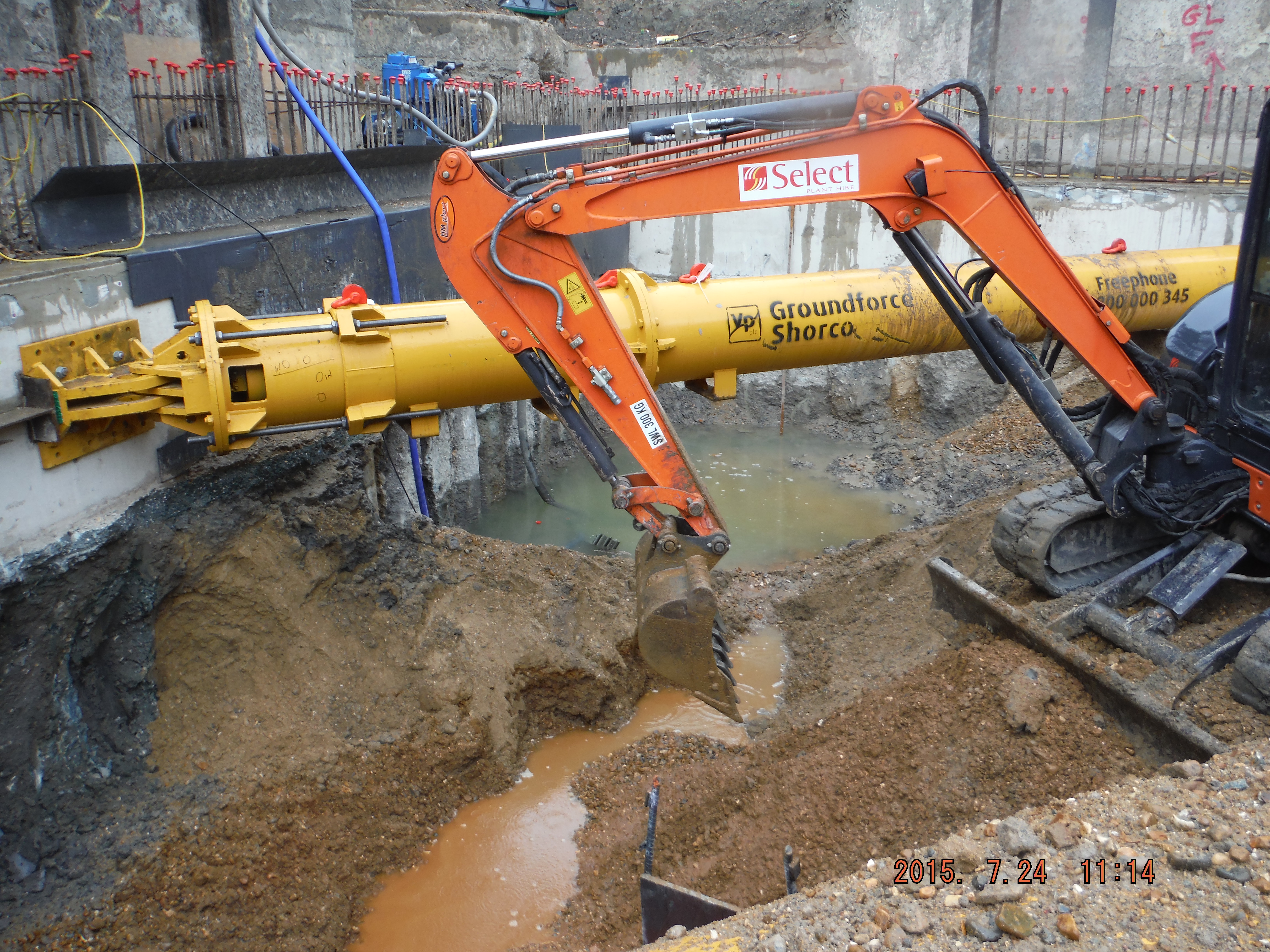
Ground water (and plenty of rain) pooling in the corner ready to be dewatered.
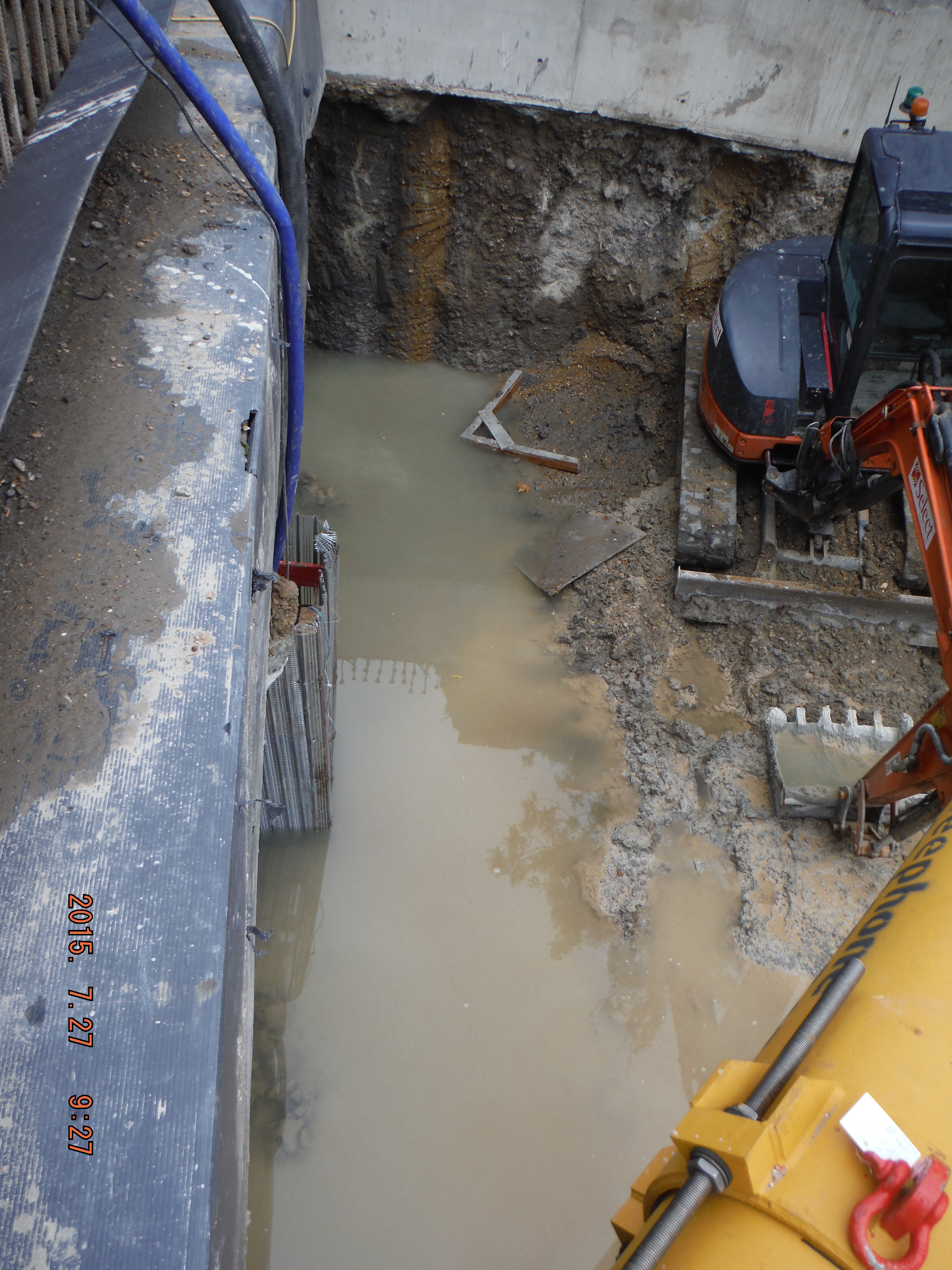
2 inch electric pump and 3 inch diesel pump used to remove water.
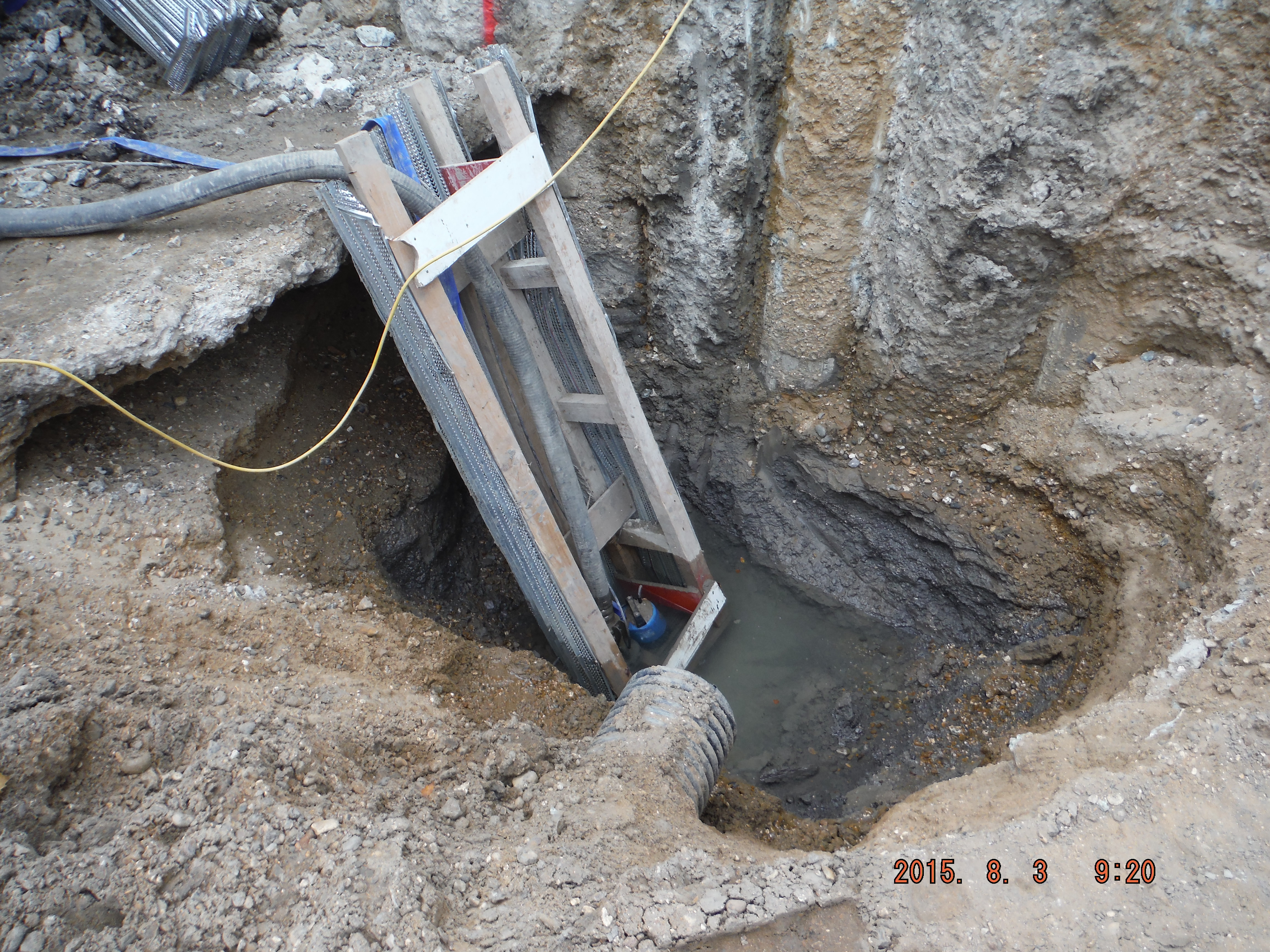
Pumps submerged within sump at bottom of excavation (close-up)
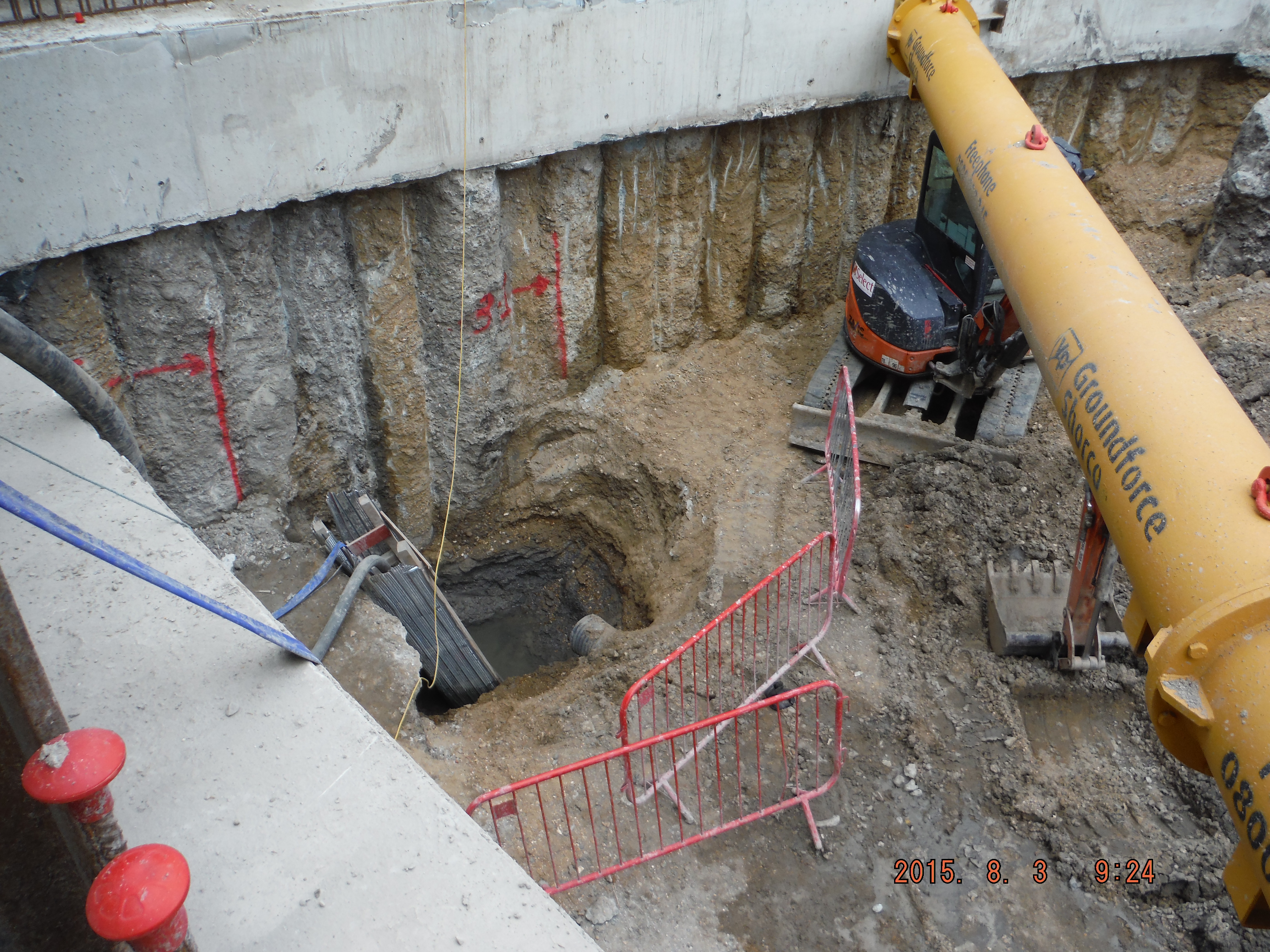
Pumps submerged within sump at bottom of excavation
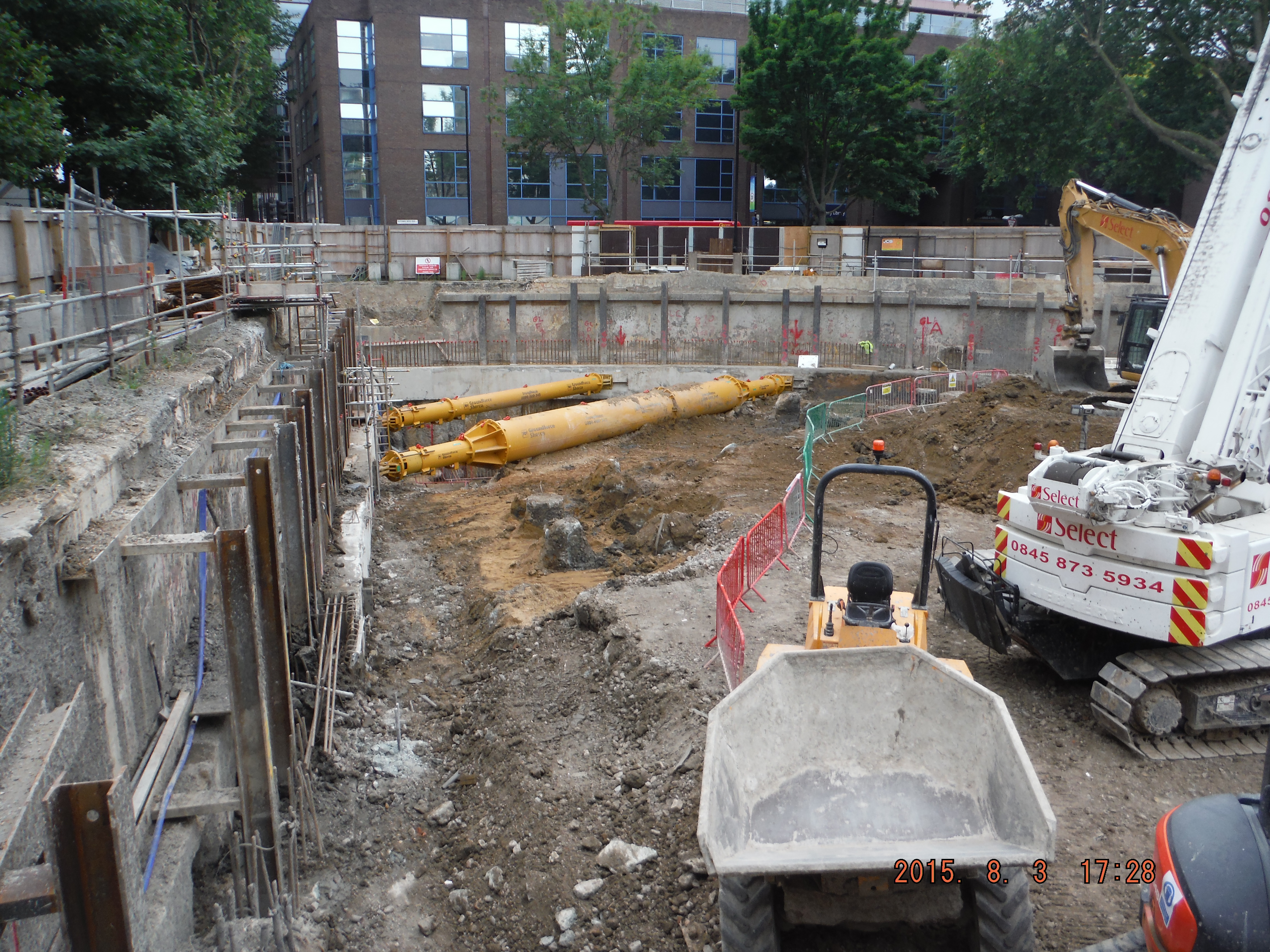
Mass excavation (reduced dig) in order to install next prop.
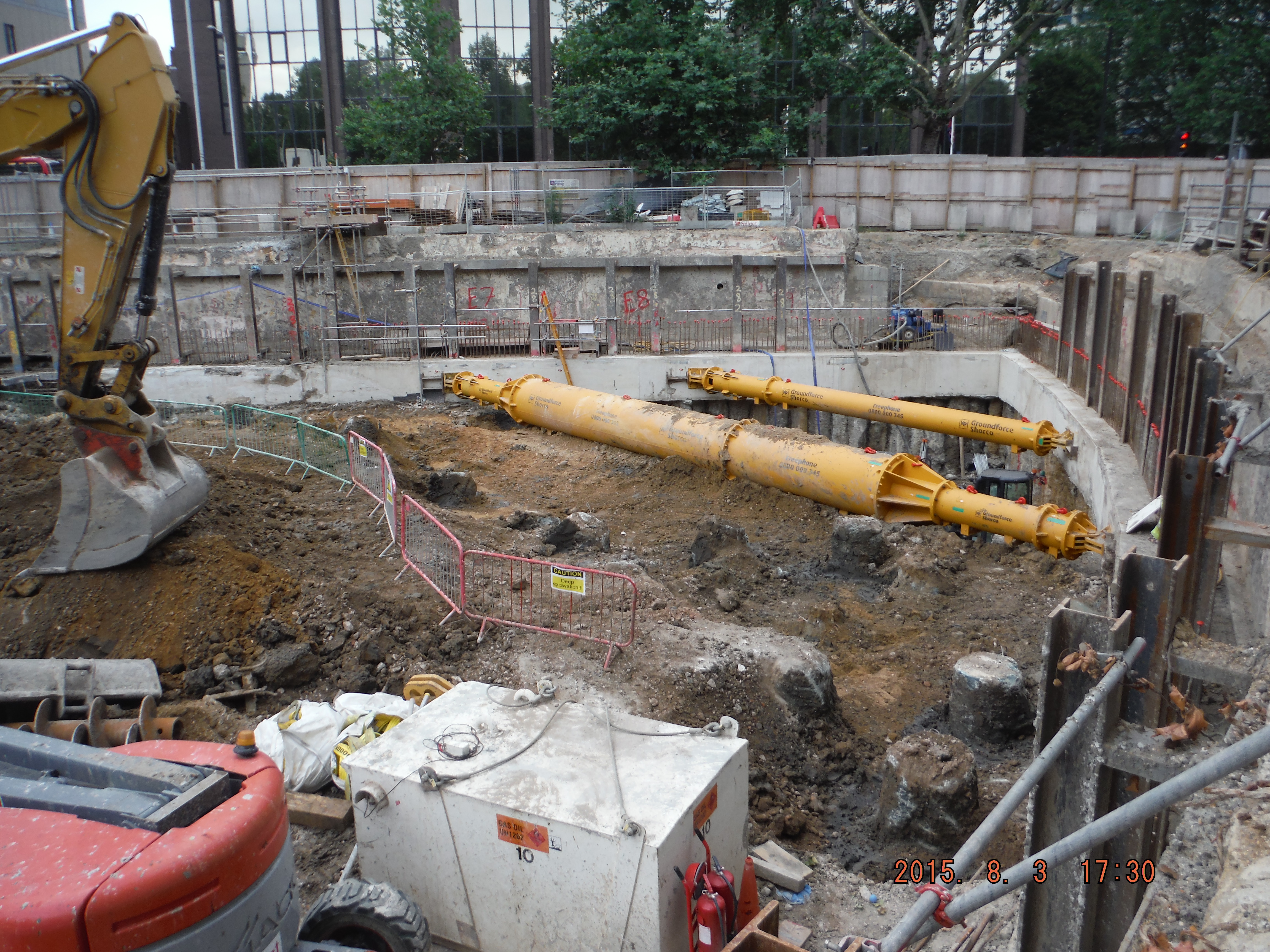
Mass excavation (reduced dig) in order to install next prop.
 Holdfast Training Services Trial Blog