Archive
How it should be done
To follow on from Daz’s excellent piece on tendering (if you haven’t read that, read it first), I thought I’d throw in my recent experience of procurement…
The architect, PDP, have design responsibility for the waterproofing, including the additional waterproofing measures required for the Grade 3 basement areas. PDP should provide a waterproofing intent that is then given to the geotechnical designers to analyse. Arup, the geotechnical designer, should furnish PDP with values that are used to define the performance requirement of the waterproofing measures. These figures should be applied by the architect to a catalogue of products and define a product. The supplier of that product are then responsible for the detailing of that product, the supply and installation.
None of that happened.
Instead PDP drew a waterproofing intent and went direct to the supplier approved by the client, Grace, to design the cavity drainage system. Grace (not Newton, sorry Henry) said they couldn’t do it. They could specify the product and do the detailing but they couldn’t do the pumps. Hoare Lea, the M+E designer, should have then been approached to do the pump design. Instead PDP went to a different supplier, one not approved by the client, Newton, and asked them to design it all. Which they did. At this point it is worth noting that PDP did not pay Newton for this design.
Sir Robert McAlpine (SRM) are now stuck with a design that is not approved by the client. The sub-contract for the supply and installation of the waterproofing does not include a cost for design. So that cost (and there must be one) must be included within the rates in the installation subcontract since no one does anything for free. In order to maintain the programme, the waterproofing has now been installed, so we’re far too far down the road to go back and do it properly so what can we do?
It looks like we’re going to have to either suck it up and accept that we’re effectively paying for the design twice (once to PDP and once to Newton), or we have to break down the sub-contractor’s quote and remove the element of design and contra-charge that to the architect.
This dilemma is currently sat with the package QS. Who has been saying for 3 weeks that he will do something about it, but hasn’t. This morning he handed in his notice so I somehow doubt this still sit’s in the Urgent and Important box on his list of things to do!
More to follow me thinks…
Tendering – managing risk with agreements and seeking opportunities through compliance
Yes, I have been hiding. Nothing to do with the Springboks getting beaten by the Japanese, I promise. Anyway, given my exposure to the tendering side of life early on in phase 2, I’m going to share my thoughts for the benefit of those who may not have had the “priviledge” yet, and offer a practical example of how not following the trodden path can produce results on site.
As a reminder, I arrived at JHG at a time when the project had not yet started on site (the head contract had not even been signed). A lot of my time was spent tendering. This is quite a process in JHG that, to me, often borders on spending more time trying to show due diligence than just getting the job done. You could argue that I am being typically cynical, but hear me out.
STANDARD FORM AGREEMENTS
The first decision point when choosing the agreement method is whether labour, consultants or on-site work other than delivery is involved. If none of the above apply, the standard JHG agreement is either a purchase order or supply only contract. The monetary value further defines the agreement to use.
Purchase orders are used for minor supply materials, items, plant and equipment of simple well established specification with uncomplicated delivery requirements, and “off the shelf” items up to an indicative value of $100k. On the Amaroo, these have typically been used for water pipe fittings and steel reinforcement.
Supply only contracts are used for supply only where no installation by the supplier is involved. It is used where the supplier has a design liability or design component fabrication or assembly requirement pre-delivery. Major materials such as concrete and quarry products (crushed rock in our case) which have a project value exceeding $100k and more stringent quality requirements are better suited to this agreement over a purchase order. The bespoke shaft access systems were procured using this form of agreement (figure 1).
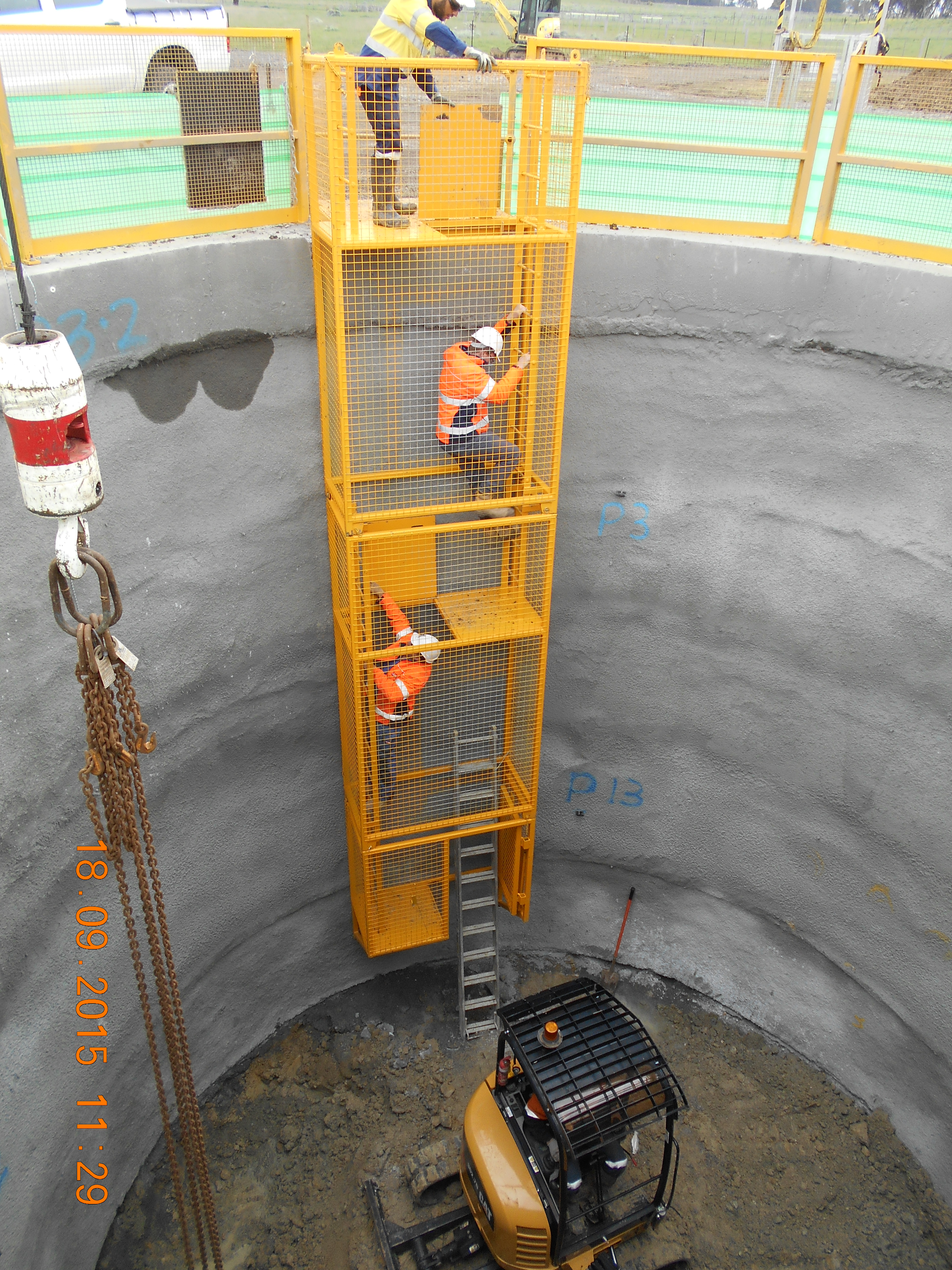
Figure 1. Bespoke shaft access system procured off a supply only contract.
Returning to the first decision point, if labour is involved, a short form subcontract agreement or standard subcontract is used. These too are also value dependant.
The short-form subcontract agreement is used where the indicative value is less than $500k and where on-site work is involved. It is used on low risk, low criticality works which are more usually more routine and less complex. It is tailored to key Head Contract conditions and improved where possible. I have used this agreement with the traffic management company to hold lollipops while I track heavy plant over main roads between shafts. A short form agreement is much simpler, I liken it to brevity over waffle. It is quickly produced and signed and returned by the willing SC.
The Standard Subcontract is used for subcontracts over $500k, where on site work is involved, and the risk and criticality issues need to be taken into consideration. It also requires tailoring to the key Head Contract and improved where possible. We have used a standard subcontract with the ‘drill and blast’ company due to the niche capability – they are not quite ‘RE P for plenty’ (figure 2).
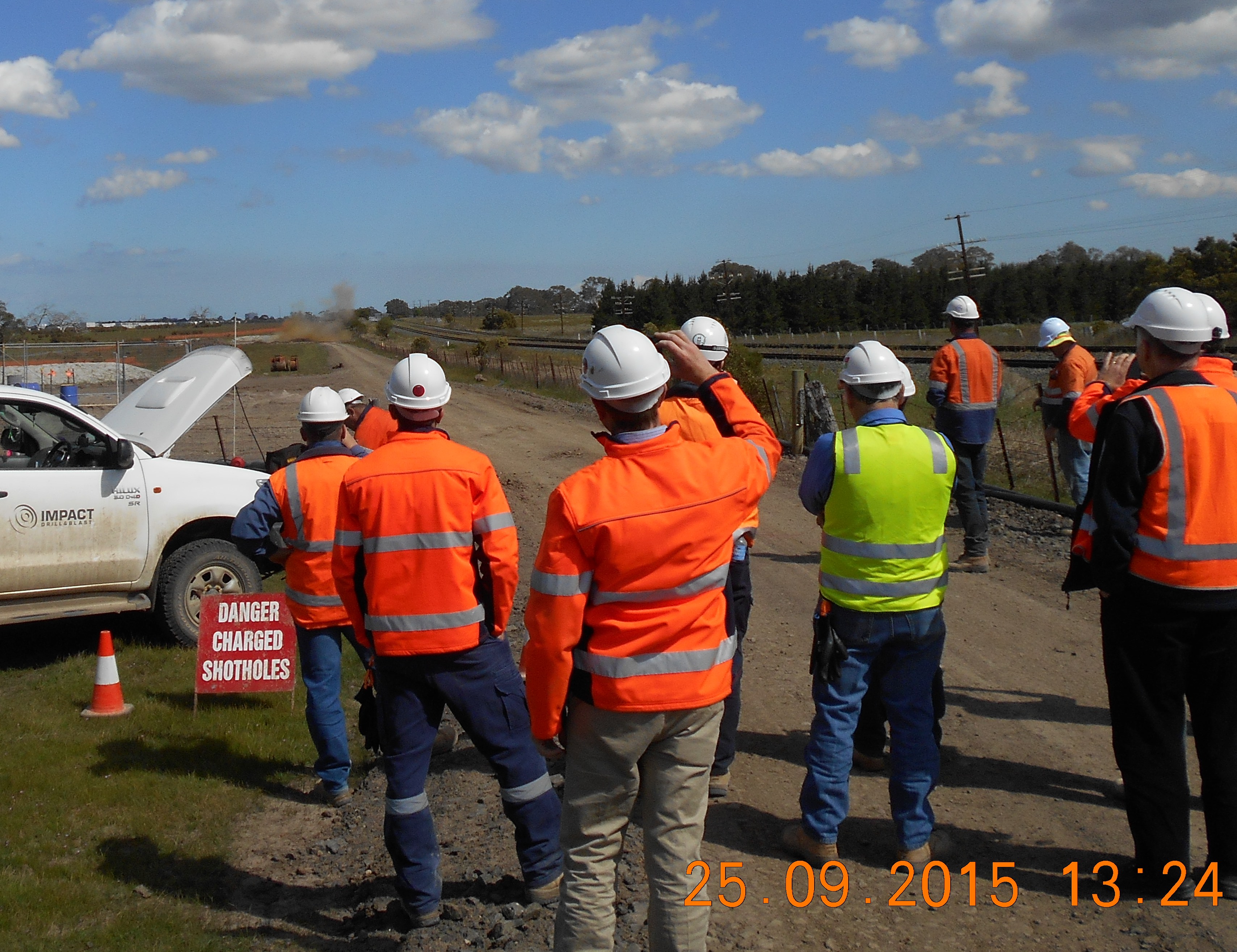
Figure 2. Impact Drill & Blast have been engaged on a JHG Standard Sub-Contract.
The benefits to JHG of a standard subcontract are that they are water tight, and heavily favour JHG. The catch is that they take hours to produce when done properly and are so heavily ‘legalese’ that the SC rarely actually reads or understands the document. They usually just sign it as work is scarce and JHG is a tier one company (a cash cow). This could be viewed as a benefit to JHG, but the amount of time spent answering SC questions afterwards when the information is in the contract they have already signed is startling. Not dissimilar to any one of us signing up to Vodafone. Another disadvantage is that if a SC has legal advice, it usually results in a game of e-mail ping-pong lasting days, if not weeks.
The agreements mentioned above are the most used on the Amaroo, although there are more e.g. plant hire and labour hire agreements.
TENDERING
When putting a package on the market, JHG invites at least 3 parties to tender. They then return their quotes for analysis along with the agreement. The key is to find the best value for money over the best price. I was caught out early on by recommending a street sweeping company with the lowest hourly rate. I had failed to squint at the fine print and note the minimum hours per call out which resulted in them being more expensive. A newbie in the area, I did not take the time to investigate the location of each of the companies to ascertain likely response times. The main effort is to ensure we clean any mud off the roads in the quickest possible time so that we do not upset the local community. My first recommendation was twice the distance as the company that turned out to offer the best value for money. We aren’t talking huge sums, but every little counts with my Scottish Project Manager who wouldn’t even pay for the CI’s dinner out of the project entertainment cost code!
Once recommended (internally within JHG), the subcontractor (or supplier) is set up on the project commercial pack by the commercial team and business can commence. In terms of planning, One week is considered a quick turnaround, with four weeks not uncommon on the 60 something agreements the project has with other parties.
CODE COMPLIANCE
In addition to tender analysis, potential subcontractors must be building code compliant. This is a system used to weed out the sham contractors. A questionnaire is sent to all potential SCs which they fill out and return along with a signed copy of the SC (or their seldomly amended version for our review).
The issue lies in the ability of the potential SC to correctly complete the BCOC questionnaire. It effectively eliminates the opportunity for small companies to win parcels of work as they don’t have the legal expertise to offer guidance on completing the form. It is not an overly complicated process, but it is time consuming and not exactly written in Layman’s terms.
So why does JHG do it? The simple reason is that if they did not, they would not be eligible to tender for government projects (BIG cash cows). You could be forgiven for thinking that it is a sensible step taken to show the AUS Govt that you are squeaky clean (benefit, right?). The disadvantage is that it constrains JHG when it comes to the tendering process and effectively does a full circle; we put the package on the market and land up going with who we always knew we would go with because no-one can be bothered to invest the time and money seeking legal advice to fill out the form only to be haggled to the bone once they are just about awarded the contract.
But there are exceptions to the rule. I had an issue excavating one of my shafts; we encountered an intact rock mass of very high strength basalt which our 3T (and then 5T) excavator could not break out. Blasting was not an option as said shaft is adjacent to a water sewerage treatment plant. Options are reduced to using conventional mechanical means. I chose to crane in a small drill rig to core 100mm diameter holes in the layer of high strength fresh basalt, and then use a rock splitter to create man-made discontinuities in the rock mass. This eliminates the relevance of the material strength. The issue was that the only company I could find with readily available plant was a small company without office support. In haste, the gentleman did not fill out the BCOC questionnaire correctly. A phone call confirmed he did not have the expertise or resources to fill the form out and therefore appeared to be non-code compliant and therefore not eligible to win the work.
I set up a meeting in our office where he was able to use JHG’s legal team’s advice free of charge in an effort to establish whether I could ‘make things happen’. It turned out that he was code compliant after all. We awarded him the work and he started solving our problems in the shaft.
To conclude on my cynicism in para 2, it appears that by not being a robot you can actually get things done. I agree that there is a need to keep the cowboys out, but a common sense approach goes some way to recognising those who shouldn’t and those who can’t without a bit of help.
 Holdfast Training Services Trial Blog