H&S – executing your plans
One of Guz’s recent blogs identified the difference between civilian and military idiots being that our idiots do as they’re told. This blog aims to echo that point and manage the expectations of those in phase one who are no doubt already chomping at the bit to be released into the wild. In the hope of giving something worth taking home, I urge you not to consider the health and safety box ‘ticked’ just because you have written a risk assessment and method statement.
We hold a pre-start meeting every day to brief the workforce on forthcoming activities and highlight any areas of concern (almost always H&S). This week we identified that as the shafts get deeper, the risk of carbon monoxide poisoning from plant operating at the excavated level increases. To reduce this risk, we have installed extractor fans to suck exhaust fumes out of the shaft. Should that fail, we have gas meters at the bottom of the shaft. Flashing lights on the meters indicate danger levels have been reached and work must cease until safe levels have been restored.
These meters have no audible means of alert, and are only useful if you can actually see them. The workforce was hanging them down the shaft off a piece of rope tied to the handrails at the top of the shaft. The problem is that the meter cannot be seen when the excavator is facing the other way. To mitigate the risk of the operators not recognising danger levels, we instructed the workforce (in the pre-start meeting) to place the meters in the cabins of the plant. A couple of hours later and they had already forgotten (figure 1). Note the meter hanging from the handrail. Civilian idiots don’t listen.
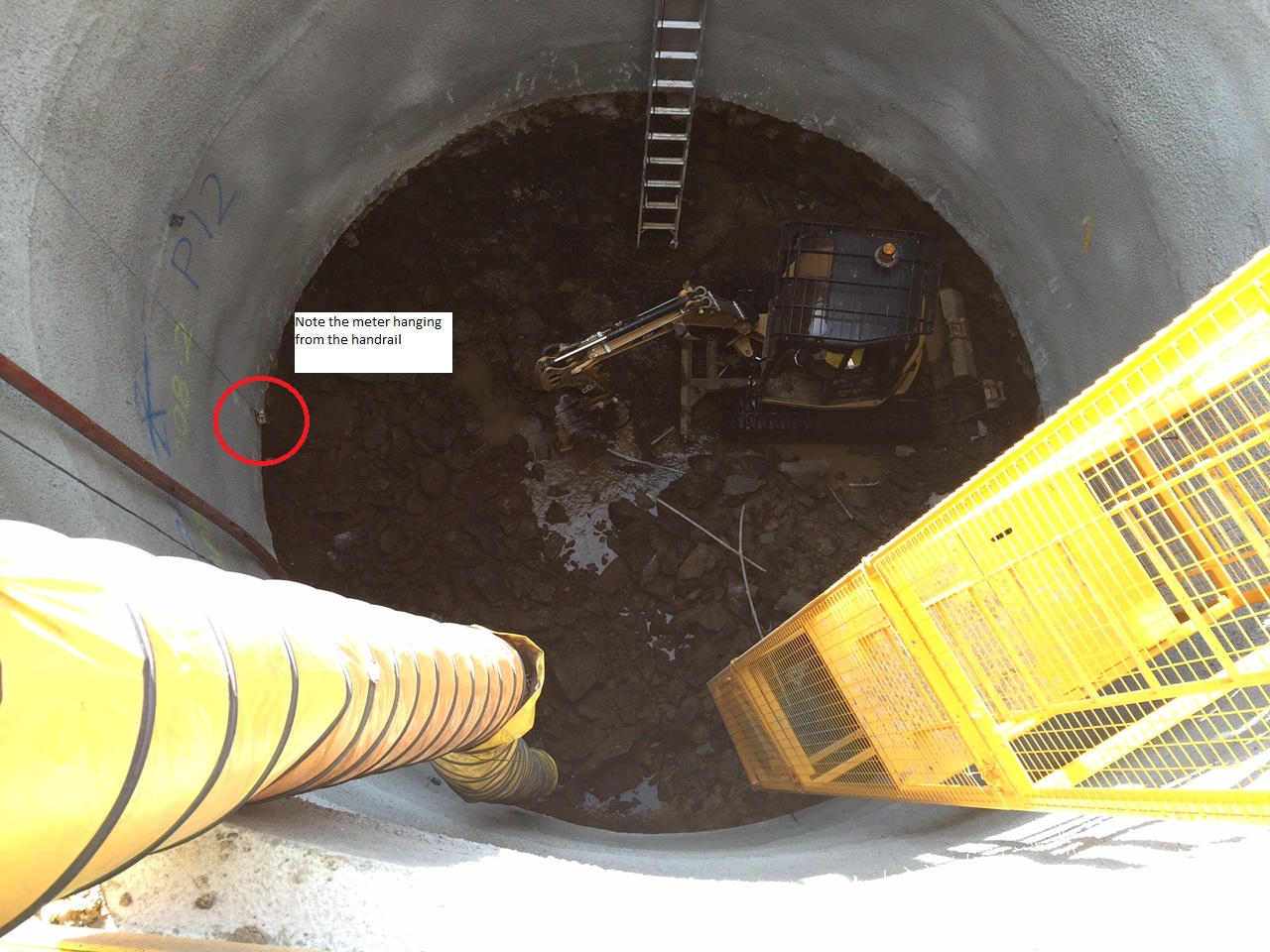
Figure 1. The red circle indicates the gas meter hanging from the shaft handrail
In addition to this, we had a working at heights issue. I produced the AMS (Activity Method Statement) for shaft excavation. This included shaft access and the introduction of a bespoke shaft access system which we had fabricated specifically for this project. The theory behind this system is that it offers both safe access to (and from) the excavated level, and a safe haven for the workforce when muck is being craned out. The PM was keen to eliminate the need for the workers to evacuate the shaft every time the kibble (skip) was craned in/out of the shaft in an effort to increase productivity (the crane costs $1600 per day).
You will identify the mesh cage surrounding the structural elements of the tower which also eliminates the need for a fall arrest or restraint system. Descent/ascent ladders are placed on alternating sides for each segment installed i.e. climb on the left, walk across to the right, climb on the right, and so on (figure 2).
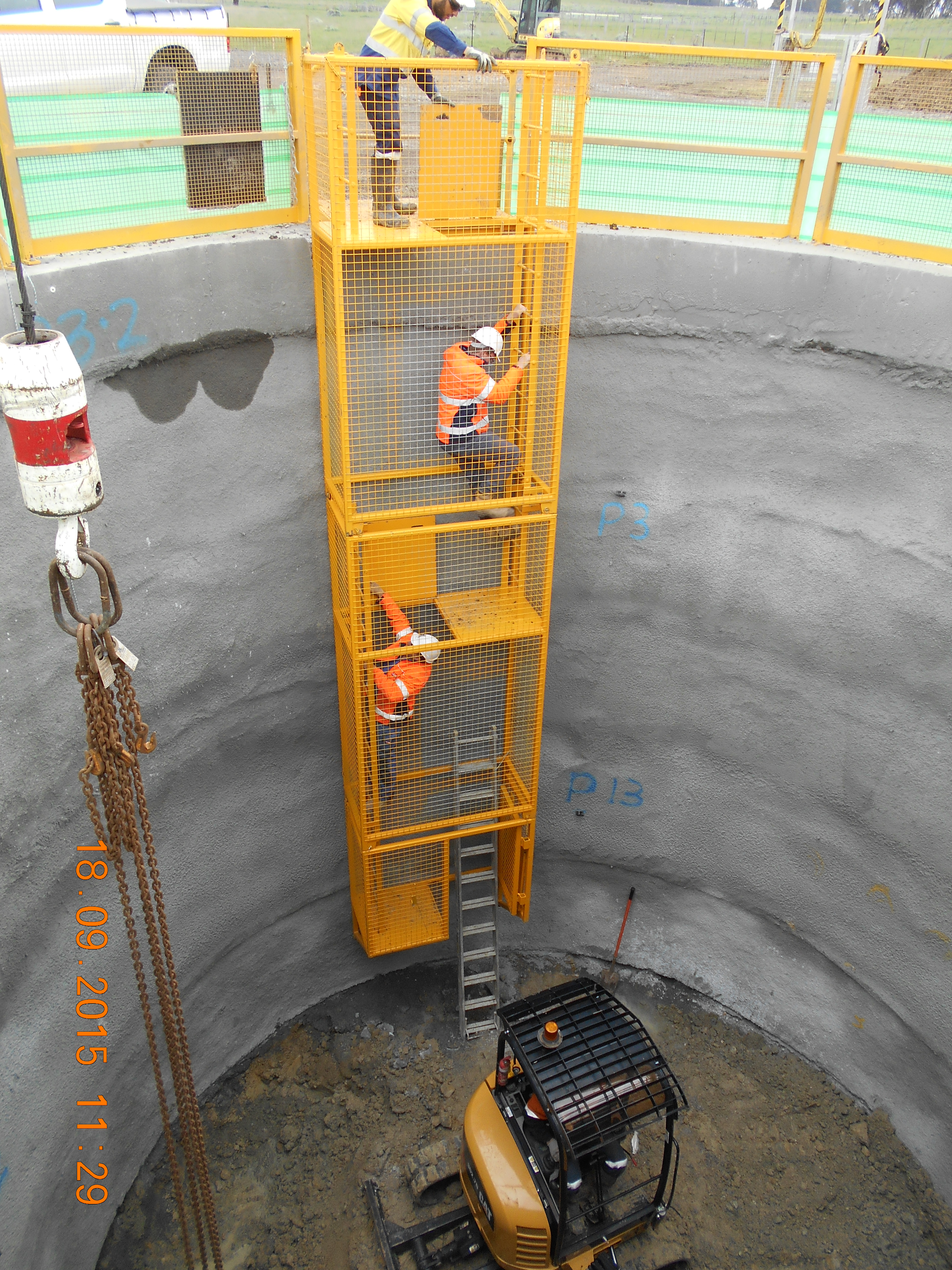
Figure 2. Correct layout of the access tower. Note the alternating ladders.
I inspected a shaft today to calculate the volume of concrete required for the base slab which signifies the end of billing works to my shaft excavation cost code. The tower had been installed such that there was no alternation between segment platforms i.e. falling off the ladder would see a re-enaction of the opening scene to cliffhanger. – the tower was effectively nothing more than a 6m ladder (figure 3).
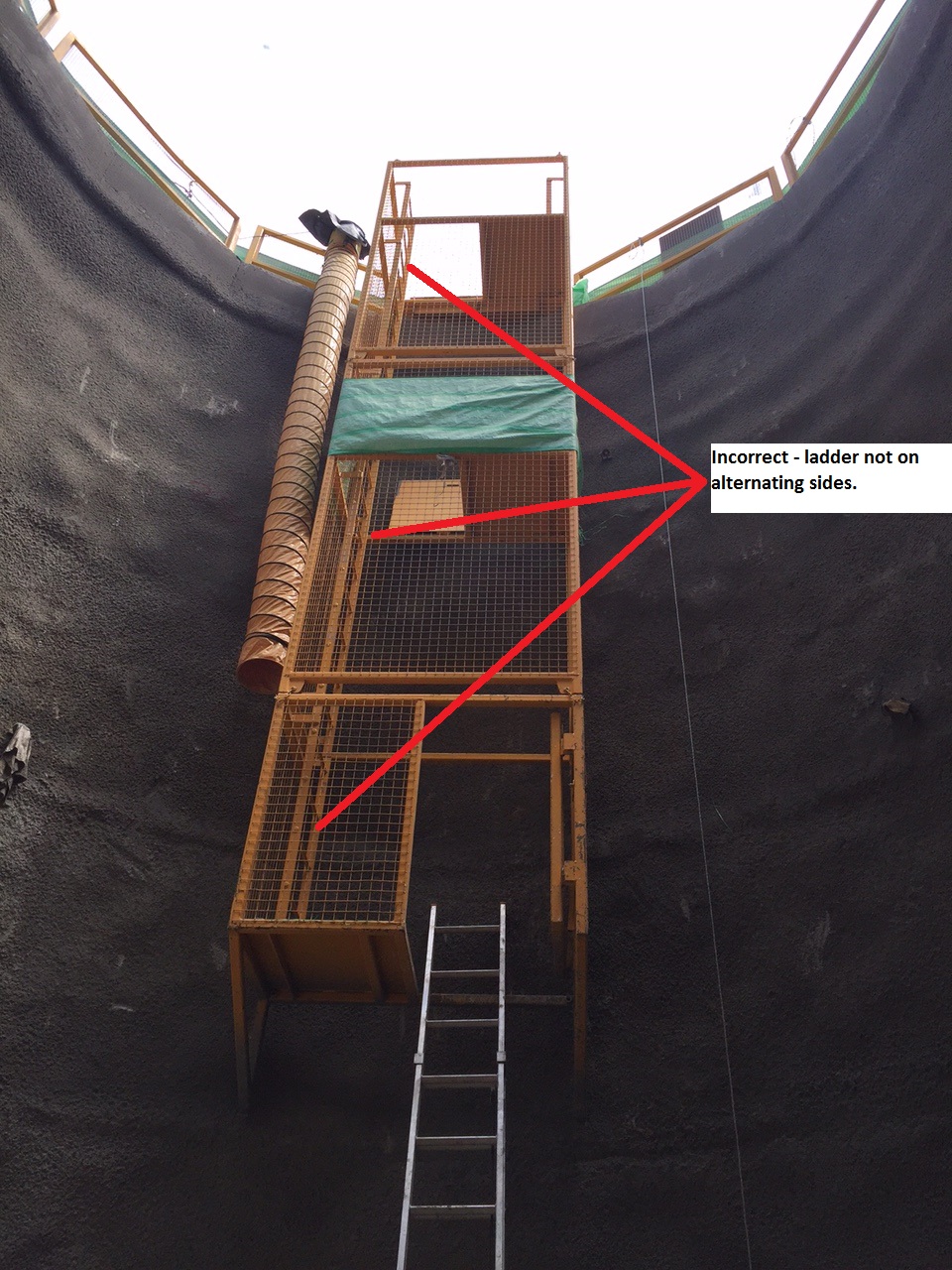
Figure 3. Incorrect layout of the segments (not alternating). It’s a 6m drop from top to bottom with no fall arrest system.
In conclusion, civilian idiots don’t listen. The workforce failed to implement two critical (and simple) measures designed to reduce and mitigate the risk of harm to them. To those who have not dealt with ‘simple’ workers (probably your average Australian) yet, brace yourselves. Delivering toolbox talks and pre-start meetings ticks the boxes at management level, but failing to follow up through regular inspections nullifies your efforts.
On a lighter note, I caught a redback spider yesterday. My JHG one-up knows to expect her in his stationery drawer if he gives me any more shit jobs (figure 4)

.Figure 4. Meet Mrs Amaroo – keeping shit jobs away
 Holdfast Training Services Trial Blog
Daz,
We had exactly the same issue digging out our cofferdams as your first point. Our 4+1 gas detectors did have an alarm but you couldn’t hear it over the noise of the excavator and getting them to attach them to the front windscreen visor seemed like an impossible task. Also, the lads would leave it on over night so the battery were always dead.
In the end we had to get two of them on site so that one was had some charge in it. Secondly, we had to employ an extra worker to stand on the top with an air horn and watch the monitor (he also checked people in and out of the shaft which was helpful). In case all of that failed we had escape sets in the dams and BA sets on the top to get people out.
So much extra work and expense was generated because we couldn’t trust the lads to work safely.
As me PM once said…”You can’t fix stupid!”
Daz, nice post. Can you bring me back one of them 8 legged critters for my next annual appraisal interview with Andrew please.
Daz, another interesting blog.
Agreed on the gas monitoring system not being great – same issue on my Laing O’Rourke site. Do you know when your shafts turn into a confined space – if there is use of a gas monitor and air extraction systems it implies there is thought that it might? Out of interest what do you have in the way of a rescue system. I was recently quizzed about rescue procedures for extracting a casualty from our site (only stair access). My suggestion was a stretcher and carry the person up the stairs. Apparently you can get a crane liftable rescue box – do you have anything of this sort or any oxygen type systems to effect a rescue?
Regarding your (and Guz’s) points about people not following what they have been told, I would also equate this to quality issues. It seems where it is easier, or the classic “this is how I did it before approach”, adjusting to do things a different way makes it hard work. The only way I see to managing these sorts of issues (H&S or quality) is to have managerial procedures to check compliance (with a standard, code, or more simply a briefing). Site Supervisors are charged with this on Laing O’Rourke sites, having received very good training, but often fail to resolve the issues. Therefore it comes to the engineers to carry out checks and ensure things are done properly.
For us access tends to be the problem. Steel fixers will happily fix steel meaning they remove any way out, ground workers will happily excavate a hole with no decent access for all of the workers below. Incredibly, those affected seem just to carryon and scrabble out of the problem. I don’t understand why, but partly place responsibility on the operatives, more so on the foremen but specifically on the management team because focus is always on getting the task done and the peripheral tasks of facility the activity often gets overlooked. I think sometimes the risk assessments and method statements should focus a little less on the actual task – such as telling a ground worker about how to place concrete (although vibration is key) and more on the safe access or enabling functions.
The quality thing is a good point. People tend to understand your reasoning for shouting at them when they’re doing something dangerous. They might not do what you want them to but at least they’ll normally listen. When you’re telling them the quality isn’t good enough they frequently don’t care and so it’s even harder to get them to do what they should be doing especially when they can’t see the reason behind it.
Olly, your mention of the batteries being left to die overnight is a problem I have too. It seems micromanaging the workforce is the only way to monitor this. On a site with shafts spread over 8km, it eats up time that could be spent elsewhere. You could argue the foreman should be on top of this but he is not and he gets very defensive when questioned – much like a SSgt does with a Tp Comd.
Jim, I found a total of 7 redbacks last week (all in my garden which is about the size of a squash court). 4 of them had nests under my garden chairs which I have been sitting on for months now. Guess it’s just not my time!
Damo, good point about the confined spaces. It is taboo to whisper ‘confined’ and ‘space’ in the same sentence here. The PM was desperate to downgrade the shaft(s) from a ‘confined space’ to one of ‘restricted access’. His reason being that it eliminates the mountains of paperwork required to allow people into the shaft.
Australian Standards (AS 2865) states ‘confined spaces include but are not limited to – pipes, sewers, SHAFTS, ducts and similar structures. The PM and Safety Manager produced a JHG ‘confined space evaluation form’ which looks at the AS qualifying criteria for a confined space (entry/exit, atmospheric pressure, likelihood of dangerous oxygen levels etc.). The JHG form is essentially a risk assessment on our shafts which puts measures in place to keep it a ‘safe’ place of work. The client has accepted that the shafts are ‘restricted’ which saves the project from having to ensure all personnel entering the shaft are confined spaces trained. Interestingly (and very cleverly in my opinion) the first 2m of tunnel from a shaft are also ‘restricted’ to give a refuge point in the event of an emergency when using the crane.
As for evacuation, there are 2 methods of entry/exit: 1. The bespoke shaft access tower (figure 2), and a man cage which is lowered and raised by a crane. There is also a crane-able stretcher on site for injured personnel.
With regards to quality, good point, and I agree that it is the job of the site engineer to monitor this. The issue we have is (again) the size of the site and the ability to monitor 5 shaft crews at any given time. It’s not all doom and gloom, the majority of the work is good and it is improving as activities become repetitive. I guess a failure (e.g. shotcrete needing to be stripped off a shaft wall and re-applied) would be a useful lesson on quality should the need arise.
Nice blog Daz, and an interesing thread. We recently participated in the ICE H&S group Webinar on CDM15 six months in. There are clearly issues surrounding the Pricipal Designer and Principal Contractor roles and extent to which paperwork doesn’t equate to safe or sensible. What is the present position in Aus wrt CDM(C) or PD/PC?