What’s that Skippy? Someone’s trapped down a well?
Well, well, well… I have often found myself taking one step forward and two back as a direct result of working alongside a heritage building. Several issues have arisen but this blog will focus on one – a 19th Century water well.
Given that we are working on an old brewery site, some distance from the nearest river, the existence of wells is to be expected. What is most frustrating with this recent issue however is its location, see Figure 1.
Figure 1.
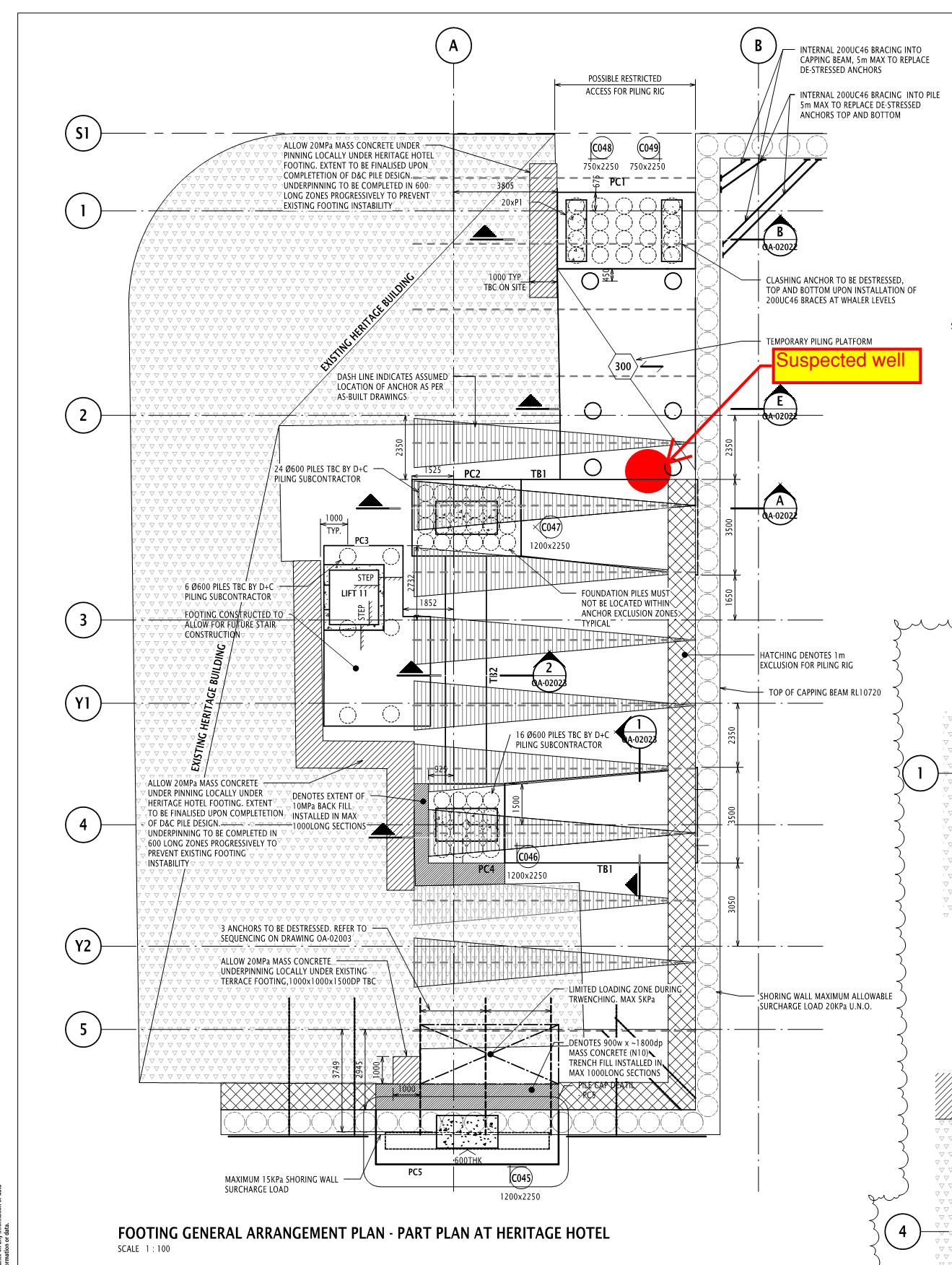
Figure 2 is an image of the well, after being ‘carefully discovered’ by an excavator. The well is approx 1.4m in diameter, the A3 clip board in the image gives an indication of the scale.
Figure 2.
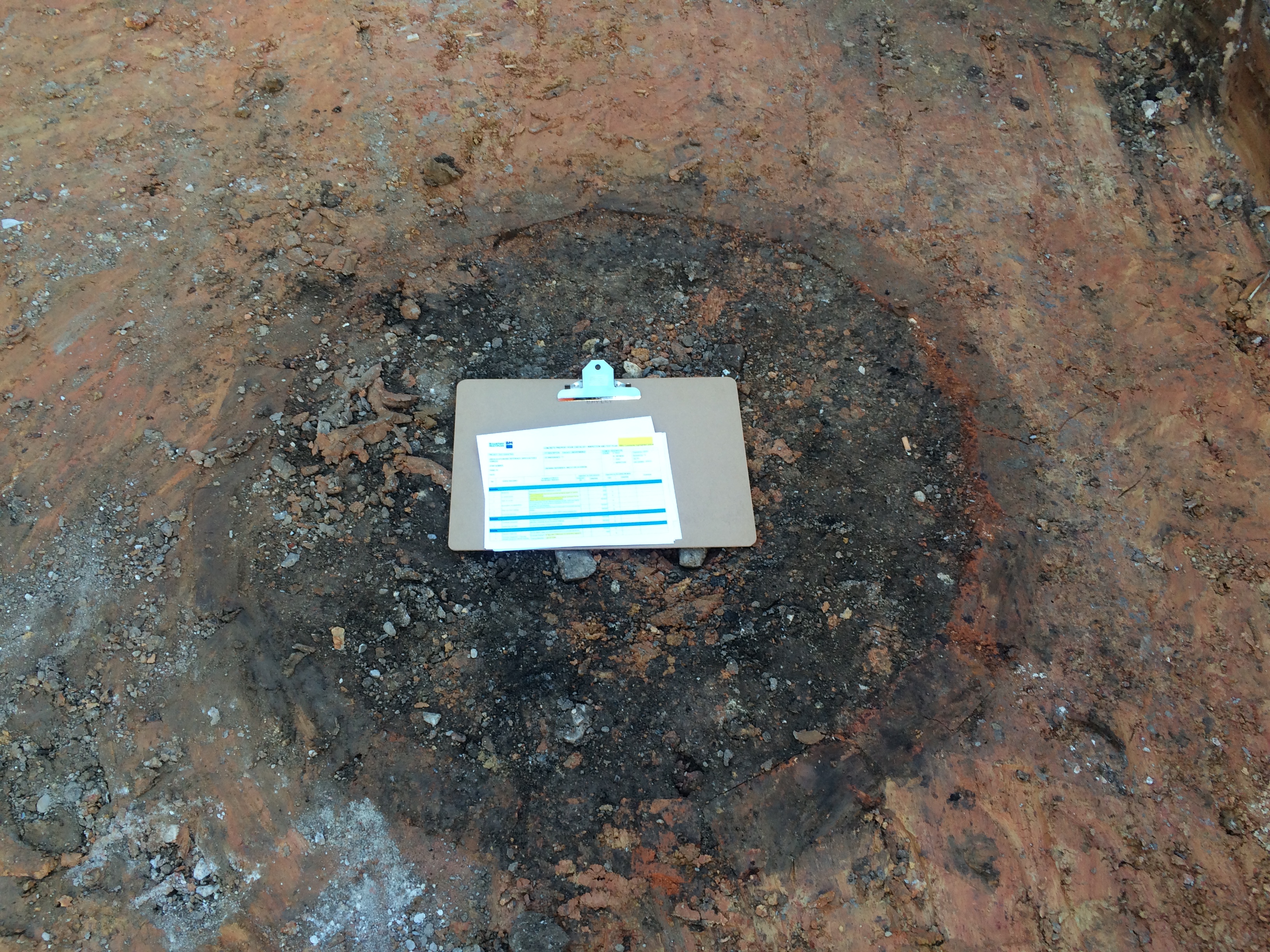
Unfortunately, not only did the well caused me to cease works whilst the Archeologists investigate its historical importance, but it is located exactly where a tie back beam is designed to sit and almost exactly where a pile was designed to sit.
Fortunately the well issue has now been resolved. The Archeologists have conducted their assessment and have allowed us to continue and the clash with the beam and pile has been avoided. The well can be excavated to a reduced level sufficient enough to allow the tie back beam to bridge across it. The pile was required as part of a temporary piling bridge allowing us to use a 30t piling rig alongside the shoring wall. As a result of a separate issue, we have redesigned the foundation piles in this area, allowing a 20t rig to be used. The surcharge load resulting from the 20t rig can be resisted by the shoring wall without the assistance of a temporary piling bridge. The bridge and its piles are therefore no longer required – catastrophe avoided.
 Holdfast Training Services Trial Blog
It’s always a shame when Breweries cease to exist. Anyway, how did you find the productivity and urgency of the Archeologists? We had some on site over here and they took months to document a tiny wall. Its important stuff but there priorities are very different. Watching an old, embattled ground works supervisor ‘discussing’ delays to his programme with a 21 year old archeology graduate made for an interesting dynamic.
The archeologist took a week to visit site but resolved the issue in a few days. It turned out to be a relatively small delay.
What was the total lost time? What does the contract say about this sort of stuff? And how much did someone have to pay for the archaeologist’s time? And who paid for it?
And I disagree that a catastrophe was avoided – the brewery has already gone!
Just over a week was lost, but it turned out not to be on the critical path, but that’s another issue. The works which are taking place around the heritage site are under a provisional sum – the Client paid.