Farmyard Acceptance Test
Aiming to broaden my attachment experiences, I volunteered to be the client’s representative for witnessing a Factory Acceptance Test of a Medium / Low Temp Hot Water plate heat exchanger set being installed as part of another project.
Perhaps naively, for a piece of equipment coming in approx. £80-100k I expected the factory to have a roof, floor, some walls and a clean(ish) environment. Instead, I met the fabricators on a dusty farm outside Basildon in Essex. I half expected Del boy and Rodney to come around the corner to take me through it.
It turned out that, despite first impressions, they had done a reasonable job spatially, improving what were very cluttered design drawings into a much better arrangement from a maintenance point of view. Valves and key items such as the distribution pumps and dirt / air separators were much easier to access and remove if required than in the original design. Having said that, all the equipment was stored in the open air (in a working farmyard), almost every pipe viewed was surface corroded inside, and the minimum design separation distance of feed and return pipework connections in the header had not been met.
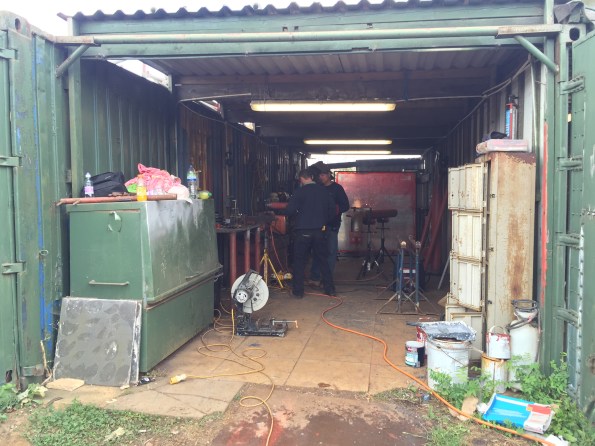
Welding workshop:
Internal corrosion:
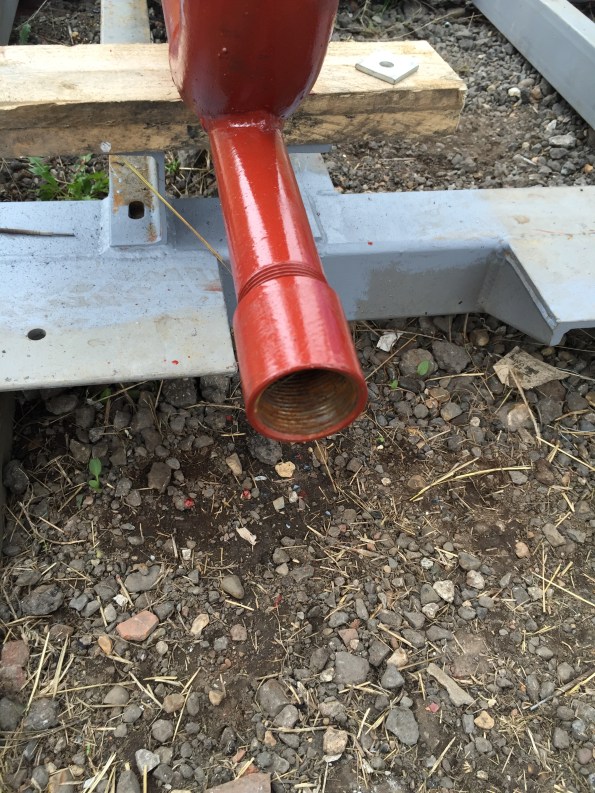
I registered all issues into a report for review by the Contractor and the wider GAL project team and requested confirmation of remediation plan for the internal corrosion of the pipework and protection of the equipment from further weather damage.
I’d be very interested if anyone else has done a FAT on a similar system and what the construction environment was like? Also, any views on the significance of rust inside nearly all the pipes – I haven’t dug into the design calculations of the system but I imagine the pumps were designed to meet certain frictional losses which would have been increased from the corrosion to some extent? Could a decent cleaning flush when installed with subsequent inhibitor application during installation be sufficient to smooth / protect the internal surface?
Plate Heat Exchangers (painted blue):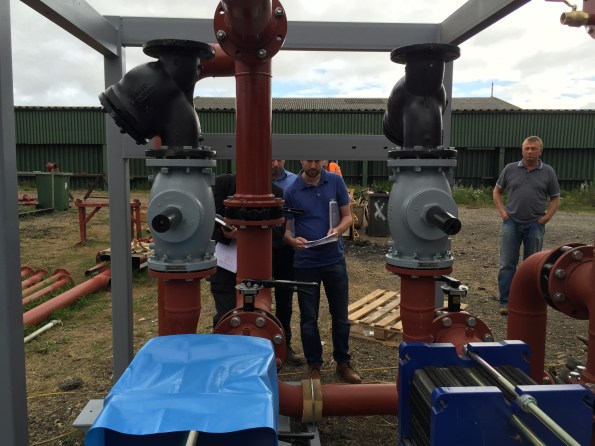
Separately and in an unfortunately similar vein to Kuki’s death on site blog, one of the baggage handlers lost his legs the other week. He was breaking strict protocol by stepping between baggage dolly’s (trailers), when the tug pulled away and he got dragged under one of the dolly’s. A sad reminder of potential catastrophic result of complacency in the work place.
 Holdfast Training Services Trial Blog
Hi Stu,
Although I’ve never attended a FAT I did get to visit Skanska’s factory where pre-fabricated low temperature hot water and chilled water plant skids were manufactured. The factory environment certainly wasn’t a farm, but wasn’t exactly cutting edge, just what you’d expect to find in a trading estate in Slough. Do they have the ability to X-ray their welds? What were you checking for other than a visual inspection?
Battersea suffered from the problem that our pre-fabricated equipment left the factory in good condition but was then stored badly away from the factory (end caps removed from pipes, etc). This led to some internal corrosion like you’ve identified. We then had an instance of bellows on 600mm diameter pipework failing during the initial pressurisation. When the bellows were replaced it came to light that the rust and detritus in the pipes had formed a slurry in the bottom of the pipes. The view was that although the situation was’t ideal it could be solved during pre-commissioning flushing. The durations required for each stage of the flush would have to be increased, which wasn’t ideal as the project was already behind schedule and so the commissioning programme was under pressure to be accelerated.
You’ve mentioned the manufacturer has changed the layout of the skids for the better from the design drawings. Any more detail on this? Did they get their amendments approved in advance? Have they got a design portion? This sounds far too proactive and won’t catch on. My experience of the construction industry is that they’d of potentially made more money by building exactly what the drawings show and then re-working the layout when everyone realises it doesn’t work.
Rich,
Thanks for this. Whilst the FAT wasn’t for one of the projects I am working on ( I was attending in place of a PE on leave), I will be following up the outcome and installation of the skid onsite. Thus I will be able to check what measures that project team have put in place to ensure that the flush has sufficiently removed corrosion slurry from the internals.
In answer to your other questions, yeas the final design arrangement elements were included in the manufacturer’s package, and yes, non-destructive testing of welds has been stipulated as required, though I am not sure where they intend to conduct the tests – there were no facilities at the manufacturing site.
Stu, we had a similar issue with corrosion of some pipes left outside at the Skanska Fabrication building in Slough. The 400mm steel pipes were left outside unprotected. The client complained and instructed Slough that all pipes with corrosion were to be removed and replaced at no cost to the client as it was the fault of the sub-contractor and could have been avoided. Have you considered rejecting the parts and asking for replacement at no cost? Check the contract documents as I am sure they will be a section on protection.
If they will be used to transport domestic water then they will definitely need cleaning and treating before use. In terms of the physical effect of the rust, I would not be concerned as it is now my experience that most pumps are over-sized to allow for design changes such as additional elbows and fittings and so the system should have no issues dealing with the addition pressure drop due to corrosion.
How were the flanges? Leaking could be a bigger concern.