‘ealth and Safety gone mad
I am trying to complete the mountain of paperwork required to get permission for a sub-contractor to start on site. One of the checks is to ensure that the workers have valid medical certificates to operate safety-critical plant equipment. Anyway these medicals are valid for 3 years but some Health and Safety ‘ninjas’ on my project have stipulated that all medicals must have been completed within three months of starting on site. the subbies I am working with all have certificates that will be 3.5 months old upon starting.
So quite rightly the sub-contractor has challenged this requirement since if this was the case on all sites, then companies would have to have their workers examined up to fours times a year – 8 times more often than an airline pilot! This would also incur additional, unnecessary cost that will inevitably be passed onto the Client.
So I challenged this rule and asked whether it is based on any form of science i.e has research shown that those with a recent certificate have less sick days. The answer was no – the decision was made during a meeting and the figure of 3-months was plucked out of thin air and agreed upon.
You may be able to tell that I am finding this kind of ‘golden plating’ frustrating and so try to challenge it wherever possible.
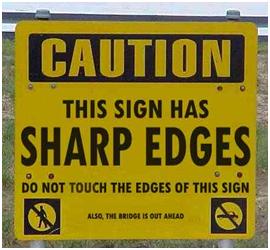
Anyway, after challenging this with the health and safety team, I have secured approval for the subbies to start on site.
Has anyone else come across similar examples of the H&S Team unnecessarily gold plating the H&S regulations without any fact or logical reasoning behind it?
 Holdfast Training Services Trial Blog
Gary,
I’ve seen a fair bit of this on my site. I think there is (an element of) logical reasoning behind it, but it’s certainly based on risk avoidance rather than risk management.
We have a similar 3 month requirement for safety critical roles, including all of our divers, whereas normally divers need only an annual medical. I think one of the contributing factors is knee jerk reactions from 3 parts of a JV. Mine is a JV between Costain, Vinci, and Bachy. There are a number of company policies that have emerged from incidents. Johnny’s safe batter angle is a potential example (although I’m just guessing here). Costain have had incidents with underslung loads from forks – now banned, Vinci have had incidents with container doors slamming – now all containers are being fitted with lock outs, there are many more examples. In my JV (as opposed to a lone venture), 3 times as many past experiences has led to 3 times as many random rules. I believe another factor is the pressure to raise the bar. The Olympics had to be safer than Crossrail, Tideway has to be safer than the Olympics. This means less LTIs more health monitoring, etc. Consequently I see a lot of ‘improvements’ for reporting purposes rather than for a benefit on the ground.
We’ve also had a lot of complaints from suppliers and sub-contractors, and whilst I can understand where they are coming from, in our case the requirements are in the Works Information, and they are deemed to have priced for it. The Client understands the additional cost and is happy to pay it.
However, when up against it to get someone started on site, it is justifiable to manage the risk and relax some of those random rules. As long as all parties are aware of the potential for additional risks, and they are happy with it.
Hi Gary,
Remember on the SMSTS when we looked at ‘what’s wrong with health and safety?’ and talked of ‘unnecessary paperwork’ and ‘misunderstand/ misinterpretation of what the law requires’? This sounds as if this is a case in hand!
What was the Principal Designers view on all of this?
Common sense vs ……………………………..?