Contract vs Common Sense
Over the last few weeks the tunnel ventilation team have been battling the Bond Street Station (BOS) prime contractors on the captivating topic of ‘floor screed’. I think that this is a good example of working to contract rather than common sense… one of many examples on site.
The station design includes a non-structural screed finish to the plant room floors. The main items installed in these rooms are the permanent vent fans, weighing 9 tonnes each. The fans will be in situ for a design life of 25 years, and impose horizontal (thrust) and vibration loads onto the structure through floor fixings.
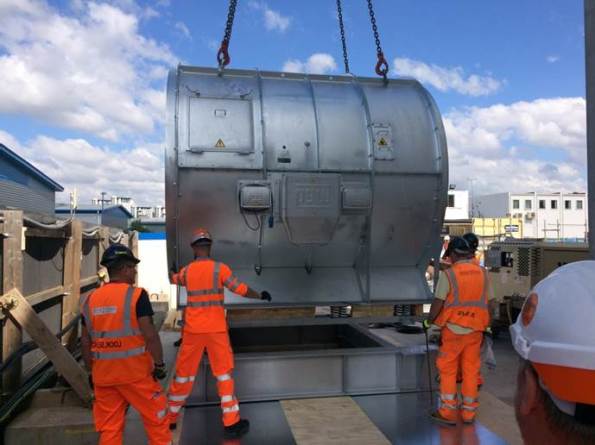
Tunnel vent fan (Horizontal Installation)
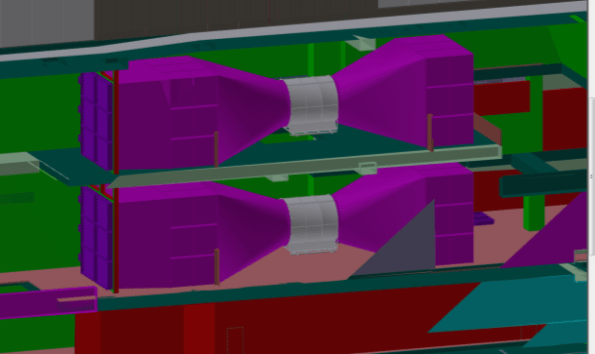
Graphic of the fan installation at Bond Street. The peach-coloured floor is currently being covered in a non-structural screed.
It doesn’t take a civil engineer to see that a non-structural screed will not stand up to this punishment for the station design life. However, despite numerous meetings pointing out the issue the station is carrying on regardless, and this week poured the screed for the plant room floor.
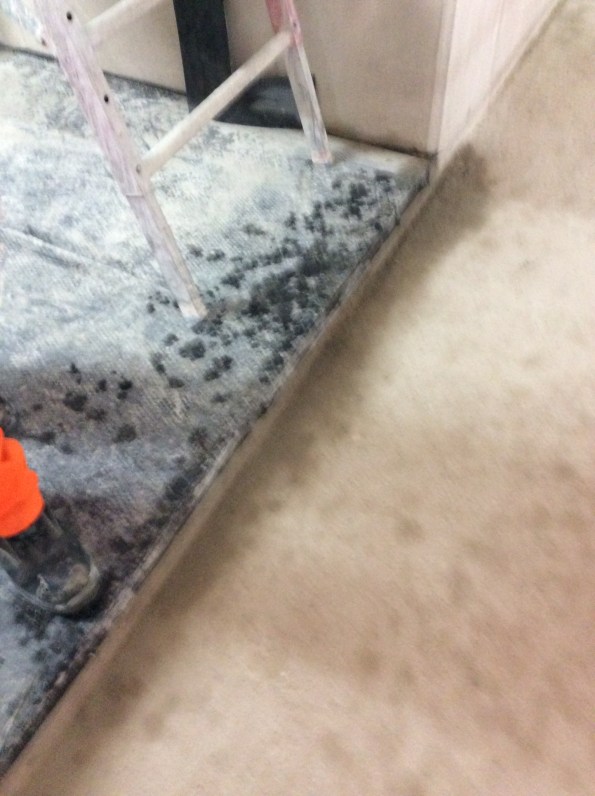
Image of the non-structural screed – note the lack of reinforcement. Please excuse the terrible image quality.
Why is the Bond St station working like this? A few theories:
- The contract incentives are linked to a finished room spec. It is easier to re-work than change the contract, as the commercial department works at a glacial pace.
- It is a lot of effort to search out the information on tunnel vent equipment, and involves liaison with my team. It is easier to claim ignorance, throw the screed finish in and then get money from the client (read taxpayer) to sort it out afterwards.
- The station construction is currently running with about 4 months delay; being instructed to strip-out finished work gives them a solid ‘arse covering’ excuse with the client.
The main contractors are rigidly working to the contract, and the client is unable to co-ordinate all of the separate designs and interfaces between contractors due to the sheer volume of work. I don’t think the client is innocent in all of this, they are slow at issuing instructions and slow at issuing notices to stop.
I expect they will be taking a concrete saw to the brand new floor covering in the middle of next week. Welcome to Crossrail.
 Holdfast Training Services Trial Blog
Mark,
So you’re not with a Principal Contractor, or is this in fighting between departments?
I’ve had some similar issues between us as PC and the marine works subcontractor, but on our contract we’ve been able to use verbal instructions. We have one lead PM per work package who can amend the written instructions with a verbal instruction, and they then follow this up with a written confirmation of verbal instruction (CVI). This has helped us to ensure that works continued whilst we clarified contract issues rather than waiting for our “glacial” commercial team to catch up. For example there was uncertainty over whether the scope of the site road surfacing included picking up the footpath drainage (we believed it did, the subbie thought it didn’t) so this was instructed with a CVI. We needed the work doing anyway and were happy to pay for it. The commercial teams could then butt their heads together for whether it actually constitutes an additional instruction or not.
Clearly there is a risk with this, but the package managers have all been around the park a few times and are confident that they can manage this through the spirit of the NEC contract and their relationship with the subbies. However, to use a CVI carelessly could cost a lot of money – hence I’m steering clear of them.
Tony