REACTIVE NOT PROACTIVE
A series of events has unfolded over the past few weeks which has reinforced my utter contempt for the reactionary nature of site works; a common theme on Phase 2 WhatsApp chat. BPS Phase 3 basement is a 13m excavation, 16m in some locations. Along the southern boundary (adjacent to the Northern Line Extension site) the embedded retaining walls used are sheet piles. The contractor is unable to use vibratory hammer techniques to drive the sheet piles due to the proximity of the largest brick clad structure in Europe (Battersea Power Station). The 23m long sheet piles are thus driven using a silent press. The geological succession is typical London stratum. Made ground (crap), Terrace Gravels (medium dense sandy gravels – very porous), London Clay (very stiff – not very permeable) and Thanet Sands (very dense silty sand – porous). Due to the required toe depth, in the London Clay, pre-augering and water jetting techniques must be used. For the civils students the problem bears remarkable similarities to Ex COFFER.
The following photos below provide an indication of the works.
 Pre-augering Works
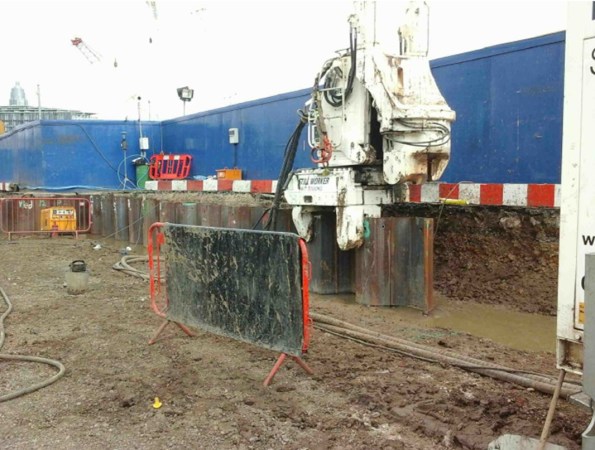 Sheet Piling Works using the silent press
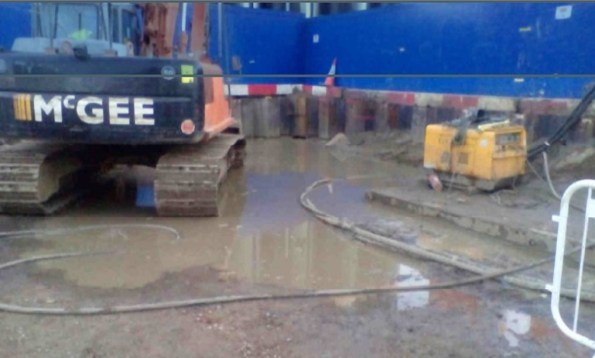 The aftermath of Water Jetting
The Inevitable Collapse
The previous photos show the steep batter adjacent to NLE site and there is a risk of undermining the adjacent site. However, sheet piling works continued whilst the contractual wrangling from the piling contractor and ground worker simmered in the background. Both parties claimed the other was responsible for fixing the problem. The inevitable happened and the batter gave way, undermining the NLE site, next to Polymer tanks. This incident has added further friction and incurred additional expense as BPS Phase 3 must repair the damage to NLE site. All in all a foreseeable incident that could have been avoided if stakeholders had looked beyond their blinkered “it’s not my responsibility” approach.
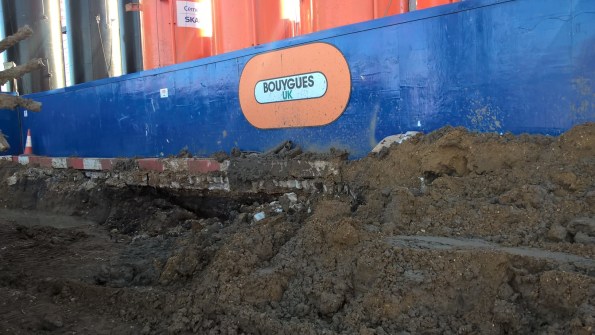 Batter Collapse
My original comment: “utter contempt for the reactionary nature of site works” may seem a little unfair given the circumstances detailed above. Never-the-less I think my comment is well founded given the final photo taken AFTER the batter collapse which was the piling contractor’s response to dealing with one of the contributing factors (disposing of the excess water)…
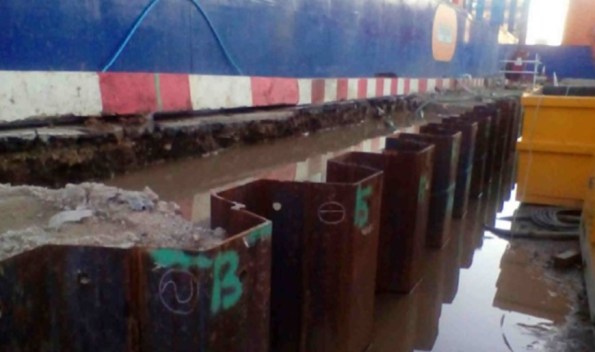 The contractor’s solution to the excess water – discharging the water behind the sheet piles further washing away any batter! However in their defence apparently contractually: “It’s still not their responsibility“
 Holdfast Training Services Trial Blog
Hi Rich, Great blog. I struggle with the subcontractors response (as I imagine you did). Surely they are responsible for the consequence of their actions and much will lie in what a competent contractor could reasonably expect. I would say that if you hose down a top soil bench with water is inviting a collapse and they should have known this. This strikes me as an issue of lack of supervision.
So while BPS Ph 3 are liable to their neighbour. Your sub-contractor is liable to you. I would put their PI on notice.
Rich,
Its great to see this issue from the other side of the fence. I actually hosted three of your french colleagues to go see the chasm that had opened up on our side of the hoarding. The ground crack is about a metre deep and 200mm wide but does run under the kentledge blocks. Their reference to the ‘phenomenon’ was interesting.
On the plus side, no one here is particularly bothered as long as it is repaired and the stability of the polymer silos is maintained. I assume that it is Bouygues that have taken on the sheet piling then? and not one of the sub-contractors. The water behind the sheets is concerning, as it will now hold water. I think i might check the hoarding again.
Also, I believe we (FLO) need to accept the design for the remediation and the batter before it is actually repaired?
So Contractually.
Nothing sits with BYUK. We are still operating under LOIs. We may sign a Construction Management contract sometime. Both Trade Contractors are working directly for the client and we are trying to manage them – without having been party to their contracts!
Keltbray Sheet Piling (KSP) are conducting the works as a Sub-contractor of Balfour Beatty Ground Engineering (BBGE).
McGee (ground worker) are providing the machines in attendance.
McGee are adamant that the pre-augering and water jetting works (KSP and by virtue BBGE) construction methodology are destroying the pile mat above and beyond normal pile mat maintenance (which is typically scraping the pile mat and rolling as required). This particular remediation requires excavation, new material, reinstatement and compaction. BBGE are adamant that the methodology has always been stated and all were aware and the risk is therefore not theirs.
If I am honest I am sympathetic to McGee’s argument. One difficulty from our perspective is that regardless of what the Construction Management team (us) think the site instructions must go through a convoluted system before being signed off:
1.BYUK – CM
2.SLW – PM
3. AECOM – Financial Auditors
4. Finally most importantly the client!
Therefore NOTHING happens quickly and to be honest we are in a crap position – grief from contractors, grief from the client and no “levers” to exercise any authority.
The problem is selling the additional costs to the client – From his perspective McGee bought the risk with a £161K sum for pile mat maintenance.
Who’s the Principal Contractor? i.e. where does the buck stop if injury/death arises whilst the haggling goes on? My guess is that with no contracts in place the client has similarly not dispossessed themselves of this responsibility. This would suggest that you cannot manage the operatives presently working on site and, if you have legal possession of the site, they shouldn’t be there without you either handing possession to them or to client to allow access to his work force. Your role under a letter of intent without engaging the subcontractors can only be as advisor to the client. As a professional engineer you cannot cease to be responsible for H&S issues you observe, you simply have to manage them in whatever manner is appropriate to your position. In this case, surely it is to notify the operators and their employer (the client) of your concerns i.e. fire a warning letter to the client in the first instance and now an event has occurred refer to the first letter and ask him to ensure swift remediation. Or am I reading this wrong?
PS – Jonny looks like we have some more difficulties on the next return!
There are a few things going on here and I’m confused by all of them:
1 If I recall your site, RIchard, the boundary in the photos is about as far form the Power Station Turbine Hall as you can get….but you are still pushing the piles ….errrr…..why?
2 Let’s separate jetting and pre augering; Jetting first///generally reduces the voids ration and increases( albeit temporarily) the pore pressure in coarse grained soil so assists the push in the Terraced Gravels- these happen to be relatively permeable so why all the water?
3 The augering -reduces the mass strength of the Clay so permits the push- I had this last year have yet to find answers to the Q- what’s the effect on the design properties? You give a 20% stiffness reduction in your TMR3 …but no references!!
4 Jetting will have no effect on this stratum . Adding a modest amount of water will BUT your 20% would increase and the strength would certainly reduce as the clay softened…….
SO I am perplexed because it looks like they were trying to jet the clay and just getting a shed load of water returned?
As always it is necessary to ask the ‘experts’ what they are actually doing…if they can’t explain simply…they’re no experts
Wooooaaa
Both Barrels from Statler and Waldorf!
Taking Rich’s post first.
You are correct we managed as best we could throughout the process and we issued two Suspension Of Works Notice to halt dangerous activities.
What is frustrating is throughout we have asked the ‘experts’ what is and is not safe and have been assured all will be OK and the batter does not need to be reinstated… Even going as far as stating it was impossible to complete with a batter.
This statement by the experts was obviously to aid their programme and to avoid slowing their progress. The batter has now been reinstated and (contrary to BBGE original statements) the piling is able to continue.
The piling contractor is also now removing all the excess water (as opposed to storing it behind the piles).