Duo – Central Park; key achievements…
Here are the key achievements of the Duo – Central Park project during my attachment so far. It hopefully provides Phase 1 students with an insight into the works packages Phase 2 can expose you to, when dealing with early structural works.
Feb – Apr 16. Although Multiplex had won the tender, several months past before a head contract was agreed. Site establishment and ‘early works’ commenced under a pre-contract budget. With the bulk excavation complete, the pre-contract budget allowed detailed excavation of footings to commence and the completion of general site establishment including temp services. In the meantime, project staff engaged in value engineering, rationalising, reviewing drawings and the identification of method statements based on anticipated buildability issues.
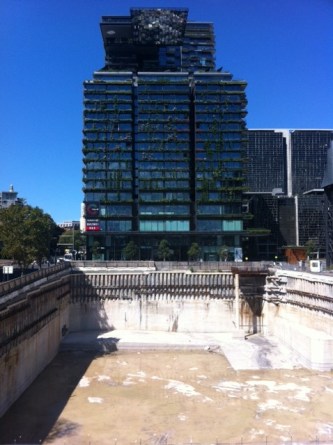
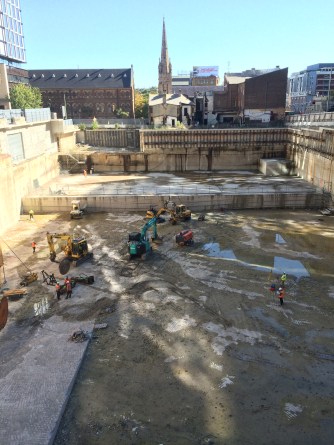
May – Jun 16. Contract signed. Detailed excavation continued and two tower cranes were installed. Whilst the majority of the project progressed through the pouring of footings, columns and SOG, my focus was on temp works in and around a heritage building. These temp works were required to provide structural stability to the heritage building before work on the new, adjacent structure could begin. These works involved underpinning and structural steel supports. I also had to identify methodologies for these key areas.
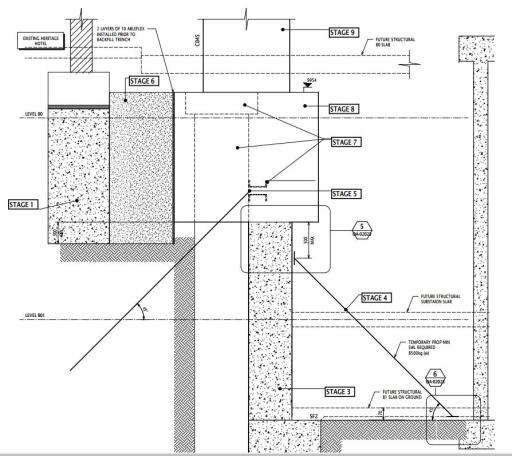
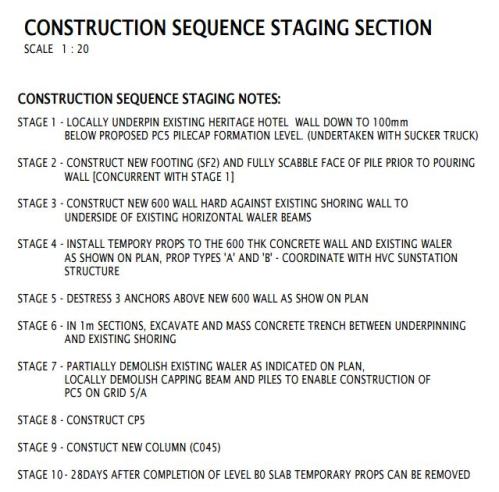
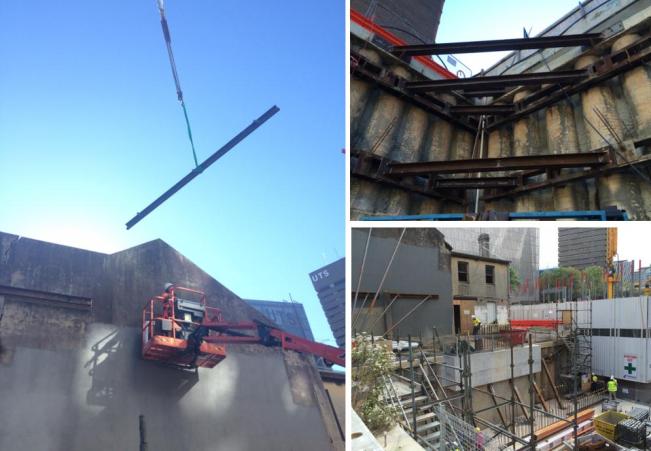
Jul 16. With the heritage building structural works complete, we progressed with piling and pile cap excavation.

Aug – Sep 16. With the piling out of the way, works in my AOR have progressed with the construction of four pile caps, a lift pit, PT slab removal and in-ground services.
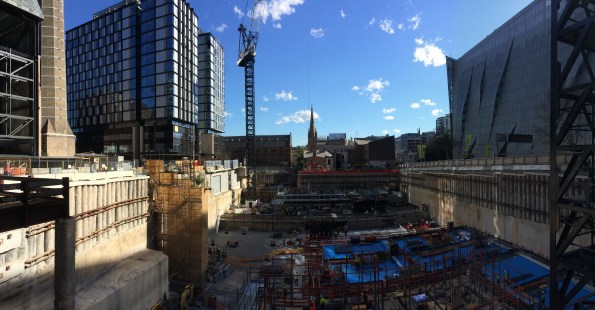
Oct – Nov 16. My final couple of months have seen the completion of the following works in my AOR; SOG, columns from Basement to L1, a lift shaft and two suspended slabs. I have also completed the removal of HAZMAT (asbestos and lead dust) from the heritage building.
Early structural works provide exposure to a wide range of works packages. The individual can gain experience in ground investigation, piling, mass concrete, reinforced concrete, prestressed concrete, structural steel and more. The site experience goes beyond these packages to include high risk workshops, method statements, contract admin and stakeholder management to name but a few. In my experience, being a site engineer is like being a Tp Comd. I view my PM as my OC, my site manager as my SSM, my project engineer as my BGE / OpsO, my senior site supervisor as my staff sergeant, junior site supervisors as section commanders and the subcontractors as soldiers. To quote Gus, the only difference is ‘soldiers follow orders and require far less supervision’. Finally, for anyone thinking of working on a structure for their Phase 2 attachment, I think the course prepares you extremely well but I would have benefited from being more efficient at reading structural drawings. I have sent a drawing exercise to John Moran, not a bad place to start. Oh, and if you can, avoid scheduling reo like the plague!
 Holdfast Training Services Trial Blog
Andy- I think this is a really nice summary of your work on site.
As the beneficiary of your reports , the particular interest points have been:
a) The unusual half-depth anchored secant piled wall ( can be seen well in last photo);
b) The fact that the location of the tie anchors ( in the face shown in your second photo) snagged piles foundation that had to be drilling adjacent to the heritage stuff (at that end);
c) Just how recent ‘heritage’ buildings are in Australia!;
d) The Fred Carno temporary façade retention structure used for the heritage façade ( they obviously don’t do much of this!);
d) The need to cut through the anchor blocks of a post stressed slab extending out from an adjacent structure to trim back the slab edge( I think it is the one to the left in the last photo?);
e) The interesting load paths for the new structure incorporating some 15 m high columns with an over sailing edge to take the structure ‘over and around’ the heritage building retained below
There’s stuff I’ve no doubt forgotten but this is the type of list that plays well in review