Home
> Uncategorized > Formation level at Hinkley Point C
Formation level at Hinkley Point C
I’m currently not allowed to upload photos onto this site – I’m trying to sort out permission from site. So I will keep it brief until I can provide a decent intro to site with some phots. I just wanted to show the formation level on the site where I will be managing the install of the main site office (OIC portacabins). There is a 48hr exposure rule due to oxidisation of the ‘blue lias’ rock which can become weathered very quickly, so I’m lead to believe. So the inspection and blinding is fairly slick to minimise further excavation to fresh rock. Is this level of cleaning excessive in your experience? Or good practice? (Conscious that this is a picture – but it’s just stones) Dan Porteous.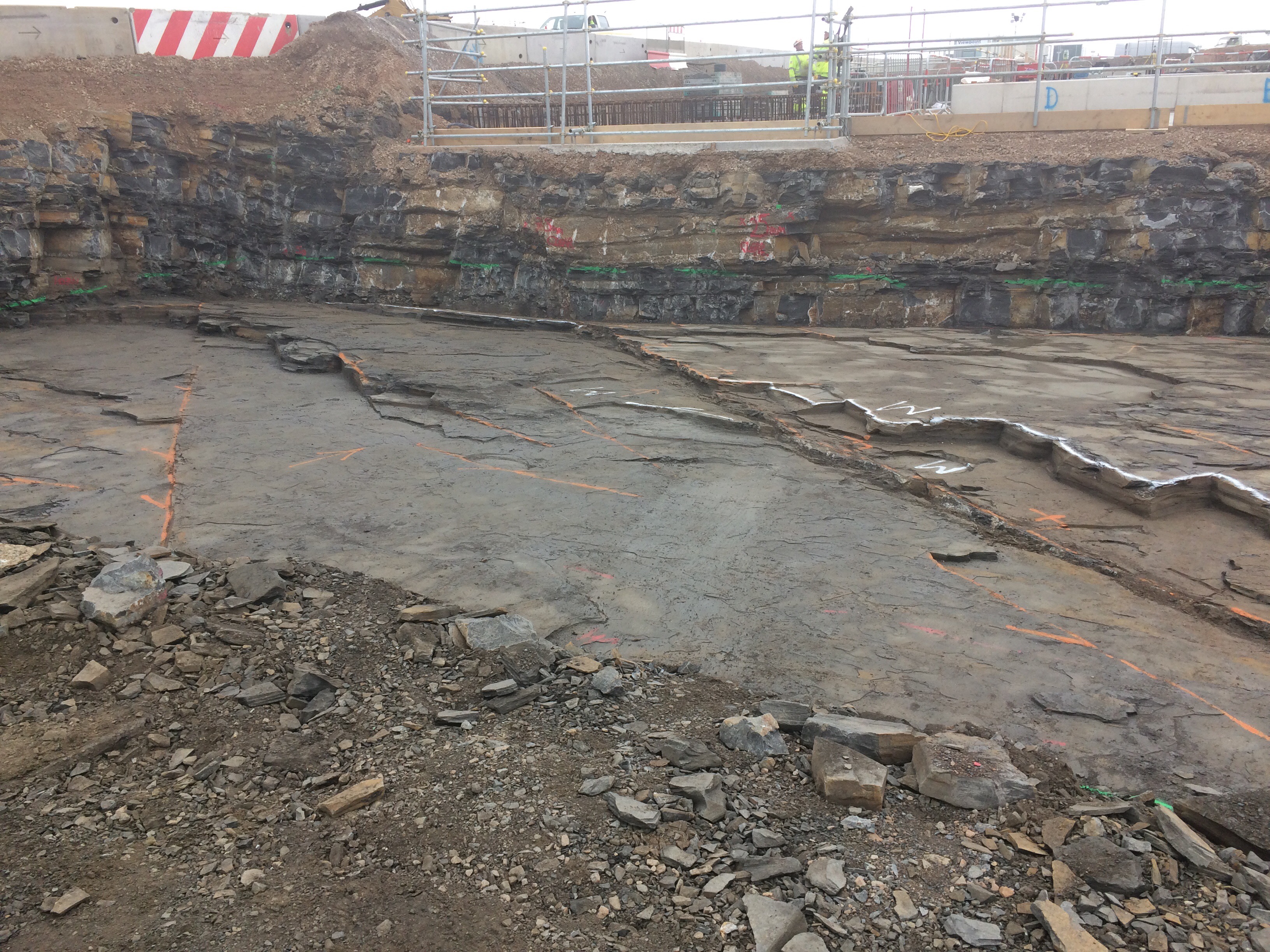
Categories: Uncategorized
 Holdfast Training Services Trial Blog
Dan, I was hoping for a pic of a monstrous machine….
All in good time.
Dan, interesting site. I would think very few of us have experience of constructing directly onto rock (I could be wrong). That’s because a fair number of us in the UK end up in London where we spend our time trudging through Boggy London Clay. Which coincidentally is a nightmare to get off the boots so I think you’re on to a winner.
That said in my experience blinding is rarely structural, it simply provides a better working surface to avoid us all getting stuck in said London clay when fixing rebar mats. Once you’re porta cabins move on in the long term is the area being used for any other permanent works? If so understanding the load path of the structure above it, and therefore structural role if any, of the blinding, will give an indication of its importance. If its not structural then that prep is probably excessive, we just ditched our blinding directly onto unprepared London clay as spare concrete material became available .
The 12x4m ‘modules’ will be largely stripped out with the staircase and lift shaft elements incorporated into a 110 person permanent office structure used for when the station has outages and therefore more operators on site. The modules themselves are more substantial than portacabins and wouldn’t be much different to those used in SLAM accommodation. Ref blinding, it is pretty high quality stuff as the batching plant only produces 2-3 mixes and the blinding is often the same material as that poured in the foundations. The strip foundations are to be broken out at lifecycle end – which could be a bit of a nightmare. Often ‘substitution’ concrete is used here to bring the level of competent rock up to formation level.
And OIC Porta cabins, nice tick in the logistics attribute for CPR!!!!!
Looking at the Photo I presume Blue Lias is a sedimentary rock?
Assuming this to be the case I suppose the quick turn around is not that surprising as the blinding will seal the formation level. In the Clyde area many of the old ship yard docks are founded directly on Mudstone and the upper layers of it are crap – when disturbed
Dickie, yes it’s you’re right there and it is limestone layers between mudstone. And as you say it turns to muck when water gets to it and is mostly weathered on top and less so with depth, although with the folds and faults here this isn’t always the case. On the coastal cliffs on site you can see the harder limestone layers have remained where mudstone layers have weathered in between.
Aye-up Dan!
I think that the issue is the presence of pyrites in the Lower Lias Clay.
In the presence of aerated water this can generate thaumasite and this has a pretty deleterious effect in non sulphate resisting concrete.
I think there can be some loss of shear strength- but this is a rock and therefore the latter is unlikely to be serious
So the surface probably needs to be sealed to prevent the access to running water. If I were placing temporary buildings on this I would blind with an SRPC – other than that I agree with Mr Docker as to what blinding is for
My tuppence I disagree with JM.
Why waste money on SRPC on a blinding layer for a temporary pad foundation for some site accommodation?
The Pad foundation must have been designed to be resistant to the corrosive chemicals?
So just throw down 100mm of sub base, run the roller over it a couple of times. This will give you a level work surface and save some money for the Christmas function.
I am being a little flippant and I know there are a host of other good reasons for using the high quality concrete you say but my sentiment remains – why waste money on a blinding layer for a temporary pad.