I THINK THIS WALL MIGHT FALL OVER
Introduction
I’m currently on Phase 2 of the course in Sunny Australia. Hi.
I am working on ‘the Wynyard Project’ which involves building a new 32 floor tower over an underground rail station whilst renovating two neighbouring, heritage buildings.
Figure 1 – Wynyard Project architectural render
This wonderful story is about a risk I encountered when looking at demolition plans for 285 George St building (one of the two heritage renovations).
285 George St (figure 2) is a building originally constructed for use by Peapes Tailors but was then altered in the 70s as it was converted into offices. Substantial renovation is required to turn the building into modern office and retail space. Additionally, the building does not currently meet seismic codes or fire regs therefore vast structural alterations are required.
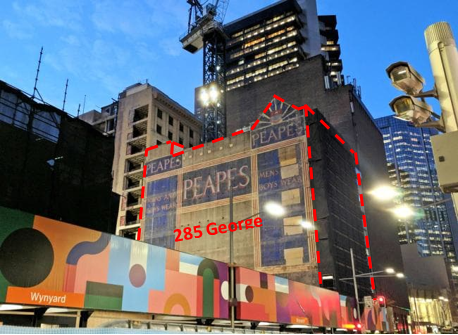
Figure 2 – 285 George St heritage building
The Plan
Demolition and structural investigations are happening concurrently and therefore it is important to identify risk and alter the demolition plans as we go.
In essence, the current demolition plan is to remove some roof structures, create penetrations through the building (for new fire stair, risers etc), demolish all internal fit-out, amend floor structures, and amend openings.
The Risk
I was asked to look at the material load-out for the staging of the planned demolition and as doing so, many risks popped up. In particular, I was concerned with the removal of Slab on Ground, George St level Slab and Wynyard Lane Level Slab (see figure 3, 4 & 5 (bottom left area of each)).

Figure 3 – Section prior to demolition
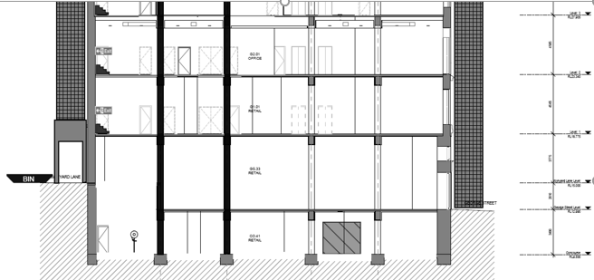 Figure 4 – Section post demolition
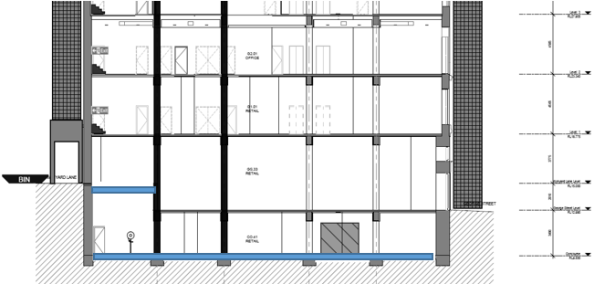 Figure 5 – Section post demolition with new slabs constructed
I believe the removal of the slabs causes several risks (the two major ones being the extended effective length of the columns and reduced number of ‘props’ for the external wall). Here I will concentrate on the risk at the Wynyard lane external wall:
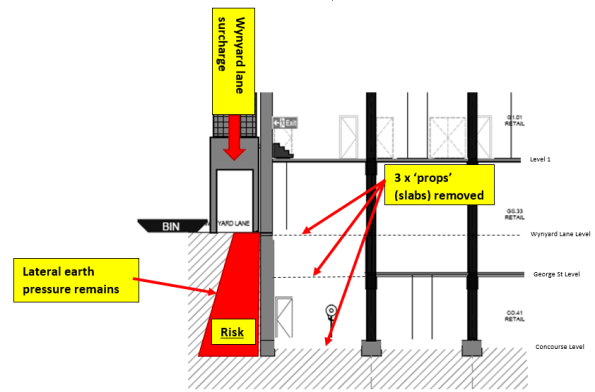
Figure 6 – Risk
I think this gives me two risks within this scenario (Agree?):
- Slide at the toe once slab on ground is removed. Therefore a hinge within the wall at level 1 will also be developed.
- If the foundation holds the toe then bending and shear stresses in the span of the wall will increase when the Wynyard lane and George st level slabs are removed (same forces left to right (Ka), reduced force right to left (slab restraints) = higher bending and shear stresses in the wall)
Is it really a risk?
Structural investigations are underway and no results yet received therefore some large assumptions must be made at this stage (when the results are complete, a structural consultant (Robert Bird Group) will assess the issue and design any temp works required). I have attempted a very crude calculation to see whether it is a substantial risk. I have thrown in some deliberate mistakes to enhance the learning experience for us all…
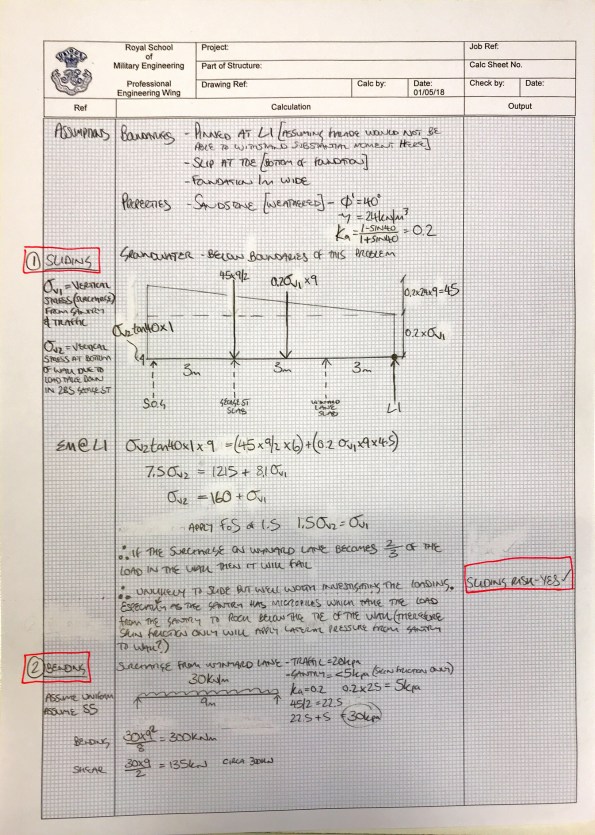
Figure 7 – Crude Calcs 1
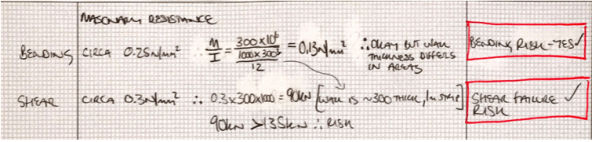
Figure 8 – Crude Calcs continued
Solutions?
Any ideas to mitigate the temporary (figure 4) and permeant (figure 5) risk?
Temp steel props during construction and permanently beef up the wall (reduces floor space/less money)?
 Holdfast Training Services Trial Blog
All good Rob
Usually you’ d get away with something like this because of the existing wall pre-compression.
This would normally be sufficient to mitigate the GEO risks ( sliding , O/T and base capacity) and the STR risks ( bending and shear in the masonry
I could not quite reconcile the calcs:
a) I would expect a pre-compression greater then 160kPa – I could not quite determine the wall height but it looks like 9 or 10 storeys including the basement That would give a greater line load at the base
b) I would expect the lateral stress to be lower than the 30kN/m indicated especially as the retained material greatly reduces the active side stress and the absence of gw pressure reducing lateral stress and maintaining the sliding effective stress.
You might often have difficulty determining strength values for old masonry .. there is some guidance in BS EN 1996 which permits adjust of strength depending on the mortar strength/using strength and masonry unit format