Archive
What goes up…must be reused?
I’m on Phase 3 with Arup’s infrastructure team looking at urban redevelopment design so this caught my eye and got me thinking…
An article popped up on the company internal blog asking for design and construction experience of pre-cast RC multi-storey car park (MSCP). It stated the project drivers being programme and durability. Nothing out the ordinary so far.
A response was received within minutes based on recent experience that clients are now more aware of their social policy/agendas (sustainability) and constrained investment potential in ‘fixed’ structures. They state clients are favouring semi-permanent and flexible structures over traditional builds with greatest possible design life. The example given (below) was a ‘shape-shifting’ and deconstructable MSCP as the client sees autonomous vehicles making a traditional MSCP obsolete within a decade. This suggests design for deconstruction (DfD) and adaptability has the potential to be as if not more valuable to clients than durability…
https://www.cbc.ca/news/canada/calgary/east-village-calgary-parkade-platform-mixed-use-1.4855681
Planet. The design for deconstruction concept is founded on waste reduction so sustainability unsurprisingly. Technological development and sustainability incentives (UN SDGs) are driving up delivery efficiencies. Time-down, Quality-up.
People. The designing-in of deconstructability needs to happen at the project concept stage. Are rapidly changing attitudes and wider socials drivers such as autonomous vehicles (excuse the pun) triggering strategies away from permanent structures? Cost down.
Profit. Are clients/developers seeing opportunities in the two paras above to turn a quicker and more efficient profit? T-down, Q-up, C-down = Profit-up
Has anyone experienced similar quasi-permanent structures or concepts in their attachments? Any key considerations?
I wonder whether there is even utility in the concept for Defence – quasi-permanent bases for a decade or two say e.g. to deal with re-basing issues? Knowing defence, I suspect for the near future we will see more erratic rather than slowly evolving cityscapes instead…
Marginal Gains….
I am now a couple of weeks into my Phase 3 attachment and while digging into some information on a project I am involved in I picked up something which I thought was quite interesting and worth putting out there for comparison against other design consultants.
Reading the Risk Assessment which was completed during the tender stage I came across an entry which highlighted a predicted profit margin of 60% as a risk and a comment which indicate this was an “aggressive” tender in the hope of securing the bid and a foot in the door for future works on this major project.
I was (maybe naively) quite surprised at this. Not having any experience of working in a design consultancy I didn’t really know what to expect, but this seemed a pretty significant margin. I had a chat with my design manager to get a better understanding of the situation and found out that actually 65 -70% is the normal range on projects and 58% is the minimum allowable margin.
I was curious to know how this bears up against other people’s experience, particularly on jobs in the UK and US vs Aus?
Stadium Porn
After a week of button bashing, trying to understand why Tekla was spitting out mental wind loading values on a prison block steel frame design, the following came as welcome relief…
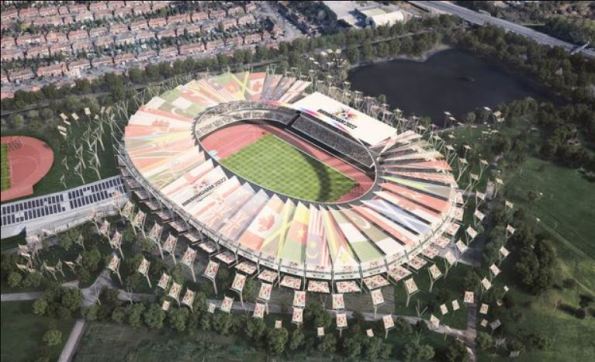
Fig. 1 2022 Commonwealth Games stadium artist impression
My phase 3 is with Arup and I am working out of their ‘campus’ in Solihull, Birmingham. Today the head of structures set the challenge of a concept design for the 2022 Commonwealth Games stadium. I wrongly assumed he was joking when he called everyone into a meeting room, handed out some rolls of tracing paper and declared “the architects arrive this afternoon, you have 30mins to sketch a concept for the new stadium, be prepared to present your scheme to the group and demonstrate how loads transfer to the ground”.
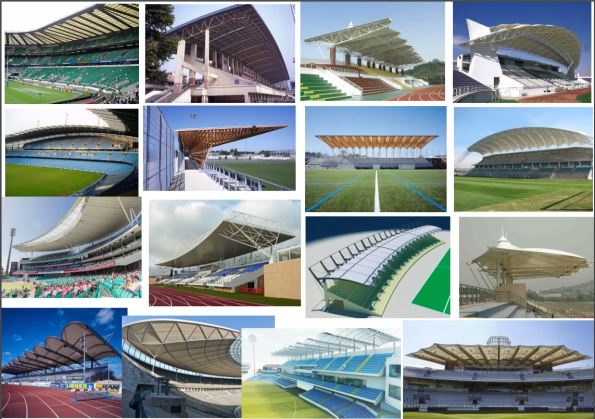
Fig. 2 Stadium porn
Obviously the architects are not coming until next week but it was cool to see the half dozen concepts get critiqued. We are not forecast to start developed design for a few weeks and there is still opportunity to take influence from existing stadia.
Has anyone been to a venue that impressed? The AAMI in Melbourne was used as a case study to showcase recent Arup success.
Please can you share your suggestions on here and I promise to credit you if it gets taken forward…
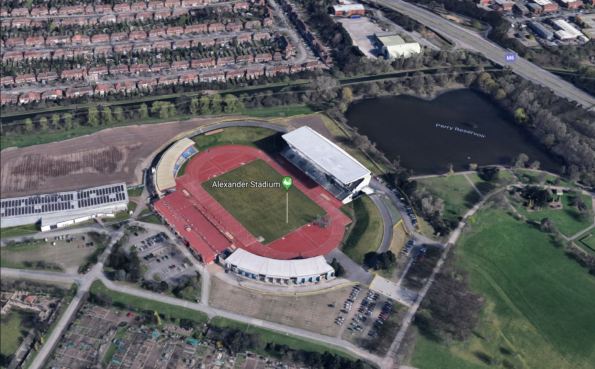
Fig. 3 – Google image of existing Alexander Stadium
Alexander Stadium will be redeveloped into a 40,000 seat capacity but has to incorporate the existing East Stand. Both the North and South stands will be de-scoped after the games to leave a legacy 20,000 seater.
Birmingham’s Alexander Stadium in £70m revamp for 2022 Games
A sign of the times….
A quick blog to share an event that happened this week in Melbourne, which reiterates the risks involved in design and construction. On Monday, I started my Phase 3 placement with the Transport and Infrastructure (TI) section of WSP. On Wednesday, a “bit of a flap” occurred in the office as an overhead road sign and part of the gantry collapsed onto a car (to note, there was no strong wind on that day). These links will take you to the news articles and dash cam footage from other vehicles travelling on the freeway. Luckily the driver of the vehicle suffered only minor physical injuries.
The freeway was re-opened to the public less than 12months ago following a $1.3billion upgrade and widening project. WSP were part of the design team and responsible for some of the gantry designs for Stage 2. CPB delivered the construction. Following the event the Client (Major Road Projects Authority) and the asset manager (VicRoads) initiated an immediate review of the full design documentation, construction documentation and remaining gantries to identify any additional risks (and also blame). Fortunately, for WSP, it turns out that this gantry is not one they designed – which was a relief for many in the office. The investigation is still ongoing, but it is believed the failure was in the gantry connections – either a poor design or not constructed to the design (current thinking is the latter and fault is with CPB QC procedures during construction). I will update the blog in the comments when the report comes out identifying the fault. As I start my first week in design, I thought this was a good reminder of the risks involved even with simple structures.
 Holdfast Training Services Trial Blog