Gas Holder Dumpling Slip
While we’re all sitting at home I thought I’d share this nugget from 2019 that made a little comeback in a lessons learned session we had before lock down. It is also an unexpected opportunity to use the word dumpling in an engineering context.
Back in June 2019 Keltbray were contracted to demolish two old gas holders in Sydenham. These gas holders are the large expanding “city gas” storage vessels that expand upward as gas is pumped in. The gas holders in question were of the “dumpling type” with a clay mound in the base centre of the gas holder (think the bottom of a champagne bottle). The gas holder is then partially filled with water to form an effective seal against the ground as gas is pumped in (see below).
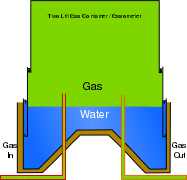
Dumpling type, two tier gas holder
As part of the dismantling sequence, the crown (lid) of the gas holder is removed, and the water and sludge is pumped out. On 12 June 2019, approximately three weeks after the pumping was completed on one of the holders, a crack through the dumpling was reported to WHP following heavy rainfall. However, the crack was first seen when the dumpling was first exposed; at the time, the crack did not alarm the site team and was considered superficial. The condition on 12 June, with the crack clearly visible, is shown below.


The next stage of the demolition would have placed plant on and around the dumpling to remove the timber and steel crown frame. The walls and main steel frame are then removed and the site capped (it is accepted that there will be major contamination beneath these sites and that redevelopment is restricted). Fortunately the advice from WHP was to halt the plant works and investigate the crack.
Shortly after these photos were taken the crack slipped further causing a noticeable movement in the dumpling and partial collapse in the timber frame (see below photos from 17 June 2019).


This is the first time SGN (the Client) have seen such a collapse in one of their decommissioned sites and it is a new to Keltbray and WHP. Simply put, the geotechnical risk in demolishing such a structure (less contamination) had not been considered. The clay in this dumpling has spent the last 40 or so years in a totally saturated condition then was quickly drained and allowed to dry out before being partially re-submerged during heavy rains.
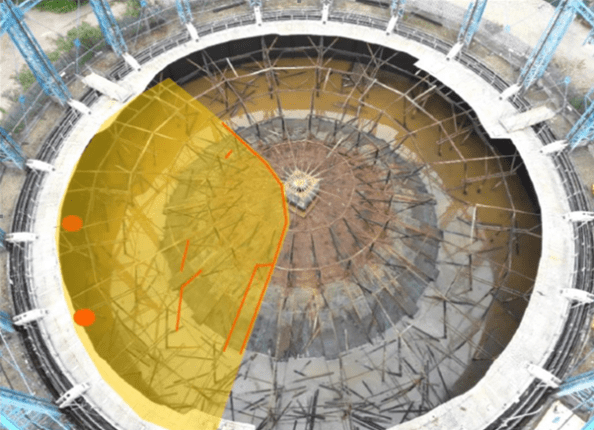
Extent of slope slip and visible frame collapse
Fortunately no one was injured but this was perhaps narrowly avoided after the first signs of the crack had been ignored by the site team. This is an important lesson for all involved and shows the treacherous nature of clay (or the ground in general) under changing ground water conditions, even when you think there is no geo risk.
 Holdfast Training Services Trial Blog
Gas dumplings are generally not clay but naturally occuring material covered in puddled clay to achieve a water tight seal. Stability throughout the working life is assured by hydrostatic pressure on the surface. Remove the active water pressure and then saturate the retained material through a cracked puddle clay seal and you have what you would expect!
Absolutely. When dissected into clear steps it is an obvious risk but one that sidestepped a lot of experienced engineers who were busy looking upward at the demolition job and not thinking of the ground.
(You have to get a violin out then, off you go with a little Dvorak… no violin? https://www.youtube.com/watch?v=YNxXf3p0isQ)
When I were a lad, I used to walk to school past these gas holders…’t save ‘tuppence for sweets)……until around 2000 all of these old coal tar gas sites were left vacant. It was because, until around then, the full source-path-receptor model for contamination risk hadn’t been suggested. So all we had was a site with lots of source. You find that the value in moving these things is now by receptor management…so if you bung a JD sports outlet on it (you choose):
a) the users of the shop are not considered worth protecting and/or ;
b) there is no risk of plants bringing nasties to the surface in gardens (phytotoxiity)
So the S-P-R chain is cleverly broken by the use of JD Sports and Mc Donald’s outlets….hoora!
No idea about the geotechnics of …errr….dumplings though…..in fact the only dumplings we had back then ( are you still scratching away on that violin?) were made of mixed sand and rubble and….on and on…..