Archive
Is the Target Flawed? (≈ 5 minute read)
As 1 of 12 benefits forming the business case for the current project I’m working on it was identified that the installation of more efficient primary plant (CHP and boilers) along with more sophisticated and energy efficient control systems, pipework insulation, wireless thermostatic radiator valves (TRV) etc. would reduce the carbon emissions of the building.
Based on the improvements mentioned above and gas and electric meter readings of the building it was estimated from the antiquated 2017 SAP carbon intensities (0.218 kgCO2/kWh for gas and 0.399 kgCO2/kWh for electricity) that a saving of 554 tonnes of carbon per annum would be achieved, this figure is enshrined in the business case and needs to be met.
Flaws…
The project identified that the building was insufficiently heated and has upgraded both the capacity of the primary plant and the pipe sizes to accomodate faster mass flow rates and therefore an adequate delivery of heat as per the only equation I remember from phase 1, Q=mdot*Cp*DeltaT… joking of course.
More heat at a better efficiency = net carbon emission increase or decrease?
The metering strategy within the building is crude with little sub-metering, coupled with the fact that the occupancy patterns and building use are highly variable increases the difficulty with assessing in any detail the realisation of the target. It was also found that the lack of insulation on the pipework was actually relied upon in some areas (Like underfloor heating) to heat the bulding fabric. Therefore by introducing pipework insulation you’re reducing the heat losses in one place (the pipe) which increases the heat demand in other places (the emitters/radiators) to compensate for the removal of the indirect heating effect. Maybe there is a net reduction in consumption from the pipework insulation, no detail exists yet.
When the target was set there was no methodology for how to track and measure its achievement, no appreciation for the diffculties involved in being able to state, with a high degree of surety, this target has been met. It is assumed that the blanket energy meter readings will be looked at when the project is finished and the hope is that they’ve reduced by 554 tonnes of carbon…
Mission creep has led to enhancements and improvements that compromise the carbon target. Design ommissions such as the removal of wireless TRVs and large scale PV arrays just increase the burden for whatever solution (Likely a closed loop heat pump) is decided upon to address the delta in the carbon target.
Was the target SMART. Specific? Yes, Measurable? Yes but with sophisticated sub-metering and an accurate baseline with extensive data to start from. Achievable? Mission creep with a lack of cohesion across the programme may have resulted in net carbon emission increase, the data isn’t there yet.
White lies? Lets say your overall carbon emissions increased from 100 tonnes to 200 tonnes, but the plant you are now using is 93% efficient whereas before it was 75%. The argument could be made that as a direct result of having higher efficiency plant, the saving you have realised over the original plant is 18 tonnes of carbon, irrespective of the net carbon emission increase. The original wording in the business case was ‘reduce emissions by 554 carbon tonnes’ not ‘achieve a net carbon emission reduction of 554 tonnes’.
Whilst I see the importance for Bottom Line up Front business cases, in this situation the lack of detail with no technical justification completely discredit the benefit and the pressing environmental need for reduced ‘NET’ carbon emissions.
Food for thought.
Use of UV light in air disinfection (12min read)
BLUF: Recent industry guidance has suggested that increased fresh air proportion is one of the best ways to de-risk person-to-person transmission of COVID pathogen. This approach brings with it significantly increased energy costs in fresh air heating (winter) and cooling (summer). There are a number of companies that have been offering Ultraviolet Germicidal Irradiation (UVGI) as a potential solution to disinfect the recirculated air of any pathogen so that plant duty is reduced to pre-COVID levels. The technology is not new but comes with uncertainties and health warnings of ozone production.
The use of UV light to render pathogens (virus, bacteria, fungi etc.) has been around for a fair while and was predominantly used to disinfect bulk water. Similarly, the study of virus susceptibility in when airborne is not a new topic. Link here to a 1936 study on just that.
There are many commercial products available today that use UVGI but they largely fall into three main categories; duct-mounted, upper-room and individual unitary systems.

- Designed to disinfect EITHER static elements such as coils/plenums/condensate pans or a moving air stream. The two applications require largely different power UV bulbs given the different exposure times.
- CAPEX for installation can be large and building service set-up may not always lend itself to the components.
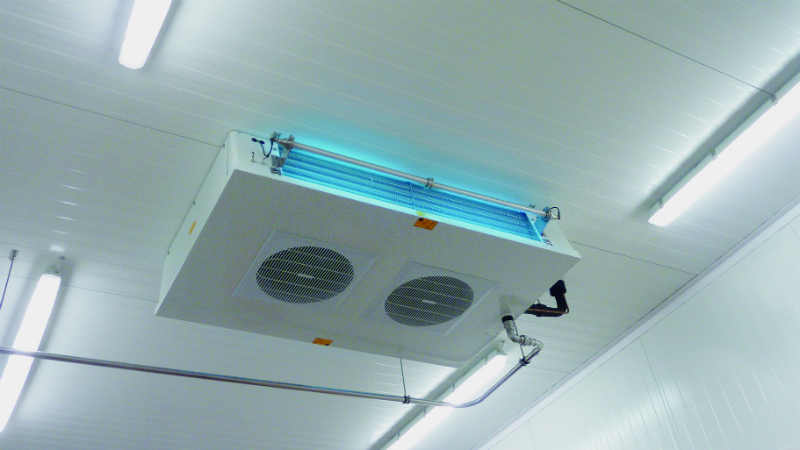
- Designed to disinfect the upper proportion of air within a room that is served by traditional mixed-ventilation. It is unsuitable for typically larger spaces that employ displacement ventilation, unless CFD is employed to confirm air-flow patterns.
- There is an inherent risk of exposure to UV light during the typical 24-hour operation and the use of occupied space must be considered. Dangers and safe use practice have been covered in the past; example papers here and here.
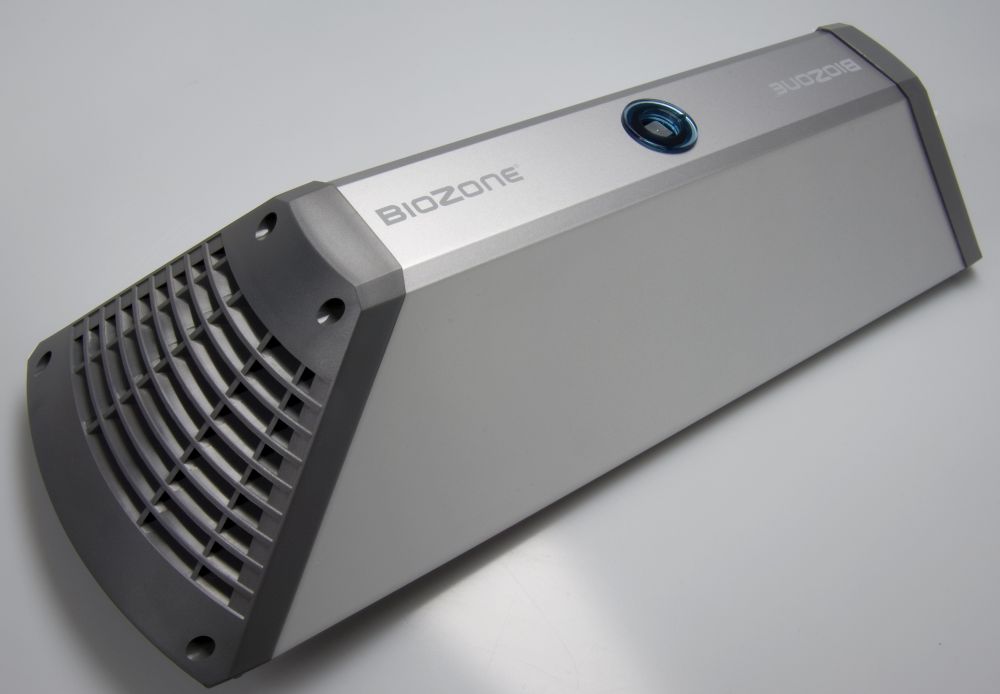
- These ‘plug and play’ solutions typically serve smaller areas (up to 30m2) and have a flow rate of around 20 litres/s. The ease of installation makes them favourable in places that may not be directly served by fresh air but only have an extract, such as bathrooms whish can be designed to be in negative air pressure.
Risk
In all of these solutions UV light is the main mechanism of rendering the pathogen unable to replicate. Many of the manufacturers also actively publicise that the production of ozone (O3) is beneficial in rendering pathogens and odours neutral. Whilst the mechanism is not disputed, the use of ozone to disinfect water and air has been longstanding, there is no universally accepted limit of human exposure to ozone within the built environment. ASHRAE have stated that safe ozone levels ‘would be lower than 10 ppb and that introduction of ozone to indoor spaces should be reduced to as low as reasonably achievable’.
All of the above solutions will go some way to preventing large-scale person-to-person transmission or the movement of virus-laden air from one space to another. There still exists the risk of person-to-person transmission from coughing/sneezing/breathing in close proximity so the array of distancing/cleaning measures could not be abandoned in favour of a ‘silver bullet’ approach.
Has anybody else been approached by contractors promising a wholesale return to work if only a magic HVAC solution is employed?
Compensation Events for a change to British Standards?
BLUF: We have been working to one standard, the standard has been superseded, and now we’re being asked to work to the new standard… Without a compensation event.
Question: The following 3 paragraphs have been ripped from a TMR I’m currently writing (so excuse the lack of colour) but led me to wonder if anyone else had come across similar instances. For example when BS 7671 (requirements for electrical installations) moved from 17th to 18th edition in 2019, would you expect to be given a PMI and CE to compensate the possible increase to the cost of your works?
The Issue:
To understand CSJV’s BIM strategy, the author sought to identify the specific BIM related clauses in their contract with the Client. However, in an interview with Matthew, CSJV’s BIM Manager (2020), it was explained that a BIM level was not specified in the contract, in fact only the requirement to work to PAS 1192-2:2013 (British Standards Institute, 2013) was specified. PAS 1192-2:2013 focuses on the construction phase and specifies the requirements for Level 2 maturity; sets out the framework, roles and responsibilities and expands the scope of the Common Data Environment (CDE). When questioned on the lack of specifics in the contract, Matthew quoted guidance issued by the UK BIM Alliance, the UK’s largest community lead institution for BIM.
The UK BIM Alliance, and specifically its legal community, recommend that BIM levels are not specified in contracts. This is because, according to Matthew, that it would require the contractor to take too much risk. The perceived risk reflects the idea that it would be impossible for the Client to effectively define the BIM requirements of level 2 as they are too many in number, and simultaneously too complex and too vague. It is also relevant to mention that whilst more recent revisions to the PAS have reduced ambiguity, at the inception of HS2 Ltd. the standards were in their infancy.
The standards of BIM expected to be met by CSJV have become more ambiguous since the Client has recently been requesting elements of the BEP (BIM Execution Plan) to be delivered to ISO19650, a new standard superseding PAS 1992-2. CSJV claim that this would require a Project Manager’s Instruction (PMI) and an expensive Compensation Event (CE) as it is a change to the scope and would require a change to internal process. The Client claims that by requiring the latest standard at the time of contract signing, there was an implication that the latest standard would always be required – this has not yet been resolved but Matthew explained that without a PMI and CE they continue to work to the older PAS 1192-2.
A night in the life on a rail project: how much time do you have to work on the night shift and how many people does it take to do anything? Spoiler: not a great deal and flipping loads.
As part of one of my ongoing jobs, I have been asked to facilitate and manage the surveying and site investigation of Sunbury station and surrounding areas for a future upgrade and track widening.
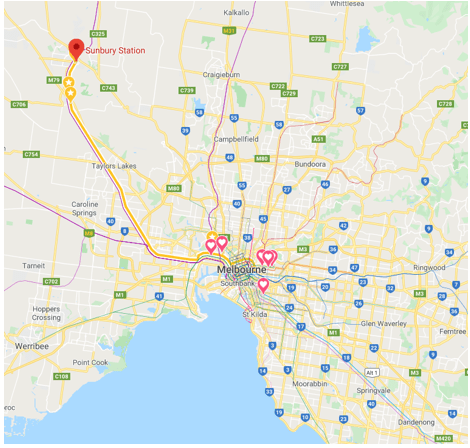
As part of this project, there was a requirement to capture the last 10km of track from Sunbury towards Melbourne digitally. This involved mounting a machine onto a ‘hirail’ modified ute and driving up the track. The data capture is akin to google street maps but captures enough data to create a 3D model of the surrounding area and skinned with high quality photography. Accurate to about 5mm. I can write another little blog on this kit if people want to get their geek fix. Photo below shows the data capture machine mounted to the rear of the ute.
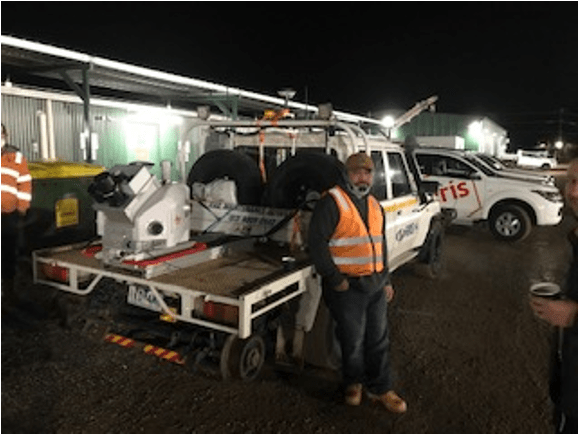
The hirail modification can be seen in the photo above too. The ute operates like normal, but once over the rails the steel wheels that are raised in the photo at the rear of the vehicle then lower and engage with the track. The ute’s normal wheels drive the vehicle forward, the rail wheel keep it on track.
Working on the track is called an occupation (occo for short; Aussies abbreviate everything). This type of occo that occurs over night is called an ALBF (After Last train at night Before First train in the morning).
Originally, I had thought I would need a lot less manpower and have a lot more time than I actually did for this simple job. I’ll run through what we actually needed.
The Plan
Manpower and Resources
- HiRail Ute
- TVO (Driver)
- Data collection wizard (Veris)
- HiRail Unimog
- TVO
- Signals Engineer
- Traffic Management
- 2x vehicle with 4 crew (Holden Road Xing)
- 2x vehicle with 4 crew (Gap Road Xing)
- Free running Vehicles (each in their own Ute)
- Project Manager (me)
- Track Force Protection Coordinator (TFPC)
- Survey Manager
- Track Certifier and Supervisor
- Level Crossing Controllers
- 1x TFPC at Old Calder highway
- 1 x TFPC at Watsons Road
Permits and Certifications
- Permit to Work
- 2 x HiRail Vehicles must be track certified, John Holland inducted, isolation checked and PlantGuard checked. (All different online systems, need VRN of vehicle)
- Each member must ‘sign on and have their ‘Rail Industry Worker’ Card checked for currency.
- 35 page Works Group document.
(Lets skip to…) What happened
At midnight I briefed the workforce of the plan, H&S and all that good stuff. Then they had a bit of time to get into position. When planning these things, you don’t actually know exactly when the last train will pass AND the safety team have put out their signage. The last train, I learnt, was 0130hrs, the works group plan told me that we must be off the track no later than 0400hrs. This gave me 2.5 hours to play with.
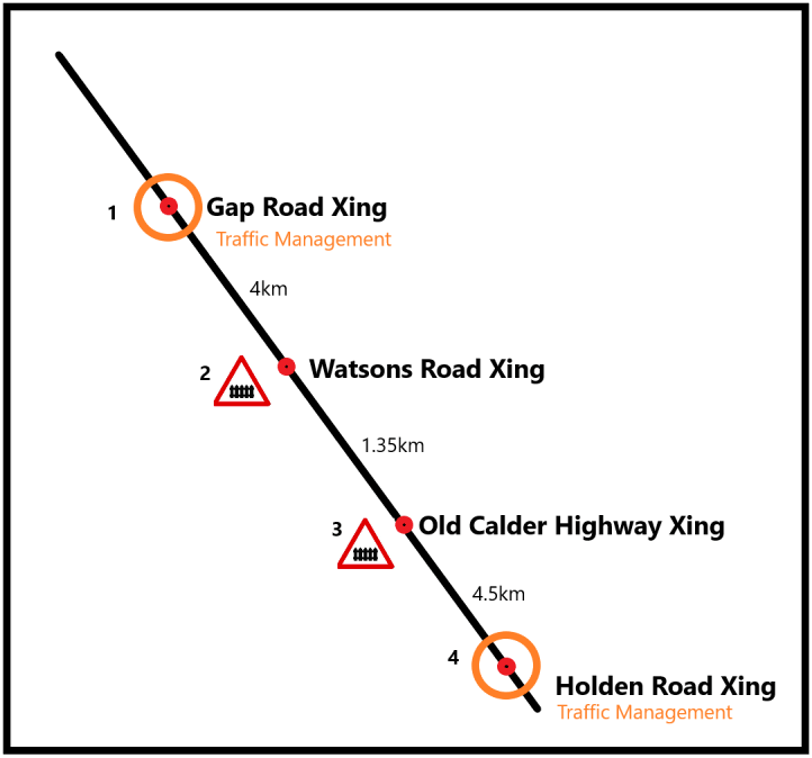
At the given time, the two HiRail vehicles would get onto the track at Holden Road under traffic management. They would start to move up the track, optimum speed would be at least 20kph, but for the first run on a new track the signal engineer had to check the signals were ‘ok’ (more info if anyone would like me to explain) before moving on. The two crossings would have the booms manually operated to allow the two vehicles to pass without slowing down. At the Gap Road crossing, under traffic management the two vehicles will turn around and return.
One loop (there and back) would be ok, but every other extra loop would increase the quality of the data capture and reduce the chance of repeating this work. A workforce that knew this and knowing their part and everyone else’s parts would give us the best chance at getting this evening to go smoothly.
We waited for the call that the rail line was clear to drive on. 0140hrs, 0155hrs, the time went on. At 0205hrs we got the call. Oh, and just before the formal briefing to the workforce I also learnt that we would have to be off the track at 0330hrs. My 2.5 hour window was reduced to 1.5 hours. Within this time, we just got in 1.5 loops which was acceptable. No one was hurt and we didn’t prang a vehicle, so I consider this a success.
Summary
For 1.5 hours worth of work and a simple plan, it took 12 vehicles and 14 people to enact. I spent 1.5 days in preparation as well as plenty of random actions to tidy up loose ends. I was massively surprised that this seemingly simple job took so long in planning and sucked in so many resources. Bed for 0430hrs, back in fornt of my computer by 1100hrs. zzz, apologies for any typos caused by sleepiness at the keyboard.
Benny Hill Show in the North Sea
Thought I’d share with you all my slightly chaotic first experience of being responsible for a contractor deploying off-shore!
Background
The Glen Lyon Floating Production Storage and Offload (FPSO) vessel (pictured) requires an upgrade to their existing Helideck Management System (HMS) to bring it into line with upcoming legistlation changes from the Civil Aviation Authority (CAA), no later than 31 Mar 21.
I am the project engineer responsible for delivering the upgrade.
Fugro Engineering (HMS vendor) had taken part in trials with the CAA earlier this year and as such, their HMS was the first to be certified as compliant with the new legislation. It was decided that although they will not be the chosen vendor for the installation, we should employ Fugro to conduct a survey of the existing HMS and ask them to come back to us with a detailed gap analysis and proposed modifications. This gap analysis would then form the basis of the client SoR that I am writing later this year.
I liaised with Fugro and arranged that 1 x service engineer would deploy off-shore for a period of 7 days to conduct the survey. They requested that I provide them with an array of documentation (block diagrams, commissioning reports, general arrangement drawings) prior to deployment. After checking that releasing documentation to Fugro was ethically sound from a commercial perspective (they are a competitor to our existing HMS vendor), I obliged. I would later come to regret not asking them whether that was all they required.
Finally I warned off the off-shore team that there would be a contractor deploying to conduct a survey of the HMS.

What Happened
On the first morning of the survey, after conducting a visual inspection of the system and looking through physical documentation, the Fugro engineer then inserted his own USB hard drive (big no no!) into the BP system to, in his own words, “download recent service visit data for data integrity verification”.
This hard drive then “accidentally” fell off the desk and swung into an open cabinet beneath and hit what I can only imagine was a big red button. This consequently managed to shut down the Integrated Marine Monitoring System (IMMS) and the Differential, Absolute and Relative Positioning Sensor (DARPS). In short, this meant that the whole HMS was effectively shut down, meaning that no helicopters could take off or land. The engineer was unsurprisingly stood down, pending a review of the incident.
Key Mistakes
Thankfully there were no serious consequences arising from the incident and the HMS was back up and running in short order and the engineer erased all of the data extracted from the system onto his hard drive. There were a few key mistakes leading up to the incident which could have easily been avoided:
1: Failure to confirm data requirements. As mentioned above, I had naively assumed that the documentation I had sent over prior to the survey was sufficient for their needs. I should have confirmed this and asked whether there were additional data requirements from the live system. This would have then enabled me to warn off the off-shore team, who could have ensured that the engineer was adequately supervised.
2: Inadequate Survey Scope of Work. The “normal” procedure for off-shore surveys is the production of an “survey scope of work”, which is typically produced by the off-shore sponsor. This job fell between the cracks because the survey was co-ordinated between the Aviation Technical Advisor and my department, both of whom are on-shore. The consequence of this was that when the engineer arrived, the off-shore team were not entirely sure what the purpose, scope and limits of his visit were, which ultimately resulted in the incident occurring. It was an assumption (that word again) of mine that the off-shore team were fully aware of the survey and would be on hand to ensure that it went smoothly.
3: Inadequate off-shore induction. The particulars of BP’s policy on IT security were not included within the induction briefing given to the engineer, specifically the use of unauthorised USB devices.
Key Takeaway
*Stakeholder Engagement is vital!* “Stakeholder engagement” is a phrase that I have glibly written numerous times of the course of phase 1 exams and projects. This experience has certainly brought to the fore that the lack of it can has calamitous consequences. As a project engineer and single point of accountability in BP, there is a lot of work that goes on around me and it is ultimately up to me to ensure that everybody is suitably informed, briefed and fully understands what is happening, when and by whom. This is doubly important in the oil and gas industry; I’m in the awkward position of being ultimately responsible for contractors off-shore, without the luxury of being physically present to ensure that it runs smoothly!
Making assumptions is a dangerous game and a mistake I will certainly not make again. To finish with the universally applicable advice of my first Troop Sgt – “Sir, it’s good to trust, but it’s much better to check”.
Pile Cropping
Debond, Debond, Debond!
An interesting loop hole/oversight, that we have come across on site. The main bars for the pile cage are de-bonded using foam down to cut off level.
The designer will never approve foam all the way down to cut off level in case of any drop in the reinforcing cages. (They allow 50-100mm). The piling subcontractor have a tolerance of cage level of -50mm and +150mm in accordance with the ICE Specification for Piling (SPERW). In this case, we have both extremes of +100mm and +150mm, which has resulted in 250mm of bonded concrete.
Normally, this would be easy using a pile cropper or diamond drilling company but not when it is bonded. Back to pneumatic picks by hand.
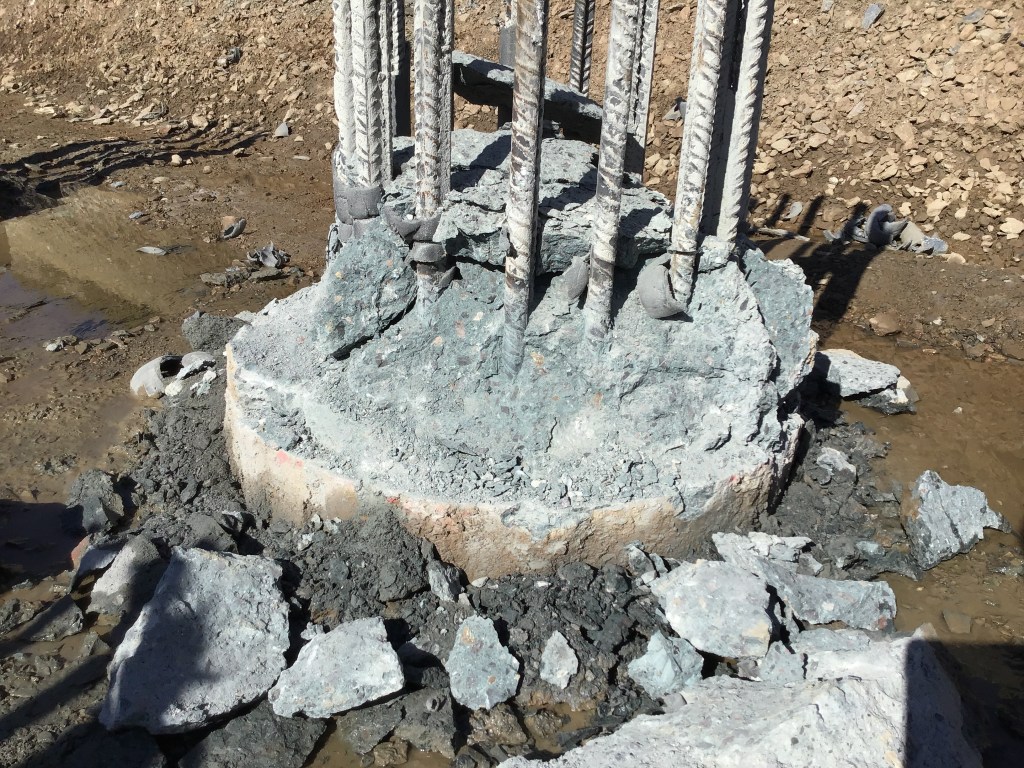
The drawings and tolerances were all checked by the piling subcontractor, principal contractor, designer and client’s representative. All failed to spot the issue, myself included. I would expect the piling subcontractor to be fully aware of the issue but again nothing was mentioned.
Contractually, nothing that we can do. The pilers are within these individual tolerances. Unfortunately, it falls on the next subcontractor to work through the issue. This means a lot of time and especially Hand Arm Vibration (HAV) as they work around the main bars.
The lesson here is even though the tolerances may appear acceptable in isolation. The sum of these tolerances have resulted in extra time, cost, and H&S risk.
The Art of Blogging / a belated mid-year resolution.
Since leaving Phase One I have submitted 1x very short blog post. This is significantly less than the recommended minimum of one/month.
Meanwhile the client’s representative on my project has no issue filling my inbox with updates from site, which, to be clear, is currently a hardstanding awaiting the delivery of some site offices.
How can they produce so much content from so little?
The updates are short and sweet but make a point. A geo-tagged photo with the comment: “Hoarding sign has come away. Stronger cable ties required.”
Clearly, a balance needs to be struck between aimless waffle and a blog to assist in the Professional Development of the collective but my question to the floor is have we gone too far the other way?
Do we all just view the blog as a chore at the end of a long day / yet another thing you need to research and produce? Would a quick update about something you thought was interesting, sent direct from your mobile, increase the frequency of Blog posts and allow us to know more about each other’s experience?
I don’t know the answer but will try and blog a bit more in the 2nd half of the year… So long as TMR 2, Thesis Form B, TMR 3, AER 3 and Thesis Form C don’t get in the way. 😉
On the bus, off the bus, repeat.
Prior to Covid-19 hitting the UK, the One Nine Elms (ONE) site in London was operating at 600-650 operatives each day. Running two jump forms, pre-stressed slabs, facade installation, large raft slab pours, demolition, blockwork the site was in full swing.
When Boris announced that we all must stay at home, Multiplex (Principal Contractor) assessed the situation and took the decision to shut the site until such time as mitigation measures had been put in place to make the site as safe as possible. Significant time was spent re-configuring the canteen and welfare areas to allow social distancing rules to be adhered to. When site opened back up on 20 April, it was running at 50-70 operatives for the first week with phased increases in subcontractor numbers on site to safely manage the new measures.
A mere three weeks after returning to site, Multiplex took the decision to cease works, this time due to non-payment by the client – the monthly valuation was priced at just shy of £13m. Thankfully this closure was short lived as the client paid up after only 2 working days lost on site.
Fast forward to now. Last Monday 29 June, notice was issued to all subcontractors and consultants of our intention to suspend works due to non-payment of the client, come Sunday night no payment had been made, resulting in a cessation of works on site at COP Monday 6 July.
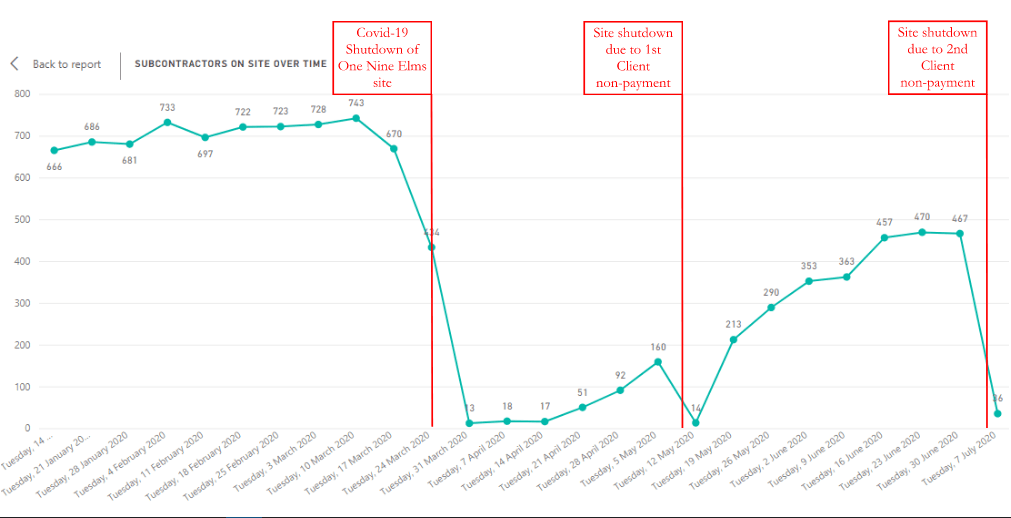
Speculation within the project team has been made as to the cause of the non-payments. Some think that this is part of a strategy by the Chinese client (R&F Properties), I think this unlikely as these stoppages are likely to cause delays to the programme and, in the form of loss and expense claims from subcontractors, significant excess costs. The delays to the programme are only exacerbated by subcontractors being unable to mobilise operatives quickly following the recommencement of works. Numerous subcontractors have already warned of delays of up to six weeks before they would be able to achieve full strength on site.
My estimation is that, more worryingly, R&F are facing significant cash flow issues. R&F owns four development schemes in London valued at £4.5bn, of which One Nine Elms is likely to top out at £1bn. With these significant costs and with delayed payments becoming a worrying trend, it will be “interesting” to see how this situation plays out. With the number of projects in the UK and Australia backed by Chinese investors I’m curious if anyone else has faced any issues recently, or if I’m just the lucky one?
Long term lessons learnt?
Yesterday during the Comdt’s backbriefs the issue of lessons identified/learned was raised. This prompted me to finally write the blog post I planned to write a while ago and never got round to completing but with different conclusions.
The apartment I’ve been renting in Melbourne has 14 storeys above ground and a 2-storey basement. As far as I can establish, the building was around in 1996 so is at least 24 years old but could be older (internet research is currently drawing a blank).
Why is this important? Yesterday we discussed whether we are failing to truly identify and learn our successes or failures immediately after an event. Generally, the consensus was that we are bad at ‘learning lessons’. If we fail to do this in the short term, I suggest we are even worse at identifying our successes or failures further down the line… say 24 years later.
Our car parking spaces are on basement level 2 so approximately 6-8m below ground level. Following rainy weather, there is always water on the floor of the basement (Melbourne’s climate is similar to the UK so there’s a fair bit of rain). The water appears to enter the basement around the service penetrations (ventilation ducts) and through construction joints in the diaphragm walls and at the wall-column interface. I’ve taken a few pictures to show what I mean.
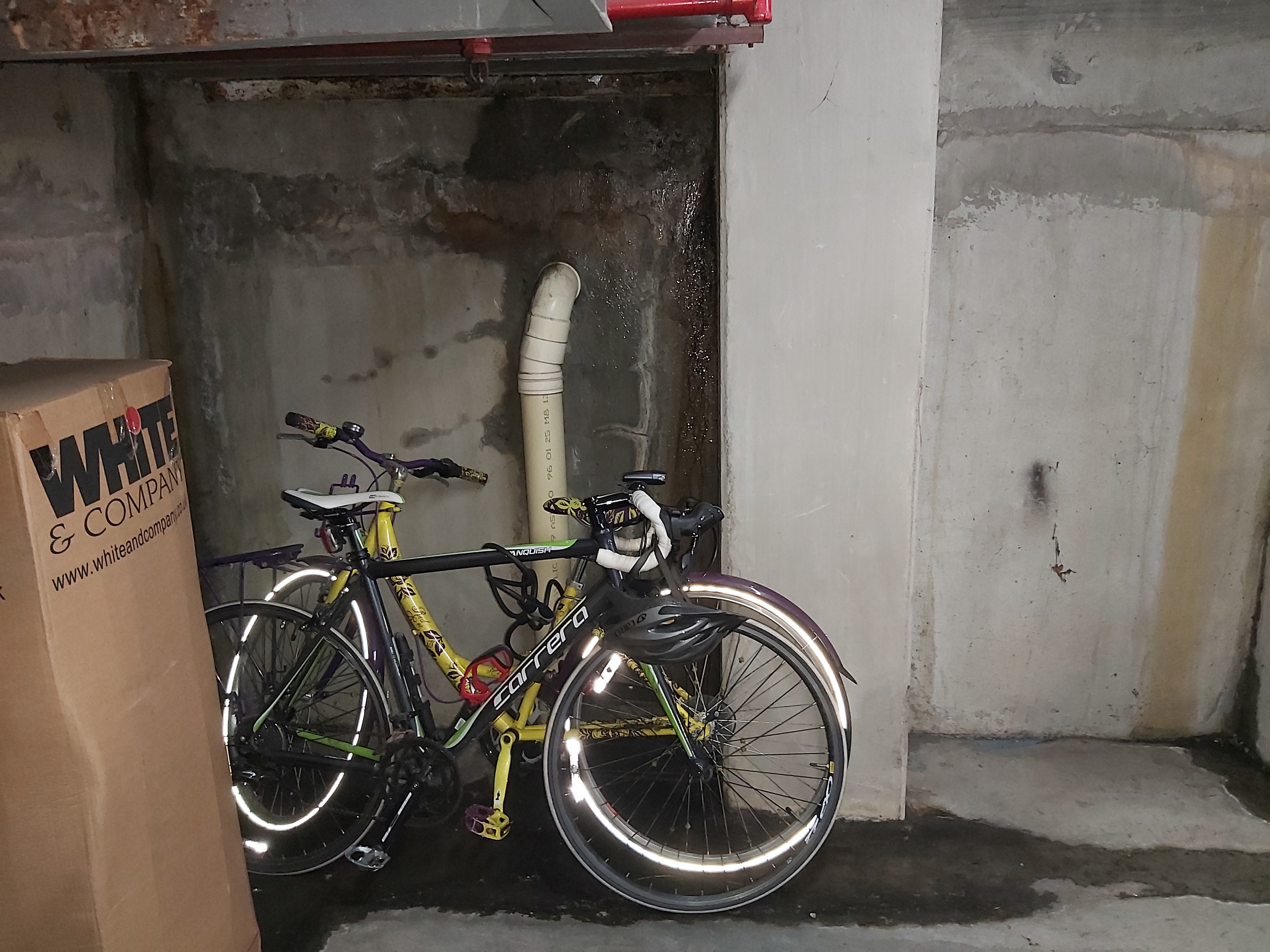
(Note the water penetration is from the vent ducting at the top of the picture and not the pipe.)
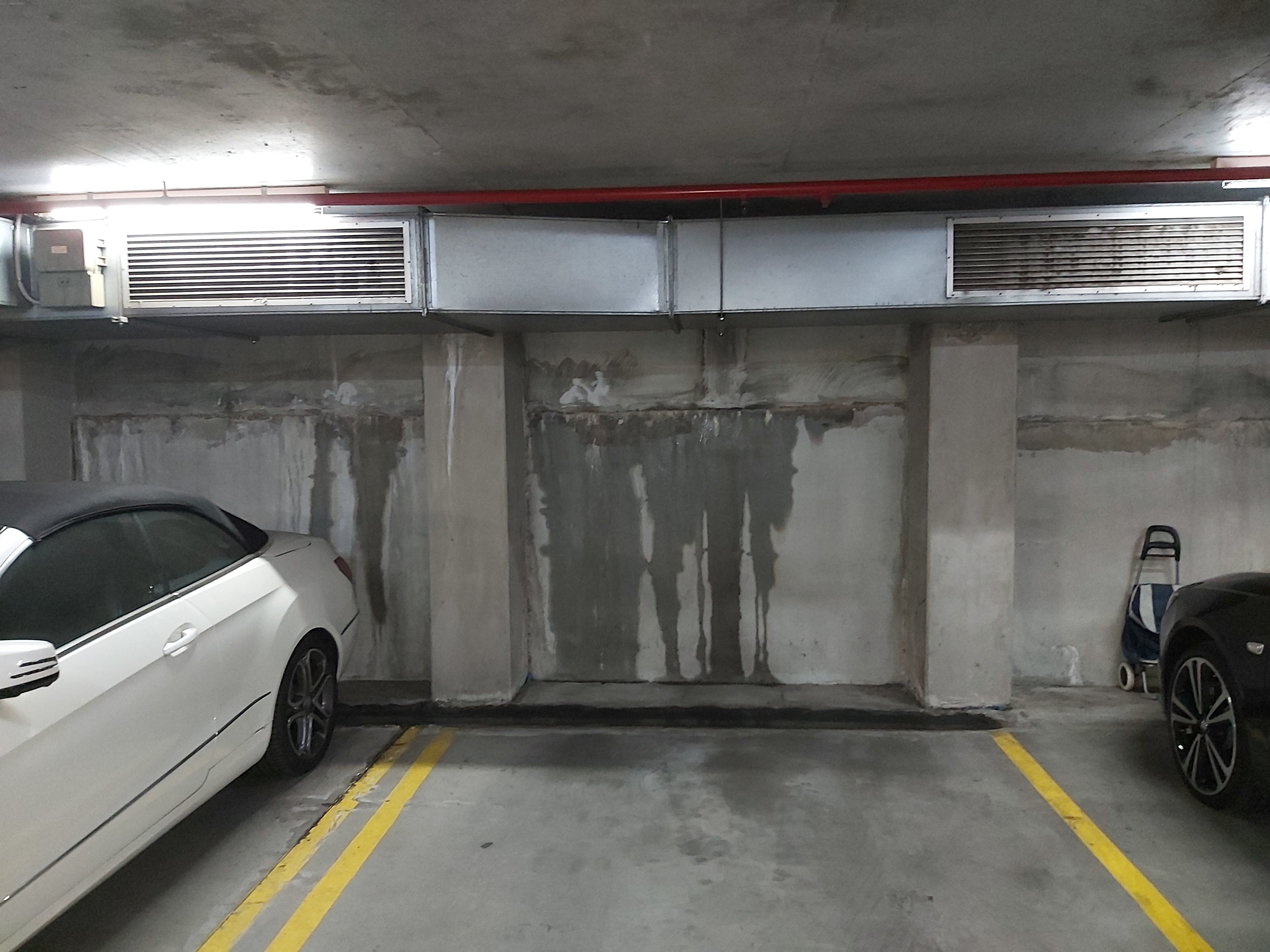
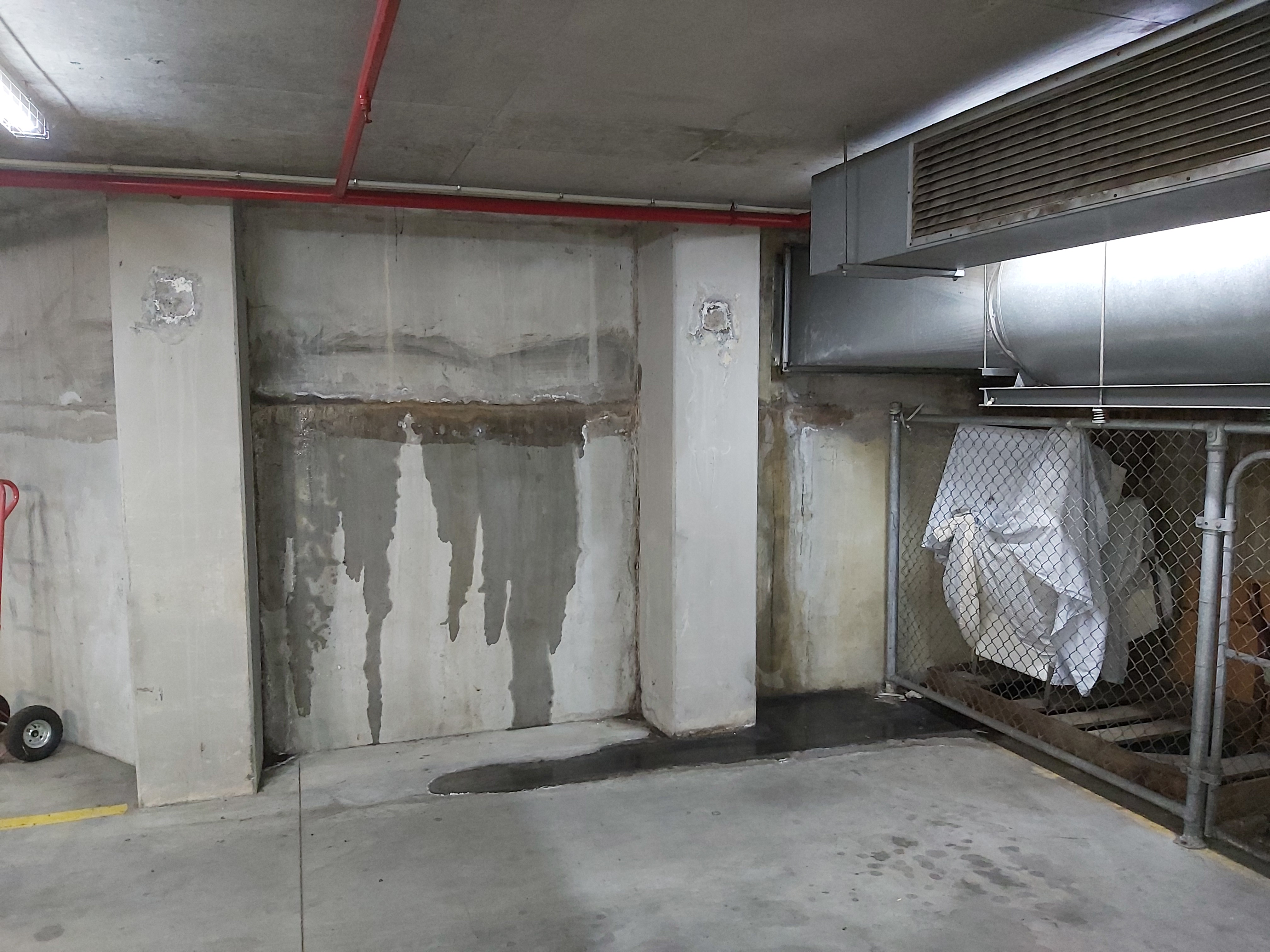
Why is this an issue? Well for me and the other residents our stuff gets wet. This is annoying but can be worked around. The bigger issue is structural durability because the ingress of water can increase the reinforcement corrosion rate and could lead to early failure of the wall. At the service penetrations and column-wall interface, there is likely to be sufficient cover to protect the reinforcement however at the mid-height wall construction joints there won’t be. I’ll hedge my bets that the contractor didn’t apply an additional protective coating to the rebar at this location meaning the reinforcement will corrode quicker.
So here are my thoughts on reviewing the construction/design issue 24 years later:
- Why were construction joints used at mid-height?
- Could the pour height have been increased so the basement walls were poured in one go? If not (due to concrete drop height or safety issues) could additional reinforcement be provided at the construction joint or a protective system employed to mitigate against corrosion?
- Was the ventilation service penetration part of the original design or was it added at a later stage?
- Was the sealant around the ventilation penetration fit for purpose and was it installed correctly?
- Has the sealant’s design life been exceeded and not replaced? Is poor building maintenance an issue here?
- Have any of these issues been highlighted to the Designer/Contractor to influence their future decisions/works? I suspect not.
My consultant does a lot of inspection of old bridges for asset owners which allows them to identify issues with historical designs that can be adapted or mitigated in their current designs, hopefully avoiding similar issues in the future. I’m not sure if the same exists in the vertical construction space but a feedback loop from building condition surveys to designers would be one way to improve future designs. I admit I don’t have the answers but hopefully, this post will spark some further discussion.
FPE Basics
I stumbled across this at work today. It’s an article published in The Singapore Engineer in April 2018 and is written by engineers who work in one of SMEC’s sister companies.
The article covers Singaporean legislation requiring buildings to be protected to prevent terrorist attacks. From what I remember of the FPE Level 1 training on RETCC and subsequent insights at 170 Engr Gp it also covers the basic FPE assessment process and principles.
I thought I’d share for two reasons:
1. As basic revision prior to the Phase 4 FPE Level 2 training.
2. So we can compare UK military practice to the civilian consultant approach. At this stage, I suspect they are very similar.
Protecting Infrastructure Against Terrorist Attacks – Surbana J (sorry for the poor quality of the images but a pdf print copy was the best I could manage).
 Holdfast Training Services Trial Blog