Too simple a process to get wrong, right?
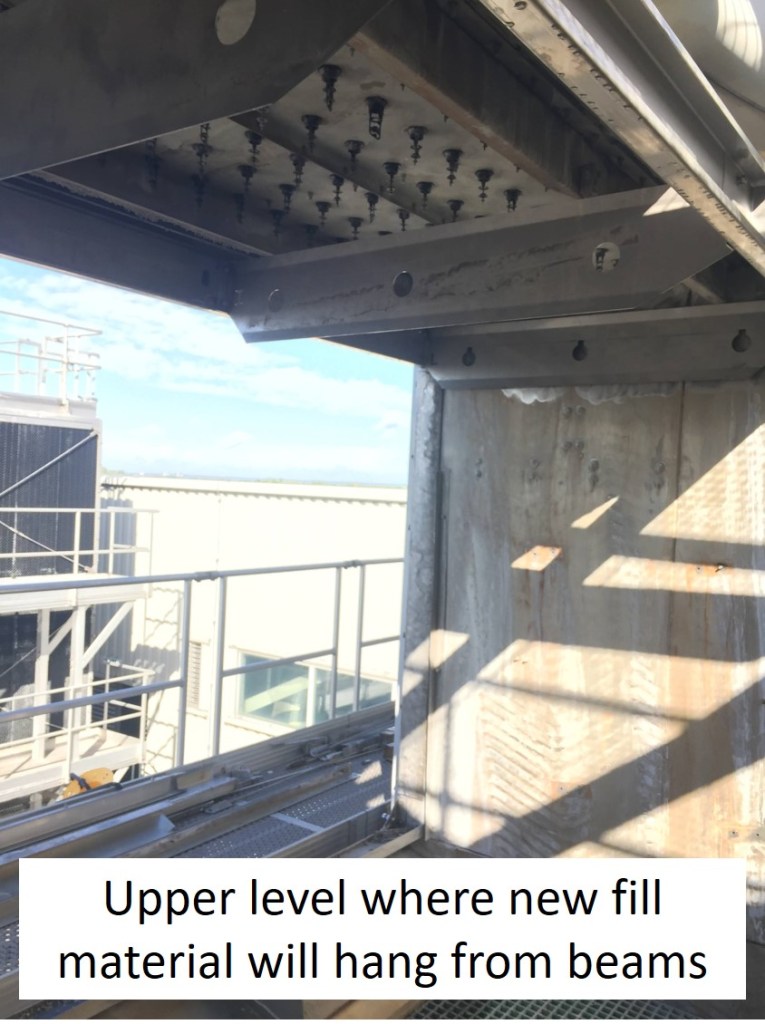
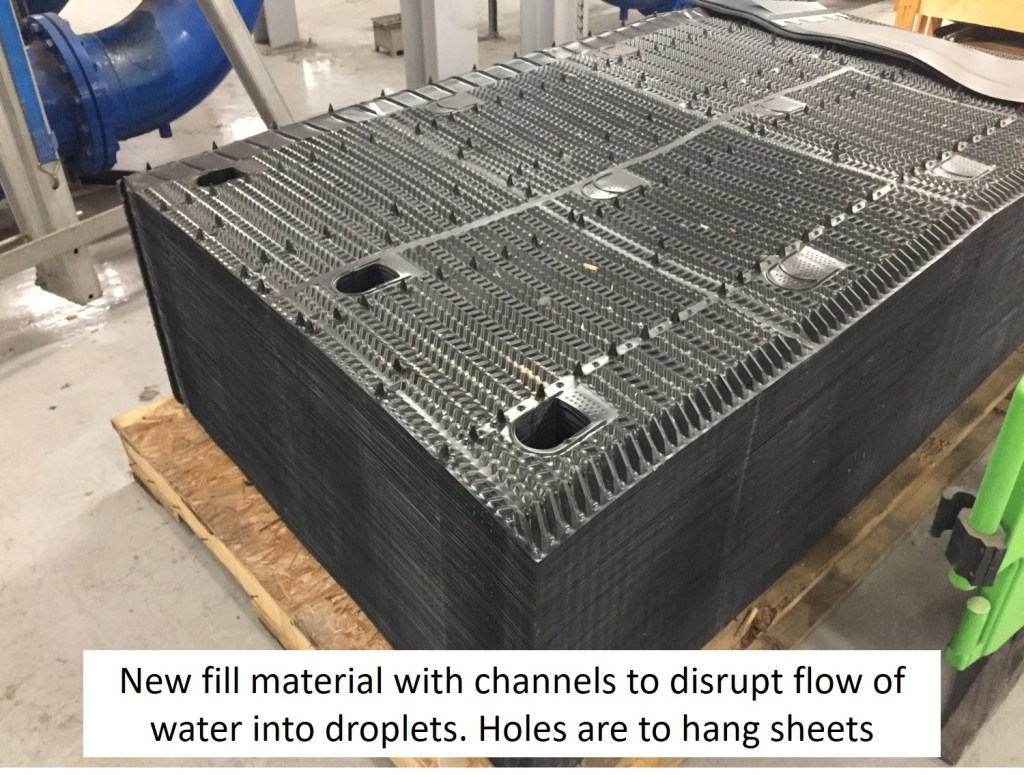
Terminal 5 at Heathrow is served locally by a set of open-loop cooling towers that are on the roof of the Terminal 5 Energy Centre, where heat can be dumped following coolth being provided to the terminal building. The operation of open loop cooling towers is wonderfully simple. The method employs latent cooling by passing the hot water, as a product of the cooling process, through a distributor (think sprinkler set) over ‘fill’ material (think plastic lattice material) that is designed to cause disruption to the flow path and encourage droplet formation. Concurrently, a cross-flow of air is forced through the fill by the presence of a whacking great fan mounted on the top.
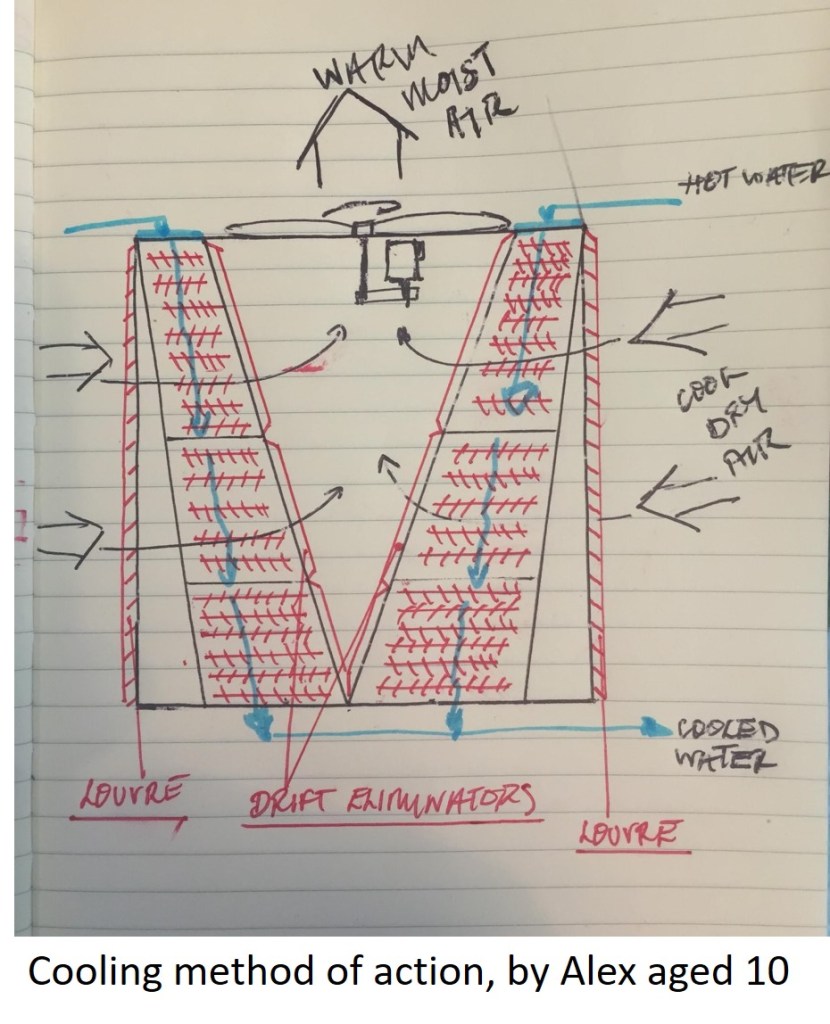
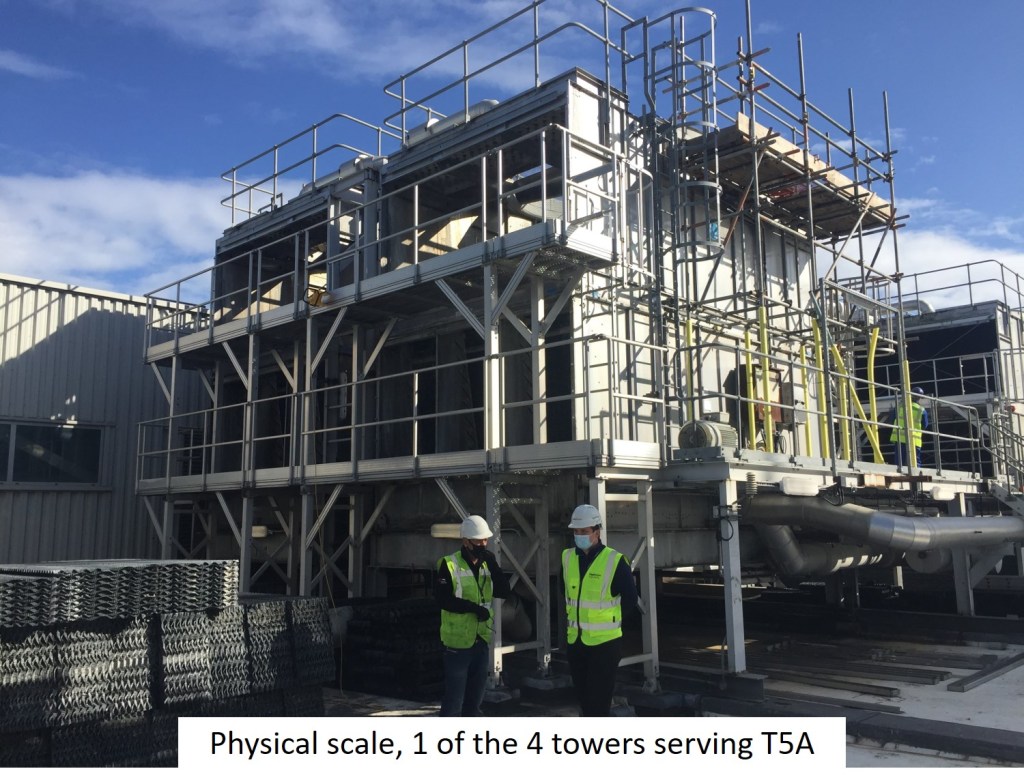
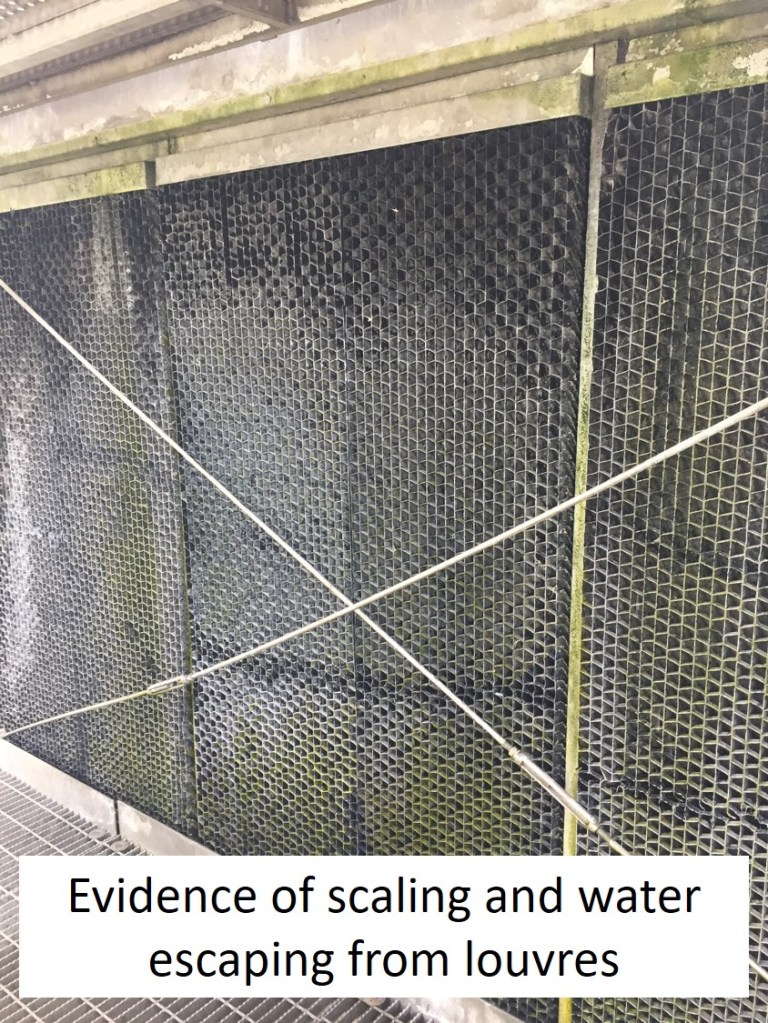
Amongst the many design controls that exist are intake louvres (on the visible outside face of the tower) and drift eliminators (on the internal face of the fill material). The job of both of these is largely to prevent as far as possible the escape of water droplets from the fill material both into the leaving air stream and also the surrounding area. Escaping water causes problems including; legionella risk, increase make-up water needed (some is always lost in the leaving air stream) and increased scaling of all components.
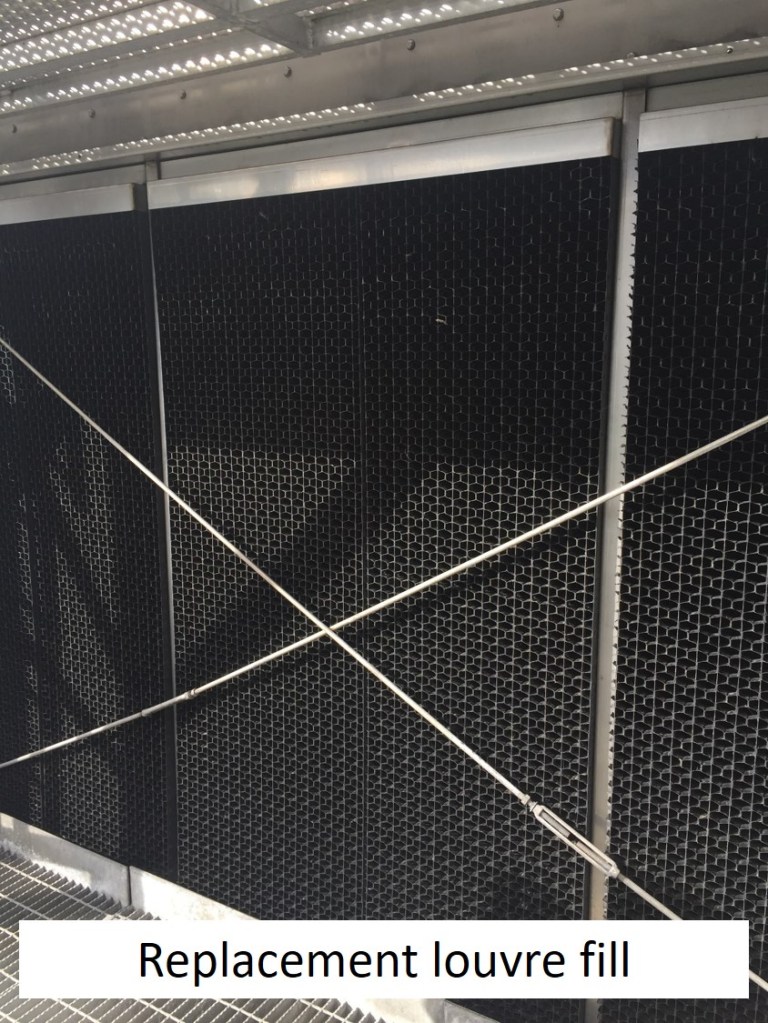
Inspections last year of the T5 cooling towers by the HSE revealed all of the above issues and an improvement notice was issued. Long story short, the louvres and drift eliminators had been installed upside down (think a cheese grater the incorrect way up) so were effectively continually funnelling water out of the cooling tower at a fairly alarming rate (discovered once accurate measuring of the make-up water had been carried out). For a simple installation error that occurred in the past the renovation process now involves the replacement of fill material (albeit due to a separate issue of incorrect de-scaling regime), replacement louvres and eliminators and in some cases replacement of belts, pulleys and fan drive-shafts (where the budget can accommodate) as a result of scaling and corrosion. Not bad for mis-reading the ‘This side up‘ label.

 Holdfast Training Services Trial Blog