Archive
Sustainability – Always an excuse
In preparation for my professional review I have been reflecting on how sustainability shapes the designs my colleagues and I have delivered over the last 6 months whilst working for a temporary works design consultancy (WHP).
There are a few ‘sustainability’ quick wins we have under our belt which anyone who has worked with temporary works would be able to reel out:
- We use proprietary equipment such a PERI pans and RMD Super Slims to reduce material usage because it can be reused.
- Rather than paying too much attention to the solution the Client’s TWC/TWS thinks they need, we focus on reviewing the Client’s problem to ensure the design we provide is the most economical solution. We often find that whatever the TWC has designed is over-kill and a more economical design can be provided.
- We are often able to use/re-use material that is already available on site (e.g. old ply wood used for hoarding, concrete legato blocks, scaffolding tubes etc).
However, if I’m to reflect truthfully (and cynically) I would say that the drivers for points 1 and 3 is often a matter of convenience for the Client with a sustainable side-effect. I also observed that the key driver for point 2 was more about offering value for money for the Client as a primary objective with a sustainable solution being a convenient side effect.
So why didn’t I sense that sustainability was a priority of temporary works design? I think it’s for the same reason that it isn’t whilst on military operations – the way we (or the Client) prioritises the Time/Cost/Quality triumvirate. The nature of temporary works means that it’s rarely considered sufficiently in advance for time not to be a constraint, and because cost is always a constraint then it’s quality (and consequently the solution’s sustainability) that suffers. If I reflect back to my time on HS2, the permanent works had a huge design team that had been developing our design for years and were under significant pressure to achieve sustainable goals. On the other hand our temporary works were often required yesterday in order that works weren’t delayed on site.
I’d be interested to know if any one else has identified the difference in emphasis on sustainability between permanent and temporary works?

Time vs Quality – 5 mins Read
Throughout construction projects we are continually reminded of the time, cost, quality conundrum. Other than relatively small military construction tasks, rarely have I experienced this compromise so evidently as in the example below. Conceptually, it makes complete sense that you cannot achieve all 3 at the same time; designers, engineers, construction managers must appropriately select the driving force and stick to that philosophy throughout all stages of project management.
During a recent weekend rail possession on the T8 Airport Line in Sydney I found it extremely obvious to identify the critical driving factor – TIME! During a rail possession, the train line completely shuts down and contractors across all industries are then able to safely access the track, whilst the public are ushered onto replacement buses at a cost of approx AUD $10 million for the weekend. Among a large number of tasks to be completed by various contractors, I was working as a site engineer for small core holing and cable pulling task in Green Square Station.
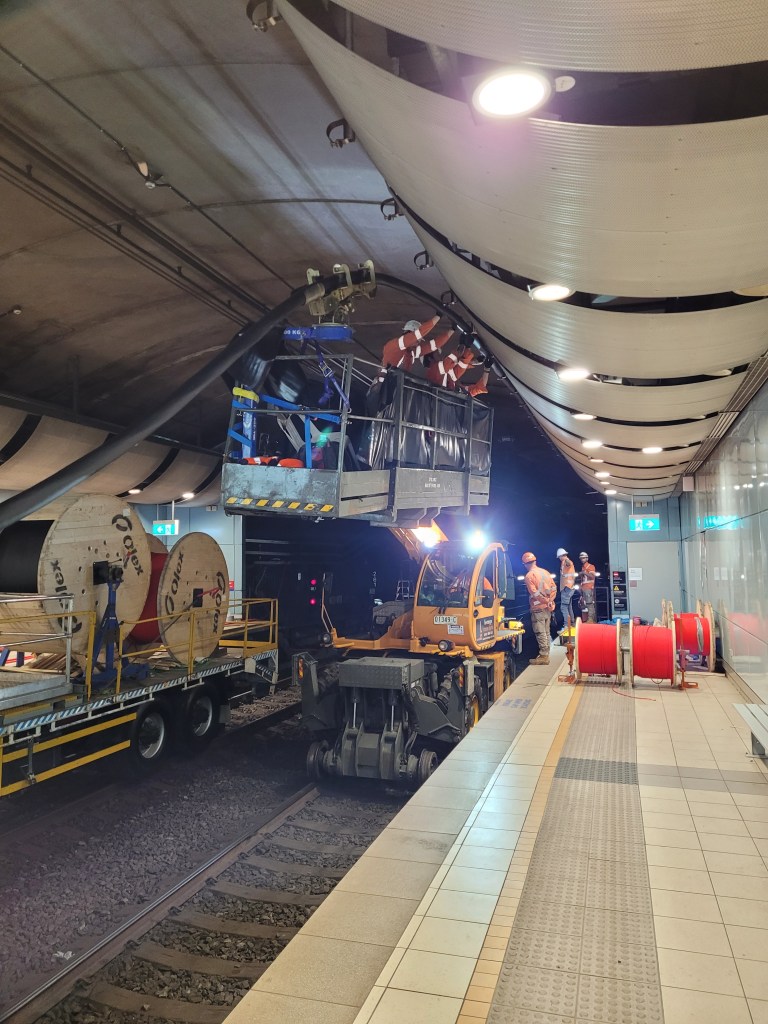
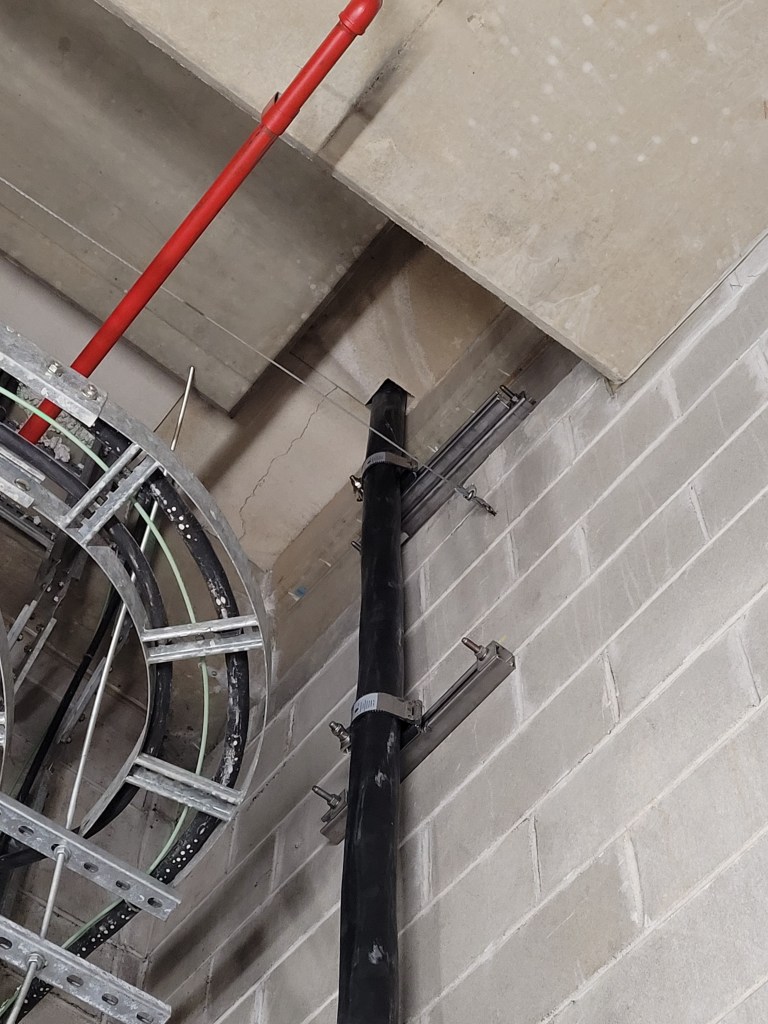
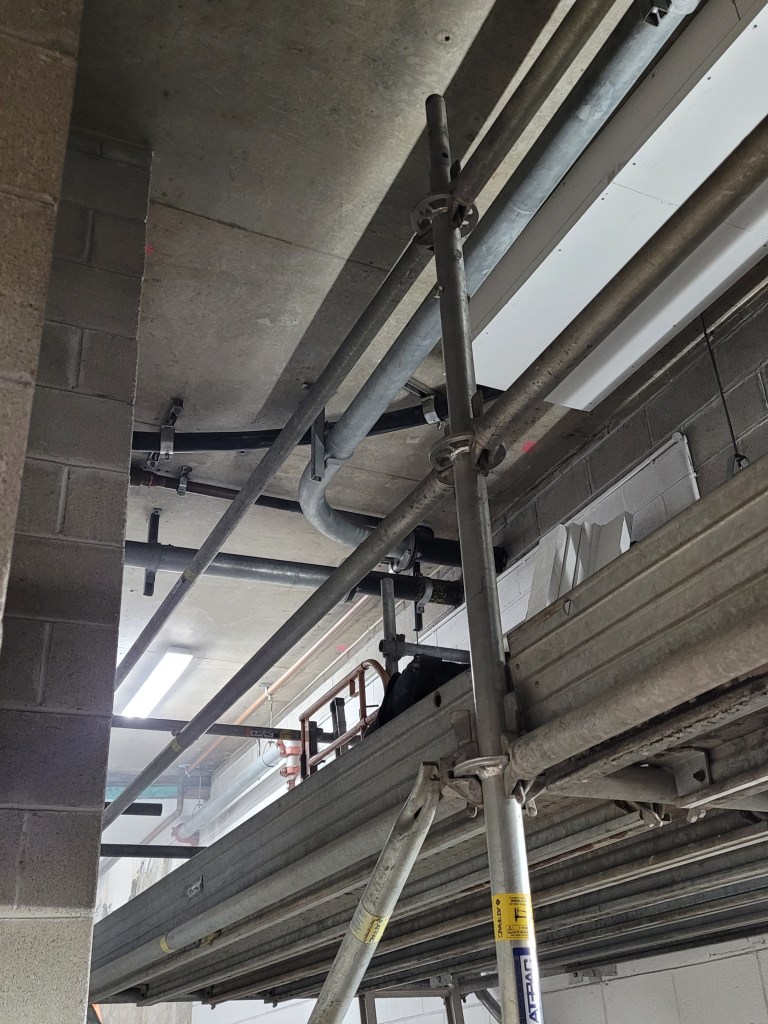
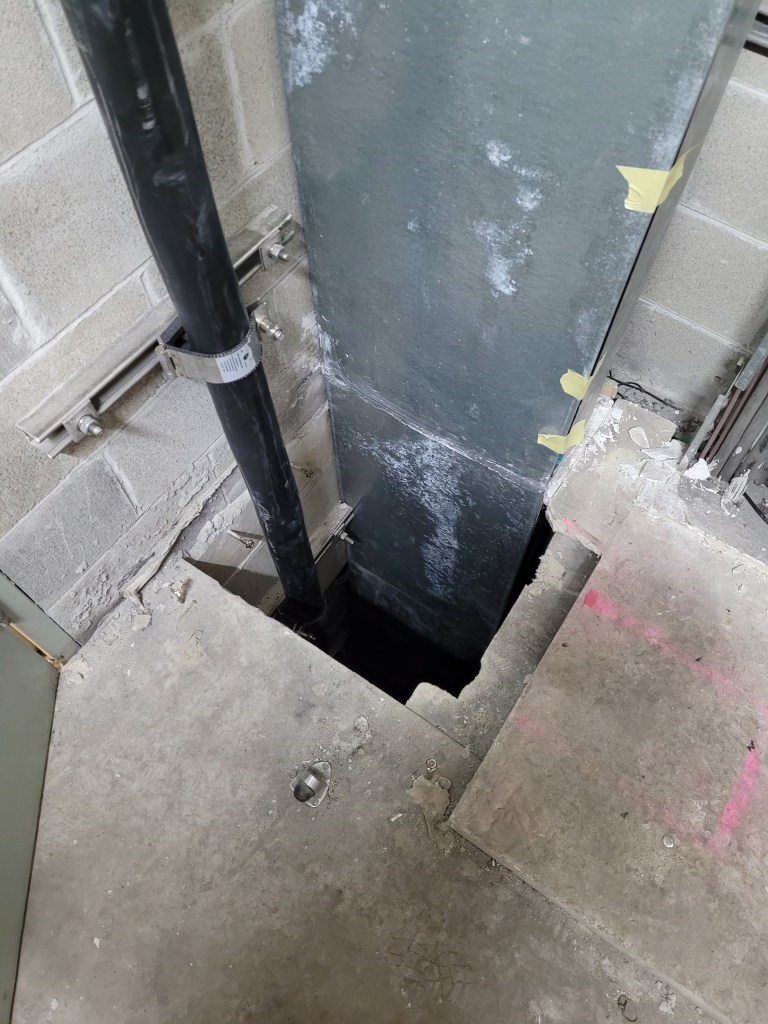
It was made clear to all staff and sub-contractors involved in the task, that the track and all stations needed to be handed back to Transport for New South Wales (TfNSW) at 02:00 on the Monday morning, ready for the Monday morning commuters. I would imagine the cost of not achieving this deadline was too large to comprehend and would cause a large headache for senior management!
Without compromising workplace health and safety, the clear goal was to complete the task by the deadline, at the expense of quality. On a number of occasions this was obvious to see….
The brackets were pre-positioned before the cable pull and therefore the 11kV cable could not be clipped into a few brackets along it’s length, in time – a clear example of a drop in quality/workmanship to achieve the deadline. Don’t panic, the brackets could be moved at a later date during normal station operation, as all the brackets were back-of-house.
The 11kV cable weighs approx 15 kg/m and is relatively stiff which means it is a difficult cable to work with, especially when trying to bend the cable through various rooms and between multiple floors of the station. As shown in the images above, the result is that the cable pulling contractor scuff/mark the cable sheath as they work, in order to position it in accordance with the design. If required, cable jackets can be installed at a later date to repair any non conforming lengths of the cable. Just another example of a drop in quality to meet the deadline!
 Holdfast Training Services Trial Blog