Archive
Subbies – Better the devil you know?
We have an on-site dilemma in sub-contractor management and wondering if anyone has similar experiences or tips in the management of under-performing subcontractors.
A civils works contractor was awarded the subcontract for the installation of the stormwater pits and drains across a new inner-city road scheme as a $3.5mil AUD lump-sum contract. The tender process was completed prior to my arrival on-site but I’ve been told they were awarded the contract as the cheapest tender as well as on the approved subcontractor list as an ex-employee of one of the parent companies on the JV.
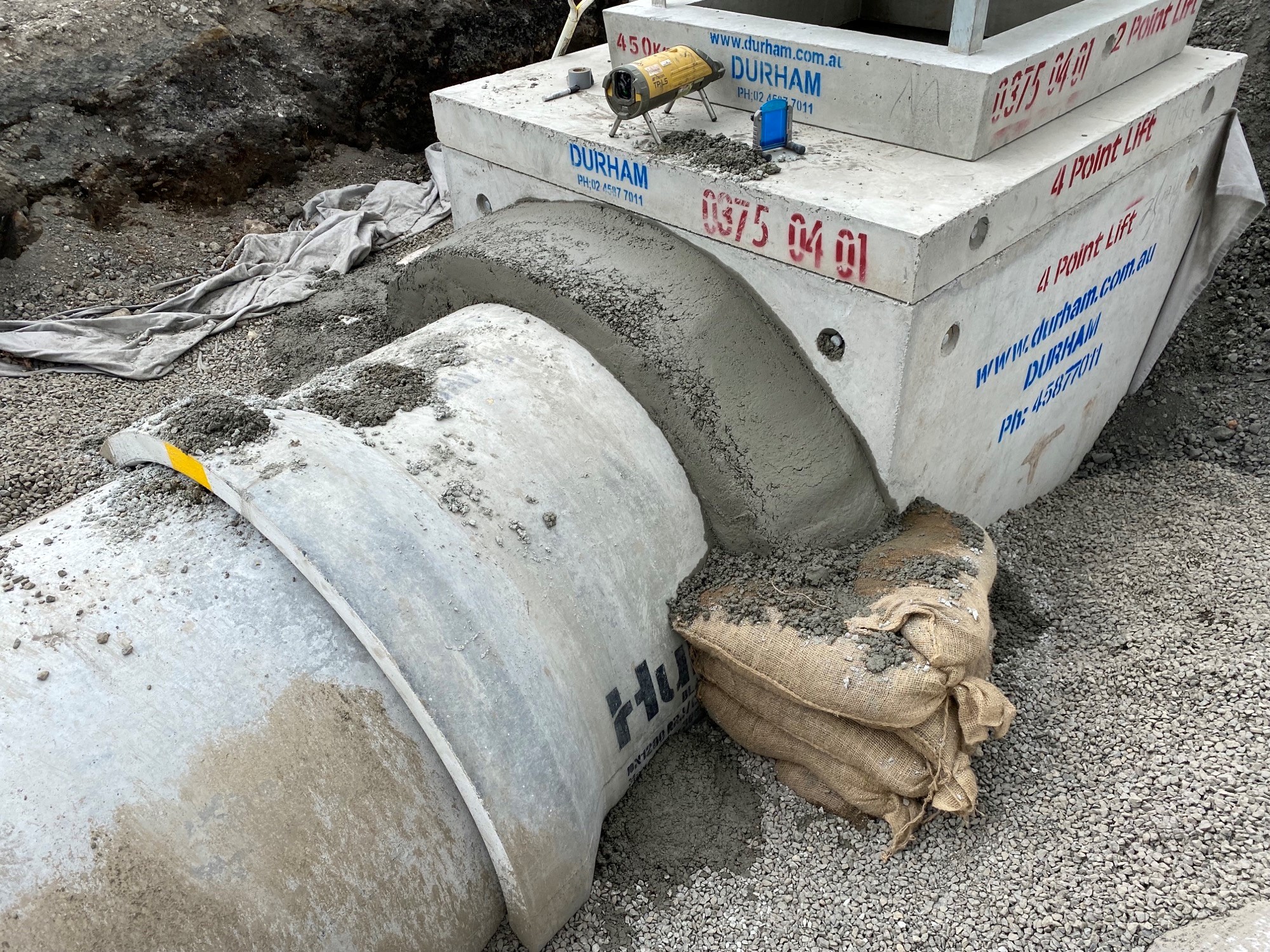
Currently, 10% of the work is complete, 3 months behind on a 12-month programme. A litany of issues including formwork blow-outs and poor workmanship leading to non-conformance reports and re-works are already 3 times the value of the whole contract retention. When I posed the question if the JV should cut its losses early and find a new subbie, the response, from middle management, was to propose a site engineer manage this subbie full-time. The engineering team is already undermanned, with an extra engineer to look after this subbie at least 3 months away.
It is often easier to progress with the status-quo because it is more straightforward to deal with the problems in front of you than try and challenge the underlying issues. Everyone on site is already busy, and taking the time to re-tender would eat into project overheads, therefore the commercial management direction is to treat the known risk with supervision instead of terminating and engaging a less risky contractor. From an outside perspective, this feels very short-sighted but shows the monthly cash flow commercial drivers of the project outweigh the quality and customer satisfaction considerations at this stage of the project.
Tumble Down The Rabbit Hole
My site is increasing the capacity of a Wastewater Treatment Works (WwTW) near Rochdale to cope with the growing population and to prevent occurrences of discharging untreated waste into the local Brook, (surprisingly common with 126 recorded spills from this site alone since 2020). The site consists of multiple new reinforced concrete (RC) structures that have required numerous cofferdams in order to install pipework and build the foundations for the various treatment tanks.
The ground investigation (GI) was sufficient enough to understand the basic risks in the ground. Firstly, the site has a risk of contamination given its use, the borehole log records a summer ground water table located approximately 2m down and the lithology is principally soft sand, overlaying very soft sand. This indicates that with the excavations varying in depth between 3-6m the risk of water ingress must be addressed.
As with many projects, the principal driver on the site is cost. Pressures on management across all parties is evident. They need to keep costs as low as possible as the project is significantly in the red (the principle contractor is circa £5 million for this site and around £20 million across the £150 million works package with estimates of the figure growing to £40 million). However, this pressure is resulting in repeating mistakes, losing time and incurring further costs.
It seems at times the management are in a fantasy world like Alice in Wonderland where they are requesting and accepting Temporary Works Designs (TWD) without careful evaluation, in the hope that somehow the conditions have significantly improved. The designs address the requirement for dewatering, stating it is the clients responsibility to reduce the ground water level below formation level prior to starting to excavate. Additionally, it identifies ‘fine ingress’, saying the client is to ensure suitable control measures are in place to reduce and to monitor existing structures due to loss of fines given the granular nature of the soil.
As the purpose of the cofferdam is to have people working inside it, it must principally be safe. But secondly, the cofferdam needs to remain dry enough to enable the works to be completed. Knowing the the ground has high permeability the decision to install ‘open’ cofferdams that are not sealed the whole way round, and in the most recent case with sheets without clutches is questionable. Dewatering systems were installed to draw down the water table, but seems to be designed in isolation, with little link between that and the cofferdam design.
As a result of the open coffer design in coarse grain soil with high permeability within the ground water table, each cofferdam has flooded and sink holes have formed due to fine migration between the sheets. Understandably, the cost of a ‘closed’ cofferdam is greater, however, the pressures to reduce losses and minimise costs are overshadowing the benefits of saving time and cost by preventing flooding and the risk to personnel of sink holes injuring them or destabilising other nearby structures.
Has anyone else found the commercial pressures are further increasing problems?


Design & Build – or Build, Design & Re-build?
The project I’m working on is using a ‘Mutual-Investment-Model’ (MIM) form of contract, which is a Welsh Government type of Private-Public-Partnership (PPP). As such a special purpose vehicle (SPV) (Known as Future Valleys Construction – FVC) has been formed with the main contractor (FCC) and designer (Atkins) both being part of Future Valleys Construction and operating a ‘design & build’ system to deliver the project. The Welsh Government has a minor equity stake in FVC and so any profits are in part shared between the Private and Public participants in the contract.
A key benefit of Design & Build contracts is that they allow for works to begin rapidly – in theory this should reduce the overall project duration, reducing cost, as design can keep pace with construction and issues be resolved as they materialise or are realised on site. In addition, from a client point of view the risk lies with the main contractor as a price is usually agreed up front for the delivery of the project – in the case of the A465 widening this is set at £590m.
Across the A465 widening scheme, and in particular on my site works are beginning before ‘for construction’ drawings have been issued and designs finalised. Work is being done using ‘for information drawings’. I have been told that this is to save time and allow the overall programme to be accelerated. However, I have come to question this logic.
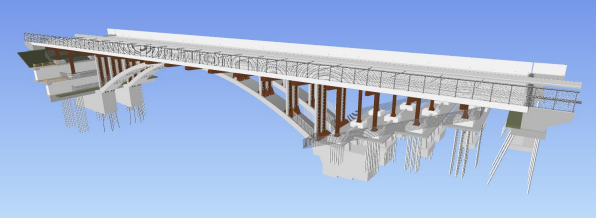
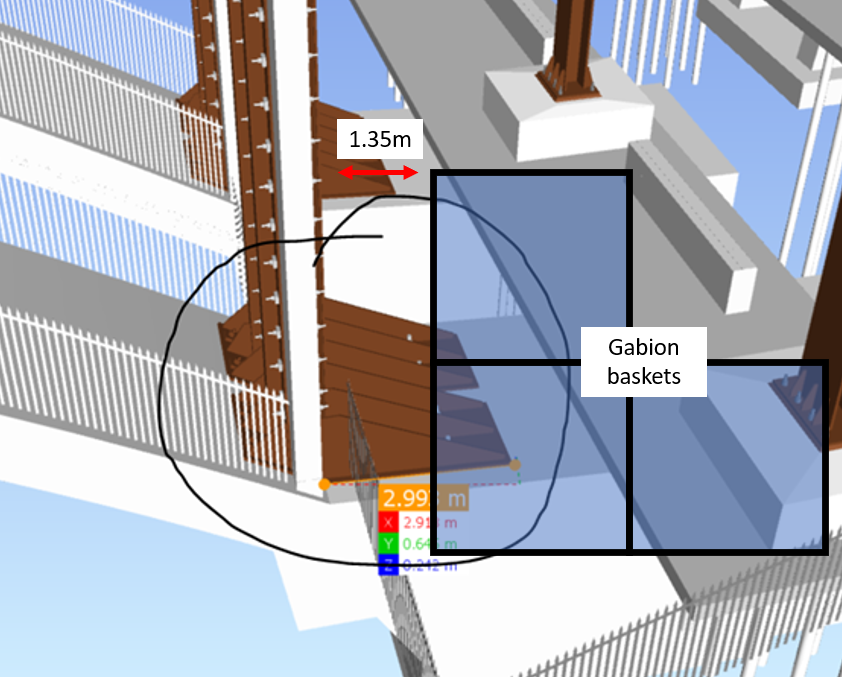
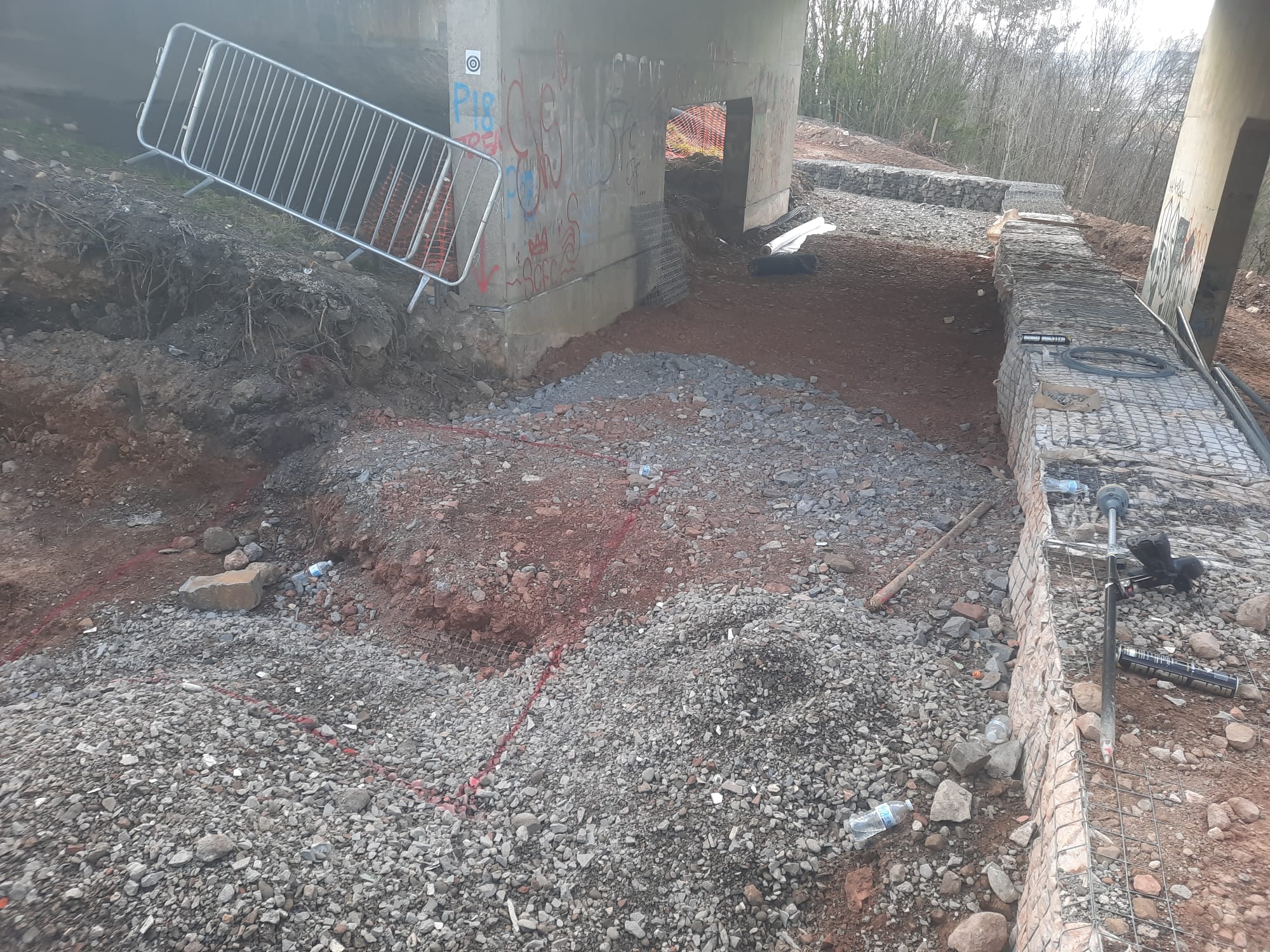
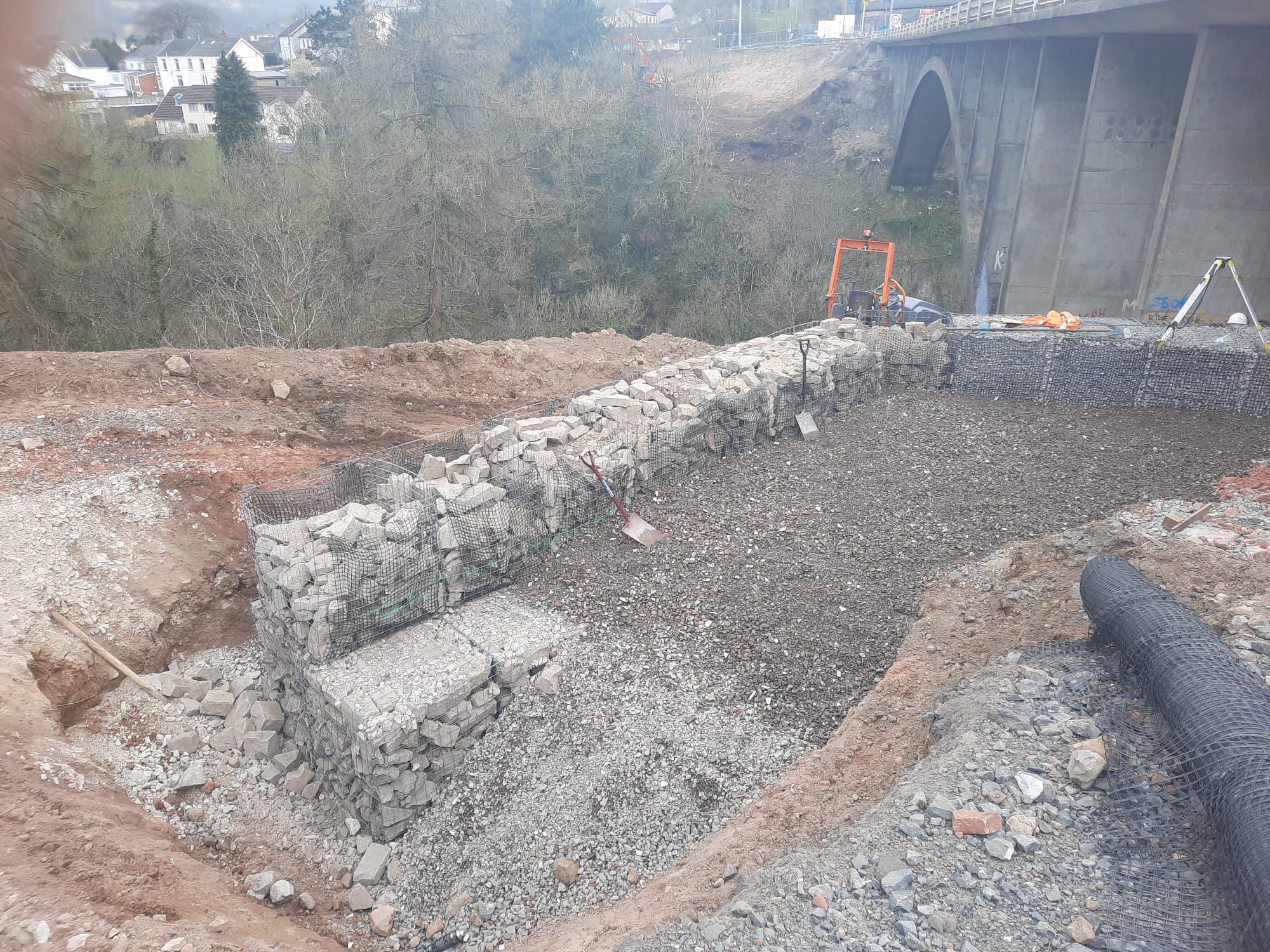
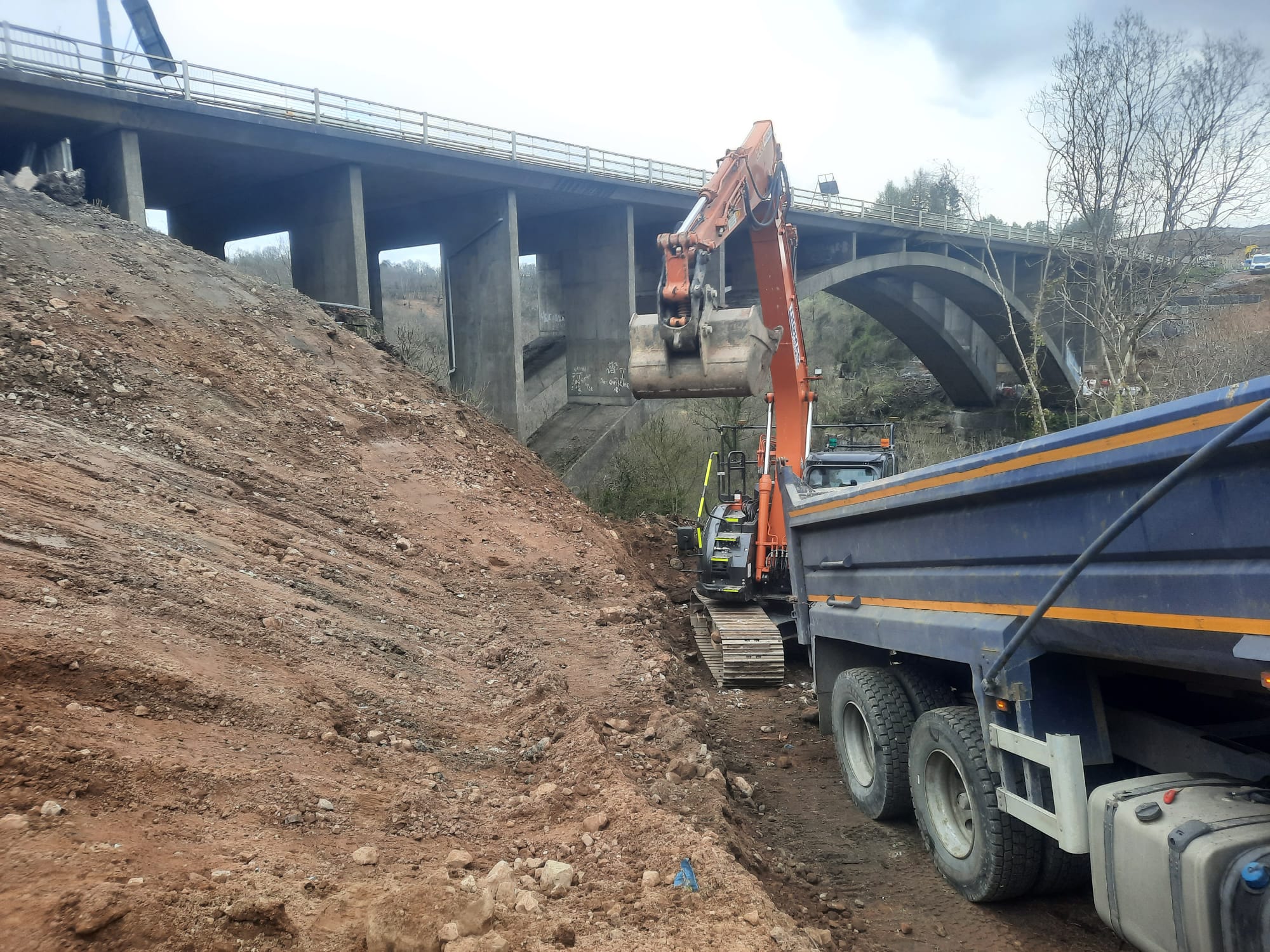
My project is a bridge strengthening and widening. In order to keep pace with the programme for the overall scheme, piling works must commence on my site on the 1 Jun 22. Pressure has been applied to start earlier. Currently on the East bank Gabion retaining walls for piling platforms (temp works) are being constructed and on the West Bank an access track cut so that retaining structures can be built there also. Both of these packages of work are forecast to be complete by late April (over a month in advance).
What has come to light since is several clashes with the permanent works which has forced a redesign of the temporary works. I have conducted my own initial review of the designers proposed solutions and believe that if they are accepted its likely that everything that has been built since my arrival on site may now be stripped out and rebuilt (which is equally soul destroying and comical). Not all of the materials used will be recoverable, meaning waste, environmental impact and cost. Plus the subcontractor executing the works has been charging day rates – further wasted cost. This is not only a significant financial expense, but also cuts into any profit share for both the public and private sector partners. In summary we have added significant cost and saved zero time – yet are still on track to be ready for piling on 1 June 22 so will not affect the overall programme.
To make matters worse, a 3D model exists of all the permanent structures on this scheme – by modelling the temporary works in the 3D models these clashes and issues would have been painfully obvious. Having asked why this isn’t happening I’ve been told ‘because the temp works change all the time its hard to model, we would have to keep re-modelling them’ – I was left pretty amazed by the reply, this is exactly why they need to be modelled! I am a complete convert to BIM for design and see just how beneficial it is to the industry. Having discussed this further with colleagues here I have realised just how unfamiliar any of the engineers are with REVIT or any other form of BIM.
I think for Design and Build to truly be beneficial and the benefits of BIM to be realised the process should be:
Partial Design (initial design) -> build virtually -> resolve issues -> build on site
What I am witnessing is this:
Partial design -> build on site -> identify issues -> re-design -> strip out and rebuild
Has anyone else had a similar experience? Has anyone actually saved time or cost in construction this way? What’s peoples experience on site been of BIM and modelling ahead of live construction?
What ARE we going to do with partial factors?
Firstly sorry about the Greek – difficult to do in this blog format
This si a live conservation regarding the current re-wrote of PAM 10 Structures for Operations.
The use of PAM 10 must be simple. It must be compliant with current structural design codes .
The current codes combine partial factor and limit state design.
The fundamental equation for ultimate ( failure ) limits states requires that:

the design effect is less that the design resistance.
Crudely we can determine
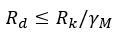
to get to the design resistance we reduce the characteristic ( usually mean vale to resistance, say , material strength) to ensure that it is statistically unlikely to be lower than the value used in design.
Although not straight-forward it could be envisaged that PAM 10 strength could be expressed as pre-factored so the resistance is determined directly using strength divided by a global gamma M ( for example C30 concrete has a strength of

The partial material factors used would be expressed in the refence documentation together with measures that PQE’s might take to vary risk.
The effects side of the equation is nominally
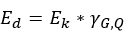
This implies we enhance actions to ensure that the design values are seldom less than actually applied . This is complicated by three issues:
| Issue | Description | Comment |
| Permanent .v. variable | Different actions are more variable than others. So permanent actions are increased by less than variable ones | Permanent actions are less variable than variable actions |
| Ultimate states .v. service states | Checks for failure Use the limit state in which the actions are factored up and resistance factored down Service checks do not factor actions( generally and use material properties that may or may not be factored | Generally stiffness is factored down for single elements but left at mean for systems ( like floor joists) |
| Multiple variable actions | When a design is checked with, say gravity and wind variable actions the dominant action is enhanced more than the secondary action | It is statistically unlikely that they are simultaneously at the extreme |
Since the narrative for PAM 10 is the management of risk – it seems sensible that some of the partial factor method is represented without having the full complication of full BS EN application.
We therefore would like the consideration of four possible options:
| Option | Resistance | Effect | Comment |
| 1 | Pre factored using recommended | Actions are pre-factored using appropriate gamma G and Q factors (ignoring further partial (psi) factoring of secondary variable actions ) | Resistance would be fairly faithful for design values Pre- factored actions would be difficult when either variable or permanent action dominated in a design . Would generally have to be taken on the high side |
| 2 | Pre factored using recommended | Actions are quoted as in various codes and are to be simply factored using fixed gamma G and Q partial factors ie ignoring further partial factoring ( psi for secondary variable actions ) | Resistance still recognizable Elements of the partial factor risk management seen in simplified action factoring |
| 3 | Resistance is to pre factored down using quoted gamma M and then further factored down using simplified gamma G,Q ( ie all the factoring on the material resistance side) | Actions are used, quoted as in various codes, without any factoring | Resistances would be about a third of the mean value Some conservatism would be embedded to allow for cases of high variable action component Actions used as is So ULS and SLS checks look similar in use |
| 4 | Resistance as quoted in BE EN with recommended partial factors quoted for use to be applied | Actions are quoted as in various codes and are to be simply factored using fixed gamma G and Q partial factors ie ignoring further partial factoring ( psi for secondary variable actions ) | Nearest to BS EN application |
DISCUSS
 Holdfast Training Services Trial Blog