Boise, Idaho Steel Portal Frame Collapse
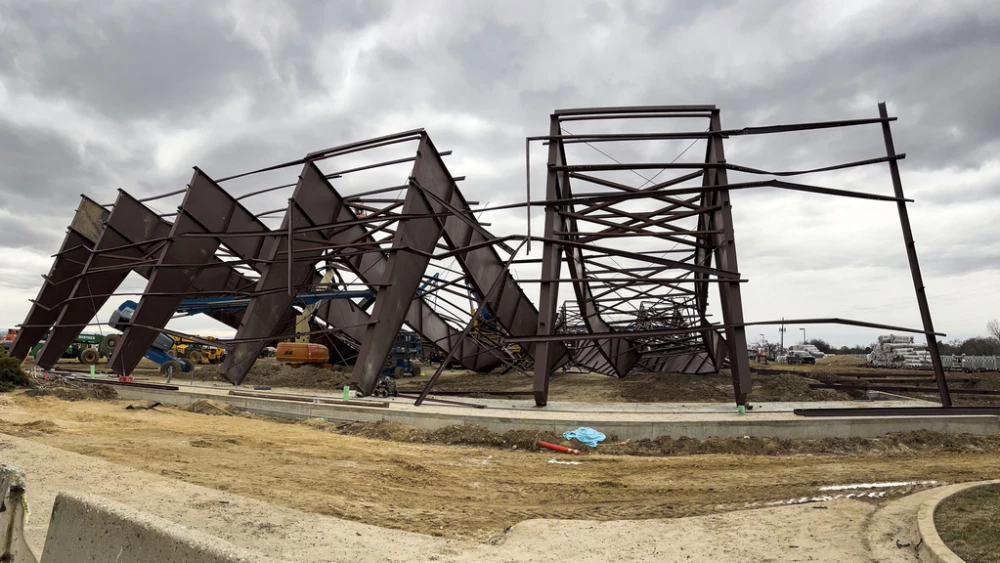
Unsure how broadcast this was back in the UK, but there was a recent significant structural collapse in Boise, Idaho. A steel portal frame under construction collapsed under what appeared to be high winds, resulting in the death of three workers and nine others injured.
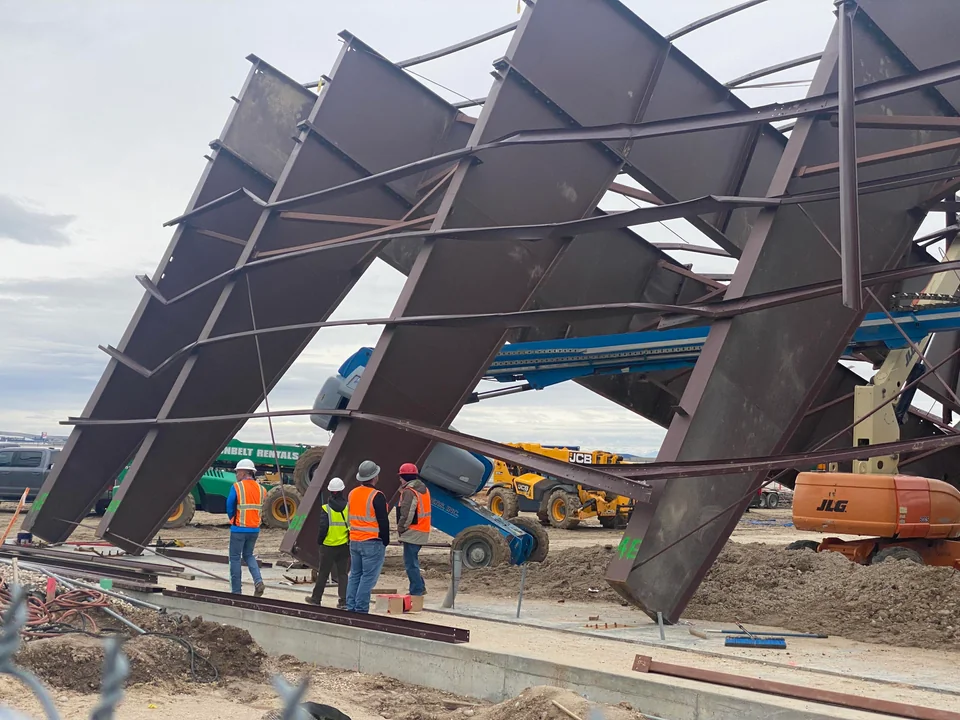
The investigation into why the structure collapsed is still ongoing by OSHA, but the information put out so far appears to indicate that high winds, combined with a lack of installed cross-bracing, resulted in the collapse of the structure at the centre, bringing down a supporting crane during a lift.
Whilst a tragedy, I think this can provide some crucial guidance as to the dangers of ignoring methodology, underestimating environmental loads and temporary loads. I’m sure in the finished design that the wind load was dealt with properly by a sufficient bracing system, but it seems that from the trickle of information being released from the site that it was overlooked during the actual method of works. From a recent news article, an individual said “Wind picked up and they were scrambling to install guy wires and cross braces before the collapse. Said the building was making all sort of nasty noises then it was a massive all at once failure.” Even if this was considered in design, the H&S plan for operation was either not substantive enough, or ignored, for the construction to still be operating in high wind. For the site I was on, during the erection of the steel frame, if high winds were recorded, any work on the frame would pause until the wind subsides. This is certainly evident in the UK, with the BCSA (Pub No. 39/05) publishing a guide specifically on the erection of steel frames in windy conditions. If there had been no workers on site during these high winds, it still would have been an expensive collapse, but at least no loss of life would have occurred.
Usurpingly, the principal contractor, Big D Builders, have had a history of safety violations and fines from OSHA. Whether this is just a coincidence or a critical link, I am sure the OSHA report will say.
Certainly relevant for Ex STEEL and the temporary works element for future courses. A morbid lesson that can teach us the importance of H&S plans on site, construction methodology, and most importantly, how temporary works should support a construction to prevent unnecessary deaths.
Further articles on the collapse:
https://www.idahostatesman.com/news/local/community/boise/article284954822.html
 Holdfast Training Services Trial Blog
Hi Dan,
A grisly reminder indeed. Does bring out a few other thoughts as well – I assume OSHA issue heavy fines for workplace fatality or injury so I wonder if the PC thought that the cost of losing the building was worth the potential cost of fines? I assume no-one would have thought or expected fatalities would be incurred but even breaching the safe practice of erecting in high winds would have incurred some cost? Especially when the weather centre had recorded threshold conditions just 10 mins prior.
My site placement featured a large steel portal frame and the PC went through great effort to ensure the temporary state was safe, far more so than the final design (although that my be as the designer would bare the responsibility for the permanent state). It was interesting to see how the PC and subbie went through in detail the methodology in a similar manner as we would in a ROC drill – albeit 3d modelled rather than moving coloured boxes around a sandpit. Subsequently they agreed what to do when certain thresholds were breached, akin to Decision Points in our own planning cycles. I wonder if such a process was exhibited here? Rather than what initially seems like the PC chanced their arm and sadly got it very wrong.
I am seldom disappointed by the human capactiy for ignoring lessons of the past and repeating errors. So many portal frame collapses occur during construction and most seem to have their roots in failure to proerly address the temporary state. UK side this seems to get caught before there is a disaster, whereas so often state side it seems to be when the risk materialises as an issue. I do wonder if we are more pedantic, and expensive, therfore slower but safer than our American cousins. It would make an interesting literature based study…