Archive
A Developer Secondment – Best of Both Worlds?
Three weeks into working for a Data Centre (DC) developer, it is clear that the experience won’t follow the typical ‘blueprint’ of a PET course secondment. The developer can identify opportunities for clients, initiate a project and create concept designs, before a Release for Proposal (RFP) for detailed design and then construction contractors. They are then responsible for overall project planning and management, scheduling, budgeting, risk management and quality. In the world of DCs, they are the specialist link between Contractor and Client.
The typical secondment of 7 months with the contractor followed by 7 months in the design office is tried and tested, providing the site experience necessary to lead engineering works and the technical knowledge to oversee technical designs. The developer space, on the other hand, appears considerably more fluid. Depending on the relationship with the employer, there are links to the contractor, the designer, the commercial team, legal, H&S, QA and more throughout the project. Earlier exposure to the ‘bigger picture’ and the wider stakeholders can present an opportunity to pick and choose challenges to tailor the experience.
My experience will primarily be within the DC developer design team, with a focus on a construction in Slough. There are 3 different buildings on site at different RIBA stages (commissioning, construction and technical design). Placement within a developer team appears to present significant opportunities and challenges for gaining the required experience against UKSPEC standards, discussed below.
Opportunities:
- The developer has significant commercial involvement throughout, from routine client and contractor management to OFCI (Owner furnished, Contractor installed) equipment procurement.
- The developers are the specialists; the contractor may not be. This forces an intimate understanding of the design to facilitate construction, in order to meet the unique client requirements. Design, development and engineering problem solving (Comp B) opportunities are everywhere you look.
- RFI and change management – the developer will manage principle designers and contractors through the RFI and change process. This presents considerable opportunity to develop technical knowledge (Comp A) across the project life cycle.
- This ensures a unique, holistic project experience throughout, with design input through to quality assurance and commissioning responsibilities.
Challenges:
- There isn’t the same concentrated site experience that would be achieved with a contractor. Developer project management is done at a high level (particularly the oversight of principle contractor), meaning the opportunities to lead and manage works are fewer (Comp C).
- Working for a multi-disciplinary specialist = a steep learning curve! Understanding the interfaces between M&E, Civil & Structural, Utilities and OFCI vendors in an unknown-to-you industry is a tall task.
- It isn’t the ‘proven route’. The experience isn’t on rails; you have to work hard to understand where opportunities exist and where you can add value.
The result is a fluid role that could mould to the required experience for the student. Provided that opportunities are exploited to lead on site, whether verifying ongoing works or carrying out H&S reviews, the work in the developer space should marry up with the UKSPEC competencies. For the PET course, this could provide an alternative path towards chartership in expanding, innovational industries.
Heathrow Airport Civils Phase 2
I am around 4 weeks into Phase 2, working in the Civil Engineering team within Technical Services at Heathrow Airport. The team owns, on behalf of the business, all civil and structural engineering assets at Heathrow including the two runways, five terminals, 65 bridges, 48 tunnels, 66 retaining structures, 150+ buildings and 200+ km of roads. We are involved throughout the whole asset life cycle; we ensure that new structures meet the correct requirements and regulations, we plan and implement the maintenance regimes, and we are involved in the end-of-life management such as decommissioning and demolition.
As we are quite a small team I am not solely aligned to one project, instead team members work together on areas of expertise or where capacity allows. However the major project I have been given to be technical lead on is the T2 Baggage Programme (T2B), and specifically within this the various demolition projects which are ongoing and scheduled. T2B is part of a £3.6 billion capital investment plan: it is a major programme at Heathrow with five tranches, each with their own projects, with civil engineering involved at every stage. The programme seeks to expand the T2 baggage handling system, which currently operates in the moth-balled T1. It will also (eventually) see the full demolition of T1, to be replaced by a whole new terminal. The programme must be completed without impacting current terminal capacity (i.e. provision of stands) and/or the efficiency, safety and resilience of the airfield operation in the vicinity of T1/T2.
Challenges at Heathrow:
The majority of the airport was built in the 1960s-1980s and this has created a variety of issues. Many of the terminals contain significant amounts of asbestos and RAAC (and sometimes RAAC coated in asbestos for extra risk). The RAAC has reached the end of its design life and in some areas is in poor condition and is undergoing regular inspections and maintenance to extend its safe use as much as possible, particularly where is it load- or end-bearing.
In addition, BIM and H&S files were unheard of when much of the infrastructure was built, meaning there are some assets with no recorded information such as calculations, drawings or maintenance schedules. One example is Calshott bridge, built at some point in the 1950s, which spans the main tunnel route into the central terminals – quite a risk if something were to go wrong. We have been tasked to conduct a loading assessment, but the bridge has been covered in cladding and services meaning that maintenance or even a proper visual inspection is impossible, and without any supporting documentation it is a real challenge.
Heathrow is under strict regulation by the Civil Aviation Authority and receives hefty fines for any delays or quality issues which affect the airlines. The first consideration on any engineering project is the impact on the operational effectiveness of the airport, meaning often the chosen solution is a ‘quick fix’ to extend the asset life rather than a permanent solution which could be disruptive and therefore costly.
Below are some photos from my time so far:
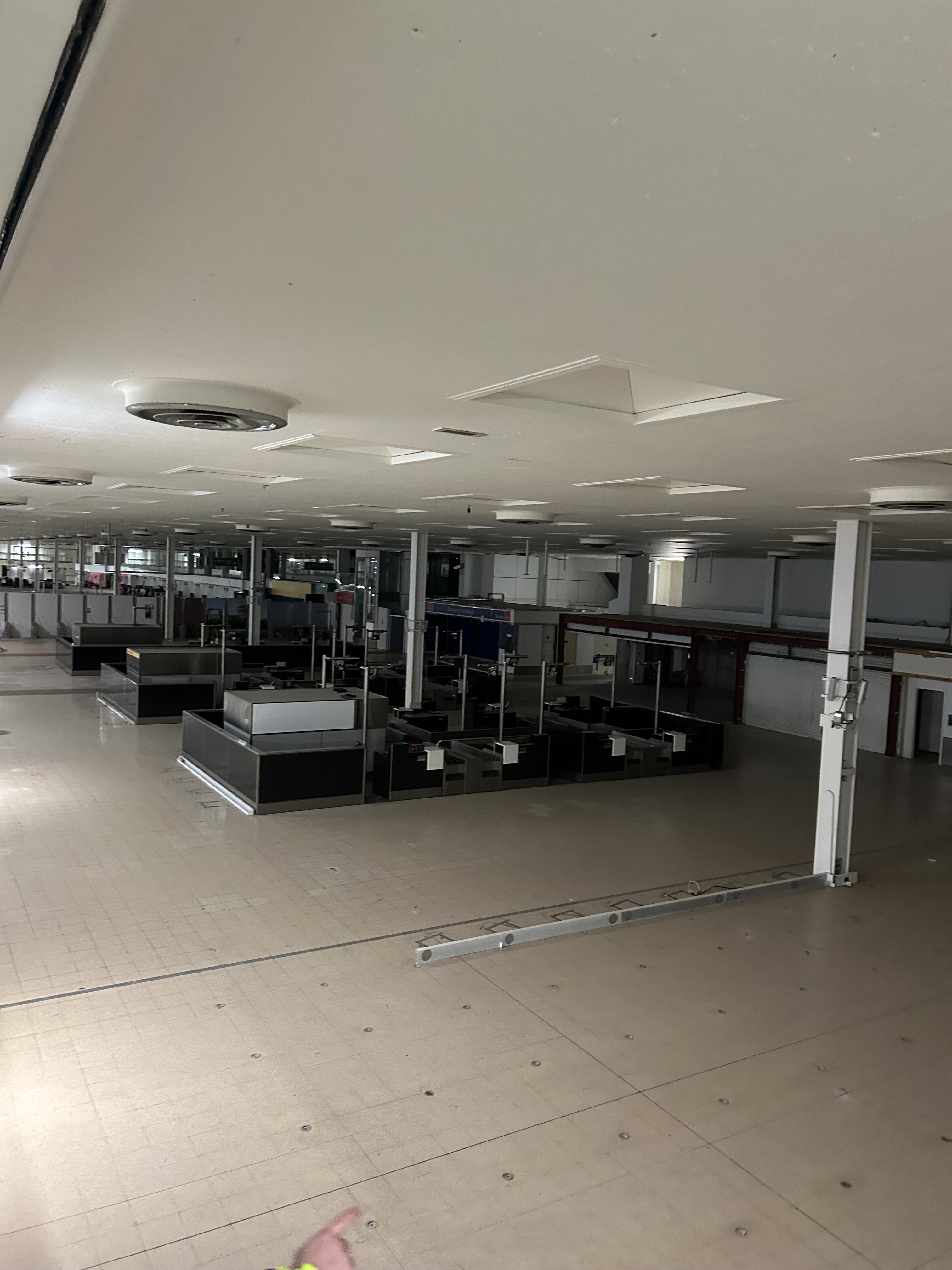
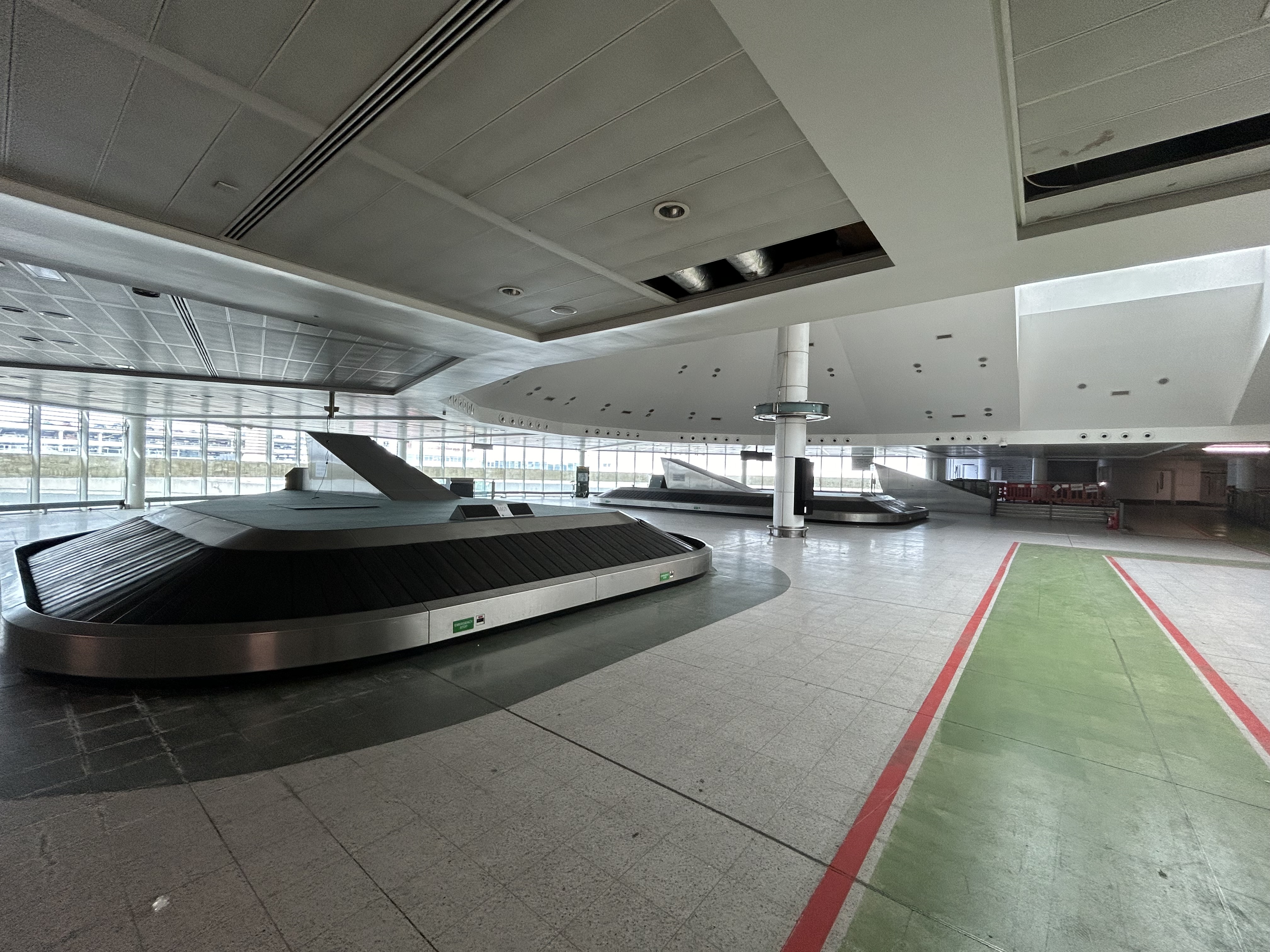
Inside the moth-balled Terminal 1. How do you safely demolish an entire terminal (full of asbestos) in the middle of the UK’s busiest airport?
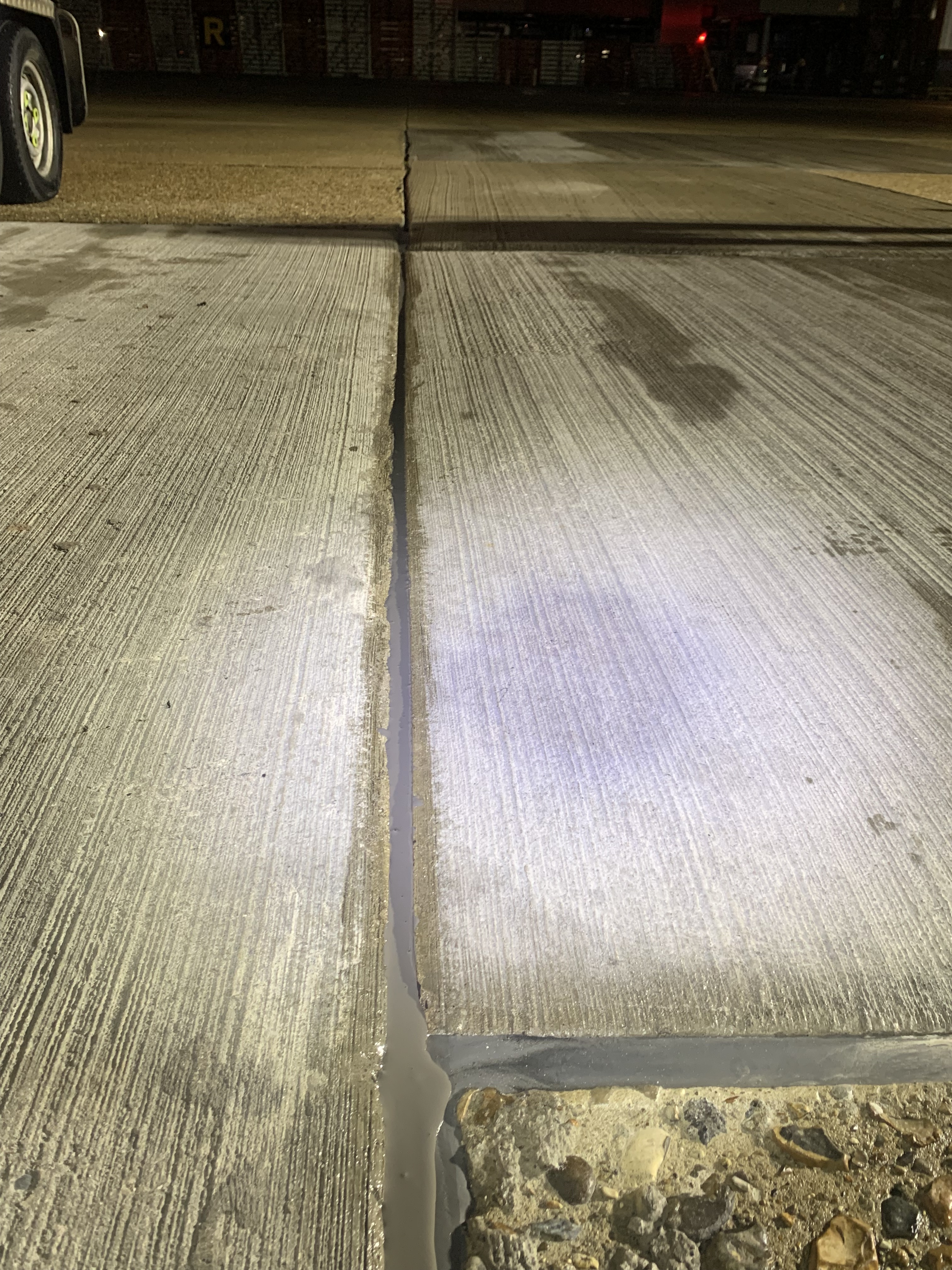
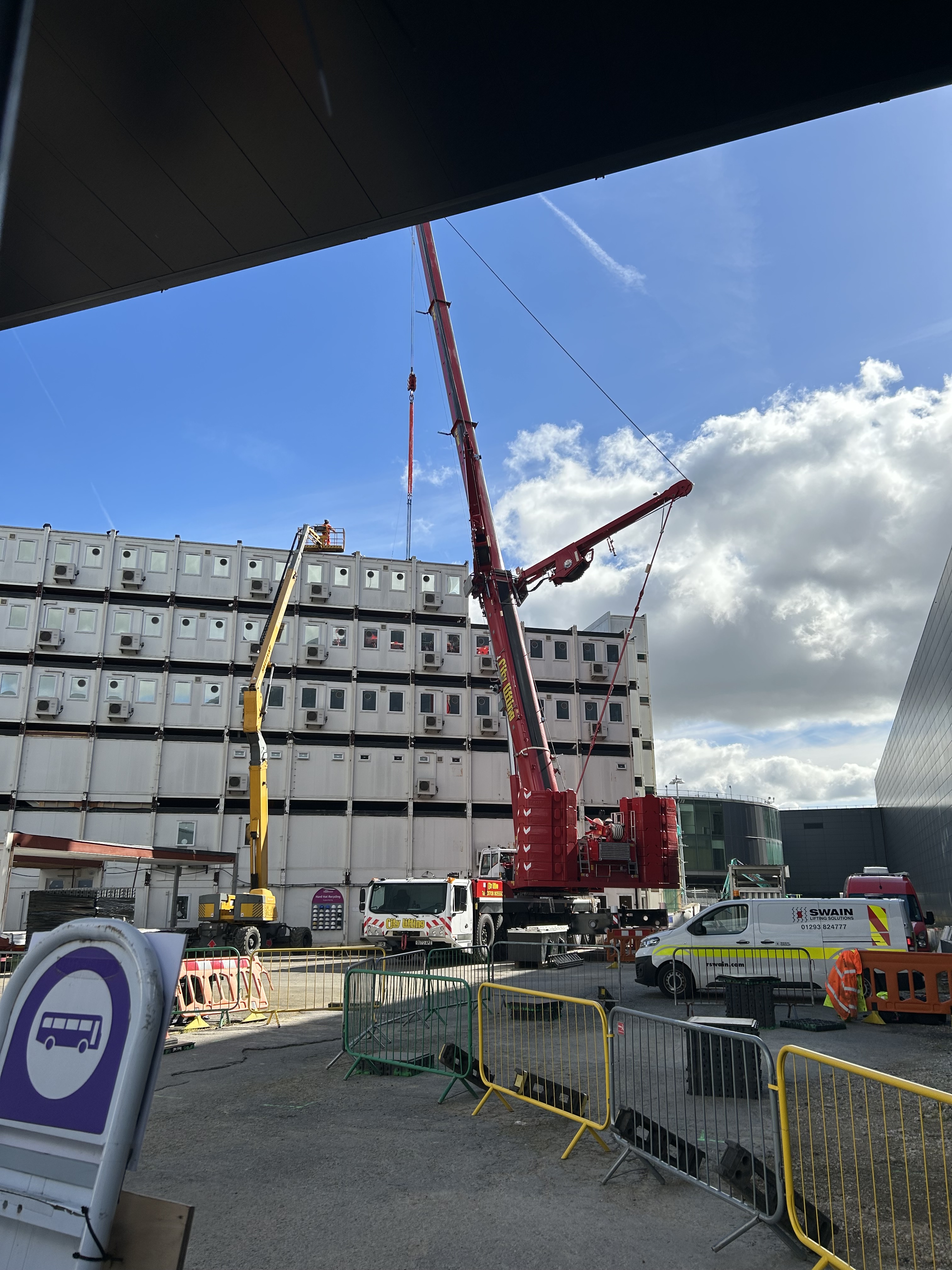
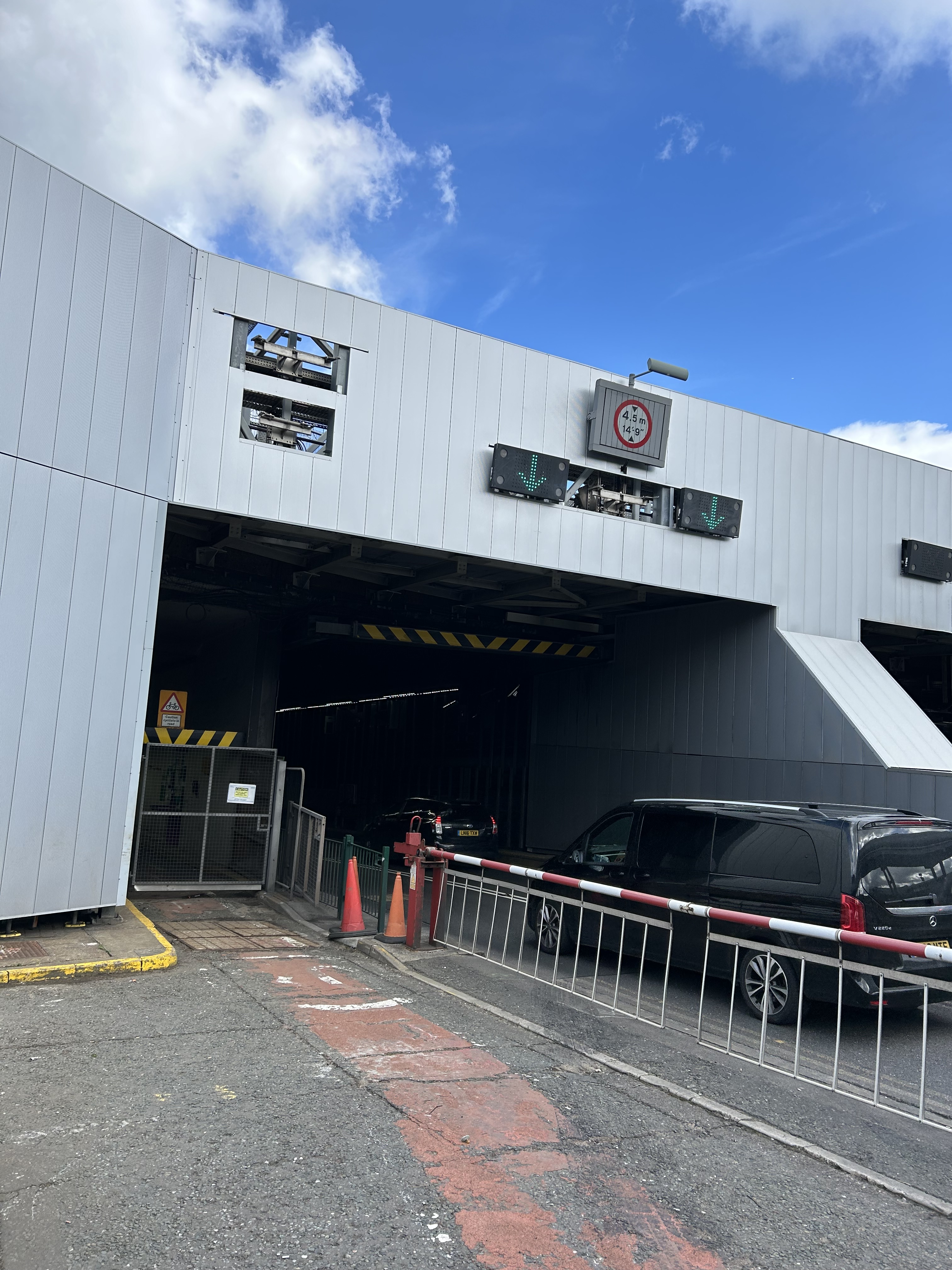
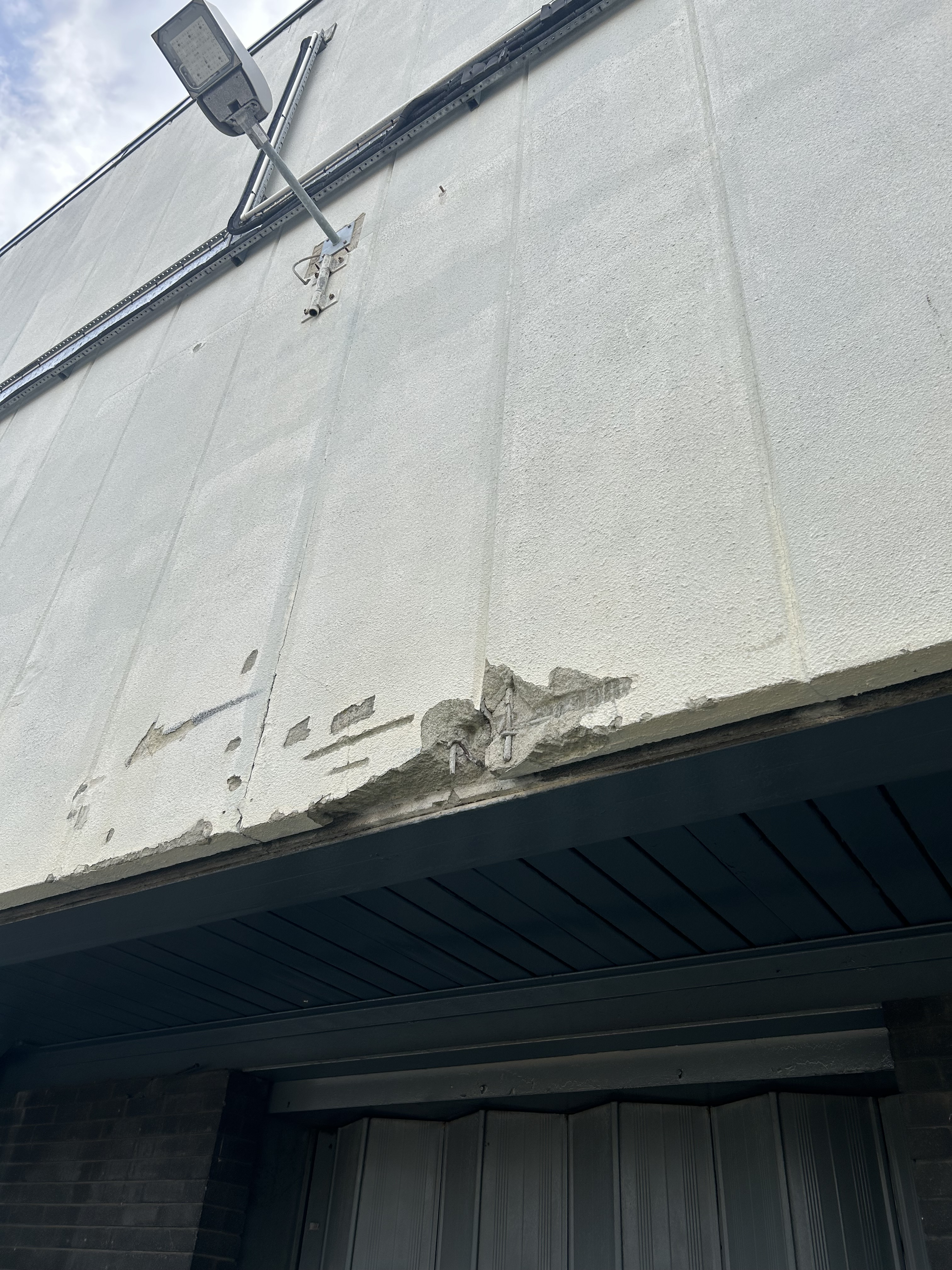
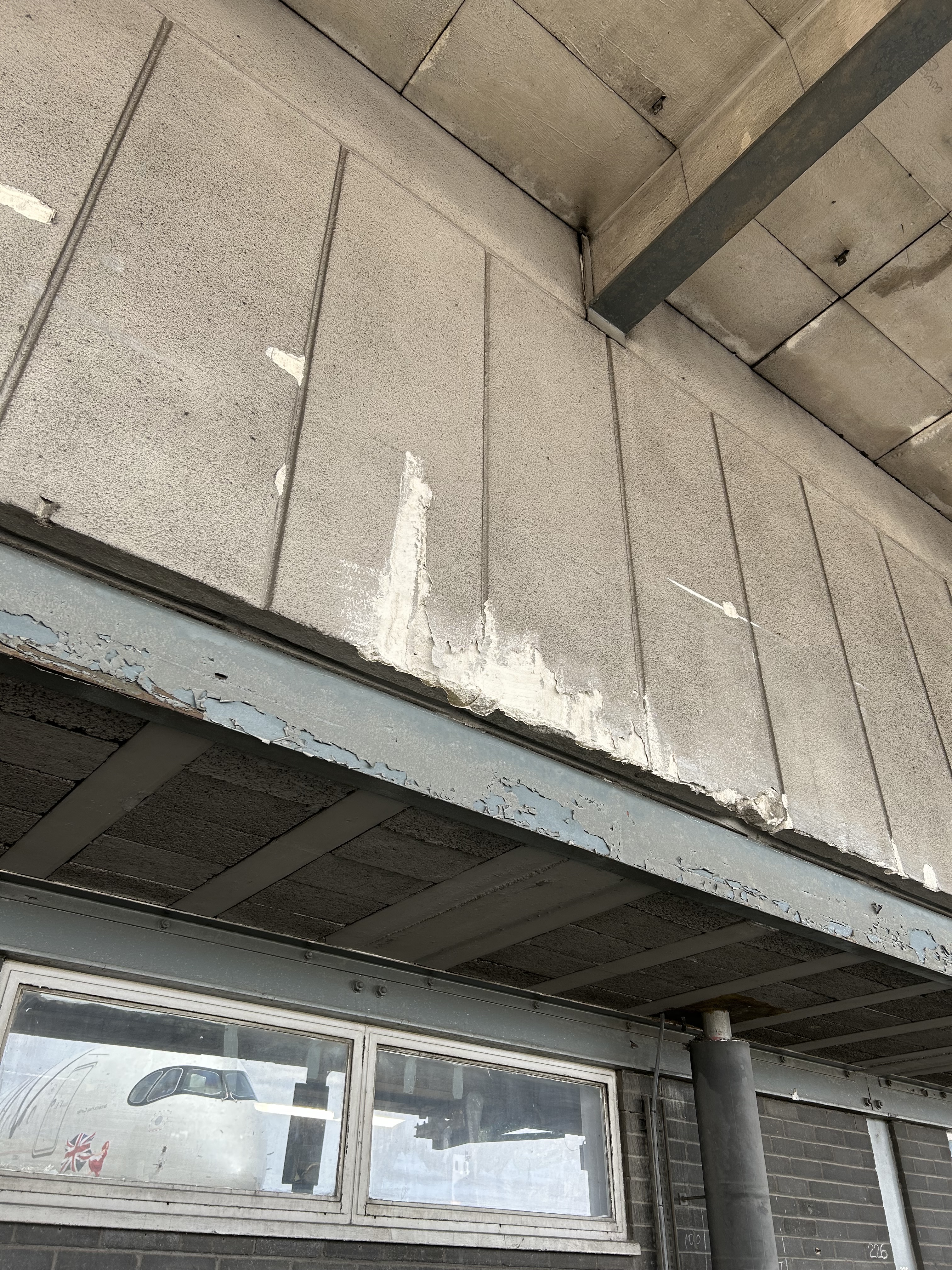
Damaged RAAC panels – not structural…
M25 Junction 10/ A3 Wisley Interchange Upgrade Project
I have recently started phase 2 of the PET course working as part of the earthworks team in Balfour Beatty who are delivering the M25 J10/A3 Wisley interchange upgrade. The project includes the widening of the A3, free flowing left hand turns at every corner, the widening of the existing interchange roundabout, an 8 mile long non-motorised user road and 8 new bridges. There is also an increase in the road furniture and a number of re-wilding projects to offset the impact of the removal of green space along the M25 and A3. A brief overview of the project is below.
Client: National Highways (formerly Highways England)
Contractor: JV between Balfour Beatty and Atkins
Budget: £317 million
Project Start: Summer 2022
Estimated Finish: Summer 2025
Website: M25 junction 10 – National Highways
The earthworks team is responsible for cut/fill, sub-base and temporary working platforms across the whole project. The cut/fill is occurring around sheet piling operations to remove excess material, after existing bridges have been demolished and back filling behind new bridge abutments. The temporary working platforms are used primarily for sheet piling operations, CFA installation and self-propelled modular transport (SPMT) bridge construction. The construction of the platforms to enable these operations is my primary focus at the moment. Some of the temporary working platforms will be used for enabling horizontal drilling operations for services, something that will become a blog post in the near future. Below is a selection of photos of my time on site so far:
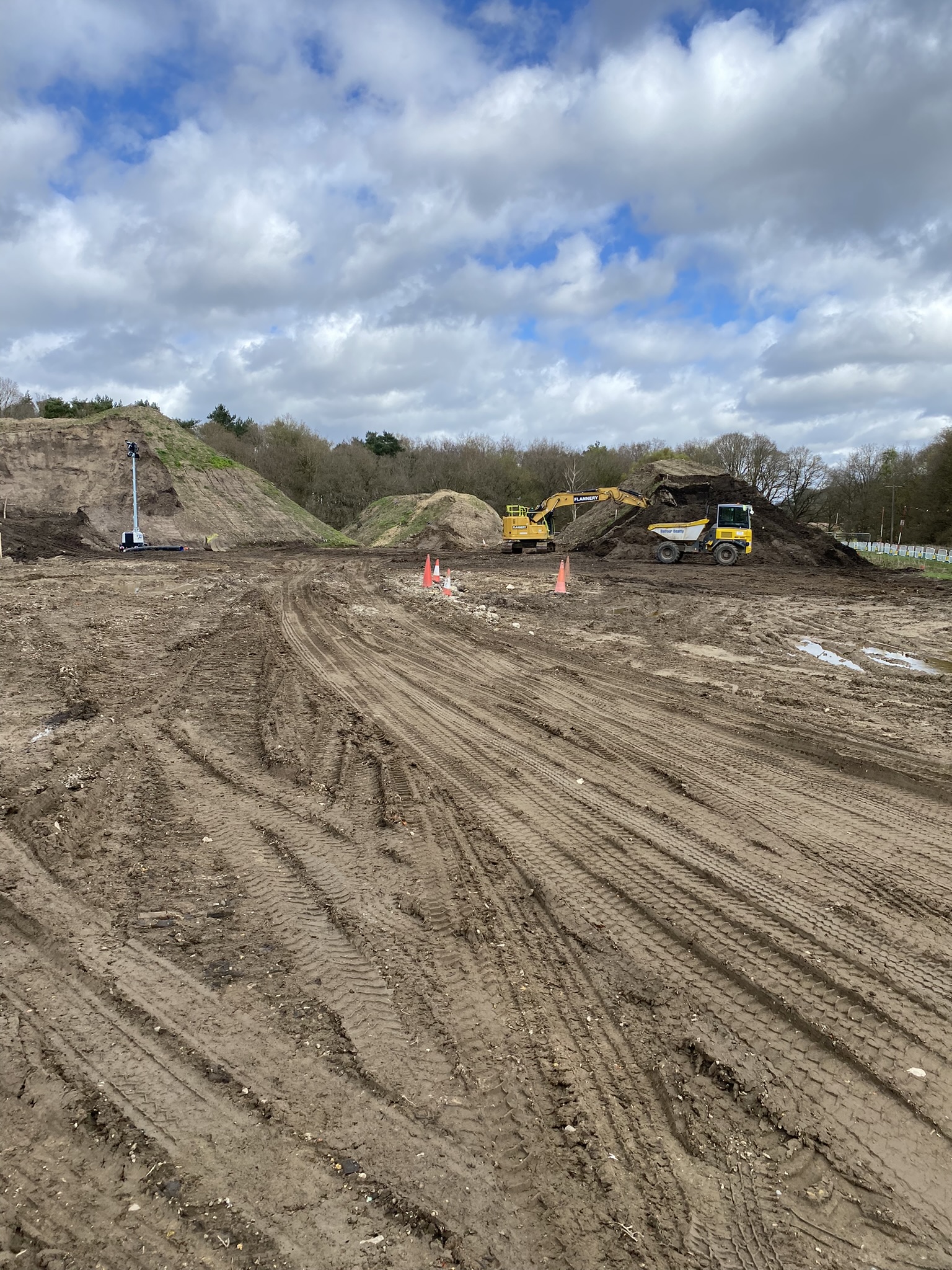

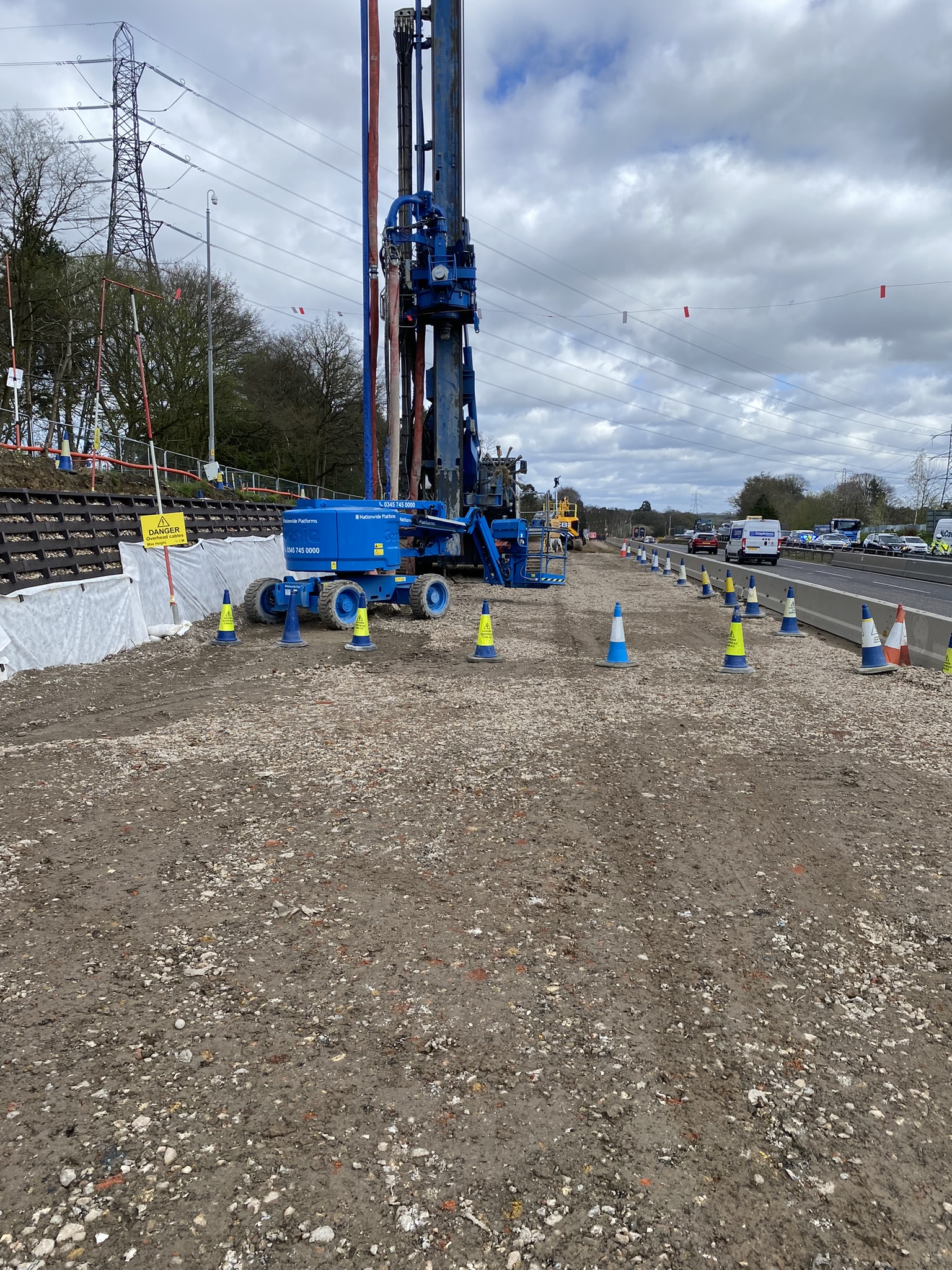
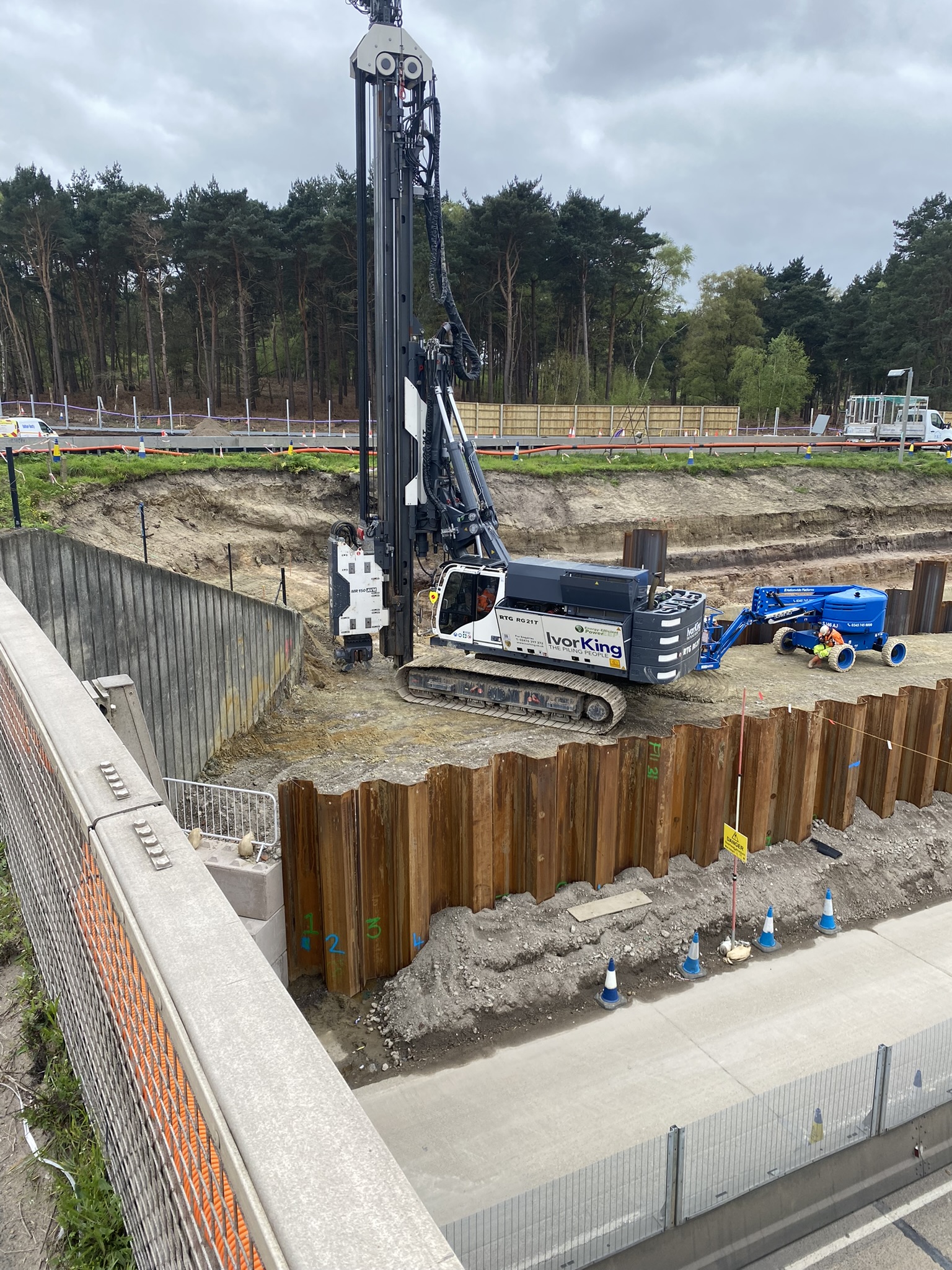
Note: all the photos are from different areas of site but demonstrate the amount and variety of temporary working platforms that are being installed. The sheet piling operations are all temporary works and are being conducted just to install some piled foundations for a bridge abutment. All of that work will be taken out once they have been installed.
A number of challenges have already become apparent on site. As often seems to be the case, there is a disconnect between the designers (who are not geographically co-located with the site team) and the reality on the ground. Some temporary working platforms have co-ordinates that place them in the middle of live traffic which is clearly not a workable solution. Others have half of the platform at the road level and the other half 5 or 6m higher with no scope to batter or step the slope due to site boundaries. When this occurs, a significant amount of time is then spent trying to establish what the designer is trying to achieve and how the platform is going to be used. This involves engagement with designers and sub-contractors so that we can construct something fit for purpose and in the right location.
I’m looking forward to getting more involved in the project; there is a lot going on and I hope to get involved with as much as I can. If you have any questions or would like to know more, please don’t hesitate to get in touch.
 Holdfast Training Services Trial Blog