Archive
Surrey based CPD – a tour of the M25/A3 Junction 10, Heathrow Airport and Data Warehouses
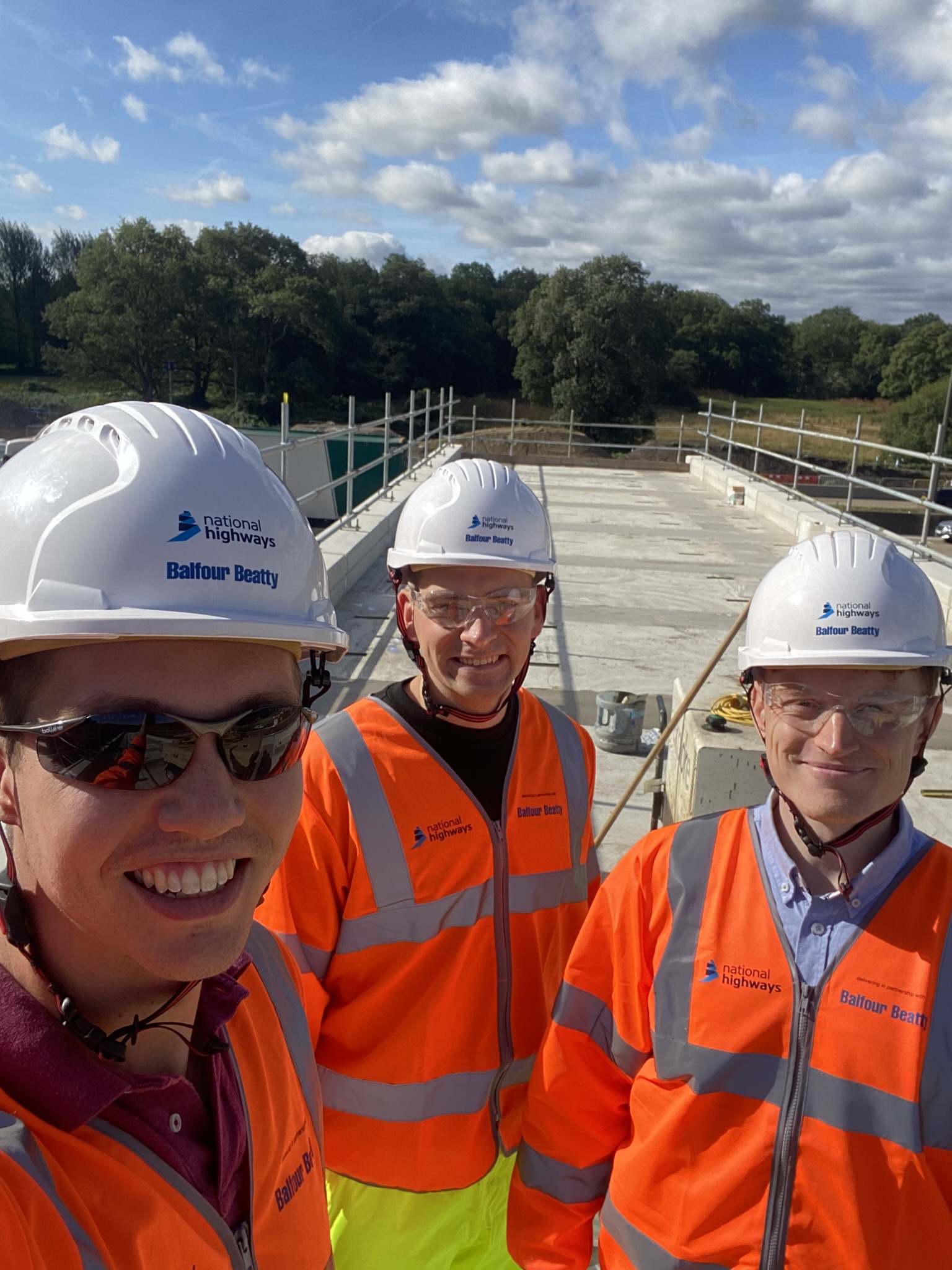
On Thursday 15th August, Capt Rich Swarbrick, Capt Joe Nield and I (Capt Joe Solway) managed to finally co-ordinate ourselves and spent the day taking turns to host each other on our respective sites. We started our journey in the M25/A3 Junction 10 traffic, before Rich gave us a flying tour airside of Heathrow and Joe took the after lunch shift in the data warehouses.
We started the day at Nutberry compound, the base location for the M25/A3 Junction 10 upgrade project where I showed Joe and Rich a 5 minute video put together by National Highways outlining the scheme. If you want to give the video a watch yourself, you can find it here: https://nationalhighways.co.uk/our-roads/south-east/m25-junction-10/#panel-id-41261b7e-591a-4f9d-bbd6-5ae9a9043c9f.
After the video we headed out to site to see a bridge that is being constructed alongside the M25 in a place called Buxton woods. The bridge is a composite bridge with 2 steel beams approximately 3m deep with a concrete deck. They deck had just finished being poured and we were able to climb up onto it to have a look further. I was responsible for constructing the working platform which was quite problematic (future blog post will provide further details) and also for constructing all of the platforms that will be used to move the bridge into place.
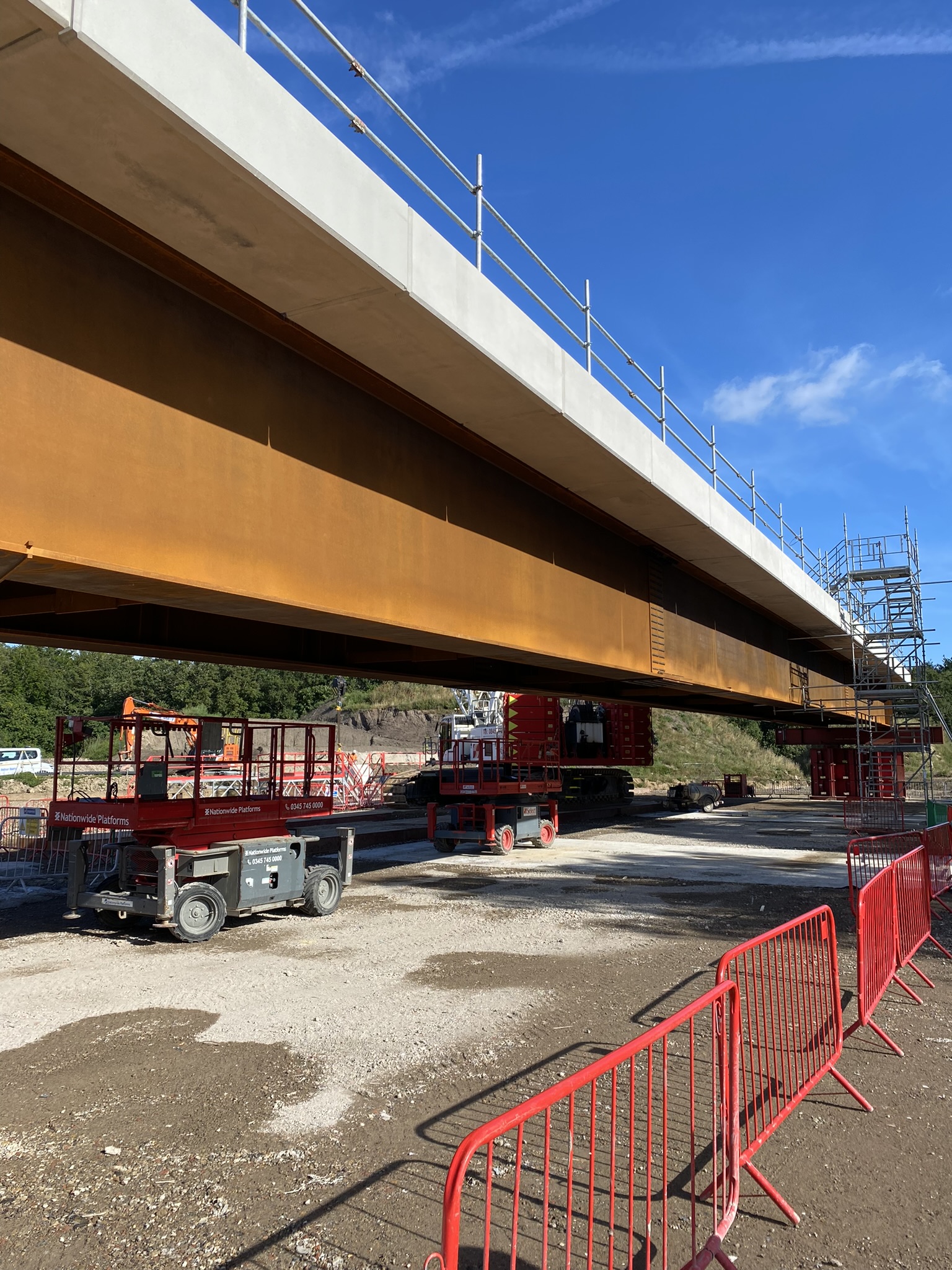
The bridge is being moved into location via a self-propelled modular transporter (SPMT) on a full road closure (currently booked for October for those in the local area!) where it will be driven out across the M25 and moved into position at Clearmount, about 100m away. Frustratingly, one of the platforms that was constructed for this has been dug up by the drainage sub-contractor, with new drainage laid right underneath where the bridge will be travelling. This is going to pose some challenges in the future, but hopefully nothing that will slow the project down even further! We discussed the challenges associated with sub-contractors and their own programmes and how sometimes construction appears to take place out of sequence and causes more problems than it solves!
At Heathrow Airport, we visited the various airside projects which Rich is involved in and discussed the unique challenges and risks associated with them.
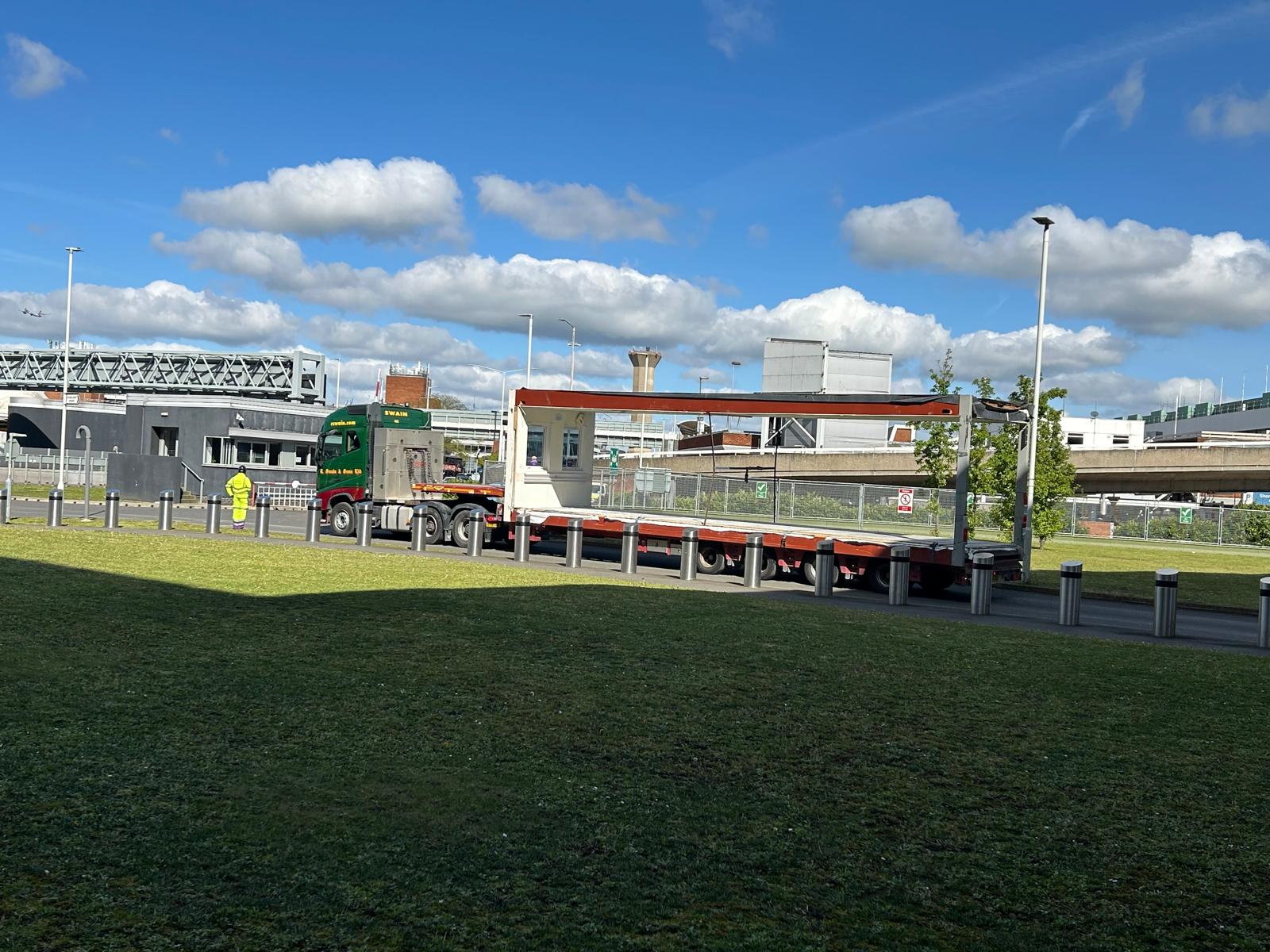
At Starlight Point, the topic of his TMR 1, the final crane lift had been successfully carried out earlier in the week. We discussed the logistical burden surrounding the dismantling and transport of large modular units through a congested Central Terminal Area, and how the risk of Foreign Object Debris has been mitigated.
We then discussed the challenges surrounding Reinforced Autoclaved Aerated Concrete (RAAC) at the airport, including how it is being managed, the research which is ongoing to better understand it’s properties as it reaches the end of design life, and how the risk is being managed with support from specialists within the engineering industry.
Next we looked at the moth-balled Terminal 1, due for full demolition over the next decade. Within the building are a multitude of services such as HV cables, security and data feeds which are still active and must be fully identified, and subsequently diverted or protected during any works.
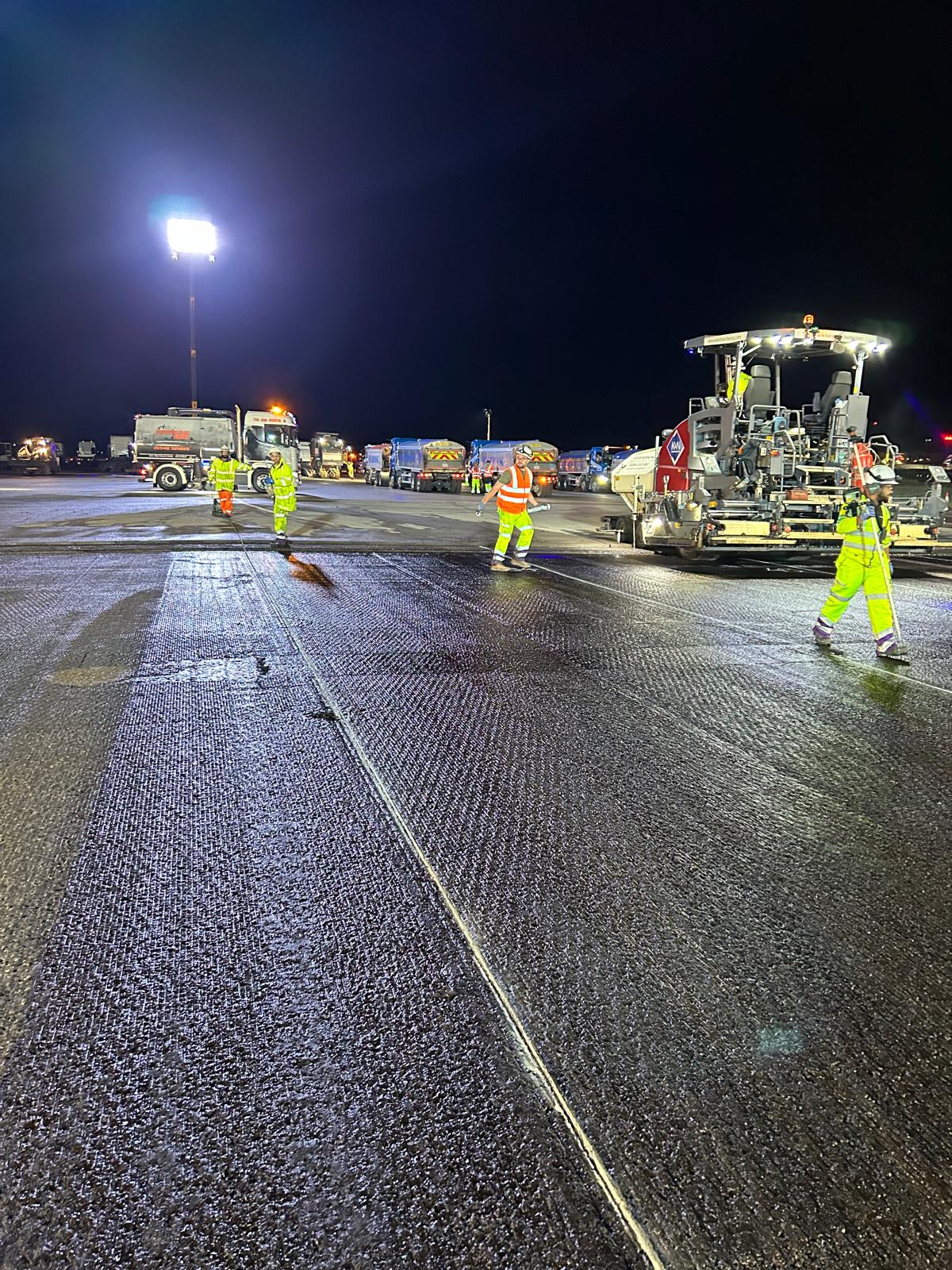
Finally, we visited the asphalt batching plants being used for the Southern Runway Rehabilitation project. We discussed the works which are being carried out overnight to plane and re-lay the top two layers of the runway, all within a short overnight working window, at massive risk to the airfield operation.
At the Yondr data centre campus, we visited a 3-storey 30MW building. That building alone utilises 26x 2400kW generators, 26x 904kW electrical plant rooms and 24x 1697kW chillers. The ongoing works included installation of chiller noise attenuation, low voltage cable pulling, cladding install and the relocation of site accommodation.
We discussed an ongoing challenge to route new underground services through a congested zone to supply the newest data centre, involving two different Principal Designers and Principal Contractors. A scope gap in the contracts meant there was a 30 metre (approx.) stretch that was undesigned by either team. This has been an important interface between civils and M&E specialists, trying to adhere to underground service code/regulations whilst carrying out considerable ground works.
We then looked at the considerable redundancy across a data centre, from diverse power streams (utility and generators) to chiller resilience (4n3 system, where 4 chillers cover each 3-chiller duty). This was most evident in the ‘technical corridor’ where many of the building services diverge. We ended with an introduction to hot-aisle containment, a common environmental control strategy within data centres. Fan wall units interact with the chilled water system to draw heat from the server racks, maintaining server integrity.
Value Engineering vs Joe
With three data centres on one campus, and residential properties approximately 50m away, the acoustic limits on site are very tight. With over 70x 2.4MW generators and 1.6MW chillers (amongst far more plant), the noise output is significant. We’re pretty much one shout away from our planning permission limits.
Load banks (LB) are required within data centres to test the generators on-load twice annually. Typically, the LB will be fixed in place and have busbar run to each generator, testing via the flick of a switch. Value engineering, in all it’s glory, led to the removal of a fixed LB for a far cheaper mobile unit, sat on a trailer and driven to each of the generators. The CAPEX savings are in the millions (though the OPEX is questionable). The issue with mobile LBs on this site is that the units can’t be routinely attenuated for noise, due to the centre of weight on the trailer and ventilation requirements.
The pertinent info for the mobile LB (not yet procured) is:
- 88dbA noise emissions, likely upwards.
- At least 2m space required to the sides to allow air intake.
- No cover above to allow exhaust of air (fire risk).
- Broadly 3.5x2x2.5m dimensions (HxWxL, on trailer).
From multiple vendors and data sheets, we will significantly breach noise limits. Some work with the acoustics team has shown that we need to reduce the dBA to 82@1m and 56@10m to the side. Modelling shows for the closest test location to the nearest noise receptor (residential), an acoustic screen would need to be over 7m tall, 2m away to the side, to screen the upwards trajectory of the noise emissions. This would then have to be wheeled around with the generator, stored, windproofed, etc… Highly unpractical.
I have also looked at:
- Procuring a compliant load bank. Tests show the load bank would need to emit 72dBA – a huge acoustical gap on a logarithmic scale.
- Buying the nearest receptor. Unsavoury and questions remain about breaching noise limits at other receptors.
- Screening the large fence line in front of the receptor – deemed ineffective, due to soundwave trajectory.
My preference and recommendation is to retrofit the fixed load bank and attenuate in place. A business case is being made elsewhere, but there may be no way back. So, keen to hear if anyone has any mobile acoustic solutions/suggestions to this kind of problem?
 Holdfast Training Services Trial Blog