Archive
This is what we always do…
I’m working on the construction of a 17 storey concrete framed hotel for Liverpool City Council. The project is part of a wider scheme of redevelopment that has 10 plots being redeveloped in close proximity. The plot adjacent to my project is a 14 storey concrete framed office building which will be the Northern Headquarters for the Royal College of Physicians (RCP).
The RCP project has reached the stage where its tower crane can be dismantled. As part of this plan a 500t mobile crane will be brought in to lift off the tower crane jib. The only place the mobile crane can set up is across the main access gate to both my project and RCP. This will cause significant disruption for at least the 2 days required for the lifts. In addition to this, 2 days has been allocated to the construction of a 300mm thick crane mat using 120m3 of 6F1.
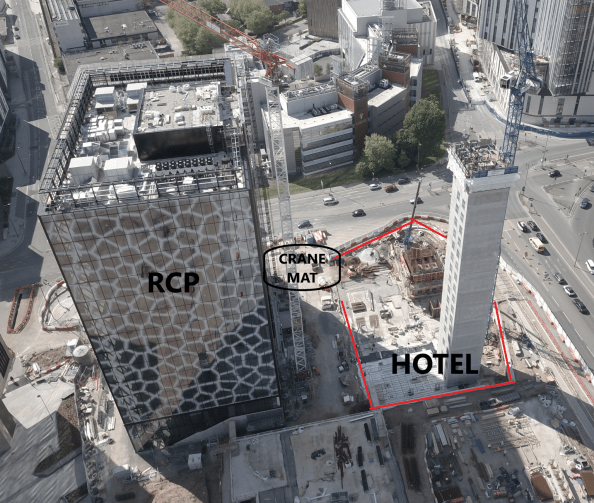
The ground conditions across the scheme are sandstone bedrock and the area where the crane will set up is a 150mm thick reinforced concrete slab. When questioned if the crane mat was necessary the response wasn’t completely convincing. It seems that a crane mat has previously been used on this scheme and so a consultant has been tasked to design the mat.
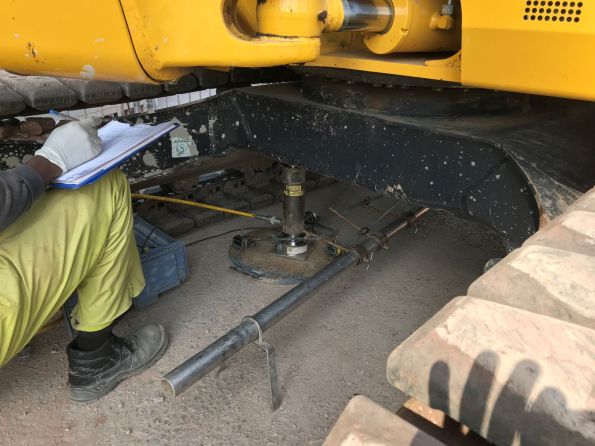
With the prospect of an additional 2 days of delay to my project and the associated Compensation Event claim, it was agreed that plate bearing tests could be carried out to confirm if the crane mat was required. Unsurprisingly, the concrete slab on top of sandstone bedrock proved to be a sufficient base for the crane outriggers. As such, my project has saved 2 days of delay, £14k of overheads for our concrete frame subcontractor, 120m3 of 6F1 and the cost of employing a groundwork’s subcontractor to complete the crane mat. Not too bad for 1hr of testing at a cost of a few hundred quid!
In many ways senior management are ruthless with commercial aspects of the project and exploiting savings and Compensation Event claims. On the other hand, I have been surprised at how unwilling people are to challenge the way we do things on site or question what information the decision was based upon.
Has anybody else been surprised at how unwilling people are to challenge the way things are done?
 Holdfast Training Services Trial Blog