Archive
House of Cards
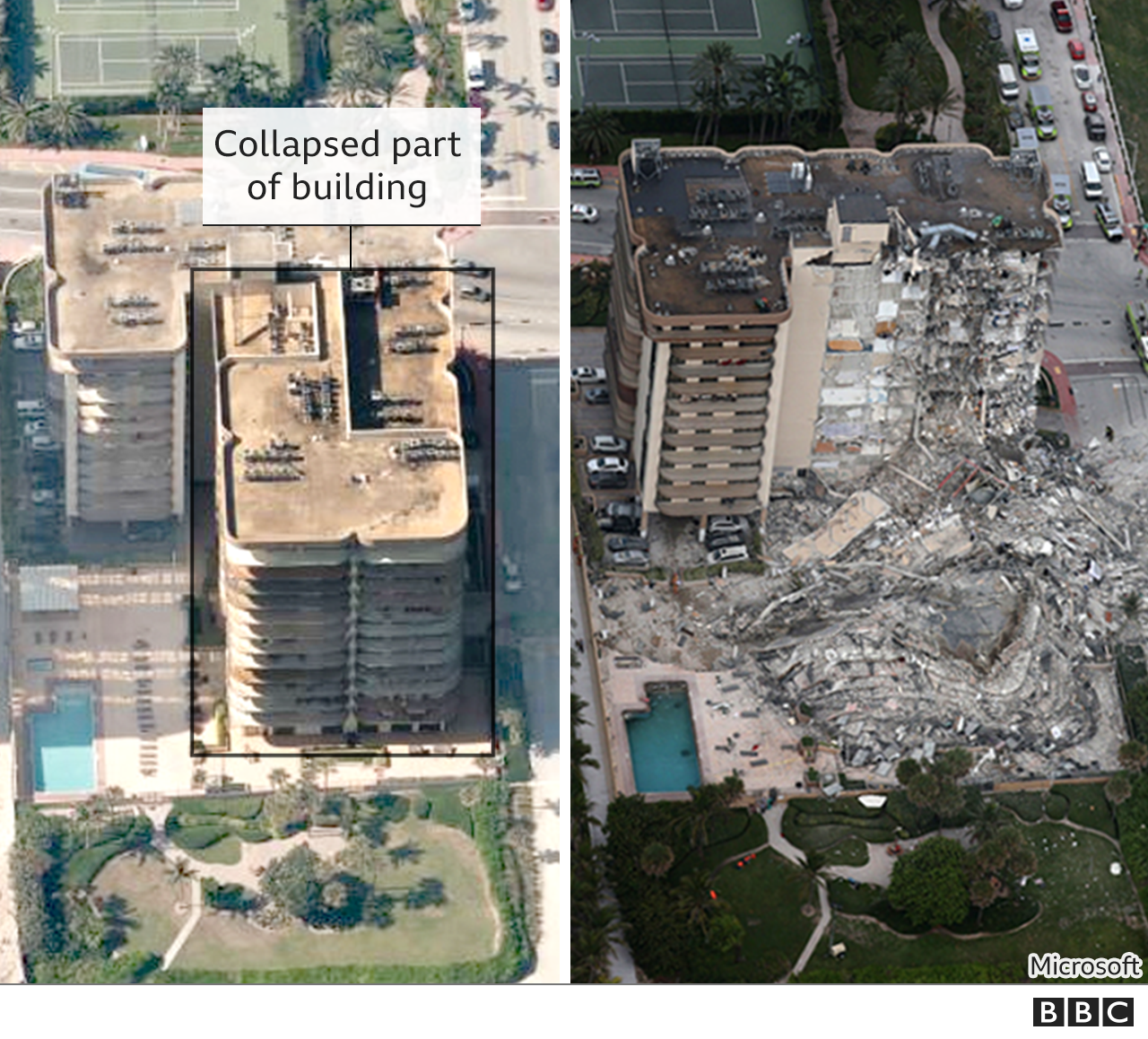
Do you remember the news of a Miami building collapse last year? 98 people were killed in the spontaneous collapse of an entire wing of the Champlain Towers on 24 June 2021. Official investigations into the cause will be ongoing for years but early reports are circulating of the assessed failures and how the second wing remained standing. If you haven’t already seen the Miami Herald interactive House of Cards article is it an engaging read (approx 20mins).
In summary, the assessed key failures include:
- Design failures & gross incompetence. The collapsed wing had smaller columns than the standing wing and critical suspended slab beams were removed from drawings prior to construction.
- Poor construction and refurbishment works. Only a fraction of designed reinforcement was placed in columns. Refurbishment around the pool did not remove existing works prior to refurbishment, instead adding additional layers of decorative concrete which which failed to reveal the over-stressed slab beneath and also added additional load to the slab.
- Structural damage / degradation. Slab cracking led to increased load transfer to the perimeter walls for equilibrium. This resulted in an over-stressed slab to wall connection which eventually failed and led to structural collapse.
- Neglect / lack of maintenance. The cracking slab led to water damage and flora ingress causing further damage. Leaks were common due to the structural deformation and these leaks were maintained but the cause was never investigated.
The building stood for 40 yrs balancing like a house of cards until the steel connections along the perimeter wall eventually fractured and the weaker wing collapsed. Obviously codes and building practices have moved on since 1980 and these failures are certainly avoidable but many high rise structures from this era still stand today, so how many of them are a house of cards? The official investigation report will provide lessons learnt and could have significant impact on maintenance of existing structures and future high rise construction.
Digital Twins
I first heard the term “Digital Twin” at a John Holland (JH) Engineers’ Forum. It was pitched as a new and exciting concept which would innovate the way JH would manage construction projects in future. After some research into the topic, I found that the Centre for Digital Built Britain is implementing a National Digital Twin programme which may be of interest to those heading for professional review soon.
What is a Digital Twin?
Digital twins are virtual models of a physical asset but, unlike BIM, they are digitally connected to their physical counterpart. Digital twins have been used for years in manufacturing and aviation but are beginning to emerge in the built environment. “Twins” are a concept, rather than a single piece of software. The Twin is created by continuously learning from multiple sources including analytics, machine-learning algorithms and artificial intelligence. Real-world data is captured via sensors, drones and other wireless technology operating within the physical asset which feeds back to the Twin.
Types of Digital Twins
Similar to the levels of BIM, there are levels of Digital Twin maturity which can be implemented as follows:
Level 1: Descriptive Twin. The descriptive twin is a visual replica with live, editable design and construction data, including 3D models and BIM.
Level 2: Informative Twin. The informative twin uses increased integration with sensors and operations data for insights at any given time.
Level 3: Predictive Twin. The predictive twin captures real-time data, contextual data, and analytics to identify potential issues.
Level 4: Comprehensive Twin. The comprehensive twin leverages advanced modelling and simulation for potential future scenarios as well as prescriptive analytics and recommendations.
Level 5: Autonomous Twin. The autonomous twin has the ability to learn and make decisions through artificial intelligence, while using advanced algorithms for simulation and 3D visualization.
Video 1: What is a Digital Twin? (from Redshift by Autodesk)
What is the National Digital Twin (NDT) programme?
The NDT programme is run by the Centre for Digital Built Britain (CDBB), a partnership between the University of Cambridge and the Department for Business, Energy and Industrial Strategy. The programme aims to:
1. Enable a National Digital Twin: an ecosystem of connected digital twins to foster better outcomes from our built environment.
2. Deliver an Information Management Framework: to ensure secure resilient data sharing and effective information management.
3. Align a Digital Framework Task Group: to provide coordination and alignment among key players.
Video 2: What is the National Digital Twin (NDT)? (from CDBB)
The NDT Gemini Principles
The CDBB has developed the “Gemini Principles” as the conscience of the NDT. The Gemini Principles consist of 9 guiding values to ensure the Digital Twins have purpose, maintain trust and function effectively. Find out more about the 9 values here: https://youtu.be/GoIv5ritEiM
Why use a Digital Twin?
- Improves efficiency and quality. Digital Twins allow the user to gain valuable insights about the performance, operation or profitability of a project, whether completed or in progress which can improve efficiency and quality.
- Aids decision making. A Digital Twin can provide real-time information about what is happening now which improves the speed of issue detection and resolution ultimatelyaiding decision making.
- Reduces risk. Conducting virtual inspections, using wireless technology, allows for identification of maintenance requirements or fault detection without requiring a human to physically inspect the asset. This is particularly useful for railways and large bridges and a technology driven inspection can return information not visible to the human eye. Virtual inspections reduce the requirement and risk for workers on a job site and can be much quicker; allowing for more frequent inspections which again reduces risk.
- Increases profitability. If the Digital Twin is fully engaged with for all of its benefits, a project can experience improved efficiency, quality and reduced risk which all provide the opportunity for increased project profitability.
- Enhances coordination. Digital twins enhance coordination as the real-time data capture can be combined with the proposal of a future installation or change concept and easily demonstrated visually to stakeholders, such as within a 3D model simulation. This provides an accurate prediction of how the asset will react to change and provides reassurance of the predicted outcome, enhancing coordination between the current physical asset and implementation of alterations.
- Provides reassurance of asset integrity. Digital twins provide a consistent and easy way to conduct real-time monitoring of a built asset which provides early warning of asset fatigue and potential failure.
Challenges of creating a digital twin
- Additional technology. The technological requirements to establish a digital twin are additional to those implemented for BIM. Companies will have to invest in Digital Twin technologies, train staff and maintain currency to effectively implement the concept.
- Return on investment not guaranteed. Unless an effective Digital Twin is implemented and then used to enhance the project, the return on investment will not be achieved. The upfront cost of technologies may require multiple project Digital Twins to be implemented before a profit is realised.
- Demand. JH are committed to making this investment and realising the benefits of Digital Twins as soon as possible, but other companies may not have this mindset. Unless a Client requires a Digital Twin for use in the operational life-cycle and beyond, some construction companies may not see the need or cost benefit of implement this concept.
- Coordination between creator and user. The creator of the Digital Twin during the design and construction phase may not be the same individual who uses the Twin for analysis of the asset in future. This disconnect could lead to a lack of investment in or understanding of the Twin and a poor replication of the physical world.
Innovative Digital Twin Data Capture in Practice
Video 3: ‘Spot’ the Robot Dog captures data for a Digital Twin (from DeZeen for Foster & Partners)
Additional Information
If you’d like to read further into this topic, I found these pages of interest:
National Digital Twin Programme | Centre for Digital Built Britain (cam.ac.uk)
Digital Twins in Construction, Engineering, & Architecture | Autodesk
What Is a Digital Twin? – Digital Builder (autodesk.com)
Digital Twinfrastructure | Institution of Civil Engineers (ice.org.uk)
Defining the digital twin: 7 essential steps | Institution of Civil Engineers (ice.org.uk)
Living a double life: Lessons from parallel careers in civil and military engineering
Upcoming ICE Webinar: Wed 19 May 2021 (1730-1900BST)
Link to book: Living a double life
If available please support a friend of mine, Captain James Glass, in his upcoming ICE Webinar where he will be discussing his experiences working as a Civil Engineer in the Oil & Gas industry and as a reserve in the Royal Engineers. Amongst other things, James was deployed on TRENTON 7 (South Sudan) as the Garrison Engineer and will be discussing the Bentiu quarry which he recommended the UN close due to significant risk to life. This segment of the webinar will include an overview of his quarry assessment and the remedial works completed to date.
ICE Event Summary:
Join ICE East Midlands Nottingham, Leicester, and Derby (NLD) Branch for a presentation from Captain James Glass of the Corps of Royal Engineers as he identifies from his own experience how the disciplines in civilian and military engineering differ in the 21st Century.
From a Civil Engineer in the Oil & Gas industry to an Army Reserve Officer within the 65 Works Group Royal Engineers, Captain James Glass has led engineering design and delivery teams on operations in Afghanistan, Iraq and South Sudan providing critical engineering support to Defence in the UK and overseas operations.
Captain Glass will draw on case studies from these projects, the challenges faced and the lessons that can be shared between engineering fields as he reflects on six years of his civilian and military engineering career and experience.
 Holdfast Training Services Trial Blog