Archive
Forth Road Bridge
Hello all,
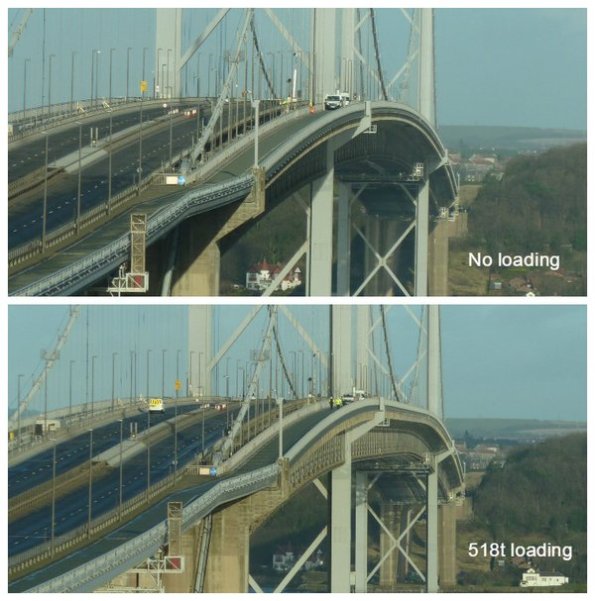
You may or may not have heard about the problems associated with the Forth Road Bridge near Edinburgh. I have been passed some info that I though may interest some of you out there….
The images below are from a load test done a couple of weeks ago. Achieved using lots of full gritter lorries with drivers on danger money wearing armbands! Some interesting facts:
- The bridge spans just over a kilometre between the piers. It was the 4thlongest suspension bridge in the world when opened in 1964.
- The piers are 156m tall (about half the height of the Eiffel tower, and about the same as Lomond or NEV from seabed to flare tip)
- The bridge contains 40,000Te of steel
- The maximum tension in the main cables is about 25,000 tonnes at the mid span
- The main cable tensile stress is incredibly high at 1050MPa (N/mm2), which is about the same as a 17 stone man suspended from a 1mm2guitar string (nice image there – sorry)
- Each tower supports 8000Te imparted from the main cables.
The part that failed was an inverted steel ‘goalpost’ that is attached to the bottom of one of the deck hanger cables. It almost certainly suffered fatigue damage, ie too much stress cycling caused by heavy lorries. When it was opened in 1964 it was designed for 25,000 vehicles/day, and the maximum lorry weight was 24Te. Today it sees 70,000 vehicles/day and the maximum lorry weight is 44Te. If the steel component had completely parted, the consequences are debatable. In the worst case it could have caused a section of the road deck between the hangers to tip, possibly causing the combination of 4 or 5 heavy lorries (that would cause such a failure) to crash.

Job cuts in the North Sea
I thought I’d spend a few moments putting pen to paper on the recent announcement by BP to cut 300 out of 3,500 jobs in the North Sea. (This note only refers to BP North Sea Global Operations Organisation.)
This was formally announced last Thursday in a Town Hall, i.e. get yourselves to the Gym for a centralised briefing (except this wasn’t three line whip). Whilst not directly influenced by this announcement I had a certain amount of interest, having been an observer during the recent military job cuts.
The Town Hall was delivered by the Regional President of the North Sea, Trevor Garlick, supported by the VP of HR, David Conway. In contrast to the military redundancy briefings it was not delivered from a script, however, it was clear that the brief had been prepared and was supported by a handful of slides. As can be expected the tone of the brief was also considerably different, in that it was softer and laboured on the fact that the decision to make the cuts was not linked to the cut in the price of oil but is a measure that had been under review and developed since Q4 2014.
So how did BP come to the number 300? The business driver is a simplification and efficiency agenda. In recent years BP has seen a 50% reduction in production, with an increase in costs of 37% and personnel by ~20%, all leading to a level of efficiency that is not competitive in the North Sea. Therefore in an effort to improve efficiency BP has scrutinised the activities in 2014, as it is the engineering, design, fabrication and execution of the activities that is costing the money, not the employee head count. With the activity set reduced the corresponding reduction in associated employee and contractor headcount was calculated. The 300 is split into 200 employees and 100 contractors, though the final numbers and split is still subject to consultation.
The execution of the redundancy programme itself does bare some similarities to the military redundancies. BP is openly inviting those that will take voluntary redundancy to come forward, through a process called expression of interest. It is not guaranteed that an individual will be selected, but it is hoped that it will reduce the number of compulsory redundancies. This process in open for a few more weeks and will close in February. After this point the VPs of each function will conduct a selection process and identify those individual that will be given voluntary redundancy and those that have been selected for compulsory redundancy. It is expected that the selection and announcements will be early in 2015 with those selected for redundancy leaving by end of Q2 2015.
One of the points laboured in the townhall was safety and how that will not be compromised during this process and this has led to certain trades being ‘ring fenced’. In simple terms all offshore worker have been excluded from the redundancy process as a cut in the offshore workforce was considered detrimental to safety. The impact of this is that half of the 3,500 is exempt from redundancy with the remaining pool approximately 1,750 strong. This relates to a 17% cut in the eligible workforce.
How does this affect me in the Project and Modification Team? At the moment I haven’t seen any direct impact in BP, though I expect that in the coming months the team will see some people leave as 80 of the 300 job cuts will occur in the Operations function, in which Projects and Mods sit. Some of this will be through redundancy though I expect some contractors will walk before being pushed as they look for other opportunities before the axe falls. Where these opportunities might be I don’t know, as many of the other operators and service companies are cutting jobs with considerably more gusto.
In terms of activities, I have seen little change in the desire to execute the work that I am responsible for as a significant amount of it is safety related and therefore tied to consent to operate. The remainder of projects have comparatively large operation efficiency impacts and so the business case that supports them remains valid, even with the depressed oil price.
Outwith BP I am starting to see some impact in the delivery of my projects. A number of senior Projects Engineers and discipline engineers in WGPSN have already made the jump and more are preparing to move on. The resultant churn as WGPSN attempts to balance resources will undoubtedly place pressure on the project schedules. In the coming months it will be important to spend more time with the Project Teams, which are unfortunately geographically remote, to keep the delivery on schedule / mitigate any impact that the churn has.
In closing this note I thought I would share Bob Dudley’s (BP CEO) comments at the World Economic Forum in Davos, Switzerland. He said: “We have got to plan on this (the oil price) being down for certainly a year, probably two and maybe three years.” Difficult times ahead for the oil industry and I expect that we will see more in the news.
Phase 1 and chartership
The documents I refer to below are mainly (not exclusively) for those following the IMechE route. However, I believe that it is worth all PET students considering the end state. Personally, I failed to spend enough time in Phase 1 considering it, i.e. chartership.
I would commend to you all that it is worth investing some time in digging out the UK Standard for Professional Engineering Competence. Having put your hands on that document then read it and spend time understanding what the statements really mean, as they are in my opinion rather vague. Whilst you are at PEW you are in a good place to speak with you mentor and ensure that as you head out to industry you get immediately after those tasks that provide evidence for competence and where appropriate reject opportunities that don’t provide evidence or decent personal development.
There are a few documents out there that are easy to find if you know to look for them (www.imeche.org):
– UK Standard for Professional Engineering Competence. (http://www.engc.org.uk/ukspec.aspx)
– Competence profiles – Guidance for applicants and assessors. Part 2 industry classification (K) – The Army.
– IEng and CEng guidance notes.
– Guidance on the Preparation of an MPDS Final Personal Report and Development Action Plan.
As a closing remark, I recognise that Phase 1 has its own pressures and putting this off appears an acceptable COA. However, if you do decide to follow this advice it will save you hours of time working out what the EC is looking for and may prevent you being burdended with a task during Phase 2 /3 that adds no value, except to the company that is sponsoring your attachement.
Miller Circle and ‘H’ Lighting
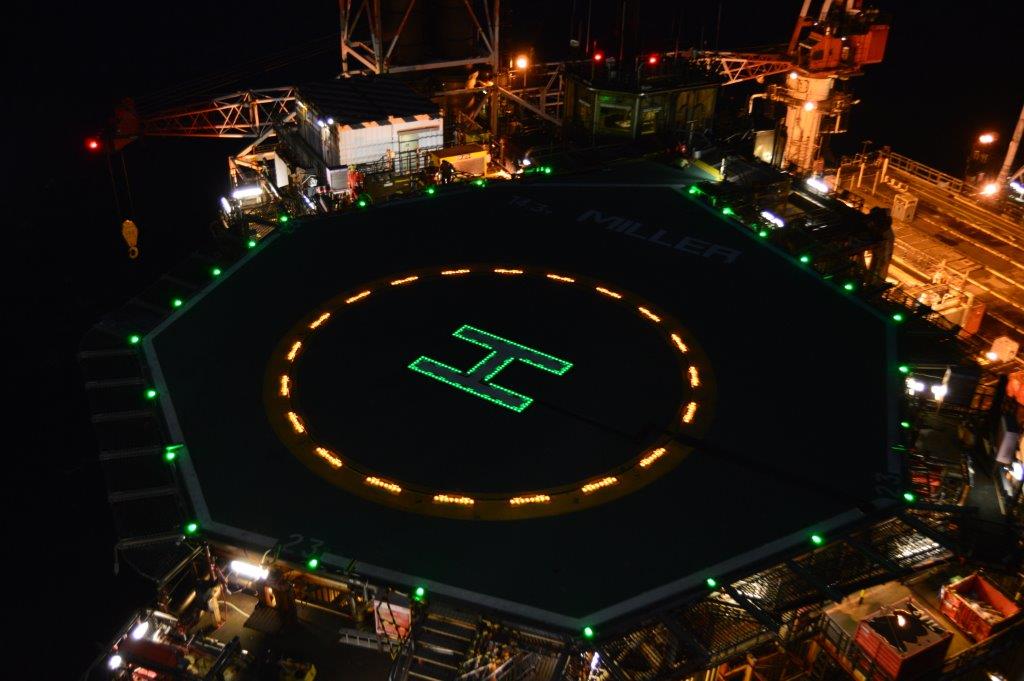
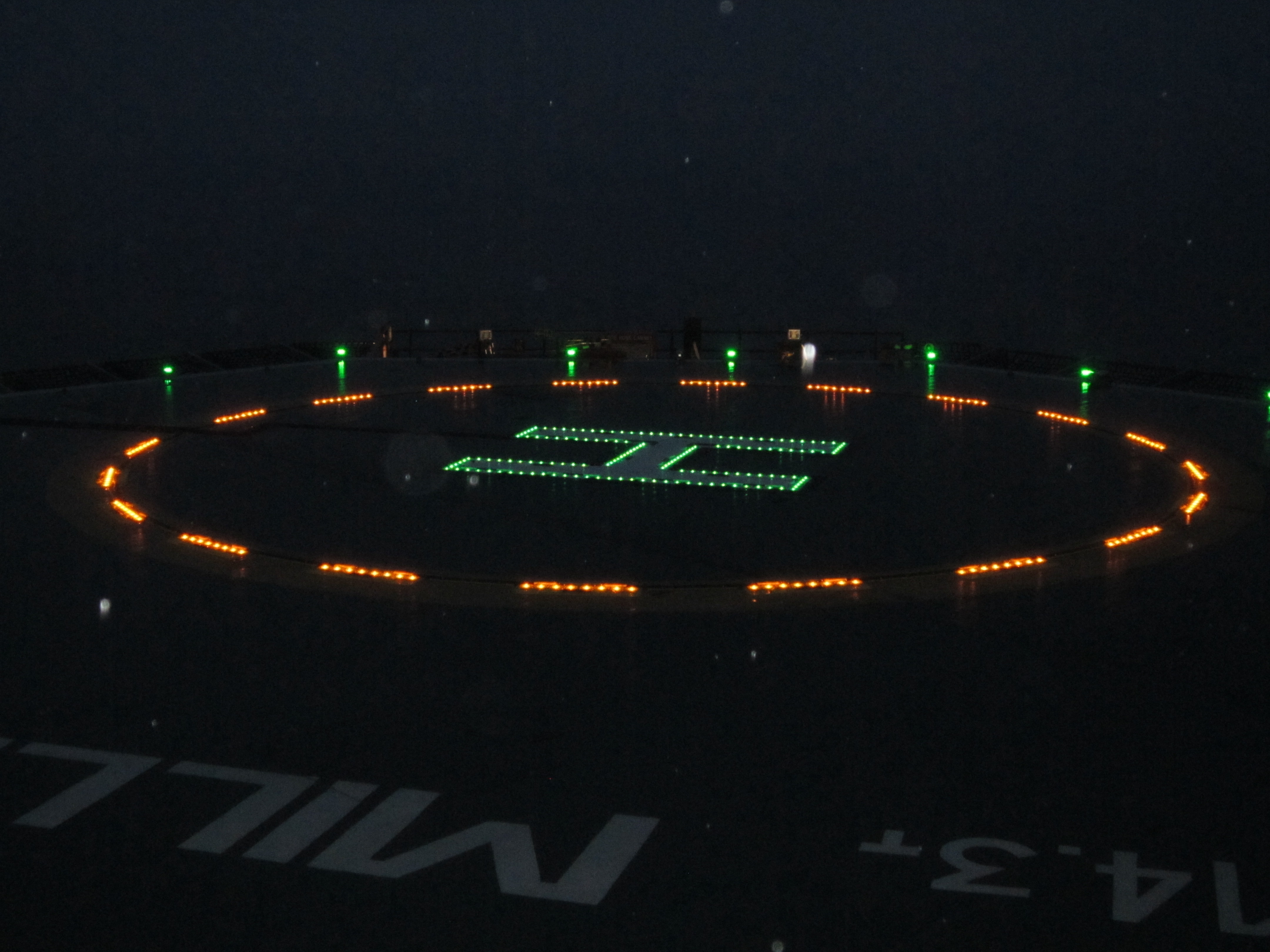
Some images of BP Miller in the North Sea with circle and ‘H’ lights installed.

More Offshore Helideck Stuff
Since the last post I have enjoyed a further stint offshore assisting with the line-up of BP Andrew for start-up. This most recent mobilisation had two components to it a) assisting with a complete system line walk before start up b) production support to start up activities.
The 96hrs line walk is the final serial prior to introducing hydrocarbons to the platform. This final walk is effectively the third system line walk that is conducted on the platform. However, considering that the previous line walks may have occurred up to 8 weeks before the start-up it is conceivable that some of the systems may have been put out of alignment. It also allow for checking that all the previously identified snags have been corrected.
Having completed this line walks I was then set to production jobs with the production technicians. The tasking received was to prepare a series of scrubbers for their gas duties. The preparation activity was to introduce approx 1m3 MEG (ethylene glycol) into each of the three vessels. As this was not a routine activity there is no procedure in place, therefore, it was down to Barny (prod tech) and I to design a procedure, find the equipment, make up the fittings, run lines from the top of the platform to the bottom and execute the task. It felt very much like a scrap heap challenge. It was definitely the most valuable and enjoyable experience of the trip for a few reasons:
Control of work. Although a relatively simple task it was necessary to create a permit to work and to take the Area Authority out on to the plant to brief them on the conduct of the task prior to it going for approval. Only once approved by the Offshore Installation Manager (the CO) could the work go ahead.
Technician competence. As an outsider I initially thought that the Ops Team Leader (the OIMs right hand man) and the techs would be all over what seemed a relatively simple job. I was wrong. Whilst the teams are sound at doing their routine tasks the ability to tackle something outside the norm really was a challenge.
Plant conditions. Though the platform was not yet producing hydrocarbons the system was far from being ‘flat’, i.e. no pressure. The conduct of the task required that we interrogate the process and instrumentation diagrams in order to identify filling points for the vessels. In all cases this necessitated breaking into systems for tie ins as there were no engineered tie in points available, e.g. via double block and bleed valves. This meant that there was no way of proving that the system was ‘flat’. Fortunately in all cases it was possible to break into the system down stream of an isolation valve. This allowed a controlled assessment of the condition of the plant. In two out of the three cases it was found that significant residual pressure had remained in the vessels, from system pressure tests/purges, even though we had been led to believe that the vessels were depressurised. (Although pressure gauges were visible they were high range pressure gauges, up to 120 bar, so the 5-10 bar in the vessels did not register.)
MILLER HELIDECK LIGHTS
Since the switch on the system has suffered a number of issues. Orga has mobilised engineers from the Netherlands to fault find. These issues have been resolved by the replacement of a control panel module and a software mod is due.
The Helideck Certification Agency (part of the CAA) has now issued an updated certificate for the operation of the helideck with the circle and ‘H’ lighting in operation. Initial feedback from pilots has been great and as long as all the lesson are captured this project will be a useful stepping stone in rolling this out across the region.
ANDREW HELIDECK HYDRANTS
This has taken a considerable amount of supervision to keep this project on the rails. The enabling scope is due to start in 3 weeks, with the engineering destruct/construct starting 10 days after that. As expected this project has not met any of the activity planning timelines proscribed by BP. But for the fact that this project is necessary to maintain the helideck certificate and operate the platform it would have been kicked in to the long grass. Instead I am on the receiving end of a long handled screw driver.
I have found this quite project both challenging and rewarding. Despite Costain assuring the BP management that they knew what they were doing and could easily deliver, it has been necessary to educate them on almost every stage of the process, whether that be engagement with the independent verification body i.e. Lloyds or procuring materials. This learning process has resulted in them losing their way with the engineering. Only a few weeks back it was necessary to signal to the BP management that I had serious doubts regarding the technical ability of Costain to deliver the project. On a number of occasions they were guilty of issuing drawings, calcs and technical notes that failed to meet either the regulatory or BP technical standards. It’s amazing the response you can get from a contractor when you communicate this lack of confidence to both management teams!!
Looking forward, I am expecting to receive the workpacks approved for construction and have the materials sat in Aberdeen ready for shipping by the end of next week (31/10). I am also looking forward to the Costain Project Manager sitting down with all the engineering changes notices that he has been stockpiling for some unknown reason. I get the feeling he has just been putting off another awkward conversation. This one will definitely be awkward Costain have nearly doubled the hours burnt without any coverage! It also brings into question the quality of their own front end engineering work against which they generated their estimate, but that will be the topic of another uncomfortable conversation.
Gratuitous photo:
BP Placement – for the Phase 1 Students
Morning All,
David recently mentioned that there was a lack of interest in the BP placement for the next turn of the wheel. I am concious that the location doesn’t quite have the same draws as the US/Australia. However, if there are any factor(s) other than geography, e.g. type of work, independance vote, that are holding you back from considering please feel free to pick up the phone. Both Nick and I would be more than happy to speak to any of you about this placement. We will both have different perspectives (I’m a singly and Nick has his young family up here).
It would be a geninue loss if this placement were to fold due to lack of interest.
Cheers,
Brendan
07980 664362
01224 778143
Aberdeen
One of my concerns with coming to BP was that I would have no construction site phase and therefore leave without seeing any tangible results. And whilst the first few months appeared to reinforce this fear, I have seen a reversal this over the last 8 weeks due to an increased pace of life and a number of notable events.
The first notable event was 2 weeks spent off-shore conducting pre-commissioning line walks for the BP Andrew platform. Whilst this had the potential to be very dull, the reality was very different. The main purpose of going offshore was to buddy up with a production technician to trace process systems and confirm that lines as recorded on the P&IDs were in fact in place and that valves and instrumentation was present, serviceable and in the correct position. The fact that there were a number of instances where reality differed from the drawings meant that it was an educational experience, as the line walking team were given the remit to ‘fix’ anything that we could. This involved simple tasks from opening/closing valves to ‘repairing’ instrumentation and safety related devices.
In addition to the line walking activities I was able to engage with the platform management and throughout the course of the two weeks was able to attend the full range of meetings that formed the platform battle rhythm. This ranged from the tool box talks associated with leak testing activities, through production meetings to senior management meetings with onshore. I was also fortunate to be invited to observe an emergency response drill, during which the platform personalities were assessed in their management of a crisis, in this case a helicopter crash. Whilst the language and manner of addressing people was somewhat alien, I believe we would all recognised the activities that were going on.
The second notable event was the offshore construction of the helideck lighting trial. Though not an earth shattering achievement and whilst it doesn’t add to the ability of BP to increase production, it was satisfying to take a step forward in aviation safety for the offshore industry. With this activity complete it provides momentum for the regional helideck lighting project which will soon pass to me. I also learnt a huge amount throughout this simple and relatively low value project. I’ll highlight two elements:
-Material tracking. Within the Corp this typically well managed by the G4 chain, not so in industry. Wood Group construction managed to send all the materials for construction offshore except the lights. A fundamental part of the system was missing due to a simple oversight on behalf of the materials coordinator. Because the lights had been gifted to BP by the Civil Aviation Authority there was no purchase order, so no ability to call off the materials. Unfortunately for Wood Group this simple error cost them ~£50,000 in material transport costs and probably the profit on this job.
-Closeout actions. The BP management of change system requires a number of closeout actions to be conducted for even the most simple task. These all appear very simple when sat behind a desk, but the reality of getting individuals to follow through is very different. I have another relatively short turnaround task on the cards, where I will be getting all post-implementation actions closed before the execution if possible and if not a very clear responsibility matrix drawn up.
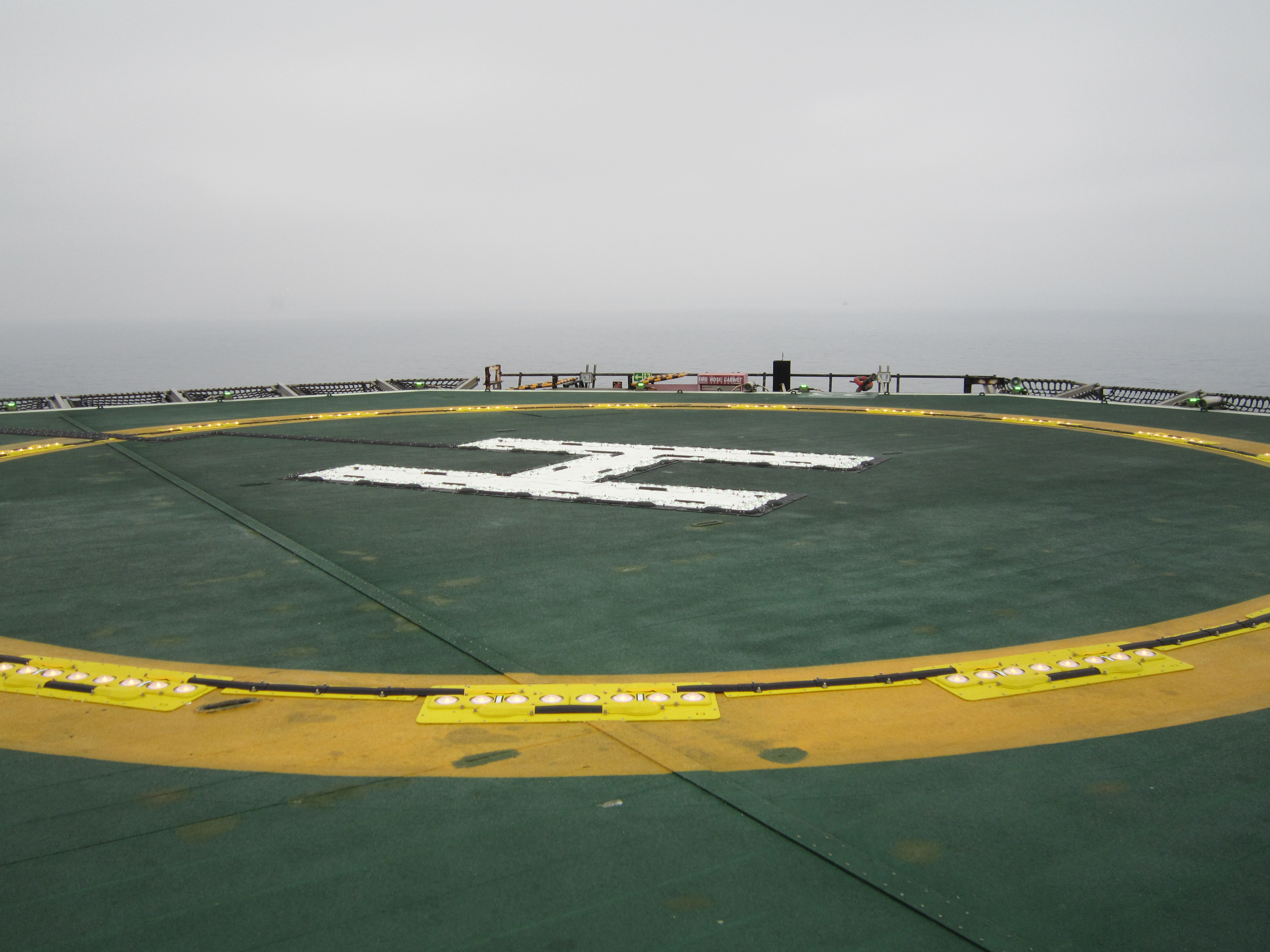
The photos below show the Orga lighting system installed on the Miller by day and night.
Projects Update
Andrew Helideck Hydrants. I have had sight of this for about 3 weeks. A quick turnaround job that has been labelled by one and all as a ‘hospital pass’. This has to be in offshore execute by the end of November. I have significant concerns with this project for two reasons:
a. The long lead items will not be available until mid-November.
b. A new project execution strategy is being trialled on this job. I know Nick is watching closely as he also has a job that is being trialling the new execution strategy, but the g*t has a little more time in hand and his job isn’t tied to consent to operate.
The two points above effectively means that I’m having to micromanage Costain Upstream on this one and BP are having to provide a lot of support to enable the interface between Costain Upstream and Wood Group for the construction. I think it is achievable but there is very little float in the schedule.
Andrew Hypochlorite Dosing. This is a hangover form the Andrew Area Development (AAD) project that has spent 3 and a half years improving and adding capacity to the Andrew platform. This project was due to deliver a temporary (2 years) chemical dosing skid to deliver sodium hypochlorite into the seawater caissons. This is to replace a faulty electro chlorination package which prevents the built up of organisms in the seawater and firewater system. Projects & Mods will have to take the partially completed design over from the AAD team, which dissolves at the end of September, and complete the onshore detailed design and offshore execute.
The AAD team have identified and purchased a duty/standby pumping skid and designed the pipe run to deliver the solution to the seawater system. The associated challenge is base-lining the progress to date and ensuring that the underpinning engineering is fit for purpose, which will be difficult as there are a number of fundamental documents missing. I expect that it will be necessary to conduct a design review of the available document and retrofit those that are missing/incomplete. The elements of the solution that have been specified appear to be suitable so I expect the this project will move swiftly once the review is complete and corrective actions have been implemented.
Miller Helideck Lighting. Offshore construction complete and now working through the post construction actions. Some of these post construction actions may prove quite difficult to close out, e.g. flickering lights and will require close cooperation with the lighting manufacturer.
Mungo Rescue and Fire Fighting Services. This has now moved into the Define phase and as such the responsibility sits with me as SPA. It has however effectively halted as the business has yet to release funding. Progressing this now sits with my 1-up.
Andrew Sea Water Filter Failure. I was fortunate enough to see the standby in place whilst offshore. The business has taken the decision to refurbish both filters in the near future. The first filter to be refurbished on-shore has now been reinstalled. The second filter will be removed once the platform is back on line. This is being managed by the asset so I will have no further involvement.
ETAP Electrical Controls Upgrade. This project has now reached the end of Select phase, where it is on hold pending a decision from Shell, one of the ETAP partners. Once a decision has been made by Shell to with either retain / dispose of a J-tube (a conduit from the platform topside to the seabed contained within a caisson) the project can complete the Select activities in order to move into Define. This is unlikely to happen until the end of the year and may stretch to early next year as the topside activity is low in value compared to the subsea work and it is not on the critical path.
ETAP Sand Management. Alongside Andrew Helideck Hydrants this project has been consuming a large part of my time. This is a perfect example of scope creep in a job. Unfortunately the scope creep occurred during the Select-Define gate review meeting. (The job should probable have been recycled through Select.) The result was a project that left the Select phase with temporary scope and entered Define a few weeks later with a permanent scope which had doubled in size in terms of packaged plant to be deployed offshore. Whilst the creep has occurred for very good reasons and the prize associated suggests the juice is worth the squeeze, the second and third order implications were not identified. I have spent the last few weeks understanding these effects with my 1-up and communicating this back to the Client (ETAP platform). I have effectively produced a decision brief requiring the asset to commit to a course of action so that this can be driven forward against some challenging scheduled timelines.
In tandem I am reviewing the cost, schedule and scope of work that has been generated by Wood Group for this workscope. The first of four stages, which includes commitments to packaged equipment vendors, has a price tag of £4.2m. The remaining stages are estimated to cost a further £3m, but it is likely that the project will only have to commit a further £0.8m before the end of the 2014/15 financial year. That’s assuming that the partners will agree to the increase in costs from £5m to £9.65m, which will be an interesting conversation later on today.
That’s all for now.
Finally some more work
But first thing first. A bit more on how projects develop in Projects and Mods.
The Process. As you read in my last blog the BP process goes from Appraise –> Select –> Define –> Execute. The precursor to all this activity requires the that customer, read platform, submits a request for work (WFR) form which is considered by the Project and Mods Team. Should it be deemed suitable the proposal is considered in a screening study. This identifies in very broad terms who the stakeholders are, how much, how long it will take, possible options….. This will then define how the project is taken forward:
- C1 – Separate Appraise, Select, Define and Execute phases. (High Value and / or complex)
- C2 – Combined Appraise / Select and separate Define and Execute phases. (Medium value and a number of options to be considered.)
- C3 – Combined Appraise / Select / Define and separate Execute phase. (Low value and simple e.g. like for like replacement)
Responsibilities. Outside the BP structure Costain Upstream is responsible for delivering the screening study, Appraise and Select phases. Wood Group PSN is responsible for the Define and Execute phases. This split responsibility is mirrored in BP with there being a front end single point of accountability (SPA = project engineer) for the screening study, Appraise and Select phases and a Define / Execute SPA (me).
Funding. There are various sources of funding available to the project teams: operational expenditure (OPEX) and capital expenditure (CAPEX). OPEX is used to fund the screening, Appraise and Select phases and CAPEX is used to fund the Define and Execute. The OPEX budget is generated and owned by Projects & Mods. The budget is bid for annually by considering planned work on assets and adding an allocation for emergent work. CAPEX expenditure is controlled by the operators and it is made available to a project once a financial memorandum (FM) is approved and an approval for expenditure (AFE) is agreed by the partners. The FM approval is required prior to an AFE being agreed.
PROJECTS – THE OLD
Mungo Rescue and Fire Fighting Services
This is now in the final throes of the Appraise / Select phase before going forward into Define / Execute phases, at which point the responsibility for the project is passed to me. The next stage will be the submission of the FM and AFE. As a warm up for the submission of these documents I was ‘invited’ to present to the partners (First Oil and JX Nippon) so that they understood the need, schedule and cost. A hugely enlightening experience, dealing purely with the commercial side of the business.
Miller Helideck Lighting Trial
When I wrote my last blog I hadn’t appreciated that there was no money available to install the lights on the Miller. A hugely frustrating place to be in, considering that both the Logistics and the Safety and Operational Risk (S&OR) business functions were screaming out for the job to be done. After much toing and froing and a delay of 8 weeks a lump of cash was found. This allowed the project to get off the blocks. I was amazed to be on the receiving end of huge amounts of pressure to catch up 8 weeks on a 9 week project. Needless to say a face-to-face meeting squared that one. I still expect to get a note a week ‘asking’ me to make up the lost time!
The accelerated timeline that this is already on is starting to create problems. As a part of the Define / Execute Wood Group would typically confirm and specify details of selected equipment as the design authority. Because of the drive to get this offshore, the Define stage has been completely bypassed. This means that materials identified (not specified) by Costain in their front end work is being used to draw up bills of materials. (Specification sits outside the requirement placed on Costain.) So at the moment I’m attempting to move a project forward in which Wood Group is uncomfortable to progress as they have no specification to work from and they are unwilling to take the materials identified and work them into specifications. Having to sit down and hold hands to even get a rivet on a BoM.
PROJECTS – THE NEW
Andrew Sea Water Filter Failure
So the 2up boss came into the office and said something like ‘come with me boy!’. At which point I was the subject of a number of commiserative glances and found me feeling like I was back at primary school and had been summoned by the headmaster for a gentle caning!
Turns out one of the two sea water filters on the Andrew has suffered unprecedented corrosion and was on the verge of failure. Not a huge concern today as the platform is not producing, however, once the platform comes back on line there will be no redundancy. Coupled with limited understanding of the corrosion mechanism there is a risk that the second filter may fail cutting off cooling water supply to the platform. This will result in a halt in production.
Initially a thinning of the filter vessel wall (Filter A) was identified as a part of a routine inspection. A significant thinning from 19.3mm to 8.3mm was recorded between Oct 13 and May 14. Further testing a week later identified a thinning to less than 2mm. At this point the vessel was isolated and the complete seawater duty run through Filter B. There has been much flapping as corrosion rates of 1mm / day are unheard off. As yet no similar corrosion has been seen on the B filter, however, on-line testing is ongoing to confirm the condition on the B filter.
There are two simultaneous streams of work ongoing to deal with this concern. The first being run by the asset is a repair of the existing 316L SS filter to bring that back into service. The second piece of work is to procure a replacement filter. There are at least four courses of action associated with procuring replacement filters:
- A – procure 2 x replacement filters made from super duplex steel.
- B – procure 1 x replacement filter to replace Filter A.
- C – procure 1 x replacement filter to replace Filter B, assuming that a Filter A is repaired and coated.
- D – do nothing (other than repair).
To date my involvement has been limited to attendance at option studies. At present the balance of effort is on progressing the repair. I am awaiting a WRF prior to initiating a screening study.
ETAP Sand Management
When the ETAP started operating the hydrocarbon flow line did not contain sand. Recently production has recovered large quantities of sand that is causing considerable damage to the produced water reinjection (PWRI) system. The PWRI system is used to maintain the well pressure, therefore, has a direct impact on production. (After bringing the pumps back on line the minimum failure interval is 1 day and the greatest is 6 weeks.)
The work scope is broad at the moment, but is looking at increasing the residence time of the hydrocarbons in the HP & LP separators and installing cyclones to remove sand from the process completely.
My involvement at the moment is limited to arranging an offshore survey. Normally a reasonably straight forward process, however, I’m having to submit waivers to divert from the normal processes. The risk of ‘fast-tracking’ the process is that the platform won’t be properly prepared for the visit and the survey will fail to meet all objectives, wasting beds on the platform – a cardinal sin.
ETAP Electrical Controls Upgrade (EECU)
I’ve had sight of this one for about a day now. It should turn out to be educational. It is mainly a subsea job (so outside the scope of Projects and Mods) but there is a topside interface that needs to be engineered and managed.
As far as I have been able to figure out, there is a legacy low insulation resistance (IR) problem with the power and control cables that run from ETAP ‘mother platform’ to the surrounding fields. The low IR is already starting to affect one field. (not sure how yet) The EECU is a proactive work stream to prevent similar problems occurring on other ETAP fields.
Aberdeen and Helicopter Stuff
I find myself starting the sixth week of work at BP and wondering where the time has gone. I can confirm that other than 2 weeks in Portugal skydiving that life has been rather sedentary.
I have been given to the programme area lead for ETAP (Eastern Trough Area Project) in the absence of any real plan. Thus far I am reading into two projects that will fall in my lap when they get handed off by the project engineer working on the first two stages of the project delivery process (Appraise and Select). I will then be responsible for the final two steps (Define and Execute).
Training
All I can say is that Chris did warn us about H&S in the industry. He wasn’t wrong, but what he didn’t prepare me for was the minimum industry training standard. Having been lulled into a false sense of security during the 3 day basic offshore safety induction and emergency training (BOSIET), which involved as much time in the heated swimming pool (not very representative of the north sea) as it did in the classroom, Nick and I were completely felled by the 2 day MIST. Essentially two days of unusually cruel torture by way of PowerPoint and a depressed American instructor!
But at least I can now go offshore.
PROJECTS
Mungo Rescue and Fire Fighting Services (RFFS)
Mungo is a normally unattended installation (NUI) that provides the topside infrastructure for the water injection equipment to enable enhanced recovery. The hydrocarbon is then piped back from Mungo to the ETAP installation, some 40kms away.
In Sep 13 the CAA initiated a safety review of offshore public transport helicopter operations
in support of the exploitation of oil and gas (CAP 1145 for those interested). It identified that fire fighting best practice for NUI had not been implemented. Therefore, Mungo is now to be fitted with an automatically activated delivery system for fire fighting foam.
There are a number of options that would meet the requirement, however, the CAA preferred solution is the installation of a deck integrated fire fighting system (DIFFS). Imagine having a permanently installed sprinkler system to water your garden and you’ve got the general idea. (Youtube link : http://www.youtube.com/watch?v=yBeNBqsVuKo)
As ever there is a wee fly in the ointment. BP’s Engineering Technical P (ETS) don’t allow for pop-up fire fighting systems. Cue the new guy working on a deviation (from the ETS).
Helideck Lighting
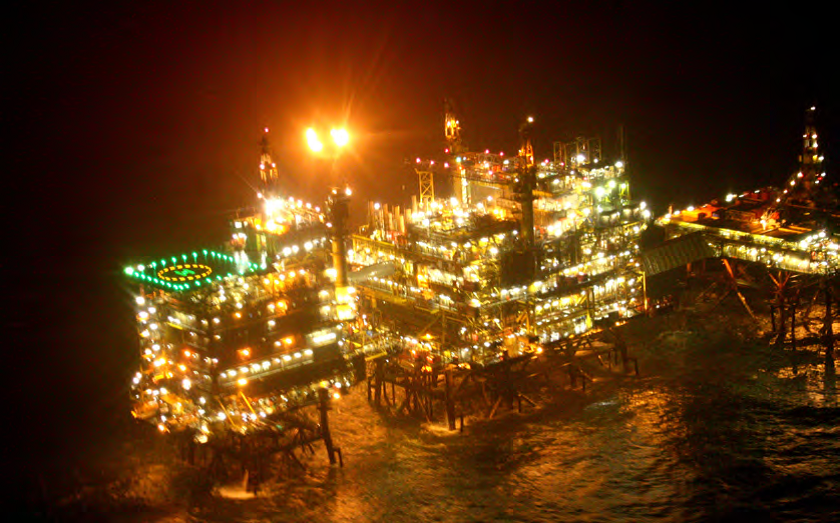
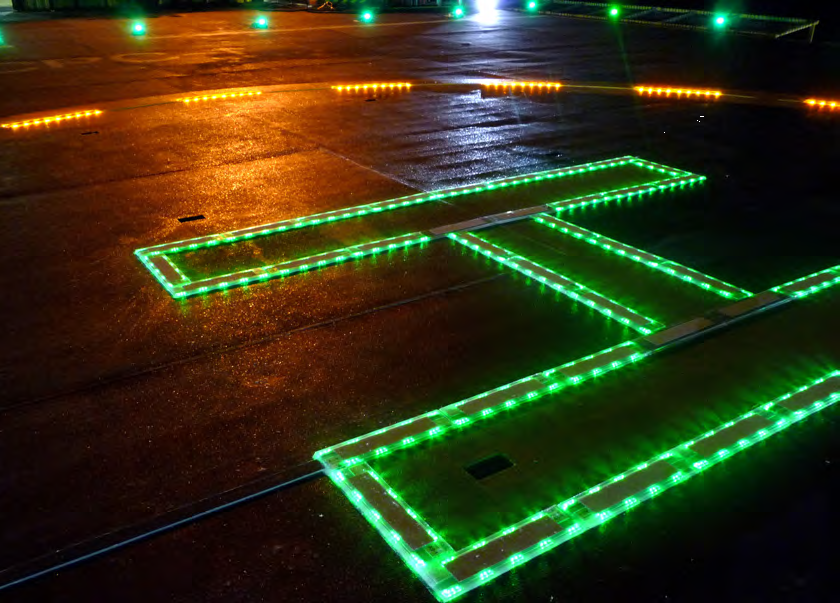
This task is also related to the CAA safety review. In relation to this task, the review identified that the pilots couldn’t see the helipad properly at night. So, we are going to light the helipads up like christmas trees.
Whereas the RFFS is only to be installed on Mungo, these lights will be installed on 7 installations starting with Miller, which is no longer operating but used as a hotel.
The project is towards the tail end of the Select phase (second phase of four). The trick will be getting a product out of Costain that will negate the need to do Appraise/Select for each installation. Installing the lighting on Miller is being seen as a trial and will act as a good rehearsal for the Wood Group PSN guys and girls.
Fortunately, this is not the first time it has been done there are however, a few technical limitations that have to be addressed / challenged.
Anyhow, the pictures below show what success will look like:
Helideck lighting – General

Helideck Light – Detail 1
Helideck Lights – Detail 2
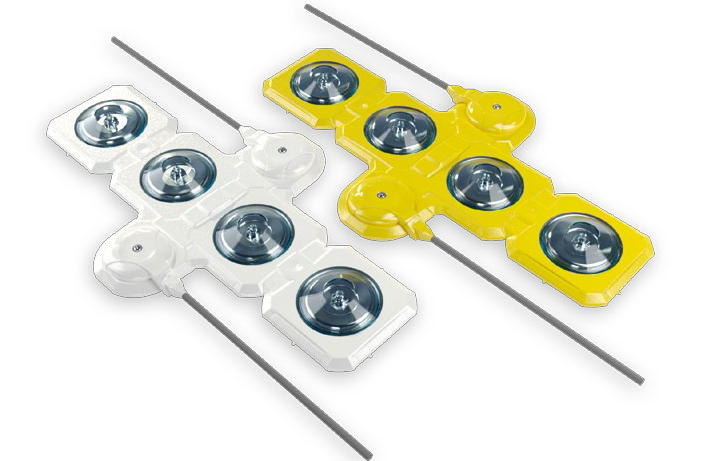
And the kit we will probably use for that is:
Orga Lights
 Holdfast Training Services Trial Blog