Archive
Life as a mechy
With less than a fortnight before I relocate 40 miles up the road to Kinloss I thought I’d give a quick update on my life as a mechy.
Flowserve. I had a look at what I was achieving here and quickly came to the conclusion that the limited gain I got from it was not commensurate with the travelling and general faff that came with it and as such have pretty much removed myself from the project. My lasting legacy? Communication has improved between Flowserve and Woodgroup and I produced a small piece of paperwork (TMR length) on sticking points from a Flowserve perspective that was greatfully received from the BP management. It was essentially a constructive critique of Phil the package engineer – who sits opposite me within WGPSN and is technically very competent but personally a bit of a knob and as such can be a real hindrance to the project. His abrasiveness and unwillingness to communicate has greatly stalled things but understandably he is not without blame. Anyway, with over £500k of project variations and the expected completion date now 6 months to the right I’m not unhappy to be letting that one go.
Sparging. My sparging pipe (OK, Swift’s sparging pipe really) is looking pretty good. We had the design review last week and I’m currently doing check calcs in Finglow to ensure the vessel into which it is being installed is suitable. It blatantly is, but it’s good for me to be doing the calcs. I did my own designs for connection methods and ran them up on Autocad too (I figured I needed to become proficient in it sooner or later) so that was good.
Pressure Vessel Calcs. I’ll be spending tomorrow and maybe Thursday reviewing some pressure vessel calcs against ASME VIII. These are for the Lube Oil Skid on the PWRI Pump – a beast I can’t escape!
SPA work. With the TAR due to start in a month I’m still chasing round BP engineers to get projects signed off. This is a common occurrence with all SPAs as the BP management realise that yes, they too need to take some accountability for the modifications. All going well though.
Touching children’s minds. Imran and I have been down the local school teaching kids how to build cars from shoe boxes and dowel. We’ve done two sessions now and go back next week (they’re decorating them this week) to see how they fair going in a straight line down a ramp. This is part of the primary engineer programme, stimulating interest in Britain’s future engineers.
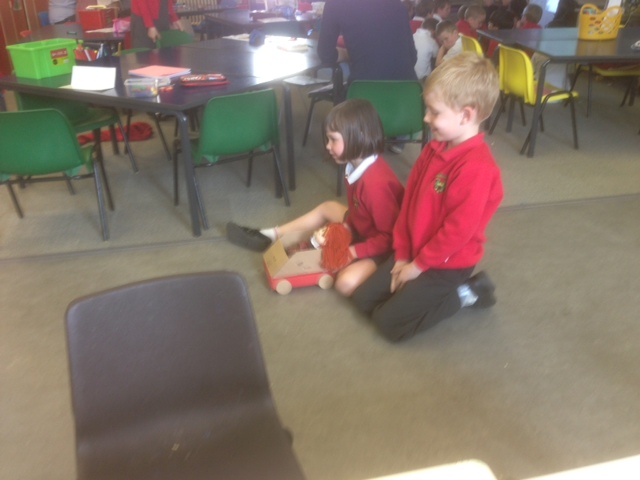
Test run before the race next week!
Next Week. As well as an obligatory leaving drinks/dinner in town and the car race at Kingswells Primary School I’ll be mostly handing over my Mechy and SPA work and reminding myself what I’ve done since last April so I can impress the IMechE panel on 1st August!
And away from work.
- Been swimming with dolphins in the North Sea – the water’s actually quite nice once you get used to it but the dolphins had disappeared by the time I got far enough out.
- The move to a quarter in Kinloss “seems” to be sorted and we’ll be moving in in a fortnight’s time. Housewarming on 13th July if anyone fancies it?
- I officially smashed the Edinburgh marathon with a time of 2:56:54, raising £550 for Combat Stress – that’s over £3,000 for the charity in the last year!
- And Imran’s found himself a new line of work… having been asked to see Pete (Head of Projects and Mods) yesterday he thought there may be some high-level project work for BP on the horizon. Turns out that Pete was after someone to dress up in “Army rig” and do a little display on Beaver Camp this coming weekend! Get in!!!
Where does the time go? 21st May
Well then, sat in the KLM lounge at Schipol, supping on Bombay Sapphires, I thought that now was a perfect time to update you on my goings on. Generally I’m in a bit of a three-way: on Tuesdays I’m in Etten-Leur, progressing the 3rd PWRI pump, while the rest of the week is roughly an 80/20 split between WGPSN’s mechanical team and BP’s Projects and Mods team. Life is good and busy as ever, and since I’ve been talking specifics recently I’ve added a few figures to this month’s blog!
- Flowserve. As BP/WGPSN’s technical expeditor I’m the interface that has been credited with getting the £3.5m 3rd PWRI Pump project up and running again. Most of this is done by ensuring that conversations are “more friendly” and that all parties are aware of the others’ issues. I am projecting my personality to get the best out of all involved and as such the project is progressing much better. This gives me a great insight into relationships and all that management stuff, but also the intricacies of a project and the little things that make a big difference and delay projects. This includes:
- Documents not being signed off in a timely manner – when I started the project there were 44 outstanding documents for review (by WGPSN); today there are only 6.
- People (BP management) getting angry as they’re not in the loop on what’s going on.
- The WGPSN package engineer and Flowserve project manager having a pissing contest and looking for faults rather than workable solutions.
- Technical Authorities (TAs) getting “overly” involved (maybe – see below).
It’s also been good to see the parts coming in from the supplier and getting fabricated – although I’m sure I could tick this box by visiting a fabrication shop (as indeed I have done!)
- WGPSN Mechanical Team. Based in the same office as BP (part of the Focus contract), I’m now working as a [mechanical] discipline engineer alongside two CEngs and a lad on a graduate scheme. My work is primarily based on the 3rd PWRI pump and has included/ includes the following:
- Checking valve spec for the lube oil skid for the 3rd PWRI Pump. This was good as it allowed me to get stuck into BP’s Engineering Technical Practices (ETPs) and other documents – mostly ASME and API, that are the industry standard.
- Writing the specification for pickling and passivation processes that must be followed after a test fit between the super duplex shaft and a carbon steel replica of the housing (for the PWRI pump). This was good as I had to research exotic steels, the natural passivation of stainless materials, the pickling process that allows the surface microstructure to be “cleansed” and then methods for testing the purity afterwards. I then submitted this to WGPSN’s Quality Assurance (QA) for approval and it will be used in the future.
- Looking at the NDE for the super duplex components. This is interesting but I’m still trying to find the line between getting overly and unnecessarily involved because the TA is mad-keen on it (everyone needs a hobby and his is metal) and ensuring the right QA is met and the super duplex components are the right spec.
- Working on the most-hated project (by both me and the new SPA) that I was SPA for, the “compressor mods” project (currently valued at £2.3m). I’m now responsible for the mechanical work on the degassers – vessels that “bubble” nitrogen through a sparge pipe to remove hydrocarbon gasses from the seal oil that is recycled through the system (Figures 1&2). This is good as includes me researching sealing methods, cutting, confined spaces, and working with the supplier, Swift. It is also good to be a small part of a project that I was running a few months ago, as I can now see the frustrations the mechy had!
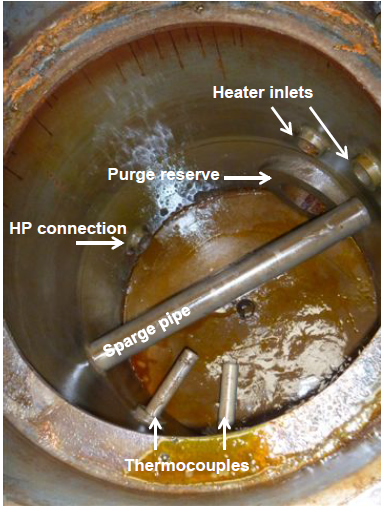
Figure 1. Degasser internals
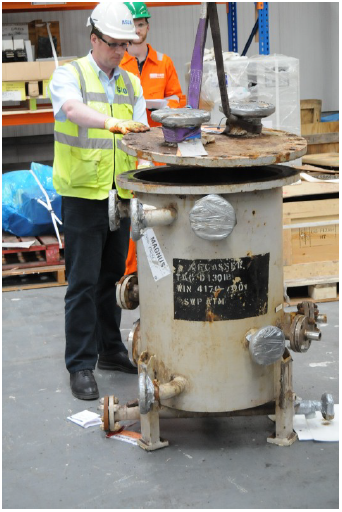
Figure 2. Identical Degasser
I’ve also got some good CPD done: a trip to Exona materials lab to see their testing methods (very similar to what I saw at uni a decade ago) and a Factory Acceptance Test (FAT) of a pig launcher that’s being installed at the end of the Magnus TAR. There’s an IMechE lecture in town tomorrow night about the Pelamis Wave Generator – I can’t wait!!!
- BP Projects and Mods. Here I’m carrying on with the two remaining projects that I have sole responsibility for: the insertion of a glycol balance line (£67k) and the replacement of single isolation valves with a double block and bleed system (£250k). This has included some risk management meetings relating to the management of change – essentially making sure that there’s full agreement (from the Asset) on all the changes that I’m making to the plant so that if it goes tits up in the future then my decisions have some higher-level sign off. No problems so far, I’m pleased to say.
I’ve also been I’m also been advising on some of the projects that I’ve handed over, including the decommissioning of various gas trains (£550k) and the automated relief of the cold boot (£670k) that are being executed this summer, and the exchange of the B Crane (c£8m) and the installation of additional living quarters on ETAP (c£10-15m) that are still in development.
- Other news (the interesting bit):
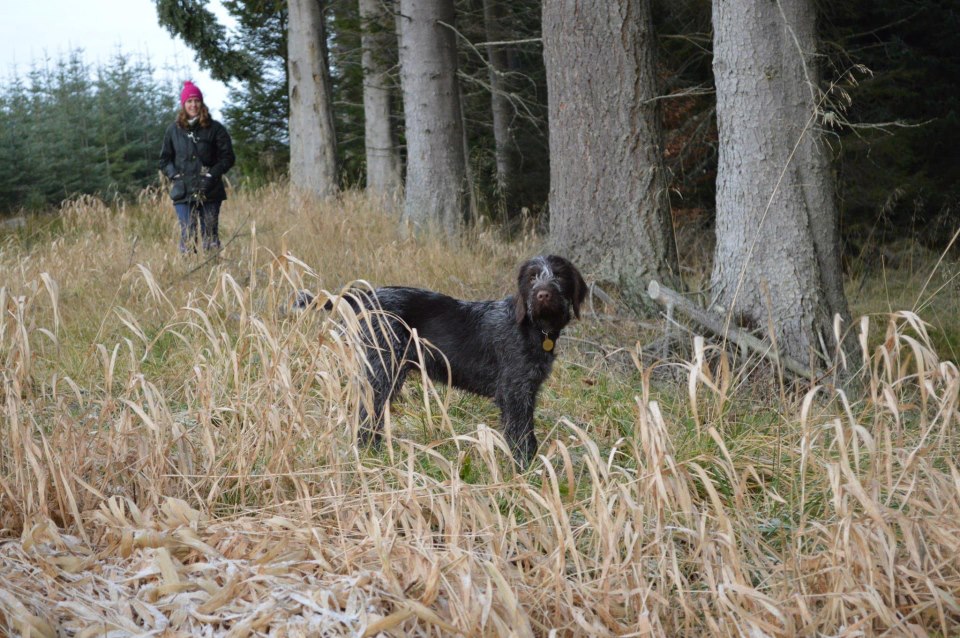
- As I’m getting thinner (now at 68kg in prep for the Edinburgh marathon this Sunday) Dougal is getting bigger and now weighs over half what I do. To Liz’s delight he is also learning how to leopard crawl through the dirtiest of ditches (Figure 3) and frequently finds tadpole-filled ponds to swim in. He’s amazing.
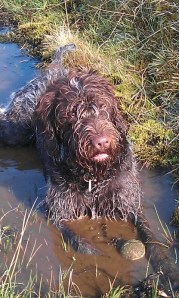
Figure 3. Dougal aged 9 months
- Liz and I both raced around Balmoral in various trail races a few weeks back – Liz finished in the top half of the 10k race and I was 12th (from 297) in the 15 mile race.
- I did some climbing instructing in Wales this weekend on the REMEC meet, really good to be out and about with sappers again and surprisingly good weather.
- We ticked off another idyllic island a few weeks back: Lewis and Harris, with some beautiful white sand/ blue sea beaches (and drizzle). Off to Orkney for a long weekend at the end of the month too – see if I can get Liz up the Old Man of Hoy?
- Looking further forwards, we’ll be moving to a quarter in Kinloss in July. After Phase 4 I’ll be based around Aldershot whilst I do my PDT/MST and then deploying on HERRICK 19 as SO2 Infra from November (subject to the SO2 board – otherwise I’m jobless!)
- And finally – I got a business card from someone last week and it listed MInstRE with his post-nominals. Turned out he’s in The TAs and was a thoroughly nice chap. However, I was a little bit sick in my mouth when later on I saw the reverse of the card: a ¾ profile mug shot of the said engineer! Have any readers of this blog had similar suprises with business cards?
- As I’m getting thinner (now at 68kg in prep for the Edinburgh marathon this Sunday) Dougal is getting bigger and now weighs over half what I do. To Liz’s delight he is also learning how to leopard crawl through the dirtiest of ditches (Figure 3) and frequently finds tadpole-filled ponds to swim in. He’s amazing.

Technical Engineering…
Residential Technical Engineer????
OK, so, rather than working on technical drawings and engineering matters with Flowserve week-on-week, my role has evolved to become more of a fixer, working in their office one day a week and kicking people’s backsides there (as well as in Aberdeen) accordingly. It’s certainly interesting seeing their side of the story and their frustrations and I’m not shy in telling people where they are delaying the project (and strangely this does all seem to working) but I’ve effectively promoted myself to consultant rather than getting stuck into the roots of engineering which was the plan. Far from ideal, but it looks to be opening some mechanical engineering opportunities (and it needs to do so quick!). These opportunities are currently quite limited, but as follows:
- Working on the Lube Oil System (LOS) skid with WG PSN in Aberdeen – still yet to happen but hopefully get a handover this week. Good stuff.
- Develop the NDT procedures and ensure they’re in line with BP’s engineering technical practices (ETPs). OK stuff
- Continue to gain an understanding of the manufacturing processes. Not-great stuff, but interesting.
- Develop a quality action plan with the BP Technical Authorities (TAs) – something that we “definitely need”, but no-one knows what it looks like (and it still isn’t a definitive A and B competency filling tick, although I’m sure I’ve seen it mentioned in UK SPEC somewhere). Generic project management stuff.
Meanwhile, I’m still progressing the three TAR jobs that need constant attention to be ready for offshore execute in July – lots of details that no-one thought to mention earlier! Imran’s starting on the Bruce bearing access platforms (chuckle chuckle) that stagnated with both Ish and I due to lack of interest from BP management. However, the programme lead (1-up) for these is now Kerry Scott who seems to have a bit more of an inclination to progress the project than her predecessor did, so he should get somewhere…
In a completely different engineering role (but maybe good point-scoring come Review), Imran and I got ourselves “Primary Engineer” qualified at a one-day training event last month so we can now go into schools across the UK to help primary school teachers do some hands-on engineer stuff with kids. Once this thesis is finished I’m going to find a school and get myself well and truly stuck in. “Primary school children are the engineers of the future and it’s important to enthuse them at this young age if we’re going to sustain our role as a great engineering nation”. Having chatted to some of the IMechE honchos at the annual dinner in Glasgow and at a Young Members’ Panel meeting in Aberdeen, they’ll absolutely love that at Review…
And you know when you’ve changed when you’re in the KLM lounge sat opposite the free bar, there’s a taxi in Aberdeen to take you home and you’re doing work. Hold on a second – how much work can I really get done in 30 minutes…
Phase Three coming right up…
Phase Three coming right up?
After months of wrangling about me getting some real technical experience (A and B competencies – aka design office experience) to complement the wealth of project management, team leading and communication skills (C, D and E competencies) I’ve amassed over the last 11 months, I’ve finally got somewhere – but a little further afield than working upstairs for WG PSN who are our main contractor for our technical engineering…
The reason? Well, it seems that although WG PSN’s mechanical engineers are incredibly busy, they don’t really have the work here [in Aberdeen] that their Engineering Manager, Ian Maycock (FIMechE) thinks is suitable for me to develop the competencies that I require to be able to sit and pass chartered review six months from now. And my management (the Team Lead, Peter Neilson and our Engineering Guru, Martin Fragell, also a FIMechE) agree.
But what they (BP and WG PSN) do require, is someone to go and work alongside one of our suppliers, Flowserve, who are currently falling behind on a rather large and quite expensive, produced water re-injection (PWRI) pump. It’s not completely clear what my ROE are just yet, but it seems like I am to go and work with them at the factory/design office in Breda for a few days a week, analyse the problems, and then come back to communicate these problems with the BP management and WG PSN engineering team in Aberdeen, with a view to being able to resolve the problems quickly and effectively back in Holland the week after. I’m told that it is excellent engineering, very mechanical and really technically detailed and complicated, so it does tick the A and B boxes – mostly because I will have to get well and truly immersed in it to understand, and develop, the damn thing! From what I understand, this is one of ETAP’s big process concerns right now (and notably, will be one of the biggest pumps in the North Sea upon completion), and there is plenty of engineering to see me through til Phase Four.
Good thing or bad thing?
Well, if I’m honest, Liz and I do quite enjoy living together, so starting the weekly commute in March rather than August is going to be a bit of a blow, but the hard facts are that working on my jobs hasn’t (in my eyes) given me enough technical clout to sit chartered review right now, nor by July. Could I have done things differently? Well, I’ve worked well (by all accounts) on the jobs I’ve been given, it’s just that BP don’t do the detailed engineering themselves, we just assimilate the information from our teams.
The technical piece is something I’ve been pushing since November, and pushing strongly since January, but with changes of management it has fallen by the wayside and I’ve let it go on, so maybe it’s just me to blame (sob, sob). The weekly commute will be a pain in the arse, as will living out of a hotel week-on-week, but hey I’m not here for an easy ride, I’m here to become a chartered engineer! Hua!
Anyway… other jobs as follows:
ETAP ALQ: Getting handed over to Cat B projects this month, or possibly next, on completion of a structural engineering review by AIG
Bunkering Lines, Cold Boot and Post-TAR decommissioning: Getting handed over this week
Decommissioning, DBBs/SIRPS compliancy and Glycol Balance Line – I’m keeping these as I just can’t let go! This way, I will see them from Appraise through to Offshore Execute. (Well, not decom as I inherited that, but it’s been my most hassle-free project, so I’ll keep the coals burning til offshore execute and “tick off” three TAR jobs).
And in other news:
Liz and I went out with REMEC last week to their Winter Meet based near Fort William. As well as outstanding conditions, it was also good to meet up with Lachlan Robertson and Paul Golding, who are both due to assume STRE command this summer. With the meet being an informal part of the Himalayan expedition selection (Sept – Oct 13) it was good to chat to them about my odds of being able to get away from work to be a part of the expedition; clearly, a lot depends on being in the ‘right’ STRE – and not theirs, as they want to be going away too! Fingers crossed…
Oh, and Dougal the “wonder pup” has passed 30kgs. He’s going to be a machine…
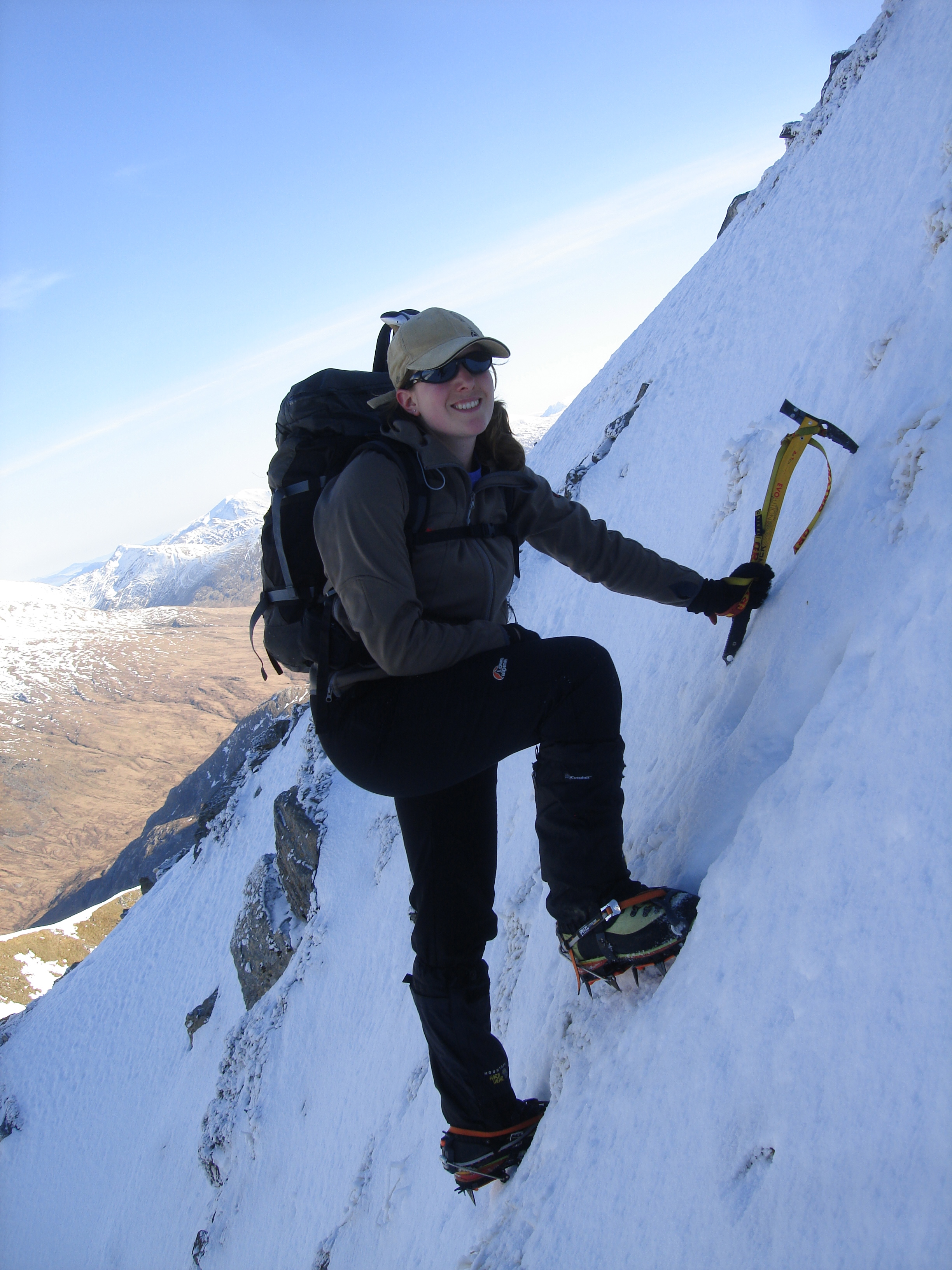
Liz climbing onto the Sgurr a Mhaim as part of the Ring of Steall (eagle eyed viewers will noe the angle of the sky…)
Offshore on the Magnus platform
Offshore!!!
After three cancelled trips I finally got onto the Magnus platform to have a look at the jobs I’ve been working on for the last ten months – and now I’m stuck here!!! Having been delayed on Shetland on Saturday night we got in on Sunday morning and I was supposed to head back around noon today but alas, the fog stepped in once again and here I am, sat in a cabin at the top of Magnus (itself sat in 190m of water, 160 km NE of the Shetland Isles). Not a bad place, but having had family (younger siblings and spouses) up with Liz in Huntly since Saturday evening I’m feeling a little sorry for her!
So what’s it like? Well, in many ways it’s a 30 year-old rust-bucket! It’s quite strange wandering round actually, as all the photos I’ve looked at and plans I’ve studied are now there in front of me and some things seem very small and others a lot bigger. Inside the quarters there are nine floors up to the helideck and a broken lift, and “outside” in the process (working) areas there are 3-4 floors and an open piping deck, with an ALQ perched in the middle as well as the prominent cranes, drilling derrick and flare stack. It’s certainly impressive, and although its only 56 x 62m width-wise, getting anywhere takes a fair while due to the labyrinth of walkways and closed off areas, interspersed with stairwells and heavy, sealed doors. Geeks (you know who you are) – you will like this New Scientist article (from before Ben’s time!) that shows the scale of it: http://tinyurl.com/ayvb98l
Anyway, it’s been brilliant here, on a kind of treasure hunt looking at where the Piping and Instrument Diagrams (P&IDs) tie into the real thing. As most of my jobs are in the execute stage it has been a bit of a sightseeing tour since most of the engineering is done, other than looking at the Bunkering Lines job which is just going into Define…
Bunkering Lines
If I was to listen to our contractor, WG PSN, this job is bigger than Ben Hur. But going out to look at it, we are removing the existing fuel and water hoses (they’re replaced every 2-years anyway) and adding a semi-permanent fitting so they can be extended onto the flotel’s gantry when it pulls alongside in 12 months’ time. Which is all of 15 foot away. Difficult as it is to actually get a survey booked and done, the adage holds true: time on recce is seldom wasted!
Cold Boot
Two blogs ago I explained that the Cold Boot project had been delayed – but didn’t quite realise the implications of leaving it as it is. And this site is secure, right?
So… currently (and this has been the case for 4 years now), the boot drains “fluid” (mostly water and a few hydrocarbons) into the open drains. In doing this, the nearby gas monitor is switched off, but not the others (as this is judged to be too many). So, last week they drained it and the gas monitor picked up some hydrocarbon and caused a “yellow shutdown” which caused a partial but not complete shutdown. Without going into too much detail as this is now subject to a lot of investigations, this led to a build-up in pressure further down the system and kaboom! A 22” water pipe, specced at around 60 bar was subject to approximately 140 before it exploded and split wide open. Fortunately there was no one present as they would have been royally f*cked. Anyway, there’s lots of folk looking into it – predominantly because the pressure should not have built up like that and also because the platform’s been shut down since. So that’s nine days now that Magnus has not been pumping something like £1.5m worth of oil and gas. A day. Ouch.
Understandably, I’ve got a meeting lined up for when I’m back in to let people know how the project is progressing so it won’t happen again; they’ll love it when I tell them we’re looking at 1Q 2014 at the earliest!
Other jobs:
Bravo Crane has now finally been handed over, the last piece of which was a few days at Kenz in Zaandam, near Amsterdam last week. Finally, I thought, four of us going out for Amsterdam, what could possibly go wrong? Well ladies and gentlemen readers; never overestimate the power of civvies. After a good steak dinner, we retired to the hotel. I could not believe it, sat on my bed at 2130 hrs because the others were all tired/under the weather. Maybe I should have dragged them on my run (minus something in shorts and t-shirt in central Amsterdam, aah yeah) a few hours earlier to get some life into them. It just felt wrong (and I did check that they weren’t just going out without me…). I did consider having a night as the lone ranger but clearly hanging around civvies has made me weak too!
ETAP ALQ is nearly ready for handing over to the Renewals Team/ Cat B projects, as being £10-20m it’s outside of the “remit” for projects and mods. Shame really as it was interesting.
And design work (me doing some technical design) is due to start in March – better find that calculator of mine!
And in other news:
I’m doing a presentation to BP’s graduates (there could literally be a hundred but I’m expecting a few less) on leadership on Thursday as part of their “lunch and learn” series where they have a non-O&G developmental presentation. I think I’ve got a copy of MATT 6 somewhere…
Running on the Shetland Islands is windy and rainy; running on a running machine is just plain dull, but I’ve got to fight the pounds somehow!
Spare time offshore would be ideal for getting work done if the internet wasn’t as slow as it is (hence no sexy oil platform shot today folks). In all, this makes the “free time” all the more frustrating!
Liz and I haven’t entered any gnarly races this year (boo!!!!!), just the toughmudder, Edinburgh marathon and Balmoral trail race. Am considering running the Spey Way (60 something miles) at the end of June – can’t wait til the thesis is smashed and I can have my life back again!
And once again, Dougal is still getting bigger…
Verifying references (thesis)
Guys – don’t do this as it causes pain!
Joking aside, I just thought I’d confirm a study from Deloitt (Wauld, C, on fuel usage (it’s steadily increasing to 22 gallons/soldier/day on average) with some figures from their Government Accountability Office and Congressional Research Service (should be pretty solid). But oh no, whilst 68 million gallons of fuel, on average, were supplied by DOD each month to support U.S. military forces in Iraq and Afghanistan (Solis, 2009) there were 188,000 “boots on the ground” (Belasco, 2009). Which means a paltry 12 gallons/soldier/day.
My only thought is that Solis’ figures somehow don’t include airpower. In which case they are hugely misleading as the figure should be much more (124 million gallons a month). All the more confusing is that I imagined that there might be more fuel requried (because of air/avn) rather than less.
Any thoughts?
References:
Belasco, A. 2009. Troop Levels in the Afghan and Iraq Wars, FY2001-FY2012: Cost and Other Potential Issues. http://www.fas.org/sgp/crs/natsec/R40682.pdf accessed 9 Feb 2013
Solis, W. M, 2009. DEFENSE MANAGEMENT. Increased Attention on Fuel Demand Management at DOD’s Forward-Deployed Locations Could Reduce Operational Risks and Costs http://www.gao.gov/assets/130/121644.pdf accessed 9 Feb 2013
Wauld, C, 2009. Energy Security, America’s Best Defence. http://www.deloitte.com/assets/Dcom-UnitedStates/Local%20Assets/Documents/AD/us_ad_EnergySecurity052010.pdf Accessed 30 Jan 2013
All Change in the Aberdeen Office
All Change in the Aberdeen Office
Well, a month back and there’s a good amount of stuff going down in the Dyce office.
Staff changes
Promotions all round in my department which his good, as my Programme Lead (1-up), Eugene is keen to iron out those things that frustrated him when he was an SPA. (He’s replaced Hugh, who was a little bit “wet” at times). Similarly, Pete Neilson has taken over as Team Leader (2-up) and he’s pulling no punches in holding WG PSN to account. A few of their management have been “moved on” since his promotion and he’s bought in new staff to oversee their methods of working. Pete is taking a much keener look at the individual projects and our management and initiation of them. His predecessor, Paul Mullan, was good but never seemed to be around, basing himself in the main BP office rather than our separate office. This may have been good for him personally, but I think the leadership of the team suffered for it.
At my level, we have a new SPA who I am handing over the B Crane changeout to. While this is a shame as it was a good job to be running with, it will eventually give me time to get stuck into some discipline engineering. This is something that has been amiss on my placement but I’ve just came away from a chat with WG PSN’s engineering manager (a Fellow of the IMechE who sits on the interview panel) who is reading through my Personal Competence Statements in order to find the best projects to get me through Review.
It may transpire that I actually hand over all my jobs, which would be a big shame as they’re not due for offshore execution til July and I’d like to get them there! Still, no time for sentiments when I’ve got a thesis to write and A and B competencies to develop.
Contractor Changes
Such is the nature of this kind of work there’s been a good few chaps from the office move on over recent weeks. As well as being paid anywhere from £60-100+ an hour, contractors are on 1-weeks’ notice (either way). This means that if a new job comes along they are more than happy to move on within that length of time; regardless of a successor being lined up or not. With some drama, our lead process engineer was told to clear his desk then and there, whilst one of the construction planners sat next to me managed his full 5-days before moving on to better and brighter things. With one of the SPAs off at the end of March and the BP planner away at the end of February, there are more and more empty desks by the minute. This is causing some problems already; our cost estimator left in November and still hasn’t been replaced. The comment of there being far more jobs than “qualified” people in Aberdeen has never been truer.
My jobs
These are all progressing well with one notable omission, that of the Cold Boot upgrade…
This has massively stalled due to two main factors: the postponement of the Controls Improvement Project (CIP) and the realisation that there is no suitable pump to empty the boot (a vital part of the project). Being located at the bottom of the platform, already having a low NPSH, potentially having muds within the “fluid” and being at low temperature (JT effect kicking in there too) there really is nothing on the market that can cope. Separately, the postponement of the CIP means that any tie ins to the ESDVs will have to be through old-school “manual” logic gates cards – literally hardwired AND/OR gates that slot in to the old control panels (Ben would love it). So, while I can still get most of the TAR work completed, I am redefining the complete scope to use a N2 blow-down system instead; something that is so very different it will need a new HAZOP and LOPA to be done to ensure it is safe. Furthermore, when we re-connect the ESDVs we may need a gas outage to allow for them to be programmed; this is where it will get painful…
While this is a motherfudger of a change, I am thankfully not entirely responsible having inherited it midway through Define (plus, the CIP project only got postponed in December). Still, it is a bit of a nightmare and something I want to get back on the straight and narrow before handing it on. To be fair, having HAZOP’d the old (pump) system we are in a far better place for getting this N2 system right after a good Define.
On the plus side, it also looks like a much better solution that might be fully ETP compliant and so a permanent modification, rather than the pump system which was only a temporary solution until 2016.
Extracurricular Activities
How are you all getting on with CPD? The IMechE meetings here are at the opposite end of town, so I’ve only gone to one so far (it took 90 mins to get through the traffic and then it was really boring anyway). Still, BP are hosting one later this month so that will just be a trip to the other office. As for now, I’m just about to head into town so I can get stuck into some fun with the Young Members’ Panel; what better way to spend a Tuesday night?
Happy new year
Happy new year!
Just a quickie as a “distraction” from TMR 4 as Dougal charges around the house and Liz packs for an MA module in Edinburgh next week. Unlike you guys I’m not really doing a separate Phase 4 so I’m developing what I’ve been doing up til now, with an aim to join some of our designers to get the A and B competencies ticked. This works for me, but I’m starting to feel conscious of the fact that I’ve not got overly technical yet.
TAR jobs. These are going well and materials are finally getting specced and ordered; I’ve made a few calls on materials for some of the lines that are being replaced so that’s always an interesting one! There are still a few outstanding issues mind, including the only remaining vendor pulling out of the fabrication of one of the emergency shutdown valves (ESDVs) on the cold boot upgrade. We’ve now got another procurement team on the case, as ESDVs have a 20-week lead time and the TAR starts in July…
The ETAP ALQ is moving forwards slowly, mostly due to it getting pushed down on my priorities list. This isn’t ideal and it may get “taken from me” if I don’t get some progress on it, but there are only so many hours etc. etc and the programme lead understands that. I’ve asked if I can keep it chugging along and give it to Imran when he gets in as it’s a nice and easy (albeit pretty big) one to start off on.
The Magnus Bravo crane. We have a decision, and the decision is… PIECEMEAL!!!!! After months of investigating and putting together arguments for different options we’ve going with a piecemeal/stick build approach (like a 6-piece lego set) to replace the 100 tonne Bravo crane. The reasons: essentially it’s because there are known-unknowns using a piecemeal approach, plus it is easier to modify if and when things slip. The HLV option is technically easier (once the cab’s removed, sail in a big ship with a massive crane on it up to Magnus to swap the cranes over in single lifts), but the unknowns remain unknown and it’s a lot of commitment that can easily change. For more details see TMR 4 where I investigate what drives the selection of the method!
And in other news: Christmas was spent at home in Scotland with the in-laws up for a few days and various other visitors here and there. We got another day of skiing in on Cairngorm which was good fun, maybe best described as “better than some days I’ve had in the Alps”. I also got the axes out for a play on Lochnagar which was exciting, but the ice was melting rapidly so we didn’t get too much done. Lots of good walks on the beaches, woods and over the hills though. Looks like the weather is starting to chill again over the next few weeks, so hopefully get some routes in between the thesis and everything else.
Liz is loving life in RHQ right now – with a Regt 2IC on resettlement courses and the RCMO gapped it’s not the easiest of lobs for her so we take it in turns to complain about our workloads. She normally wins hands down during the week, but I champion it at weekends!
Aberdeen Update
Is it really 4 weeks since the last blog???
Well, for those readers who haven’t had the good fortune of seeing my AER, here’s an update on the goings on of your favourite BP Project Engineer.
Magnus B Crane Changeout.
Apologies to Ish who may have had burnt ears after my last blog, but he may be right about the HLV after all, it’s just that I couldn’t find his evidence for it! So, complete with dodgy ‘tache, I took a trip to Holland to meet up with Heerema Marine Contractors (HMC) to see how they would do it. Turns out, it really is that easy, but they won’t formalise anything until we contract them to do so and therein lies the problem. It’s a chicken and egg situation: I now need to convince BP to commit to using a Heavy Lift Vessel (HLV), to then get the guys from Procurement and Supply Chain Management (PSCM) to get all the vendors to bid so we can select an HLV that they can prove it is the best option and we can contract it. More meetings with BP management/ PSCM to follow but I’m particularly keen to go with an HLV as it seems such a better option (and it fits in with my UK Spec Competencies too). Unlike the HLV Sparrows showed us (see last blog), HMC’s Thialf can stabilise itself and has removed similar size cranes from other platfoms (Fig 1) and installed new platform cranes onto platforms in single lifts. Easy!!!
Fig 1. HLV removing platfomr crane on NW Hutton
ETAP ALQ
My brief to the Area Operations Manager (think high level bloke that is responsible for a number of oil fields) went well and I left with a whole load more questions to answer. Like any meeting though, there were the usual suspects asking pointless, irrelevant (for this stage) questions but on the whole the comments were very useful. Lots more work before I get to the end of Appraise and write a good DSP, but it will be a good project for Imran to follow on with in Select and Define (and the guy after him to take into Execute). We’re looking at a 2015 installation so it should keep RSME engineers busy for some time yet. As a rough order of cost, £20m (P50) will get you something like this (Fig 2)
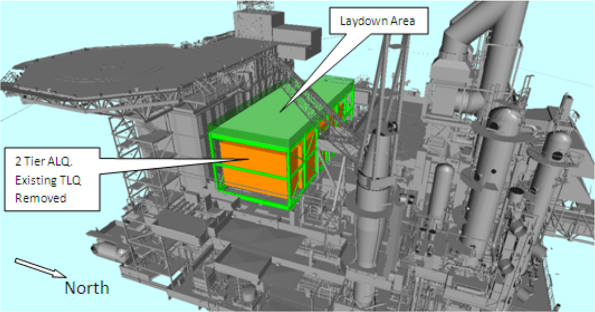
Fig 2. Schematic of ETAP ALQ for 40 POB
Magnus TAR jobs
These are what are keeping people on the Magnus team “excited” at the moment as deadlines for Work Packs and long lead items approach and everyone wants things done yesterday. I have six jobs going on in the TAR and they are at various states. Since they are all “priority”, it gets interesting when I then have to prioritise between them. On the whole, we are getting there but I fear that some won’t be ready on time unless there is some serious “pulling out” of fingers.
What am I doing about this? My four Runcorn jobs are actually going OK (although a little behind schedule, as everyone’s are), it’s the ones done here which I’m struggling with, and I think the problem is a combination of the inherent complexity and the turnover of contracted engineers. So, in true officer fashion, I’m keeping our heads up, and trying my best to facilitate all the required conversation between the process engineers working on the jobs and the Technical Authorities in BP. We’re getting there, but it’s my biggest risk.
In Other News
- Dougal is getting big, and I will do soon if I don’t start running properly again: 2-3 hours of walking a day is not what I call training! Still, I’ve got two ultras lined up for next year, either one of the Mont Blanc races (100km along, 5.5km up) or the Bob Graham Round. And for something short, Combat Stress have given me a place in the Edinburgh marathon – I’m planning on breaking 3 hours.
- I’ve been selected as a reserve for the REMEC 8000 expedition in Aug/Sept 13. I’ll have to plan what training I can go on around my work, thesis and wife, and if it looks like I’m going to get on the team, consider my postings carefully.
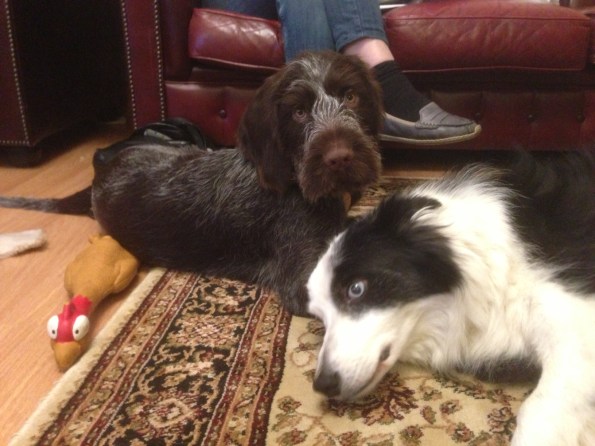
- Just had the folks up for a week; it rained pretty much non-stop and their aged, three-legged border collie just about coped with the boy Dougal.
- And sadly Movember comes to an end. I didn’t plan on raising any money but a few folk from work insisted and I raised £60. It’s good to see the rise of facial hair; in one meeting recently there were 11 of us present and just 4 clean-faces (two of whom were lassies).

“It’s all good to go”
“It’s all good to go”: Magnus B Crane Changeout
The replacement of Magnus’ B Crane was one of Ish’s major projects, and handed to me “all good to go” following two Value Systems Analysis meetings with the key stakeholders and an external agency who were brought in to facilitate it. The first was to investigate what weighting should be applied to four considerations that between them would be used in ranking methods of the B Crane change out. This was done by rating the importance of one factor against another and saying if it stronger, much stronger or very much stronger than the other. The outcome of this was more extreme than expected and showed that there was a 62% weighting towards (not) impacting operations, 22% towards constructability, 12% to the importance of having a straightforward implementation, and just 4% to minimising the cost. In my eyes the absence of anyone from the business side of things was highly influential on the outcome that suggested “quick and straightforward at any cost”.
In the second meeting had a few more key players: Gav from Renewals whose opening line was “So, is this where we confirm its an HLV then?” and Tamara from the financial side who was amused to see that the real cost had such a low influence. The next part of the meeting compared the different methods of crane changeout based on very few hard facts; essentially peoples’ opinions based on what they’d seen/heard in the past. Even more interestingly, we compared two named stick-builds (Sparrows and LBO, who all had supplied facts and figures) with three notional ideas of how a Heavy Lift Vessel would work, rather than named HLV vessels themselves. Funny old thing, the notional HLV came out on top, despite none of us having a real idea of what the implications are.
A week after Ish left we got Ian Alexander from Sparrows (our preferred bidder for lifting operations) in to discuss how they have worked with HLV crane installations in the past (bearing in mind the lowering speed can be 0.5 m/s there are some impact forces to mitigate against, amongst other things). They gave us an excellent presentation on their enabling works with the HLV Saipem on the Captain platform. In this instance the ‘super-fast HLV method’ required a total of 11 weeks work from start to finish due to all the other works required, such as moving some items on the platform (the HLV had a 2m “obstruction-free” zone), jacking up the crane that was being removed, and shutting down the platform as must be done for all HLV work. This has made us re-think the HLV option, although having spoken to Herema today (and also Ish), they have a much lower requirement for enabling works. The problem I now have, is finding the best solution based on some maybe flawed parameters, and then convincing everyone that I still have the best option by all accounts. To give rough figures, the full cost of an HLV is estimated as £15-20m; a Sparrows stickbuild will be £7-10m.
What I’ve really learnt from this is the seemingly obvious reiteration of three important things:
- Have hard facts and figures for all options when doing any kind of comparative analysis.
- Ensure key stakeholders are present at meetings that affect decisions where options can have £10m difference.
- Always remember Rule number one.
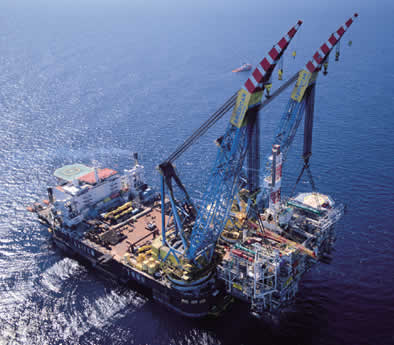
Figure 1. Saipem being used to install an entire platofrm. Is it overkill to use an HLV for a single crane?
Other jobs
ETAP ALQ. My Appraise report is nearly complete and having convinced my programme manager that we need to look at more POB, I have a feeling we may be asked more than the 30 originally planned for. To get the Area Operations Manager to attend my gate meeting I was given two windows this side of Christmas, but as I have found, I don’t want to make any decisions without the big-guns verifying it, so I have a date and time set. The go-ahead (looking at £15m for 40 POB) will be based on a business case that I’ve been told to not concern myself with, so all I need to worry about is the engineering of it. This will be an excellent job for my successor to carry on with the Define and onshore Execute of. The offshore Execute will be Summer 2014.
Magnus TAR jobs (5 of). These are all running OK, with the work on three of them being split to minimise the work done inside of the TAR so it can be completed after (outside of the time when a day equates to roughly £2m in lost revenue). My concern is that the work will be delayed so I am fighting to get buy-in from the platform for the project POB afterwards. The one that this is unlikely to be the case on is the Decommissioning work – there is loads more than expected (looking at <300 different parts of pipework post-TAR) and that is a lot of work: something like 300 man-weeks in the latest estimate! This non-TAR work will be surveyed in Jan and Feb so we should know more then.
And in other news.
I’ve hung up my running shoes for the year, having finished 4th (from 196 starts) in the 60-mile London to Brighton race, and 12th (from 150) in the Glencoe Marathon (gutted – was 2nd for the first 8 miles but piled in as soon as we started running downhill). Liz also did Glencoe and did amazingly, despite cutting her knee nicely in the first mile. Nearly £1000 raised for Combat Stress and the Muirhouse Youth Development Trust so that’s good.
Dougal is awesome but hard work – Roy Serevena, I really don’t know how you managed with all those dogs and children: Lisa must be a legend!
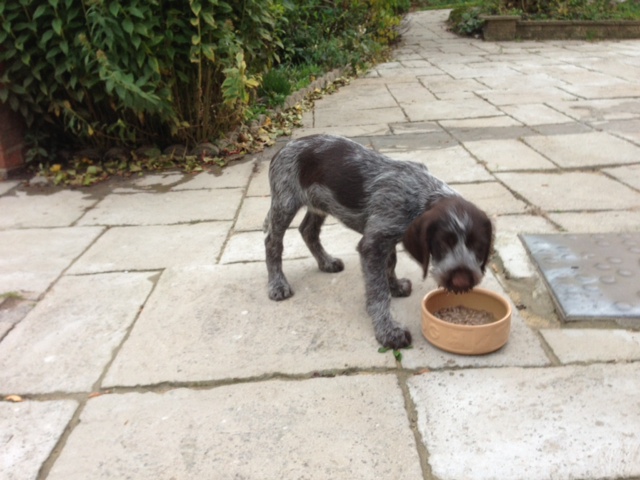
Figure 2. Dougal
Winter tyres are ordered and get fitted next week: it was -4 as I drove in last week (admittedly this was at 0500 hrs…). Perhaps a little cooler than things Down Under, but looks good for the winter climbing season!
 Holdfast Training Services Trial Blog