Archive
Care Construction Challenge
On Saturday three members of the Lillie Square Project Team completed the 26.2 mile race in aid of the infrastructure development charity, there was an ex-Olympic swimmer, a fat bloke and me.
The 26.2 mile course included a canoe, bikes, a 10km run, loads of hills and stinging nettles. As we lined up on the start line it dawned on us that we might be out of our depth. The teams either side had brought their own expensive looking mountain bikes, looked extremely fit and were taking it all very seriously. We held our nerve, and each others hands, and when the command came we skipped off across the field in our dresses.
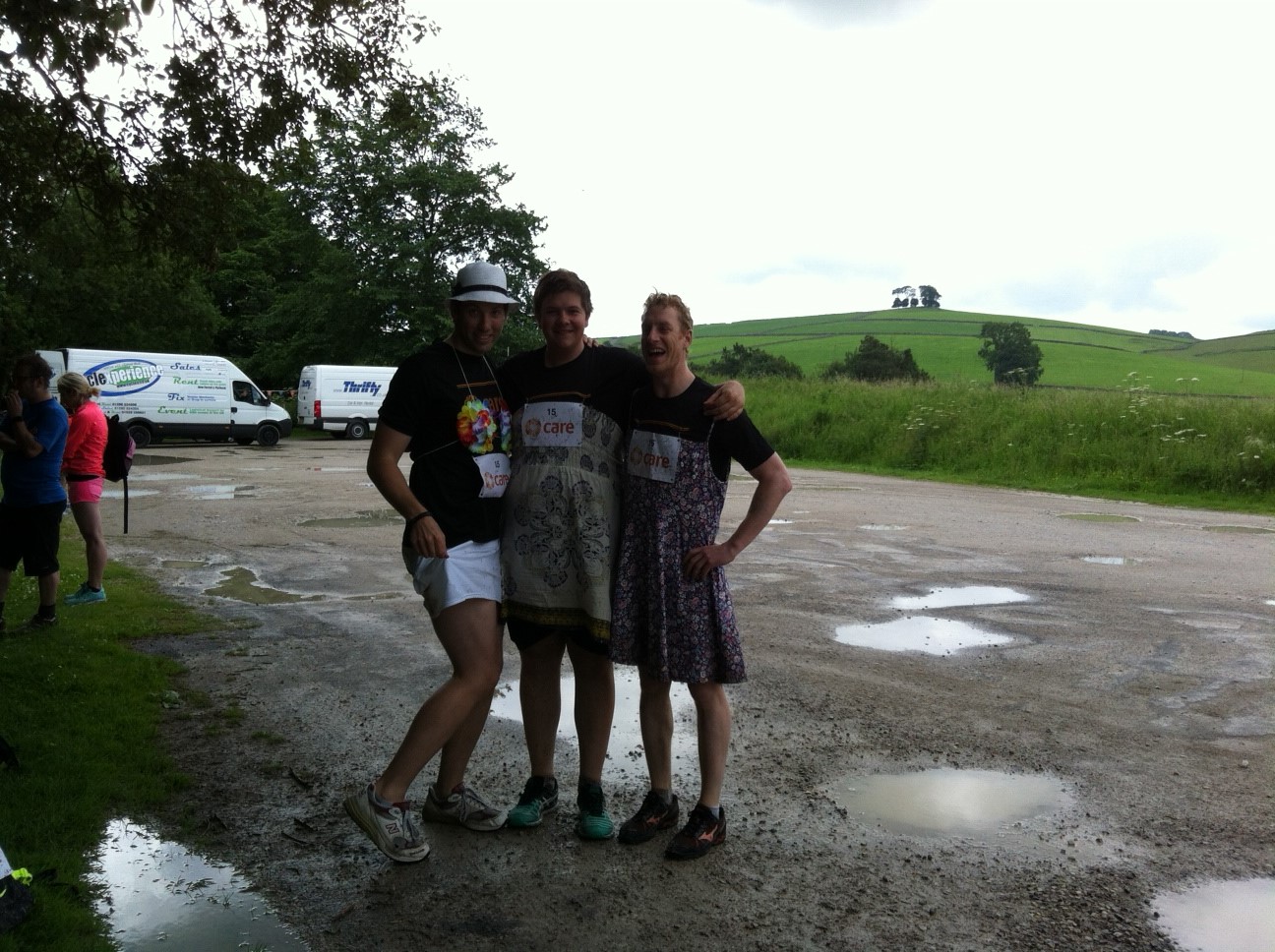
The bike was over, the run was still to come
There were many challenges along the way including a memory test, building a stable structure from straws and riding side saddle without falling off – although that last one was self imposed. Our high spirits and Haribo got us through and with the added encouragement that comes from being dressed like your Mum finished 8th overall. Most impressively we gained the highest points score from all the challenges and received the coveted “most brainy” award. Although clearly not the most brainy engraver given that the trophy says “most sporting” on it and the word “construction” is spelt wrong!
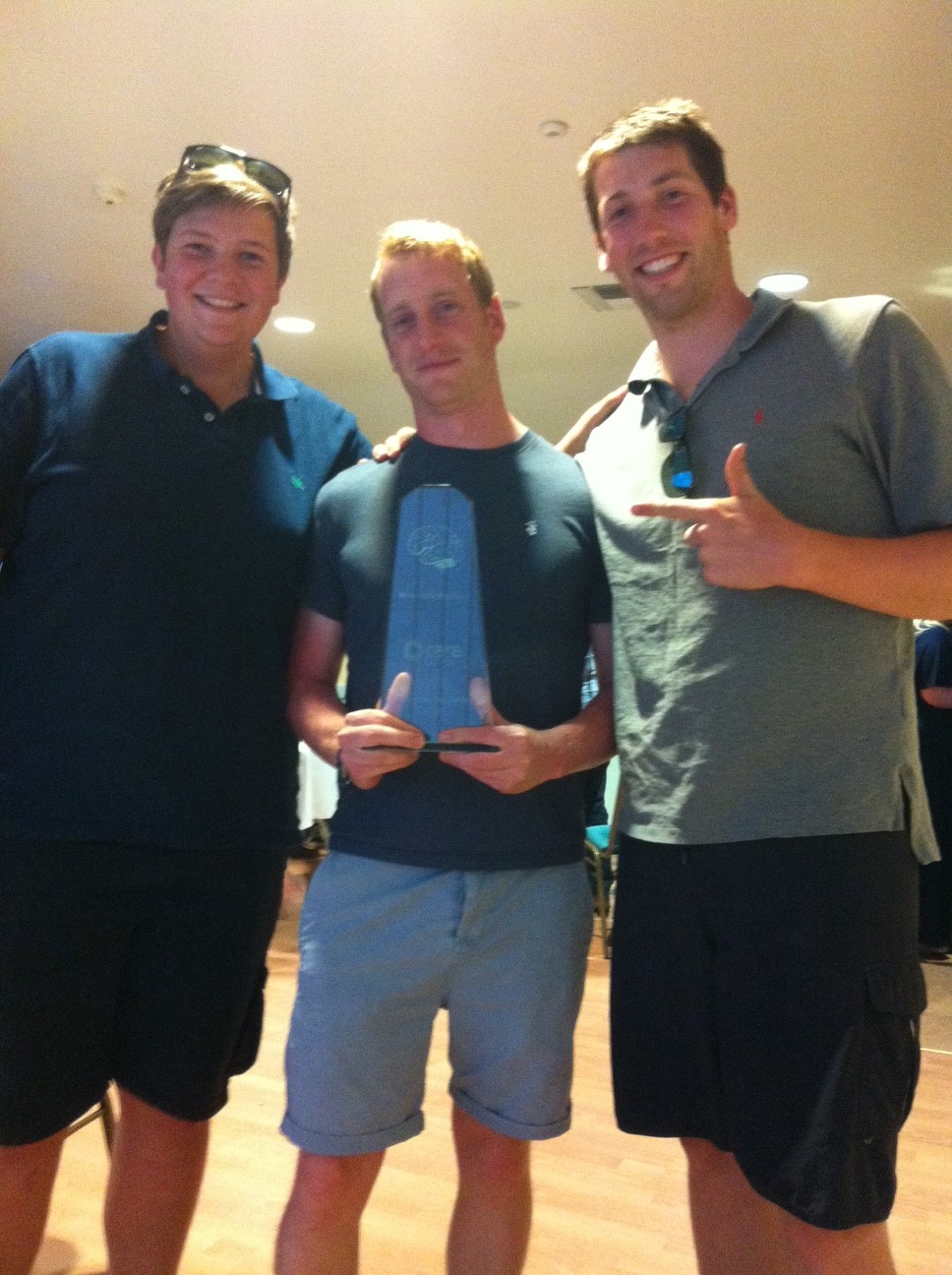
Victorious!
A great day was had by all and lots of money raised for a worthy cause. If you would like to donate you still can by visiting http://www.justgiving.com/lilliesavages
A video of the event can be found at https://youtu.be/wy-gCUoADiw
The Good, the Bad and the bloke setting out
It seems to me that there are two types of engineer. I don’t refer to those people that sub-contractors refer to as engineers that just carry a total station around all day, they are not engineers. Instead I refer to good ones and bad ones. A good one looks at something, asks a million questions about it, wants to know all the details and then enters them into a spreadsheet. A bad one says “fuck it – that’ll do” and moves on to the next thing.
On my site we have this:
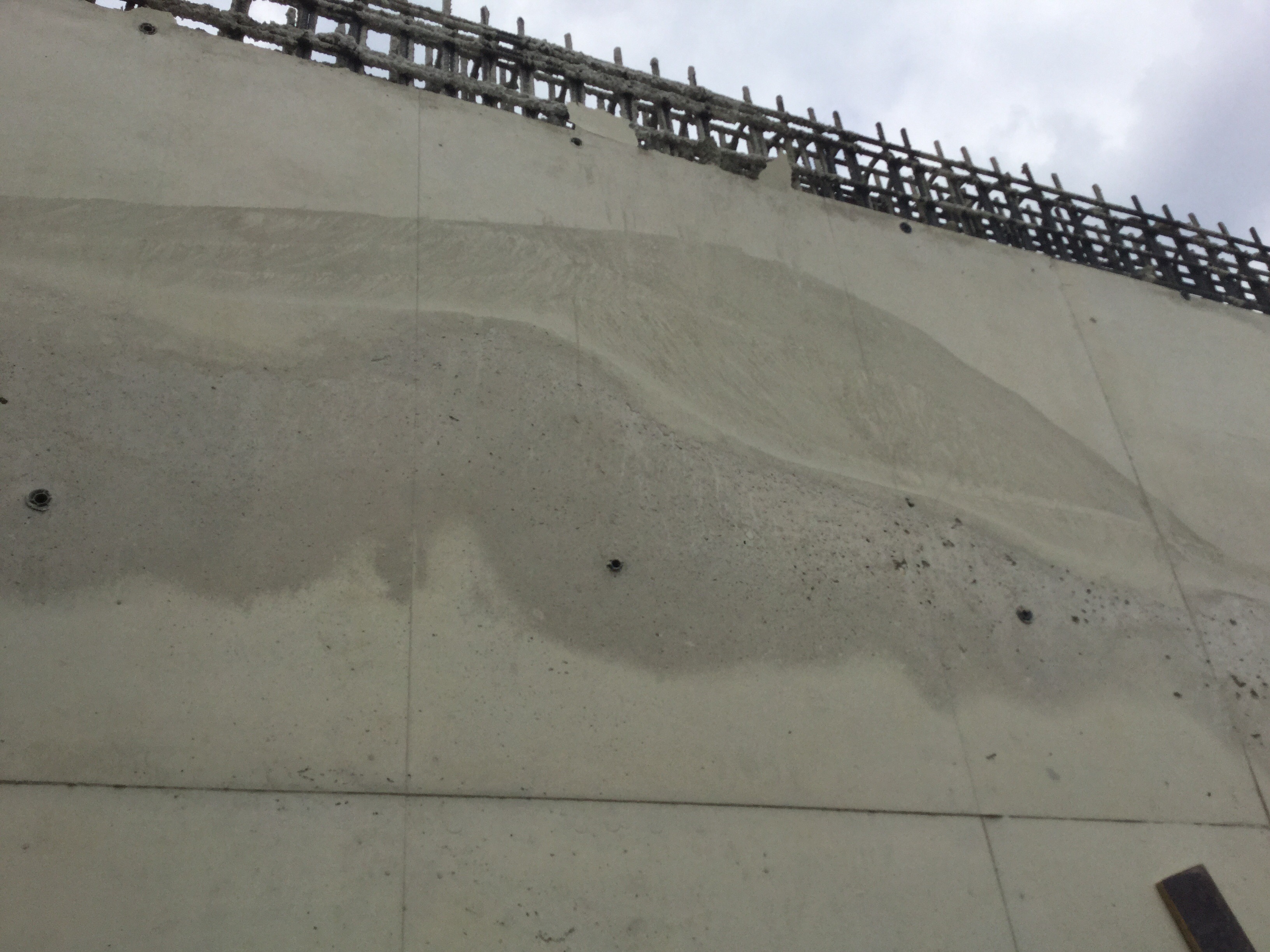
Discolouration in concrete retaining wall
I looked at it and went “oh look, funny colours”, then moved onto the next thing.
Luckily we have a resident engineer from Arup on site called Tom (who incidentally once held the world record for the tallest tower made of dominoes). He looked at it and asked “why has it done that?” And a good job he did too. It turns out the upper bit of darker concrete is simply a higher strength concrete that was put there by mistake, no dramas there then. The lower bit it turns out is where the cement and fines have migrated up within the concrete and the aggregate has settled out. While we can’t be sure why this has happened it is believed the concrete was at the sloppy end of the allowable slump test result and the man with the vibratory poker lift it in the concrete while he went for a fag.
This is a problem because if there is no cement or fines around the aggregate at the bottom it will not be bound together properly. If there is no aggregate in the top bit then it won’t be strong enough. So we’ve ordered some cores to be taken. If they pass we’re ok. If not the wall will have to come down.
I have learnt a lesson: Ask more questions! Ask why much more often. It might make all the difference!
Stay tuned for the results of the core tests and the DNA test to see if Tom is in fact related to Damo….

Tom and his dominoes
Silly Money
In the original contract BoQ we agreed to pay PCH nearly £1000 per tonne of reinforcement steel to procure and fix the steel. When PCH started having cash flow issues back in March, McAlpine started buying in the steel themselves and free issuing it to PCH. Since McAlpine were paying for the steel it was decided that they (and by that I mean me) should call it off too. An agreement was made with PCH that we would subtract how much we were paying for the steel from PCH’s BoQ rate and pay them the rest.
Then when PCH went into administration a couple of months ago we started paying the steel fixers directly too. So again, we deducted that amount from the BoQ rate and paid PCH the rest.
While initially that made sense: we couldn’t be sure we’d get the steel at the same rate as PCH so we minimised the risk by guaranteeing the combined rate for supply and installation. But now we’re in a position where we pay around £250 per tonne to buy the steel direct to the supplier. We then pay £500 per tonne direct to the sub-contractor to fix the steel. We then give the remaining £250 to PCH for what? Currently we’ve given PCH nearly £250 000 for doing nothing.
McAlpine chose to minimise their risk by ensuring they would never have to pay more than the original BoQ rate, but they missed an opportunity to pay less. It seems so obvious but a SWOT analysis of the situation probably would have identified the opportunity to make a saving, but no one did one. They simply identified a risk and dealt with that.
While I accept the risks are hugely important, I would suggest the SWO is important to and therefore before dealing with the risks we should first identify the other elements in order to make a fully informed decision.
Mortar, PT and Mily Cyrus
Two points of interest this week.
Firstly the Mortar Silo. This is not where we store the mortar rounds on site. My site is in West London, not America and therefore we have no need for heavy armourments to protect against the gun toting British, gun toting police or indeed gun toting population.
It is in fact where we store the mortar for the Blockwork. A package I have been given to look after. “Sort out the silo” I was told. “Easy” I thought (once I’d googled what one was). Oh how wrong I was!
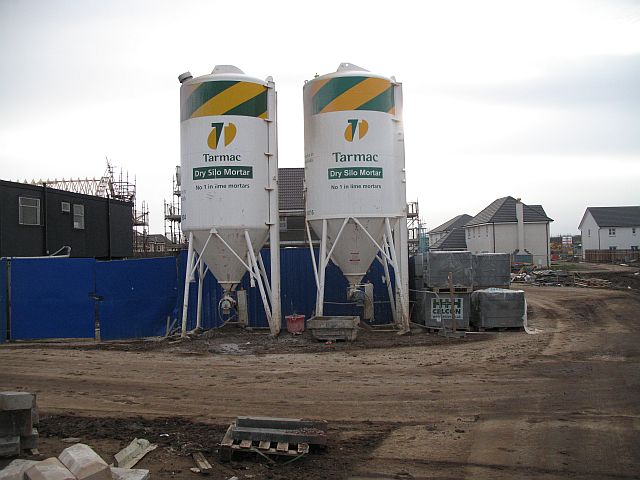
The first question I tried to answer was “where should it go?”. Our construction manager picked a spot, then went on holiday for a week. In his absence everyone else agreed that was a stupid place to put it. So another spot was picked with the assistance of the man from Tarmac who came to site on a recce. The silo requires water and power. The location chosen is against a fence along which the water ring main runs – so a tick there. It’s also next to a large steel portal frame building where prefabrication will occur. That building has lights and stuff so I thought the electrical bit would be fine. Wrong again. The building does have electickery but it’s not turned on. And won’t be until the road has been dug up (again). I’m hopeful it will be on in time but I’m not so sure.
Next it needs to sit on a concrete slab. This slab must be 400mm deep (to accommodate some holding down bolts) but cannot be higher than 100mm from ground level. So we need to dig a hole. In a car park. Made of concrete. Laid on top of cobbles. With train tracks in it. Oh dear.
Then there’s the bolts themselves. Tarmac sent me the spec for the bolts but couldn’t send me setting out details since the silos are apparently made by someone with the accuracy of the Royal Artillery and therefore no two are the same. The only way round it is to sit the silo on the slab. Drill through where the holes are and attach the bolts all while hoping it doesn’t fall on you. So we’re going to use our massive forklift to hold the Silo in place while we mess about with the feet.
So it looks like I’ve sorted it, or at least I would have if the Blockwork sub-contractor would tell me how many of the things he wants!
My other headache this week was the PT slab. The first one should have been poured on Wednesday, but the designer was working for PC Harrington, who didn’t pay them. So McAlpine paid them and they did the work. The pour was then rescheduled for today. It isn’t happening. It was discovered yesterday that Arup (the principle designer) had designed the building with a certain tolerance for differential settlement between the building core and the surrounding slab. This was published in their “movement and settlement report” which was issued to PC Harrington for onwards dissemination to the PT designer. It never got there. So the PT slab was designed with a different set of applied forces to that which Arup thought it should. Arup ran some numbers and told the PT designer that they’d have to do it again increasing shear by 12%, bending moment within the slab by 10% and (this is the biggy) punching shear by 38%! The PT designer is not happy. They think that they’ve done what they were asked since the Arup PT spec doesn’t mention the report and they were never given it anyway. They say the recalculations will take 3 days and cost “thousands”. After the calcs the additional steel will need to be ordered, delivered and installed. So we’re probably looking at a week delay and the associated penalties.
McAlpine blame PC Harrington for this (along with the current delay, the poor quality concrete finish, third world poverty and Mily Cyrus). PC Harrington think it’s Arup’s fault as their spec doesn’t specifically mention the requirement to design in accordance with that report. But it does say that all “relevant reports” should be considered. I would say that the bit of paper that quantified the differential settlement is fairly relevant.
Previously I spoke about how people within Arup weren’t talking to each other and therefore the drainage and the reinforcement steel clashed all over the place. That was clearly a communication problem. So is this. There have been numerous examples where a specification or a drawing says something that is ambiguous, as a result the product is not quite what the designer intended. Some of this is inevitable, it is the shortfall of language. But some of this is down to people using flashy words when they don’t need to. It not just a military problem. While I’ve not heard anyone ask for “greater granularity” on anything yet, I have heard loads of people attempt to describe something in words when they should just draw it, or use clever sounding words when they should just use plain English. This is particularly relevant when a lot of the people who do the lower level design work don’t speak English. Or at least not any better than I do.
So if part of the point of AMRs, TMRs, essays, etc is to ensure that PQE Officers can write in clear English – I say good. And for future courses maybe there should be more of them. Along with stretcher runs, drill and CBRN training obviously!
Finally a shimpf: a few weeks ago I posted a link to our justgiving page for sponsorship for an event. The support has been somewhat underwhelming. I know its not a military charity but I do think it’s a good cause. It all goes towards improving infrastructure in some of the worlds poorest places. Places most of us have seen and so probably understand how shit it would be to live there without clean water or electricity. Please help!
Not as good as Damo’s…
I started this as a reply to Damo’s blog but it became a bit epic so I thought I’d make it a stand-alone blog. So it you haven’t read his; read that first, or just instead, it’s better than mine anyway!
The client has contracted BLP as its insurers for the project. They visit at certain times to inspect the things most likely to cause a claim. At this early point in the build it’s waterproofing. McAlpine are still picking up the pieces from a job finished last year where the basement is now leaking. They have spent over £1 million injecting grout into the walls and water is still getting in. Later on the insurers will care about the façade, and the roofing, anything that could let water in. But right now it’s all about the waterproofing under the concrete.
It’s not that BLP don’t care if the building falls down, it’s just that thanks to all the other checks that happen, and likely hood of such an event, they’re focussed on the stuff that might cost them money in the long run. They just assume the actual structure will be alright.
They have paid particular attention to manholes. And quite rightly, as the first 3 we built we massively messed up!
The first isn’t waterproofed at all. The second is, but a movement joint was incorrectly installed and now the membrane is torn, and the third one used waterproof concrete that it turns out is less than waterproof. All of these will require remedial waterproofing works which we are waiting for the waterproofing designer to come up with before the architect approves it before we can instruct the install.
To add further complication these three manholes were installed by our previous drainage sub-contractor who walked off the job some time ago after they hadn’t been paid. When our new drainage sub-contractor surveyed the manholes they discovered that at best the invert of the inlet was level with that of the outlet, and in one particular case the inlet invert was 40mm higher that the outlet, see picture below.

The worst manhole ever!
The curved 100mm dia (4” for Brad and Henry) pipe is the inlet. The straight 150mm dia (6”) straight pipe is the outlet. The reason the 4” is curved is because it enters the manhole at such an awkward angle that the benching would be a nightmare so a curved bit was added. By removing the curve (requiring local breaking out around the joint half embedded in the wall) we managed to achieve a 15mm drop (whoop whoop) and we’re hoping that with some artistic benching we can make it work. Luckily that inlet comes from a floor gully, so at least we don’t have to worry about trying to get a poo round the corner!
I’ll keep you posted…
In other news I have managed to talk two blokes from my site into the Care Construction Challenge, a 26.2 mile cycle, run and kayak race in the peak district. We all have to do all the legs and I have promised that if we raise our target amount that we’ll complete it in dresses. So please sponsor us at https://www.justgiving.com/LillieSavages/.
Thank you!
Making it up
This week’s blog is about stuff that doesn’t fit…
We’ve got a channel for an ACO drain in the steel, and a pipe for the ACO drain, but the two don’t line up. I checked the setting out for the pipe, it was in the correct location according to the setting out information from Arup. I then checked the channel in the steel. It too was in the correct location according to the setting out information from Arup. It turns out that if you overlay the structural drawing and the drainage drawing they don’t line up:
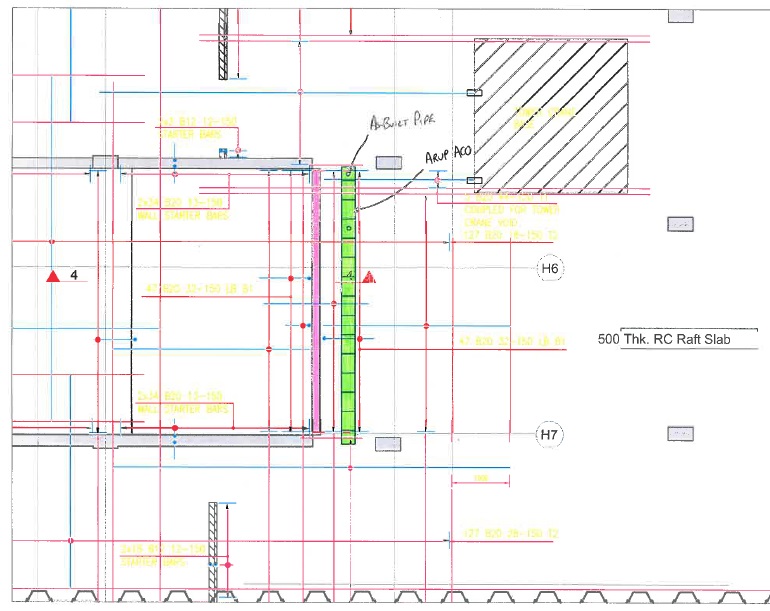
Pink shows structural design location for ACO drain, Green shows the drainage design location
We’ve solved the problem with the imaginative use of a 90 degree bend (which are actually 87.5 degrees, but that’s another story) and a T junction.

I would dearly love this to be the only such balls up, but it’s not. We had a drainage run that should be a straight pipe with a y to a second drain. It couldn’t go there as it would clash with the discharge pipe for another sump. So we tried it the other way round and that clashed with a pile head. So we’ve had to bend it round the pile in order to get it in.
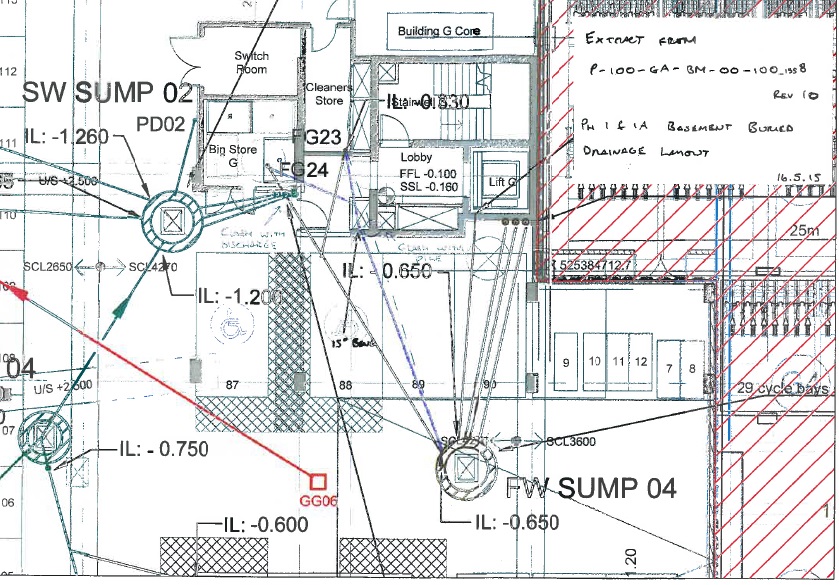

Both the drainage design and the structural design are both done by Arup, so yet more examples of an organisation sending out contradictory information.
But unlike previous examples where it was because people in open plan offices sit next to each other and yet still prefer to send emails rather than have any form of human contact, this would appear to be mostly due to one man thinking his area of responsibility is more important than anyone else’s and assumed that everyone would make their designs fit his. The structural engineers assumed they were the most important and so didn’t bother to check.
We’ve solved all of these problems but it does begin to raise concerns about the competency of the people who design these things. Neil often asks about how on earth they designed something as complicated as the Shard. I fear the answer may be: “They just made it up!”
It’s not all bad news though. Our 5th tower crane is up and the site is really moving now. PCH are here only in name but the blokes are very much here in person so we’re progressing nicely!

Bent stuff
It’s been a couple of weeks since my last blog thanks to TMR 1 consuming my time and then I was away for a week.
Life on site has been interesting…
Yesterday a man got 5 minutes into the induction before asking for written, signed confirmation that if PC Harrington go under (which they have), Sir Robert McAlpine will pay him. We couldn’t offer that, so he left.
On a slightly more technical note I have spent most of today trying to work out if the sheer pile wall will fall down if I take a corner prop out. The prop is really bent. It was hit by an excavator during the dig. It’s meant to be straight and connected to the capping beam each side by a plate and some fairly serious bolts. Since the beam is as bent as it is, I think that it’s load bearing capacity will have been severely reduced. Which temporary works are designed to withstand impacts, this was a big one. Look at the deflection! Additionally it would appear to have lifted away from the capping beam at each end, so isn’t in proper contact anyway. Also the inclinometers, prisms and google maps so no movement on the sheet pile walls. So I think it isn’t really carrying any load. However I can’t prove it. And without an ability to prove it, no one will take the risk on taking it out.
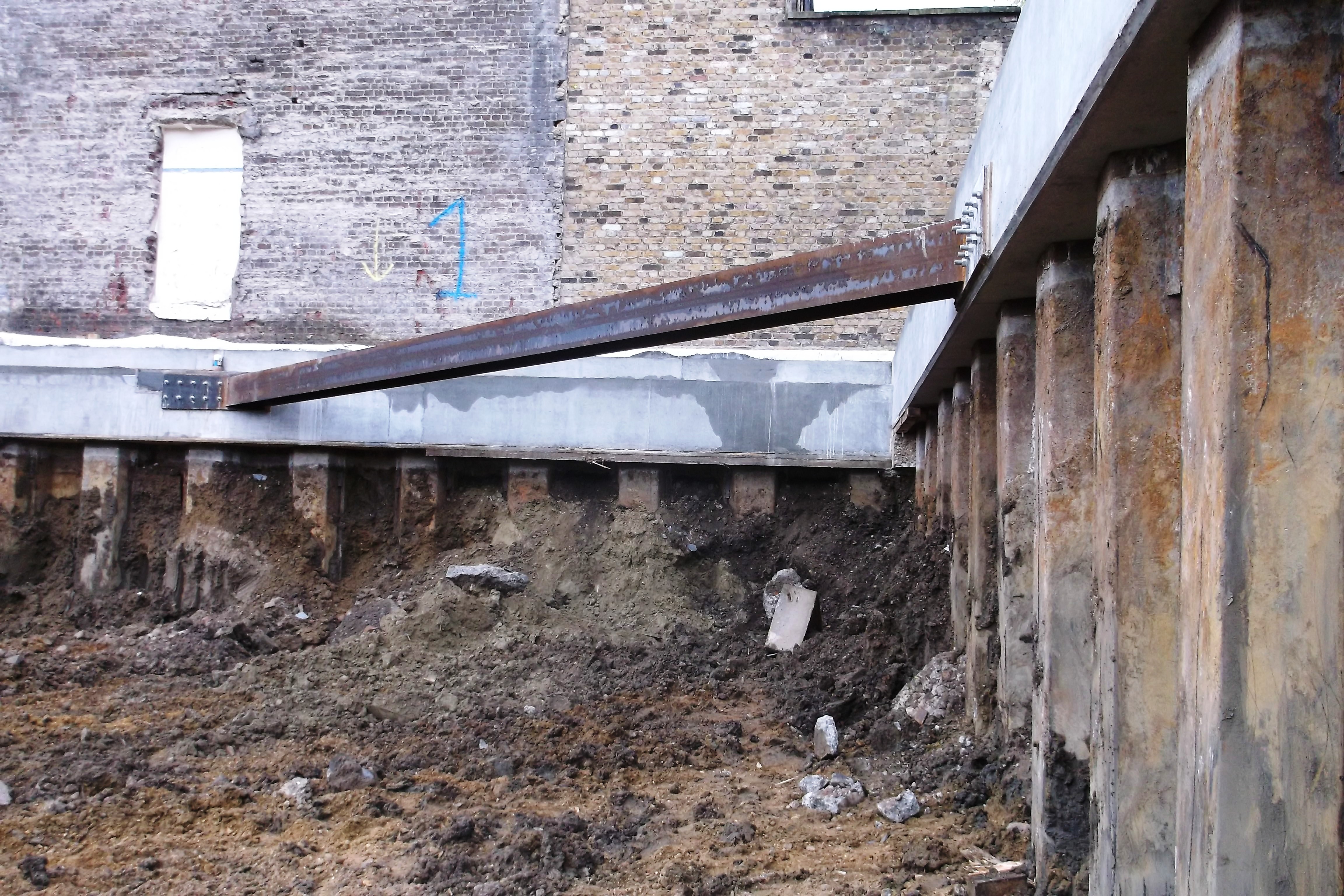
Beam as installed
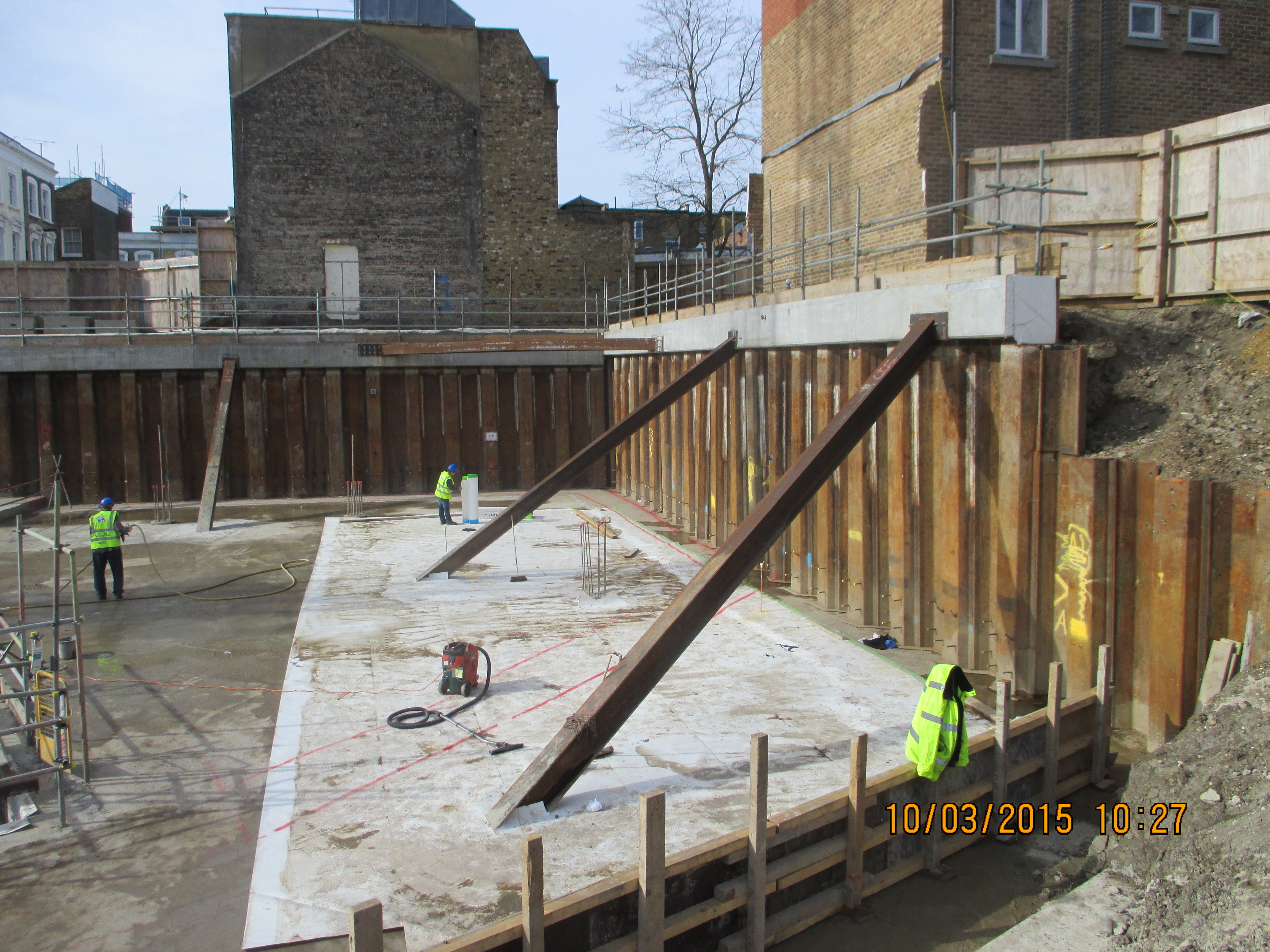
Beam post strike
So instead the subcontractor will be required I box around the beam. Wait for the concrete to cure enough and then allow the slab to take the strain before the beam can be removed.
In other news we’ve just changed caterers in the canteen and the lunch menu has significantly improved!
Tower Crane Rescue
Yesterday I was on a tower crane rescue course. We listened to a bloke in a classroom for a couple of hours, played with a stretcher for a bit, swung around on some ropes, then spent the remainder of the day on top of a 60m tower crane.
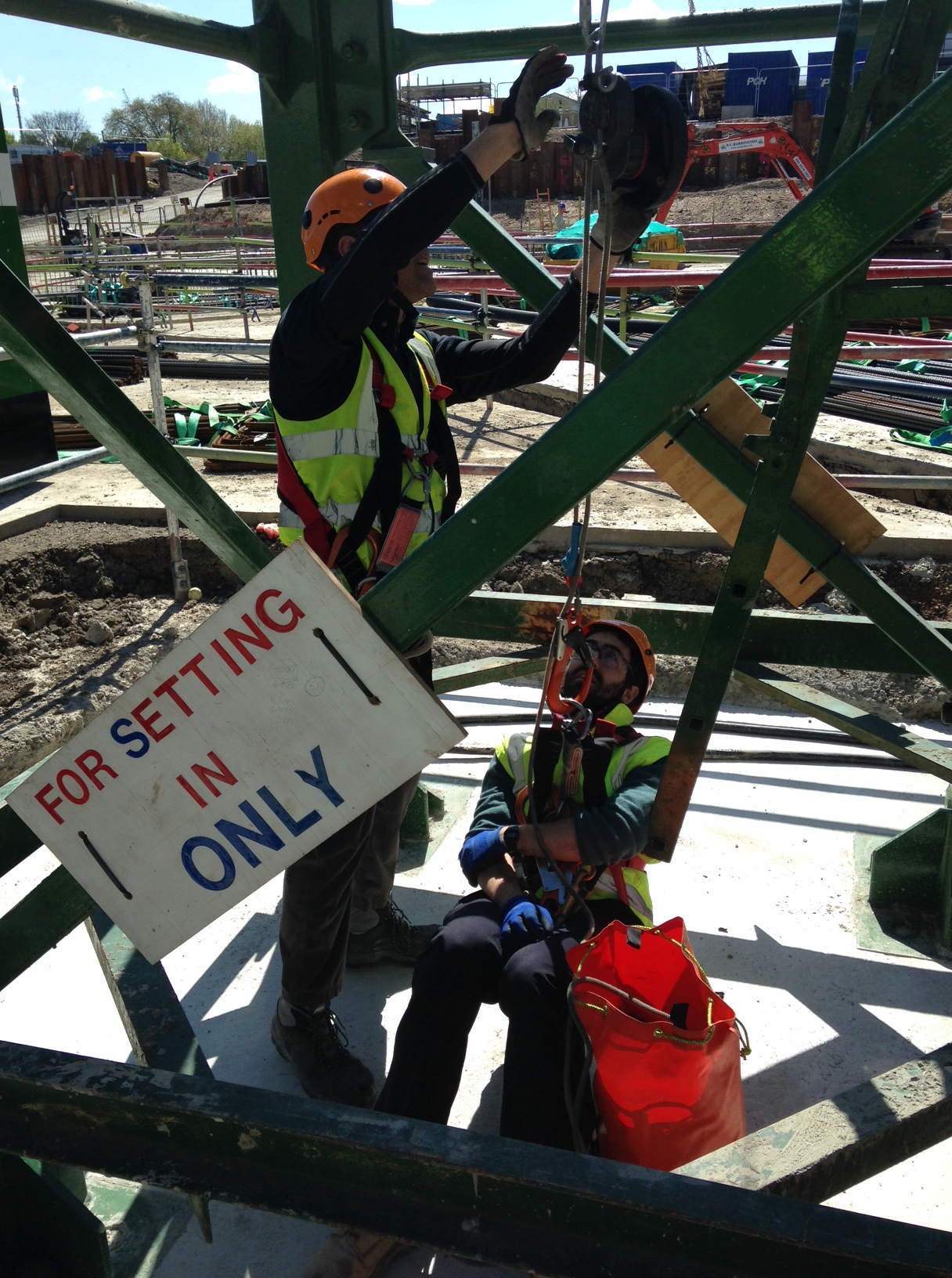
Hanging around
For those that know me well this may cause some amusement since my level of comfort at heights is not one of my strong suits!
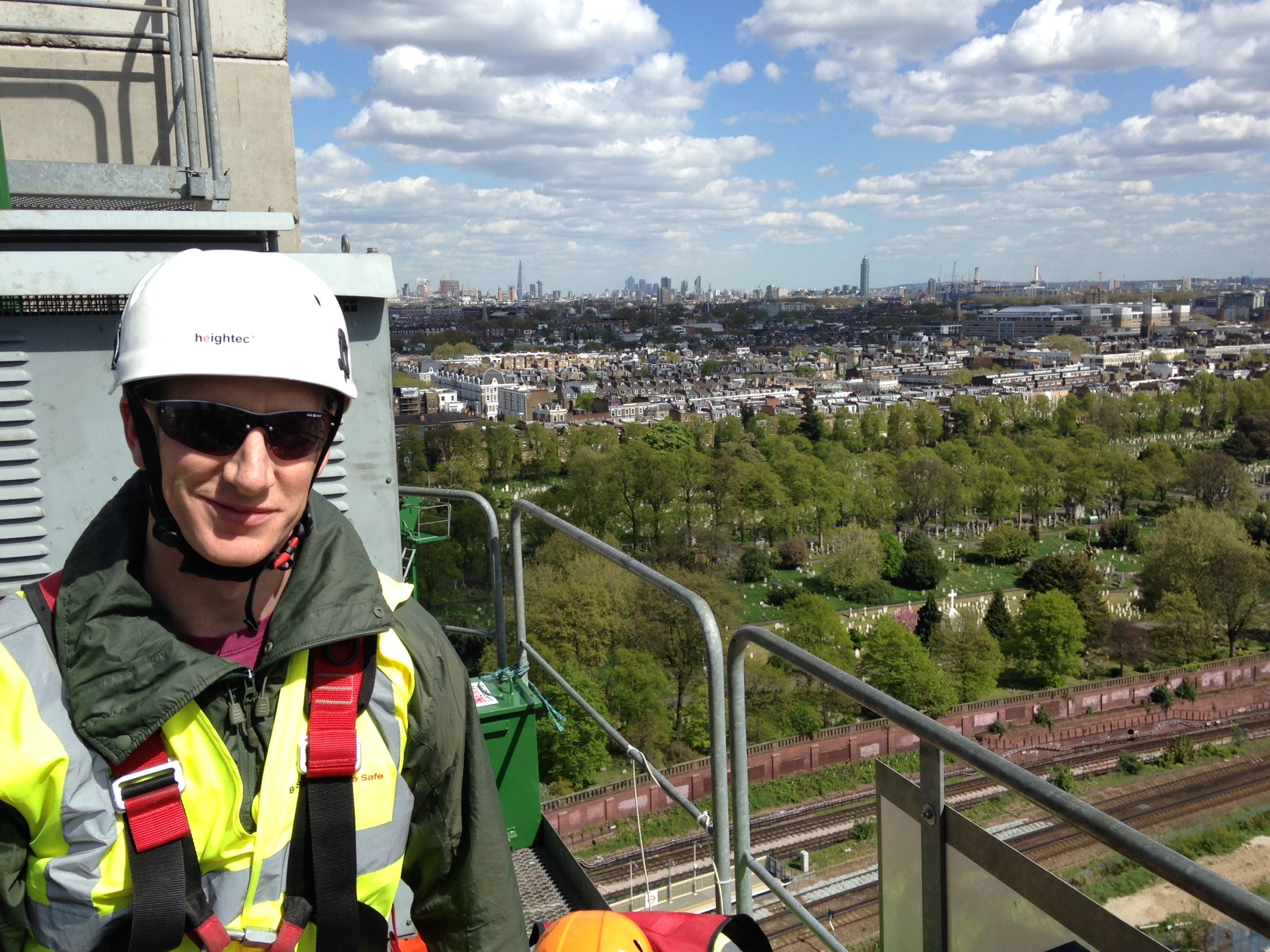
Hiding the fear!
All being well we would have practiced the rescue of a person from the cabin and would pass as qualified tower crane rescuers.
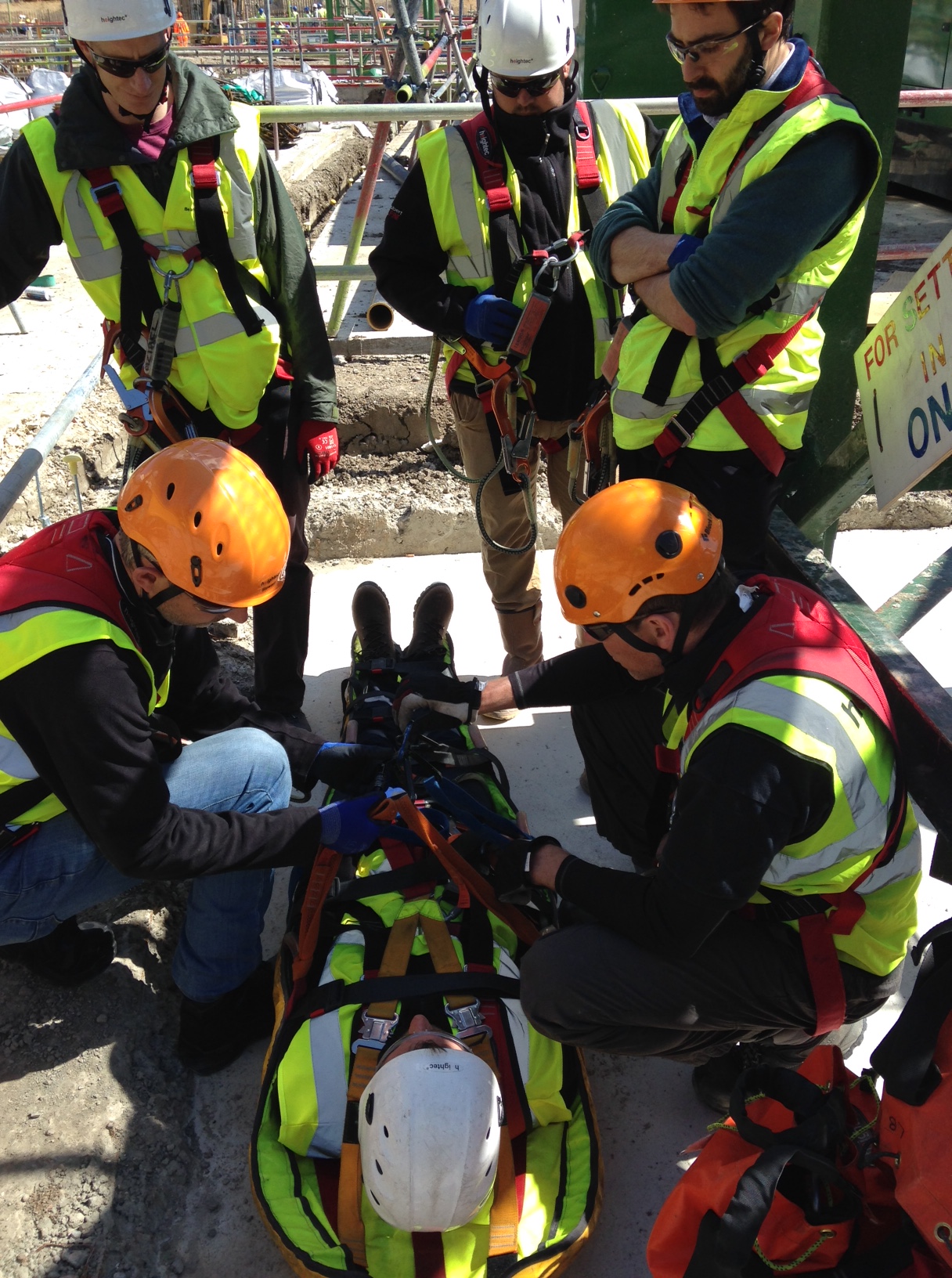
If you tie them down they can’t run away…
Just to prove that almost anything could be a TMR…
The course was called short while we were on top of the crane but prior to the rescue happening as the site could not afford the down-time on the crane. The course had been planned for ages and they knew the crane would be out of use for an hour while this training was conducted, so why the change of heart?
It’s because we’re meant to be pouring a slab section on Friday. The steel for that section is yet to be installed and the steel fixers spent all morning in the canteen as they’d not been paid. Therefore there was a mad rush in the afternoon to fix the steel and the crane was being used to move the steel into position.
So because our sub-contractor hadn’t paid their sub-sub-contractor, we now don’t have people qualified in tower crane rescue.
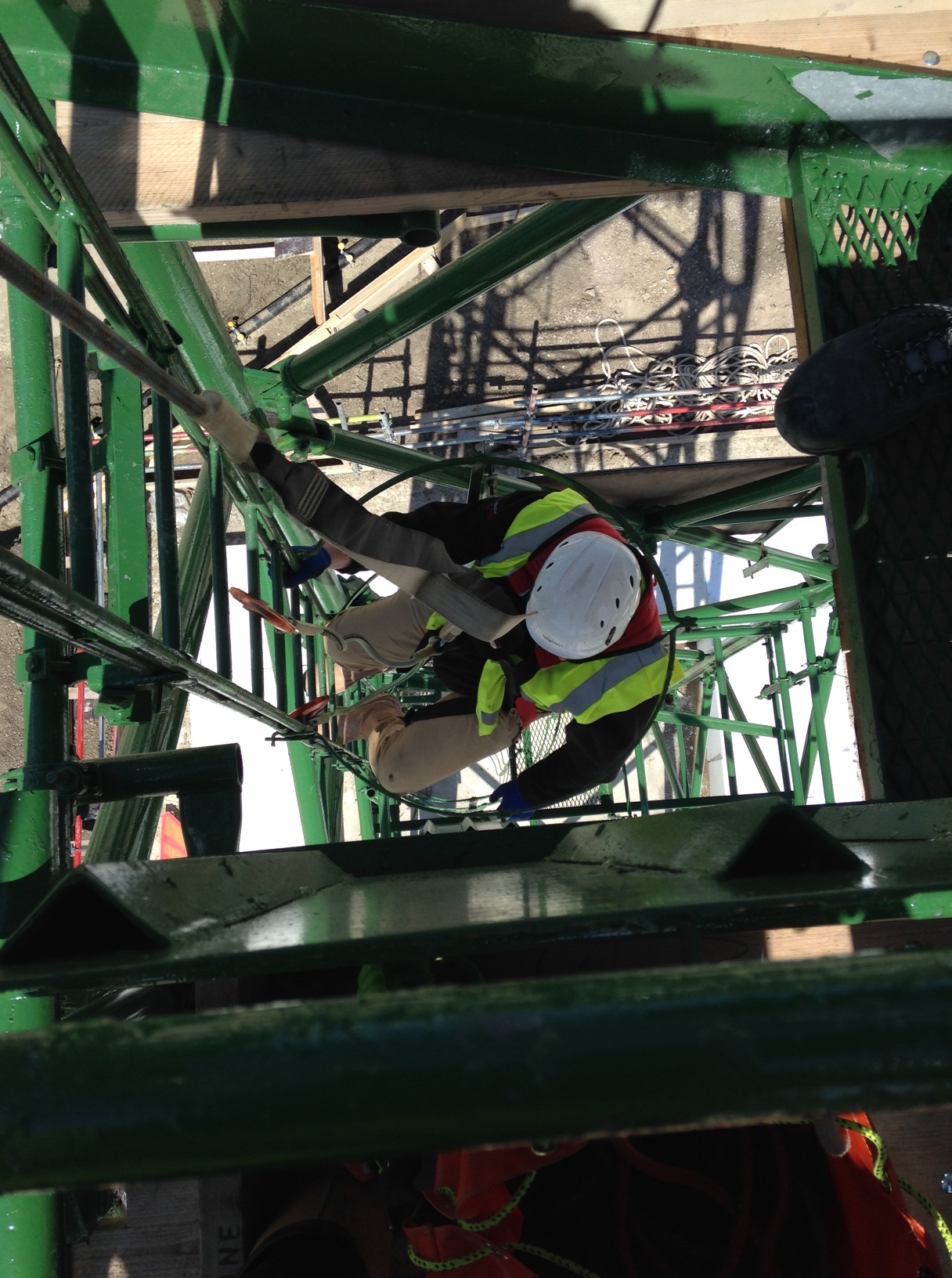
Fat bloke stuck in ladder
Is it the end of the world? The Work at Height Regulations 2005 require us to have the capability to recover an ill / injured operator from an area where we have sent him to work. That includes the top of a tower crane. We’ve got a plan and we’ve got the kit. We’ve got willing people who have had all the lessons but haven’t completed the course. The Regs do not require the rescuers to be qualified, only “competent”. So do I consider myself competent? No. Unless I have actually completed a full rescue serial I would not consider myself competent. If the crane operator had a heart attack now I’d have a crack at it obviously, but I would be that confident. So could we stage a rescue of our own so we had practiced it? Until we are competent we must be supervised conducting this activity by someone who is. So we would need to get the instructor, or someone else, back here anyway in order to watch us do our training. At which point we’d get the qualification anyway!
So while the rescue team must be “competent”, not “qualified”. Without the qualification it is almost impossible to be competent.
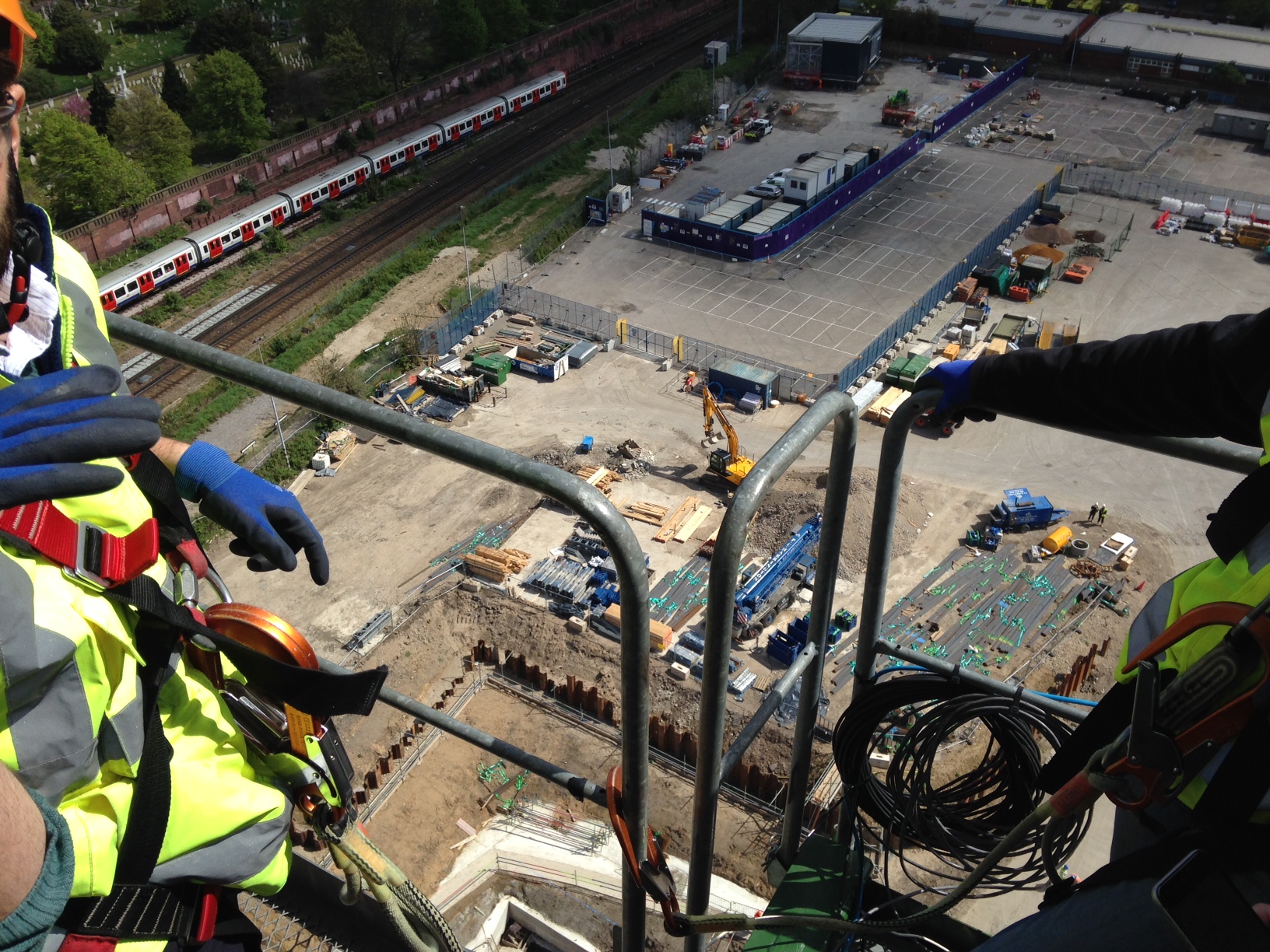
It was a long way down!
The definition of “competent”: I am sure you could get 3000 words out of that, there’s 465 to start you off!
Risk free plumbing
Since the sub-contractor went into administration a couple of weeks ago their sub-sub-contractors and suppliers have been either walking off site (like the plumbers), or going straight to McAlpine in order to get paid.
We are now paying for:
Steel
Plumbers
Drainage stores
Skips
Waterproofing materials
Timber and consumables
Muck-away
Almost everything else
PC Harrington are still paying for:
Concrete
Some labour
The drainage is now being installed by Realtime. Since we needed them to start immediately they had us over a barrel at least initially so they’re currently working on day rates. A price will be agreed soon but in the mean time they’re making hay while the sun’s shining. The contractor is throwing blokes at the job, which is great for our progress and great for his profit. We pay £31 per hour for the drainage supervisor. He probably earns half that at best. The rest is overheads and profit. They are working totally risk free.
More concerning is that we’re having to supply timber and consumables. Even B&Q won’t give PC Harrington any credit! We’re also now supplying pull-out bars for the slipform. Irritatingly they’re on a 1 week lead time. We were only told they couldn’t get them yesterday, but they need them tomorrow. Obviously this can’t be done. We asked for the quantities and we’re told the engineer would do the take off for us. This means they hadn’t done the take off. That means not only had they not placed the order themselves, but they had no intention of doing so.
In a progress meeting yesterday PC Harrington told us that their recovery program would be issued 48 hours late. They can’t even program when their program will be published. They also gave us a list of what works they will complete in the next two weeks. They told us how far behind they are today but had no idea how they would be looking in two weeks time. Their forward planning is terrible.
There are some great things about working in civvi street: they are very efficient and know their stuff, the other day I was running late and didn’t shave before work, no one cared that I wouldn’t be able to get a proper seal with a respirator!
There is also some really annoying stuff. The accuracy of their written work is terrible. If I have to read another ITP describing me as a Mace representative when I work for McAlpine I might scream! And their ability to plan beyond what their having for lunch is woeful. I use to laugh at the term “military precision” having seen some pretty slap dash planning, but at least it was planned, which is a start!
Rant over.
UPDATE – We are now also buying their stationary. Today we had an order for 30 reams of A4 paper!
Sort your admin out!
Our structural concrete package includes all drainage, waterproofing, slip forming, RC and post tension design and construction. This package was let to P C Harrington (of Southbank tower “worlds slowest slip form” fame). On Wednesday P C Harrington went into voluntary administration. On Friday the plumbing sub-sub-contractor, Salmon Plumbing, pulled out of the job and the concrete gang refused to come onto site until their boss assured them they would be paid.
This was considered a breech of a number of sub-contract clauses and McAlpine have now hired their own plumber to complete the drainage works. We have also had to procure all the rebar and pay for PCH’s skip hire and waste service.
By entering into voluntary administration PCH have bought themselves 10 working days to sort their finances. If they’d waited for the banks to step in their assets would have already gone into liquidation and they’d have had to cease trading. They’ve been clever on the timing too. Many sub-contractors don’t expect to paid the week following a bank holiday.
PCH have a large crane division reportedly worth around £50million. They aim to sell that quickly to correct their cash flow, appease the banks and stay in existence.
In the meantime we now have to closely control the two subcontractors working in the same area, using the same assets in an attempt to get closer to program (we’re currently 4 weeks behind and growing)!
Stay tuned!
 Holdfast Training Services Trial Blog