Archive
Still not talking…
My site will have one gigantic basement raft slab that covers the entire site. There is a podium slab 6 metres higher then the buildings above that.

The basement raft slab is built in sections of varying depths. There’s an 800mm deep section of C40/50 with 75mm cover. There’s a 500mm thick section of C50/60 with 40mm cover (shown by shaded area below). There’s bit with steel orthogonal to the western line of sheet piles, and there’s bits with steel orthogonal to the eastern line of piles. There’s areas with steel at 150mm centres, there’s areas with steel at 75mm centres. There’s steel ranging from 32mm diameter bars down to 20mm diameter.
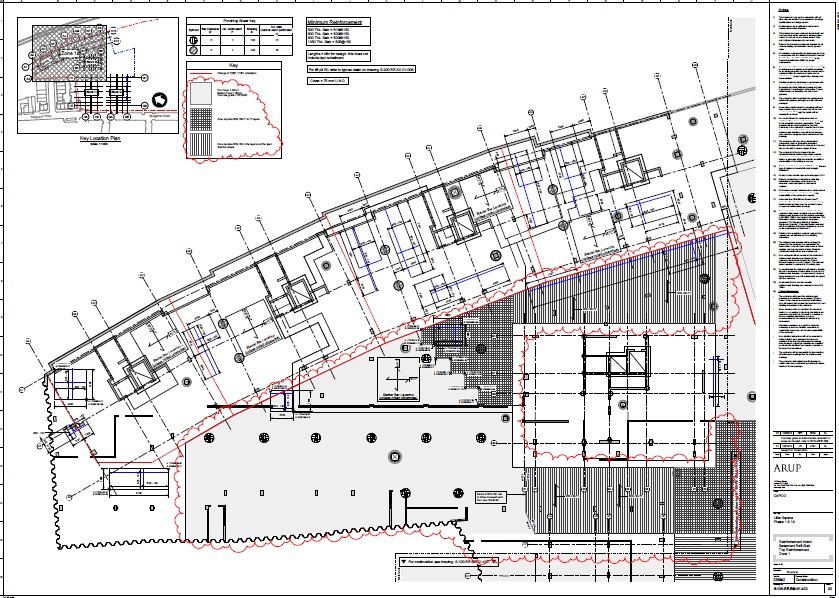
The drainage is no better. We’ve had a nightmare with clashes between the bottom steel and the drainage runs. There are also areas where the drainage runs for several metres into a manhole, only to turn around and run back the other way (shown by the brown arrows). Why doesn’t it run along the black arrow?

Believe it or not, our project was subject to a significant value engineering study where some of these issues were designed out, only to be put back in again due to continually changing client requirements.
The Arup design is a “reinforcement intent”. The detailed design is done by the sub-contractor. The detailed design showed the reinforcement around an ACO drain like this:
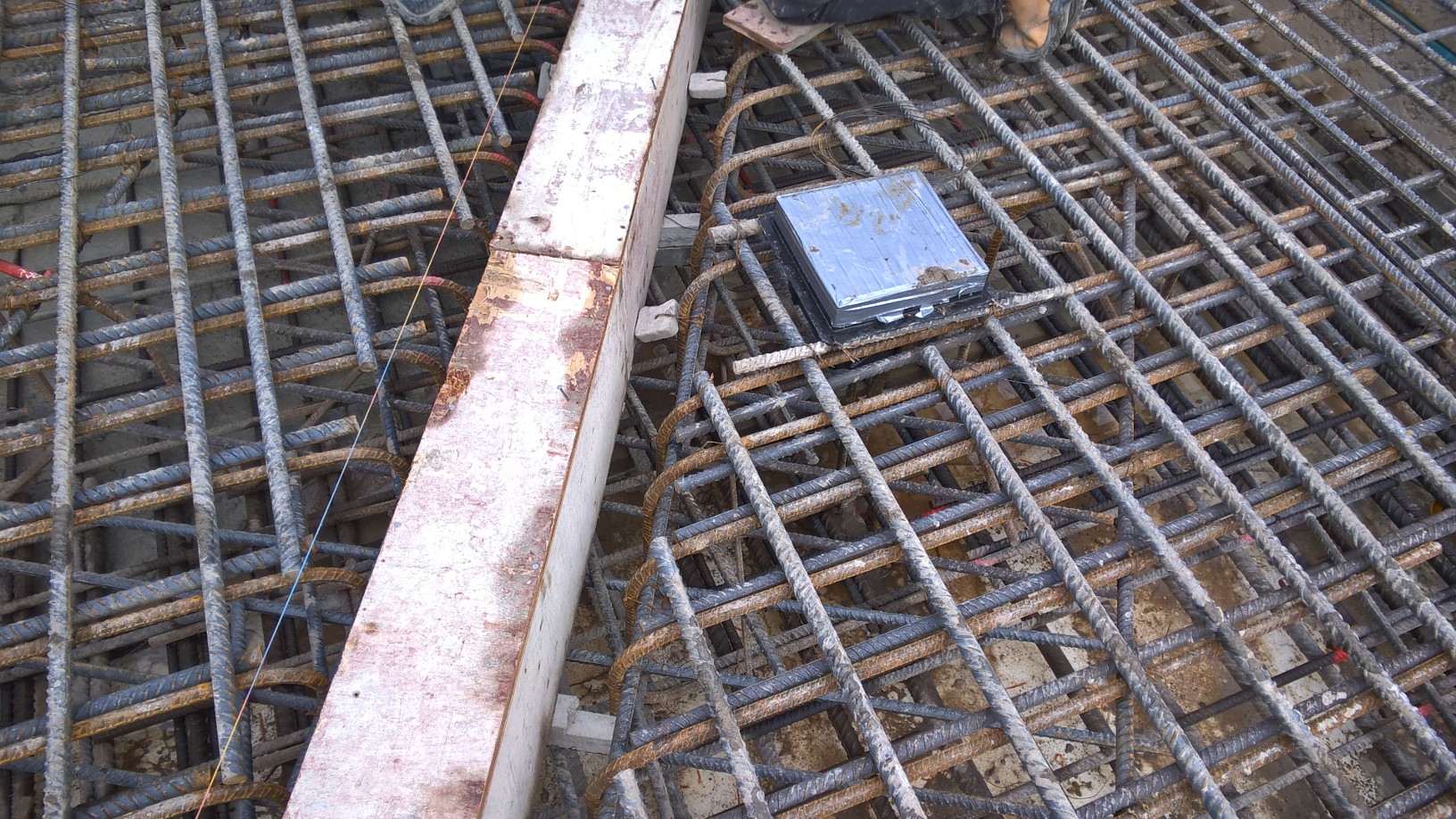
Arup OK’d it, but on seeing it built decided it wasn’t ok and made them add in additional bars. Which they had to do around the rapidly approaching concrete. Timely!
The drainage designer is a bloke with a beard at Arup. The structural designer is a bloke with a beard at Arup. The reinforcement detailer is a bloke without a beard who doesn’t work at Arup (you can’t have everything). And they haven’t spoken to each other, thus the clashes. We’re on a design and build JCT contract. So all the structural designers and architects were novated to us when the contract was signed. Therefore all of these things are our problem to solve.
We have a design manager on site. In fact we have three. But ultimately the drainage in the responsibility of the drainage package manager, the steel that of the structural package manager and so on. And they haven’t spoken to each other.
To link back to a previous blog… Communication is key is this situation. And we’re lacking it.
So what are we going to do about it? Well this is where I’m not too sure. McAlpine SOPs seem to be to let them fail and say “I told you so” later. Not sure why. I’m sure I’ll work it out in time.
Do they REALLY mean it?
As of next week I have to start conducting site inductions. So I’ve started getting my head into McAlpine’s Health and Safety policy.
Obviously they induct everyone on their first day, insist on CSCS cards and SMSTS trained supervisors. That’s the norm. But McAlpine are attempting to go further…
McAlpine have the” Work Safe, Home Safe” tag line, and claim to be attempting to change the culture of construction by pushing Health and Safety to the fore. They conduct workforce engagement session each week and everyone who works on site must attend one within two weeks of starting.
But do they follow it through? Do they really mean it?
How much does all this cost? There’s the cost of the materials, facilities and training courses. And there’s the lost hours which impacts on the program. And program = money. Particularly when the subcontractor is currently 3 weeks behind. McAlpine must think it’s worth it in the long run. So where are they making that money back?
A couple of weeks ago I posted this photo and learnt the lesson of “It’s all about money”.

That happened because a tipper was driving onto a pile of spoil to dump more material onto in. The pile hadn’t been compacted and there were no stop blocks or banksmen to stop him. He drove onto a loose area, it gave way, dumper at funky angle. But prior to the last trip, he must have driven onto the pile 5 or 6 times.
In my mind each of those trips was a near miss. It was an unsafe practice that could have resulted in injury – proved by the later incident. So what did McAlpine do? Did they report the incident internally as an accident? Did they scorn the sub-contractor? No. They recorded the incident as a near miss and cracked on.
Prior to any work being conducted on site risk assessments and method statements must be completed by the sub-contractor. John and Harry would hate them. They’re full of stuff about slips, trips and falls and make no consideration to how the tasks relate to each other. They don’t require a real consideration to the risks involved or what the safest way to conduct that activity is. There is one method statement for steel fixing and another for drainage. Nothing on how they interact though. Which led to this:
![WP_20150327_08_29_51_Pro[1]](https://pewpetblog.com/wp-content/uploads/2015/03/wp_20150327_08_29_51_pro1.jpg)
In case you’re wondering a large non-return valve should fit on that pipe. A lot of rebar had to be cut to get it in. And for each bit of rebar they cut, they have to put an additional area of steel back in, including a full anchor length. So they’re really not helping themselves.
![WP_20150327_12_43_39_Pro[1]](https://pewpetblog.com/wp-content/uploads/2015/03/wp_20150327_12_43_39_pro1.jpg)
So I ask again: Do they REALLY mean it?
I sense a TMR coming on…
The invention of talking
ICE attribute E3 (I am sure E&Ms will have something similar) requires us to “Demonstrate sound judgement on statutory, contractual and commercial issues in relation to your area of responsibility.”
On completion of AER 1 I was naïve enough to believe I understood enough and could crack on with “doing stuff”. It turns out I was wrong (Neil – one for you).
There is loads of other, seemingly small, stuff that you need to understand to really appreciate the commercial implications of what happens on site.
On my site we’re just 6 weeks in and our sub-contractor (PCH) is over 2 weeks behind schedule. According to their recovery schedule they should be pouring the first section of the basement raft slab on Monday. That won’t happen. Primarily because they still haven’t ordered the top rebar, let alone had it delivered or fixed it. PCH is staring down the barrel of a non-conformance report which looks very bad for the company. So naturally they’re looking everywhere to find someone else to blame. Therefore we (the main contractor) must ensure we’re whiter than white. We cannot be made to look responsible for their lateness. Therefore there is a huge push to ensure that all the RFIs are answered, designs approved, drainage and water-proofing inspected and tested, etc…
This has come to the fore thanks to a problem with the lightning protection. The installer struggled to reach the required resistivity (one for the E&Ms) and as a result had to come back and redo some work. This isn’t the end of the world; they can do the remedial work around the steel that has been laid. The problem that was highlighted is that the lightning protection package manager hadn’t told anyone there was a problem. So the construction manager asked the question “what else don’t I know?!”
The problem is communication. We all sit in an open plan office in a large porta-cabin (like TFH HQ for anyone that ever saw it) and no one talks to each other (like TFH HQ). But this lack of communication could have led to a “get out of jail free” card being given to PCH. So we’ve implemented a severe measure: each day at 1700 the engineers and the site supervisors get together and talk about what happened that day, what should happen the next day and thrash out any problems. It’s not new, it’s not clever, it’s not quite an O Group but it’s not far off.
In summary: There is nothing discrete, everything that happens on site carries a commercial implication. Therefore it’s key that I keep in mind how all the parts are interconnected as any delay could cost someone loads of money!
Slightly early this week and a bit dry, so here is a gratuitous digger shot:
![WP_20150317_13_18_20_Pro[1]](https://pewpetblog.com/wp-content/uploads/2015/03/wp_20150317_13_18_20_pro1.jpg)
AIRBORNE!
UPDATE: It turns out PCH (the sub-contractor) were having some cash-flow problems. So McAlpine (the main contractor) have bought the steel direct on their behalf and will deduct the sale amount from their payment. This should speed up the process and we’ve managed to secure a better rate! It’ll start to arrive on Wednesday. Guess which lucky individual gets to count it all when it arrives…!
That’ll do!
After a week off last week the learning curve had ramped up again this week.
Two tower cranes up, three to go. We’ve cast the ducts for the power cables to the tower cranes into channels under the blinding. This keeps them out the way and protected. The ducts continue across the site and spit out of the edge of where the building ends.
![WP_20150313_08_58_31_Pro[1]](https://pewpetblog.com/wp-content/uploads/2015/03/wp_20150313_08_58_31_pro1.jpg)
![WP_20150313_08_58_41_Pro[1]](https://pewpetblog.com/wp-content/uploads/2015/03/wp_20150313_08_58_41_pro1.jpg)
Ducting emerges… …from under the (still wet) concrete
Adjacent to this is the berm holding back the sheet piles (in that area they’re just there for water control really, less so for soil retaining. In order to install the cables it was asked if the berm could be locally removed in the corner to allow the cables to come straight down the pile wall and into the ducts.
![WP_20150313_08_59_02_Pro[1]](https://pewpetblog.com/wp-content/uploads/2015/03/wp_20150313_08_59_02_pro1.jpg)
The berm in question
So I broke out the cofferdam notes and off I went. I discovered that although the piles would still stand, it seemed likely the top would see a deflection of up to 40mm.
5 meters behind the wall is a public road complete with services under it. I then estimated the services would probably see a localised deflection of up to 20mm. Well beyond the acceptable 10mm. So it needs bracing.
So I broke out the Cofferdam spread sheet and off I went. I estimated the wailing load, and thus the prop load. I selected a propriety system that could accommodate and made a recommendation. My CEng took one look at it, halved the section size said “that’ll do”.
It’s due to get installed next week.
I really hope it holds!
Quick, there’s a condition…!
A short one this week as I finish off my first draft of AER1 – wow they come around fast!
WARNING – GRATUITOUS MUD SHOTS!
The majority of my site is London Clay, unsurprising given it’s location. Damo’s site is similar. I know this as when I met him in the pub last week he brought some to show me! The clay here is so overconsolidated that it has started to form localised soft mudstone deposits. Therefore it is to water what John’s worked examples were to me: impossible to get through!
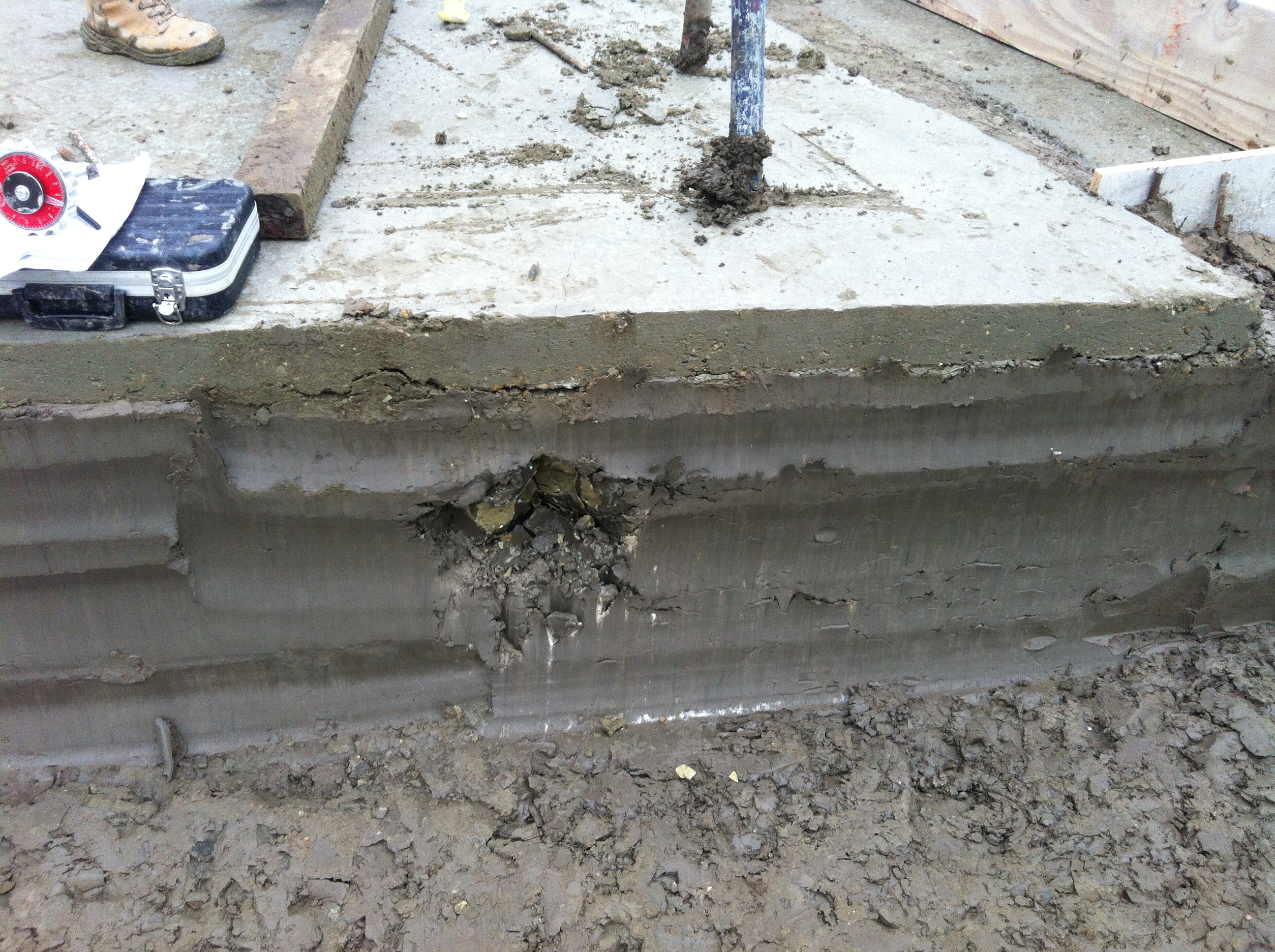
Area in general
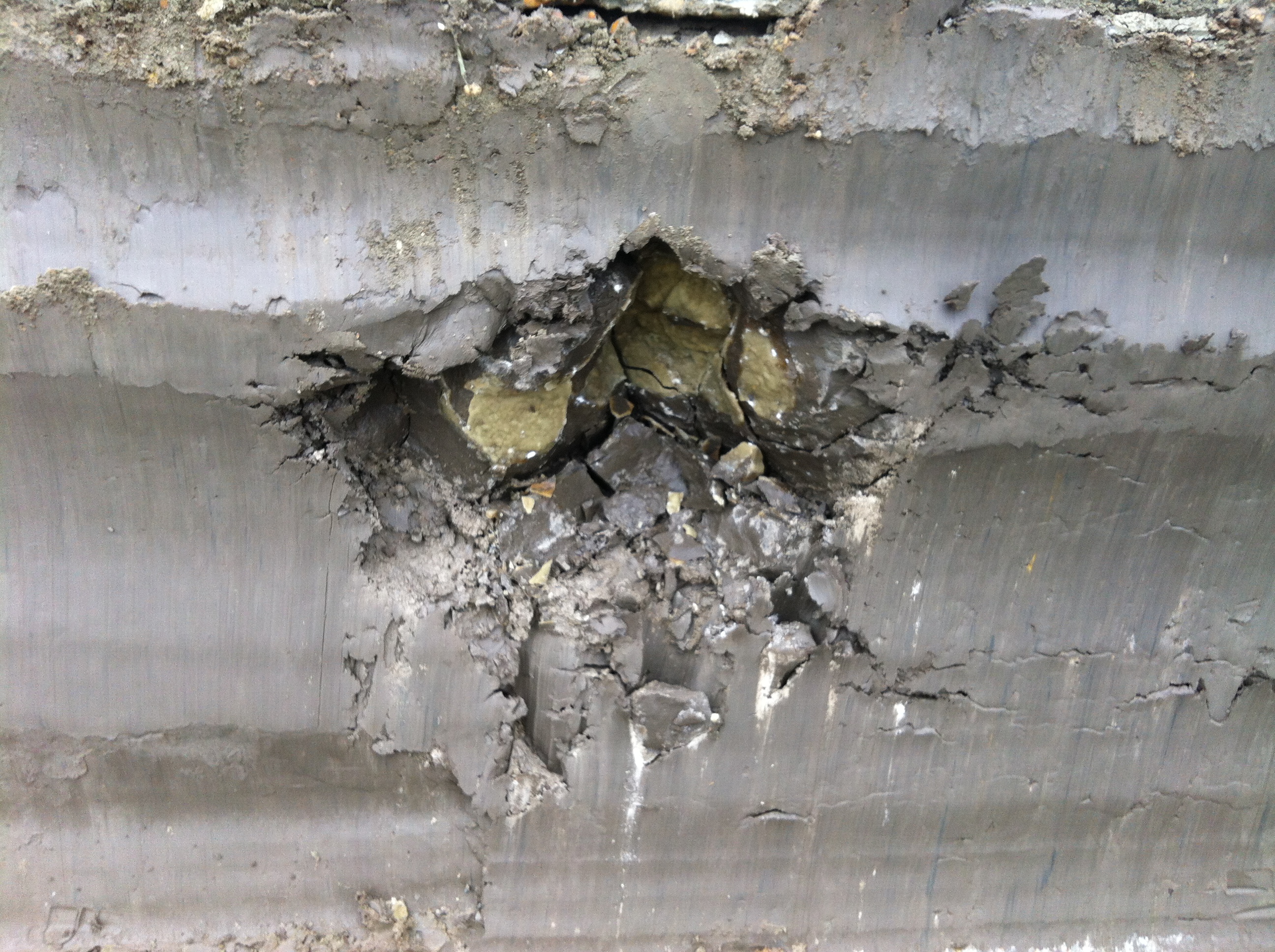
Area in detail
The clay is overlaid by river terrace deposits, a much more permeable material. And since the whole site is one big cofferdam I’m fairly sure I’m getting flash-backs.
The clutches on the sheet piles have been welded down to the puddle flange which will eventually sit at the bottom of the slab. Below this they’re not welded and in the sandy gravel areas this has led to water flowing in under formation level.
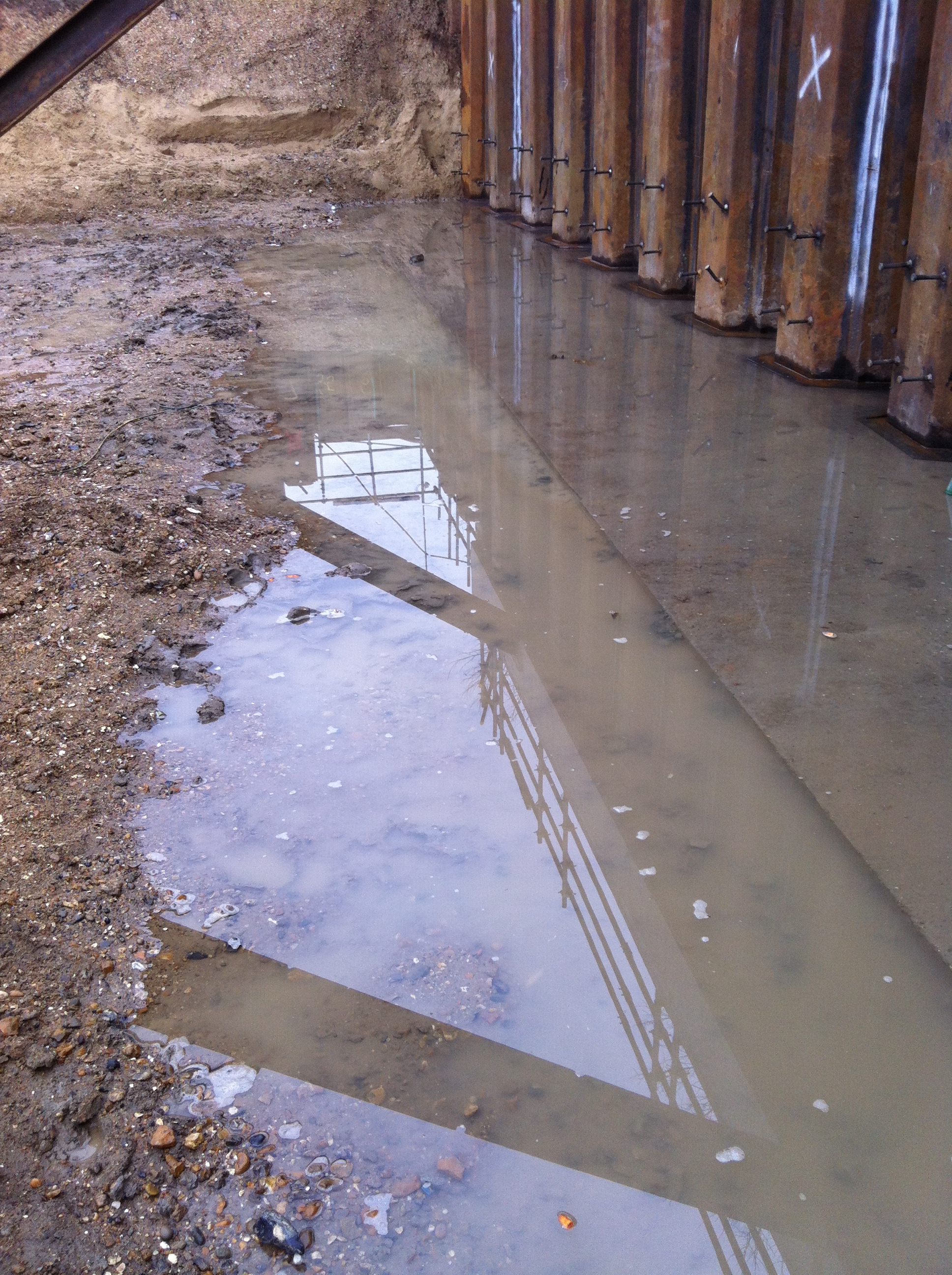
The spec states that where there are localised areas of clay in the sandy gravel, that it should be removed and replaced with type 1 or concrete blinding. But it makes no mention of areas of coarse material within the clay. So when an area of sand was found within the clay the sub-contractor kept digging in an attempt to find the bottom. And then stuff started sinking. Most notably a bloke holding a levelling staff.
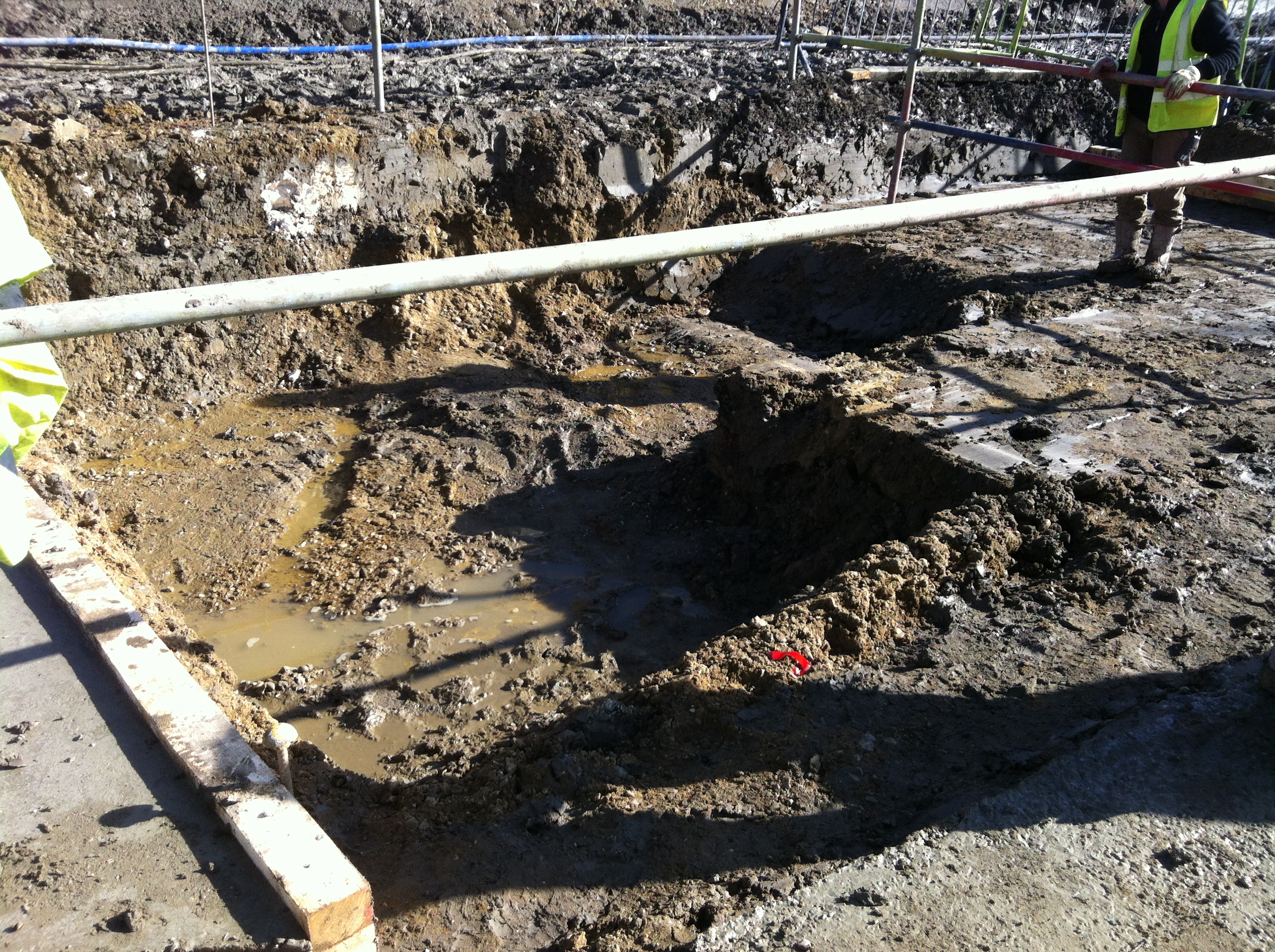
Dig for victory!
They’d made two mistakes. They hadn’t considered why areas of fine material in course need to be removed, but areas of coarse in fine don’t – settlement. And by trying to dig to find solid ground they had created a hydraulic gradient and therefore a quick condition.
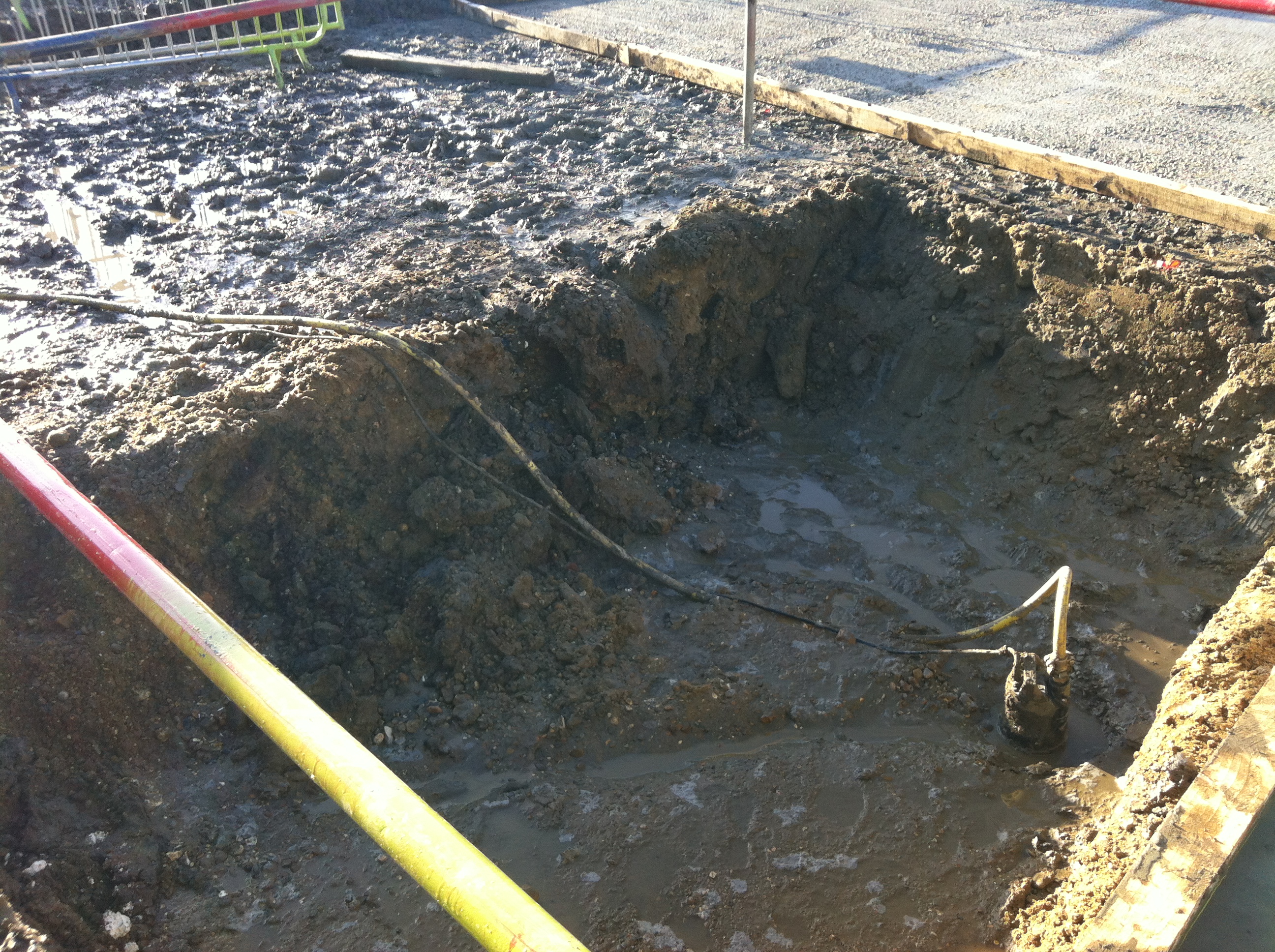
The sandy hole
Once they stopped digging and started pumping the ground solidified. They filled the hole with some concrete that got rejected from a tower crane base pour (another story involving slup tests) and continued on their merry way!
What the hell is 6F2?!
It’s a been a bit of a crazy week, and it’s all P C Harrington’s fault! So much has happened it’s difficult to pick one thing to chat about.
I could talk about this…
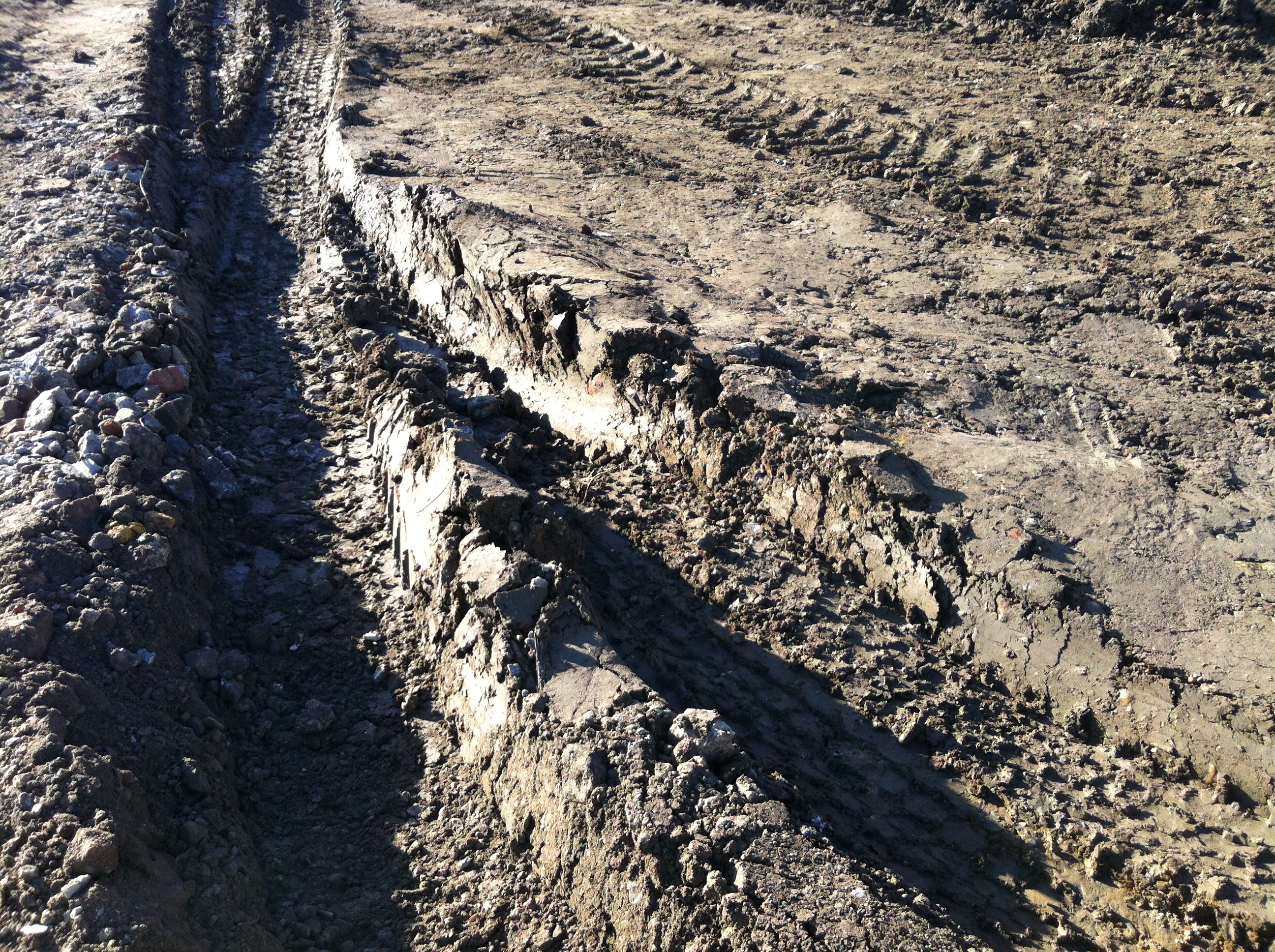
I could talk about this…
But instead I’m going to talk about fill.
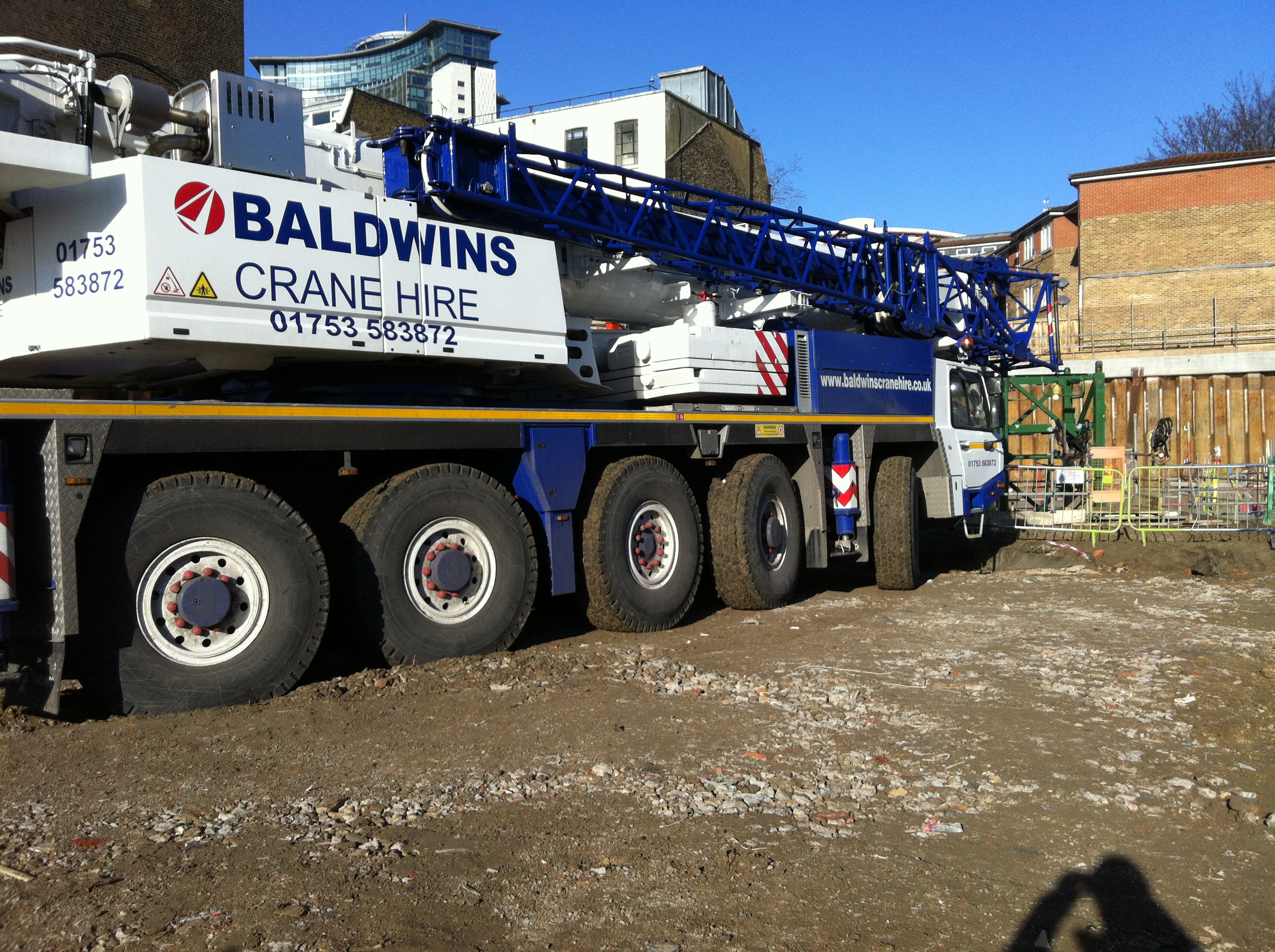
After the nightmare of the sinking crane on Tuesday (see above), I have been keeping a keen eye on the construction of the mobile crane base for the construction of our second tower crane (we have 5 in total!). The base is to be 450mm thick. Laid in 4 layers. Each compacted with 3 passes of the roller onsite.
First of all they laid it far too thick. Then they didn’t realise that a roller is categorised by its mass per metre width. These things are forgivable. What followed is not…
About two months ago I was halfway through Rhubarb Creek writing about how the 6F2 would be compacted by a certain number of passes of a vibratory roller. At that point I didn’t really understand what 6F2 was (sorry Richard!), but now I do. It is a granular fill with a very specific grading curve. It is not:
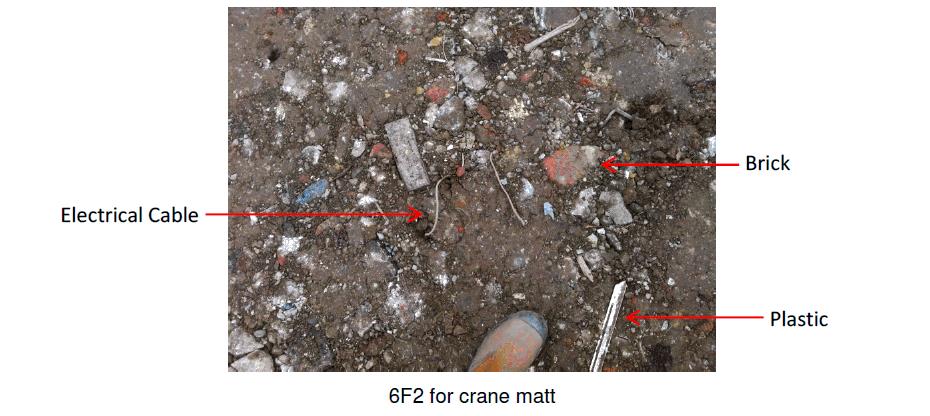
So I explained this to them. They said they would pick out the bits, compact and make sure it didn’t happen again. This morning I found this:
![IMG_0720[1]](https://pewpetblog.com/wp-content/uploads/2015/02/img_07201.jpg)
![IMG_0717[1]](https://pewpetblog.com/wp-content/uploads/2015/02/img_07171.jpg)
Plastic Wood
Now while this is fairly funny and a bit annoying for the bloke who is picking all the crap out of it, it’s not great for the company. They’re paying for 6F2 and they’re not getting it. The quality assurance process they should have in place they don’t.
So we’re working with a company who are running late already (we’re only 2 weeks in), they’ve already had an accident (see tipper above), and their workmanship is shoddy (see last weeks blog). They’ve got a bad enough name here as it is, so why are they accepting this? Probably the same reason why we hired them in the first place. The fill is like the company, a bit crap but bloody cheap!
At the end of my second week I have learnt an important lesson:
IT’S ALL ABOUT MONEY!
First Impressions: Muddy hole!
Prior to Christmas the Groundworks contractor took the level down to 150mm above formation and handed over to concrete contractor (PC Harrington of Southbank slipform fame). Concrete contractor took down to formation level, but had no intention to blind for an additional 3 days, despite direction to cover within 4 hours. Shear vane tests had been directed by the designer (Arup) which could not be conducted immediately, thus the contractor’s reasoning for the delay. Due to concern for the quality of the surface material at formation level – it’s London clay and tends to suffer from surface cracking if left to dry out and turns into an ice rink when wet – the contractor was instructed to blind immediately but leave holes for the test to be conducted. Seems strange that a specific test was specified other than “test for this property”, but it’s my first day and what do I know? I haven’t got a computer or a log on yet, let alone a clue what’s going on!
![IMG_0667[1]](https://pewpetblog.com/wp-content/uploads/2015/02/img_06671.jpg)
A real digger!
Day 2 and I witnessed a group of hairy Irishmen with their asses hanging out of their trousers (one for John) attempt to put a very large, prefabricated RC cage into hole. It didn’t fit. For 2 reasons: the hole was square, the cage wasn’t; and when the piles were cut down all the rebar was bent all over the place and wouldn’t fit through the spaces between the rebar. They got it in eventually but if Harry had seen how he’d have probably had kittens! It’s led to some cover issues. The rebar is touching the blinding round the hole in places, this probably isn’t an issue since it’s a tower crane base, therefore temporary, therefore the durability is unlikely to be a problem. But PCH are the problem children on site so we’re not given them an inch at this early stage. So the contractor will have to do some localised breaking out of the blinding to ensure correct cover, mostly since they have no idea what strength of concrete was used when they poured the blinding! They’ve learnt from it and the steel fixers will make the other 4 in the hole – sensible!
![IMG_0669[1]](https://pewpetblog.com/wp-content/uploads/2015/02/img_06691.jpg?w=300&h=224)
Tower crane footing
Today (Friday) I was sent onto site to hold the hand of a Geo Engineer from Arup (they must have heard of my fondness for quiche). He came to observe some shear vane tests on the foundation level clay prior to the blinding being poured. The minimum required value was 40kPa. The very lowest of our results was 120kPa. Does this mean the basement slab, sheet piling, pile shaft resistance and anything else that might have been based on cu is massively overdesigned? I tried to gently probe the area by asking questions, but didn’t get very far, the bloke looked about 12 and a bit scared that anyone had asked him a question with the word “overconsolidation” in it, all I got was that c’ was taken as about 25 (comment John?). Afterwards the Chartered Engineer on site asked me how I’d remembered things like Atterburg limits, I told him what we did last week and he looked horrified. I think I’ll be babysitting the Geo bloke every time from now on. Ahh well, at least it’s not making the brews!
![IMG_0660[1]](https://pewpetblog.com/wp-content/uploads/2015/02/img_06601.jpg)
Shear vane test
By the end of the week I finally have a computer, a log on and a McAlpine fleece, but still no clear idea of what I’ll be doing. Very TBC but it looks like I may be responsible for QA on Tower cranes, basement raft slab and, most excitingly, slipforming! Looks like I’d better dig back through Rich Hall’s blogs!
 Holdfast Training Services Trial Blog