Archive
Finally a pile is in the ground!
The piling subcontractor is finally on site and what I thought would be a nice easy period before the madness of concrete pours turned out to be anything but. First off the kit that they were confident would be up and running within half a day actually took closer to 2 days to set up. I have a feeling they were hoping to drag their feet enough so that Easter came and they would get a break without any piles having been driven. Thankfully their management gave them a reminder that they’re paid per metre of pile driven and so they started to move a little faster.
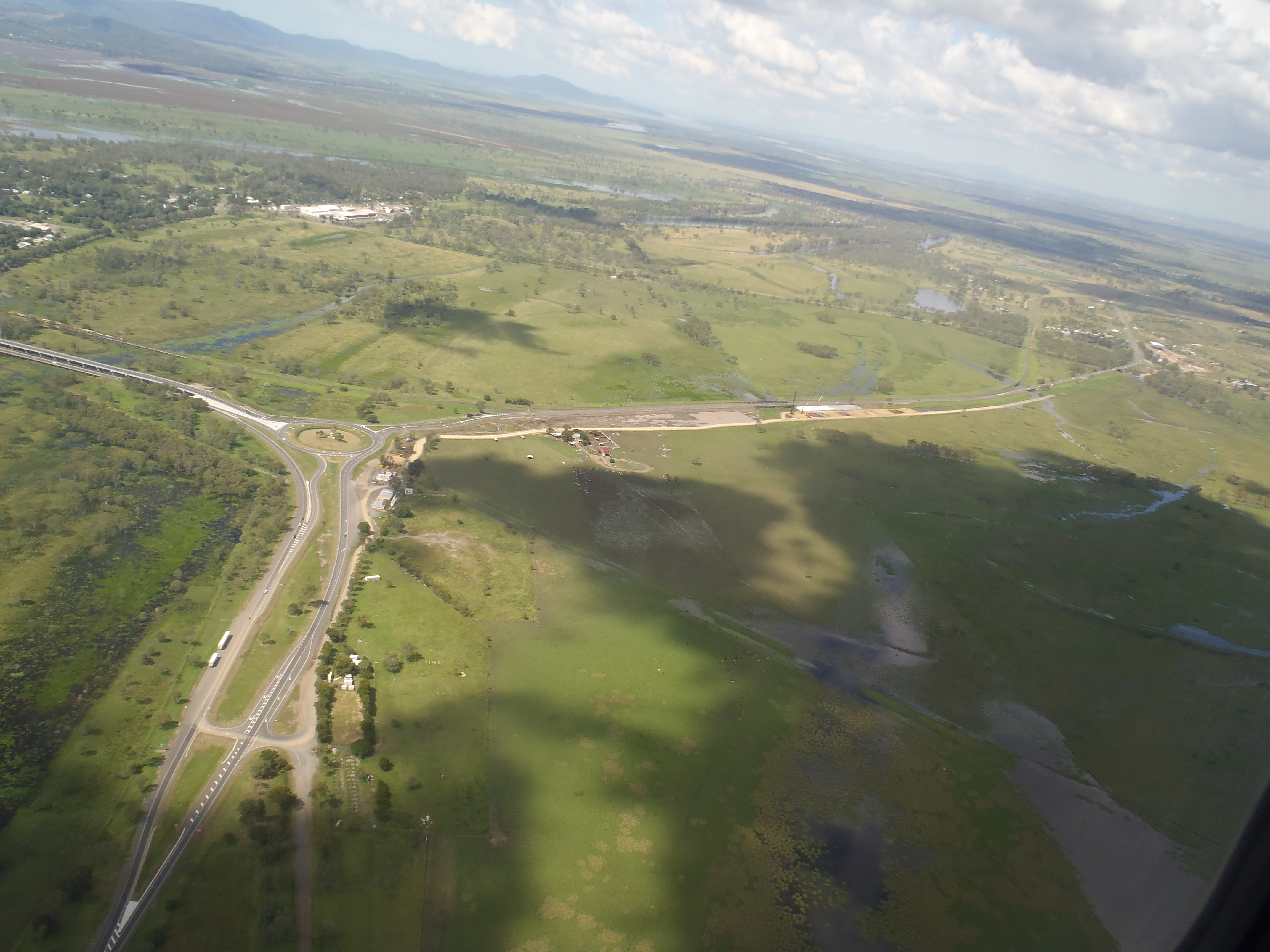
When it came to driving the first test pile the consultant engineers that are doing the monitoring set their gauges up and off we went. The pile was pitched without any problems and locked into the 26t hammer 23m in the air (26m pile with 3m prebore). The pile self weight along with the hammer weight caused it to sink about 4m in total. Driving started nice and easy and were steadily increasing the drop height when a hydraulic hose broke. This shouldn’t have been a problem to fix, except the subbie hadn’t completed the lift study for using the manbox hanging from the 110t service crane. This is despite having the info nearly a month in advance. The reason for giving so much notice is that John Holland have a classification system for all crane lifts. There is an easy to use table (it must be if I managed it) that rates the risk based on the weight, how close to the capacity of the crane you are and a few other factors such as multi-crane lifts and the conditions you are in. One thing that automatically goes into the critical category is any use of manboxes. This needs the lift study to be signed off by two lifting SMEs in Brisbane, the project H&S manager, the project manager and the area general manager in Brisbane. While this can frustrate some on site, the process is based on lessons learnt after crane incidents on various sites through John Hollands time in the industry. It has also frustrated the subbie somewhat as they had intended to use a 25t franna as the tailing crane when pitching the piles. Being a two crane lift there is an instant reduction in both cranes capacities of 20% (due to a small mis-movement from an operator possibly placing up to 80% of the load on one of the cranes). Now this means that the subbie needs to find a bigger crane, likely an 80t crawler crane. So the remainder of the afternoon was wasted as they tried to get a cherry picker onto site.
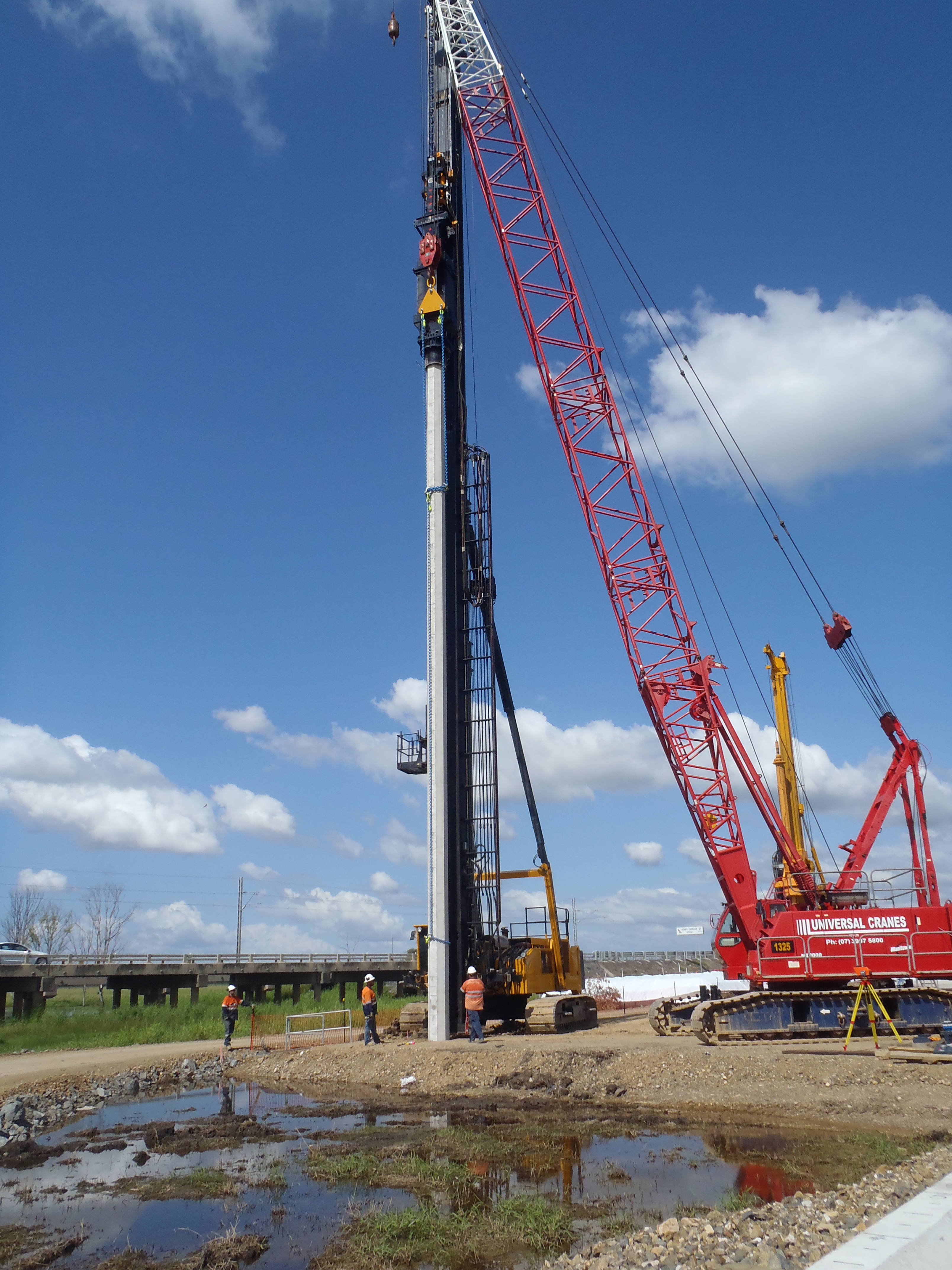
Thankfully the next day the cherry picker arrived, the hose was fixed and we were able to finish driving…or so I thought. The second monitoring requirement placed on us is that the piles need PDM (Pile Driving Monitoring) at the end of drive. This is a glorified laser level that sights onto a 3M sticker on the pile and records the temporary compression along with peak pile velocity. As we neared our design toe level we were still about 1000KN away from reaching our required set. We then went a metre past and still had a long way to go (only 60% of what we need). At this point I had to call a stop for a few reasons. 1) The gauges were about to disappear down the hole and they cost $5000 a pop. 2) We only have 3m overdrive allowance after the design toe height. 3) It was nearly 4pm on the Thursday before Easter. My thinking was that with the piling subbie away for 10 days this might allow the resistance to increase when we re-strike. Thankfully others thought this too, however there is still 40% of the capacity to find and if the soil profile is remotely right )which it might not be) then the toe is currently sitting in a band of sandy silt. I think this might become a contractual issue as the current plan is to fit a dolly to the pile to enable us to drive below the level of the rig. As soon as we hit 3m we hit issues with the length of rebar to be exposed that needs to tie into the pilecap, and the Dolly will only give us 1m more than the overdrive limit anyway. We’ll also need to fix the gauges to the dolly and try and figure out the losses from using it in the next 2 metres. I think I also need to spend a bit of time reading more into Johns notes on piling…
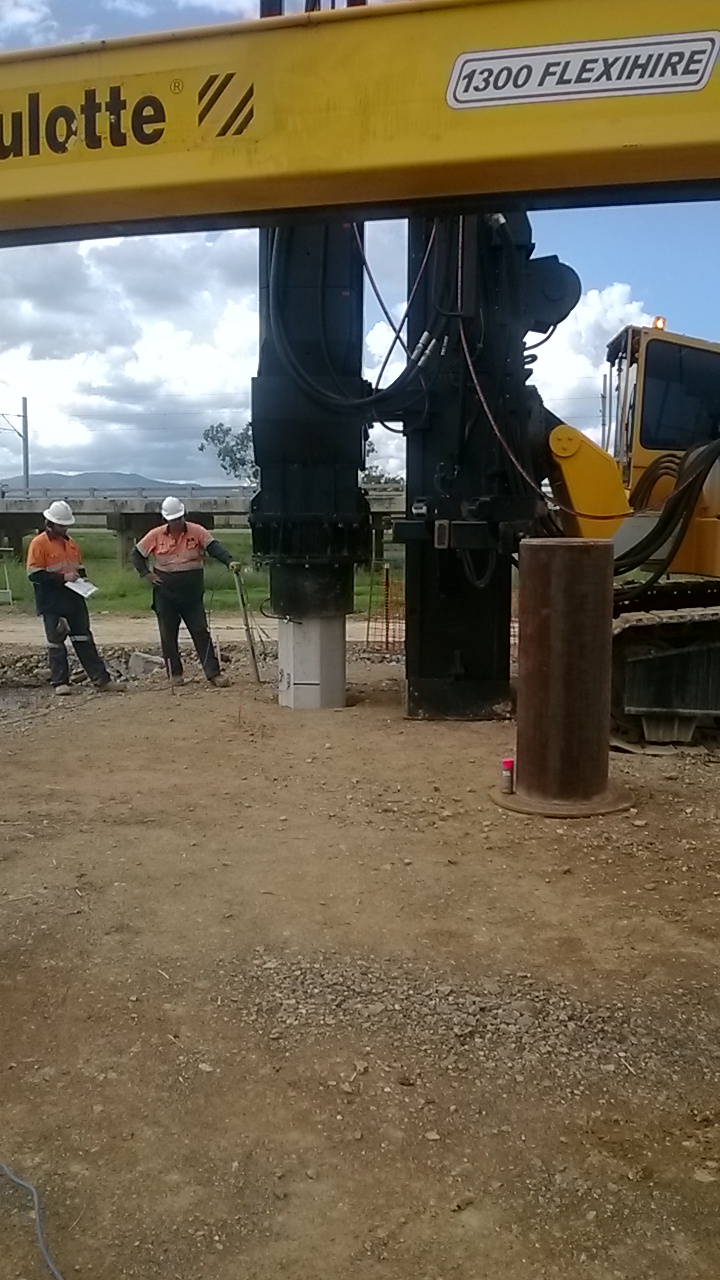
I’ve also had the first payment claim from the piling subbie in, mainly mobilisation costs for the first rig $85000 and the tiny bit of driving they’ve done. However I’m glad I checked as the standard method of measure in this contract states that length of pile driven is from the base of the pilecap. The piling subbie tried to claim from the top of our piling mat. That may only be 3m difference but at $90 per metre and with 1000 piles that’s $270000!
I also had a fairly long and important meeting with all concerned parties for the substructure sequence and methodology, and started to look at the cofferdams for piers 1 and 2, but I’ll save that for another time.
I went down to Brissy over the Easter weekend and stayed with Ben in his nice plush pad in New Farm. That gave a perfect excuse for a BBQ.
Phrases I’ve learnt:
“Bush Pig” – A woman who is not blessed with good looks, and resembles an unkempt wild pig
“Outan babi” – As above but in aboriginal (or so I’m led to believe)
A cry for help….
I’ve received a bit of a random cry for help that I could use the advice of the collective group for….
I have a mate who is now working out in Africa for the Halo Trust doing de-mining in Angola. The camp that he is running is basically built on sand. No problem for the buildings but the vehicles they use to get to the de-mining areas are struggling. He’s asked me what he can do to improve it (his first mistake could be asking for my help!).
I’ve attached the some photos he sent me below. He has a limited budget to improve the area (it being a charity that he works for) and is looking for the best “sticks and string” answer. The camp needs to last at least 5 years and the rainy season is November to end of March.
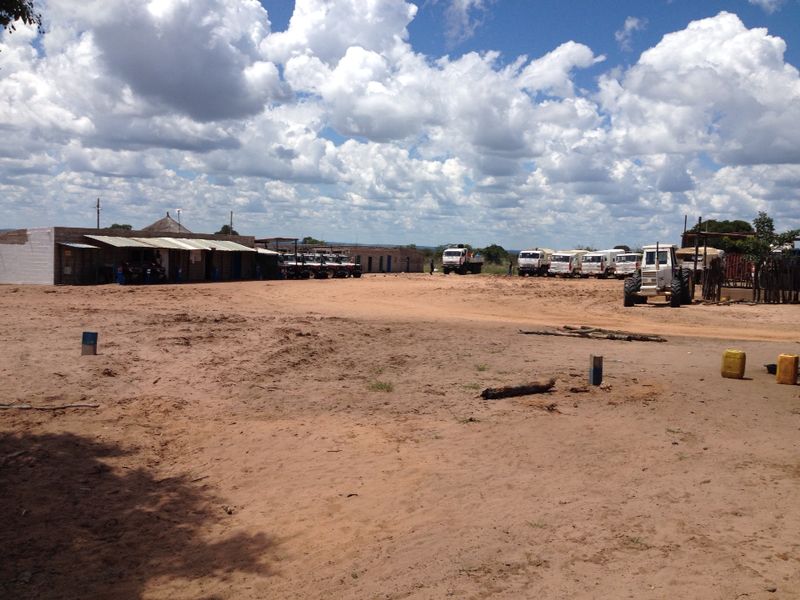
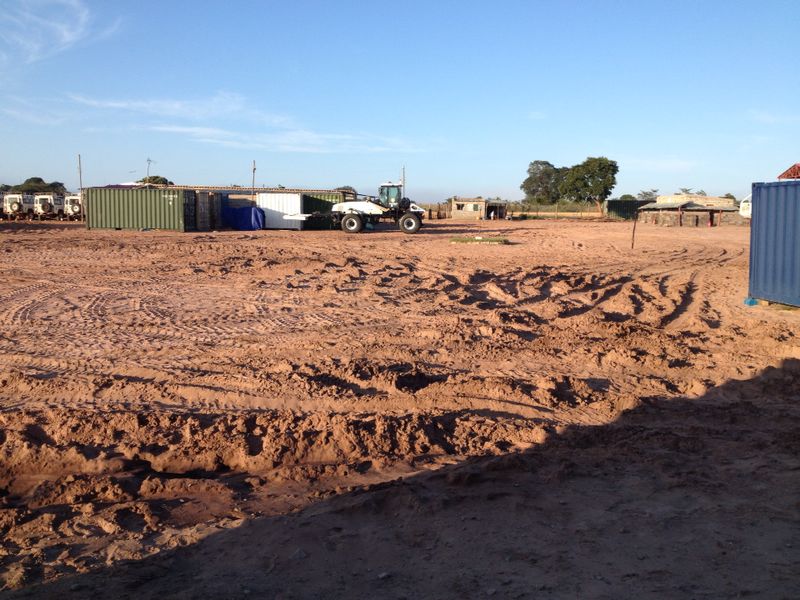
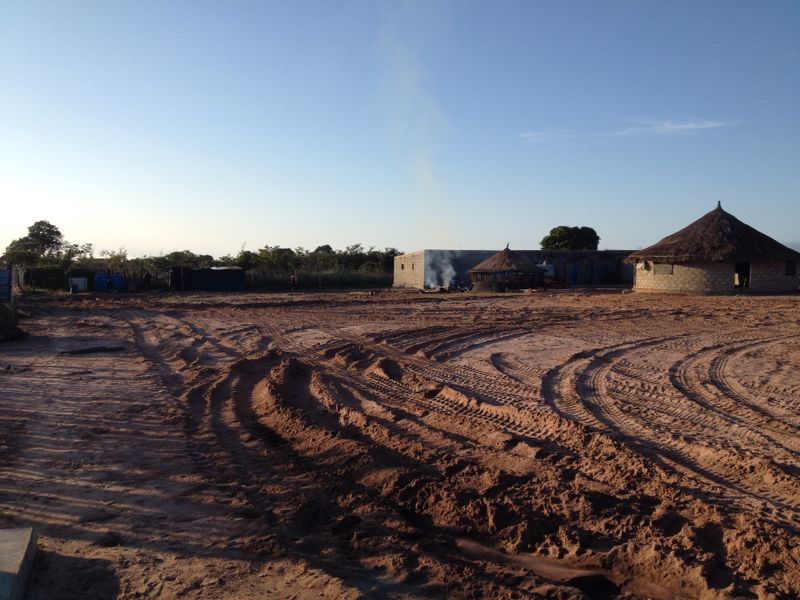
The town he is in is called Cuito Cuanavale in Kuando Kubango province Angola. You can google it and you’ll find a small airport, his compound is about 2.5Km NW of the airport. He’s up at 1250m above sea level and where he’s seen some exposed strata by the river it is all sandy soil with no rocks.

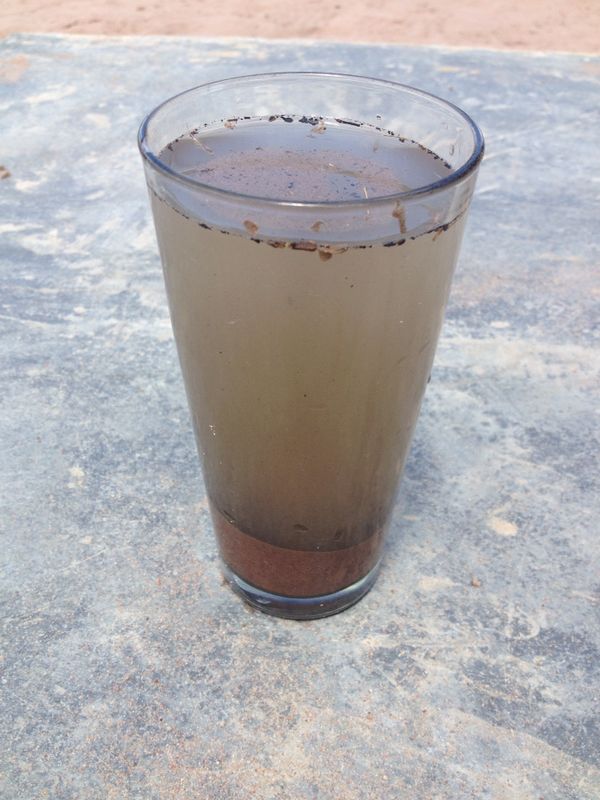
To find out a bit about the soil I got him to drop some of the material into a glass of water and see what happened – the photo below is after 3 mins. There is a sketch above that he sent me of the layout. The key areas are the vehicle park and the areas that the tractor towing the water tank on needs to get to – so a bit of a one way circuit around the edge would cover that. He should be able to get his hands on a roller from another de-mining camp without too much bother and maybe a local JCB for a short period.
Any and all (sensible) suggestions welcome!
Water, water everywhere….
There have been quite a few developments since my last blog, the most recent and dramatic being the 200mm of rain we had in about 48hrs, but more about that later. My concrete thermal tests have finished on both the 40MPa and 50MPa mixes and happily they both passed the temperature test reaching 62oC and 71oC respectively (the limit was 75oC). Happy days I thought, however this does not fit with a computer model that the Project Manager had commissioned from a consultant. He is concerned that the 2oC difference between results will mean we go over the limit in the real pours. I’ve now spoken with the chap who did the computer analysis to see what the score is, and he confirmed it will be fine. This was what I had thought all along, plus when our batch plant is finished the agg temp will be lower than that in the trials (shaded stockpiles and cooled water passed over the coarse agg, which wasn’t used for the trials). CIRIA report 135 was very handy in giving guidance on temperature reduction for larger volume pours.
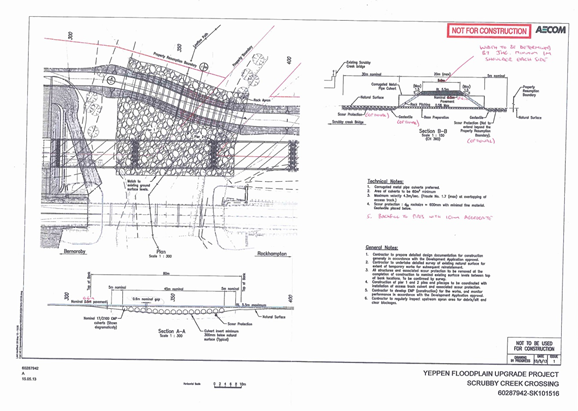
The temporary works for crossing scrubby creek were progressing well with the temporary bund 2/3 complete when the environmental rep for the designers drove past on route to a meeting. Her passing comment “I don’t think you’ve got a permit for that” threw the cat among the pigeons. We did have a permit, issued by them. The reply was “we thought you’d just drop them in” . What she proposed for us to “just drop in” are 14 x 2.1m diameter, 15m long culverts that need to sit on a bed of engineered fill into a creek filled with water. The lack of consideration given by the designers to how we would build a fairly critical part of the facilitating works astonished me. Has anyone else had any similar occurrences?
I met with the steel fixers for this job and now have a number of RFIs to submit to try and change the design to make it possible. I found the note from the designer rather amusing – pilecap reinforcement not shown for clarity – probably because it isn’t possible to fit it in! Some changes are possible to make it work, but in some cases it means a splice and we will end up out of pocket for the extra steel. The change will hopefully make prefabricating the steel easier, and the saving in time may outweigh the cost of the extra tonnage. In the same meeting we also discovered that the steel fixers were using pre-construction drawings from the tender phase. Not good. The correct drawings have now been issued from the document management system (incite) and hopefully we’re back on track. I think this arose from the steel fixers not having been contacted since the tender phase, as it is the contract has still not been signed.
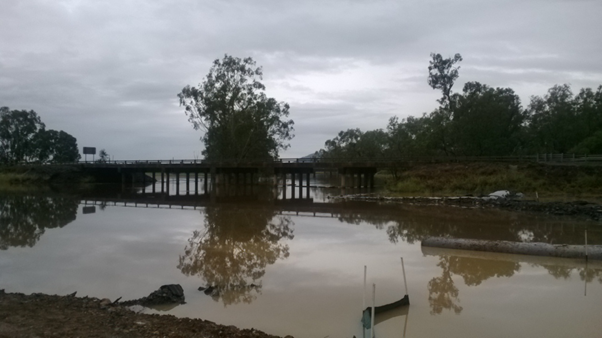
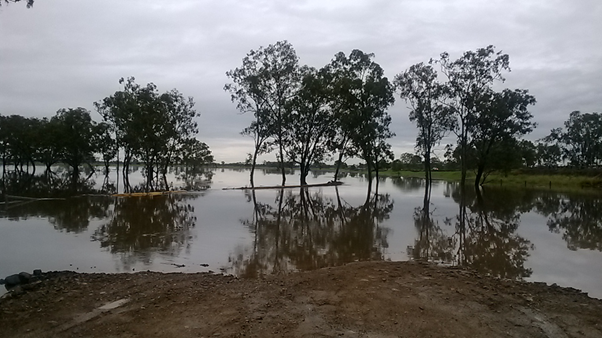
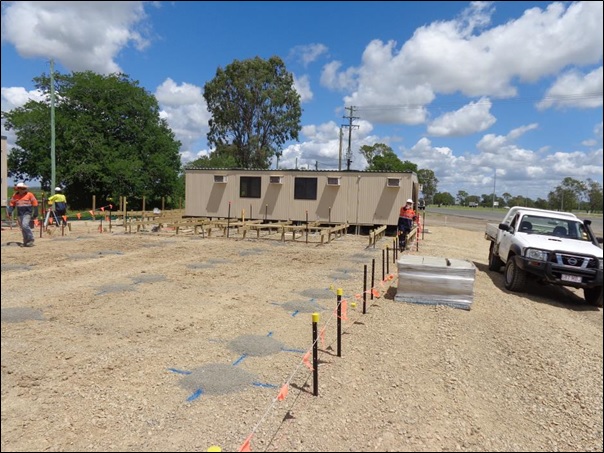
Back to the weather. The site has gone from pic 1 to pics 2 and 3 in just a day. This is not so good for the program. As this is a fairly normal rain event (less than a one in 1 yr rainfall) there will be no extension for time and no extra costs for John Holland to claim as this is not unforseen. As I see it John Holland gambled with putting fewer rain days in their program than all the other bids, who are likely to have included substantial costs for delays due to rain. The largest of those costs will be the piling subcontractor, who will charge $30000 a day if we delay without a minimum of 2 weeks notice (the cost drops to $5000 a day). There is no pain/gain share in this contract so as we were facing some heavy costs the plan has now been flipped on its head. Instead of starting at the southern end of the bridge and heading North we’ll start at the North and head south. This gives us about 8 to 10 weeks work to get the rest of the access track completed and the whole site linked up. Why this wasn’t con-planned before I don’t know.

Paperwork for the concrete works continues, and I’ve talked down some of the bids from the concrete pumping companies with a view to awarding that contract next week (still have to finish the tender evaluations). The first piling rig is also due to be transported here next week along with the additional cranes and associated gubbins.
Phrases learnt this week:
“Fair dinkum” – straight up or fair enough, “no joking”
“ fair suck o the savaloy” – same as fair dinkum
“eat the arse out of a low flying duck” – to be rather hungry.
Test cubes and Chinese measuring skills
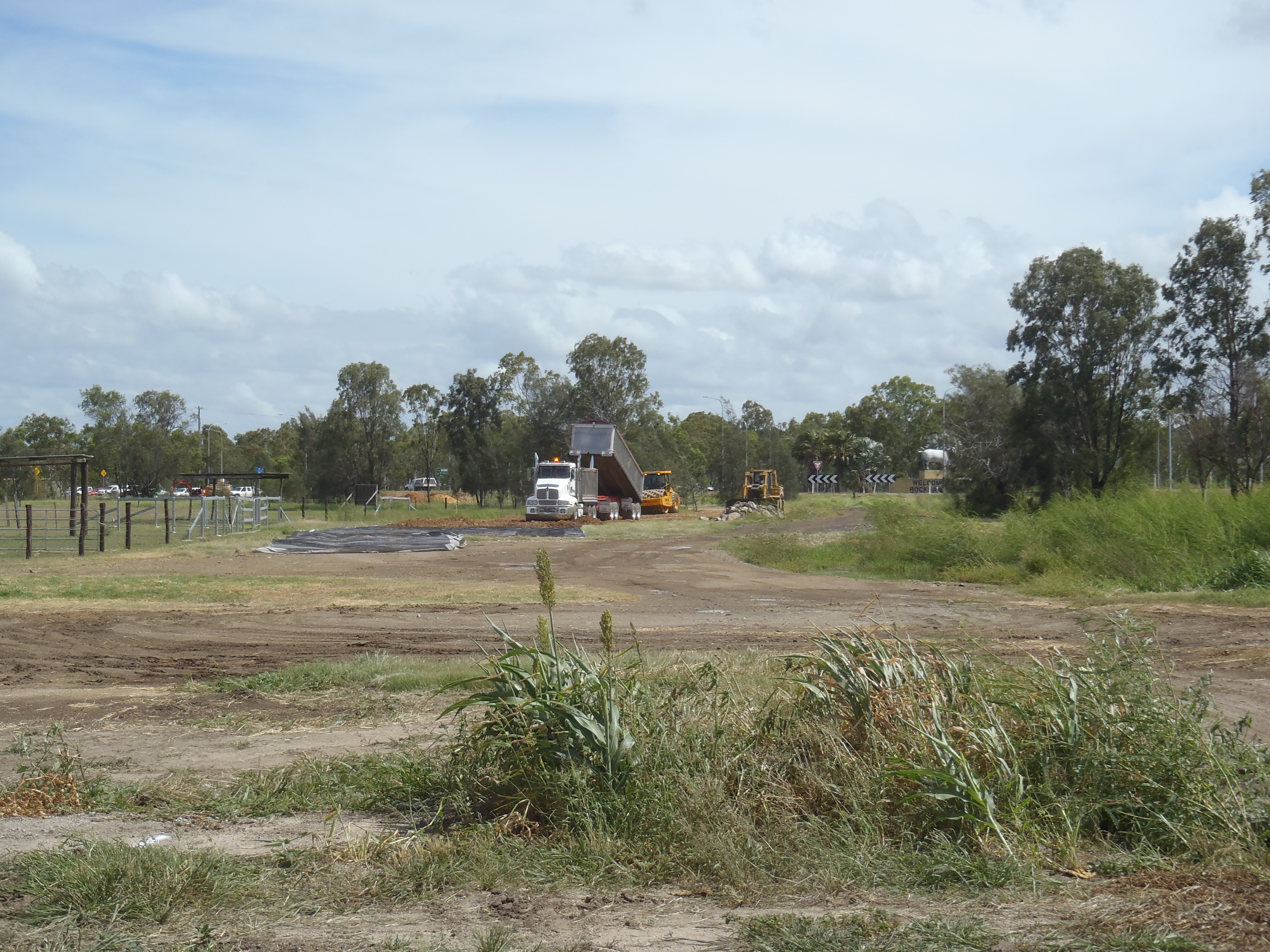
I’m now on site and all moved into the site office after a brief stay in the temporary office (a bit of a glorified cardboard box). Its been a pretty busy 2 weeks, but the access track is finally going in(see below).
The AMS for piling is now 95% complete and I will be sending it out for the team to review later today. This seems a very good practice to me, as it allows the experience and opinions of others in specialist areas to improve and inform the risk register for each activity. I’m not sure whether conflicting opinions will hinder the document being issued, but as it is a live document I’m hoping not. With a bit of luck it also means the more experienced people can fix my mistakes…. The checklists and other quality assurance documents are finished now and its just the environmental side of things I’m waiting for. The environmental manager still has to get back to me about the Site Environmental Plan (SEP) and how Acid Sulphate Soils will be dealt with. From the GDR its clear the piling will encounter them during the prebore prior to driving the piles, but a plan still isn’t in place for where we will be adding the lime (the treatment requires the soil is on a prepared surface with a low permeability and bunding, the soil be in layers 300mm thick and turned regularly when adding lime).
Budget is being brought to the heart of all issues now, and the PM is making that abundantly clear to all from the start. The access track is updated in cost per day vs output in metres and I will have similar reports to do when my piling and concreting starts. To balance this I’ll hopefully be completing a steady stream of work lots to balance the books and bring some money in.


The first of the custom formwork that has been ordered from China for the pilecaps, columns and headstocks should have been loaded by now, however there was a slight hiccup…. Someone made a bit of a mistake and they only realised when shutting the container door and it wouldn’t close. The forms were 200mm too long for the ISO. Now they’ve had to be cut about 2m back and altered so that they can be butt welded together when they reach site without a loss in strength. The forms themselves are modular to take into account the changes in pilecap size over the bridge length and also the change in angle of the headstocks. I’ve added some of the designs below. The headstock forms sit on what I and a few others think is an overly complicated support system. It relies on 8 tension bars going through each column stressed to 600KN. To me this adds a lot of time that we don’t have spare. A simple stand system that rests on the pilecap would be far faster to install, remove the need for remedial works on the columns and save the time in installing, tensioning and certifying the tension supports. Whats even more mental is a stand system has been designed as a backup! No-one seems to be able to tell me why the tension system is not the backup. I’m also going to have to look at the crane time needed for installation. I want to move the forms in as few pieces as possible (making assembly quicker too), but the weight may be too much for the smaller franna cranes on site. At the moment this is a problem for later next week.

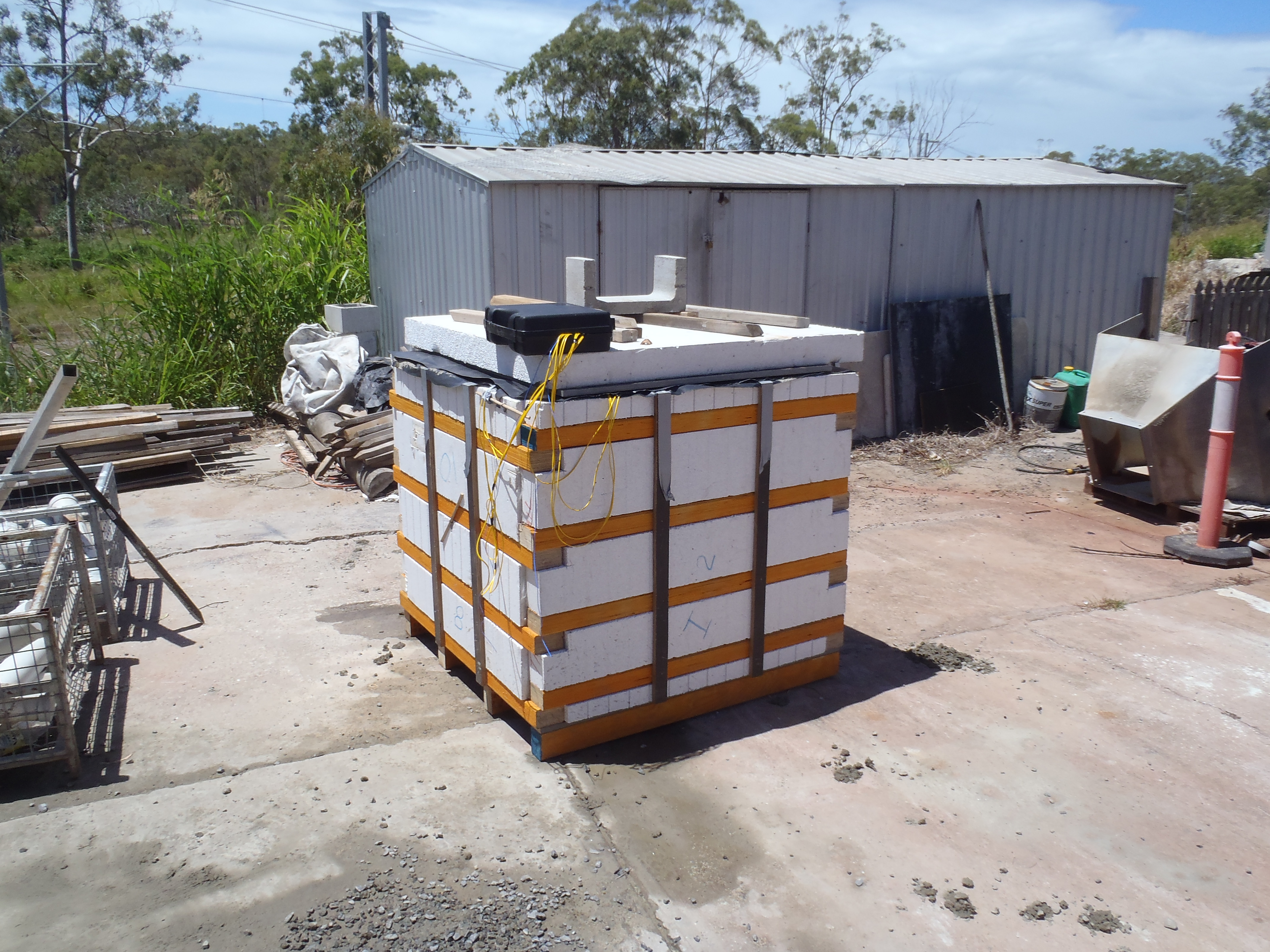
The thermal monitoring of the first concrete block (see pic below) was completed – max temp from all thermocouples was 69oC, a whole 5oC under the maximum allowable. This bodes well, as the placement temp was right on the limit (anything over 25oC will be rejected). However Hanson made such a hash of getting the mix right on the day, with the first slump being 200mm instead of 100mm – prompting a change in the mix design (which had already been submitted to the client) After their lack of interest at this and poor attitude from some of the management I’ve now got a thermal trial going with Holcim. It looks like Hanson might have just lost out on a few million dollars worth of work!
The crocodile that is the sub contract for the concrete pumps is now nearing my canoe, and so I’ll be detailing the scope of works early next week. It looks like this will be left to me which should bode well for ticking off some development objectives.
Words I’ve learnt this week: Bogums – The Aussie equivalent of a chav or a ned
Dunga – A portacabin or temporary building eg. The site office
Far too many documents
The last week or so has mainly been filled with finishing the Driven Piling Procedure for submission and buying thermocouples, data loggers and some formwork for large concrete test cubes. I’ve also had the joy of starting the Concrete Process Procedure and concurrently starting to write the Activity Method Statement (AMS) for the piling.
You may think that the piling procedure and method statement would be the same document, sadly they are not. The first one is submitted to the client for approval as it contains the “How we will do it” for a number of the piling activities that need to be approved in advance. For example the piling procedure (that I would think of as a method statement) must be submitted for approval a minimum of 21 days prior to starting piling. The second document is internal to John Holland and mainly covers the risk involved in the task, broken down into three areas: Quality, Safety and Environment. Its safe to say that I have been hassling the piling sub-contractor a lot for his intended methods and then changing them based on my vast knowledge gained from many years in the piling industry….or not. As it happens I had to alter his process to fit in the pile testing procedures, and there is likely to be a fair bit of waiting on site for the first hold point to be released (CAPWAP analysis needs to be completed before we can continue piling and the client needs to sign off on it).
I’ve also finished the projected program of works for bridge 1 for the next 3 weeks in detail, with the next step being planning out for the next 3 months. I’ve got one wee graduate engineer working for me and should have another 2 starting around mid March. I guess that’s D.O. C3 sorted. I think I’ll need them by then as the date for the first pile in the ground is fast approaching, and then the first concrete pour (pile cap on pier 3) is only a week after that.
I also had the (dis)pleasure of becoming more involved with the contracts side of things. My main focus is the JHG contract with the piling subcontractor (Caporn Piling), but I’ve also looked into the highly interesting tome that is the main contract with the Client (Qld Main Roads and Bridges). I can now see the advantages of the NEC 3 contract with its relatively limited use of “legal speak”. The contract is build only, with payment by instalments. Each month we submit the work lots that have been completed along with supporting evidence, and the client pays that amount. When tendering for the main contract it was a pretty quick process, there was no to and fro in making changes to this clause or that, it’s a simple take it as the government body sets it or don’t bother bidding. (I think JHG did submit a list of changes to Main Roads, but were told it’s a flat out no) I see the thinking behind levelling the playing field and avoiding any possible claims from losing bids (thinking back to Virgin Trains losing the west coast mainline contract and their subsequent legal challenge). In addition all bids had to submit conforming designs as per the tender documents, alternatives could only be submitted along with a conforming design. Any bids that submitted an alternative design only were dropped and did not proceed any further in the tender process.
From the clients point of view this is very good, all the roads and bridges in Queensland will be built to the same spec, reducing complexity and future maintenance costs. The downside for JHG as the main contractor is it is very difficult to find areas to make savings (and so increase the profit). To say the budget is tight would be an understatement (“tighter than a ducks arse” springs to mind). There is more to say on the supplementary specs and annexures, but I’ll save that for AER1.
Oh, and the site office is finally going in so I should have somewhere to hide from the sun when I arrive next week.
In other news I went to Australia Zoo, so here is a photo I took of a tiger yawning.

Work Life Balance
As I sit in the office on a Saturday, I find the below very appropriate…

Piles, piles and more piles…
A little background first for everyone on the Yeppen South Project. The project is an elevated highway to allow access to the town of Rockhampton, even when the area floods (which it tends to do on a semi-regular basis). My part in this will be as the project engineer responsible for bridge 1. That involves 43 piers with an average of 16 piles on each pier. To put it another way, it seems like I am doing Ex Soft Bottom in real life!
The ground we are constructing on is a floodplain and as its still the rainy season most of the site is currently under water (pier 3 where we are due to start piling is under about 2m of water right now…). The ground has been split into 4 main groups in the GDR:
ALL1: Quaternary Alluvium, comprised soft to very stiff silty clay, and was encountered at varying depths from the existing ground surface to a depth of 18.2m. The thickness of this layer varied from 7.0m to 18.2m. Silty clays/clays were generally of high plasticity based on a plot of the Atterberg limits test results. D Na
ALL2: Quaternary Alluvium, comprised loose to very dense sands and gravels inter-bedded with generally firm to hard clay lenses and pockets, encountered at varying depths between 7.0m and 45.4m. The thickness of this layer was found to vary from 3.4m to 36.7m.
RS: Residual soils, comprising very stiff to hard silty clay, were encountered at varying depths between 27.0m and 48.5m. The thickness of this layer varied from 1.8m to 11.3m.
RG: Rockhampton Group, comprising extremely weathered to slightly weathered siltstone/sandstone/conglomerate with varying strength that generally increased with depth. Rock-head was encountered at varying depths across the site between 16.0m and 48.5m below existing ground level.
Groundwater was found in previous studies at 2.7m below surface, but this is extremely seasonal. Fig 1 and 2 show cross sections for the length of bridge 1.
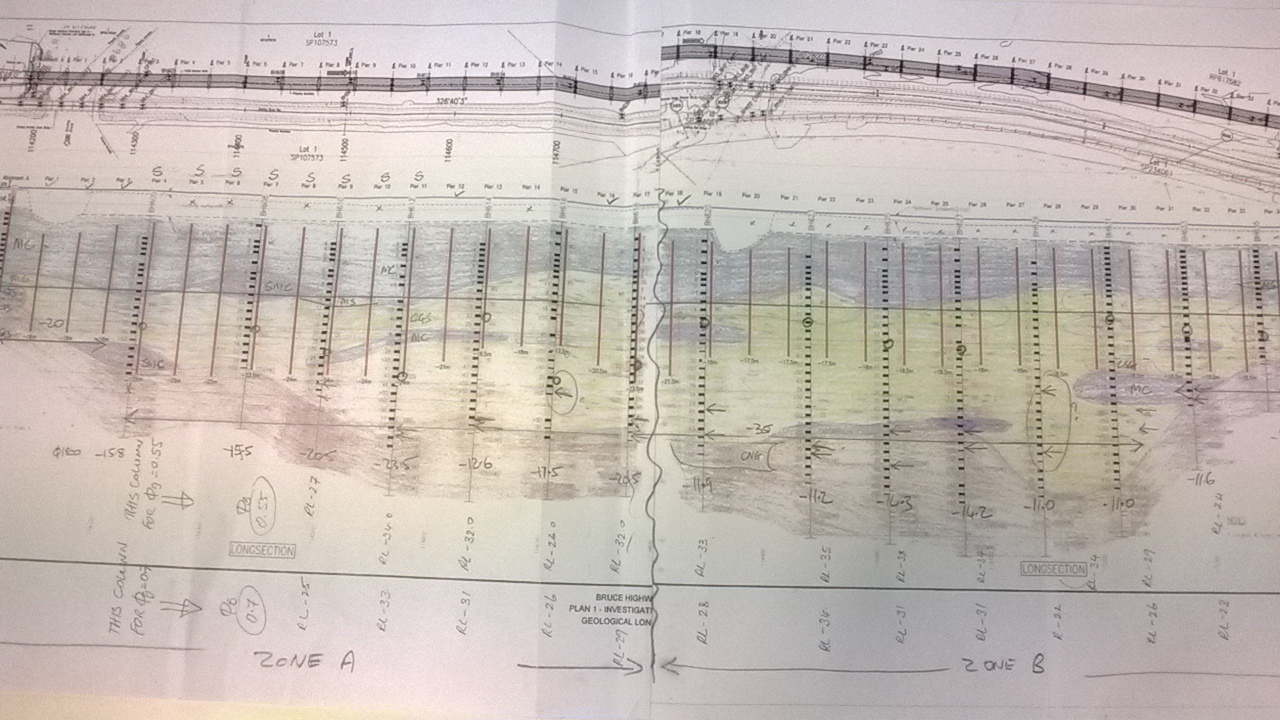
Fig 1 – “an artists impression” cross section of the ground
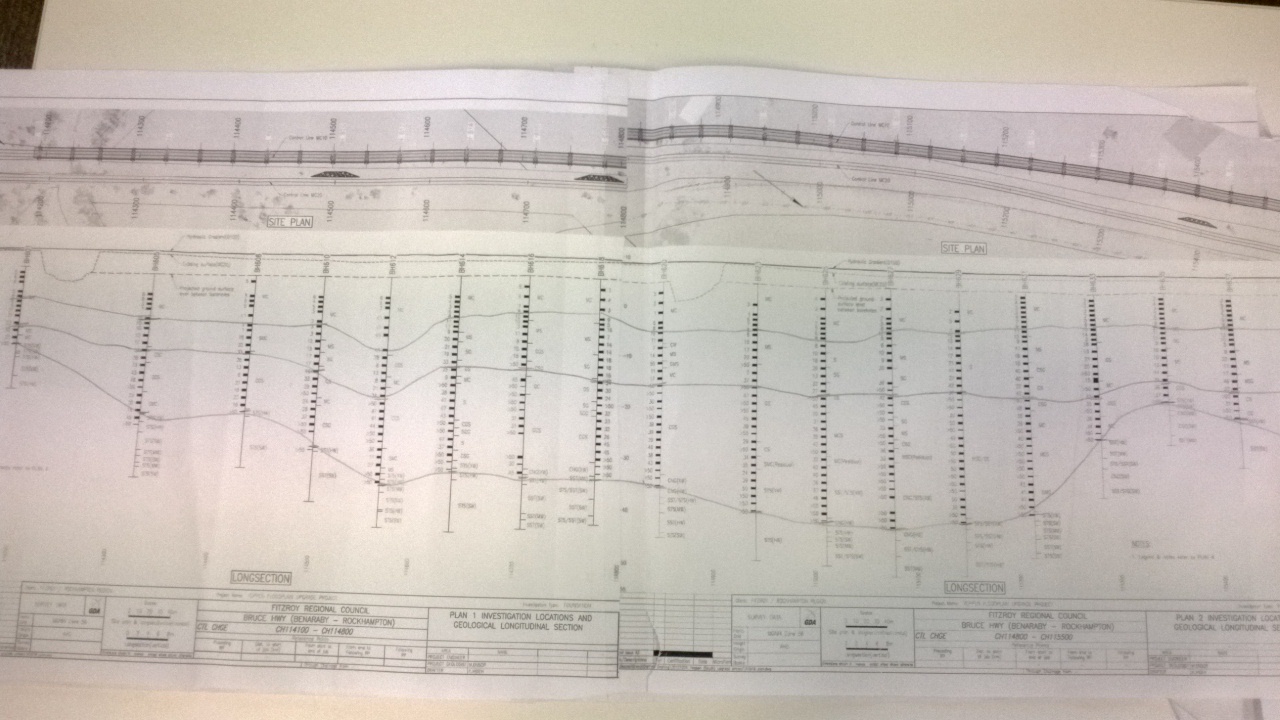
Fig 2 – showing the layers of the 4 main groups
The piles are subject to the following Ultimate actions: an axial load of 2550KN with Fx = 80KN , Fy = 50KN, Mx = 225 KN and My = 310 KN, Tension is expected to be 160 to 270KN. There are 43 piers on bridge 1 and each span is 35m. The actions vary slightly but not massively from pier to pier.
I’m not sure what the results would be if you fired it into the Bently software (my laptop hasn’t arrived yet) but I will see what it gives. I may even go for some rough hand calcs to see what length I come up with and compare to what the real engineers have designed. The design piles are driven 550mm diameter octagonal precast prestressed concrete. And vary in length. The longest single piles are 28m and the spliced ones go to 33m. The pile cap layout is shown below (fig 3).
Fig 3 – General pile cap layout
There is also a potential problem with the high temperatures causing a lot of cracking in the concrete. This has led to the client (Qld Main Roads) imposing some very strict monitoring on all the concreting works on site. Thermocouples will need to be placed at different points in the pile caps, columns and headers. More specifically this means that I’ll need to get about 2000 thermocouples and a bunch of dataloggers. A number of mix designs have been decided on to take forward to testing and hopefully next week we will pour a test cube (that’s a 1m3 not the small UK test cubes) and see how they preform I curing. (that could be blog number 2…)
I thought I’d add in a little weather update for Hoops – its been over 28 degrees since I got here and the forecast says it’ll hit mid 30’s this weekend…..how are things on the East coast of the US?
 Holdfast Training Services Trial Blog